
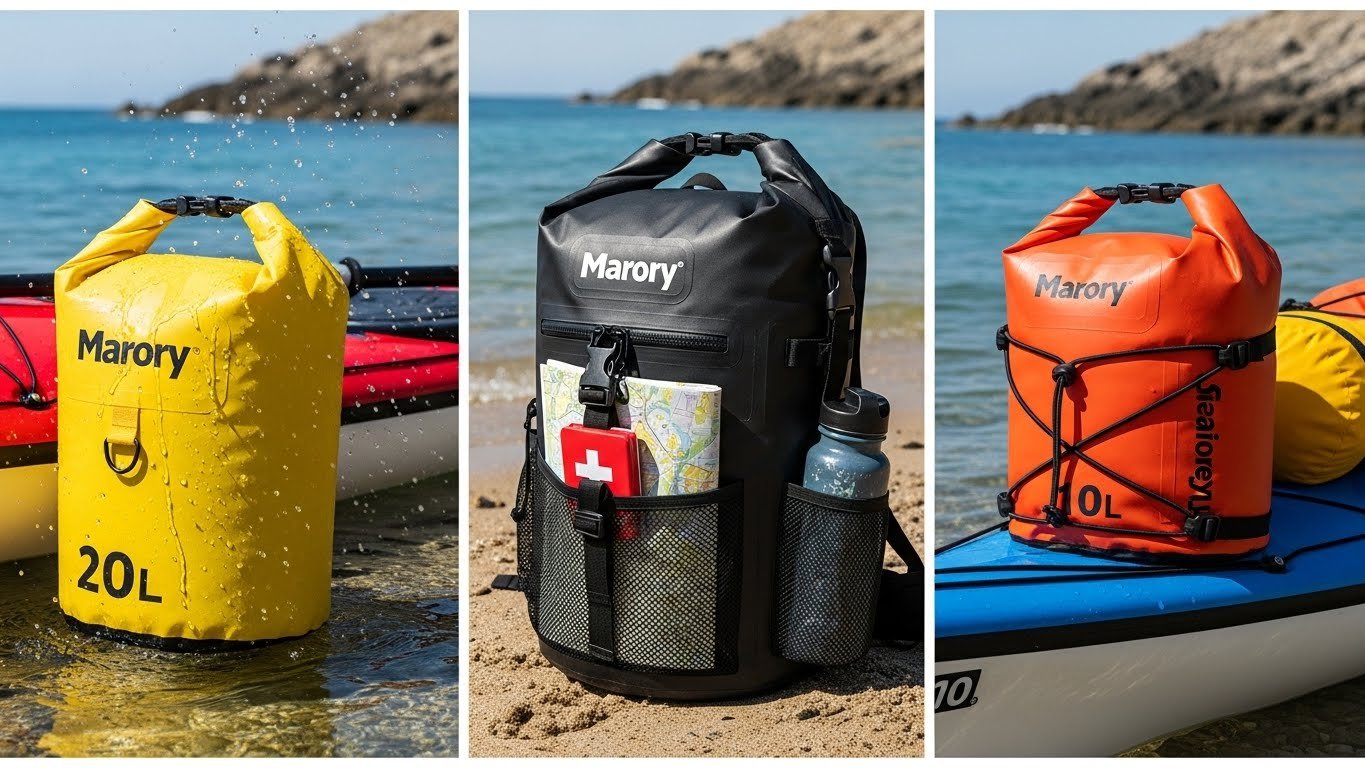
Selecting a dry bag for marine usage is a critical decision for kayaking brands. Product failure on the water leads to damaged gear and a loss of customer trust. The most reliable bags are defined by specific construction details, not just marketing claims, ensuring performance in harsh conditions.
We cover the essential features of a marine-grade bag, compare roll-top versus zipper closures, and detail how to maximize buoyancy. This analysis provides the technical details needed to source or design equipment that performs reliably for your customers.
What Makes a Dry Bag “Marine Grade”?
A dry bag becomes “marine grade” when it meets strict waterproofing standards and uses durable materials for harsh water environments. Key factors include its waterproof rating (at least a 10,000mm hydrostatic head), robust fabric construction, and a reliable seal system like a roll-top closure.
Waterproof Rating Standards
The performance of a marine dry bag starts with its waterproof rating. These technical standards measure a material’s ability to withstand water pressure, which is critical when facing waves, heavy rain, or accidental submersion. From our manufacturing experience, we know that hitting these specific metrics is non-negotiable for true marine use.
- ✅ Hydrostatic Head Rating: A bag must have a rating of at least 10,000mm. This test measures how tall a column of water a fabric can hold before it leaks. A 10,000mm rating ensures the material can resist significant, sustained water pressure.
- ✅ Submersion Protection (IP Rating): For full submersion, look for an IPX8 or IP68 rating. This certification guarantees that the bag can be submerged to depths of at least one meter without leaking, protecting sensitive electronics and gear.
- ⚠️ Consumer-Grade vs. Marine-Grade: Bags with lower ratings, such as 2,000mm, are only water-resistant. They are not designed for serious boating, kayaking, or marine environments where gear is exposed to more than light rain.
Material and Construction Requirements
A high waterproof rating is useless if the bag itself isn’t built to last. Marine environments demand materials that resist abrasion, punctures, and UV degradation. The construction techniques used to assemble the bag are just as important as the fabric itself.
Key components include:
- Robust Fabrics: Manufacturers use high-denier fabrics (like 500D polyester or nylon) coated with PVC or polyurethane (PU). This combination provides excellent abrasion resistance and a completely waterproof surface.
- Welded Seams: Instead of traditional stitching that creates tiny holes for water to penetrate, marine-grade bags use high-frequency (HF) welding or tape-sealed seams. This process fuses the material panels together, creating a permanent, watertight bond that is as strong as the fabric itself.
- Reinforced Stress Points: High-stress areas, like where handles and D-rings attach, feature reinforcements such as scrim-reinforced vinyl and double bar-tacked stitching to prevent tearing under heavy loads.
Seal and Closure Systems
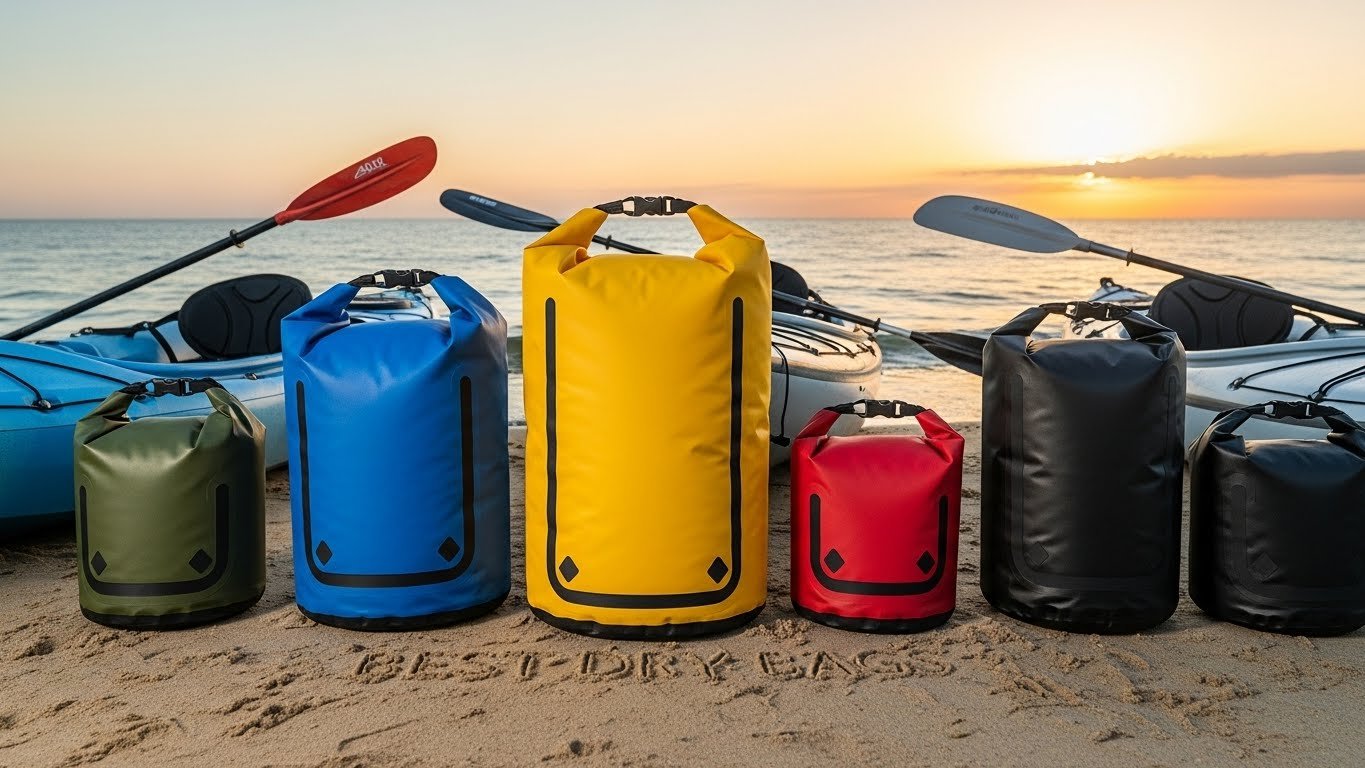
The final piece of the marine-grade puzzle is the closure system. The most reliable and widely used method for dry bags is the roll-top closure. It creates a secure, waterproof seal by folding the top of the bag over on itself multiple times.
A properly designed system employs a stiffener strip along the top edge, which prevents bunching and ensures a uniform, tight seal when rolled. To create a fully waterproof barrier, the standard procedure is to fold the roll-top down at least three times before securing it with the buckle. This simple, effective mechanism is proven to keep water out even in rough conditions.
Roll-Top vs. Zipper Seal: Which is More Secure?
For marine environments in 2026, roll-top closures are more secure. Their design has no mechanical parts that can fail, creating a highly reliable waterproof barrier when properly sealed. Zippers, while convenient, can jam, break, or require maintenance, introducing potential points of failure.
When choosing a bag for kayaking or other marine activities, the closure system is critical. The choice between a roll-top and a zipper directly impacts how well your gear is protected from water. Here’s a breakdown of how they compare in key areas.
| Feature | Roll-Top Closure | Zipper Closure |
| Sealing Mechanism | ✅ Creates a waterproof seal by folding fabric over itself. No mechanical parts to fail. | ⚠️ Relies on interlocking teeth. Vulnerable to jamming from sand, dirt, or salt. |
| Submersion Reliability | ✅ Very dependable for full submersion when rolled down at least three times and buckled. | ❌ A major weak point. Even “water-resistant” zippers will leak under pressure. True waterproof zippers can fail if damaged. |
| Field Durability | ✅ Exceptionally durable. The closure is as strong as the bag’s fabric. | ❌ The zipper mechanism can break in the field, making the entire bag impossible to seal. |
| Maintenance Needs | ✅ Requires no special cleaning or lubrication to function properly. | ⚠️ Waterproof zippers need routine cleaning and lubrication to maintain their water resistance and prevent jamming. |
| Ease of Access | ⚠️ Slower access to contents, as it requires unbuckling and unrolling. | ✅ Offers quick, simple access and provides clear tactile feedback when closed. |
Verdict for Marine Use: Why Simplicity Wins for Security
In demanding marine situations like kayaking, the roll-top’s mechanical simplicity makes it fundamentally more reliable. In our experience manufacturing heavy-duty bags, we know that the fewer moving parts exposed to the elements, the better.
The complete absence of a zipper track or slider means there is no risk of a small component failing and compromising the bag’s entire waterproof function. While zippers offer faster access, for pure security against potential submersion, the roll-top design is the superior and more durable choice for protecting valuable gear on the water.

Heavy Duty Waterproof Bags for Cargo Ships
Heavy-duty waterproof solutions for cargo ships are not consumer bags. They are industrial-grade systems like marine tarpaulins or components of ISO-certified containers, built to meet strict maritime standards for capacity, durability, and safety in harsh sea environments.
Understanding the Distinction: Consumer vs. Industrial Marine Solutions
There’s a critical difference between a waterproof bag you might strap to your car and the containment systems used in maritime logistics. Consumer-grade cargo bags are designed for personal vehicle transport and temporary protection from the elements. They are not built for the extreme conditions of open-sea voyages.
Professional marine cargo solutions are large-scale, engineered systems. This includes standardized ISO shipping containers (measured in TEUs) and industrial-grade, heavy-duty tarpaulins that cover bulk freight. The primary distinction is scale and regulation; consumer products handle cubic feet of personal gear, while marine solutions manage tons of cargo under international maritime law.
Key Specifications for True Marine-Grade Cargo Containment
Equipment used on cargo ships must meet non-negotiable standards to ensure safety, legality, and durability. Casual equipment simply won’t suffice.
- ✅ Genuinely Marine-Grade Material: The materials must be engineered to withstand constant saltwater spray, high-velocity winds, and extreme temperature fluctuations without degrading. This goes far beyond typical “waterproof” fabrics.
- ✅ Compliance with International Standards: Safe and legal transport depends on adherence to strict regulations from bodies like the International Maritime Organization (IMO) and standards such as ISO 668 for shipping containers.
- ✅ Integration with Securing Systems: True marine cargo equipment is designed to integrate seamlessly with a ship’s lashing points and securing systems to maintain stability and prevent shifting during transit.
Sourcing Appropriate Maritime Logistics Equipment
Finding the right equipment means looking in the right places. The market for professional marine gear is highly specialized and separate from the consumer retail space.
- 💡 Focus on B2B Suppliers: Target your searches toward B2B suppliers who specialize in marine logistics and industrial shipping equipment, not general bag retailers.
- 💡 Verify Supplier Credentials: Always ask for documentation of compliance with maritime industry certifications. A reputable supplier will readily provide proof of their products meeting necessary standards.
- 💡 Consult with Logistics Experts: If you are unsure, speak with maritime logistics providers. They can offer expert recommendations on the correct containment and securing solutions for your specific type of cargo and vessel.
Build Your Custom Heavy-Duty Bags with Confidence
Tell us your exact specifications—from 25kg load capacity to full-color branding—and our experts will craft the perfect solution. See your vision come to life with a free, production-ready digital mockup delivered in just 12 hours.

How to Pack a Dry Bag for Maximum Buoyancy
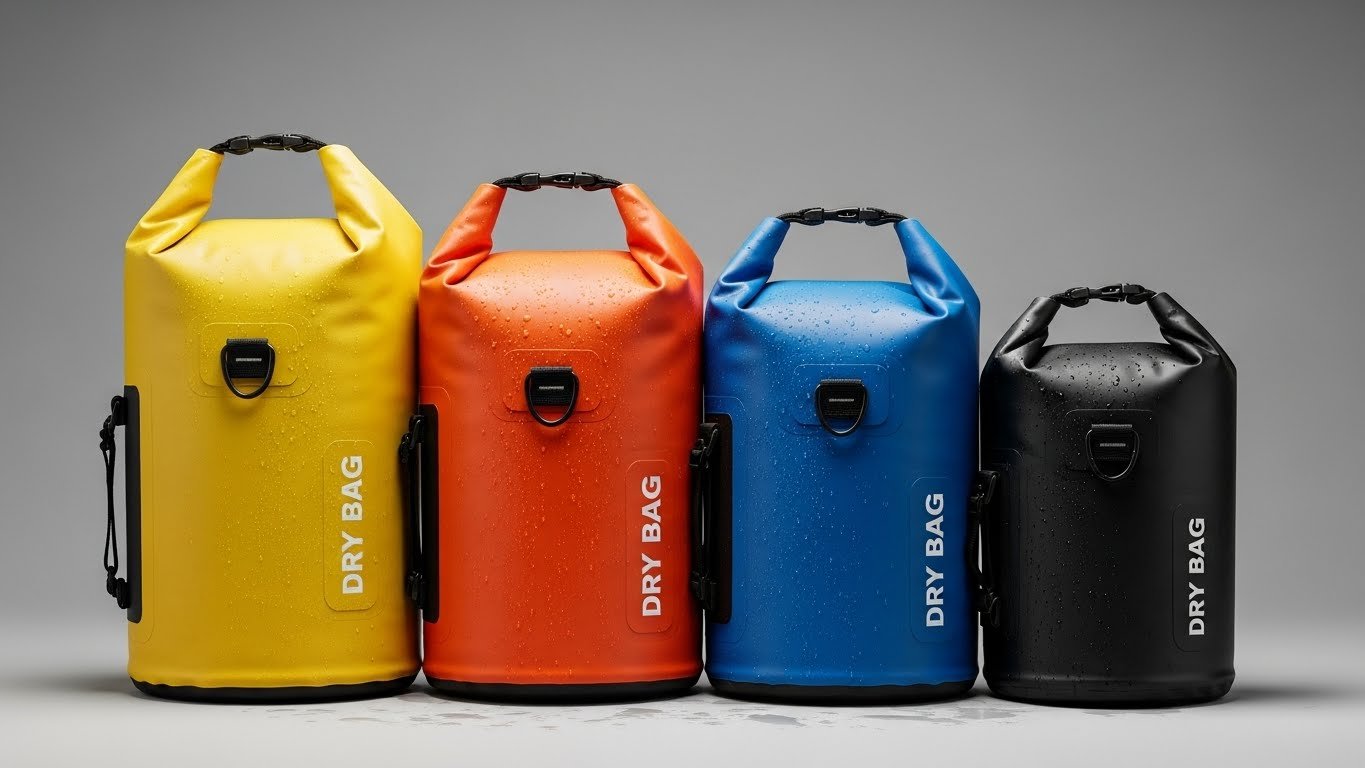
Quick Answer: To maximize a dry bag’s buoyancy, intentionally leave a pocket of air inside before sealing it. Roll the top down at least three times to create a watertight seal that traps the air, allowing the bag to float effectively if dropped in water.
Ensuring your dry bag floats isn’t just about keeping gear dry; it’s a critical safety feature for any marine activity. A bag that sinks is a lost cause. The key is packing it not just for protection, but for flotation. Proper weight distribution and an airtight seal are the two pillars of a buoyant bag.
Step 1: Balance Weight Distribution
How you arrange items inside the bag directly affects its stability in the water. An improperly balanced bag can easily tip over, straining the seal. In our experience manufacturing heavy-duty bags, structure begins with the foundation.
- Heavier Items First: Place dense, heavy gear like food containers or tools at the very bottom of the bag. This creates a low center of gravity.
- Lighter Items on Top: Stack lighter equipment, like clothing or sleeping bags, on top of the heavier base.
- Avoid Overpacking: Leave enough empty space at the top (about 20-25%) to allow for a clean, tight roll-down seal.
- ⚠️ Prevent Punctures: Keep any hard or sharp objects away from the bag’s interior walls. A puncture, no matter how small, will compromise both water resistance and buoyancy. The bag’s material integrity is everything.
Step 2: Trap a Pocket of Air
This is the most important step for making your bag float. The trapped air is what provides the positive buoyancy needed to keep it on the surface.
💡 Before sealing, gently push the sides of the bag together to squeeze out some, but not all, of the air. You want to leave a generous pocket of air inside. Think of it as inflating a life vest—that internal air is what does the work.
Step 3: Execute the 3-Roll Seal
A reliable seal is what traps the air inside and keeps water out. This process creates the necessary internal pressure for flotation and a watertight barrier for protection. A quality buckle and strap system is non-negotiable for maintaining this seal under pressure.
- Align the Edges: Bring the two top edges of the bag together, ensuring they are flat and aligned.
- Roll Down Tightly: Carefully roll the top edge down over itself. For a dependable seal, complete at least three full rolls. For rough conditions or maximum security, 3-5 rolls are recommended.
- Secure the Buckle: ✅ Clip the buckle together firmly. This locks the roll in place and prevents it from unfurling, securing the trapped air inside. Once buckled, the bag should feel firm and slightly inflated.

Top Features to Look for in a Marine Dry Bag
The best marine dry bags combine durable, waterproof materials like PVC with RF-welded seams to eliminate leaks. A reliable roll-top closure system creates a secure seal, while features like buoyancy, the right capacity, and strong attachment points (D-rings) make the bag practical and safe for marine use.
| Feature | Key Specifications | Why It Matters for Marine Usage |
|---|---|---|
| Core Materials & Seam Construction |
|
The bag’s entire purpose depends on its construction. From a manufacturing perspective, RF welding is the gold standard for creating a truly waterproof product. Stitched seams, even when taped, can eventually fail and let water in. |
| Secure Closure Mechanisms |
|
The closure is the main entry point for water. A simple, effective roll-top design is less prone to failure from sand, salt, or debris, making it ideal for rugged marine environments. |
| Capacity, Sizing & Buoyancy |
|
Choosing the right size prevents carrying unnecessary bulk or not having enough space. The built-in buoyancy is a critical safety feature that protects your valuable gear from sinking to the bottom. |
| Practical Features for Usability |
|
A dry bag isn’t just about keeping things dry; it has to function well in the field. Strong attachment points prevent the bag from being lost, and comfortable straps make it a practical piece of equipment on and off the water. |

Best Dry Bags for Kayaking and Boating
The dry bag market for kayaking and boating in 2026 offers solutions for every price point and need. From lightweight day-trip sacks to heavy-duty expedition duffels and premium submersible backpacks, the right gear is available to protect your equipment. This list covers the top options, balancing budget, durability, and specific use cases like protecting sensitive electronics or packing for multi-day trips.
TIIOCTI Custom Heavy-Duty Bags (B2B Wholesale)
🏆 Best for: Logistics providers, Wholesale buyers, Marine and boat rental companies, Retail brands
TIIOCTI specializes in manufacturing custom heavy-duty waterproof bags exclusively for B2B clients. Serving logistics providers, marine retailers, and tour operators, they provide a reliable alternative to standard consumer products. Their focus is creating durable, branded equipment tailored to the demands of rigorous commercial environments, ensuring every bag aligns perfectly with operational needs and professional branding standards.
The core of their service is deep customization. Clients can specify exact dimensions, choose robust materials like Woven PP with PE lamination, and request features such as reinforced handle stitching engineered to support loads of 20–25 kg. Businesses can transform essential gear into a marketing asset by adding logos through high-quality silk screen or heat transfer printing, creating a unified and professional brand presence across rental fleets or retail product lines.
TIIOCTI streamlines procurement with valuable B2B services, including complimentary design mockups delivered within 12 hours. They adhere to international quality certifications like SGS and BSCI, guaranteeing a reliable and scalable supply chain. For companies needing professional-grade, branded storage solutions built for repeated, heavy use, TIIOCTI offers a direct-from-manufacturer partnership that combines quality, customization, and efficiency.
Key Information:
- 📍 Location: China (Global Shipping)
- 🏭 Main Products: Custom waterproof moving bags, Heavy-duty storage bags, OEM/ODM organizer bags
- 🛒 Main Markets: Logistics providers, Wholesale buyers, Marine and boat rental companies, Retail brands
Pros & Cons:
| What We Love | Things to Consider |
|---|---|
|
|
SealLine Discovery Dry Bag
🏆 Best for: Kayaking, Paddleboarding, Outdoor Recreation
The SealLine Discovery Dry Bag presents a compelling blend of performance and value for businesses in outdoor recreation. It offers a reliable waterproof solution without the premium cost of specialized gear, making it an ideal choice for outfitters, tour operators, and rental fleets. Its straightforward design ensures ease of use for a wide range of customers, protecting valuables and company assets from water damage while minimizing operational friction.
At its core is a classic roll-top closure, a proven system that delivers a dependable watertight seal against splashes and brief immersion. Constructed from durable, abrasion-resistant materials, the Discovery is built to handle the demands of frequent commercial use in marine environments. The bag comes in a versatile range of capacities from 5L to 50L, with the 20L model hitting a practical sweet spot for day trips, making it a popular inventory choice.
For businesses in the kayaking, paddleboarding, and boating sectors, the Discovery bag represents a smart investment. It delivers consistent, no-fuss performance that enhances the customer experience and safeguards sensitive equipment trip after trip. Equipping your operations with these bags provides a trustworthy solution that supports diverse water-based activities, reinforcing your commitment to quality while managing equipment costs effectively.
Key Information:
- 📍 Location: Seattle, WA, USA
- 🏭 Main Products: Dry bags, Waterproof packs
- 🛒 Main Markets: Kayaking, Paddleboarding, Outdoor Recreation
Pros & Cons:
| What We Love | Things to Consider |
|---|---|
|
|
YETI Panga Backpack 28
🏆 Best for: Fishing, Boating, Premium outdoor gear
The YETI Panga Backpack 28 provides an uncompromising solution for protecting mission-critical assets in demanding aquatic environments. Engineered to be 100% submersible, this 28-liter backpack is built for professionals who cannot risk equipment failure. Its design guarantees that high-value electronics, from cameras to field laptops, remain completely secure and operational, regardless of weather conditions or accidental submersion. This makes it an essential tool for marine biologists, professional fishing guides, and commercial boating operations.
The backpack’s exceptional durability stems from its advanced materials and construction. It features a laminated, high-density nylon shell that resists punctures and abrasion, paired with RF-welded seams to eliminate any potential points of water entry. The core of its impenetrable design is the HydroLok™ Zipper, a technology borrowed from survival suits that creates a hermetic seal. This level of engineering ensures that sensitive gear is isolated from water, dust, and mud, safeguarding your operational continuity.
While rugged, the Panga 28 is also designed for practical field use. Ergonomic DryHaul™ shoulder straps distribute weight evenly, making it comfortable to carry heavy loads over long distances. The streamlined design avoids snags while navigating tight spaces on a boat or thick brush. For businesses operating in harsh outdoor settings, the Panga 28 is a strategic investment in equipment protection, minimizing downtime and replacement costs associated with water damage. Its $300 price reflects its role as specialized professional gear.
Key Information:
- 📍 Location:
- 🏭 Main Products: Submersible backpacks, Hard coolers, Drinkware
- 🛒 Main Markets: Fishing, Boating, Premium outdoor gear
Pros & Cons:
| What We Love | Things to Consider |
|---|---|
|
|
Sea to Summit Lightweight Dry Bags
🏆 Best for: Hiking, SUP, Kayaking, Bikepacking
Sea to Summit’s Lightweight Dry Bag series offers a high-value proposition for retailers targeting the fast-growing minimalist outdoor market. Engineered for activities where every ounce counts—like SUP touring, hiking, and bikepacking—these bags meet a specific demand for efficient, low-weight gear. Their reputation for quality and performance makes them a reliable addition to any outdoor equipment inventory, appealing directly to customers who prioritize speed and mobility.
The core of the series is its durable 70-denier nylon fabric, which provides dependable waterproofing without unnecessary bulk. The standout feature for consumers is the exceptionally broad size range, spanning from a compact 1.5L for small electronics to a spacious 35L for sleep systems. This versatility allows end-users to build customized, modular packing solutions inside larger packs, a key selling point that drives multi-unit purchases and enhances customer satisfaction.
While the 70D fabric is optimized for internal use rather than extreme external abrasion, it delivers trusted protection for its intended applications. The combination of minimal weight, a proven track record, and a wide array of sizes has established this series as a favorite among multi-sport enthusiasts. For B2B partners, this translates to a high-turnover product line with strong brand recognition and consistent consumer demand across multiple outdoor segments.
Key Information:
- 📍 Location:
- 🏭 Main Products: Lightweight dry bags, Camping gear, Travel accessories
- 🛒 Main Markets: Hiking, SUP, Kayaking, Bikepacking
Pros & Cons:
| What We Love | Things to Consider |
|---|---|
|
|
REI Co-op Lightweight Dry Sack
🏆 Best for: Budget-conscious outdoor enthusiasts, Casual paddlers
The REI Co-op Lightweight Dry Sack offers a practical solution for dependable, no-frills water protection. Positioned as a highly accessible entry-level option, it provides essential dry storage with a starting price of under $20, making it ideal for outfitting groups, rental fleets, or retail environments focused on budget-conscious consumers. Its core value lies in delivering reliable performance without the premium cost of more technical gear, ensuring essential equipment stays dry.
Constructed from a durable 70D nylon fabric, the sack effectively balances ruggedness with a low pack weight, a key consideration for paddling and outdoor activities. The design features a classic roll-top closure system secured with a sturdy buckle, creating a dependable seal against splashes and rain. This straightforward mechanism ensures user-friendliness and consistent performance, protecting valuable contents from water damage.
Available in versatile sizes of 5, 15, and 25 liters, the product line covers essential storage for day trips and short excursions. While it forgoes advanced features, its simplicity is a key strength. This makes it a perfect choice for equipping casual paddlers or as a cost-effective way to supplement an existing gear inventory, proving that quality waterproofing can be both effective and economical.
Key Information:
- 📍 Location:
- 🏭 Main Products: Dry sacks, Outdoor apparel, Camping equipment
- 🛒 Main Markets: Budget-conscious outdoor enthusiasts, Casual paddlers
Pros & Cons:
| What We Love | Things to Consider |
|---|---|
|
|
Skog Å Kust DrySak
🏆 Best for: Recreational water sports, Beach use, Casual outdoor activities
Skog Å Kust has established a dominant position in the outdoor gear market as a leader in the ultra-budget category. The brand’s core strategy revolves around delivering exceptionally reliable waterproofing at a highly accessible price point. This focus on essential functionality and value makes its DrySak line a compelling, high-volume product for retailers catering to a broad base of casual consumers. The company provides a practical entry point for end-users who require dependable gear for occasional use without the need for a significant financial commitment, ensuring strong market appeal and consistent turnover.
The DrySak’s market success is anchored in its durable construction. Each bag is engineered from tough 500D PVC and features high-frequency welded seams to ensure a secure, watertight seal that protects electronics and personal items. A key differentiator that adds considerable end-user value is the inclusion of a removable and adjustable shoulder strap, even on smaller models. This feature enhances portability and convenience, setting it apart from competitors in the same price bracket and boosting its appeal for on-the-go activities near the water.
Offered in versatile 5, 10, and 20-liter capacities, the product line is perfectly suited for the needs of the recreational market. Its simple yet rugged design is ideal for casual kayakers, beachgoers, and anyone needing a straightforward solution for protecting their essentials. For B2B partners, Skog Å Kust represents a reliable supplier of high-demand, entry-level dry bags that appeal directly to the largest segment of the outdoor consumer base.
Key Information:
- 📍 Location:
- 🏭 Main Products: Dry bags, Waterproof backpacks and duffels
- 🛒 Main Markets: Recreational water sports, Beach use, Casual outdoor activities
Pros & Cons:
| What We Love | Things to Consider |
|---|---|
|
|
SealLine Pro Duffel
🏆 Best for: Expeditions, River trips, Travel
The SealLine Pro Duffel offers a superior gear management solution for outfitters and expedition leaders who demand reliability and quick access. Available in high-capacity 40L and 70L sizes, its design moves beyond traditional roll-top limitations. Its signature feature is a wide-mouth, duffel-style opening that simplifies packing and locating items, saving valuable time in the field.
Security is guaranteed by a heavy-duty, fully waterproof YKK zipper that creates an airtight seal. This design allows the duffel to be completely submerged without water ingress, offering unmatched protection for sensitive electronics, supplies, and client equipment. This submersible performance provides critical peace of mind during river crossings or accidental capsizes, safeguarding valuable assets.
Engineered for gear-intensive commercial use like multi-day river trips and remote expeditions, this duffel optimizes logistics. The ease of access minimizes hassle for guides and clients, improving the trip experience. While its construction is heavier than standard dry bags, the trade-off delivers exceptional convenience and cavernous, easily-organized storage. It’s a robust tool built where gear protection and accessibility are paramount to operational success.
Key Information:
- 📍 Location:
- 🏭 Main Products: Waterproof duffels, Dry bags, Portaging packs
- 🛒 Main Markets: Expeditions, River trips, Travel
Pros & Cons:
| What We Love | Things to Consider |
|---|---|
|
|
Frequently Asked Questions
What is the best dry bag for kayaking?
The best dry bag depends on your specific needs. The NRS Bill’s Bag is often cited as the best overall choice for its balance of features and durability. For those on a tighter budget, the SealLine Discovery offers great value. If you prioritize lightweight gear for day trips, Sea to Summit bags are an ideal option, while Watershed bags provide maximum durability for extreme conditions.
To give a specific example, the top-rated NRS Bill’s Bag (65L) weighs 4 lbs, 3 oz and costs around $180.
Do dry bags float?
✅ Yes, dry bags float if they are sealed properly. The air trapped inside creates buoyancy, keeping the bag on the water’s surface. To ensure it floats, leave some air inside the bag before rolling the top down at least three times and fastening the clip.
⚠️ While a floating dry bag can be used as a temporary flotation aid in an emergency, it is not a certified life jacket or personal flotation device (PFD). Never rely on it as a primary safety device.
What size dry bag do I need for kayaking?
The right size depends on your trip’s length and the gear you need to protect.
- For day trips: A 15-20 liter bag is usually sufficient for essentials like a change of clothes, a towel, snacks, and electronics.
- For multi-day trips: Using two 20-liter bags is often more practical than one large bag. This makes it easier to pack into a kayak’s tight compartments and helps distribute weight for better balance.
💡 Pro-Tip: It’s a good practice to choose a bag with a 5-10 liter buffer larger than your estimated gear volume. This extra space ensures you can properly roll the top down for a secure, watertight seal.
How to close a dry bag properly?
Following the correct steps is crucial for creating a watertight seal. Here’s how:
- Don’t Overfill: Fill the bag to about two-thirds of its capacity. Overfilling prevents you from rolling the top down enough times.
- Align and Roll: Press out excess air, align the top edges of the bag, and roll the top down tightly at least three times.
- Secure and Check: Fasten the buckle to complete the seal. Gently press on the body of the bag to check for escaping air. If you hear or feel air leaking, unroll it and try again with a tighter roll.
Can you use trash bags for kayaking?
Yes, but you should only use them as a secondary layer of waterproofing, not as your primary solution. Trash bags are not durable and can tear easily.
They work best as an inexpensive liner inside a dedicated dry bag or stuff sack. This creates a redundant system that provides extra protection for critical gear like electronics or a sleeping bag.
Are Yeti dry bags worth it?
For users who demand absolute reliability and maximum durability in marine environments, Yeti dry bags are often considered worth the premium price. They feature top-tier construction with welded seams and proprietary magnetic closures that deliver guaranteed waterproofing.
Data confirms their performance: the Yeti Panga 50L scored a perfect 10/10 in rigorous waterproofing tests. Similarly, 92% of reviewers recommend the Sidekick Dry 1L pouch. The main trade-offs are that they are significantly more expensive and heavier than most alternatives on the market.

Final Thoughts
A truly marine-grade dry bag is defined by its construction, not just its label. Prioritizing features like RF-welded seams over stitching and a reliable roll-top closure over a zipper ensures genuine waterproof security. The bag’s effectiveness also depends on proper use—packing for buoyancy by trapping air with a three-roll seal can make the difference between recovery and loss. These technical details separate dependable marine equipment from a simple water-resistant sack.
For kayaking brands, selecting a dry bag built to these standards is a strategic decision that impacts customer safety and reinforces a reputation for quality. Ensuring your products meet these non-negotiable criteria for materials, construction, and closure systems provides a clear competitive advantage. Partnering with a supplier who understands these marine-specific requirements simplifies sourcing and guarantees performance where it matters most: on the water.