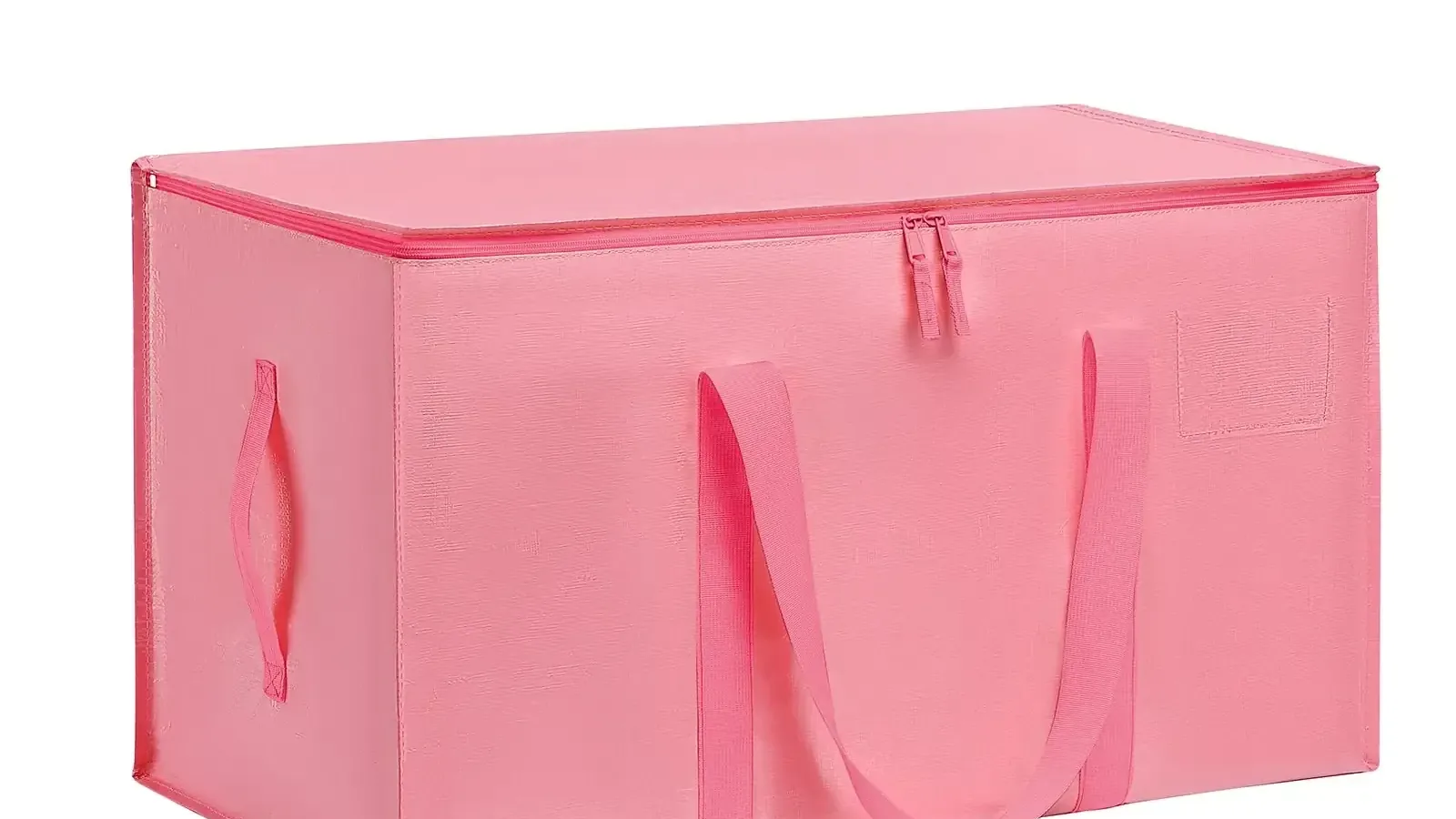
This walk follows one travel storage bag order through the factory floor, station by station, using the production and QC details recorded for this style.
The container was booked for a Tuesday, and the travel storage bags were still flat on a QC table two days before. A buyer's agent walked the line with a clipboard, marking cartons that had passed and cartons that had not. The order had started as a single PO line eight weeks earlier, and the walk from that line to the loading bay is where most surprises live.
The question in the title sounds like it asks for one failure. In practice, a travel storage bag order goes wrong in small increments at six stations, and each station leaves a signature that a buyer can read if they know where to look. This is a walk through those stations, from the PO to the sealed carton.
The PO line that starts the walk
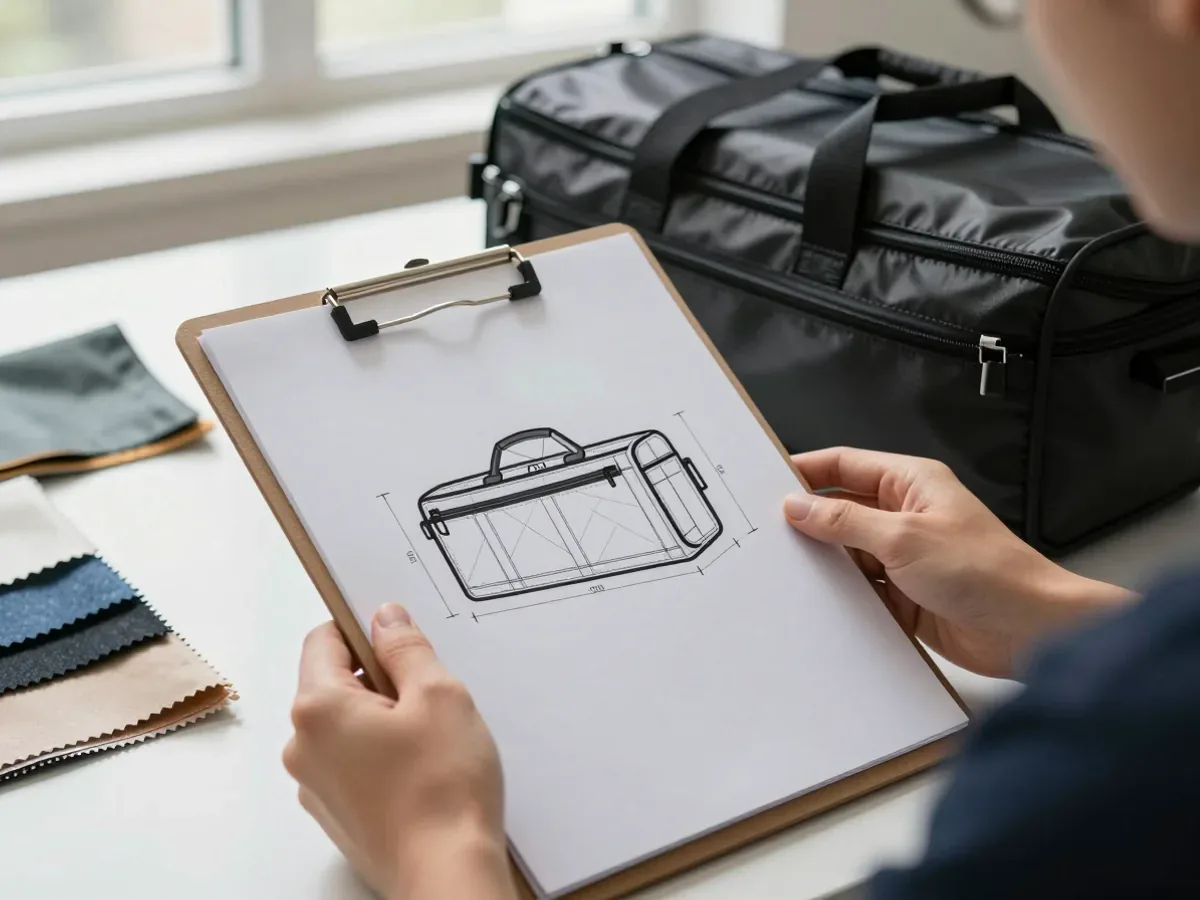
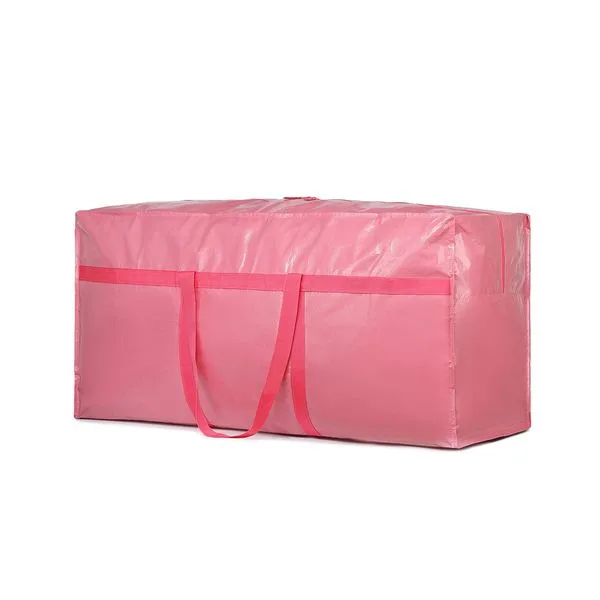
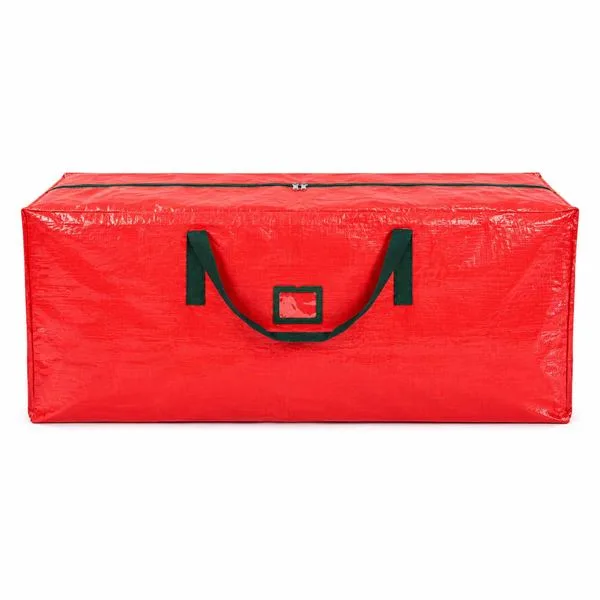
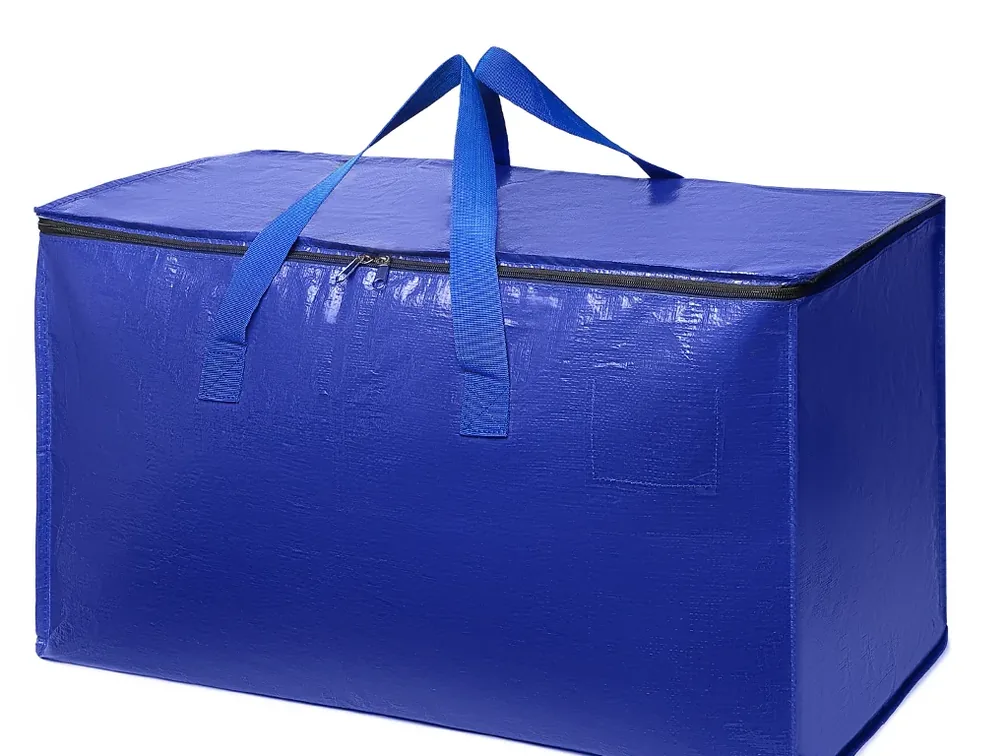
The order began with a line that read like a sentence: travel storage bag, custom size, zippered top, matching handles, clear pocket for a room card. That line is short, and it hides four decisions. The first is size, which is a standard request built from the measurement the buyer sends. The second is the closure, a zippered top that has to sit flat when the bag is full. The third is the handle attachment, which decides how the bag carries weight. The fourth is the clear pocket, which is sized to a room card and nothing else.
A buyer who signs that line without a drawing is trusting the factory to interpret four words. At the PO stage, the check is not whether the line is correct. It is whether the line is complete. Ask for a measured drawing with the handle drop, the zipper length and the pocket position marked. If the drawing comes back with a pocket that fits a business card, the error started here, not on the sewing floor.
At fabric intake, the roll tells the first story
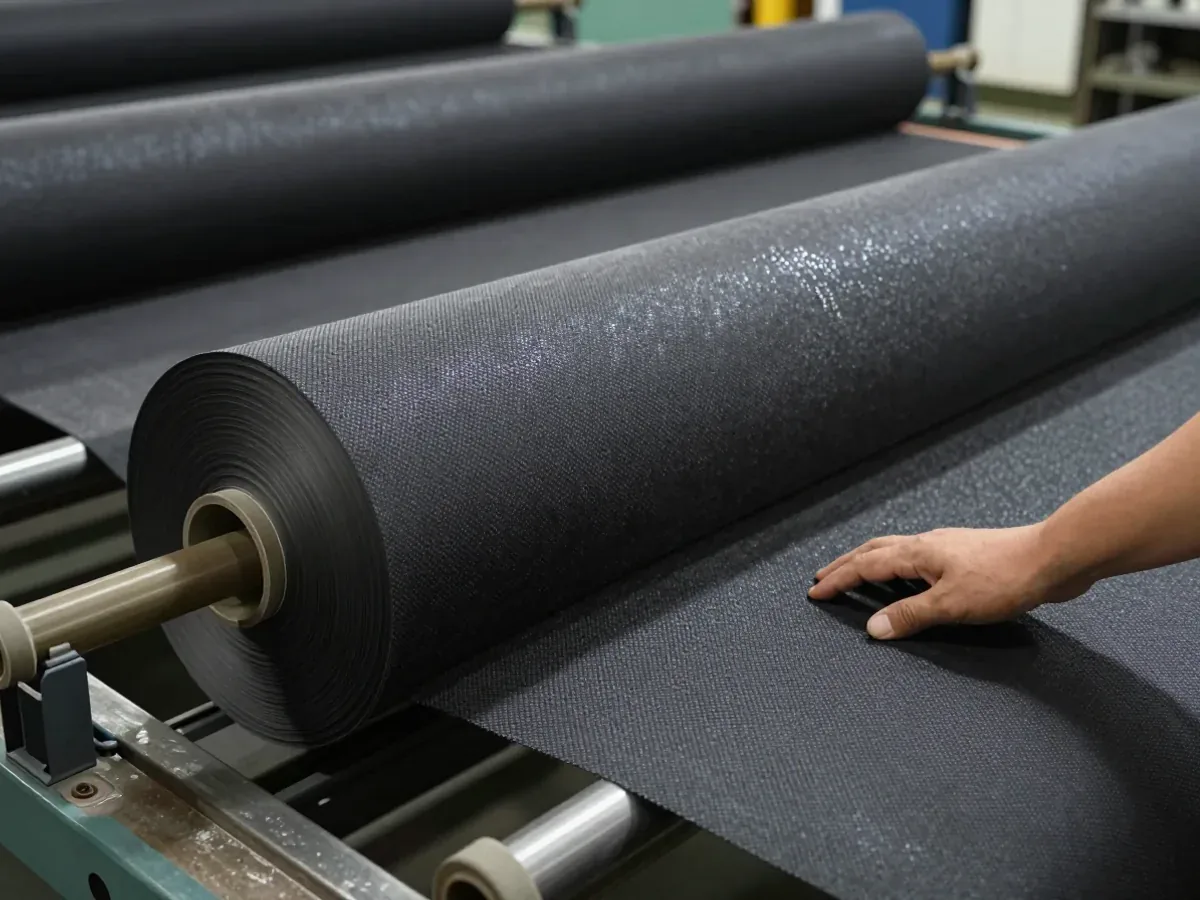
The roll arrives wrapped and labelled, and the first thing to check is not the colour. It is the hand. Two rolls of the same stated weight can feel different, and the difference shows up later as a bag that stands up on a shelf or slumps into a puddle. A buyer walking the line should ask to feel the roll that will actually be cut, not a swatch from a previous order.
The second check at intake is the face of the fabric. A travel storage bag spends most of its life folded, stacked or compressed inside a suitcase, so crease marks and surface scuffs matter more than they would on a tote. Run a hand across the roll and look at it under the same light the retail shelf will use. If the surface shows a sheen that was not in the approved sample, the bag will look cheaper than the photo the buyer approved.
The third check is the backing. Our shells are stitched rather than sealed, so the bag resists a splash but is not waterproof. A buyer who expects a waterproof travel storage bag will be disappointed at the destination, not at the factory. Confirm the backing and the seam treatment at intake, because that is the last moment when the expectation can still be corrected.
At the cutting table, size and nesting decide the yield
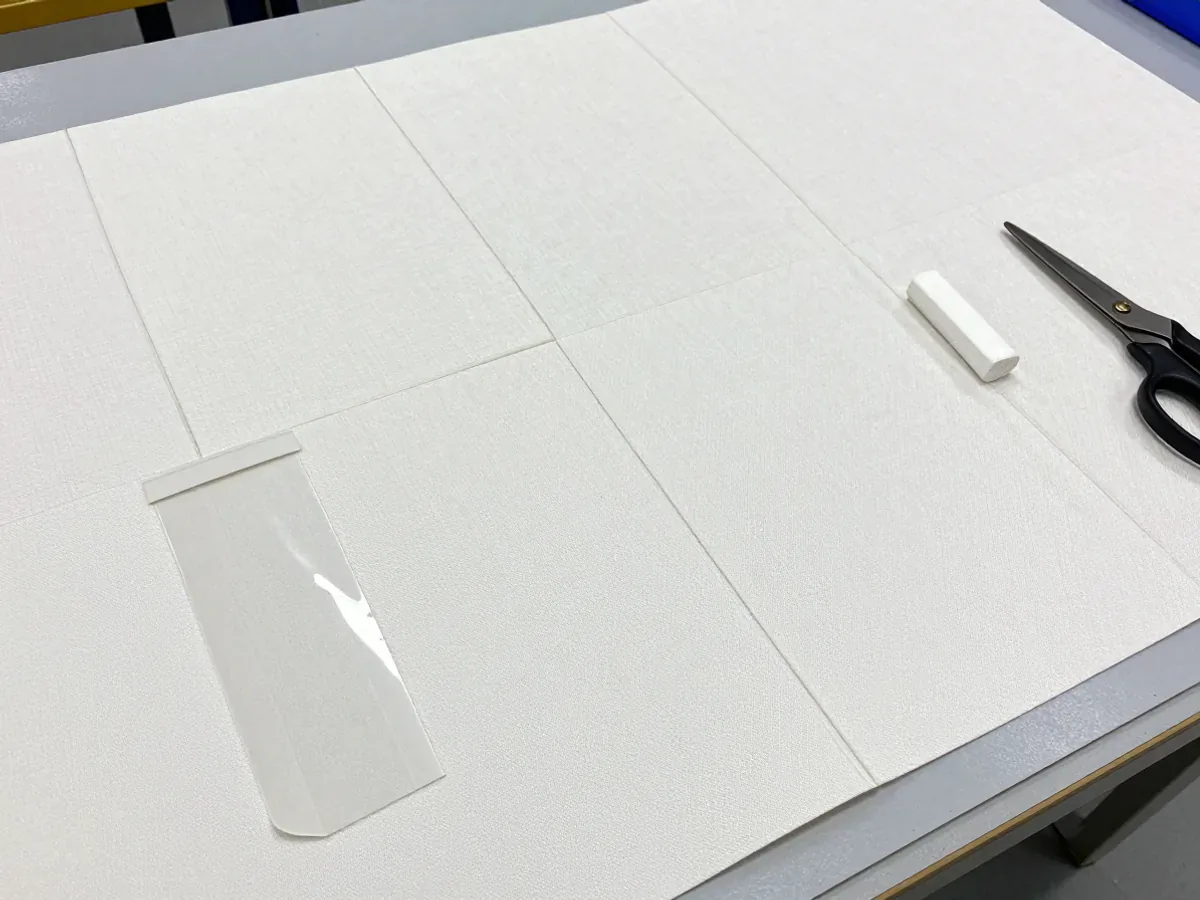
The cutting table is where a custom size becomes real. A buyer who asked for a bag to fit a specific shelf or suitcase will see the pattern laid out, and the layout answers a question the PO could not. Does the finished bag, once filled, still slide into the space it was measured for? A bag cut to the internal dimension of a shelf will not fit once the seams and the zipper tape take their allowance.
Watch the nesting on the table. A good cutter groups the panels so the grain runs the same way on every piece. When the grain is mixed, the bag twists after a few trips and the handles no longer meet evenly. The waste percentage is also visible here. A pattern that wastes a wide strip along the selvedge is not automatically wrong, but the buyer should know whether that waste is priced into the quote or absorbed later as a change.
The last check at this station is the pocket panel. The clear pocket for a room card is a small piece, and small pieces are where a cutter will substitute an offcut. Look at the pocket against the light. If the clear film is cloudy or the stitching runs through the window, the card will be hard to read at a hotel desk.
At the sewing station, handles and zipper get their test
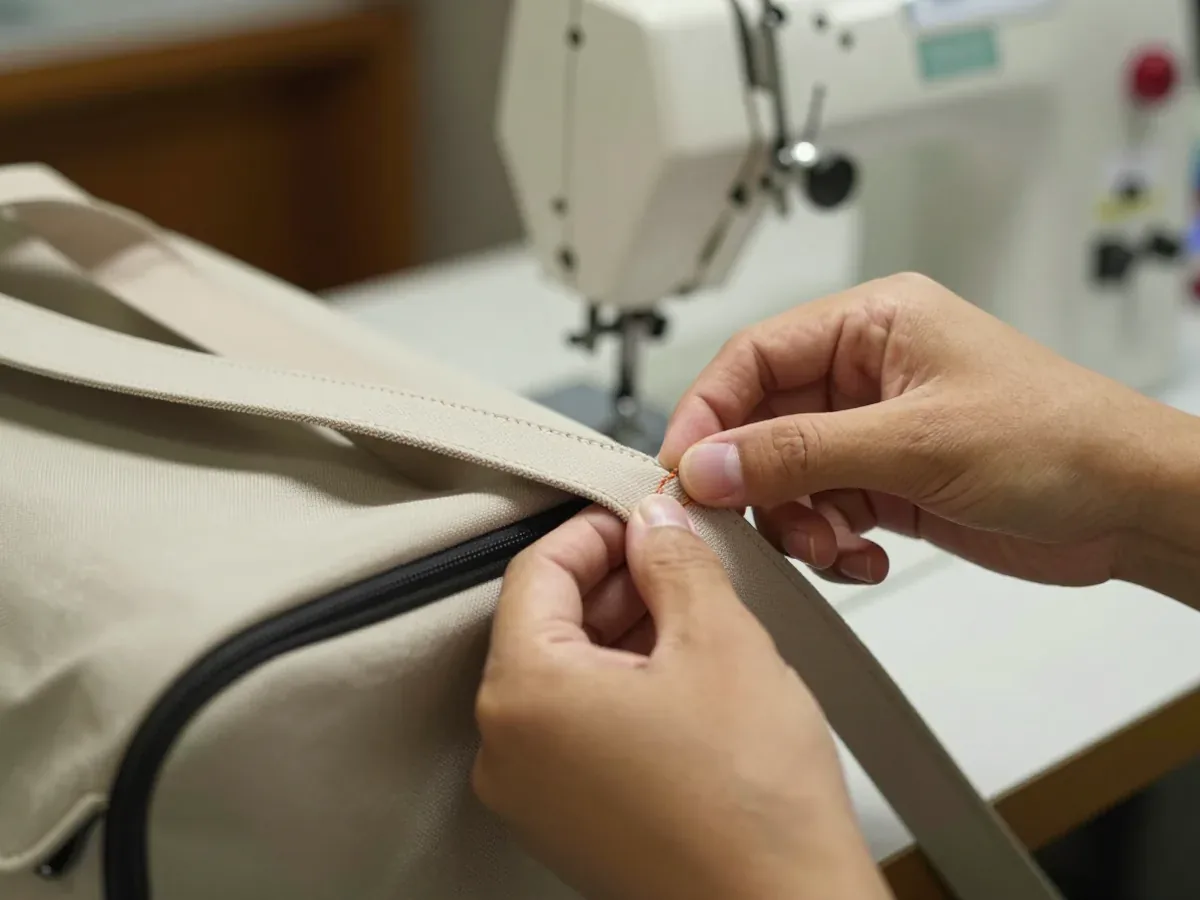
The sewing floor is the slowest station for a travel storage bag, and the reason is the handle. Matching handles look simple on a drawing. On the machine, each handle end has to be caught by a box stitch or a bar tack deep enough to hold a loaded bag. A buyer walking the line should pick up a sewn shell and pull one handle away from the body with steady force. The stitch should hold, and the fabric around it should not pucker.
The zippered top is the second test. Zip the bag closed with nothing inside, then zip it with a folded towel inside. A zipper that runs smoothly when empty and catches when full is a tolerance problem, not a slider problem. Check the tape width and the seam allowance at the ends, because that is where the slider jams first.
The third test is the inside. Turn the bag out and look at the seam allowances. Loose threads are cosmetic. A seam that has been trimmed too close to the stitch line is structural, and it will open after a season of packing and unpacking. This is also the moment to confirm branding, since screen print, a woven label or retail packing are all applied around this stage, and a label sewn into the wrong panel is expensive to move later.
At final QC, the bag is packed and unpacked
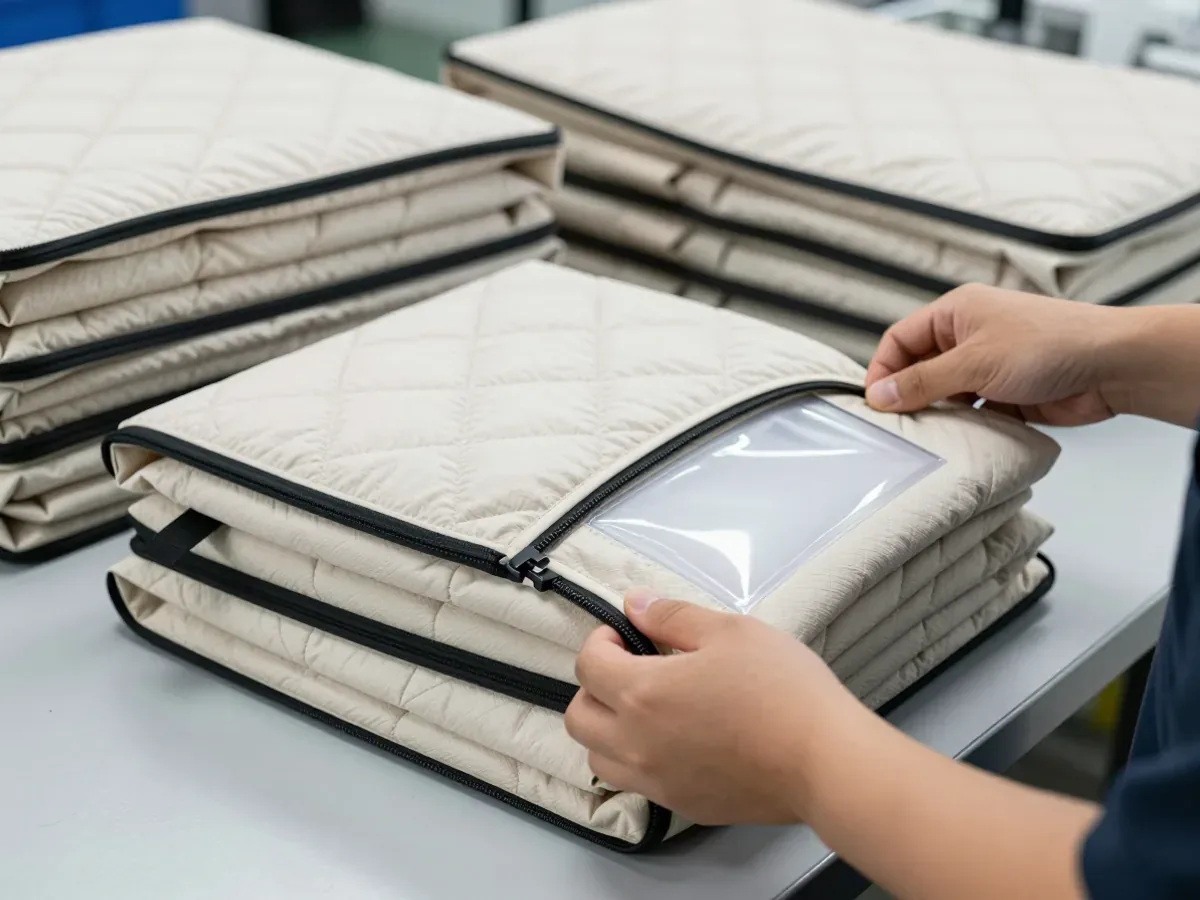
Final QC is where the bag stops being a sample and becomes a unit. Every order passes four QC checkpoints, and the last one is the one a buyer should watch. The inspector packs the bag with a standard load, zips it, lifts it by one handle, then unpacks it and checks the seams and the pocket. That sequence is more useful than a flat visual check, because it imitates the first ten minutes of a trip.
Ask what the standard load is. A travel storage bag tested empty will pass every time. A bag tested with a folded quilt will show whether the zipper tape stretches and whether the bottom seam takes the weight. The clear pocket should be checked with an actual card inserted, because a pocket that fits the drawing but not the card is a retail complaint waiting to happen.
The packing decision also lands here. Retail packing means a polybag, a hang tag, a carton or per store packing lists, and each option changes what the QC inspector has to verify. A hang tag applied at the wrong height is a minor defect on its own. Across a chain delivery, it becomes a sorting problem at the store.
At the loading bay, cartons and labels close the loop
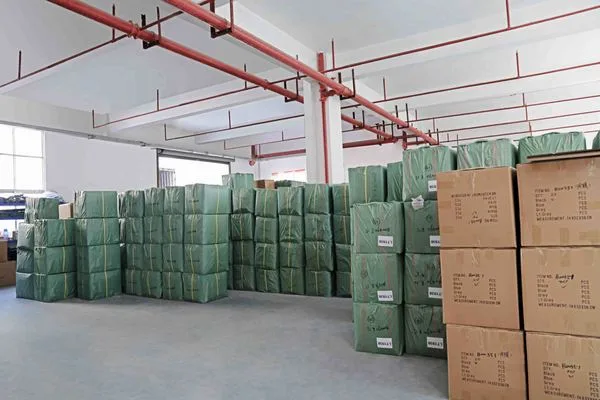
The loading bay is where the walk ends and the paperwork begins. Cartons are sealed, and the label on the outside has to match the packing list inside. A buyer's agent should pull one carton at random, open it, and read the label against the bag. Size, colour and quantity are the three fields that drift, and they drift because the label is often printed from the PO rather than from the actual run.
Check the carton strength against the stack height. A travel storage bag is light, so the carton is usually the weakest part of the shipment, and a crushed corner on arrival is a return even when the bag inside is perfect. Look at how the cartons are stacked on the pallet and whether the bottom layer shows any bowing.
The last check is the count. A short count discovered at the destination is almost impossible to resolve, because the container is already sealed. Count the cartons against the packing list at the bay, and photograph the sealed pallet with the label visible. That photo is the only record that ties the PO to the container.
What the walk leaves a buyer holding
A buyer who walks these six stations ends with a short list rather than a long report. The list has a measured drawing, a fabric hand check, a grain check at the cutting table, a handle pull and a loaded zipper test, a packed and unpacked QC unit, and a carton count at the bay. None of these require a laboratory. All of them require standing in the right place at the right time.
The order in the title goes wrong first at the PO line, because that is where an incomplete sentence becomes a physical bag. The stations after it can only correct so much. A buyer who fixes the line, then watches the roll, the table, the machine, the QC bench and the bay, will usually find that the container leaves with fewer surprises than the one that started this walk.
FAQ
Should a travel storage bag be waterproof?
A stitched shell resists a splash but is not waterproof. If the bag will sit in a damp garage or a rainy transit, ask for the seam treatment and the backing to be specified, and treat water resistance as a separate requirement from the base fabric.
Can the bag be sized to fit a specific shelf or suitcase?
Yes. A custom size is a standard request built from the measurement the buyer sends. Send the internal dimension of the space, not the external one, and ask for a drawing that shows the seam and zipper allowance before cutting.
What does retail packing add to a storage bag order?
Retail packing means a polybag, a hang tag, a carton or per store packing lists. It adds a QC step, because the tag position and the carton label have to match the store's plan, and it changes how the cartons are sorted at the loading bay.