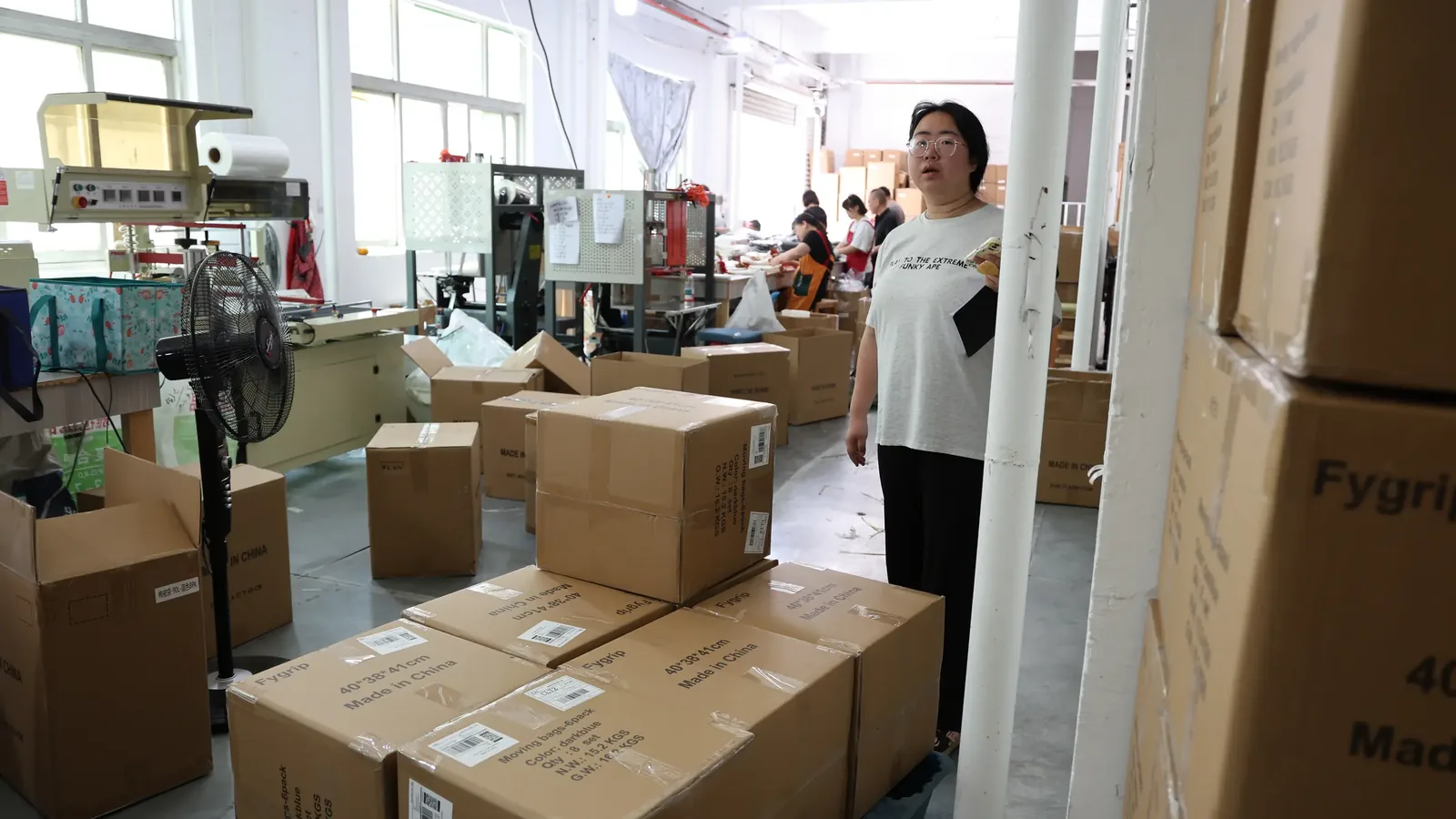
This rewrite draws on the archived OEM canvas tote bag article and the factory spec notes on stitching, branding, sizing and QC checkpoints.
The cartons arrived on a Tuesday, and by Wednesday the returns were already logged. A mid-size brand had ordered 1,200 canvas totes for a spring campaign. The bags were the right colour and the right size. The handles, though, sat two centimetres lower than the approved sample, and the woven label was stitched a few millimetres off centre. Nothing failed outright. Everything felt slightly wrong.
The factory had not changed. It was the same workshop that produced the sample the brand approved three months earlier. The gap opened somewhere between the sample room and the sewing floor, and nobody had written down what "approved" actually meant.
The Cartons That Came Back Wrong

The first carton was opened at the brand's warehouse, not at the factory gate. That timing matters. By the time a buyer sees the goods, the factory has already been paid for the balance and the container has already cleared. A handle that sits low is now a warehouse problem, not a production problem.
Store staff noticed it first. A tote that hangs shorter than a competitor's sits awkwardly on a shoulder, and customers put it back on the shelf. The brand's own product photos showed the longer drop. Two customers emailed to ask whether they had received a different model.
The cost was not catastrophic. It was worse than that: it was slow. Replacing 1,200 bags meant a second production run, a second freight booking and a launch date that moved. The brand had done the hard part, which was designing a good bag. It lost the easy part, which was proving the factory could repeat it.
Tracing the Order Back to the Sample Room
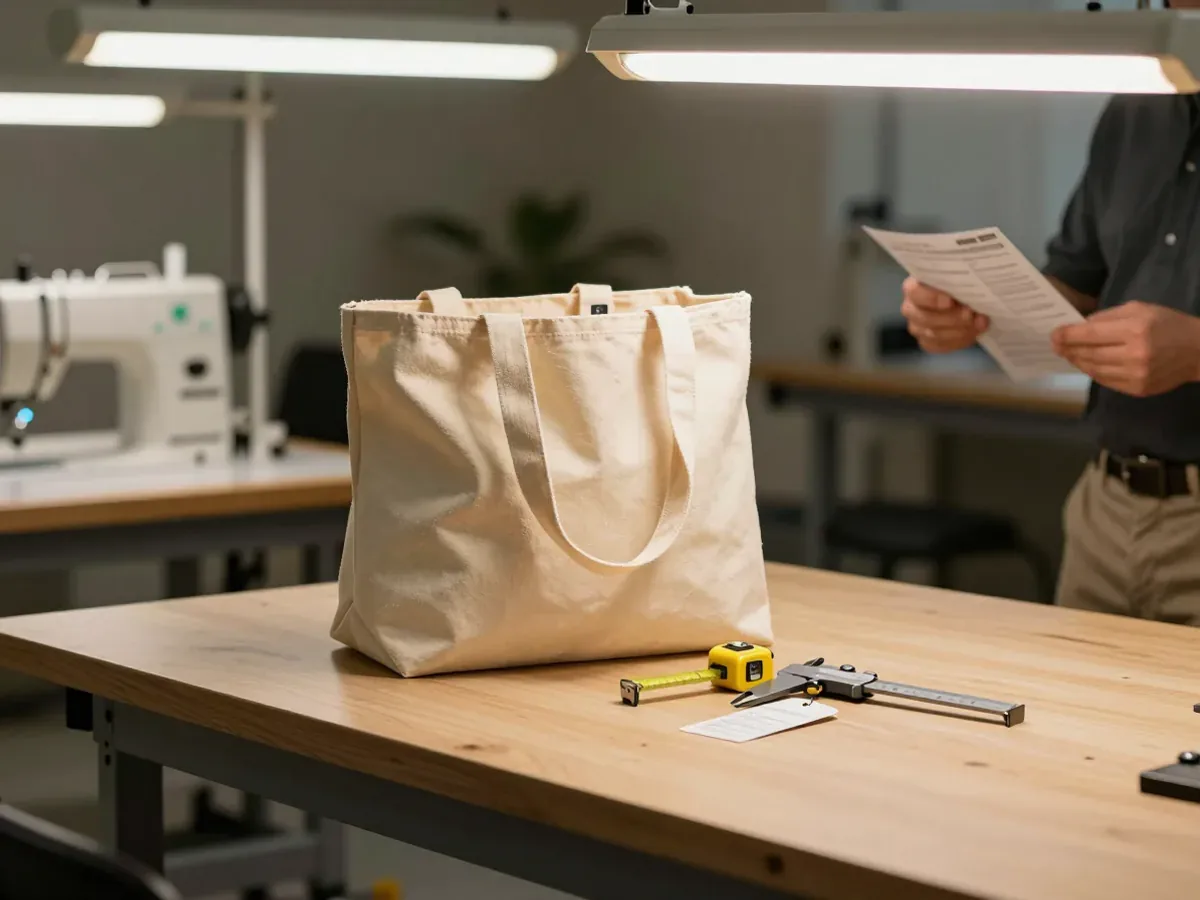
Three months earlier, a sample had arrived at the brand's office in a plain polybag. It looked right. The buyer photographed it on a desk, sent a short email saying "approved, go ahead", and the order moved to production.
That single email carried more weight than any purchase order. It was the only document that said what the bag should be. It did not say where the handle should attach, how wide the stitching should be, or which label position was correct. It said the bag looked fine.
The factory, reasonably, made what it remembered making. A sample room and a sewing floor are different rooms with different people. The sample maker had the original measurements in front of them. The line supervisor had a work ticket with a size, a colour and a quantity. Between those two sets of information, the handle drop disappeared.
The Spec Sheet Line Nobody Read Twice
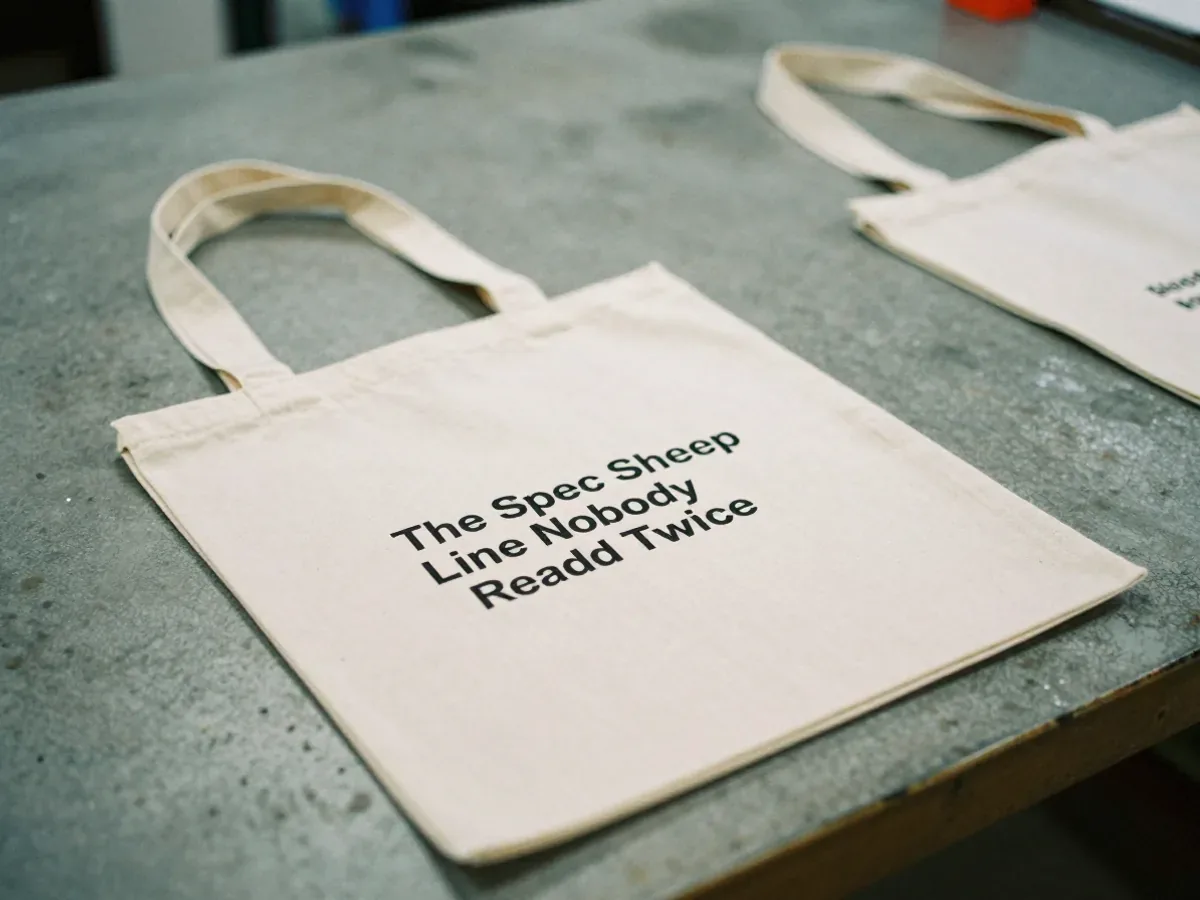
The purchase order had a line that read "canvas tote, custom size, screen print, woven label". Every word was true. None of it was measurable.
A custom size is a normal request, and it is built from the buyer's own measurement. That means the measurement has to exist somewhere in writing, in the unit the factory uses, with a tolerance attached. The same applies to the handle. Handles stitched through the body behave differently from handles tacked on at the top edge, and a buyer who does not specify which one they approved has approved both.
Branding had the same hole. Screen print, a woven label and retail packing are three separate decisions, and each one has a position, a size and a proof. A logo is proofed before production whatever the process, but a proof only protects the buyer if someone signs it and the signed version reaches the line.
The spec sheet was not wrong. It was thin. A thin sheet pushes every judgement call down to whoever is standing at the machine.
What the Four QC Checkpoints Would Have Caught
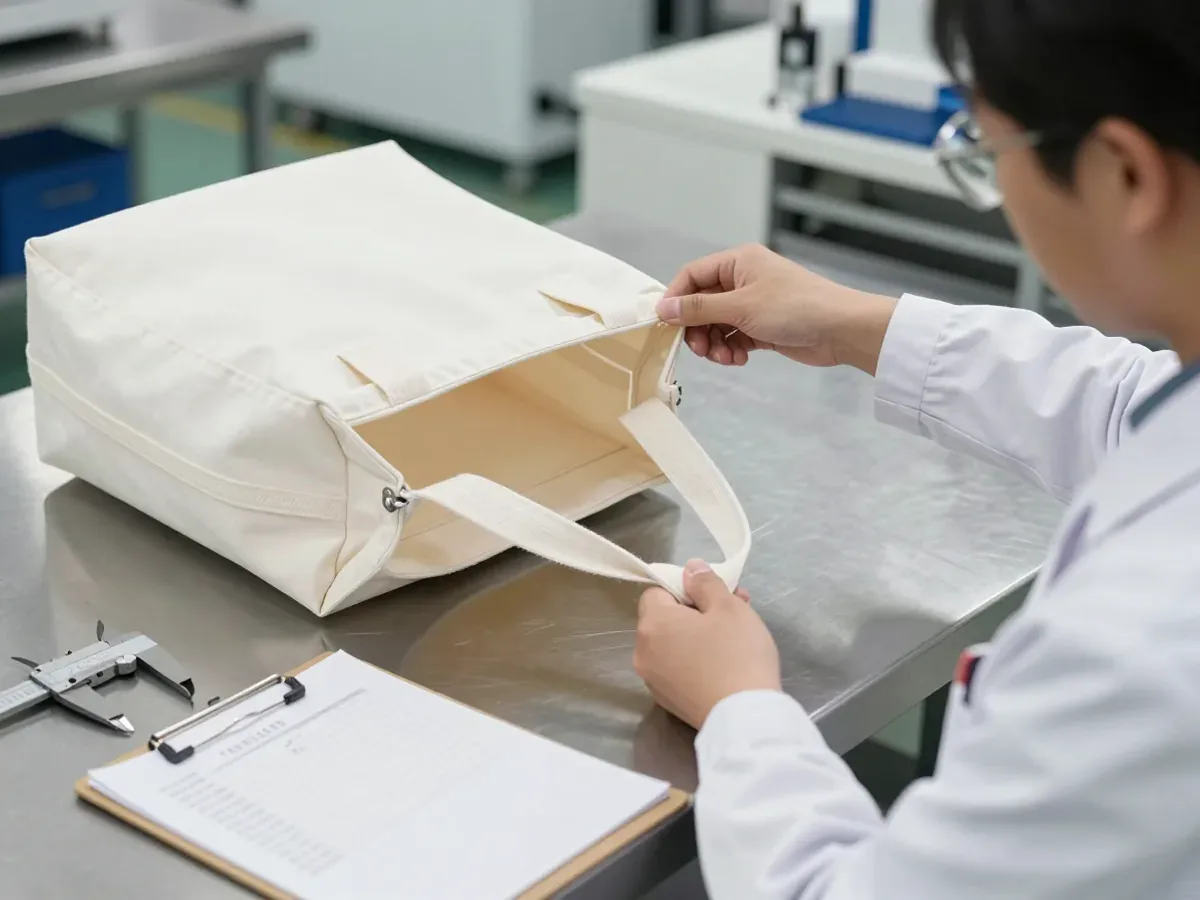
Most factories run inspection at set points rather than at the end. Every order that moves through our lines passes four checkpoints, and the handle drop would have surfaced at the second one, where the first assembled bag is measured against the approved sample rather than against memory.
The first checkpoint looks at incoming fabric and trim. A canvas shell that is stitched rather than sealed resists a splash but is not waterproof, and a buyer who expects waterproof has already made a decision the fabric cannot support. Catching that at intake is cheap. Catching it at retail is not.
The second checkpoint compares the first off-line bag to the signed sample. The third checks branding: print position, label placement, and whether the proof on file matches what is running. The fourth happens before packing, when the cartons, polybags and hang tags are checked against the retail packing list.
None of these checkpoints need a large factory. They need a sample that lives on the line, a signed proof, and someone with authority to stop the run.
OEM, ODM or Private Label: Which Model Fits the Brand
The brand in this story assumed it was ordering OEM, where the factory produces the buyer's own design. In practice it had ordered something closer to private label, because the only thing it truly specified was the logo.
The distinction is not academic. OEM means the factory builds to your design, which puts the burden of a complete specification on you. ODM means you take an existing factory design and add your branding, which shifts more of the specification to the factory but limits how much you can change. Private label tote bags sit in between: a factory product carrying your logo, packaging and label artwork.
A brand with a clear handle drop, a set stitch density and a strong view on label position should be ordering OEM and should expect to supply those numbers. A brand launching its first line with a limited design team may be better served by private label, where the factory's existing construction is already proven and the buyer's decisions are confined to branding and packing.
The Evidence a Buyer Should Collect Before Signing
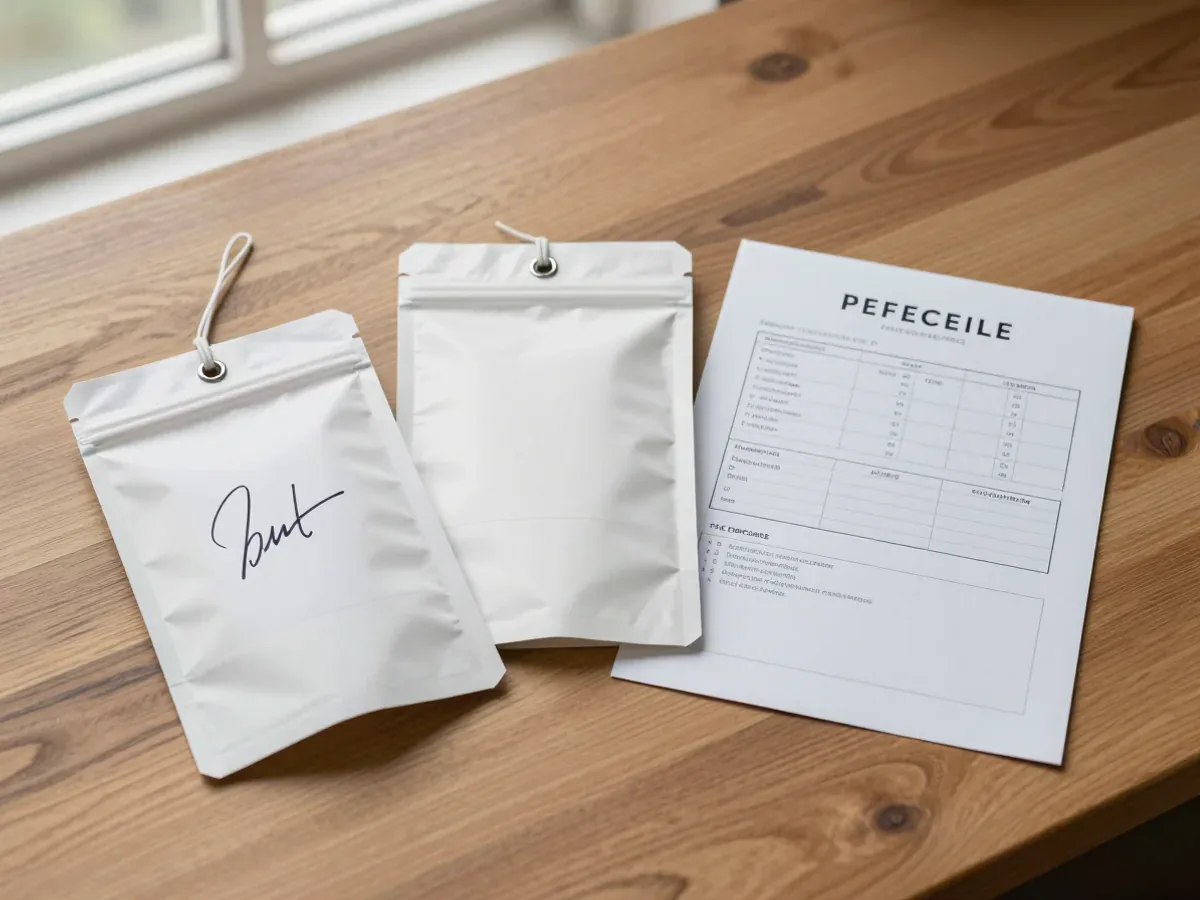
The useful question before signing is not how big the factory is. It is what will still be true on the sewing floor six weeks after the buyer leaves.
Start with a signed sample that carries measurements, not just a photograph. The handle attachment, the stitch type and the label position should be written on the sample tag or in a document that references it. A second sample should be kept sealed at the factory as the reference piece.
Ask for the branding proof in writing. Screen print, heat transfer and woven labels all need an approved artwork file with position and size marked. Retail packing needs its own list: polybag, hang tag, carton, and per store packing lists if the delivery goes to multiple locations.
Ask which checkpoints the order will pass and who signs each one. Ask whether third-party inspection is allowed, and get the answer before the deposit rather than after. Certifications are worth checking, and a factory that cannot produce them or explain their scope is telling you something.
Finally, put the commercial terms in the same document as the specification. MOQ, sample lead time and production lead time belong next to the handle drop, because they are all part of the same promise.
A Short Checklist for the First Canvas Run
A first canvas order is a test of the buyer's paperwork as much as the factory's sewing. The brands that avoid the second run are usually the ones that spent an extra week on documents before the first one.
- Signed sample with measurements written on it, plus a sealed reference sample held at the factory
- Spec sheet with size, tolerance, handle attachment, stitch type and fabric weight in numbers
- Branding proof approved in writing for print, label and packing
- Retail packing list covering polybag, hang tag, carton and any per store split
- Named QC checkpoints with a stop authority at each one
- Certification documents checked for scope, not just presence
- Third-party inspection clause agreed before deposit
- MOQ, sample time and production time recorded in the same document as the spec
None of these items is expensive. Each one closes a gap where a factory has to guess, and guessing is where a good bag turns into a return.
FAQ
What MOQ and lead time should a brand expect from a canvas tote bag manufacturer?
Most canvas bag factories set minimums somewhere between 300 and 1,000 pieces, with samples taking roughly 7 to 15 days and production running 30 to 45 days. Treat those as ranges to confirm in writing rather than fixed numbers, and check whether the MOQ applies per colour or per style.
How many sample rounds does a new canvas tote size usually need?
A new size typically takes one sample round when the buyer supplies a complete measurement. A new colour is matched to a Pantone reference and usually needs no separate construction sample. Extra rounds appear when the brief is incomplete, not when the bag is complex.
Should a first OEM canvas tote order start small?
A small first order is the cheapest way to test whether the factory can follow a specification. It also exposes the paperwork gaps while the volume is still low. The trade-off is that small runs carry a higher unit cost, so the test order should be sized to prove the process rather than to hit the best price.
What is the difference between OEM and private label tote bags?
OEM means the factory produces your design, so you own the specification and the factory builds to it. Private label means you take a factory product and add your logo, packaging and label artwork, so the construction is already set and your decisions focus on branding.