
The “Hidden Cost” of Free Boxes: Labor & Tape
Free moving boxes often introduce significant hidden expenses that hurt your bottom line. These costs come from inefficient labor spent sourcing inconsistent sizes and the extra materials needed for reinforcement. Choosing the right packing supplies is critical for protecting profit margins on every job.
This cost analysis compares bags and boxes on a price-per-move basis, explores reusability to calculate long-term ROI, and shows you where to buy wholesale to maximize your margins.

The “Hidden Cost” of Free Boxes: Labor & Tape
Free moving boxes introduce significant hidden expenses that can outweigh initial savings. These costs stem from the labor inefficiency of sourcing and packing inconsistent boxes, and the material costs for extra tape and padding needed for reinforcement.
The Real Cost of “Free” Labor
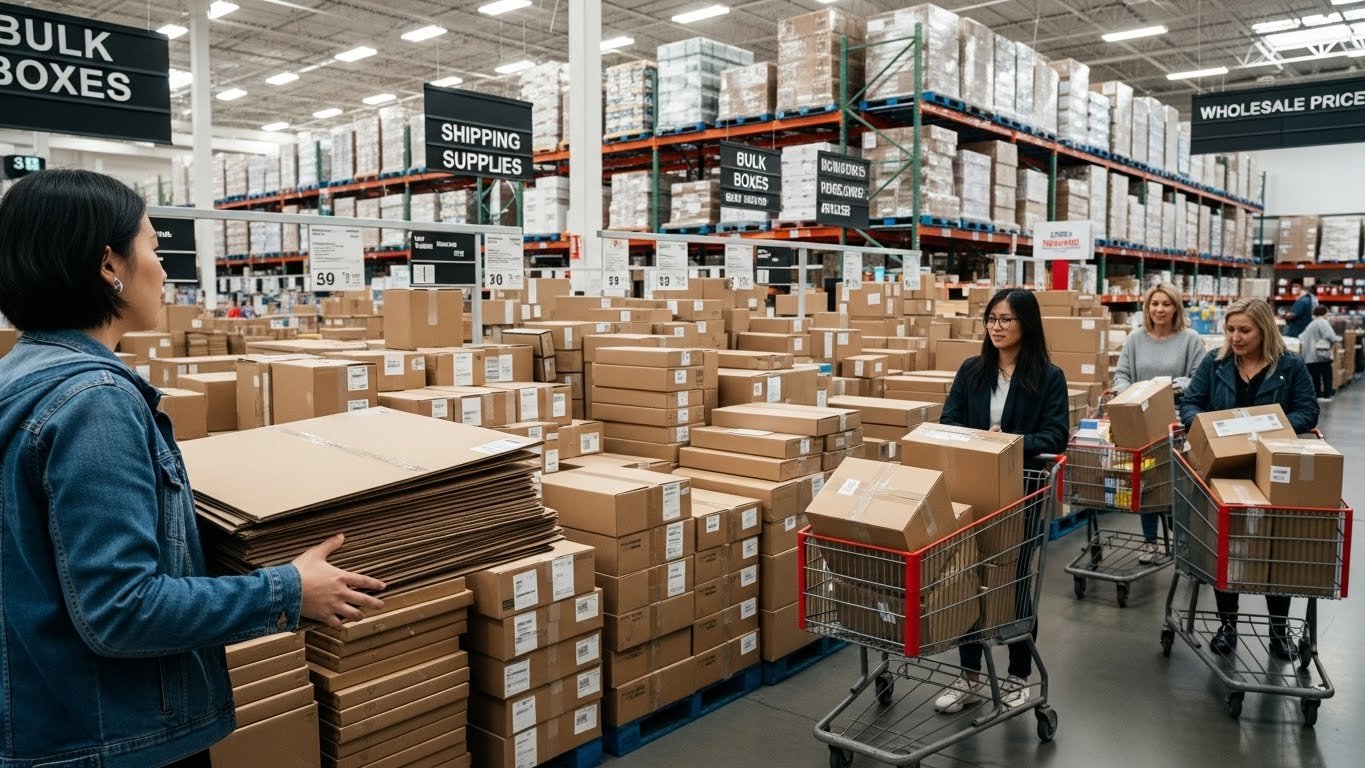
Sourcing “free” boxes from grocery stores, liquor stores, or online marketplaces is a direct drain on operational time. Every hour an employee spends hunting for, sorting, and assessing used boxes is an hour not spent on billable work. This inefficiency extends directly to the job site.
Inconsistent box sizes and questionable structural integrity make packing and loading a truck a slow, frustrating puzzle. Standardized containers stack predictably and securely, but a mix of random boxes creates instability and wasted space. This extends the time needed for each move, cutting into profit margins.
- ❌ Wasted Man-Hours: Time spent sourcing and sorting boxes directly increases labor costs without generating revenue.
- ❌ Packing Inefficiency: Crews work slower when they can’t establish a consistent rhythm with uniform boxes.
- ❌ Insurance Liability: Many professional movers refuse to insure items packed in damaged or unsuitable customer-provided boxes, creating a point of friction and potential disputes if something goes wrong.
The Compounding Expense of Supplementary Materials
Salvaged boxes are rarely transport-ready. They often have old labels, weak spots, or missing flaps that demand significant reinforcement. This is where the costs of supplementary materials begin to accumulate, turning “free” into a significant expense.
A typical roll of quality packing tape costs around $5, and reinforcing a full household of weak boxes can easily consume several rolls. Add in the cost of bubble wrap (around $20 per roll) and packing paper ($25 per 100 sheets) needed to compensate for poor box quality, and the total can quickly approach $300 for a standard move.
⚠️ Using the wrong materials only makes things worse. Attempting to use masking tape or duct tape often results in box failure during transit, leading to damaged goods and an unhappy customer.
Risk and Liability: The Price of Unreliable Boxes
The biggest hidden cost is the risk associated with structural failure. A used box that has been exposed to moisture or has hidden wear can collapse without warning. The consequences impact your finances, your team, and your reputation.
When a box breaks, the immediate result is often damaged client possessions, which leads directly to insurance claims and out-of-pocket costs. But the fallout doesn’t stop there.
- 🚨 Potential for Injury: A collapsing stack of boxes can cause serious injury to your movers, leading to workers’ compensation claims, lost time, and a damaged safety record.
- 🚨 Customer Dissatisfaction: Damaged items and a chaotic move create a negative customer experience, which translates into poor reviews and lost referrals.
- 🚨 Reputational Harm: Arriving with a truck full of mismatched, failing boxes undermines the professional image you work hard to build.

How Many Times Can You Reuse a Moving Bag?
There is no single standard for how many times a moving bag can be reused. The actual number depends entirely on material quality, construction, and usage intensity. A heavy-duty woven polypropylene bag with reinforced stitching may last for dozens of moves, while a lower-grade bag might not.
Key Factors That Determine Moving Bag Durability
The lifespan of a moving bag isn’t a fixed number; it’s a direct result of its engineering and materials. Professional moving companies need bags that can withstand repeated, heavy use. In our experience, these are the critical components that define a bag’s reusability:
- ✅ Material Selection: The fabric is the foundation. Woven polypropylene (PP) is a top choice because it’s lightweight yet highly resistant to tears and punctures. Adding a PE coating makes the bag waterproof, protecting contents and extending the material’s life.
- ✅ Handle Reinforcement: Handles are the most common point of failure. Look for bags with double-stitched webbing that wraps around the bag for support. Properly reinforced handles should comfortably support loads up to 25 kg without tearing.
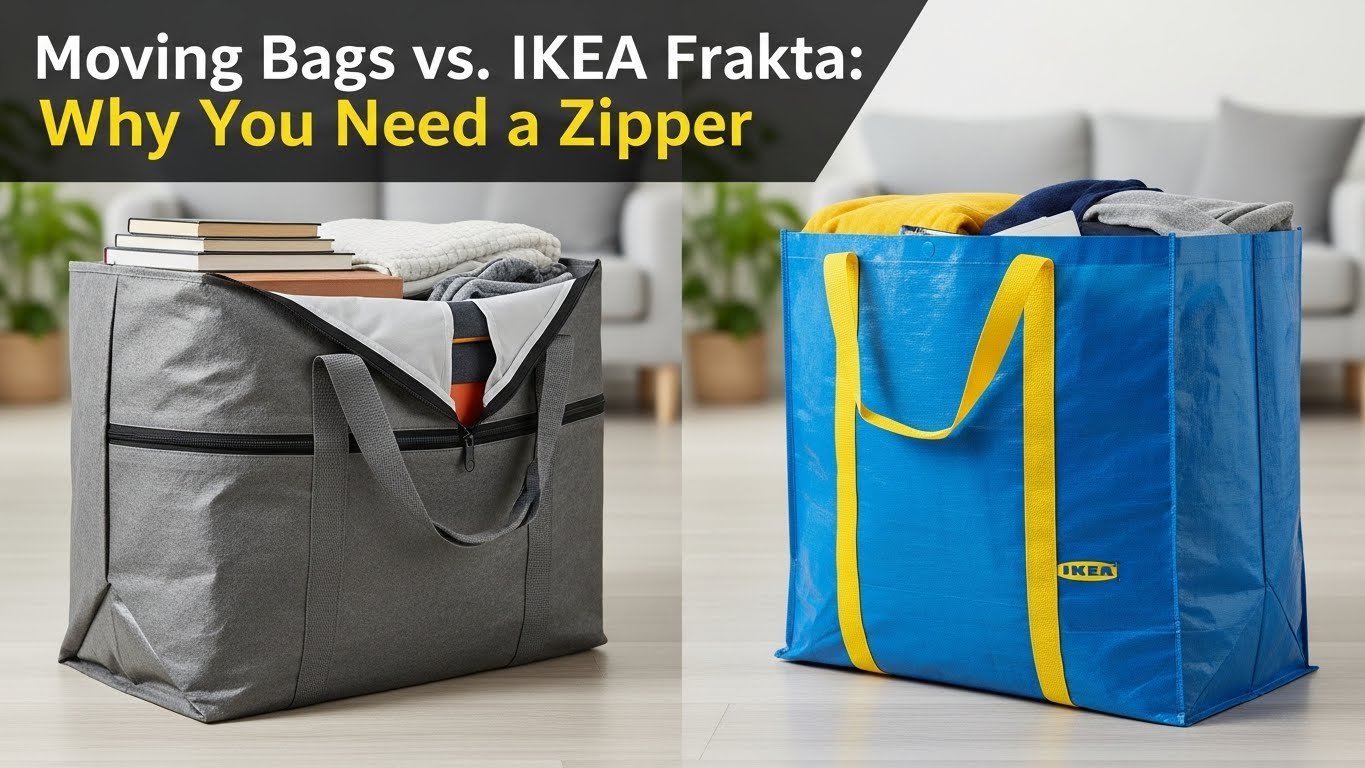
- ✅ Stitching and Closures: Weak seams and cheap zippers will quickly render a bag useless. Reinforced stitching, durable piping along the edges, and heavy-duty zippers are essential for surviving the stress of multiple jobs.
- ✅ Structural Design: A bag designed with a rigid, box-like shape holds its form, making it easier to stack in a truck and less likely to deform over time. This structural integrity is crucial for repeated professional use.
Why Moving Bag Data Differs from Other Reusables
You might see statistics about reusable grocery bags lasting for 100+ uses, but that data doesn’t apply to the professional moving industry. The use cases are fundamentally different, making direct comparisons misleading.
Here’s why you can’t rely on consumer bag metrics:
- ⚠️ Different Use Cases: A moving bag endures extreme stress—heavy loads, abrasive surfaces, and constant friction inside a truck. This is far more demanding than a trip from the grocery store.
- ⚠️ Distinct Material Standards: Industrial moving bags are built with materials specified for high load-bearing capacity and tear resistance. Consumer bags are designed for light, casual use.
- ⚠️ Lack of Specific Studies: Nearly all public data on reusability focuses on consumer shopping bags. There are no large-scale, independent studies that track the lifespan of commercial-grade moving equipment.
How to Calculate the Lifespan of Your Own Moving Bags
Instead of relying on a generic number, the best approach is to track the performance of your own inventory. This gives you a real-world understanding of your equipment’s value and helps you perform an accurate cost analysis. Setting up a system is straightforward.
- Establish a Tracking System: Assign unique identifiers to small batches of new bags. Use a simple spreadsheet to log how many jobs each batch completes.
- Define Wear-and-Tear Thresholds: Create a clear inspection checklist for your team. What are the signs a bag should be retired? This could include torn handle seams, broken zippers, or significant fabric tears that compromise safety.
- Calculate Cost-Per-Use: Once you have an average number of uses before retirement, divide the bag’s initial purchase price by that number. This reveals the true cost of each bag per job and helps you evaluate if your supplier is providing good value.
- Set a Retirement Policy: Implement a non-negotiable company policy for retiring a bag. This ensures your equipment always looks professional and, more importantly, prevents bag failures that could damage client property or cause injuries.

Reselling Used Bags: A New Revenue Stream for Movers
Reselling used bags offers movers a lucrative revenue stream by tapping into the growing second-hand market. This business extension leverages existing logistics and customer access to capture items for resale, with potential profit margins exceeding 60% and minimal additional investment.
The Financial Potential of the Used Bag Market
The second-hand market isn’t just a trend; it’s a rapidly expanding industry. For a moving company, this growth represents a direct opportunity to diversify income by tapping into items you already handle. The market for used bags is particularly strong.
Here’s a look at the numbers driving this opportunity:
- ✅ Market Growth: The second-hand bag market is projected to grow from USD 7.123 billion to over USD 12.5 billion by 2035.
- 🚀 Steady Expansion: This growth reflects a stable compound annual growth rate (CAGR) of 5.8%, indicating consistent long-term demand.
- 💡 Consumer Demand: The expansion is fueled by consumer interest in sustainable fashion and the accessibility of online resale platforms.
Profit Margins and Revenue Expectations
Entering the resale market can significantly impact your bottom line. A cost analysis shows that the profit potential is substantial, especially when you can acquire inventory at a low cost. Moving companies are uniquely positioned to source bags directly from clients who are downsizing.
Gross profit margins in luxury resale often range from 30% to over 60%. Sourcing bags through wholesale channels or direct buyback programs can reduce acquisition costs by 40-60% compared to typical consumer-to-consumer prices. This advantage can translate into thousands of dollars in extra monthly income, with even mid-range bags adding hundreds to your revenue.
Strategic Considerations for Movers
Integrating a resale operation into your moving business requires a clear strategy. In our experience working with logistics professionals, leveraging existing assets is the key to minimizing costs and maximizing returns. Your team, trucks, and customer relationships are your biggest advantages.
Here are a few key steps to get started:
- Establish an Acquisition Process: Create a simple buyback program to acquire used bags from customers during a move. Offer a small credit or cash for bags they no longer want, turning a client’s decluttering into your inventory.
- Manage Platform Fees: Carefully analyze the consignment fees on resale platforms. These can vary widely, from 15% to 50% on sites like The RealReal and Fashionphile. Factoring this into your cost analysis is critical for profitability.
- Leverage Existing Infrastructure: Use your current logistics network, storage space, and customer relationships to operate the resale arm. This approach avoids significant new capital investment and keeps operational overhead low.
Get Durable, Branded Moving Bags Built for Your Business
We manufacture heavy-duty moving bags engineered for commercial use. Customize everything from materials and load capacity to full-color logo printing. With low MOQs, fast production, and free digital mockups in 12 hours, you get a reliable solution tailored to your brand’s specific needs.


Case Study: ROI of Switching a Fleet to Bags
While direct case studies on switching fleets to physical bags are not available, data on fleet optimization for moving companies shows significant ROI. Solutions like telematics and flexible rentals can reduce operational costs by 12-56% and improve processing times by over 30% through better fuel and labor management.
The data provides a clear blueprint for how moving companies can achieve major savings by improving operational efficiency. Investing in better tools—whether it’s software or physical equipment—directly impacts your bottom line. While the following examples focus on vehicle management, the principles of reducing costs and speeding up processes apply directly to packing and handling materials.
ROI from Fleet Management Technology
Investing in modern fleet management technology yields measurable returns by optimizing routes, reducing idle time, and improving vehicle maintenance. For example, Jackson Moving and Storage transformed its operations after adopting new tools.
- ✅ 56% Reduction in Operational Costs: The company drastically cut expenses through more efficient fleet deployment and resource management.
- ✅ 31% Reduction in Processing Time: Better logistics and tracking streamlined their entire workflow from start to finish.
- ✅ Industry-Wide Savings: General data shows fleet tech can decrease fuel and labor costs by 12% and cut accident-related costs by 19%.
Telematics and Driver Behavior Improvements
Monitoring driver behavior with telematics is another high-return investment. By tracking metrics like speed, acceleration, and braking, companies can train safer, more efficient drivers. Alliance Leasing saw incredible results by implementing Zubie Fleet Connect.
- 🚀 257% Estimated ROI: The savings generated far outweighed the cost of the telematics system.
- ✅ $1,029 in Annual Savings Per Vehicle: These savings came from reduced fuel consumption, lower maintenance needs, and fewer incidents.
- ✅ 15% Reduction in Insurance Premiums: Proving safer driving habits to insurers led to direct cost reductions.
Flexible Fleet Strategies vs. Ownership
High capital expenditure on vehicles can limit a moving company’s growth. A flexible fleet strategy, like the one used by Dose Moving & Storage, avoids the financial burden of ownership while allowing for scalability.
In our experience, this asset-light approach also applies to packing materials. Switching from disposable boxes to a fleet of durable, reusable moving bags reduces constant repurchasing costs and lets you scale your inventory based on real-world demand.
- ✅ Avoid High Capital Expenditure: Using rentals or leasing avoids tying up cash in depreciating assets.
- ✅ Scale with Demand: Easily add or remove vehicles to match seasonal peaks and troughs, keeping your fleet perfectly sized.
- ✅ Lower Fixed Costs: Reduce long-term expenses related to maintenance, storage, and insurance that come with vehicle ownership.

Where to Buy Wholesale to Maximize Margins
💡 To maximize margins, moving companies must strategically source supplies directly from wholesale partners. This involves identifying suppliers specializing in durable moving equipment, negotiating bulk pricing, and prioritizing industry-specific partnerships over general wholesale channels to ensure product quality and cost-effectiveness.
Key Criteria for Wholesale Moving Supply Partners
Finding the right supplier is about more than just a low price. The quality of your supplies directly impacts your operational efficiency and brand reputation. A cheap, flimsy bag that fails mid-move costs far more than a durable one in the long run. In our experience, focusing on partners who understand the demands of the moving industry is critical.
Look for these core qualities in any potential supplier:
- Specialization in Moving Equipment: Prioritize suppliers who manufacture products for professional use. General-purpose bags won’t withstand the repeated stress of heavy loads. You need gear like heavy-duty bags with reinforced stitching, industrial-grade dollies, and thick protective padding.
- Bulk Order Capability: Your supplier must be able to handle large, consistent orders without stockouts. A reliable supply chain ensures you always have the equipment needed to serve your customers, especially during peak seasons.
- Product Durability and Quality: ⚠️ Always request samples. Test the material strength, handle attachments, and zipper construction yourself. Verifying the build quality firsthand helps you avoid costly failures, replacements, and potential damage to client belongings.
Effective Sourcing and Negotiation Tactics
Once you’ve identified potential suppliers, your next step is to secure terms that protect your margins. Smart negotiation goes beyond the sticker price and sets you up for a profitable long-term relationship.
Use these tactics to get the best value:
- Request Tiered Pricing: Ask for a clear pricing breakdown based on order volume. Understanding the cost-per-unit at different quantities helps you optimize your purchasing strategy and see the direct financial benefit of placing larger orders.
- Negotiate Beyond Unit Price: Discuss the complete terms. Ask about shipping arrangements (like Delivered Duty Paid – DDP), flexible payment schedules, and discounts for signing a long-term contract. These factors can significantly reduce your total landed cost.
- Explore Customization Options: Inquire about branding opportunities. Adding your company logo to moving bags or other supplies enhances professionalism and turns your equipment into a mobile marketing asset.
Sourcing Directly from a Manufacturer Like TIIOCTI
The most effective way to control costs and ensure quality is to partner directly with a specialized manufacturer. Cutting out the middleman gives you access to factory pricing, deeper customization, and direct communication with the team producing your equipment. This approach transforms a simple purchase into a strategic investment.
Working with an industry-focused manufacturer like us provides distinct advantages:
- ✅ Industry-Specific Design: We produce heavy-duty moving bags engineered for professional movers. Features like reinforced webbing handles, waterproof PE-coated fabrics, and heavy-duty zippers are standard because we build for the job.
- ✅ Cost-Effective Customization: Get direct-from-factory pricing on custom orders. We offer flexible MOQs (starting at just 500 pieces), provide free design mockups to visualize your brand, and support Pantone color matching to ensure perfect consistency.
- ✅ Assured Quality and Compliance: Our entire production process is certified by SGS and BSCI. This guarantees that every product meets international quality standards and is manufactured under ethical conditions, giving you peace of mind.

Frequently Asked Questions
Are moving bags cheaper than boxes?
It depends on your needs. For a single move, cardboard boxes are the cheapest upfront option at $1–$3 per box. Moving bags are generally cheaper than hard plastic totes but can cost more than cardboard initially.
The long-term value is where bags excel. A set of 5–10 reusable bags might cost $50–$120, but they can be used for multiple moves, making them more cost-effective over time.
Can you reuse moving bags?
✅ Yes. Moving bags are designed for multiple uses. Materials like Woven Polypropylene (Woven PP) are specifically chosen for their durability and strength, allowing the bags to handle repeated packing and transport cycles without tearing.
How much do moving boxes cost?
Individual cardboard moving boxes typically cost between $1 and $3 each. Buying in bulk is more economical—a bundle of 15 large boxes can bring the per-unit cost down to about $1.60.
Keep in mind that a complete set of packing supplies for an entire move, including various boxes, tape, and padding, can range from $200 to $800.
Is it better to rent plastic bins or buy bags?
For local moves, renting plastic bins is often the most cost-effective choice, costing 80-90% less than buying them outright. Rental fees are typically $1.50–$3.00 per bin, per week.
However, buying moving bags or cardboard boxes makes more sense for long-distance moves or if you need the containers for long-term storage after you unpack.
Do movers provide packing materials?
Full-service movers provide all necessary packing materials, but it comes at a premium. Expect a 50-100% markup over standard retail prices, which can add $100-$300 to your total moving bill.
⚠️ Labor-only movers do not provide supplies. They expect you to have everything packed and ready for loading when they arrive.
How to save money on moving supplies?
You can cut costs significantly with a few simple strategies:
- 💡 Source Free Boxes: Check with local businesses, online community groups, or friends and family for used boxes.
- 💡 Use Household Items: Use towels, blankets, and clothing you already own as padding for fragile items instead of buying bubble wrap.
- 💡 Rent Bins: For local moves, renting plastic moving boxes is a cost-effective and environmentally friendly alternative to buying new cardboard.

Final Thoughts
The upfront cost of cardboard boxes is misleading, often concealing deeper expenses related to labor, supplementary materials, and operational risk. When you analyze the total cost-per-move, durable woven bags become a clear strategic asset. Their reusability drastically reduces long-term supply spending and aligns with the proven ROI of investing in efficiency—much like optimizing a vehicle fleet. This shift moves your packing supplies from a recurring expense to a valuable, long-term investment.
Ultimately, switching to reusable bags is a direct investment in operational excellence. You protect your margins from hidden costs, minimize risks associated with equipment failure, and build a more professional brand image. The key is sourcing equipment designed for professional demands. Partnering with a specialized supplier ensures you get the durability needed to maximize the return on your investment and gain a reliable competitive edge in a cost-sensitive market.