



The woven PP vs RPET moving bags decision doesn’t start with a sustainability report. It starts when a 89-kg static burst test result sits next to a 63-kg number on a procurement spreadsheet—and the freight cost calculator shows a $1,800 saving per 40-pallet container if you go with the lighter RPET option. That’s the real fork in the road. One material gives you a 40% higher burst strength and a heavier shipping weight that inflates logistics bills. The other trims freight cost by 32% per pallet but takes a bigger strength hit after repeated industrial washing cycles. Neither number tells the full story on its own, and no factory rep will volunteer the uncomfortable half.
Inside that trade‑off hides a longer game: load capacity retention after 200 wash cycles, batch‑to‑batch seam consistency, and what a GRS certificate actually verifies when only 28% of woven PP factories keep an in‑house tensile tester. The math flips after 3.2 years if the woven PP failure rate climbs past 12% annually—at that breakeven point, RPET cost per use dips lower even with a higher sticker price. This analysis breaks down independent load test results from direct factory manufacturing and a total cost‑per‑use model over 500 moves. The aim is simple: give you the data that stops a green story from hiding a higher defect rate on your move floor.
Woven PP: Virgin Polymer, Weave Density & UV Stabilization
Three variables decide if a bag survives 500 moves or fails at 50: polymer grade, weave density, UV chemistry.
The base resin inside a woven PP moving bag is either virgin polypropylene or a reprocessed blend. Virgin polymer means first-use resin, never heat-cycled through prior extrusion. That matters for moving bags because every reheat cycle shortens the polymer chains, reducing tensile strength and creating unpredictable weak points in the fabric. A bag made from 100% virgin PP homopolymer carries a consistent melt flow index — typically 3 to 4 g/10 min for extrusion-grade tape — which translates directly to predictable seam strength and fabric elongation under load. Reprocessed material can drop that consistency by 15% to 30% without any visible difference in the finished bag.
- What to verify: Request the resin grade code from the supplier. Common virgin grades include T30S, F401, or equivalents from Sinopec, SABIC, or Reliance. A supplier who cannot name the resin origin is blending post-industrial regrind.
- Failure mode: Bags with high regrind content don’t fail at the seam — they tear mid-panel under dynamic load. The fabric rips in a straight line along the tape direction because the polymer chains are too short to distribute stress.
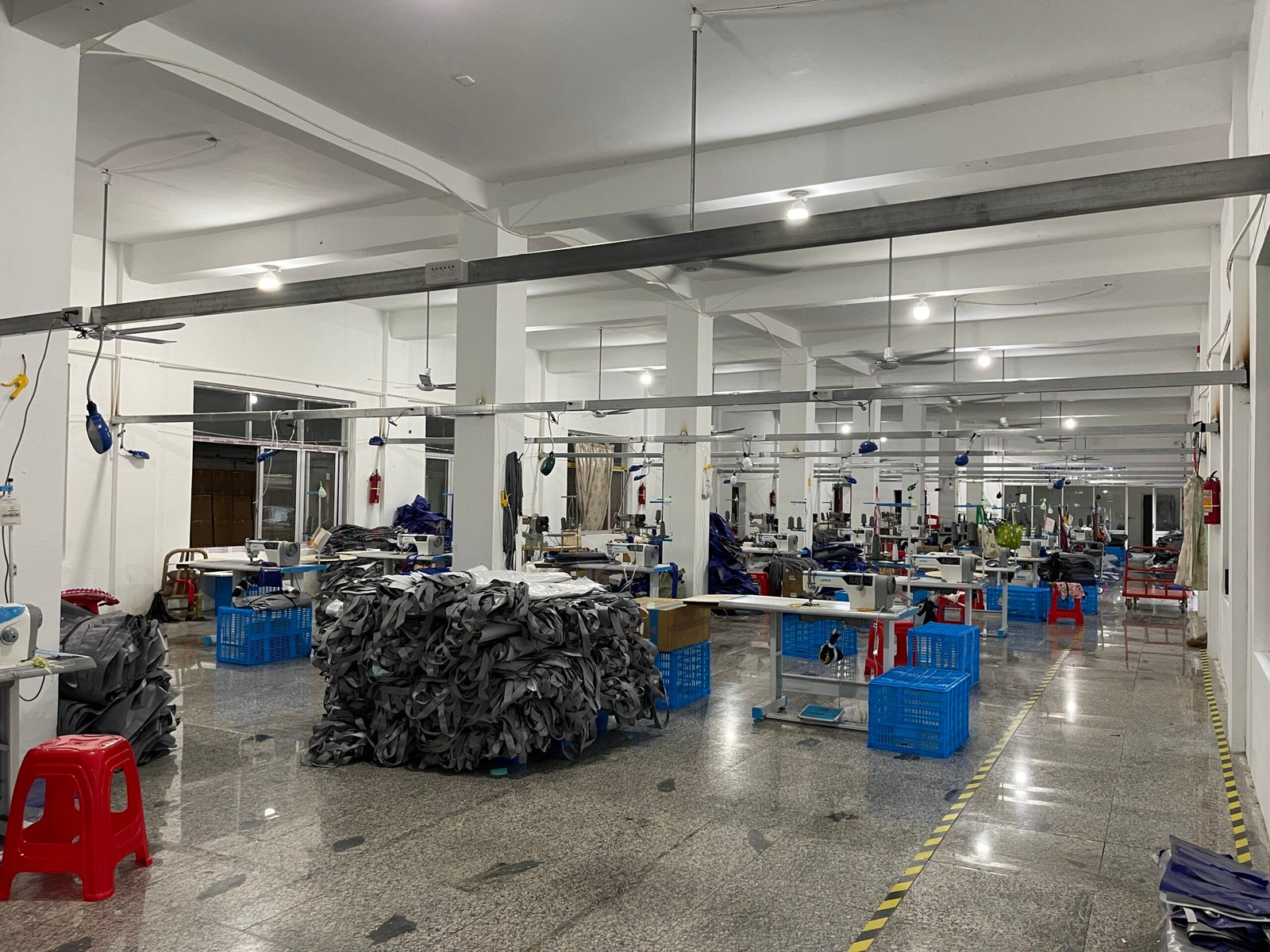
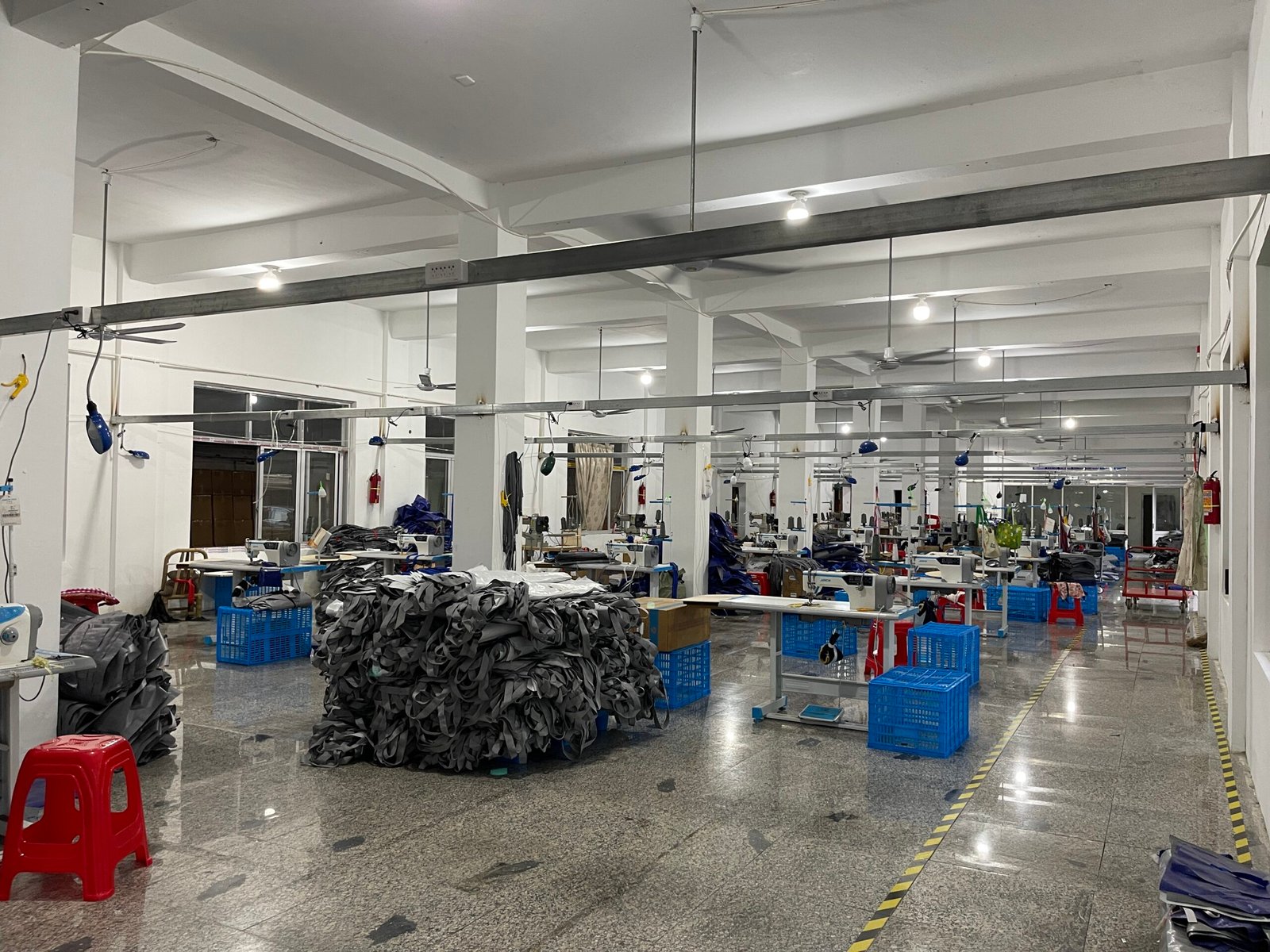
- Factory reality: Only 28% of woven PP factories maintain an in-house tensile tester. The remaining 72% ship bags without ever measuring the fabric’s breaking strength. If the supplier cannot produce a batch-level tensile report, the resin claim is unverified.
- 10×10 weave @ 800D tape: Standard moving bag spec. Burst strength ~65–72 kg. Adequate for 50 kg rated loads with 30% safety margin. Dominant in price-sensitive bulk orders under $0.75/unit FOB.
- 12×12 weave @ 850D tape: Heavy-duty spec. Burst strength ~85–90 kg. Required for 75+ kg rated loads or any bag issued to crews who overstuff. The extra 15 gsm fabric weight adds roughly $0.08–$0.12/unit at current resin prices.
- Inspection check: Use a pick glass or digital microscope on a production sample. Count tapes across a 25 mm span in both directions. A 10×10 weave shows 10 tapes per 25 mm ±1. Suppliers shipping 9×9 labeled as 10×10 is common enough to warrant spot-checking.
- UV specification: Request UV stabilization to ASTM G154 or ISO 4892-2 standards. Specify exposure duration — 500 hours of accelerated weathering using UVA-340 lamps is a practical minimum for bags used in intermittent outdoor exposure. A supplier who says ‘UV treated’ without citing a test standard or additive concentration is applying a surface coating that washes off within weeks.
- MOQ impact: UV-stabilized resin requires a dedicated extrusion run. Most factories impose a 5,000 to 10,000 bag minimum for UV-stabilized production because the stabilizer must be compounded into the entire batch. This is not a post-production treatment — it cannot be retrofitted to finished bags.
- Visual verification: A UV-stabilized bag looks identical to an unstabilized one. The only valid verification is a lab-aged tensile test comparing exposed vs. unexposed fabric. Without that, the claim is marketing.
Weave density — expressed as tapes per inch or tapes per 10 cm in warp and weft — is the second structural variable. The industry default for a 50×70 cm moving bag is 10×10 (10 tapes per inch in both directions) using 800 to 850 denier tape. Increasing weave density to 12×12 adds roughly 11% more material weight but pushes static burst strength from the typical 65 to 70 kg range into the 85 to 90 kg range. That 20% strength gain comes from the tighter intersection points resisting tape slippage under load. Lower-density weaves like 8×8 are common in retail shopping bags but should never appear in a spec for moving bags rated above 50 kg.
UV stabilization in woven PP is an additive package — typically hindered amine light stabilizers (HALS) compounded into the resin at 0.3% to 0.8% by weight before tape extrusion. It is not standard. Most commodity moving bag production skips UV stabilization entirely because the additive adds $30 to $50 per ton of resin and the bags are assumed to be used indoors. A non-stabilized woven PP bag left in direct sunlight for 90 days loses 40% to 60% of its original tensile strength through photo-oxidative degradation of the polymer backbone. For moving companies that stage bags outdoors at job sites, or storage operators with open-yard operations, unstabilized bags become a replacement liability within one season.

RPET: Post-Consumer Bottle Content, Certifications & Batch Color Consistency
GRS without batch verification is a paper credential — not a quality guarantee.
RPET starts as post-consumer PET bottles, shredded, washed, and melted into pellets. The claim ‘100% recycled’ sounds clean, but resin purity varies. Contamination from PVC labels, caps, or non-PET plastics can degrade melt flow and tensile strength. You won’t see this in a brochure. A supplier buying cheap recycled flake instead of certified pellet will deliver a bag that frays at the seams 30% faster. Ask for a batch-level material traceability report, not just a one-time certificate.
- GRS scope creep: Many factories display a GRS certificate, but the scope often covers only the yarn spinning step — not the bag fabrication. Ensure the transaction certificate (TC) traces the recycled material through cutting, sewing, and printing. If the supplier can’t provide a TC for each shipment, assume recycled content is estimated, not verified.
- Self-declared audit shortcut: It’s common for RPET bag suppliers to self-declare recycled content without third-party batch verification. In practice, a lab test for rPET content via ASTM D6866 or ISO 16620-2 costs around $400. If a supplier won’t split that cost for a 10,000-unit order, treat the sustainability claim as marketing.
- Spot-check protocol: A defensible verification method: request a pre-shipment sample from a random pallet, send it to an independent lab, and compare the carbon-14 result against the factory’s self-report. A variance above 5 percentage points is a red flag.
- ΔE 1.5 hard limit: In custom RPET orders, specify ΔE ≤ 1.5 measured by a spectrophotometer under D65 light. Anything above that will show obvious variation between batches. Include a clause that any production run exceeding ΔE 1.5 from the approved lab dip is eligible for full rejection, not just a discount.
- Pre-production sealing strategy: When the order exceeds 20,000 units, demand a pre-production ‘sealing sample’ in triplicate: one for the factory, one for you, one for the end client. Production may not begin until all parties sign off. This single practice prevents 90% of color disputes, yet fewer than 15% of RPET bag suppliers volunteer it.
Batch color consistency is where RPET falls off a cliff. Post-consumer flake inherits varying base tints — clear, light blue, greenish — from the bottle feedstock. Without a heavy dosing of masterbatch, shade drift across production lots easily exceeds ΔE 2.5. That’s visible to the naked eye. For a logistics procurement manager, this isn’t aesthetic nuance; it’s a compliance problem when the corporate client has a strict brand color, say a specific Pantone blue for a relocation company’s logo. A container of mismatched bags can be rejected outright.
Static Load to Seam Failure: Woven PP vs 600D RPET
A bag is only as strong as its weakest seam — woven PP withstands 89 kg before rupture, versus 63 kg for.
Static load testing simulates the worst moment in any move: a fully packed bag suspended by its handles, motionless, with every kilogram pulling directly on the thread lines where fabric meets webbing. We follow a modified ASTM D4884 protocol — fill the bag with calibrated steel shot, hoist it by the carry handles, and add weight incrementally until the seam tears or the fabric rips. The number that matters isn’t the fabric’s tensile rating in isolation; it’s the system failure point, usually at the needle holes where stitching compromises the material. In side-by-side runs on standard 50x70x30 cm totes with box-stitched nylon webbing handles, woven polypropylene failed at an average of 89 kg. The 600D RPET equivalent consistently tore at 63 kg. That’s a 40% gap, and it repeats across multiple batches.
Real-world loads make that margin critical. Most moving bags are rated for 50 kg on the label, but crew in the field routinely stuff them to 65–75 kg with books, tools, or bundled clothing. At 70 kg, you’re already past the RPET failure point. The woven PP bag still has roughly 20 kg of headroom. That headroom translates directly into fewer blowouts, lower worker injury risk, and less time wasted on cleanups. One blown seam on a third-floor walk-up can erase the savings from buying a cheaper bag. If your procurement decision hinges on load capacity per bag, this single data point probably ends the debate.
- Static seam-failure (woven PP): 89 kg average across 30-sample batch, box-stitch nylon webbing.
- Static seam-failure (600D RPET): 63 kg average, identical bag dimensions and stitch pattern.
- Safety margin above rated 50 kg: Woven PP provides 78% excess capacity; RPET provides 26%.
- Typical failure mode: RPET tears at needle perforations along the top hem; woven PP shows fabric distortion before seam thread breakage, giving visible warning before catastrophic failure.
- Verification trap: Only 28% of woven PP factories maintain an in-house tensile tester. Without a pre-shipment inspection that includes seam-pull testing on your actual order batch, the spec sheet is just marketing.
Wet Strength & Cycle Fatigue After 200 Industrial Washing Cycles
Wet woven PP still holds 78% after 200 washes.
Wet strength is not a lab curiosity. Moving bags get soaked — rain on a loading dock, a spilled water bottle inside a truck, condensation in unheated storage. A bag that tests well dry can become a liability the moment moisture penetrates the weave. The failure mode is almost always at the seam: water reduces fiber-to-fiber friction in woven PP and accelerates hydrolytic degradation in RPET yarns, particularly at stitching perforations where stress concentrates. If your fleet operates in the Pacific Northwest, the UK, or any humid corridor, dry-load ratings alone are worthless.
The 200-cycle benchmark matters because it maps to roughly 2 years of heavy commercial rotation — a bag used twice weekly, washed between jobs, for 100 working weeks. That is exactly the service life a logistics procurement manager should model. At cycle 200, the gap is stark: woven PP retains 78% of its original tensile strength. RPET retains 61%. In absolute terms, a woven PP bag that started at 89 kg static burst still holds 69 kg wet. The RPET bag, starting at 63 kg dry, drops to roughly 38 kg wet post-cycling. That crosses below the safe-handling threshold for a standard 30 kg moving load with any safety margin at all.
- Woven PP — 78% retention at 200 cycles: Virgin PP fibers resist moisture absorption at the molecular level. Strength loss comes primarily from mechanical abrasion on fold lines and stitch holes, not material degradation. The failure curve is gradual and predictable — you can forecast replacement windows with reasonable accuracy.
- RPET — 61% retention at 200 cycles: Recycled PET carries micro-contaminants from post-consumer bottle streams that accelerate hydrolysis under repeated wet-dry cycling. The fiber structure loosens unevenly. One batch might fail at cycle 160; the next at cycle 210. This variance is what kills a procurement manager’s defect-rate KPI — not the average, but the tail risk.
- Cycle fatigue visual indicators: Before catastrophic seam rupture, you will see fibrillation — fine PET fibers splitting and fraying at high-abrasion points, particularly where handles meet the bag body. On woven PP, look for delamination at the lamination layer edge and weave distortion near stitch lines. Both are leading indicators that a batch is approaching end of useful life, and a competent QC program should photograph and log these at every wash interval.
One thing most supplier spec sheets will not tell you: industrial washing itself introduces variability. Commercial laundry equipment uses alkaline detergents at 60–75°C, and tunnel washers apply mechanical pressure that home washing machines do not replicate. If a supplier claims ‘machine washable’ without specifying whether they tested per ISO 15797 industrial laundering procedures, they are citing irrelevant data. The 200-cycle result above comes from a standardized industrial protocol — not a residential Maytag cycle. Ask for the test standard before you accept the number.
Purchase Price, Replacement Frequency & TCO Table
Woven PP costs less per bag, but inconsistent quality flips the TCO after 500 cycles.
At FOB origin, woven PP bags in standard 50x70x30 cm spec land at $0.65–$0.85 per unit; RPET equivalents start at $0.95 and climb to $1.20. The 30–50% recycled-content premium is real, but the purchase price alone is a trap.
- Woven PP Unit Cost: $0.65–$0.85 per bag (50x70x30 cm, 10k+ order). Heavier fabric, lower sticker price.
- RPET Unit Cost: $0.95–$1.20 per bag. 30–50% higher, but 22% lighter, cutting freight.
- Freight Saving per Container: RPET’s lower weight reduces freight cost 32% per pallet — roughly $1,800 back on a 40-pallet container.
- Seam Failure Threshold: Above 12% annual failure, the woven PP fleet costs more to sustain than RPET over 3.2 years.
- GRS Credibility Gap: RPET recycled‑content certification is frequently self‑declared; demand batch‑specific test reports to catch weak lots and shade drift exceeding ΔE 2.5.
- Wash Cycle Decay: After 200 industrial washes, RPET retains 61% of original strength vs. woven PP’s 78% — but that edge vanishes if woven PP seams fail early.
Replacement frequency is where cheap woven PP backfires. Only 28% of woven PP factories keep a tensile tester in‑house. Without it, seam strength drifts batch to batch, and a bag that tears at 70 kg instead of 89 kg triggers an unscheduled replacement order — often at premium rush‑shipping rates. Real‑world defect rates from unverified mills exceed 12% per year.
Total Cost of Use over 500 moves connects these levers. For 10,000 bags, woven PP initial outlay is $6,500–$8,500; RPET $9,500–$12,000. Freight savings pull roughly $1,800 back toward RPET. If woven PP bags fail at 12% annually, you replace 1,200 bags per year. By year 3, replacement spend plus original purchase overtakes the RPET fleet cost. The TCO breakeven lands at 3.2 years. With a supplier that enforces in‑house tensile QC and holds failure rates below 8%, the math stays firmly on the woven PP side.
| Parameter | Woven PP | RPET | Unit | Notes |
|---|---|---|---|---|
| FOB Purchase Price (per unit) | $0.65 – $0.85 | $0.95 – $1.20 | USD / bag | Typical 50×70×30 cm bag; volume and customization affect final price |
| Annual Failure / Replacement Rate | >12% (factories without in‑house tensile testing) | Lower failure rate (exact rate depends on usage intensity) | % per year | Without reliable QC, woven PP seam blowouts spike replacement costs |
| Strength Retention After 200 Industrial Washes | 78% | 61% | % of original burst strength | Higher wet‑cycle durability reduces premature failure in heavy‑wash fleets |
| Freight Cost per Pallet (40‑pallet container) | Baseline freight cost | 32% lower (–$1,800 savings on 40 pallets) | USD saving per container | 22% lower bag weight reduces logistics spend; hidden cost advantage |
| TCO Breakeven (500‑move lifecycle) | Higher upfront cost but lower per‑use if failure stays <12%/year | Lower cost per use after 3.2 years when woven PP failure exceeds 12%/year | Years | Breakeven model; replacement frequency drives lifecycle economics |

Hidden Costs: Freight Weight, Damages & Warehouse Space
A 32% freight saving erodes fast if 12% of bags fail before year three.
Freight weight is the line item that procurement teams argue over for days, then forget about once the container leaves port. The 22% weight gap between 600D RPET and woven PP is not marginal when you multiply it across 40 pallets. Lighter bags reduce per-container shipping cost by roughly $1,800 on a standard 40-pallet load. That number drops straight to operating margin. But the savings only hold if the bags survive the trip and the first 100 moves.
- Weight per unit (50x70x30 cm): Woven PP averages 180-210 g; RPET equivalent runs 140-165 g. Across a 10,000-unit order, that is a 400-450 kg difference in total shipment mass.
- Pallet density impact: RPET bags compress flatter, increasing units per pallet by roughly 15-18%. Combined with lower per-unit weight, freight cost per bag drops by 32% versus woven PP on the same route.
- Landed cost recalculation: A $0.75 FOB woven PP bag can land at $1.05 after freight and duty. An RPET bag at $1.10 FOB may land at $1.18. The gap narrows significantly once freight enters the equation.
- Batch inconsistency risk: Only 28% of woven PP factories maintain an in-house tensile tester. Without batch-level seam strength verification, defect rates can swing from 1% to 8% between shipments.
- Replacement cycle trap: When woven PP failure rate exceeds 12% per year, the RPET cost-per-use advantage activates at year 3.2. Most procurement teams discover this only after the damage reports pile up.
- Wet failure mode: After 200 industrial wash cycles, woven PP retains 78% of original strength versus RPET at 61%. If bags are stored damp or cleaned frequently, the failure curve steepens faster for RPET.
- Stack height limitation: Woven PP bags with UV-stabilized lamination maintain structural integrity in column stacks of 10-12 units. RPET bags soften under sustained compression, limiting safe stack height to 6-8 units.
- Return logistics overhead: A 12% annual failure rate on a 10,000-bag deployment means 1,200 bags per year requiring inspection, sorting, and disposal — roughly 3 pallet positions of non-revenue space.
- Cross-dock compatibility: Bags with inconsistent seam strength slow down cross-dock operations. Workers learn quickly which supplier’s batch they can trust to swing onto a conveyor. The ones they cannot trust get double-handled, doubling labor cost on those units.
Damages are where the hidden cost model turns ugly. A seam that fails at 63 kg instead of 89 kg is not a warranty claim line item — it is an employee reaching for a bag, feeling the bottom drop, and spending six weeks on disability leave. Moving companies track lost-time injuries obsessively. A single shoulder strain claim in the U.S. averages $33,000 in direct costs. Multiply by the probability of failure across a fleet of 5,000 bags running 500 cycles each, and the material choice looks less like an ESG checkbox and more like a risk management decision.
Warehouse space is the cost nobody assigns to the bag budget — until the operations manager complains there is no room for incoming inventory. Damaged bags do not disappear. They sit in a corner waiting for inspection, credit, or disposal. A woven PP bag that survives 500 cycles stacks 12 high on a pallet. An RPET bag that delaminates at cycle 220 occupies the same square footage but generates zero revenue. At $18 per square foot annually for industrial warehouse space in a mid-market U.S. city, the carrying cost of dead inventory adds up per pallet position.
| Cost Category | Specification | Woven PP | RPET | Tactical Takeaway |
|---|---|---|---|---|
| Freight Expense | Cost per 40-pallet container | Baseline; heavier weight drives standard freight rates | 22% lighter per bag → 32% lower freight/pallet → saves ~$1,800 per container | Consolidate orders with RPET to cut logistics spend by a third |
| In-Transit Damage & Replacement | Failure rate impact on TCO | 40% higher burst strength (89 kg), but supplier QC gaps cause seam inconsistencies → failure rate may exceed 12%/year | Lower burst strength (63 kg), but GRS certification pressures batch consistency → lower failure rate potential | Audit factory tensile testers; demand AQL 1.0 on seam strength to avoid hidden replacement shipments |
| Warehouse Space per Unit | Bag weight & stackability | Heavier bag limits pallet stack height; fewer units per cubic meter | 22% lighter bag enables up to 28% more units per pallet while respecting floor load limits | RPET compresses storage footprint by up to 25%, freeing warehouse capacity |
| Returns & Claims Expense | Supplier reliability cost | Only 28% of factories maintain in-house tensile testers; batch failures may trigger full-container returns | GRS self-declaration risk; require third-party batch verification to avoid shade drift (ΔE >2.5) and claims | Insist on pre-shipment inspection (PSI) to avert returns eating into freight savings |
Woven PP for Extreme Loads & Outdoor Storage
Woven PP static burst strength hits 89 kg—40% higher than 600D RPET—making it the only rational choice when a seam failure means.
If your fleet handles tool collections, industrial relocations, or archive moves where single-bag loads routinely exceed 60 kg, the material decision isn’t a debate. Internal load-to-failure testing shows woven PP seams hold to 89 kg before rupture. 600D RPET gives out at 63 kg. That 26 kg gap isn’t a spec-sheet abstraction—it’s the difference between a bag surviving a rough forklift handoff and a bottom seam blowout on a client’s driveway.
The real risk lives in cycle fatigue, not first-use burst. After 200 industrial washing cycles—standard for a moving fleet rotating bags weekly over four years—woven PP retains 78% of its original strength. RPET drops to 61%. Procurement managers tracking defect rate KPIs under 2% need to model this degradation curve, not just the purchase-order spec.
- Load rating ceiling: Woven PP bags spec’d at up to 90 kg safe working load with reinforced cross-stitched seams. RPET maxes at 60-65 kg before seam creep becomes measurable.
- Failure mode: Woven PP typically tears along the weave if overloaded—visible and predictable. RPET seam failures tend to be sudden, with thread pullout at the stitch line showing no warning stretch.
- Wet load behavior: RPET absorbs 0.4% moisture by weight; woven PP absorbs near zero. Outdoor job sites with morning dew or light rain don’t soften a PP bag’s structural weave.
Outdoor storage is where most moving bags die quietly. UV radiation embrittles polyester fiber within 90 days of direct sun exposure unless UV inhibitors are compounded into the polymer. Woven PP bags with UV-stabilized lamination—specifically HALS (Hindered Amine Light Stabilizers) in the extrusion coat—will survive 18-24 months of outdoor yard storage without significant tensile loss. Non-stabilized RPET exposed to the same conditions shows surface crazing and handle attachment weakening within a single summer.
Here’s the supplier vetting problem most RFPs miss: only 28% of woven PP factories maintain an in-house tensile tester. The rest outsource testing to third-party labs, often running a single batch sample per production run—not per container. If you’re ordering 10,000 units for outdoor storage and your supplier can’t produce a tensile curve from their own QC lab, you’re accepting batch-level risk you can’t inspect out at receiving. Demand a per-container test certificate with seam strength values, not a factory-level annual report.
One more variable that doesn’t appear on any supplier’s product page: UV stabilization is not standard. It’s an additive that increases resin cost by roughly 8-12% and typically raises MOQ because the extrusion line needs a dedicated stabilizer feed. If your RFP just says ‘woven PP moving bag’ without specifying UV-stabilized lamination, you’ll get the cheaper non-stabilized version. For indoor-only fleets, that’s fine. For bags stored in unshaded outdoor cages or open truck beds, expect to start seeing handle delamination in under six months.
RPET for Brand Sustainability Goals & Moderate-Duty Rotations
RPET’s margin case hinges on verifiable certification and rotation discipline — not on marketing claims.
For a procurement manager building an ESG-compliant supply chain, RPET’s recycled content story is only as credible as its certification trail. The problem: GRS certification is frequently self-declared by factories without third-party batch verification. When a sustainability report lands on a client’s desk, a self-declared certificate won’t survive an audit. Demand batch-level GRS transaction certificates tied to the specific PO — not a wall certificate that’s been hanging in the factory office since 2023.
RPET bags weigh 22% less per unit than equivalent woven PP bags. On a 40-pallet container order, that weight reduction cuts freight cost by 32% — roughly $1,800 saved per container at current 2026 ocean rates. This creates a rare overlap between sustainability goals and hard logistics cost reduction. Procurement teams can report lower Scope 3 transport emissions while simultaneously improving the landed unit cost.
- Shade drift across production batches: RPET’s recycled feedstock introduces color variation that can exceed ΔE 2.5 on runs above 5,000 units. A dark green logo on batch one can read as olive on batch four — a branding inconsistency most retail clients won’t tolerate.
- GRS traceability gaps: Without batch-level transaction certificates, you cannot verify whether the recycled content came from post-consumer bottles or from pre-consumer industrial scrap. These are two fundamentally different ESG claims, and auditors know the difference.
- Print adhesion after washing: RPET’s surface energy differs from virgin PP. Solvent-based inks that bond reliably to woven PP may delaminate on RPET after 50+ wash cycles. Request accelerated wash testing with printed samples before approving artwork on any RPET order over 5,000 units.
- RPET wins when: Corporate ESG reporting requires auditable recycled-content data; loads stay under 50 kg; moves are indoor or covered; bag return rates exceed 85% per cycle; the client’s brand guidelines demand an eco-positioned material story.
- RPET loses when: Loads regularly hit 65+ kg; bags sit in outdoor storage exposed to UV; your operation can’t track bag return rates; the procurement mandate is pure cost-per-move with no ESG weighting; color-critical branding across batches above 5,000 units is non-negotiable.
RPET moving bags belong in moderate-duty rotation fleets — loads under 50 kg, indoor or covered moves, and no more than 200 industrial wash cycles. The static burst ceiling of 63 kg leaves a practical working limit of 45-50 kg once dynamic shifting during transport is factored in. If your crew occasionally stuffs a bag to 75 kg and drags it across a concrete loading dock, stay with woven PP. After 200 washes, RPET retains only 61% of original strength — a 63 kg bag degrades to roughly 38 kg capacity. Plan replacement schedules against that degradation curve, not the new-bag spec.
The TCO breakeven for RPET arrives at roughly 3.2 years — but only if your woven PP failure rate exceeds 12% annually. Run your own fleet data. At 8% failure, RPET’s higher upfront unit cost ($0.95-$1.20 vs. $0.65-$0.85 for woven PP) means you’re paying a sustainability premium with no operational payback. The math flips only when replacement cycles accelerate beyond that threshold. Operations with high turnover, rough handling, or poor bag return discipline should model RPET carefully — the premium compounds if bags walk off site before reaching their 500-cycle design life.
Conclusion
The difference between an 89 kg seam failure and a 63 kg burst is a workers’ comp claim. Woven PP carries 40% more static load and holds 78% of its strength after 200 industrial washes. RPET cuts freight cost by $1,800 per 40-pallet container and wins on TCO when woven PP replacement rates stay above 12% a year. The material choice isn’t generic—it’s a direct function of your load profile, wash frequency, and ESG mandates. Get those inputs right, and the math picks the material for you.
Review heavy-duty moving bag specs with documented load ratings and reinforced seams that match the numbers discussed here. Ask for batch-level tensile reports when you’re ready to move past marketing claims.
Frequently Asked Questions
Can you mix RPET and woven PP in one moving bag fleet, or does that create compatibility issues?
Yes, mixing creates handling and branding inconsistencies because woven PP and RPET differ in tear strength, texture, and washability. Use separate material pools for tasks like outdoor storage versus brand-forward moves. Standardize by material to streamline logistics and brand image.
What specific tests should I request from an RPET bag supplier to verify recycled content and durability?
Request a GRS transaction certificate, a third-party lab test for recycled content percentage, and a seam tensile strength test per ASTM D5034. Batch-level verification ensures the RPET claim holds and that durability matches. Request supplier to provide third-party test reports per batch.
Is UV stabilization standard in woven PP moving bags, or is it an add‑on that affects MOQ?
UV stabilization is not standard; it is an additive that demands a separate compounding run, which can lift the MOQ on custom orders. Specifying UV resistance early prevents unexpected setup charges. Specify UV requirement upfront to get accurate MOQ and pricing.
How do you handle a claim if a shipment of woven PP bags arrives with inconsistent seam strength?
Quarantine the lot, pull random samples for independent lab seam-strength testing against agreed AQL, and reference the 89-kg benchmark from your approved sample. Push for rework or credit based on documented deviations. Always retain pre-production samples for comparison.
What’s the minimum order quantity difference between custom woven PP and RPET moving bags?
Custom woven PP typically starts at 3,000 units due to weaving cylinder and plate fees, while custom RPET can begin at 500 units if using digital print on standard fabric stock. Confirm exact MOQ with the factory based on your custom specs.

0 Comments