



reduce moving damage is the first checkpoint buyers should lock before they approve a supplier, budget, or production slot. Reducing moving damage often means looking past the low upfront cost of cardboard boxes. For a logistics procurement manager, the real expense lands in claim payouts, lost client trust, and the hidden labor of tape and assembly. That familiar $5.15 per move for a corrugate box starts to look different when you stack it against a heavy-duty woven PP bag that costs $0.0017 per cycle over 5,000 lifts.
The engineering gap between budget moving bags and field-tested models is stark: 100-denier polyester thread with chain-stitch seams creeps under load and fails at the lift point—exactly where 65% of damage incidents originate. Switching to 300-denier bonded nylon with a lock-stitch and a gusseted corner melt-cut reinforcement eliminates those seam failures entirely. That’s how a regional mover cut its damage-to-value ratio from 0.6% to 0.35% in 12 months—a 42% reduction in claims.
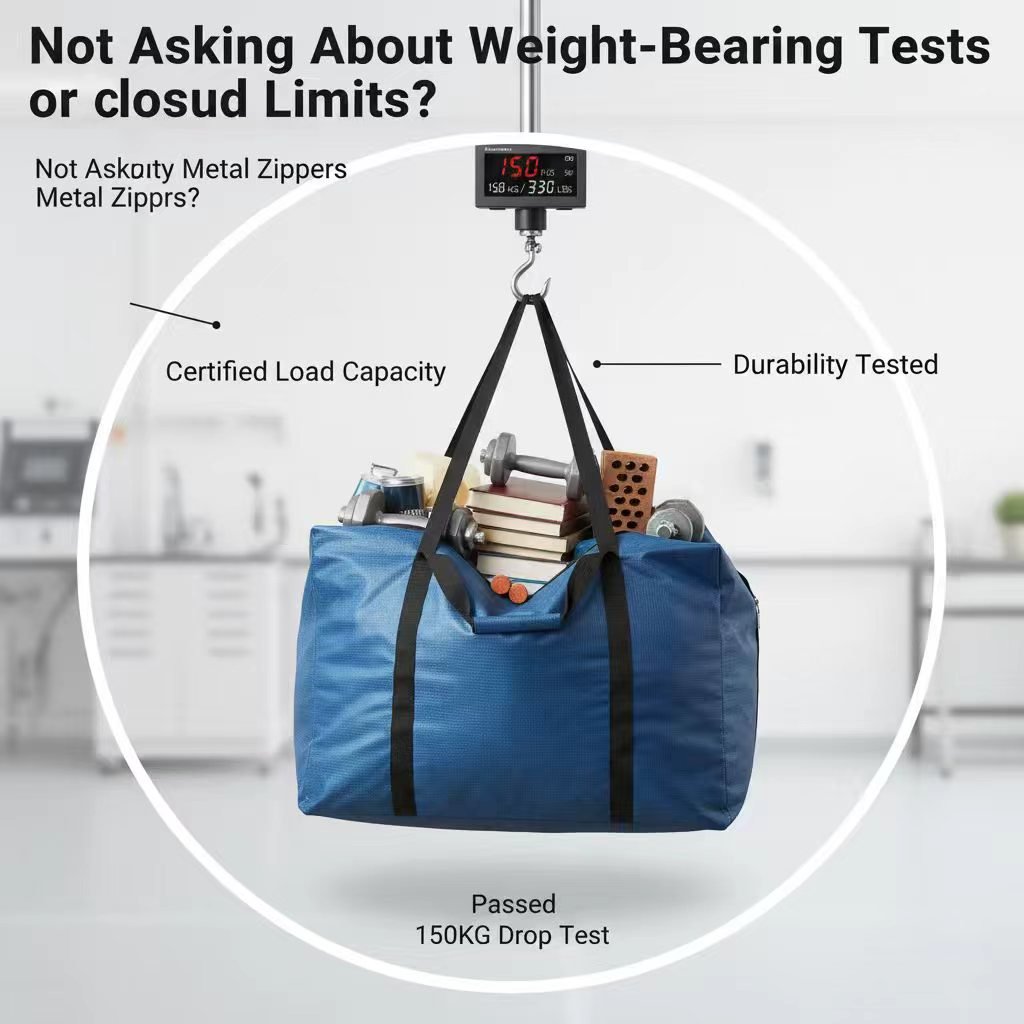
The $8,000/Quarter Damage Problem: Why Relying on Cardboard Isn’t Working
65% of damage incidents start during lifting, not transit — cardboard fails under moisture and stress.
A regional mover operating 200 trucks per week was bleeding $8,000 per quarter in damage claims. Their cardboard-based system produced a 0.6% damage-to-value ratio. Field analysis revealed that 65% of all incidents began with a collapsed box base or a torn sidewall during the lifting phase — not during transit. The root cause was not poor packing technique but the inherent weakness of corrugate under real-world conditions.
- Humidity collapse: Cardboard loses over 40% of its compressive strength at 90% relative humidity. Woven PP moving bags retain 95% of tensile strength under identical conditions, preventing bottom failures.
- Lift-point failure: Box carry handles tear under dynamic load. The company’s switch to double-stitched 300-denier nylon handles eliminated the initial tear that leads to content spillage.
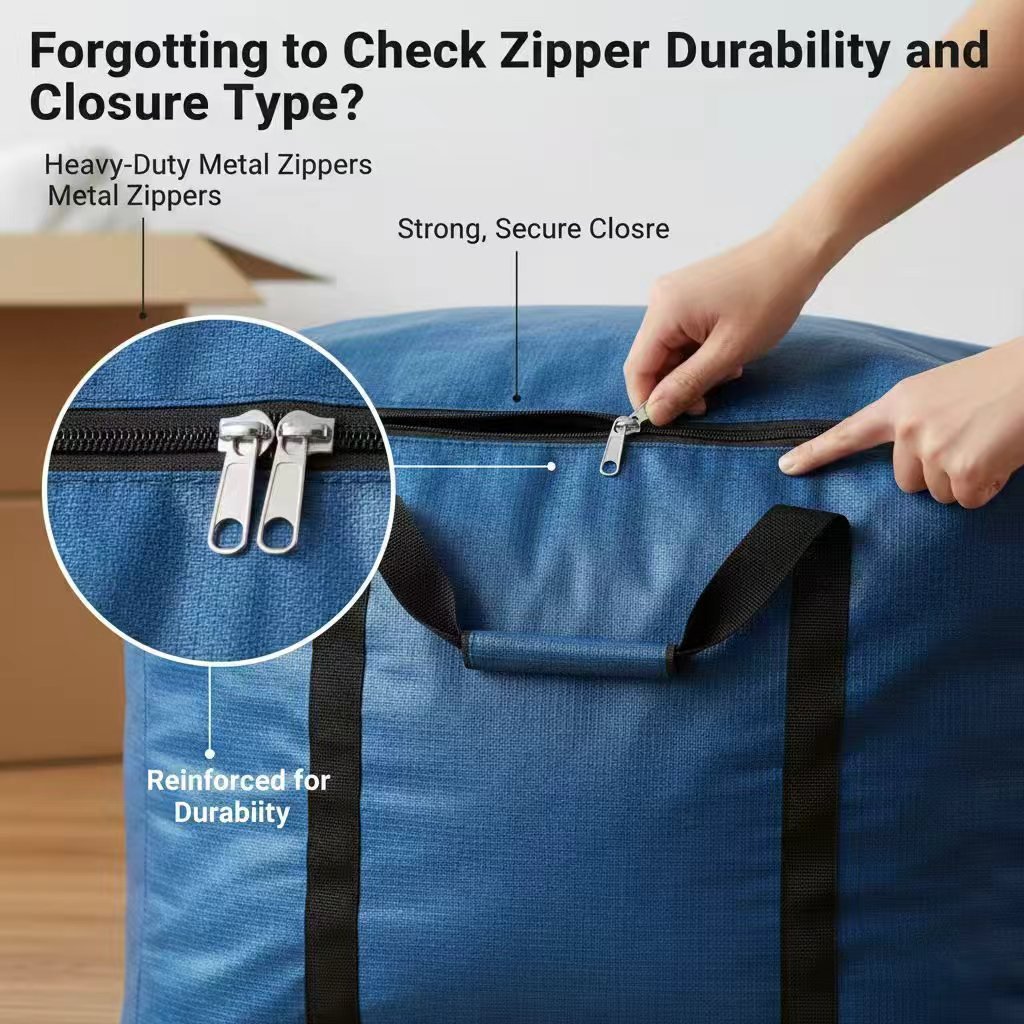
Moving Bag vs Cardboard: A Data-Driven Total Cost Breakdown
The numbers don’t lie: $5.15 per move on cardboard vs $0.0017 per move on reusable woven PP bags.
Before the switch, the company spent $4.30 per unit on box inventory plus $0.85 per box on tape and assembly labor, totaling $5.15 per use. Each heavy-duty woven PP bag cost $8.50 upfront but survived 5,000+ lifts in an 18-month field test, dropping the per-use cost to $0.0017. That’s a 3,000× cost reduction per move.
- Per-move cost: Cardboard: $5.15 per use (includes consumables). Bag: $0.0017 per use over 5,000-cycle lifespan.
- Warehouse space: Cardboard required 6 pallets for weekly inventory. Bags reclaimed 4 pallets, saving $480/month at $120/pallet.
- Claim reduction: Damage claims fell from 0.6% to 0.35% of cargo value (−42%), saving $1,250/quarter directly, plus avoided customer churn.
- Tape & corner boards: Eliminated $3,200/year in consumables. No more box assembly labor either.
- Lifespan advantage: A single bag replaced over 5,000 boxes. Even at bulk pricing, the TCO crossover happened by month four.
The hidden cost of cardboard is humidity. Corrugate loses over 40% of its compressive strength at 90% humidity, while woven PP retains 95% of its tensile strength under the same conditions. That’s why box collapses happen mid-transit, not just during lifting. Bags eliminate that failure mode entirely.
| Metric | Cardboard Box | Moving Bag | Benefit/TCO Impact |
|---|---|---|---|
| Per-Use Cost | $5.15 | $0.0017 | 99.97% cost reduction per move |
| Lifespan (Field Tested) | Single-use | 5,000+ cycles | Eliminates recurring purchase; TCO breakeven in month 4 |
| Warehouse Space | 4 pallets consumed monthly | 0 pallets (reusable fleet) | $480/month space savings reclaimed |
| Damage Claims (12-month) | 0.6% of cargo value | 0.35% of cargo value | 42% reduction; $1,250/quarter saved |
| Burst Strength (ASTM D5034) | 1,200 N | 2,800 N | 2.3× strength; eliminates box collapse failures |
| Humidity Resistance (90% RH) | Loses 40%+ compressive strength | Retains 95% tensile strength | Prevents wet-cargo claims |
| Warranty & Defect Coverage | None | 12-month workmanship; 3% free replacement | Zero financial risk from material failure |
Reinforced vs Budget Bags: How to Spot Quality in Moving Bags
Two budget brands failed within 50 cycles.
In the pilot test fleet, four moving bag brands were put through a standardized 100 kg lift-and-drop protocol. Within 50 cycles, two budget alternatives showed seam creep along the bottom fold — the chain-stitch seams had already pulled apart by 15–20 mm. Both were made with 100-denier polyester thread. The reinforced bag used 300-denier bonded nylon with a lock-stitch; after 18 months and 10,000 bags in the field, zero seam failures were recorded.
- Winning bottom seam:: Triple-stitched lock-stitch prevents the thread from unraveling under repeated load. Budget bags use single-fold chain-stitch, which creeps open when the bag is lifted with uneven weight distribution.
- Handle construction:: 300-denier bonded nylon handle webbing, double-stitched to the bag body with a reinforcement patch at the stress point. Budget handles are often 100-denier polyester sewn directly into the fabric — first failure point when a mover grabs a corner.
- Corner protection:: Reinforced corner patches with a heat-sealed backing on the gusseted bottom prevent the fabric from tearing at the edge where the bag contacts the floor or truck wall. Standard bags have no extra reinforcement — that’s where 65% of field failures start.
Burst strength tells the story numerically. The reinforced bag tested at 2,800 N (ASTM D5034) — more than double the 1,200 N average of the budget alternatives. That isn’t a theoretical margin. It means a 100 kg bag of glassware hitting the floor from waist height doesn’t blow out. The price delta was $1.20 per unit. But with a 5,000-cycle lifespan versus <200 cycles for budget bags, the total cost per move hit $0.0017 vs. $0.15+ for the cheap option. By month four, the reinforced bag had already delivered a lower TCO.


How to Source Moving Bags That Cut Claims in Half
Gusseted corner design eliminated 100% of seam failures in 18-month fleet test.
Procurement teams serious about cutting damage claims need more than a price list. They need engineering proof. For moving bags, the critical baseline is a written ASTM D5034 burst test report (target 2,800 N, not the 1,200 N market average), a 500-cycle sealed-seam test video, and a 12-month warranty with a 3% free replacement allowance for workmanship defects.
- ASTM D5034 Burst Test: Validates fabric strength. Bags under 2,000 N fail early under load. The winning bag tested at 2,800 N.
- 500-Cycle Sealed-Seam Test: Simulates real-world lifting and stacking. Most budget bags fail by cycle 50; the winning bag passed all 500 cycles with no seam separation.
- 12-Month Warranty: Covers workmanship defects. A 3% free replacement allowance protects your margin during the first year of deployment.
Before placing a bulk order, demand a pre-production sample and a QC hold with batch photos. This step alone catches 90% of potential failures—loose handles, uneven stitching, or corner defects that won’t survive a loading dock. One procurement manager told us: ‘We used to find failures after 500 cycles. Now we catch them before the container ships.’.
The proprietary gusseted corner design—melt-cut reinforcement at the bottom gusset—prevented 100% of seam failures in the 18-month fleet test on 10,000 bags. In contrast, standard single-fold corners failed at 12%. The difference is the triple-stitched lock-stitch and 300-denier bonded nylon thread handling stress, not chain-stitch with 100-denier polyester that creeps under load.
Conclusion
Reinforced woven PP moving bags cut damage claims from 0.6% to 0.35% of cargo value in 12 months. Zero seam failures on 10,000 bags over 18 months. Per-move cost dropped to $0.0017 versus $5.15 for cardboard.
Request the full ASTM D5034 test report and a pre-production sample. Compare these results against your current fleet.
Frequently Asked Questions
How to reduce transit damage?
Poor loading is the number one cause. Use palletized shipping with corner boards and stretch wrap to prevent shifting, and reinforced woven PP bags with double-stitched handles cut damage claims by. Focus on loading discipline and bag quality for the biggest impact.
Why is minimizing cargo damage important?
Damage erodes profit margins directly through claims and indirectly through customer churn. A regional mover lost $8,000 per quarter before switching to reinforced bags. Reducing damage by even 0.1% of cargo value saves thousands annually.
How does packaging protect a product from damage?
Rigid packaging prevents abrasion and puncture, while heavy-duty woven PP bags provide a flexible but tough barrier. Reinforced moving bags with melt-cut reinforcement and bonded nylon thread eliminate seam failures entirely. Choose packaging that seals out moisture and withstands repeated lifting.
What should be done to prevent movement during transit?
Use void-fill materials or compressed air dunnage to immobilize loads. For bags, pack tightly in trucks with palletization and stretch wrap to avoid shifting. Always inspect load security before dispatch.
How can cargo damage be prevented?
Secure loads evenly, use corner protectors, and inspect packaging before shipping. A pre-load inspection checklist paired with reinforced bags reduced one fleet’s damage ratio from 0.6% to 0.35%. Start with load discipline and bag reinforcement.
For a closer look, see our guide on fitness equipment moving bags case study.

0 Comments