




“Recycled” is the easiest word in bag marketing to print and the hardest to prove. A supplier can claim 100 percent recycled polypropylene and ship a bag made mostly from virgin resin, and the buyer only finds out when a customer asks for the paperwork. The Global Recycled Standard (GRS) exists to close that gap, but only for buyers who know how to read its chain of custody documents.
This guide explains how GRS chain of custody works in practice: which documents prove what, how to check them before you order, and which red flags separate a certified factory from a factory with a certificate on its website.
What GRS Chain of Custody Actually Tracks
The Global Recycled Standard is a product standard owned by Textile Exchange, the nonprofit that maintains the standard and its certification program. GRS chain of custody tracks recycled material from the recycling facility through every stage of production: yarn spinning, weaving, dyeing, cutting, sewing, and final assembly. Each certified site must keep records showing that the recycled input it bought matches the recycled output it sold.
The accounting method is mass balance. A factory can mix recycled and virgin resin in one production period, as long as the total recycled input across the period equals or exceeds the recycled output it sells. The records that prove this balance are checked by an independent certification body during an annual on-site audit, and the certificate is issued for a fixed period, usually one year.
Two documents carry the proof. A scope certificate (SC) proves a facility is certified for specific processes and product types. A transaction certificate (TC) proves a specific shipment of recycled material or product changed hands between two certified parties. Buyers need to see both, and they need to read them together. The pair works like a passport and a visa: the SC proves the traveler may cross the border, and the TC proves this specific trip actually happened.

Scope Certificates and Facility-Level Proof
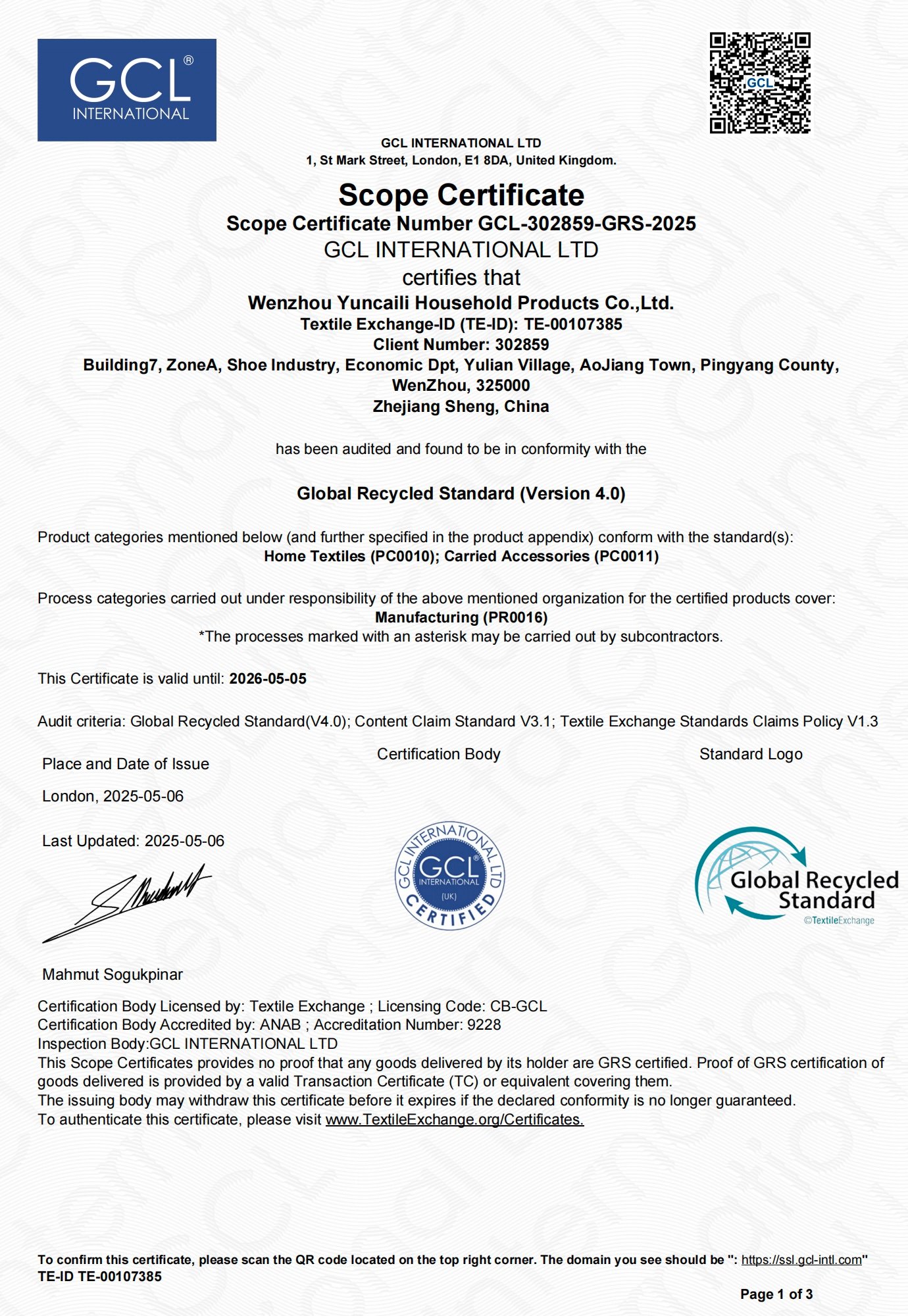
The scope certificate names the certified company, the facility address, the certification body, the standard version, and the certificate’s validity period. It also lists the scope of certification: which processes the facility may perform under GRS, such as spinning, knitting, dyeing, or sewing, and which product categories it covers.
Check the scope before anything else. A certificate that lists “trading” but not “sewing” does not cover the bag factory’s production step. A certificate expiring next month means the facility is between audits, and material purchased in that window may not carry valid TC coverage. Ask for the certificate PDF, not a screenshot, because the PDF carries the certificate number that the certification body can verify.
The standard version printed on the certificate matters. Textile Exchange revised GRS over time, and a certificate referencing a superseded version may not reflect the current audit requirements. Textile Exchange publishes the current standard and its transition rules in its certification hub, so a buyer can confirm which version the factory’s audit actually followed.
The certification body’s name matters too. GRS audits are performed by accredited certification bodies such as Control Union, SGS, Intertek, and Bureau Veritas. The certification body’s logo and contact details on the SC let you confirm the certificate number directly with the issuer, which is the only way to catch a fabricated document.
Transaction Certificates and Shipment-Level Proof
A transaction certificate is issued for each shipment of certified material or product. It names the buyer and seller, the product, the quantity, the recycled content percentage, and the SC numbers of both parties. The TC is the document that ties your specific order to the recycled claim, and it must be issued before or at shipment, not six months later.
Verify the TC against four facts. The seller’s SC number must match the factory you ordered from. The product description must match your purchase order, not a similar bag with a different closure. The quantity must be at least your order quantity, because a TC for 10,000 bags cannot cover a shipment of 30,000. And the recycled content percentage must match the claim on the label, which we cover next.
Ask for the TC before you approve the commercial invoice. Once the shipment leaves, a missing TC becomes a sourcing problem, not a paperwork problem: your customer’s compliance team will reject the goods or demand a discount for unverified claims. The TC check takes five minutes and belongs in the same approval step as the invoice and the packing list. Certified facilities issue TCs electronically through the certification body’s system, so the document arrives with a reference number you can quote back to the issuer when you verify it.
Recycled Content Percentages and Label Claims
GRS sets two thresholds that buyers constantly confuse. A product must contain at least 20 percent recycled content to be certified under GRS at all. To carry the GRS logo and make a visible recycled-content claim, the product must contain at least 50 percent recycled content. A bag with 30 percent recycled fiber is GRS-certified but cannot legally carry the GRS label.
Read the TC’s percentage line against the label artwork. If the label says “100% recycled” but the TC says 60 percent, the claim exceeds the certificate and the product is mislabeled. If the label says “made with recycled materials” with no percentage, the TC still needs to support at least 20 percent, and the hang tag should state the actual percentage for the claim to be meaningful to your customer.
The percentage also changes the cost story. A 20 percent recycled bag costs less than a 100 percent recycled bag, and some suppliers quote “GRS material” pricing for 20 percent content. Confirm the percentage in the quotation, the TC, and the label all at once, because each document can carry a different number if nobody reconciles them.
Red Flags That Separate Certified From Paper-Certified
Five red flags appear repeatedly on bag orders. The factory shows an SC but cannot produce a TC for your shipment. The TC lists a different company name than the seller on your invoice. The certificate number does not match the certification body’s published list. The product description on the TC is generic, like “bags,” instead of your specific item. And the factory claims GRS on the website but the certificate expired last year. Any one of these stops the order until the factory explains it; two of them end the conversation.
Suspension is the red flag buyers rarely ask about. A facility that fails its annual audit or its mass balance review can have its certificate suspended or withdrawn, and material produced during the suspension does not qualify for TCs. Ask the supplier when its last audit took place and whether any corrective actions were issued. A supplier that answers with the audit date and the findings is managing the standard seriously; a supplier that hesitates is often managing a gap.
Mass balance over-selling is the hardest red flag to catch from documents alone. A factory that buys 10 tons of recycled resin and sells 40 tons of “recycled” bags is running a negative balance, and only the auditor’s records expose it. Buyers can pressure-test this by asking for the facility’s GRS audit summary, which certified facilities can share, and by requesting TCs from the factory’s own suppliers for the recycled material in your order.
The strongest protection is the request for a full certificate chain. Ask the factory for the SC and TC of its yarn or fabric supplier, not just its own documents. A genuine certified supply chain produces these without hesitation, because the chain is the point of the standard. A factory that cannot produce its supplier’s TC is either buying recycled material without certification or buying no recycled material at all.

Building the Verification Into Your Order Process
Add the GRS document check to your RFQ stage, not the shipment stage. Ask for the SC and a sample TC with your first inquiry, and record the certificate numbers in your supplier file. A supplier that provides valid documents at quotation is a supplier that treats certification as a process; a supplier that promises documents after the deposit is running on hope.
Write the claim into the purchase order. State the required recycled content percentage, the standard version, and the documents that must accompany shipment: the SC, the TC, and the supplier’s TC for the raw material. Tie the final payment to document delivery, so the paperwork arrives with the goods instead of after them.
The recycled material product range on this site covers the certified constructions we produce, and the recycled PP supply report explains how GRS-certified material pricing moves with resin markets. Buyers combining both documents get the full picture: what the material costs and what proof of its recycled content looks like. The bag certification overview and the REACH documentation guide round out the compliance folder for the same order.
The check does not end at the first order. Certificates expire, scopes change, and a facility that passed its audit in January can fail it in October. Put a re-verification date on your calendar every twelve months, pull the SC and the latest TC again, and confirm the certificate number with the certification body once per year. That single annual review keeps the recycled claim on your packaging honest for the life of the program and every order inside it.
Document the verification trail for your own customer. Keep the SC, the TC, and the supplier’s raw material TC in the same folder as the test reports for the order, because retail compliance teams ask for the same chain of evidence you asked the factory for. A folder that answers the question in one look protects the sale; a folder that requires follow-up emails puts the order at risk while the compliance clock runs.
Frequently Asked Questions
What documents prove GRS certification for textile bags?
A scope certificate proves the facility is certified for specific processes, and a transaction certificate proves a specific shipment of recycled product changed hands between certified parties. Buyers need both, plus the supplier’s own TC for the recycled raw material.
What is the difference between a scope certificate and a transaction certificate?
The scope certificate covers the facility and its certified processes for a period, usually one year. The transaction certificate covers one shipment, naming the buyer, seller, product, quantity, and recycled content percentage. The TC is shipment-specific proof; the SC is facility-level proof.
How much recycled content does a GRS bag need?
A product must contain at least 20 percent recycled content to be GRS-certified. To carry the GRS logo and make a visible recycled-content claim, the product must contain at least 50 percent recycled content. Confirm the percentage in the quote, the TC, and the label together.
Can I verify a GRS certificate number?
Yes, contact the certification body named on the scope certificate, such as Control Union, SGS, Intertek, or Bureau Veritas. The certificate number on the PDF can be confirmed directly with the issuer, which is the only reliable way to catch a fabricated document.
What is mass balance in GRS chain of custody?
Mass balance means a factory can mix recycled and virgin material in a production period, as long as total recycled input equals or exceeds recycled output sold. The balance is verified by an annual on-site audit by an accredited certification body.
How EPR schemes reach bag imports is explained in our EPR packaging rules for bags.
Related: which certifications to name in a bag RFQ and what each one proves




0 Comments