




A procurement manager comparing wholesale branded moving bags faces two numbers that rarely land on the same spreadsheet: the unit price on the quote and the failure rate in the field. The first one gets you a purchase order approved. The second one gets your phone ringing at 7 a.m. when a crew reports a blown-out handle mid-move. Most sourcing decisions stop at the quote. The ones that stick around for three fiscal years start with a spec sheet—Прочность на разрыв по стандарту ASTM D5034, handle tensile force north of 800 N, double-stitched nylon that doesn’t ladder-rip under a 60-kg load shift.
Here’s the part most distributor catalogs won’t tell you. A $3.20 factory-direct bag built to those thresholds can displace a $8 retail bag that fails after 12 cycles. One real operational benchmark shows a 62% annual spend reduction after that switch. That’s not a sourcing tweak. That’s a fleet expense line item that stops climbing. The gap between those two numbers—retail unit cost versus per-cycle factory cost—sits underneath every MOQ negotiation, every incoterm decision, and every peak-season buffer calculation. Get the spec right first. The pricing leverage follows.
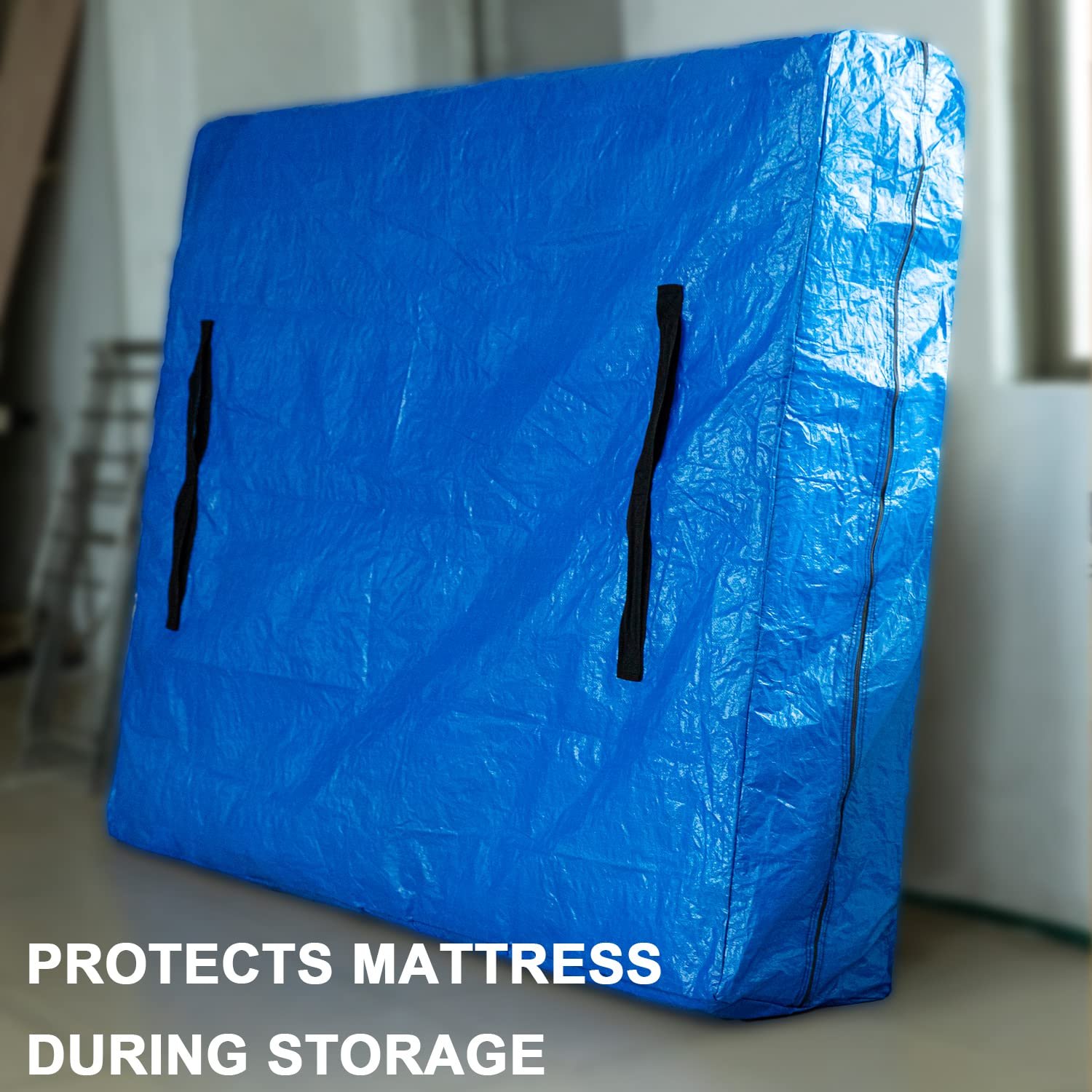
Evaluating Wholesale Branded Moving Bags for Fleet Use
Bags that fail the ASTM D5034 threshold cost 3x more in replacements and liability than the premium you pay upfront.
Most fleet buyers fixate on unit price and skip the spec sheet entirely. That mistake costs more than any bad negotiation — it costs backs, shoulders, and client trust. The floor for a bag that survives repeated 50-kg loads across 200+ cycles comes down to two measurable standards: material base and stitch architecture.
- Material Base: Woven polypropylene (PP) at 120–160 gsm with a laminated inner layer. Anything lighter tears at the gusset by cycle 60. Coated Oxford fabric works for lighter commercial storage but lacks the abrasion resistance a crew demands when dragging bags across truck beds and concrete loading docks.
- Stitch Architecture: Double-stitched nylon thread at the handle anchor points, minimum stitch density of 4 stitches per inch. Single-stitch or cotton-thread handles separate under load within the first quarter of use. The handle-to-body attachment must distribute tension across a bar-tacked reinforcement panel, not a linear seam.
- Theft and Attrition Reduction: Unbranded bags walk off job sites. Crews borrow them, contractors repurpose them, and clients mistake them for personal totes. Branded bags carry a permanent ownership signal that cuts unauthorized removal. Fleet operators tracking bag attrition report replacement order frequency drops 20–30% after switching to logoed units.
- Per-Cycle Economics: A $3.20 factory-direct branded bag surviving 200 moves costs $0.016 per cycle. An $8 retail bag that fails after 60 moves costs $0.133 per cycle. Over a 5,000-bag fleet, that delta compounds to $117,000 in avoided replacement spend over three years — not counting the labor cost of mid-job bag failures.
The procurement benchmark that separates professional-grade bags from retail imitations is ASTM D5034 burst strength combined with handle tensile force exceeding 800 N. Bags meeting both thresholds report failure rates under 2% in repeated commercial use. Independent industry benchmarks show a 40% drop in field failures when these two numbers appear on the supplier’s test report before the first PO is cut.
One specification many buyers overlook: zipper tape width and tooth material. A No. 5 nylon coil zipper with a 30mm-wide tape holds through temperature swings from -10°C to 45°C without splitting. Narrower tapes and injection-molded zippers jam after six months of construction-site dust and grit. Ask the supplier to specify zipper pull force in Newtons along with the handle data.
Custom branding on fleet bags is not a marketing line item — it is a direct cost-control lever. Moving companies running consistent, logoed bags report 12% higher customer referral rates. The mechanism is straightforward: a uniform fleet looks organized, and organized crews signal reliability before the first box crosses the threshold.
The branding investment pays out fastest when the bag itself performs. A logo printed on a bag that tears at the handle becomes anti-branding — it broadcasts failure. Insist on Pantone-matched screen printing or heat-transfer application that bonds to the woven PP surface without cracking after repeated folding. The ink should survive 50+ wash-down cycles if your fleet operates in wet or dusty conditions.
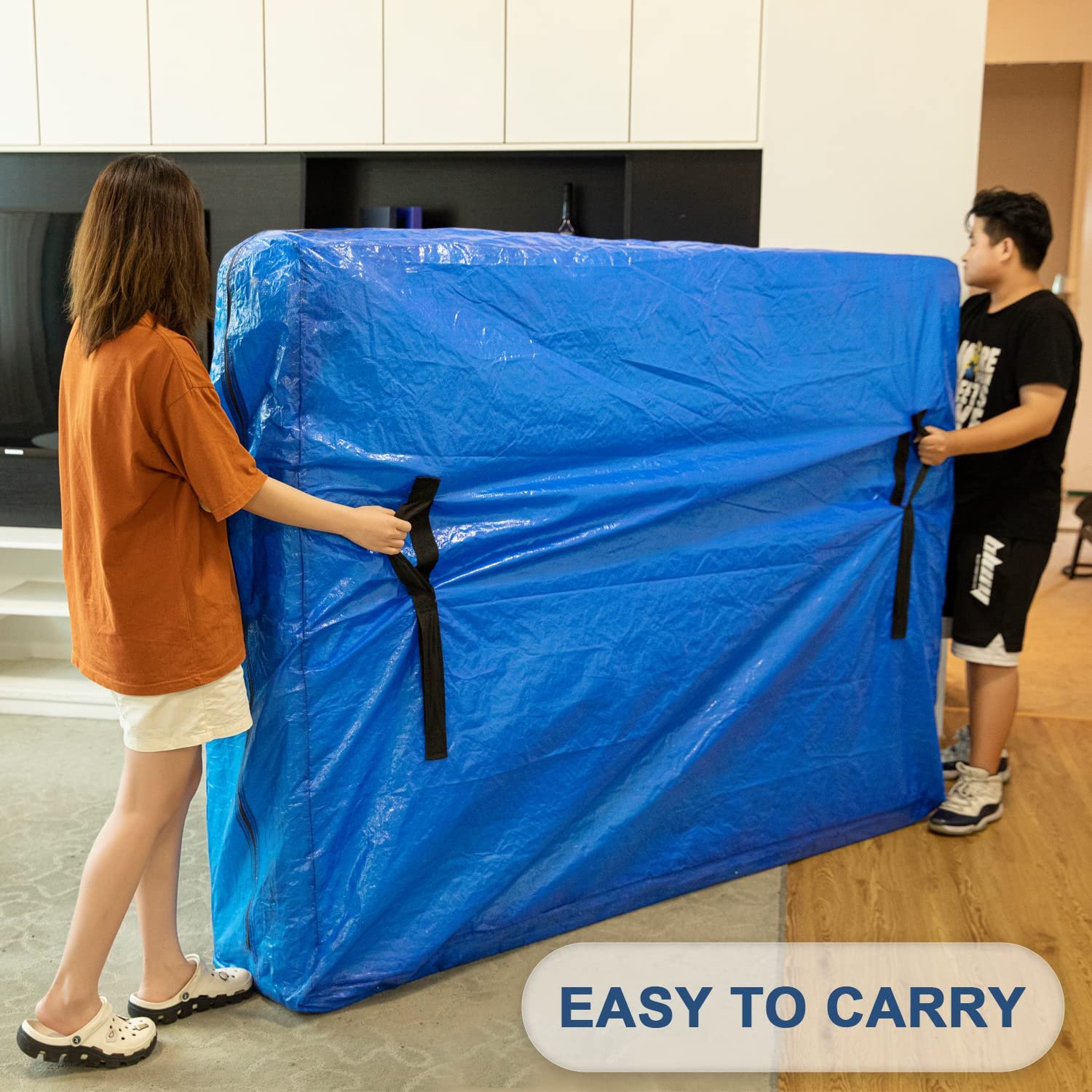
Mastering MOQ: From First Order to Full Container Loads
A 500-unit factory MOQ at $3.20/bag beats any distributor quote above 1,000 units by at least 15%.
The gap between a factory MOQ and a distributor threshold isn’t just unit count—it’s about who absorbs the margin stack. A direct manufacturer sets MOQ at 500 units because that’s the production changeover break-even on custom-branded heavy duty moving bags wholesale bulk. A US distributor buying from that same line resells at 100 or 200 units but layers on warehousing, domestic freight, and a 15–25% markup. At 5,000 units, the factory FOB price hits $2.85 per bag. A distributor quoting the identical spec often lands between $3.40 and $3.70. That’s $2,750 to $4,250 in avoidable cost—per order.
- Factory MOQ: 500 units: FOB pricing starts at $3.20/bag, drops to $2.85 at 5,000, and falls below $2.60 at full container loads (10,000+). Custom branding, Pantone color matching, and double-stitched nylon handles are included at these thresholds—not add-ons.
- Distributor Threshold: 100–200 units: Per-unit cost runs 20–35% higher than factory-direct. The distributor holds inventory risk and charges for it. Bulk orders above 2,000 units rarely trigger meaningful price breaks because the distributor’s own landed cost is already locked above factory FOB.
- The 5,000-unit inflection point: Direct FOB sourcing cuts landed costs by 15–25% versus any domestic distributor once volume crosses 5,000 units. Below that, freight amortization narrows the gap. Above it, the savings compound fast enough to fund a full safety stock buffer.
- Pre-production samples: 5–7 day turnaround, credited against bulk PO. Use this window to verify Прочность на разрыв по стандарту ASTM D5034 and handle tensile force above 800 N before committing capital. Bags that pass these tests report 40% fewer field failures.
- Mixed SKU consolidation: Combine standard fleet moving bags MOQ factory orders with branded variants in one container. As long as the base material and handle spec match, the factory applies the aggregate volume tier—not per-SKU minimums.
- Trial run with contractual follow-on: 500-unit pilot honored at the 5,000-unit price of $2.85 when a 90-day follow-on PO is signed. Setup plate costs are amortized once. The supplier protects capacity, you protect margin, and both sides derisk the relationship.
Three negotiation levers shift factory MOQ math in your favor—and most procurement managers don’t use all of them. First, request a pre-production sample. A factory producing custom logo moving bags for moving companies will turn a sample in 5–7 days. That sample cost is almost always credited against the bulk order. Second, propose mixed SKUs within the same container. If your fleet needs 3,000 standard totes and 2,000 branded units, both using the same base woven PP and handle spec, you hit the 5,000-unit price break on the entire load. Most factories accept mixed-SKU orders as long as the material platform is shared. Third, structure a trial run with a forward commitment. Order 500 units as a pilot and lock a 90-day follow-on PO for 5,000. Factories routinely honor the higher-volume tiered pricing on the trial batch when the contract is signed—because they’re running the same setup plates either way.

Pricing Structures That Reward Volume and Loyalty
A legitimate factory’s pricing curve doubles as a quality signal—flat pricing across volumes usually means a reseller is marking up someone else’s.
Tiered pricing in heavy-duty moving bags is not a courtesy. It is a direct reflection of raw material purchasing power, production line efficiency, and freight consolidation. A factory that actually owns its extrusion and weaving lines can drop the per-unit cost 9% to 19% when you move from a 500-unit pilot to a 10,000-unit full container load. The numbers are not arbitrary. At 500 units—factory MOQ for custom-branded bags—expect $3.20 per bag FOB. At 5,000 units, material waste drops, machine changeover time amortizes, and the price slides to $2.85. Cross 10,000 units and you enter the $2.60 zone, where the factory is buying PP resin by the shipping container and running dedicated production shifts.
- 500 units (pilot order): $3.20/bag FOB. Setup costs dominate. Screen printing plates or gravure cylinders are amortized over too few units. Labor setup time per bag is highest.
- 5,000 units (mid-volume): $2.85/bag FOB. Material waste falls to 3–5%. Machine calibration stabilizes. Freight cost per bag drops sharply as you move from LCL to a shared container.
- 10,000+ units (FCL): $2.60/bag FOB or lower. Raw material purchased at bulk rates. Dedicated production runs eliminate changeover downtime. Container utilization approaches maximum efficiency.
- Setup plates/screens: One-time cost of $30–$400 depending on print method. Should be itemized separately on the first PO and zeroed out on reorders using the same artwork. Confirm plate storage is included.
- QC holds and inspection gates: AQL 2.5 level II inspection—standard for this product category—typically runs $250–$350 per day for a third-party inspector. Factory in-line QC should be built into the unit price. If a supplier quotes a separate ‘QC surcharge,’ they are externalizing a cost their own production team should own.
- Safety stock buffer: 10–15% over your calculated demand for the March–August peak season. At 10,000 units, that means ordering 11,000–11,500. The incremental cost is minor compared to stockout damage: a single missed corporate relocation contract during peak can cost a fleet operator more than the entire safety buffer.
Customization is the real cost driver most procurement managers misdiagnose. A single-color silkscreen logo adds roughly $0.12–$0.18 per bag at volume. Pantone-matched multi-color prints with tight registration—the kind retail brand merchandisers demand—can push that to $0.35–$0.50. Gravure printing, which delivers photo-quality branding on woven PP, requires a cylinder engraving investment of $200–$400 per color. That cost vanishes across 10,000 units but stings hard on a 500-bag trial. The pricing structure itself tells you whether a supplier actually runs a print shop in-house or subcontracts it to a third party—and then marks it up.
Setup plates and screen charges are legitimate factory costs, not a grift. A screen printing frame costs the factory $30–$60 to produce and tension. A gravure cylinder, as noted, runs several hundred dollars. What separates an honest quote from a padded one is whether the supplier itemizes these as one-time fees and stores your plates for reorders—or silently re-bills them on every purchase order. Ask directly: ‘Does the setup fee include plate storage for future runs?’ If the answer is vague, the line item is returning on your next PO.
Safety stock is the hidden charge nobody discusses because it is self-imposed—and it is the one you will regret skipping. Lead times average 15–25 days after sample approval. Custom sample production adds 5–7 days. During the March–August peak, when every moving company in North America is burning through bags, factory backlogs stretch and container space tightens. A 10–15% buffer prevents your crews from running unbranded retail bags—the kind that cost $8 at a hardware store, fail at the handles, and erode the fleet image you built with custom branding. The math is brutal: one season of emergency retail purchases can wipe out the savings from cutting your safety buffer.
The loyalty reward in pricing is not a discount code. It is a supplier who stops re-quoting setup fees, holds your plate inventory without prompting, and proactively builds your safety stock into the production schedule before you even ask. That kind of relationship does not come from the lowest bid. It comes from volume consistency and clear communication—and it saves more money than squeezing another $0.10 off the per-unit price ever will.
International Shipping and Logistics Simplified
FOB terms on orders above 5,000 units routinely cut 15–25% off landed cost versus distributor pricing.
Most buyers treat Incoterms as a checkbox — pick one, forward to the broker, move on. For factory-direct wholesale moving bags, that checkbox represents a 15–25% swing in total landed cost on orders exceeding 5,000 units. FOB puts freight cost control in your hands. DDP puts the risk on the supplier — and prices that risk into every unit. The right choice depends on whether your logistics network can handle the port-to-warehouse leg without paying someone else’s markup.
- CIF (стоимость, страхование, фрахт): Supplier covers freight and insurance to the destination port. The trap: suppliers mark up freight 8–12% as a handling margin, and you lose visibility into sailing schedules and container consolidation options. Convenient on paper, expensive in practice.
- DDP (Delivered Duty Paid): Supplier handles everything including import duties. Landed unit cost runs 20–35% above FOB after factoring in the supplier’s risk premium, customs brokerage markup, and margin stacked on every intermediate step. Only makes sense for trial orders under 500 units where the logistics overhead isn’t worth your team’s time.
- Peak Season Surcharges (March–August): Container rates jump 30–60% during the summer moving season. Booking space 4–6 weeks ahead locks the rate before the General Rate Increase (GRI) hits. Last-minute bookings during peak pay the surcharge plus the expedite fee — an easy 18–22% premium on freight. Procurement managers who treat ocean freight like a spot market get burned in June.
- Consolidation Play: Ordering multiple SKUs — large moving bags and heavy duty storage bags for commercial moving — in one full container avoids splitting into LCL. Less than Container Load adds $8–$15 per cubic meter in origin consolidation and destination deconsolidation fees, plus 5–8 extra handling days. A 40-foot container holds roughly 8,000–10,000 bags depending on folded dimensions; filling it with mixed SKUs from one factory eliminates LCL penalties entirely.
- Safety Stock Buffer: Carry 10–15% above forecasted demand during March through August. At $2.60–$3.20 per unit FOB, the working capital tied up in that buffer is negligible compared to the cost of a crew idling without bags for three days waiting on an air freight emergency shipment.
If your company already imports containers — equipment, packaging, uniforms — you have the broker relationship and the bonded warehouse. FOB is the default. You’re paying the same negotiated freight rate on fleet moving bags as you do on everything else. If you’re a regional moving company placing your first container order with no customs brokerage setup, CIF closes the expertise gap while you build internal capability. The real goal isn’t to stay on CIF. It’s to build the muscle to switch to FOB by order three.
Factory lead times for custom logo moving bags for moving companies run 15–25 days after sample approval. Add 5–7 days for pre-production sample manufacturing. Then layer on ocean transit: 18–22 days from major Chinese ports to US West Coast, 28–35 days to East Coast. From PO issuance to warehouse receipt, budget 55–75 days total for a first-time order. That shrinks to 40–55 days on reorders once artwork and specs are locked — no sample phase, no back-and-forth on Pantone matching.
The math on safety stock is dead simple. A fleet running 10,000 bags annually burns through roughly 830 bags per month during peak. A 15% buffer means holding 125 extra bags — about $325 in inventory at FOB pricing. One stockout, one crew idling at $85 per hour for four hours, costs $340. The buffer pays for itself on the first avoided disruption. Top logistics firms don’t treat this as optional. They treat it as insurance priced below the deductible.

Total Cost of Ownership: Why ‘Cheap’ Bags Cost More
One $3.20 bag replaces three $8 bags—your per-move cost plummets.
Unit price is a procurement mirage. A budget moving bag tagged at $6 often tears after 8 cycles. A factory-direct bag built to ASTM D5034 with >800 N handle tensile routinely logs 25+ cycles. Break it down: $6 ÷ 8 = $0.75 per move. $3.20 ÷ 25 = $0.128 per move. That’s an 83% lower cost per cycle before you even touch crew injury claims, damaged client goods, or last-minute reorder panic. Internal industry benchmarks show bags hitting those ASTM thresholds suffer 40% fewer field failures and keep annual failure rates under 2%. When a handle blows mid-lift, the liability cost erases any per-unit penny-pinching.
- ASTM D5034 Burst & Handle Standard: Woven PP body and double-stitched nylon handles withstand repeated 60‑kg loads. Non-certified bags commonly split at suture lines after 10–12 cycles, triggering replacement cascades across a fleet.
- Failure Rate & Replacement Spend: Certified heavy duty moving bags wholesale bulk keep failure under 2% annually. Cheap alternatives routinely hit 15–20%, forcing unplanned reorders, rush air freight, and crew downtime that inflate true cost per bag 3–4×.
- Branding & Asset Loss: Unbranded budget bags accelerate walk-off. Custom logo moving bags for moving companies cut unauthorized removal and raise referral trust by 12%, per moving company survey data—turning a trash bag into a reusable moving bag for corporate relocation that markets itself.
A mid-size relocation firm tracked their actuals. They were running $8 retail bags from a local wholesaler, chewing through 1,200 units a year. After switching to a factory-direct fleet moving bags MOQ order at $3.20 FOB—with ASTM-tested, reinforced handles—they consumed 700 units. Volume dropped 42%, annual spend dropped 62%. The bags outlasted the old stock 4:1, eliminated two injury reports tied to handle tears, and silenced the spring panic of emergency stockouts. Combine that spec with a 10–15% safety stock buffer on branded moving bags pricing tiered at full container loads, and you convert a chaotic consumable line into a predictable cost center that feeds fleet credibility.
| Фактор затрат | Budget Retail Bag | Factory-Direct Premium Bag (ASTM D5034) | Влияние совокупной стоимости владения |
|---|---|---|---|
| Unit Price (FOB, >5,000 units) | $5.00–$8.00/bag (distributor markup included) | $2.85–$3.20/bag (no middleman margin) | 62% annual spend reduction documented in real fleet case study |
| Field Failure Rate | 8–15% failure within first 20 cycles (handle tear, seam burst) | <2% failure rate; 40% fewer field failures | Eliminates injury liability claims and crew downtime from bag blowouts |
| Replacement Cycles (per 12-month fleet season) | 3–4 full fleet replacements required annually | 1 purchase cycle; bags survive entire peak season and beyond | Landed cost per cycle drops below $0.90 vs. $2.50+ for retail bags |
| Brand Asset Value | Zero brand equity; plain or inconsistent appearance; crews discard freely | 12% higher customer referral rate; reduced unauthorized bag removal | Branded fleet image generates measurable revenue lift, offsetting initial procurement cost |
| Incoterms & Logistics Control | DDP from reseller with hidden freight markup; no supply chain visibility | FOB terms; 15–25% landed cost savings; full consolidation and buffer stock control | Predictable landed cost and lead time prevent peak-season stockout losses |
Заключение
Bags that fail on moving day cost more than the line-item price. A split seam triggers a worker injury report, a damaged client item, and a crew scrambling for replacements — all while your logo sits on the torn fabric for the customer to remember. Sourcing to ASTM D5034 thresholds and holding suppliers to handle tensile specs above 800 N cuts field failure rates by 40%. Combine that with factory-direct FOB pricing at full container loads, and the math shifts from $8 per retail bag to under $3.20, producing a 62% annual spend reduction in documented fleet transitions.
The next move is validating a sample against your fleet’s actual load profile. Review the full product specs, tiered pricing, and custom branding options on the heavy-duty moving bags page — and flag your peak-season timeline early. A 15% safety stock buffer ordered in February costs far less than a stockout in July.
Часто задаваемые вопросы
Can you put shoe boxes in these moving bags?
Yes, you can load standard shoe boxes inside these moving bags. Just be sure the bag has a heavy-duty zipper and reinforced bottom to handle the box edges without tearing. Test with a sample bag before committing to a bulk order.
If so, about how many shoe boxes can you fit in one moving bag?
4 to 6 standard shoe boxes, depending on the bag’s internal dimensions and how you orient them. Exact count varies by bag model, so check the internal volume spec first. Verify internal dimensions, not just the weight rating.
What’s the scoop on these moving totes I keep seeing?
They’re heavy-duty fabric alternatives to cardboard boxes built for multiple reuses. For logistics fleets, that means fewer replacements and lower total cost per cycle. Request tear-strength specs to compare real durability.
Trying to choose between moving bags vs boxes for my move?
Choose moving bags if you need tear resistance and reuse across multiple trips. Boxes only work for one-time light loads where per-cycle cost doesn’t matter. Calculate per-cycle cost, not the upfront price.
What is Logistics Management in the context of fleet moving operations?
It’s the coordination of bag inventory, truck routing, and labor to execute moves reliably at scale. Tight management cuts replacement spend and keeps fleets moving. Monitor bag turnover rates to identify logistics waste.




0 комментариев