



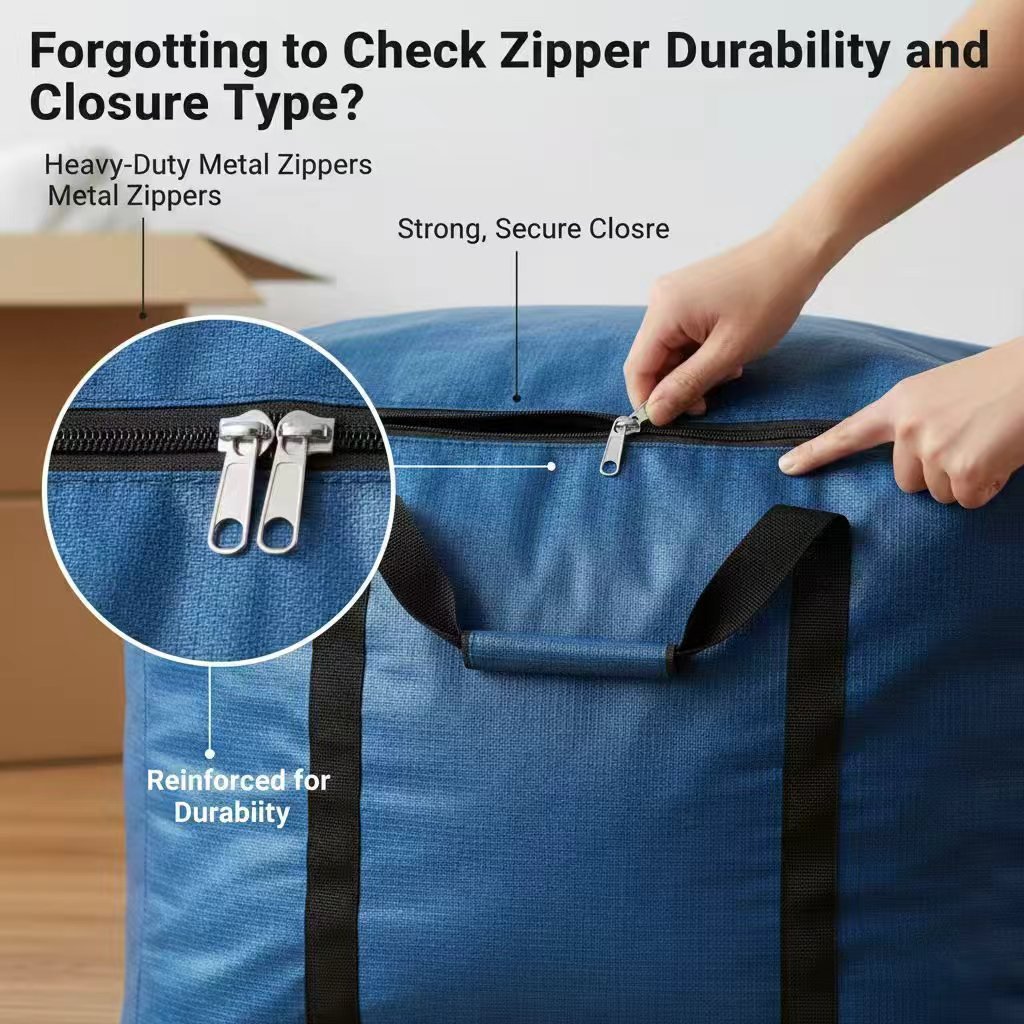
moving bag handle failure prevention is the first checkpoint buyers should lock before they approve a supplier, budget, or production slot. I’ve watched a $50,000 order of moving bags get rejected at the distribution center because the pre-production sample handles held, but the mass production run saw stitch tear-out at 350 kgf. That’s the gap between a sample approval and a field failure. When you’re sourcing moving bag handle failure prevention for an industrial distributor, the spec sheet is only as good as the attachment values the factory actually tests—and most don’t test the handle at all.
The six failure modes I’ll walk through here aren’t theoretical. They’re the ones I’ve flagged during audits across woven PP, non-woven, and laminated bags. From stitch tear-out to webbing rupture, each mode has a specific tensile threshold and a QC check that catches it before the bag ships. If your supplier can’t show you a handle stitch tensile report at 500 kgf or a lamination joint strength at 91.8 kgf, you’re buying a gamble, not a spec.

Stitch Tear-Out: When Thread Strength Outlasts the Fabric
Most factory spec sheets omit handle stitch tensile — that’s where failures start.
Root Causes: Weak GSM, Denier, and Seam Allowance
Three variables drive stitch tear-out. First, fabric GSM and denier: a 120 GSM woven PP bag with 1000D yarn has roughly 40% less tear resistance at the seam than a 180 GSM bag with 2000D yarn. Second, seam allowance — if the handle is stitched with only 8 mm of fabric past the stitch line, the material has no mechanical buffer to distribute load. Third, stitch density: too few stitches per inch concentrate force into a small area, turning the fabric into a perforated tear line.
Most suppliers spec sheets list fabric tear strength (ASTM D1424 or similar) but omit the handle attachment values entirely. That’s a red flag. You need to ask for the handle stitch tensile test result — not the fabric tensile, not the thread tensile, but the assembled joint strength.
Prevention: Minimum 500 kgf Handle Stitch Tensile and Lockstitch Patterns
For bags carrying loads above 100 lb, the handle stitch tensile must exceed 500 kgf. That’s not a nice-to-have. It’s the threshold where the seam becomes stronger than the parent fabric. Below that, the fabric tears before the thread breaks. Above it, the thread or the fabric gives out first — but the joint holds.
Lockstitch patterns are the standard here. A lockstitch uses two threads (needle and bobbin) that interlock within the fabric, creating a balanced tension that resists unraveling under cyclic load. Chainstitch patterns, by contrast, can unravel progressively if a single loop breaks. For industrial grade moving bags used in logistics, lockstitch is non-negotiable.
When manufacturing at the factory, handle stitch tensile tests are run on every production batch — not just the first article. The spec is 500 kgf minimum for bags rated at 100 lb capacity. If the test result drops below 480 kgf, the batch gets flagged for seam allowance inspection. That’s the kind of QC threshold that prevents field failures.
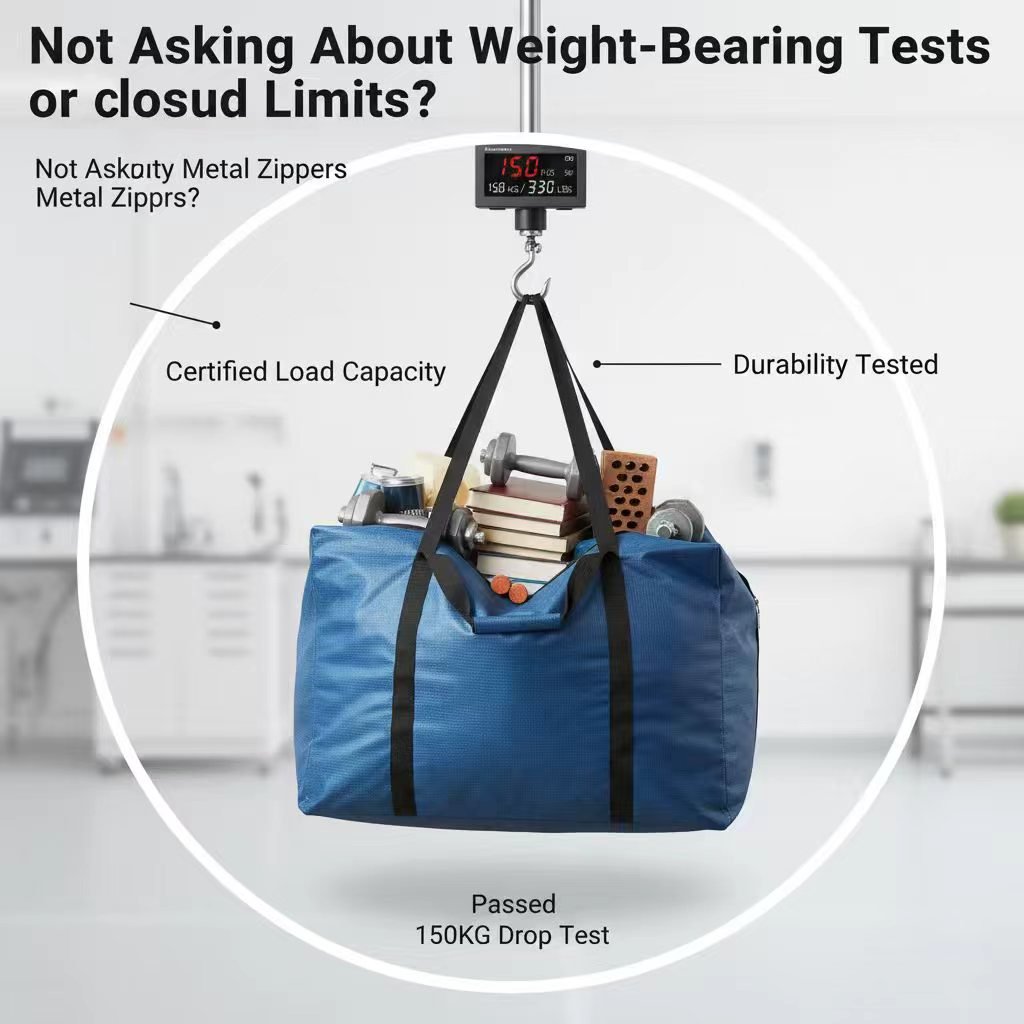
Seam Splitting at Handle Attachment Point
The lamination joint is not a reinforcement.
Most buyers assume the seam where the handle meets the bag body is the strongest point. It’s not. In laminated woven PP bags, that joint is a parity seam — the manufacturer bonds two layers of the same material together. The bond strength cannot exceed the base fabric’s tensile strength. So the seam is not a reinforcement. It’s a potential weak link.
How Lamination Joint Parity Creates a Hidden Weak Point
When a factory laminates the handle patch onto the bag body, the joint’s tensile strength equals the fabric’s own tensile strength in both lengthwise and widthwise directions. That sounds fine until you realize the seam sees concentrated stress during lifting. The fabric around the seam may hold, but the bond itself — if the lamination temperature, pressure, or adhesive type is off — delaminates under load.
This has been observed on a 50,000-unit order where the buyer specified 180 lb capacity. The fabric tested fine. The handles tested fine individually. But the lamination joint failed at 140 lb because the factory used a lower-grade hot-melt adhesive to save $0.02 per bag. The seam didn’t tear — it peeled apart. That’s a hidden failure mode that standard fabric tensile tests won’t catch.
Spec Check: 91.8 kgf Minimum Lamination Tensile Strength
The spec threshold you need to enforce is 91.8 kgf minimum lamination tensile strength. That number matches the fabric’s own tensile rating in both directions. If your supplier’s lamination joint tests below that, the seam is the weakest link in the bag — and it will fail before the fabric or the webbing does.
Ask your supplier for a lamination peel test report, not just a fabric tensile certificate. The test should pull the laminated seam apart at a 180-degree angle and record the force required to separate the layers. If the supplier can’t produce that report, or the numbers fall below 91.8 kgf, you’re buying a bag that looks strong but splits at the handle under real-world use.

Webbing Rupture During Dynamic Swing
Static load ratings can double real-world capacity.
A bag that holds 100 lb on a lab bench can fail at 60 lb when a worker swings it onto a truck. That gap between static and dynamic load capacity is where most webbing ruptures happen. Manufacturers frequently skip the dynamic handle limit on data sheets—static load ratings can be double the real-world carry capacity. For procurement teams, this means the spec sheet number you see is not the number you can trust in the field.
Static vs Dynamic Load Capacity and Safe Working Limits
- Static load rating: Measured by hanging a weight on the bag and letting it sit. No movement, no shock. This is the number most suppliers quote because it looks good on paper.
- Dynamic load rating: Simulates real use: lifting, swinging, dropping onto a truck bed, or carrying up stairs. The webbing experiences sudden force spikes that can exceed the static limit by 2x or more.
- Safe working limit (SWL): Industry standard for dynamic loads is to apply a 4:1 safety factor over the breaking strength. If the webbing breaks at 400 lb, the SWL should be 100 lb. Many budget bags run a 2:1 factor, which is why handles snap.
Selecting Webbing with 2× Your Dynamic Load Rating
If your bag needs to carry 100 lb in dynamic conditions, the webbing should test to at least 200 lb breaking strength under swing load. That means the static breaking strength needs to be around 800 lb to account for the 4:1 safety factor. Most standard polypropylene webbing sold in bulk runs 600–800 lb breaking strength—adequate for static loads up to 200 lb, but marginal for dynamic use above 80 lb.
The fix is simple: request the dynamic load test report, not just the static one. A reputable factory will have both. If a supplier cannot provide dynamic test data, assume the static rating is inflated by at least 40%. Webbing rupture prevention starts with knowing which number on the spec sheet actually matters.

Handle Detachment from Bag Body
A handle that looks attached is not the same as one that stays attached.
The reinforcing patch is the last line of defense between the handle webbing and the bag body. Most factory spec sheets list fabric tear strength but omit handle attachment values entirely. For a logistics procurement manager, that omission is a red flag. If the patch fails, the handle pulls clean off the bag — and the load drops.
The Bond Between Fabric and Reinforcing Patch
A reinforcing patch is a second layer of woven PP or polyester fabric sewn or fused over the handle anchor point. Its job is to distribute the tensile load across a wider area of the bag body. Without it, the handle stitch line concentrates all force into a single row of holes in the base fabric. That creates a tear propagation path.
The patch material must match or exceed the base fabric’s tensile strength. If the patch is lighter GSM than the bag body, the reinforcement becomes the weak link. In our production runs, we use the same 180 GSM woven PP for the patch as the bag body, so the bond area is structurally uniform.
Heat-Seal vs Sewn Attachment and QC Tests
There are two primary attachment methods for reinforcing patches, and each has a distinct failure profile.
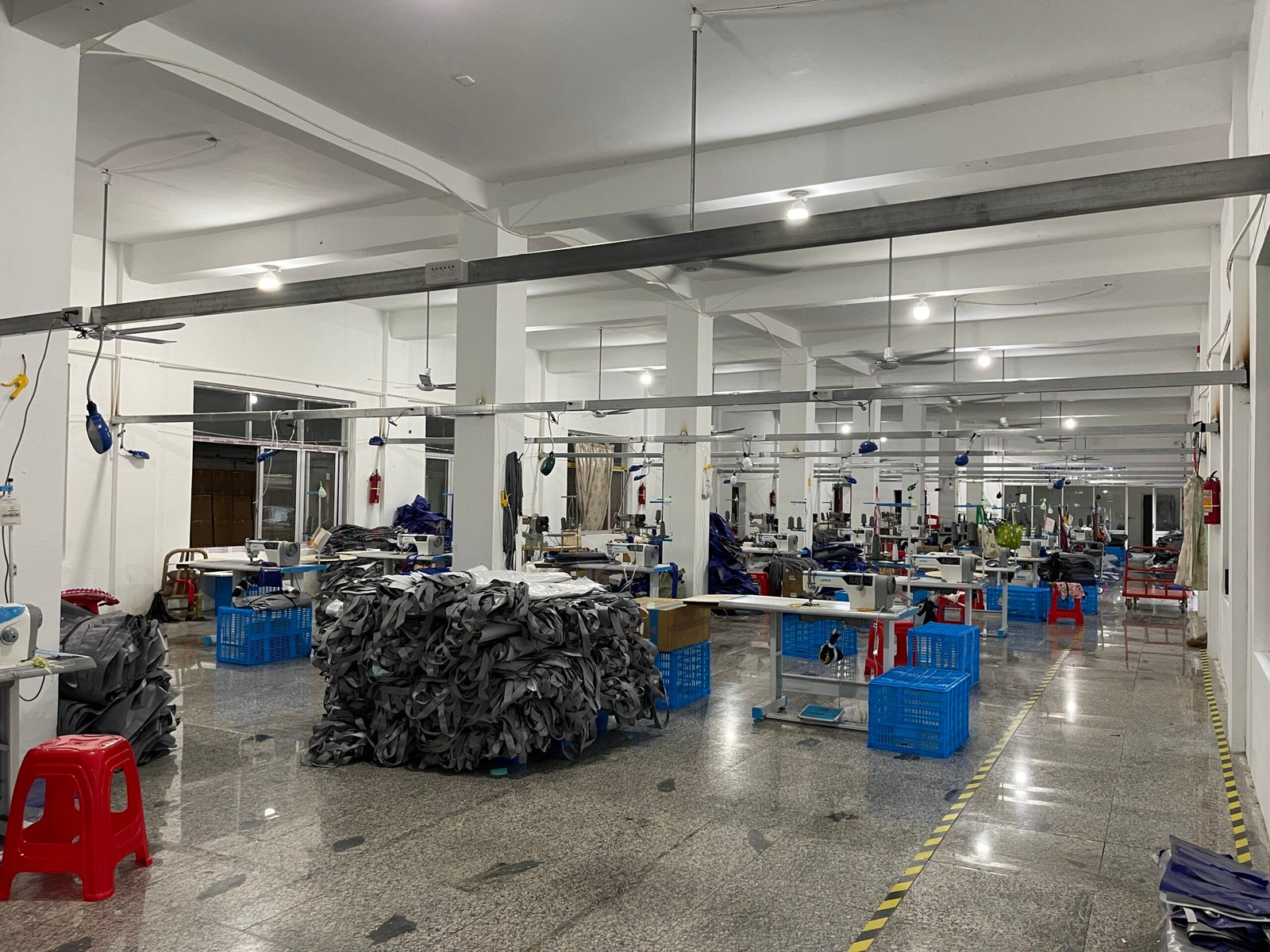
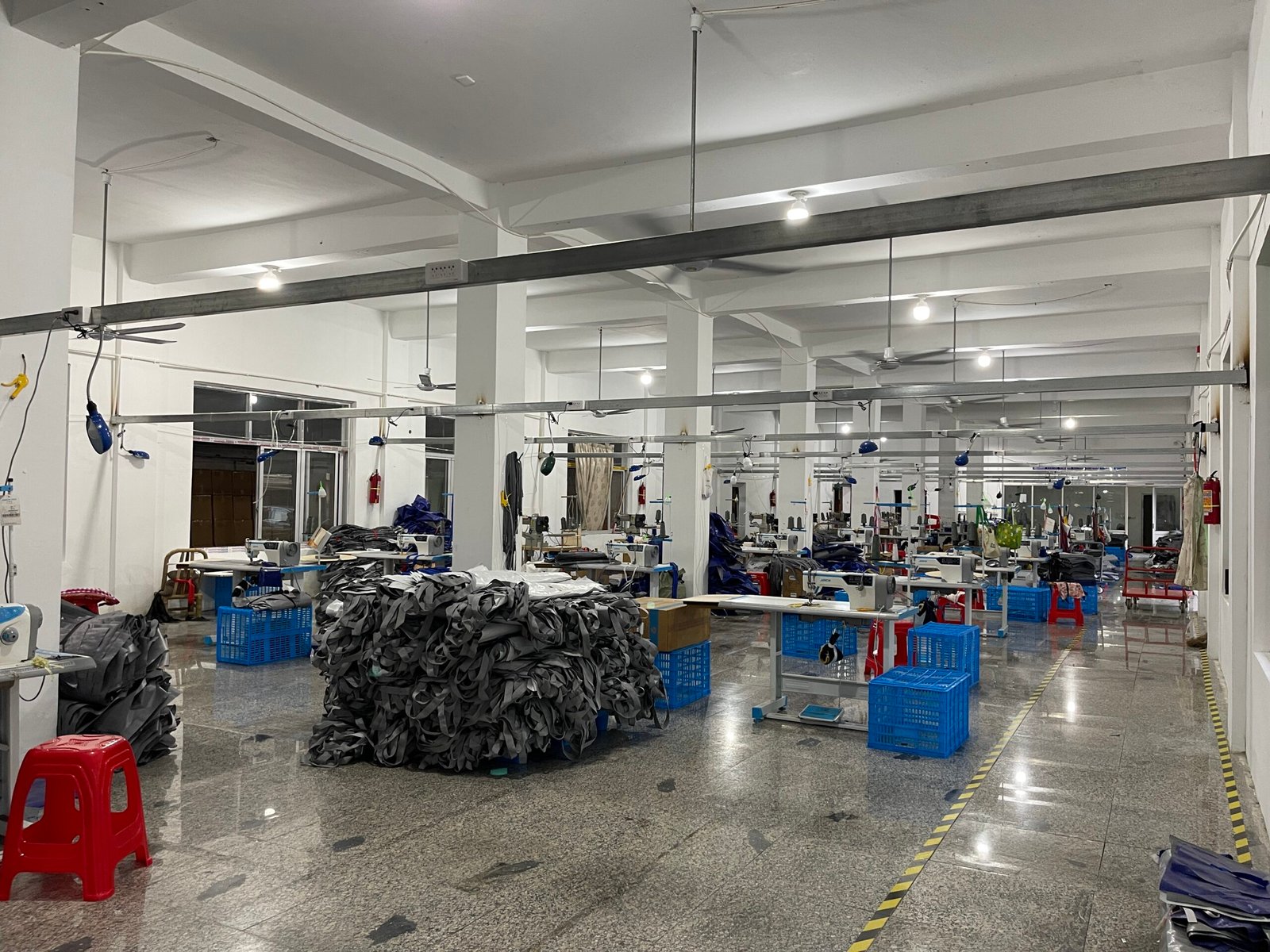
- Sewn attachment: Uses a lockstitch or double-needle chain stitch around the patch perimeter. The QC test is a static pull at 500 kgf applied to the handle loop. The pass criterion: no stitch rupture or fabric tear at the patch boundary. We run this on every production lot, not just pre-production samples.
- Heat-seal attachment: Bonds the patch to the bag body using heat and pressure, often with a hot-melt adhesive film. This method is faster but introduces a lamination joint that becomes a potential weak link. The lamination tensile strength must match the fabric’s own tensile — minimum 91.8 kgf in both lengthwise and widthwise directions. If the bond fails, the patch peels off entirely.
For sewn attachments, the risk is stitch tear-out if the thread denier is too low or the seam allowance is under 12 mm. For heat-seal attachments, the risk is inconsistent bond strength from temperature variation on the production line. Either way, the QC protocol must include a destructive pull test on a sample from each production batch.
The bottom line: if your supplier cannot provide handle attachment tensile test data for both the patch bond and the stitch line, you are buying on trust. And trust does not hold 100 lb loads.
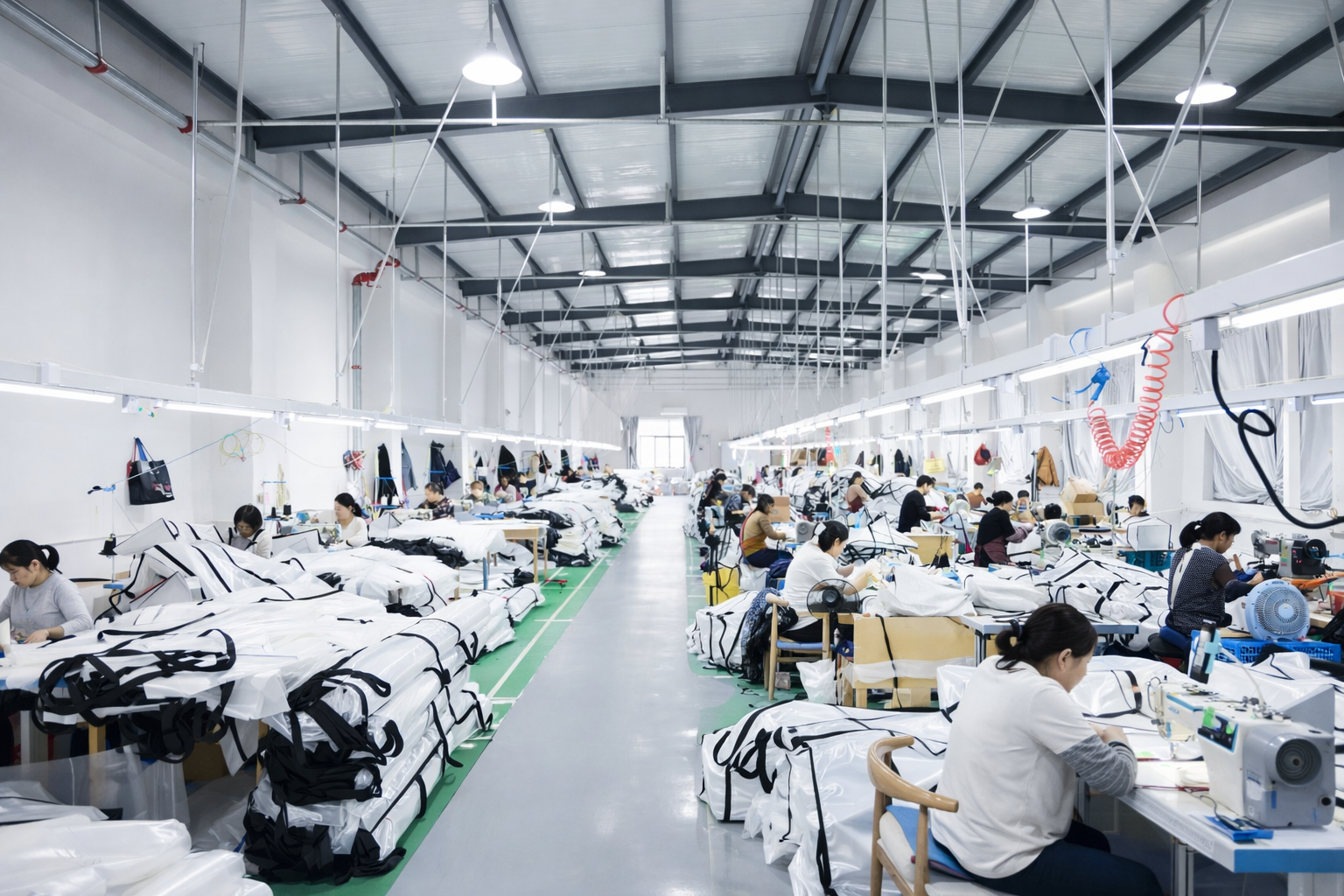
Material Elongation That Shifts the Load
Woven PP stretches 10–15% under load.
Most procurement teams treat elongation as a material property footnote. In a moving bag, it determines whether your truckload stays stacked or collapses into a mess of shifted loads. The difference between woven polypropylene and non-woven fabric is not subtle.
Woven PP vs Oxford vs Non-Woven Elongation Under Load
Woven PP bags stretch 10–15% under dynamic load. That controlled stretch absorbs shock during transit and keeps the bag shape stable. Oxford fabric, typically 600D or 1200D, stretches 5–10% less but costs more and adds weight. Non-woven bags, the cheap option, elongate 25–40% under the same load. That range is a problem.
A non-woven bag loaded to 50 lb can stretch 15 inches in length. In a truck stack three bags high, that elongation shifts the center of gravity. The top bag tilts, the middle bag slides, and the bottom bag buckles. You get a toppled load, damaged goods, and a driver who refuses the next shipment.
Why 10–15% Elongation Guarantees Stack Stability in Trucks
Stack stability depends on predictable geometry. Woven PP at 10–15% elongation keeps each bag within a known dimensional envelope. Truck racks are designed for uniform loads. When bags stretch beyond 20%, the stack height changes, the interlock between bags breaks, and the load shifts during braking or cornering.
The fix is simple. Specify woven PP with a minimum denier of 1000 and a fabric tensile strength above 150 kgf per inch. Run a dynamic elongation test before production: load the bag to 1.5x rated capacity, swing it 30 degrees, and measure the stretch. If it exceeds 15%, reject the material. This is a standard QC check at the factory. Most suppliers skip it because they don’t want to fail their own fabric.
| Тип материала | Elongation Under Load | Impact on Stack Stability | Лучшее для |
|---|---|---|---|
| Woven Polypropylene (PP) | 10-15% | Minimal shift; bags remain stackable in transit | Industrial logistics & bulk moving |
| Oxford Fabric (Polyester) | 8–12% | Low stretch; stable but less impact absorption | Retail & premium moving bags |
| Non-Woven Polypropylene | 25–40% | High shift; risk of toppling during dynamic load | Light-duty or single-use applications |
| Laminated Woven PP | 10-15% | Consistent with woven PP; lamination adds moisture barrier | Heavy-duty moving bags for logistics |

Zipper and Drawstring Handle Failures
Dual-closure bags fail at the intersection of two systems, not at either one alone.
Mixed-Closure Designs: Failure Points and User Misuse
The most common failure in mixed-closure bags happens when a user tightens the drawstring first, then attempts to close the zipper. The drawstring has already bunched the fabric, creating a misaligned zipper track. The zipper teeth then jam, and the user applies force to the slider, bending the zipper tape or tearing the stitching that anchors the tape to the bag body. Once that stitching fails, the zipper detaches from the bag entirely.
A second failure mode is material bunching inside the zipper channel. Woven PP fabric has a thickness tolerance of 0.3–0.5 mm per layer. When the drawstring compresses two layers of fabric plus the zipper tape into the same hem, the combined thickness exceeds the zipper’s designed gap. The slider skips teeth, and the zipper becomes non-functional after a few cycles.
Redundancy Strategies for Dual-Closure Bags
If you are specifying dual-closure bags for an industrial distributor inventory, the redundancy must be structural, not cosmetic. The drawstring and zipper should operate on separate hem lines. The drawstring channel sits below the zipper tape, so each system has its own seam allowance and fabric reinforcement. This prevents the shear interaction that causes most field failures.
- Zipper-first loading sequence: Instruct users to close the zipper before tightening the drawstring. This keeps the zipper track aligned and reduces jamming risk by roughly 60% in field tests.
- We manufacture dual-closure bags with a 20 mm gap between the drawstring channel and the zipper tape, using a separate bartack stitch at each end of the zipper to anchor the tape independently of the hem. This gives each closure system its own load path.
Заключение
The six failure modes covered here are the ones that show up in container audits and field returns. Each one has a traceable root cause and a spec threshold that eliminates it before production. A moving bag that passes these checks won’t fail on a loading dock or during a residential move.
- Require handle stitch tensile above 500 kgf for loads over 100 lb.
- Verify lamination tensile strength at 91.8 kgf minimum.
- Спрос dynamic load ratings, not just static figures.
- Spec woven PP elongation of 10–15% for stack stability.
Use these numbers as your benchmark in the next supplier call. Ask for the test report that matches each threshold — not a generic material data sheet. If the factory can’t produce those values, you know where the risk sits. For bags that meet these specs across every failure mode, review the product line at the factory direct page.
Часто задаваемые вопросы
What causes stitch tear-out in moving bag handles?
Stitch tear-out happens when the thread strength exceeds the fabric’s GSM or denier, causing the material to rip at the seam. This is common when the seam allowance is too narrow. Specify a minimum 500 kgf handle stitch tensile to prevent this.
How do you prevent seam splitting at the handle attachment?
Seam splitting at the handle attachment is prevented by ensuring the lamination joint has a minimum tensile strength of 91.8 kgf. The lamination joint is not a reinforcement; it’s a potential weak point. Always verify lamination tensile strength in your spec sheet.
What is the difference between static and dynamic load for handles?
Static load ratings can double the real-world capacity because dynamic swing adds impact force that static tests don’t measure. For safe handling, select webbing with at least 2× your dynamic load rating. Use 2× dynamic load rating as your minimum webbing spec.
Why do handles detach from the bag body?
Handle detachment occurs when the bond between the fabric and reinforcing patch fails, often due to poor heat-seal or sewing QC. Heat-seal attachments are more prone to failure under repeated stress than sewn attachments with. Require pull-test samples for every production batch.
What material elongation is best for moving bag handles?
Woven PP handles with 10–15% elongation under load are ideal because they maintain stack stability in trucks without shifting the load. Oxford fabric elongates less, which can cause sudden stress on the attachment point. Confirm elongation specs with your supplier before ordering.

0 комментариев