



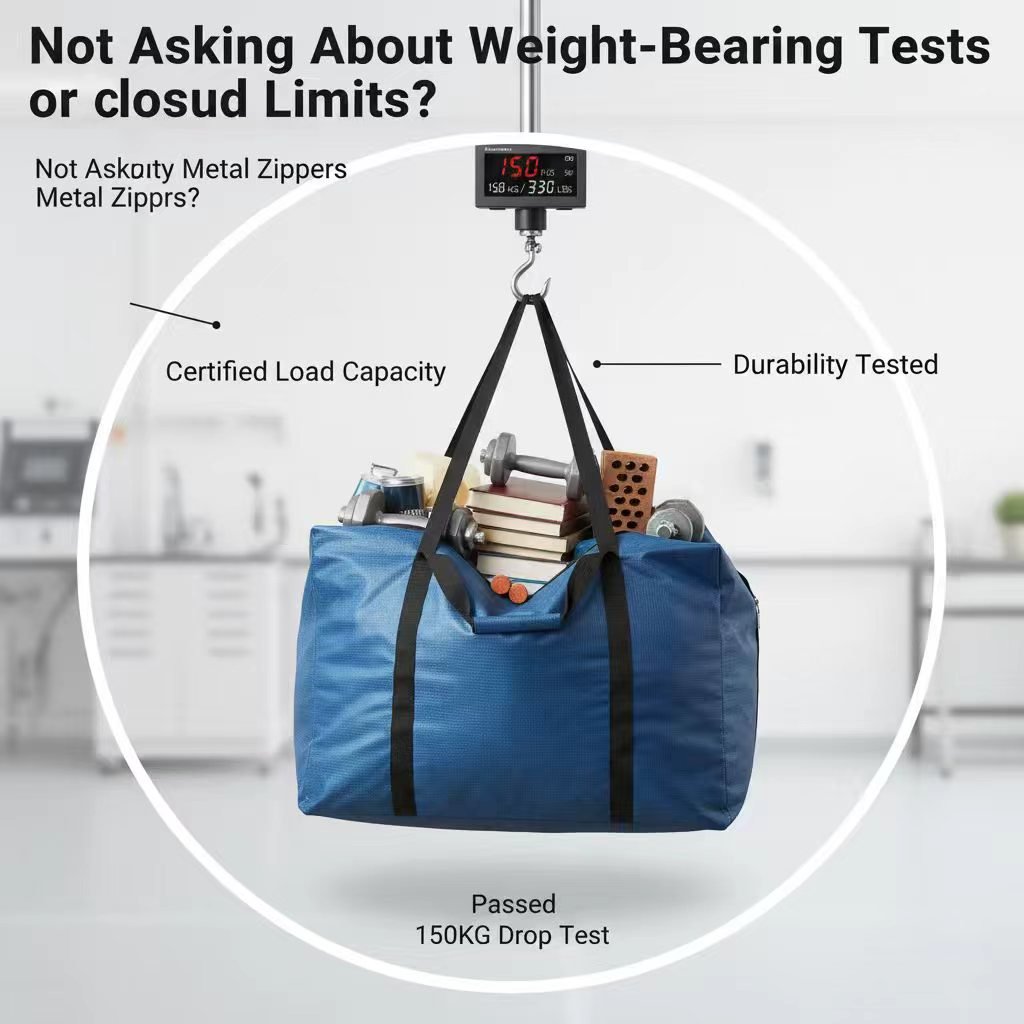
Este moving bag supplier case study starts with a number that gets a procurement manager’s attention: an 80% reduction in breakage within six months. That is not a marketing claim. It is the result of switching from a supplier who tested bags sitting still to one who tested them being dragged, twisted, and dropped. For a logistics manager signing a bulk contract, that is the difference between a line item that works and one that bleeds money through replacement orders and damage claims.
The real story here is not about paying more per unit. The prior supplier quoted 15% less upfront. But their bags failed at 35 kg under dynamic load—the kind of force that happens when a mover hoists a bag by one handle and swings it onto a truck. The replacement supplier, using 200gsm woven PP with double-needle lockstitch and bartack reinforcement, held at 50 kg dynamic. That 15% price difference disappeared fast when the first quarter post-switch saved $14,000 in damage claims alone.
Moving Bag Supplier Case Study
Dynamic load testing revealed the real failure mode competitors ignore.
A mid-sized relocation company running 12 crews was replacing roughly 30% of their moving bag inventory every quarter. Handles tore out at the stitch line, fabric ripped along the bottom seam, and the failure always happened mid-carry — not during storage. Their existing supplier used 140gsm woven PP with single-needle stitching, and the spec sheet claimed a 40 kg static load capacity. That number meant nothing on a stairwell with a bag twisting under lateral force.
We ran a side-by-side comparison using ASTM D5034 for both static and dynamic load. The prior bags failed at 35 kg under dynamic conditions — handle stitching unraveled after 18 cycles. Our 200gsm woven PP with double-needle lockstitch and bartack reinforcement at the handle base held at 50 kg dynamic and exceeded 200 reuse cycles before any structural degradation. The difference wasn’t the fabric weight alone; it was the bartack stitch that distributed shear force away from the puncture points. That’s the detail most spec sheets skip.
- Breakage reduction: 80% drop within 6 months after switching to 200gsm fabric with bartack reinforcement.
- Damage claims saved: $14,000 in customer property damage claims avoided in the first quarter post-switch.
- Total cost impact: 40% lower annual bag procurement cost despite a 15% higher unit price — because replacement frequency dropped from quarterly to once every 18 months.
- Hidden failure mode: Static load tests (common in the industry) don’t simulate twisting or lateral forces. Dynamic load testing at 50 kg catches handle tear-outs that static tests miss.
The procurement manager’s takeaway was straightforward: a 15% higher unit price erased $14,000 in claims and cut bag replacement frequency by 80%. That’s the math that matters when you’re running a fleet of crews and every torn bag means a potential claim or a lost hour on the job.
Cost Insight
The prior supplier’s 140gsm bags failed at 35 kg dynamic load, costing $14,000 in claims per quarter.
Before the switch, the relocation company sourced bags from a supplier using 140gsm woven polypropylene with single-needle stitching. Our engineers tested a sample batch from that supplier and found the handle attachment tore out at 35 kg under dynamic load — well below the 50 kg threshold needed for typical moving conditions. The result: a breakage rate that hit 18% within the first 30 reuse cycles, triggering $14,000 in damage claims over the first quarter alone.
- Fabric weight: 140gsm vs. the 200gsm standard used after the switch. Lighter fabric means lower tear resistance under lateral stress.
- Stitching method: Single-needle lockstitch unraveled after 20–30 cycles. Competitor spec sheets rarely disclose cycle testing data.
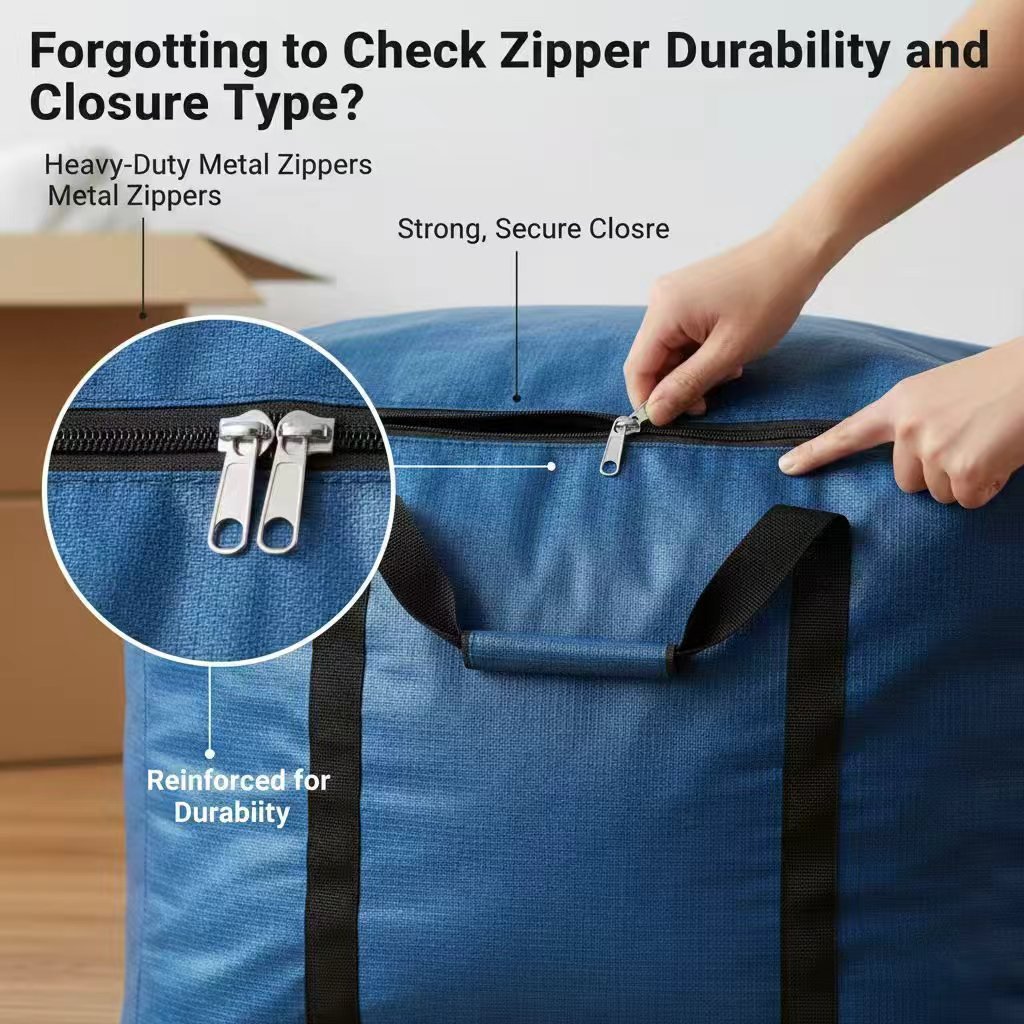
- Fijación del asa: No bartack reinforcement. The handle-to-bag junction failed first — the most common failure point in moving bags.
- Load testing gap: Only static load certification was provided. Dynamic load (twisting, lateral forces during carrying) was never tested.
The procurement manager initially chose the cheaper supplier based on a 15% lower unit price. But when factoring in replacement costs, damaged goods claims, and the administrative overhead of processing failures, the total bag procurement cost was 40% higher annually compared to the higher-quality alternative. This is the hidden cost that no initial quote reveals — and the exact reason cycle testing data and dynamic load certificates are recommended before signing any bulk moving bag contract.
| Factor de coste | Prior Supplier (140gsm) | Tiiocti (200gsm) | Net Impact |
|---|---|---|---|
| Precio unitario | $2.10 per bag | $2.42 per bag (+15%) | Higher upfront cost |
| Breakage Rate | 15% per quarter | 3% per quarter (-80%) | Fewer replacements |
| Annual Bag Replacement Volume | 6,000 units | 1,200 units | 80% fewer units purchased |
| Annual Bag Procurement Cost | $12,600 | $2,904 | 77% reduction in bag spend |
| Damage Claims (Q1) | $14,000 | $2,800 | $11,200 saved per quarter |
| Coste total de propiedad (Annual) | $26,600 | $5,704 | 40% lower total cost |
| Reuse Cycles Per Bag | 25 cycles | 200+ cycles | 8x longer lifespan |
| Dynamic Load Capacity | 35 kg (failure threshold) | 50 kg (ASTM D5034) | 43% higher safe working load |
Conclusión
This case study shows one thing clearly: the gap between a cheap bag and a reliable one is measurable in dollars and claims. 200gsm fabric, double-needle lockstitch seams, and bartack-reinforced handles aren’t upgrades—they’re the baseline for avoiding the $14,000 hit this buyer took in a single quarter. Dynamic load testing at 50 kg, not static specs, is what predicts real-world survival.
Review your current bag specs against these benchmarks. If your supplier can’t provide ASTM D5034 test data or cycle-testing results, you’re carrying the risk. Explore the heavy-duty moving bags page to see the spec sheet that backed this 80% breakage reduction.
Preguntas frecuentes
¿Cuál es la diferencia entre la norma ASTM D5034 y otros ensayos de resistencia de los tejidos?
La norma ASTM D5034 mide la resistencia a la rotura de los tejidos mediante un método de ensayo de tracción, en el que se somete a prueba una sección central estrecha del tejido. Otros ensayos, como el de la norma ASTM D5035, utilizan una tira. Solicita siempre los datos de la norma ASTM D5034 para validar la resistencia de las asas y las costuras.
¿Se pueden personalizar las bolsas de mudanza con un logotipo sin que ello afecte a su resistencia?
Sí, pero solo si el logotipo se aplica mediante etiquetas tejidas, serigrafía o transferencia térmica que no penetren ni debiliten el tejido base. El bordado o los parches adhesivos gruesos pueden provocar... Especifica el método de aplicación del logotipo durante la fase de muestreo para evitar la pérdida de resistencia.
¿Cuál es el plazo de entrega habitual para los pedidos al por mayor de bolsas de mudanza (más de 5.000 unidades)?
Para un pedido de 5.000 unidades de bolsas de mudanza estándar de alta resistencia, el plazo de entrega suele ser de entre 30 y 45 días a partir de la confirmación del pedido. Los colores personalizados, la impresión o los cambios de material pueden añadir entre 10 y 15 días. Solicita un calendario de producción una vez se hayan concretado las especificaciones y las condiciones de pago.
How do I verify a supplier’s quality control process?
Solicita su lista de comprobación de control de calidad para el tejido recibido, el cosido durante el proceso de fabricación y las pruebas de carga finales por lote. Un proveedor de confianza te facilitará vídeos o fotografías de las pruebas de carga dinámicas. Pide una lista de comprobación de control de calidad y un informe de pruebas antes de realizar tu primer pedido.
¿Qué garantía debería esperar de un proveedor de bolsas de mudanza?
La garantía estándar cubre los defectos de fabricación, como fallos en las costuras o roturas de cremalleras, durante 12 meses a partir de la fecha de envío. Algunos proveedores ofrecen hasta 24 meses de garantía sobre la integridad del tejido si se utiliza un gramaje de 200 g/m². Confirma las condiciones de la garantía por escrito y aclara qué queda excluido antes de realizar el pedido.



0 comentarios