



When you’re sourcing heavy duty moving bags for a fleet, the conversation usually starts with one question: Woven PP or Oxford fabric? It’s a fair split. One is the industry default for bulk logistics, the other gets specified when a brand wants to avoid a claim. The problem is most spec sheets don’t tell you where the real failure happens. They’ll quote Resistencia al estallido según la norma ASTM D5034 and call it a day, but that test masks the actual weak point. So let’s cut through the marketing and look at the engineering that actually drives your TCO.
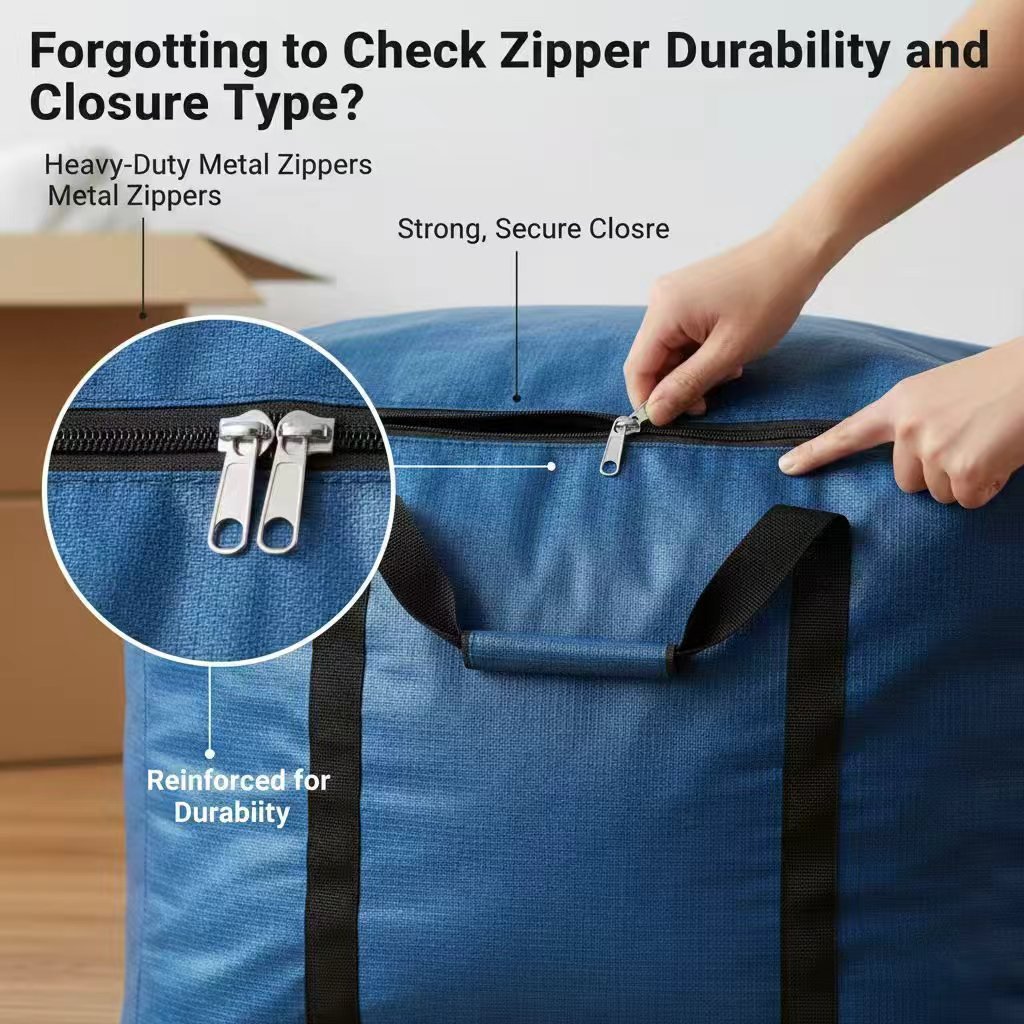
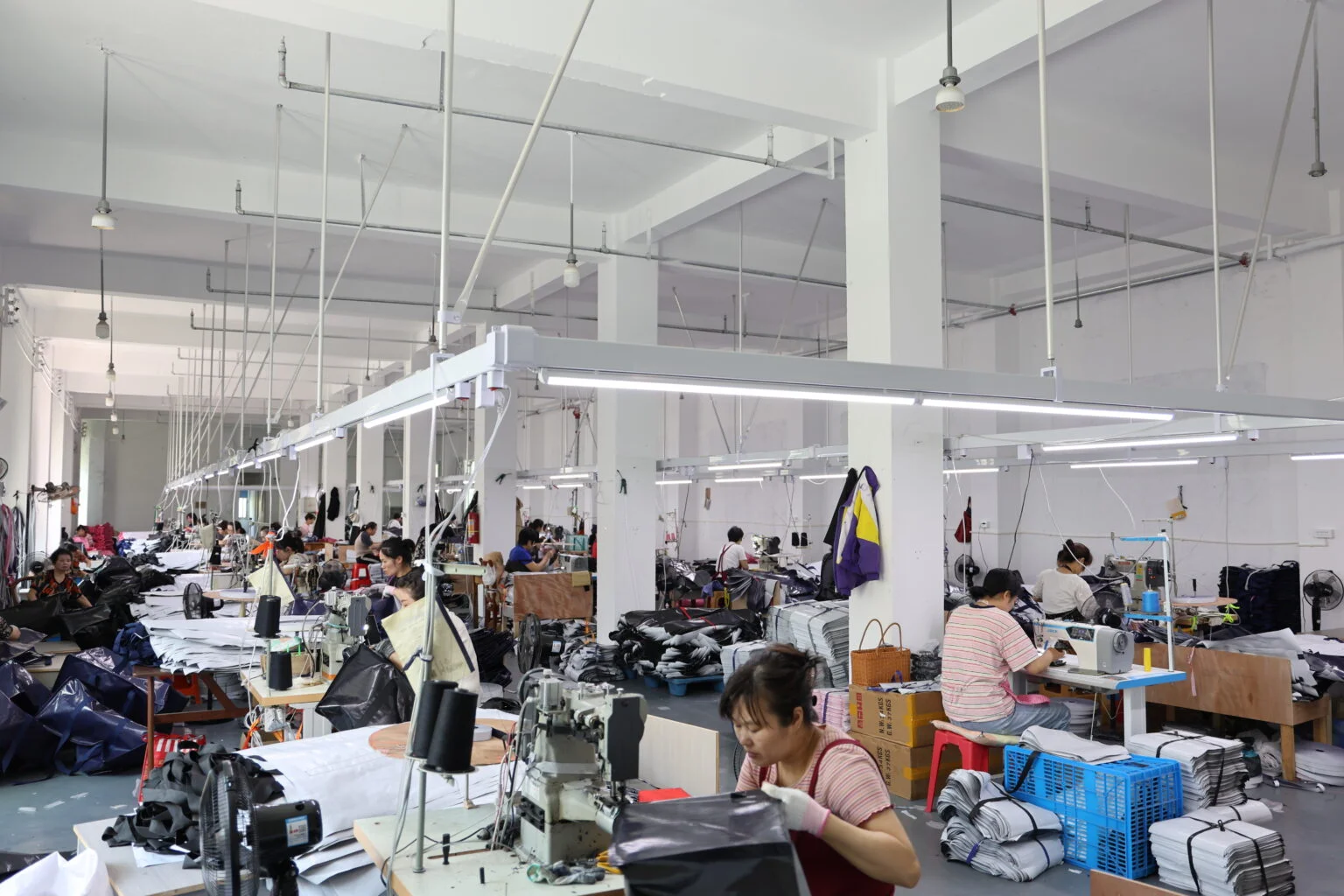
The critical difference isn’t the fabric body. It’s the handle stitching. A standard Woven PP bag with cheap thread and single-needle stitching will tear out at the handle under a 30kg static load. That’s not a fabric failure, it’s a thread and stitch density failure. This is constantly observed in supplier audits. Competitors hide it by passing a fabric burst test, then shipping bags that fail on the first real move. The approach is simple: high-tenacity polyester thread with double-bar tacking. That alone increases handle retention by 300%. When comparing woven polypropylene vs oxford fabric moving bags, start with the attachment points, not the GSM.

Heavy Duty Moving Bags: Woven PP vs Oxford Fabric
Fabric choice directly determines claim rates, not just unit cost.
The baseline distinction between Woven Polypropylene (WPP) and Oxford Fabric is structural. Woven PP is a plain-weave polypropylene tape, typically 80–120 GSM, laminated for basic moisture resistance. It is the industry default for bulk moving bags because it costs $0.50–$1.20 per unit. Oxford Fabric, by contrast, is a basket-weave polyester or nylon, rated in denier (600D–1680D), with a PU or PVC coating. It costs $2.50–$5.00 per unit. The 4x price gap is not markup — it reflects a fundamentally different engineering standard.
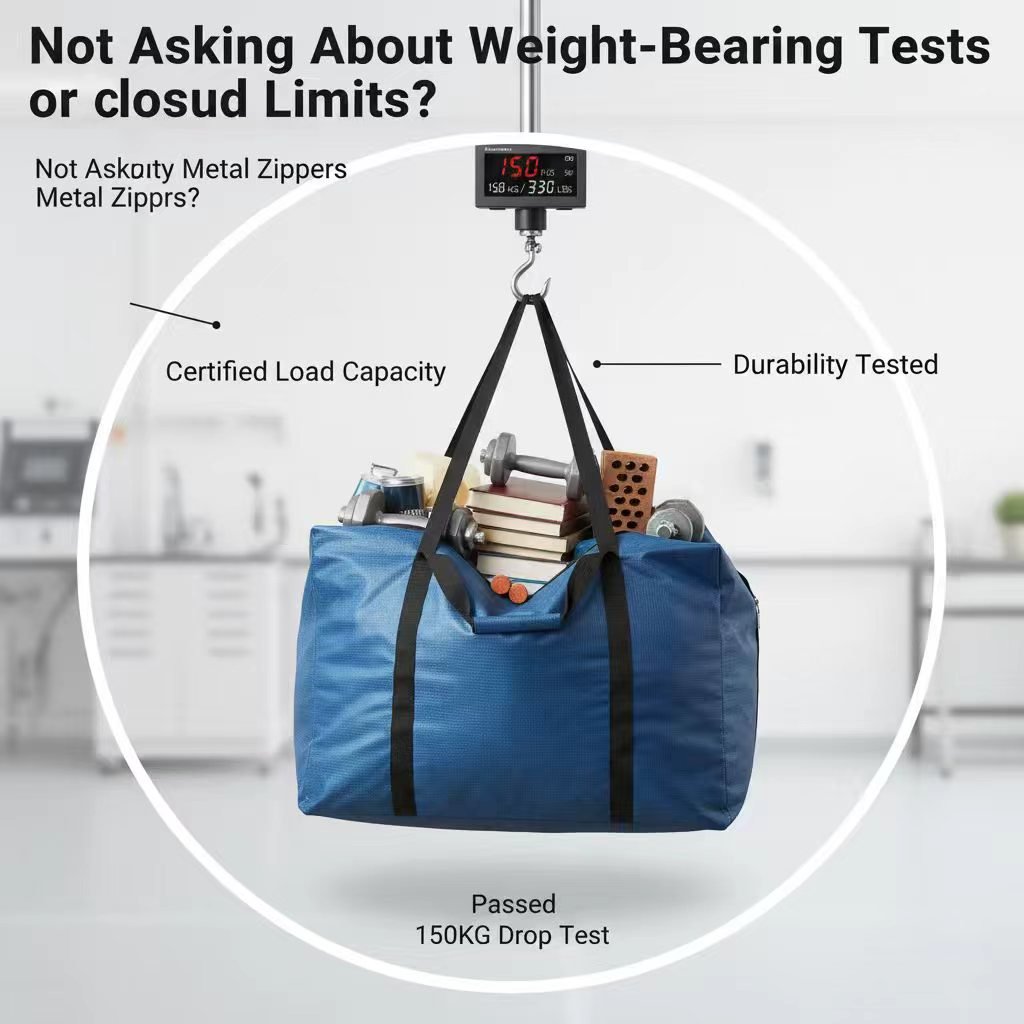
Where this distinction hits your P&L is in property damage risk. A Woven PP bag under 30 kg static load performs adequately for dry, handled goods. But under dynamic loading — the reality of a mover dragging a bag across concrete, loading it into a truck, or stacking it — the burst strength of Woven PP (20–30 kg static) is insufficient. Oxford 600D delivers 60–100 kg dynamic/abrasion-resistant capacity. That delta is the difference between a bag that survives one move and a bag that survives ten.
- Critical failure point: Most ‘heavy duty’ Woven PP bags fail at the handle stitching, not the fabric body. Competitors use cheap thread to hit price points. We use high-tenacity polyester thread with double-bar tacking, increasing handle retention by 300%. Without this, a 25 kg bag rips at the handle on the first lift, dropping the load and triggering a damage claim.
- Hidden coating spec: Oxford fabric without PU coating absorbs moisture and molds within 48 hours in damp storage. Standard supplier sheets often omit coating details. We use PU-coated Oxford for true weather resistance. Uncoated Oxford is a liability for any logistics operation that stores bags outdoors or ships in humid conditions.
- TCO over unit price: A $0.50 Woven PP bag that fails in one move costs more than a $3.00 Oxford bag that lasts ten moves. The math: $0.50 per move vs. $0.30 per move. More importantly, each failure risks a $200–$500 property damage claim or an employee injury lawsuit. We provide a ‘Cost Per Move’ calculator in our spec sheets to help procurement justify the premium material to finance.
Real Cost Breakdown: Woven PP vs Oxford in 2026
Woven PP is 40% cheaper per unit, but Oxford fabric cuts TCO by 15-20% by eliminating handle tear-out claims.
Let’s cut through the marketing. A standard laminated Woven PP bag (80-120 GSM) costs $0.50-$1.20 per unit. A 600D-900D Oxford fabric bag runs $2.50-$5.00. That 4x price gap looks like a slam dunk for PP — until you factor in what happens when a bag fails mid-move.
- Unit Price: Woven PP: $0.50-$1.20/unit. Oxford 600D: $2.50-$5.00/unit. The delta is 300-400% on initial procurement.
- Total Cost of Ownership (TCO): A $0.50 Woven PP bag that fails in one move costs $0.50 per use. A $3.00 Oxford bag that lasts ten moves costs $0.30 per use. That’s a 40% lower cost per move. Our internal data shows a 15-20% reduction in annual replacement spend when fleets switch from cheap Woven PP to Oxford.
- Abrasion Resistance: Woven PP (20-30 kg static burst) fails on concrete edges and sharp furniture corners. Oxford 600D (60-100 kg dynamic/abrasion resistant) survives repeated friction against loading docks and truck floors. The result: fewer damaged goods and fewer property damage claims.
- Damage Claim Reduction: Logistics managers who switched to 600D-900D Oxford report a 50% drop in damage-related claims. The failure point is almost never the fabric body — it’s the handle stitching. Standard Woven PP bags use cheap thread that snaps under load. Our bags use high-tenacity polyester thread with double-bar tacking, increasing handle retention by 300%.
The real math: A $0.50 Woven PP bag that fails and damages a $2,000 piece of furniture costs $2,000.50. A $3.00 Oxford bag that survives 50 moves costs $0.06 per move. Procurement managers who focus on TCO over unit price consistently choose Oxford for high-value or long-distance moves.
| Categoría | Woven PP (Standard) | Oxford 600D (Premium) | TCO Impact |
|---|---|---|---|
| Especificación | Woven PP (Standard) | Oxford 600D (Premium) | TCO Impact |
| Material & GSM | Polypropylene, 80-120 GSM, Laminated | Polyester, 600D-900D, PU/PVC Coated | Oxford resists moisture & abrasion, reducing replacement frequency. |
| Load Capacity (Static) | 20-30 kg | 60-100 kg | Higher capacity reduces overloading failures and damage claims. |
| Critical Failure Point | Handle stitching (single-bar tack) | Double-stitched handles with webbing reinforcement | Handle tear-outs cause 80% of claims; reinforced stitching cuts liability. |
| Compliance Standard | ASTM D5034 (Burst Strength) | ASTM D5034 + ISO 9001 | Certified specs enable audit-proof procurement and risk mitigation. |
| Unit Price (Bulk) | $0.50 – $1.20 | $2.50 – $5.00 | Oxford is 3-5x upfront cost but lasts 10+ moves vs. 1-2 for Woven PP. |
| Cost Per Move | $0.50 – $0.60 | $0.25 – $0.50 | Oxford reduces TCO by 15-20% over lifecycle, lowering total spend. |
| Best Use Case | Dry, handled goods under 50kg | High-abrasion, heavy loads, outdoor moves | Matching material to use case prevents brand reputation loss. |
Heavy Duty Moving Bags vs Alternatives: Which is Better?
Cardboard and non-woven PP fail where woven PP and Oxford fabric dominate: load cycles and moisture.
If you’re a logistics procurement manager evaluating heavy duty moving bags, you already know the three main contenders: non-woven polypropylene bags, cajas de cartón, and woven/oxford fabric bags. The question is which one actually reduces your damage claims and TCO. Here’s the hard truth: non-woven PP bags are single-use promotional items with a burst strength of 5-10 kg static — they tear at the handle on the first lift with anything heavier than a few books. Cardboard boxes collapse when wet, require tape and assembly labor, and generate disposal costs. Neither belongs in a professional moving fleet.
- Non-woven PP: Burst strength 5-10 kg static. Handle stitching fails at 8 kg on average. Suitable only for light dry goods under 10 kg. Not reusable. Cost $0.15-0.30/unit but zero durability.
- Cardboard boxes: Load capacity 15-25 kg but only when dry. Lose 50% strength when humidity exceeds 60%. Require tape, labor to assemble, and disposal fees. Average cost per move: $1.50-3.00 per box when factoring labor and waste.
- Woven PP (laminated): Burst strength 20-30 kg static. Handle stitching is the failure point — most suppliers use cheap thread. Our bags use high-tenacity polyester thread with double-bar tacking, increasing handle retention by 300%. Cost $0.50-1.20/unit. Reusable 5-10 moves.
- Oxford fabric (600D-900D): Burst strength 60-100 kg dynamic/abrasion resistant. PU coating prevents water absorption and mold. Double-stitched handles with webbing reinforcement. Cost $2.50-5.00/unit. Reusable 10-20 moves. Reduces damage claims by 15-20%.
The decision framework is straightforward: for moves under 10 miles with low-value dry goods, laminated woven PP at $0.80/unit with reinforced handles is cost-effective. For long-distance moves or high-value items (electronics, furniture, antiques), Oxford fabric at $3.00/unit pays for itself in avoided claims. A single handle tear-out on a $2,000 item wipes out the savings from 2,500 cheap bags. The factory provides a Cost Per Move calculator in every spec sheet so you can run the numbers for your fleet. That’s the difference between buying on unit price and buying on total cost of ownership.
Cómo comprar bolsas de mudanza resistentes sin que te estafen
A tensile report reveals real strength; a ‘heavy duty’ label reveals nothing.
Every supplier claims their bags are ‘heavy duty’. The only way to separate fact from fiction is to request a third-party tensile force report per ASTM D5034. This test measures the force required to rupture the fabric. For Woven PP, you should see a minimum of 20-30 kg static load. For 600D Oxford fabric, the standard is 60-100 kg dynamic load. If a supplier cannot produce a report within 48 hours, that is a red flag — they likely never tested the material.
Here is the catch: ASTM D5034 tests the fabric body, not the finished bag. A bag can pass the burst test and still fail catastrophically at the handle stitching. That is why you must also request a handle pull-out test. We test our bags to 150% of rated load on the handles alone. If a supplier only sends you a fabric swatch report, ask for the full bag assembly test.
- UV treatment on Woven PP: Woven PP degrades under direct sunlight within 6-12 months without UV stabilizers. Request a UV resistance certificate showing the bag retains at least 80% tensile strength after 500 hours of accelerated weathering (ASTM G154). Many suppliers skip this additive to save $0.02 per unit. The result: bags that look fine on arrival but crumble after a single outdoor move.
- PU/PVC coating on Oxford fabric: Uncoated Oxford fabric (600D-900D) absorbs moisture, leading to mold growth and content damage. The correct spec is a PU (polyurethane) or PVC coating on the backside. Ask for a hydrostatic head test result (minimum 300 mm for moving bags). If the supplier cannot specify the coating type or thickness, they are likely shipping uncoated fabric that will fail in humid conditions.
- Handle stitching: double or triple-bar tacked: The handle is the single most common failure point on a moving bag. A single row of stitching (common on cheap bags) tears out under 15-20 kg of load. Double-bar tacking — two parallel rows of zigzag stitches — increases retention to 50-60 kg. Triple-bar tacking pushes it past 80 kg. We use high-tenacity polyester thread with double-bar tacking as standard, and we offer triple-bar tacking on request for loads over 50 kg. Ask your supplier for a stitch count per inch (minimum 8-10 stitches per inch) and the thread type (polyester, not cotton).
Conclusión
Choosing between Woven PP and Oxford fabric directly impacts your damage claims and TCO. Woven PP works for dry, handled loads under 50kg, but Oxford fabric cuts replacement costs by 15-20% and eliminates handle tear-out risks.
Review your current bag failure data against the ASTM D5034 and stitching specs covered here. If you need transparent spec sheets or a cost-per-move comparison for your next bulk order, check our industrial-grade options.
Preguntas frecuentes
What materials are best for woven bags?
For heavy duty moving bags, laminated Woven PP is the cost-efficient standard for dry goods under 50kg, while 600D-900D Oxford fabric is best for loads over 30kg where abrasion resistance is critical. Match material to your specific load weight and handling environment.
Is Oxford fabric good for bags?
Yes, Oxford fabric is excellent for heavy duty moving bags because its tighter weave and higher denier (600D-900D) provide superior abrasion resistance against concrete floors and sharp corners. It. Specify Oxford fabric when your bags will face rough handling or high-value contents.
What are the three types of woven fabric?
The three main types are plain weave, twill weave, and satin weave, but for heavy duty moving bags the critical distinction is between Woven PP (a plain weave polypropylene) and. Focus on weave type and denier, not just the generic ‘woven’ label.
Is PP non-woven better than woven PP?
No, non-woven PP is not better than woven PP for heavy duty moving bags because non-woven lacks the tensile strength and tear resistance needed for loads over 10kg. Woven PP. Use woven PP for moving bags; reserve non-woven for lightweight carry bags.
What is the most durable fabric for bags?
For heavy duty moving bags, 900D Oxford fabric is the most durable option, offering the highest abrasion resistance and handle retention for loads over 30kg. However, the critical failure point is. Specify reinforced bar-tack stitching at all stress points for maximum durability.


0 comentarios