




industrial moving bag standards is the first checkpoint buyers should lock before they approve a supplier, budget, or production slot. I once got a call from a distributor staring at a $50,000 problem. He had a container full of industrial moving bags where the handles were ripping out at half the advertised weight. The supplier just kept pointing back to the initial sample approval, which, of course, was perfect. It’s the classic gap we all dread: the chasm between the golden sample you sign off on and the 10,000 units that actually show up at the port. When that happens, your margins for the quarter are gone.
This is why trusting a supplier’s spec sheet or a single perfect sample is a fundamentally flawed procurement strategy. Your real costs aren’t just in the FOB pricing; they’re hidden in the field failures and customer chargebacks that come three months later. The only defense is to move the conversation from promises to proof. This is where understanding industrial moving bag standards becomes critical. Knowing how to read an ASTM D5034 moving bag test report isn’t an academic exercise—it’s the only way to enforce quality tolerance and ensure the bag you specified is the bag you get in every single shipment.
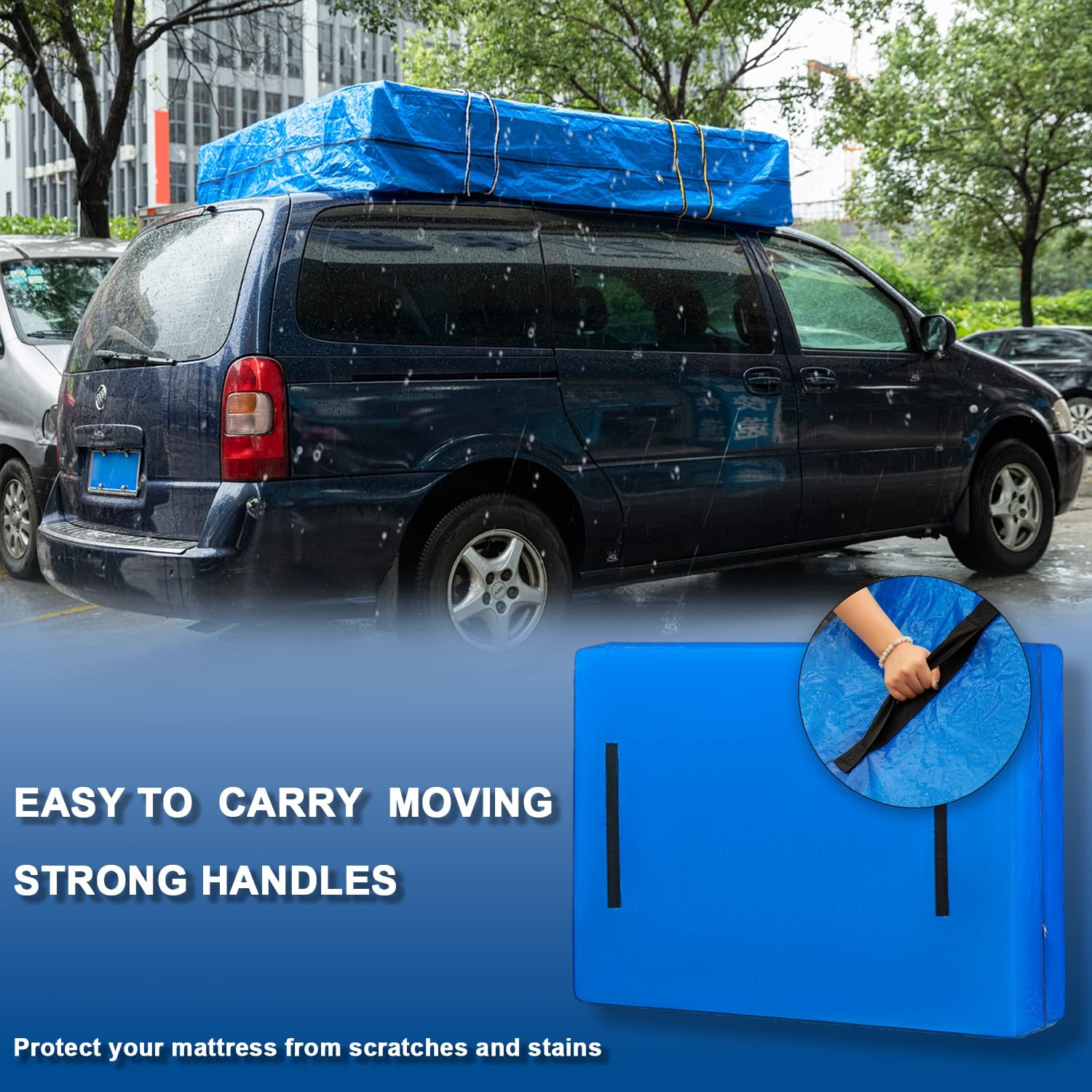
Why ASTM Standards Are the Backbone of Industrial Moving Bag Quality
Requesting a full ASTM D5034 moving bag test report isn’t being difficult; it’s basic due diligence to verify a supplier’s claims.
Everyone in this business has a story about a golden sample. The pre-production unit was perfect, you signed off, and the container that arrived three months later was filled with $50,000 of garbage. The supplier points to the signed sample approval, and you’re left holding the bag—literally. The real cost isn’t just the bad order; it’s the field replacements, the angry customers, and the slow, painful erosion of your margins. This is what happens when you buy a marketing claim instead of a specification.
Here’s a scenario I’ve seen kill a distributor’s entire quarterly profit: A container of woven polypropylene bags, which passed all strength tests at the factory in a dry climate, arrives at a humid port warehouse. Suddenly, you’re getting reports of catastrophic failures. Why? Because no one checked the moisture absorption. Untreated polypropylene can lose up to 18% of its tensile strength when wet, based on ASTM D570 data. The bags that were perfectly fine on paper become a liability in the real world. That’s the hidden cost of ignoring standards.
ASTM standards are not about academic exercises or gold-plating your products. They are a brutally effective industrial moving bag quality control checklist. They replace vague promises like “heavy-duty” with a non-negotiable set of numbers. This gives you, the distributor, a powerful tool for risk management and bulk moving bag procurement standards. It creates a universal language between you and the factory, eliminating ambiguity and protecting your investment.
- Establishes a Verifiable Baseline: A spec sheet that requires a specific woven polypropylene moving bag thickness specification and a minimum result on the heavy duty moving bag burst strength standard (ASTM D3787) is your defense. If a batch fails, the argument is over before it starts. The data doesn’t lie, preventing endless arguments over subjective quality.
- Predicts Real-World Performance: Knowing a bag’s ball burst strength directly predicts its resistance to punctures from sharp-cornered contents. This isn’t theoretical; it’s a direct path to distributor moving bag failure reduction. It allows you to match the right bag to the right application, preventing failures before they happen.
- Enforces Supply Chain Accountability: Demanding a supplier ASTM certification for moving bags forces transparency. Factory-direct sources can provide batch-level test data. Resellers and trading companies often can’t. This simple request acts as a filter, helping you quickly identify who actually controls the quality and who is just a middleman obscuring a low-quality source.
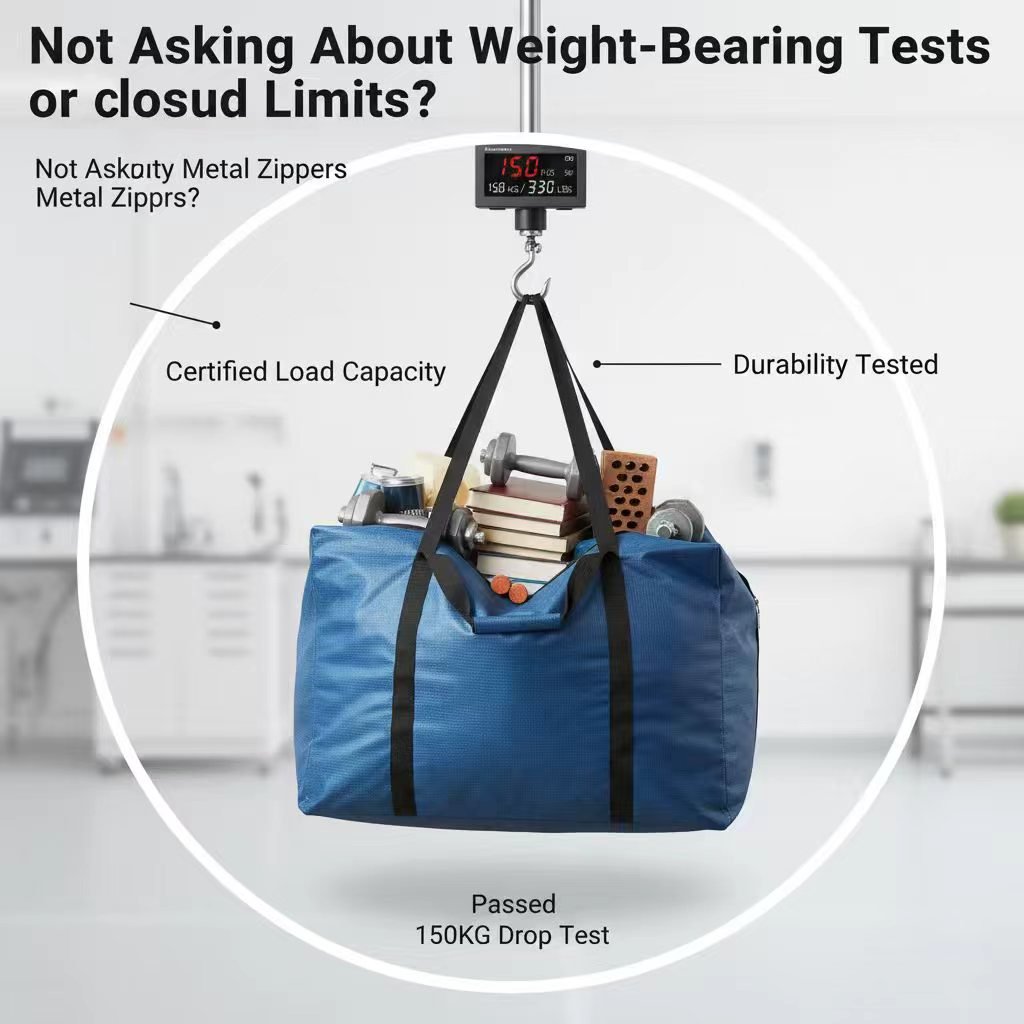
The Cost of Ignoring Standardized Testing in Bulk Sourcing
As a distributor, your margin isn’t made on the FOB pricing you negotiate; it’s made on the product that your customers accept and don’t return. Any buyer can chase a low unit cost. Professionals protect their profit by eliminating the downstream costs of failure. Ignoring standardized testing is the fastest way to turn a profitable container load into a balance sheet liability through field replacements, freight credits, and reputational damage.
The real risk isn’t in the obvious defects you catch during sample approval. It’s in the latent failures that only appear under specific, real-world conditions—conditions that a basic spec sheet completely ignores. This is where your profit margin is most vulnerable.
- Puncture vs. Load Capacity: A supplier boasts a 200 lb load capacity, and their bag passes when filled with sand. Your client, however, uses it to move boxed equipment with sharp corners. The bag ruptures at 50 lbs. Why? The supplier skipped the ASTM D3787 ball burst strength test. Your “savings” on the unit cost are now erased by the cost of replacing a single failed bag and the damage to your client relationship. This is a classic case of distributor moving bag failure reduction starting at the procurement stage.
- Environmental Degradation: You approve a woven polypropylene bag based on a sample that performed perfectly. The container arrives, and the bags are distributed to warehouses in different climates. The bags in a humid Houston warehouse start failing. The reason? The supplier used untreated polypropylene, which can lose up to 18% of its tensile strength when wet, based on ASTM D570 moisture absorption data. The bag that was strong in the factory is now a liability in the field.
Relying on a supplier’s marketing claims instead of demanding third-party test reports is not a procurement strategy; it’s a gamble. Building your bulk moving bag procurement standards around verifiable ASTM data is the only way to create a reliable supply chain and protect your bottom line from the hidden costs of “good enough.” This requires a supplier who can provide documentation not just once, but for every batch.
| Risk Category | Vague Supplier Promise | Hidden Technical Failure | Impact on Distributor Margins | Preventative ASTM Standard |
|---|---|---|---|---|
| Seam & Handle Failure | ‘Industrial-Grade’ or ‘200 lb Capacity’ | Low stitch density and weak thread material that fails under dynamic load, not just static weight. | Cost of returns, customer credits, and reputational damage from catastrophic field failures. | ASTM D5034 (Grab Test) |
| Puncture & Rupture | ‘Heavy-Duty Woven Fabric’ | Low resistance to pressure from sharp-cornered contents, leading to bag rupture and content spillage. | Direct cost of field replacements, product loss for end-users, and negative reviews that deter future buyers. | ASTM D3787 (Ball Burst Test) |
| Batch-to-Batch Inconsistency | ‘Consistent Quality, Every Order’ | Undisclosed variations in material thickness and weave density between production runs. | Unpredictable performance, increased internal QC costs, and risk of an entire batch failing to meet client specs. | ASTM D1777 (Thickness) |
| Environmental Degradation | ‘All-Weather Durability’ | Untreated polypropylene fabric can lose up to 18% of its tensile strength when wet or stored in high humidity. | Unexpected failures in warehouses or damp job sites, creating liability for damaged client assets. | ASTM D570 (Water Absorption) |
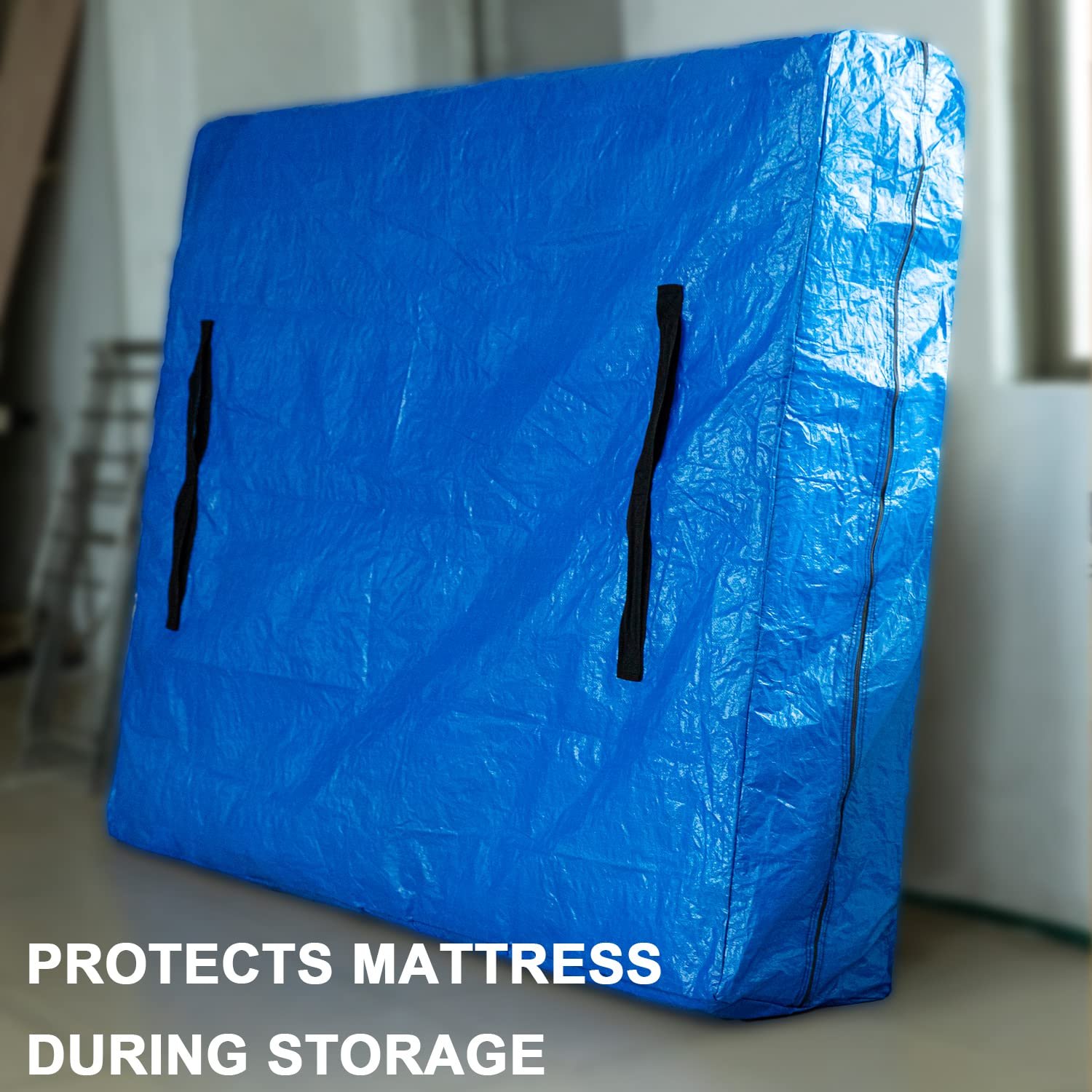
How Test Standards Protect Against Hidden Failure Rates
Hidden failure rates aren’t about fraud; they’re about un-tested environmental and stress variables that your supplier hopes you never ask about.
The biggest lie in procurement is that a pre-production sample guarantees quality. I once watched a buyer get burned on a $50,000 order because the beautiful sample he approved had nothing in common with the thousand-unit production run that arrived six weeks later. The supplier met the spec sheet, but the bags failed in the field. Why? Because the spec sheet was garbage. It didn’t ask the right questions.
A “pass” on a test means nothing without context. A supplier can test a single, perfect bag under ideal lab conditions and present it as representative. Your job as a distributor is to protect your margin by understanding the difference between a marketing “pass” and a true pass that accounts for real-world stress. Failure rates spike when the test doesn’t mirror reality.
- The Puncture Failure: A bag can have high tensile strength but zero resistance to a sharp corner. This is where the heavy duty moving bag burst strength standard, ASTM D3787, is non-negotiable. It simulates a concentrated pressure point, predicting failure when bags hold anything other than soft goods. Ignoring this test is why you get calls about ruptured bags from clients moving boxed items.
- The Humidity Failure: This is the one almost everyone misses. An untreated woven polypropylene bag can lose up to 18% of its tensile strength when wet or stored in a humid warehouse, based on ASTM D570 moisture absorption data. That “200 lb” bag is suddenly a “164 lb” bag in a damp environment. A proper supplier ASTM certification for moving bags must include material treatment details.
- The Handle/Seam Failure: The fabric itself rarely fails first; it’s the stitching. An ASTM D5034 moving bag test report (Grab Test) is essential. It doesn’t just test the fabric; it pulls on the integrated product, stressing handles and seams. A low score here tells you the bag’s construction, not its material, is the weak point. This is how you truly verify moving bag load capacity claims beyond a simple weight number.
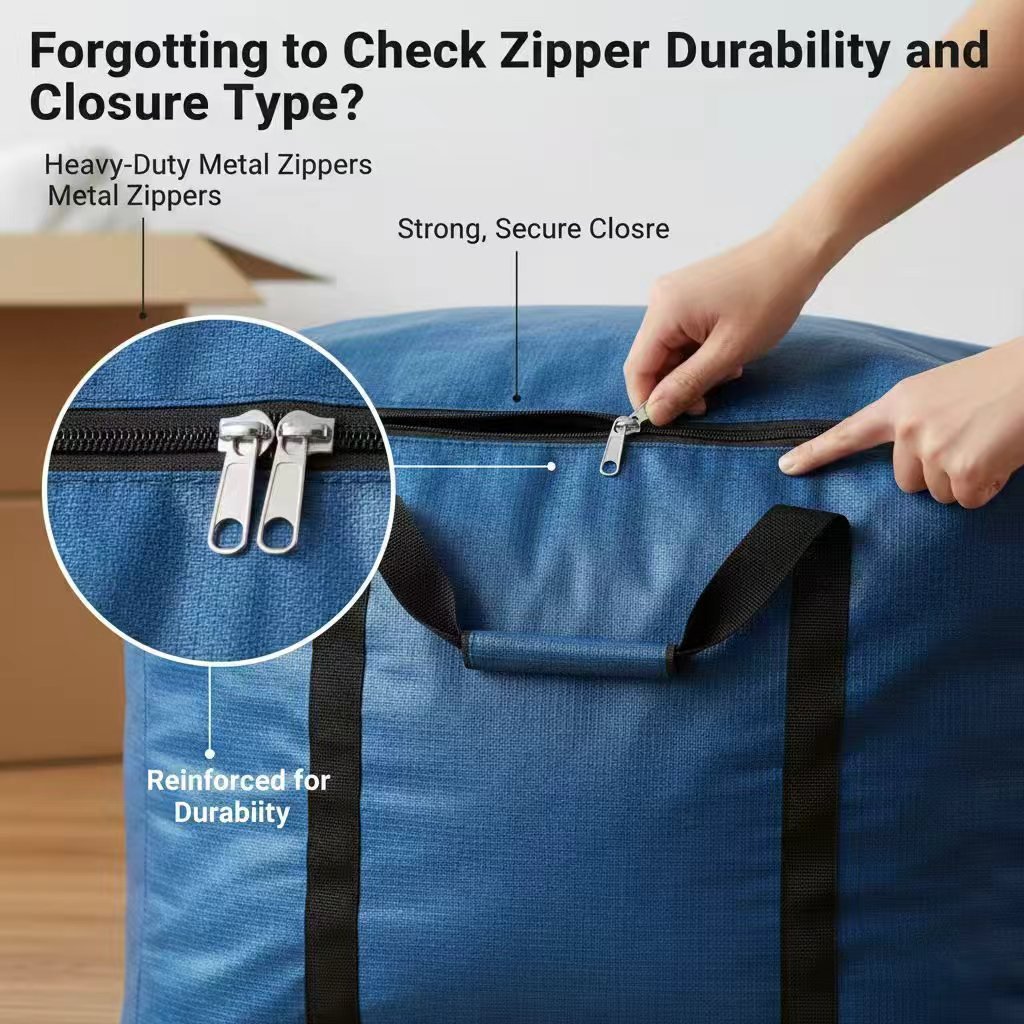
Core ASTM Methods Every Distributor Must Demand
Most suppliers claiming ‘heavy-duty’ can’t produce a valid, third-party ASTM D5034 report from a 10-specimen lot.
Stop asking suppliers if their bags are “strong.” That’s an amateur question. A professional asks for the test reports. If they can’t produce a supplier ASTM certification for moving bags , you’re not talking to a serious manufacturer. These three ASTM methods are the non-negotiable core of any bulk moving bag procurement standard and the first step to genuine distributor moving bag failure reduction.
This isn’t just about fabric strength; it’s about the entire assembly’s integrity. The “Grab
This is the “Ball Burst Strength” test, and it’s your best defense against margin-killing field failures. It simulates a sharp corner or an irregular object pressing against the fabric from the inside—the most common failure mode in the real world. A high tensile strength from the Grab Test doesn’t mean much if a box corner can puncture the bag with minimal pressure. For any distributor, this heavy duty moving bag burst strength standard is a direct predictor of customer complaints and returns. Ignoring it is financial malpractice.
Finally, the simplest and most revealing test: thickness. ASTM D1777 measures material uniformity. A supplier trying to cut costs after sample approval won’t make the entire bag thinner; that’s too obvious. Instead, they’ll have inconsistencies—thick spots and thin spots. Those thin spots are where failures begin. A proper woven polypropylene moving bag thickness specification should have a tight quality tolerance, for example, +/- 0.05mm. If their report shows wide variations across the sample, you’re looking at a low-quality production run, plain and simple.
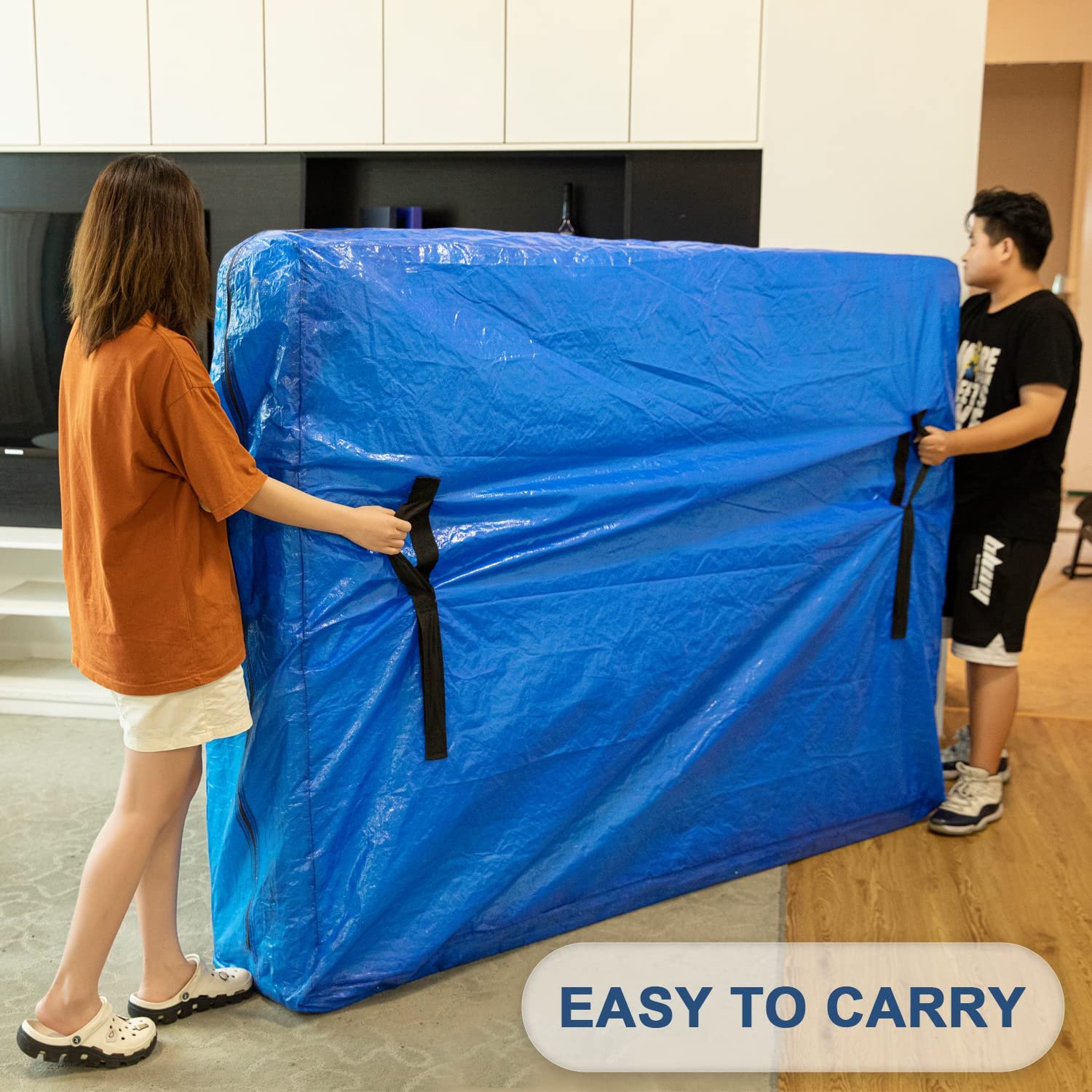
ASTM D5034: Grab Test for Breaking Strength and Stitch Tear Resistance
Let’s get straight to it. Any supplier can send you a perfect pre-production sample. The real test is whether the 5,000th bag off the line has the same integrity as the first. The ASTM D5034 Grab Test is your single best tool to enforce that consistency and prevent the kind of field failures that destroy a distributor’s reputation and margins. This isn’t just a lab test; it’s a lie detector for fabric quality and construction.
This standard has two critical parts. The first is breaking strength. A machine grips the woven polypropylene fabric and pulls it until it rips apart, measuring the force required. This tells you the raw material’s tensile strength in both the warp (lengthwise) and weft (crosswise) directions. If a supplier cheaped out on the fabric denier after you signed the PO, the numbers here will expose it instantly. A low breaking strength means a bag is susceptible to tearing from any sharp edge or concentrated pressure point.
The second, and often more important, part is stitch tear resistance. This is where the handles and seams are tested. The strongest fabric in the world is useless if the stitching fails. This test simulates the real-world stress of a fully loaded bag being lifted, yanked, or dropped. A failure here is what leads to catastrophic spills and customer complaints. A supplier who only provides fabric strength data but not stitch tear data is hiding something.
- High Variance: If the breaking force across the 10 specimens varies by more than 15%, it signals inconsistent manufacturing process control. One bag might be strong, but the next could be a liability.
- Omitted Stitch Data: A common trick is to provide a glowing report for the fabric’s breaking strength while conveniently leaving out the (likely much lower) results for the stitch seams. Always demand both.
- Fabric-Only Failure: If the report shows the fabric tearing before the stitch gives way, that’s generally a sign of balanced construction. If the stitch itself unravels or tears the fabric alongside it at a low force, the bag is poorly designed.
A supplier who readily provides this level of documentation per batch is a partner invested in quality. One who makes excuses or tries to pass off old data is showing you exactly how they’ll behave when a problem arises with a full container load. Use this standard not just to verify quality, but to filter out low-quality suppliers from the start.
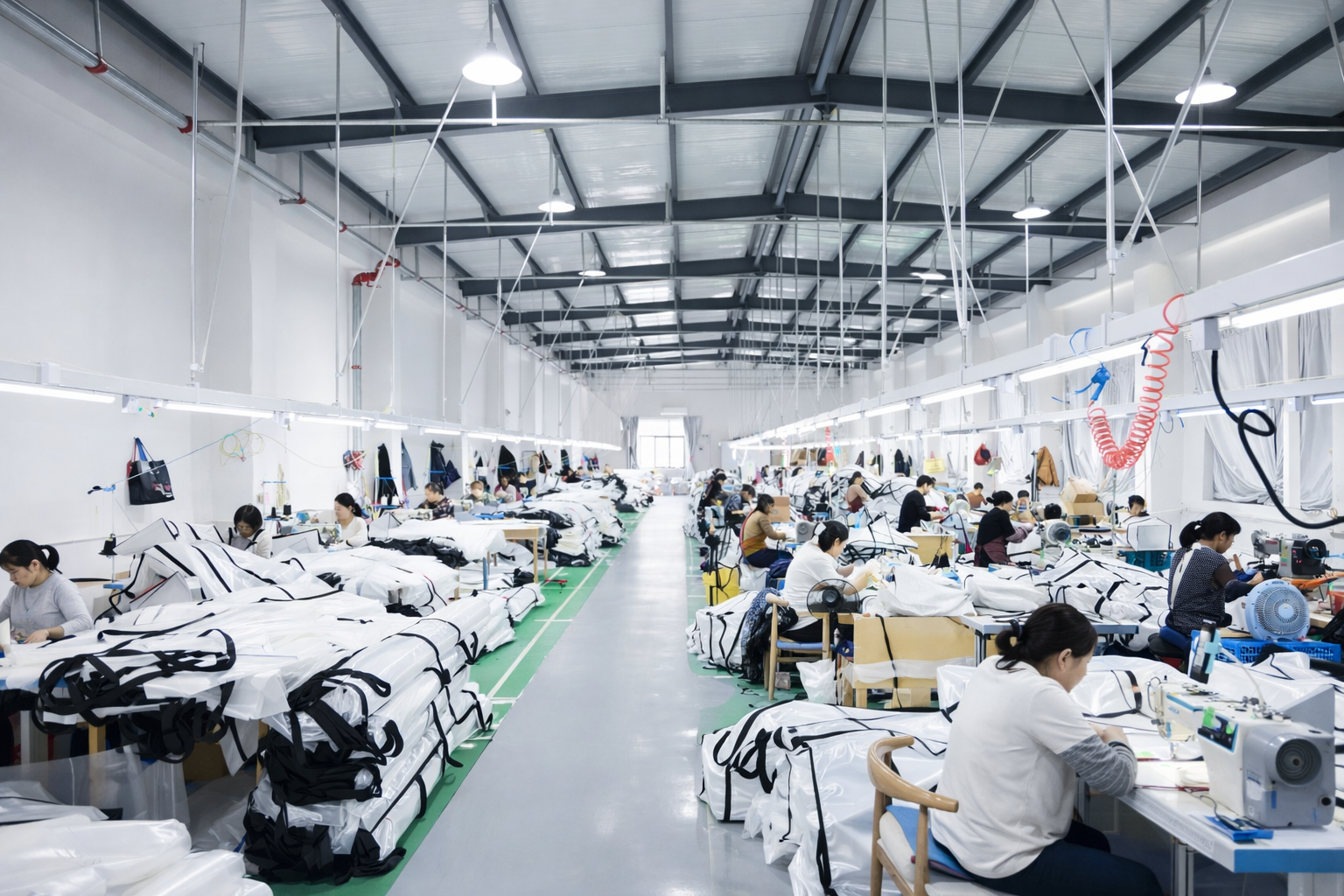
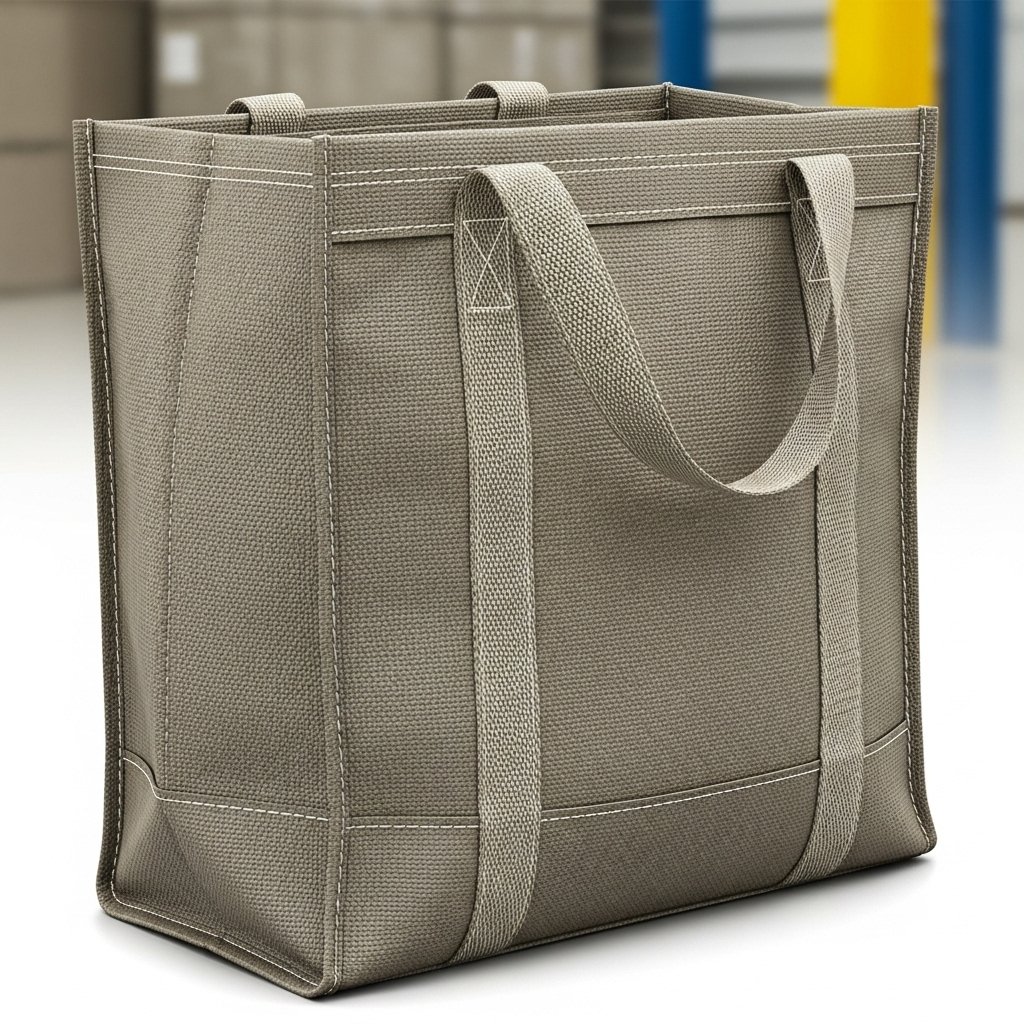
ASTM D3787: Ball Burst Strength to Prevent Load Ruptures
Tensile strength data is useless against a sharp corner.
The Grab Test (D5034) tells you how a bag’s fabric handles being pulled apart. That’s useful, but your customers aren’t just pulling on bags; they’re stuffing them with unpredictable contents. A metal bracket, a picture frame corner, or the edge of a power tool doesn’t care about tensile strength. It applies a concentrated, piercing force. This is precisely the failure scenario that the ASTM D3787 Ball Burst test is designed to measure, and it’s a critical data point for any industrial moving bag quality control checklist.
This test simulates reality. A polished steel ball is pushed against a secured piece of the bag’s fabric until it ruptures. The force required to cause that rupture is the “burst strength.” A low number here is a direct predictor of field failures. For an industrial distributor, this isn’t just an unhappy customer; it’s a direct hit to your profitability. One tear that spills oily machine parts or construction debris can cost more in cleanup and replacement than the margin on an entire pallet of bags. This is the core of distributor moving bag failure reduction: preventing the costly problems before they happen.
When you demand a heavy duty moving bag burst strength standard, you’re not just asking for a number; you’re setting a contractual quality tolerance. Any supplier who can’t provide this data is either hiding something or doesn’t understand the demands of industrial use. Your spec sheet should be non-negotiable on this point.
- Minimum Threshold: For bags intended for anything beyond clothing or linens, a burst strength below 90 lbf (pounds-force) is a serious risk. For hardware, parts, or job site debris, we don’t approve anything under 120 lbf.
- Consistency is Key: A report shouldn’t just show an average; it should show results from multiple samples. High variance between samples indicates poor process control at the factory, meaning the quality of your next shipment is a coin toss.
- Actionable Spec: Write the minimum acceptable lbf value directly into your purchase order. This shifts the liability for out-of-spec product from you to the supplier. It’s the difference between a frustrating loss and a simple credit memo.

ASTM D1777: Thickness Measurement for Material Uniformity
Your quality tolerance for thickness variance should be under +/- 5%.
Forget the single thickness number on a supplier’s spec sheet. It’s a vanity metric. I’ve seen distributors get burned because their “heavy-duty” bags had weak spots that tore open, even though the pre-production sample felt robust. The real enemy isn’t average thickness; it’s a lack of uniformity. A bag is only as strong as its thinnest point, and that’s precisely what ASTM D1777 is designed to expose.
This standard isn’t about finding one number. It’s a systematic process of taking multiple measurements across a fabric sample under specified pressure. This reveals the minimum thickness, maximum, and average, giving you a true picture of material consistency. A low-quality manufacturer will produce woven polypropylene with significant variance—thin patches that are guaranteed points of failure. Demanding an ASTM D1777 report is your primary defense against this.
When you review a supplier’s woven polypropylene moving bag thickness specification, you’re not just checking a number; you’re auditing their entire quality control process. A supplier who can’t provide a multi-point report is either hiding something or doesn’t have the process control to produce consistent material. This isn’t just about preventing a few torn bags; it’s about protecting your margin from the cost of field failures, returns, and damage to your reputation as a reliable distributor.
| Parameter | Specification / Measurement | Importance for Industrial Distributors | Distributor Red Flag |
|---|---|---|---|
| Test Method | ASTM D1777: Standard Test Method for Thickness of Textile Materials. | Verifies the fundamental material quantity in each bag. It’s a direct check on whether you’re getting the material you paid for. | Supplier cannot provide a D1777 report or claims it’s ‘not relevant’ for their bags. |
| Material Uniformity | Measures thickness at multiple points on a bag to calculate variance (standard deviation). | Ensures batch-to-batch consistency. High variance means weak spots, leading to unpredictable failures that damage your reputation and erode margins through returns. | A report showing only an ‘average’ thickness without min/max values or standard deviation, hiding inconsistencies. |
| Specification Compliance | Compares the measured thickness against the agreed-upon specification in your purchase order (e.g., 6.0 mil +/- 5%). | Protects your procurement investment. Prevents suppliers from silently reducing material to cut costs, which directly impacts bag durability and performance. | Measured thickness is consistently at the low end of the tolerance range, or below it, across an entire batch. |
| Performance Indicator | While not a strength test itself, thickness is a key input for durability, puncture resistance, and abrasion resistance. | Acts as a leading indicator of quality. A bag that fails the thickness specification is highly likely to fail more critical performance tests like burst strength (ASTM D3787). | Supplier claims high load capacity but provides bags that are noticeably thinner than a competitor’s proven product. |

Decoding Supplier Test Reports Without a Lab Background
A passing grade on a test report means nothing if the test itself was rigged.
You get a PDF from a potential supplier. It’s an ‘ASTM D5034 moving bag
First, ignore any report based on a single sample. That’s a marketing stunt, not quality control. True process capability is revealed by consistency. We mandate a minimum 10-specimen test lot for any bulk moving bag procurement. A high standard deviation between those 10 samples—even if the average ‘passes’—is a massive red flag for inconsistent manufacturing.
The units tell a story, too. A grab test (ASTM D5034) should be in pounds-force (lbf) or Newtons (N). A heavy duty moving bag burst strength standard (ASTM D3787) is in pounds per square inch (psi). If a supplier mixes these up or uses vague terms, it signals a fundamental lack of process control. It’s a simple check on your industrial moving bag quality control checklist that filters out amateurs fast.
- Red Flag: Non-Accredited Labs: A report from the supplier’s own ‘QC Department’ is effectively marketing material. Demand reports from an independent, ISO/IEC 17025 accredited lab. This is non-negotiable for verifying any supplier ASTM certification for moving bags.
- Red Flag: Cherry-Picked Data: Is the report from six months ago? Or for a slightly different model? Resellers are notorious for this. A factory-direct partner can provide batch-specific documentation. If they can’t, you’re likely buying from a batch they never even tested, increasing the risk of distributor moving bag failure.
- Red Flag: Missing Context: A test report in a vacuum is useless. For example, untreated woven polypropylene can lose up to 18% of its tensile strength when wet. If the report doesn’t specify material treatments or environmental conditions of the test, it’s hiding a potential failure point for your inventory in a humid warehouse.
Conclusion
Ignoring these ASTM reports isn’t a calculated risk; it’s a predictable expense on your balance sheet. Within the next 90 days, a single pallet of failed bags returned from a customer site can easily wipe out the margin from an entire truckload of good ones. This isn’t about having zero quality tolerance; it’s about preventing the catastrophic failures that erode your reputation and require costly field replacements.
The most practical next step is to pull the current spec sheet from your main supplier and check it for a verifiable ASTM D5034 moving bag test report. If it’s missing or vague, you have a data-backed reason to demand better from your supply chain or explore alternatives built on documented performance.
Frequently Asked Questions
What’s the key ASTM test for moving bag strength?
The ASTM D5034 Grab Test is the most critical standard for evaluating the breaking strength of an industrial moving bag’s fabric and seams. This test directly measures the. Always request the full D5034 report, not just a pass/fail summary from the supplier.
How do ASTM standards guarantee bag quality?
ASTM standards provide a repeatable, objective method for testing a bag’s material properties, ensuring consistent quality across production batches. They replace vague marketing claims. Use these standards to create a spec sheet that filters out suppliers who cannot prove their quality claims.
What’s a red flag on a bag’s test report?
A major red flag is a test report from a non-accredited lab or one that shows only cherry-picked data or partial passes. Reputable suppliers provide complete reports. Verify the testing lab’s accreditation independently before accepting any report as final proof of quality.
How do I use ASTM specs when sourcing bags?
Write specific ASTM test requirements, like ‘Must pass ASTM D5034 with a minimum breaking strength of 200 lbf,’ directly into your RFQ. This forces suppliers to compete on verified performance. Make passing these specified tests a contractual requirement for final payment release.

0 Comments