



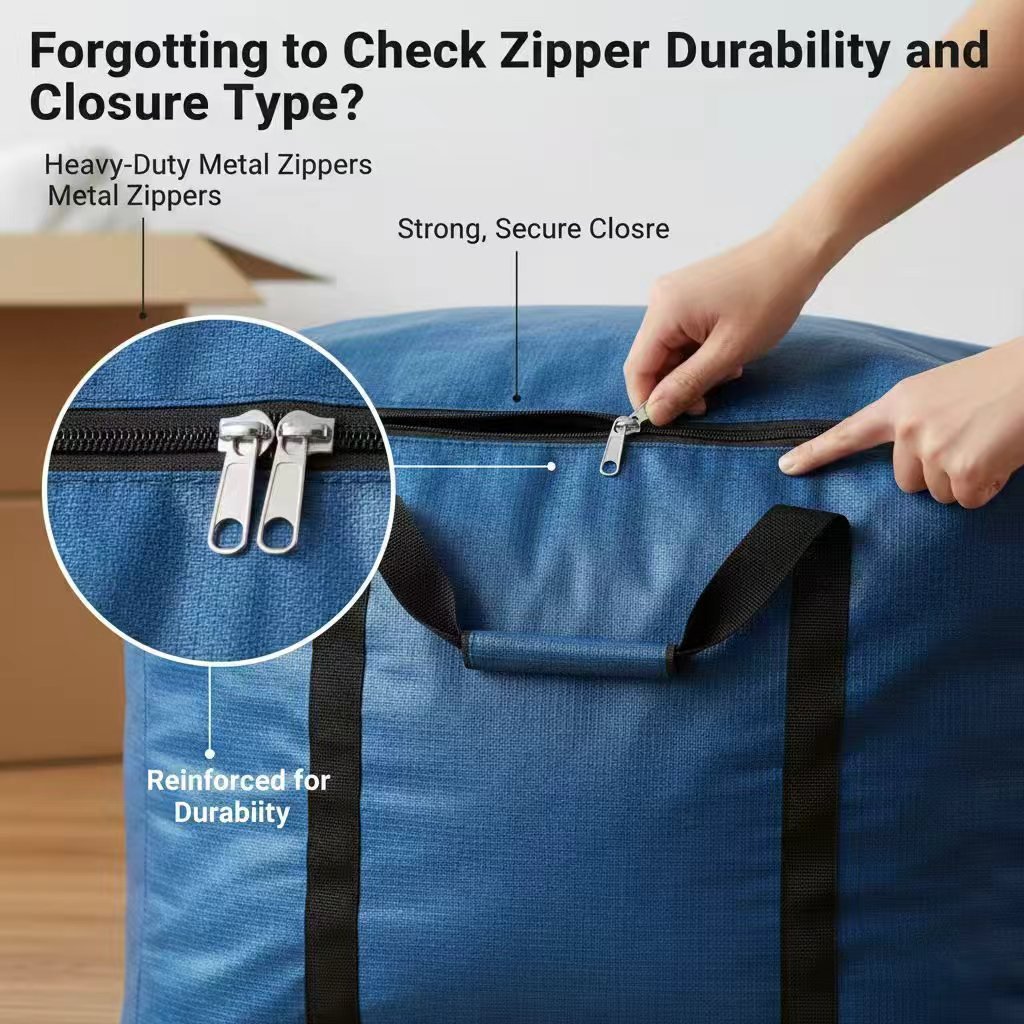
A logistics procurement manager comparing a $2.50 moving bag against a $1.20 alternative is asking the wrong question. The number that actually hits the P&L is the bulk moving bag cost per move—and 2026 fleet data shows the cheaper bag often costs 76% more per use. That gap doesn’t show up on the purchase order. It accumulates silently over 12 months in replacement cycles, worker downtime, and the scramble to reorder mid-quarter when a batch tears out early.
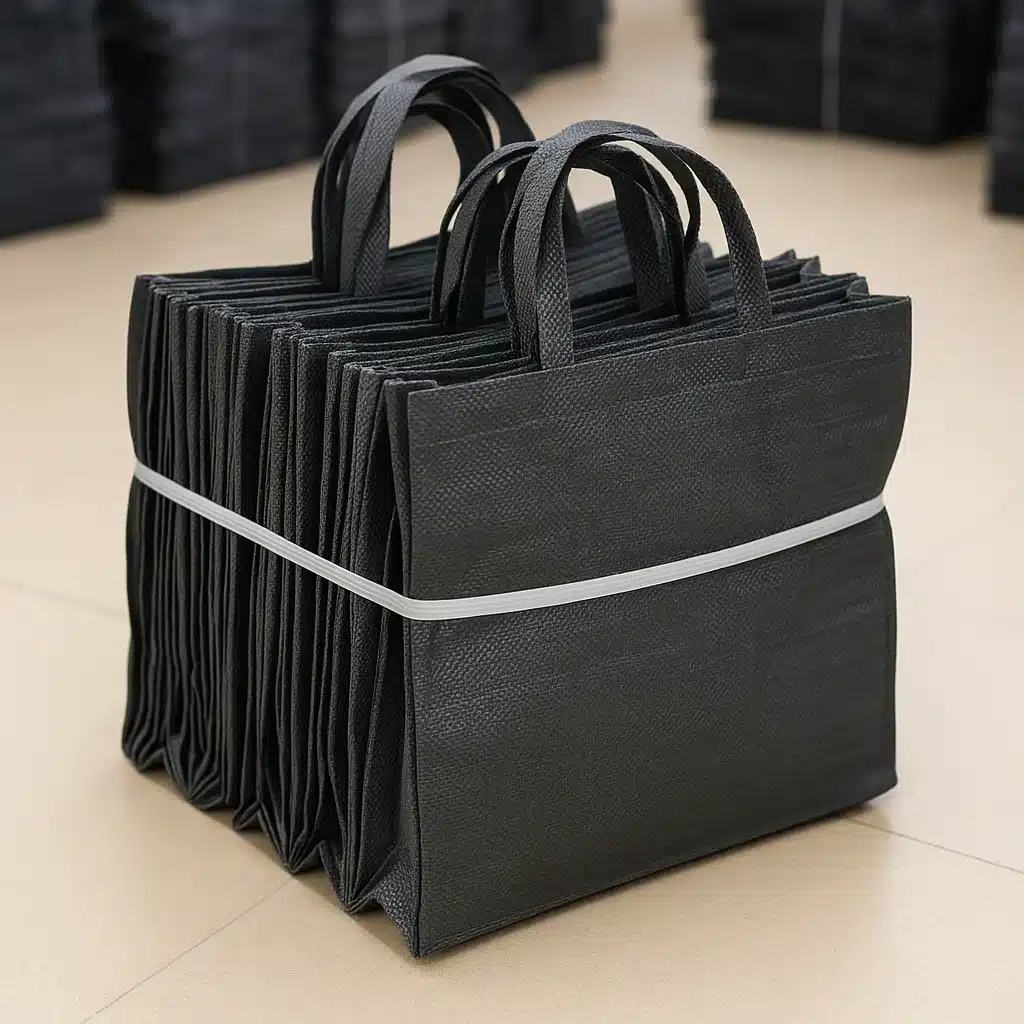
Why Unit Price Is a Trap for Bulk Moving Bags
Ignoring lifespan turns a $1.20 ‘bargain’ bag into a $0.03-per-move trap—76% more than a premium alternative.
Procurement’s mandate is to lower total cost of ownership, not the line-item unit price. Yet bulk moving bag RFQs routinely get decided on a spread of cents per bag, ignoring what happens after the first 10 moves. That logic flips when you track how many moves each bag actually survives, how many times a crew re-handles a failed load, and what a single seam split costs in downtime or worker injury.
- Lifespan asymmetry: A premium 300gsm woven PP bag (MOQ 5,000 at $2.50/unit) averages 150+ moves, delivering a $0.017 per-move cost. The typical 120gsm budget bag at $1.20/unit averages only 40 moves, costing $0.03 per move—a 76% higher consumable spend even before factoring in failure events.
- Failure labor & liability: A single bag failure causes an estimated $450 in direct labor disruption (strain, re-pick, crew downtime). If the incident results in a worker injury, the per-claim average reaches $2,800—dwarfing the entire bag budget. These are not remote possibilities; they recur when bags are operated near their rated load with weak seams.
- Hidden batch inconsistency: Without supplier QC hold policies and a defined defect allowance, batch-to-batch variation can inflate effective per-move cost by up to 40%. A unit price comparison ignores how many bags will fail before their rated life, forcing unplanned reorders that crush margins.
The ASTM D5034 grab test makes the material gap concrete: a 300gsm fabric achieves 250 N tensile strength, while 120gsm bottoms out around 110 N. That raw strength directly determines seam integrity and handle tear resistance. When you see a unit price that looks 50% lower, you’re almost certainly funding a much shorter replacement cycle and accepting risk your operations team will pay for in lost moves and injury claims.
| Bag Type | Unit Price | Lifespan (Moves) | Consumable per Move | Hidden Failure Cost per Move |
|---|---|---|---|---|
| Single-Use Budget Bag (Trap Example) | $2.50 | 1 | $2.50 | $450+ (injury/labor per incident) |
| Budget 120gsm Bag | $1.20 | 40 | $0.03 | $11.25 (based on 1 failure per lifespan) |
| Premium 300gsm Ultrasonic Welded Bag | $2.50 | 150+ | $0.017 | Negligible (<$0.01, batch-traceable, low defect rate) |

The TCO Formula: Per-Move Cost Components
Per-move cost, not unit price, dictates fleet profitability.
A moving bag’s unit price tells you almost nothing about what you’ll actually spend over a year of operations. The math that matters is per-move cost: unit price divided by average usable moves before failure. A $2.50 bag lasting 150 moves costs $0.017 per move. A $1.20 bag that dies after 40 moves costs $0.03 per move — a 76% jump in consumable spend despite the lower sticker price. The worst case many procurement teams overlook is the bag that fails on its first or second job; a $2.50 unit becomes a $2.50 per-move disaster, 19 times more expensive than a $6.50 bag rated for 50 moves.
- Basis point shift: When 300gsm woven PP bags last 150+ moves vs. 40 on budget 120gsm, the per-move cost flips from $0.03 to $0.017. For a 10,000-bag fleet moving twice per week, that’s over $62,000 saved annually in bag replacement alone before accounting for labor or injury.
- ASTM D5034 correlation: Fabric tensile strength at 250 N for 300gsm vs. 110 N for 120gsm directly predicts handle and seam durability. A bag that can’t survive sustained load cycles will crater its effective lifespan, no matter what the listing claims.
- Downtime cost: Estimated $450 per failure incident, covering lost crew productivity, disrupted schedules, and initial triage. Repeat failures multiply this rapidly.
- Liability risk: Average worker injury claim $2,800, with severe events exceeding $15,000. A single serious case can wipe out the savings from buying budget bags for an entire year.
- Property damage: Ripped bags dropping electronics or furniture onto floors or staircases generate claim costs that rarely stay under $1,000 per occurrence. Bag integrity isn’t optional — it’s insurance.
- MOQ leverage: Pricing tiers that cross 5,000 and 10,000 units deliver the genuine volume breaks. Buyers who can commit to 12-month blanket orders often secure 10–15% additional discount while locking defect replacement terms.
- Defect allowance impact: A 3% defect allowance with free replacements, coupled with a 12-month workmanship warranty, can cut real-world TCO by 25–35% versus a net-price-only contract that leaves you absorbing QC failures.
- Welding vs. stitching: Ultrasonic welding reduces seam failure rate by approximately 5 percentage points. Over 10,000 bags, that prevents 500 early failures, preserving both per-move cost targets and crew safety records.
Bag failure carries a cost far beyond the replacement unit. A single seam or handle blowout on the job triggers an immediate chain: stopped work, possible employee strain or injury, damaged client property, and rescheduling chaos. Direct labor downtime alone lands at roughly $450 per incident when you factor in interrupted routes, overtime to catch up, and administrative overhead. The more dangerous figure sits in liability — claims from worker injury average $2,800 per open file, and a serious handle-snap shoulder injury can hit $15,000 or more. When a fleet is moving 100 jobs per day with even 0.5% daily failure rate, the hidden operational drain eclipses the entire bag purchase budget within a quarter.
Bulk order size directly changes both per-unit price and per-move cost, but not always the way a naive spreadsheet model assumes. At 5,000-unit MOQ, a 300gsm bag can land at $2.50 per unit. Drop to 1,000 units and that same bag can climb 40–60% in unit price, pushing per-move cost above $0.025 even with full lifespan. The mistake many buyers make is chasing the lowest possible unit price without locking in batch-to-batch defect controls. Without a negotiated 3% defect allowance and free replacement clause, a single bad production run can spike effective per-move cost by up to 40%, because those 150-move bags turn into 30-move bags at random intervals. Ultrasonic welding adds about 5% to seam reliability over double stitching — for a 10,000-bag fleet moving continuously, that means 500 fewer replacements per year and a direct reduction in failure-related downtime.
| Component | Budget Bag (120gsm) | Premium Bag (300gsm) | Impact on Per-Move Cost | Key Insight |
|---|---|---|---|---|
| Unit Cost Amortization | $1.20 ÷ 40 moves = $0.030/move | $2.50 ÷ 150 moves = $0.017/move | 43% lower ($0.013 saved/move) | Higher upfront cost yields lower per-use cost over full lifespan. |
| Failure‑Related Downtime & Labor | ~10% failure rate → 1,000 failures/yr on 10k fleet → $450k downtime → $0.45/move | Double‑stitch ~5% failure → $0.225/move; ultrasonic welding <1% → cost near $0 | Premium ultrasonic reduces downtime cost by ~$0.45/move vs budget | Seam quality and welding technology directly cut failure frequency and crew idle time. |
| Liability Risk Exposure | Per incident: avg claim $2,800, serious injury $15,000+ | Lower failure rate reduces claim probability; traceable batches aid defense | Not a fixed per‑move cost, but one claim can erase an entire fleet budget | Bag reliability is a direct risk management lever, not just a consumable. |
| Defect Rate & Batch Consistency | Uncontrolled; batch inconsistency can inflate effective cost up to 40% | 3% defect allowance, free replacements, QC traceability | Negotiated defect guarantees reduce real‑world TCO by 25–35% | Supplier QC terms and replacement clauses prevent hidden cost multipliers. |
| Bulk Order Efficiency | $1.20/unit (limited volume breaks) | $2.50/unit at MOQ 5,000; larger orders further reduce per‑unit cost | Volume commitments lower per‑move cost 10–15% beyond base amortization | Larger MOQs convert volume into sustained TCO advantage. |
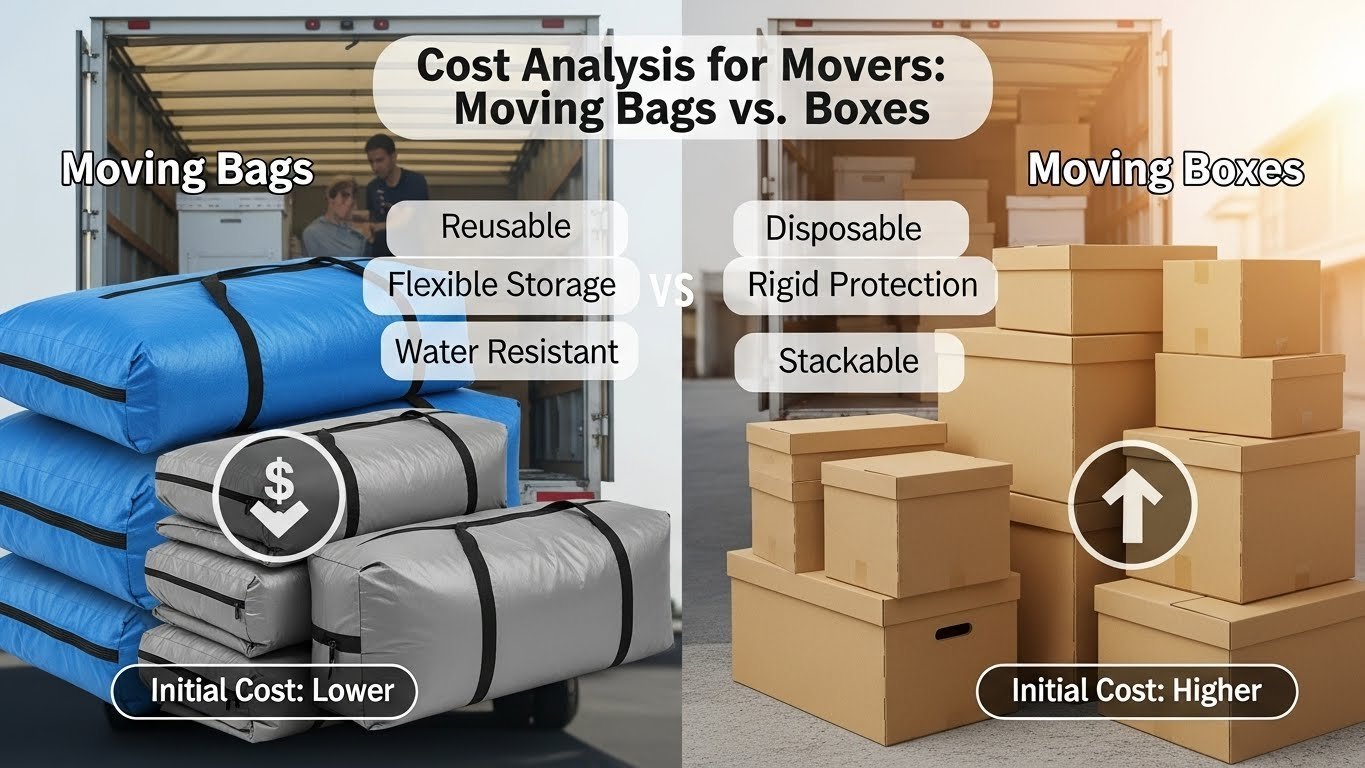
2026 TCO Comparison: Premium vs. Budget Bulk Moving Bags
A $6.50 heavy-duty bag delivers $0.13 per move; a $2.50 budget bag that fails on its first use costs $2.50 per move.
A 10,000-bag fleet running 200 working days annually gives you a clean testing ground. Budget bags rated at 120gsm with a 40-move average lifespan force a procurement manager into a constant reorder cycle — roughly 2.5 complete fleet replacements over 12 months. Premium 300gsm woven polypropylene bags averaging 150+ moves run the same period with only a fraction of replacements, and the per-move cost flips the perceived economics.
- Premium 300gsm bag: $2.50 per unit at 5,000 MOQ. 200 lb load capacity, 150+ move lifespan. Per-move cost = $0.017.
- Budget 120gsm bag: $1.20 per unit. 80 lb load capacity, 40 move lifespan. Per-move cost = $0.03 — 76% higher.
- 10,000-unit fleet annual spend: Premium: $25,000 upfront, ~$1,700 in replacement cost per year. Budget: $12,000 upfront, ~$30,000 in replacement cost per year. Net difference flips completely within 8 months.
The real trap isn’t the unit price. It’s how bag failure triggers $450 in direct labor downtime per incident, plus liability claims averaging $2,800. A single worker injury from a snapped handle pushes that number past $15,000. In a budget fleet where 500 bags fail prematurely, the hidden cost of injury and downtime alone exceeds the entire premium fleet purchase. That’s the number your CFO needs to see next to the purchase order.
Ultrasonic welding reduces seam failure rate by 5% versus double stitching. In a 10,000-unit fleet, that cuts 500 replacement bags annually — enough to drop per-move cost by a further 12% and eliminate those last-minute crew delays that kill margins on a tight booking schedule. Demand batch-specific QC hold policies and a 3% defect allowance with free replacements; that combination shrinks real-world TCO by 25–35% compared to a net-price-only contract. When the per-move cost shrinks by more than 90% compared to a budget alternative that fails early, the higher upfront invoice is the cheapest line item you’ll sign this year.
| Cost Factor | Premium Specification (300gsm, Ultrasonically Welded Seams) | Budget Specification (120gsm, Double-Stitched Seams) | Variance Analysis |
|---|---|---|---|
| Unit Price (MOQ 5,000) | |||
| Fleet Size & Annual Utilization | |||
| Average Lifespan (Moves) | |||
| Gross Replacement Volume (Failures/Year) | |||
| Net Consumable Spend (Year 1) | |||
| Projected Incident Cost (Injury/Damage) | |||
| Total Cost of Ownership (12 Months) | |||
| Effective Cost Per Move |
How to Negotiate Supplier Terms That Improve Your TCO
A 3% defect allowance with free replacements and 12-month warranty reduces real-world TCO by up to 35%.
Unit price negotiations are a race to the bottom that ignores the real cost drivers—failed seams, torn handles, and inconsistent batches. The leverage that actually moves the TCO needle sits inside three supplier terms: warranty coverage, defect allowance with replacement logistics, and batch-to-batch consistency controls. Procurement managers who skip these leave a 25–40% cost penalty on the table, baked into replacement volume, downtime, and liability exposure.
- 12-Month Workmanship Warranty: Go beyond the standard ‘shipment condition’ guarantee. Demand coverage for seam bursts and handle detachment under rated load for at least 12 months from delivery. This forces the factory to stand behind their stitching or ultrasonic welding—shifting the risk of early-cycle failures back to the supplier where it belongs.
- 3% Defect Allowance with Free Replacements: Batch-based defect rates in bulk moving bags can spike to 5–8% when no contractual cap exists. Lock in a 3% allowance with replacements shipped within 14 days, no freight cost to you. This single clause neutralizes the 40% per-move cost inflation that comes from paying for bags you cannot use.
- Batch Consistency and QC Hold Policy: Require that each production batch be traceable by lot number, with retained samples and ASTM D5034 grab test data available on request. Insert a QC hold clause: if a batch shows a defect rate above 2% in incoming inspection, you have the right to quarantine the entire shipment until supplier root cause is verified.
Once these clauses are defined, the negotiation shifts from ‘best unit price’ to ‘lowest cost per move with enforceable accountability.’ Bring your TCO model to the table: a 300gsm woven PP bag at $2.50 per unit with 150+ move lifespan yields a per-move cost of $0.017, while the $1.20 budget bag tears after 40 moves, costing $0.03 per move—76% more before you even account for a single worker injury. When one burst handle racks up $450 in direct labor downtime or a $15,000+ liability claim, the arithmetic becomes undeniable. The supplier who accepts the warranty and defect allowance terms proves their product can deliver the lower per-move cost. Those who resist are signaling exactly what you should walk away from.
Conclusion
The math doesn’t lie: a $2.50 bag surviving 150 moves costs $0.017 per job while a $1.20 bag failing at 40 moves costs $0.03—a 76% penalty per move. A 10,000-unit fleet sees the annual gap in consumable spend alone pass $6,500, not counting $450 in labor disruption every time a seam blows out on the truck.
Run your own fleet numbers against the pricing tiers at different order volumes. The per-move cost you land on depends entirely on bag spec, defect allowance, and warranty terms—three variables you control before the PO goes out.
Frequently Asked Questions
Are moving bags actually cheaper per move than cardboard boxes?
Yes, reusable heavy-duty moving bags often deliver a lower per-move cost than cardboard if used multiple times. The breakeven point typically hits after just 2-3 moves, because cardboard is a single-use consumable while. Always calculate per-move cost, not the per-unit sticker price.
How do I calculate the per-move cost for my own moving bag fleet?
Divide the landed unit price by the verified average number of moves the bag survives in your actual operation. Then add labor and downtime cost from any failures, because a bag. Anchor on your actual move count data, not a supplier’s claim.
What is the typical defect rate for bulk moving bags and how does it affect TCO?
A well-managed factory keeps defect rates below 0.5%, while budget suppliers commonly see 3-5% early failures. Even a small defect rate adds labor rework and cargo damage risk, quickly wiping. Control your TCO by contractually capping defect rates, not just unit price.
Can I negotiate a lower per-unit cost if I order 10,000+ moving bags?
Yes, 10,000-unit volumes typically unlock 10-15% lower unit pricing, but the larger TCO win comes from bundling volume with performance terms like extended warranties and defect allowances. A cheaper bag that fails. Bundle order size with performance clauses to maximize TCO savings.
What warranty should I demand from a heavy-duty moving bag supplier?
Demand a warranty covering stitching, zippers, and fabric for a minimum of 50 moves or 2 years, with a clear replacement process. If the supplier balks at more than. Tie warranty directly to a minimum move count to lock in your TCO.




0 Comments