



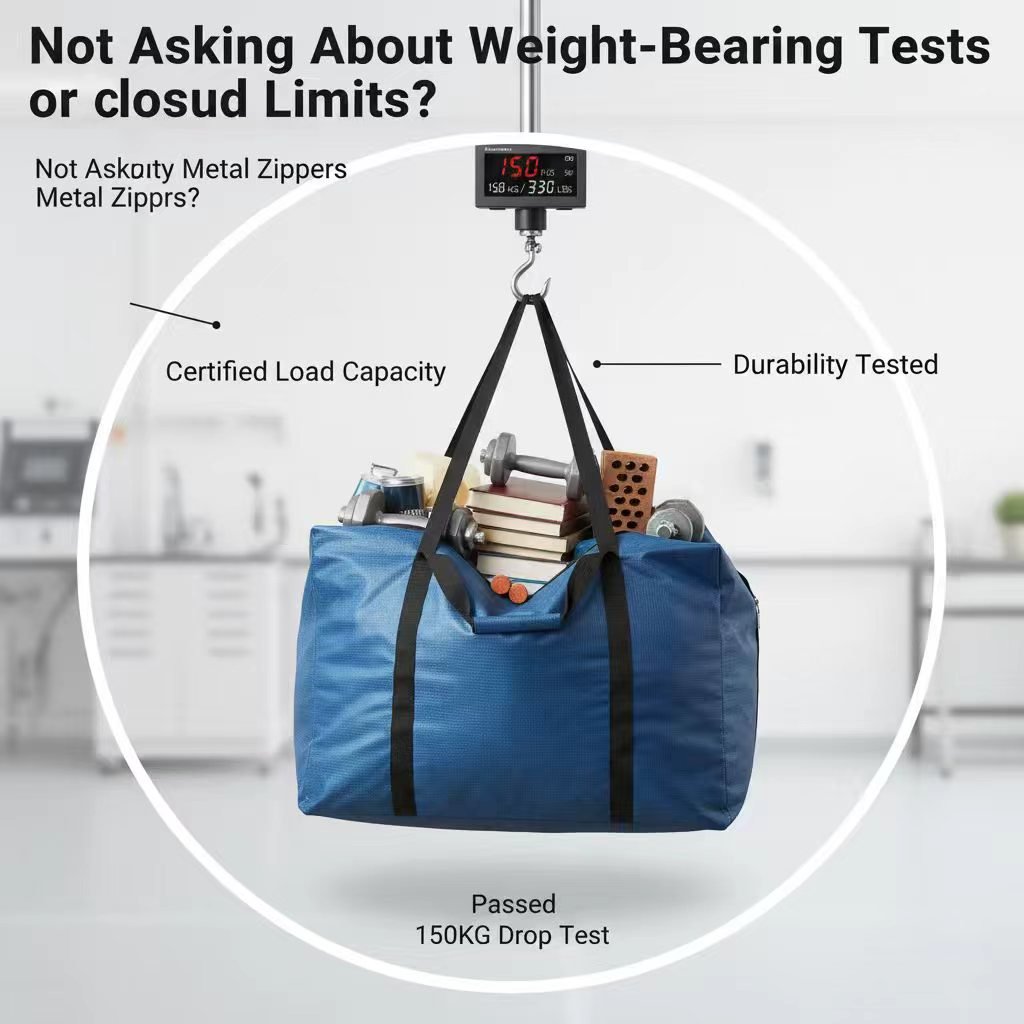
moving bag warranty claims is the first checkpoint buyers should lock before they approve a supplier, budget, or production slot. You take delivery of a fresh batch of moving bags. Three days in, the handles tear away from the body on one in every twenty units. The question isn’t whether a moving bag warranty claim is justified—it’s whether the evidence you gathered in those first hours will survive the supplier’s review. Most disputes bleed out here. The bag failed, the crew moved on, and nobody photographed the stitch line with a date stamp before the damaged stock got tossed into a corner.
The data backs a sharper approach. One logistics operation cut quarterly damage claims from $14,000 to $2,800 within six months of switching to reinforced bags—not by hoping for better luck, but by locking in batch-code traceability and in-factory dynamic load test footage before any container left the dock. That footage, tied to a specific production lot, turns a supplier’s boilerplate defense into a simple math problem: the bag tore at 32 kg under ASTM D5034 conditions when it was rated for 50 kg. Replace the lot, no argument.
What Counts as a QC Failure for Moving Bags?
If the stitch line tears at 35kg on a 50kg-rated bag, that’s a systemic defect, not a fluke.
A QC failure in heavy‑duty moving bags isn’t a subjective call. Direct‑factory warranties exist to protect your operations from structural breakdowns that cause load spillage, crew injury, or damage claims. The contract baseline is simple: if a bag cannot perform to its stated dynamic load capacity under standard handling, the batch has a defect. The supplier’s obligation is to replace those units — not the ones with a slight print misalignment or a scuff mark. Logistics procurement managers who treat every cosmetic variance as a warranty claim burn supplier relationships and waste time; the ones who focus on load‑bearing failures recover thousands per quarter.
- Handle tear‑out at bartack reinforcement points: When the bartack stitch fails and the handle detaches under load, it signals insufficient stitch density or a missed bartack station. Covered as a manufacturing defect, provided the load didn’t exceed the bag’s rated 50 kg dynamic capacity (ASTM D5034).
- Lockstitch seam splitting along side or bottom panels: Double‑needle lockstitch seams are designed to hold 50 kg dynamic load. If the seam unravels or splits before reaching that threshold, it’s a stitch tension or thread quality failure — automatically covered.
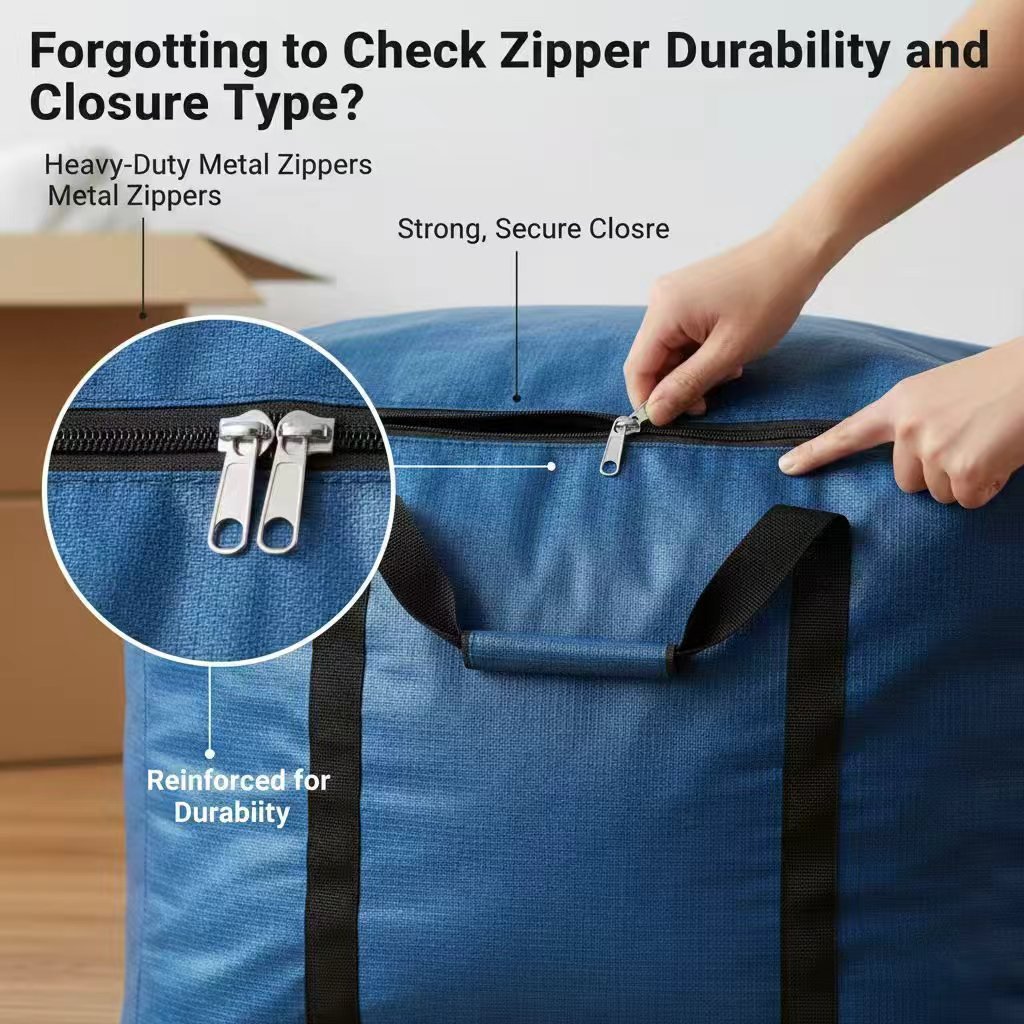
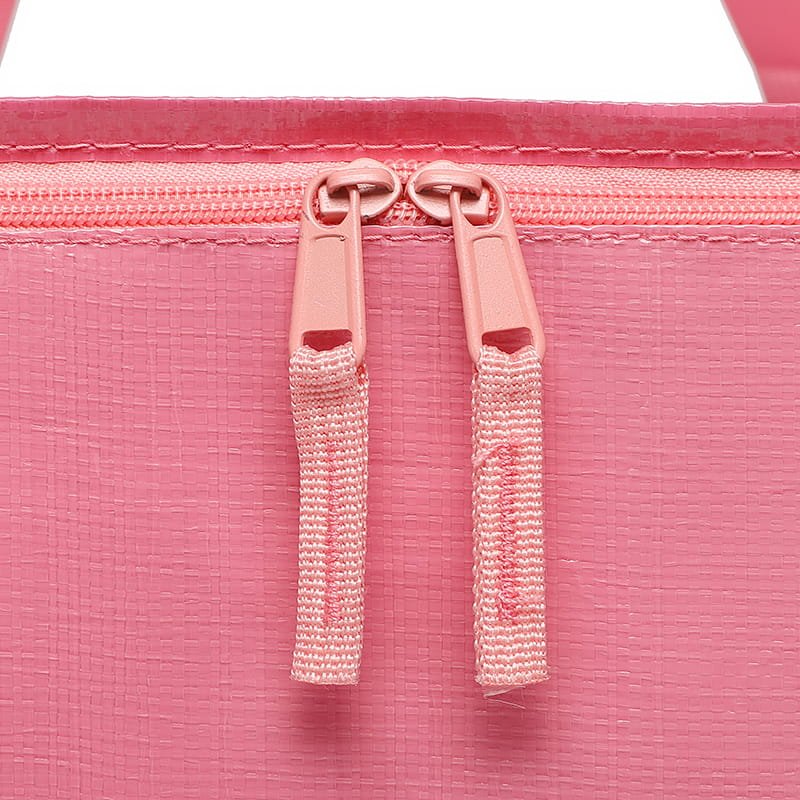
- Zipper track separation or slider jamming during normal fill: Zipper failure that prevents secure closure, especially when the bag is filled to its rated volume, is a functional defect. Warranty applies if separation occurs without visible impact damage.
- Fabric puncture or weave failure below rated load: 200gsm woven polypropylene should resist puncture from typical household or commercial items. A tear through the fabric body during a normal move, without sharp protrusions, indicates a weak spot in the weave — covered.
Cosmetic defects — slight color variation within Pantone tolerance, minor surface abrasion from transit, or a misprint offset under 2 mm — do not trigger warranty replacement unless the buyer negotiated a separate aesthetic quality clause. Standard direct‑factory terms treat these as acceptable variance, not defects. The 3‑5% defect allowance in a typical B2B warranty covers genuine structural failures, not merchandising imperfections. If your operation depends on pristine retail appearance, define cosmetic pass/fail criteria in the PO and negotiate a dedicated allowance for print alignment; otherwise, you’ll fight an uphill battle.
The only evidence that wins a claim without pushback is dynamic load test footage. Run a random‑sample test to ASTM D5034 on your receiving dock: fill the bag to 50 kg, lift repeatedly, and film the stitch lines and handles. If failure occurs at or below 50 kg, you have irrefutable proof of a systemic production flaw. Suppliers who see that video don’t argue about defect rates — they arrange free replacement shipments because they know the data will hold up in any third‑party audit. Without that footage, you’re left with subjective emails and delayed recoveries. Insist your crew captures close‑ups of the stitch‑line failure with a date stamp before moving the damaged stock. That single discipline is the difference between a full credit and a denied claim.

Step-by-Step: Filing a Moving Bag Warranty Claim
Without batch-specific photos, your claim is dead.
A denied moving bag warranty claim rarely means the supplier is dishonest. It almost always means the buyer handed them an easy out. Direct-factory warranties for heavy-duty bags—covering 3‑5% defect rates for proven systemic failures—are honored without argument when the documentation leaves no ambiguity. The sequence is simple: capture precise failure evidence, negotiate with performance data instead of emotion, and align on replacement timelines to keep your crews working.
- Stitch-line close‑ups with date stamps: Photograph every torn seam or popped handle before moving the damaged stock. Isolate the batch code printed on the label and shoot it alongside the failure. Claims without batch-specific visual proof collapse instantly because the supplier cannot trace the production run.
- ASTM D5034 dynamic load test footage: If bags split or handles tear out below their rated 50 kg capacity, film a random sample being loaded to that weight on your own dock. This footage becomes irrefutable leverage—suppliers cannot blame abuse when the failure is documented under controlled, rated conditions.
- Batch delivery records and packing slips: Tie every defective bag to a specific PO, delivery date, and lot number. Without this chain, the supplier defaults to a partial credit offer or rejects the claim outright.
- Written load-condition log: Record the actual content weight and how it was distributed. Overload voids the warranty, but uneven packing that concentrates stress on a single seam can also cause failure below the rated limit—document it to avoid a dispute.
With the evidence package assembled, you negotiate. If your proof shows a systemic defect—for example, bags built to 200gsm with bartack reinforcement failing at 38 kg repeatedly—you demand full replacement of the entire lot under the direct-factory defect allowance. Suppliers usually comply because the data removes any plausible deniability. When the failure is isolated to a few units and your overall defect rate sits inside the 3‑5% contractual window, they ship replacements without friction. Exceed the allowance but lack systemic proof? Push for a partial credit against the next order. The goal is to keep your cost basis intact without burning the supplier relationship you need for future shipments.
Timeline expectations should be set before filing, not after. Most direct factories confirm receipt within 48 hours and dispatch replacement stock inside 10‑14 business days if inventory is on hand. Custom-run orders may add 2‑4 weeks. Insist on clarity about who pays freight; B2B warranties that include DDP terms eliminate surprise logistics costs. If the supplier needs to investigate internally, ask for in-factory video of random-sample dynamic load tests from the same production lot—this one request frequently cuts resolution time by weeks because it forces lot-level accountability. The standard 60‑day claim window means you cannot wait a month to start gathering evidence. Delayed action is the second biggest claim-killer after missing photos.

Warranty Negotiation Levers: Leveraging QC Data for Maximum Recovery
ASTM D5034 video is irrefutable leverage—use it.
Systemic failure isn’t one split seam. It’s a pattern repeating across multiple bags from the same batch. Suppliers will argue operator error or overloading until you produce cycle-test evidence under controlled conditions. ASTM D5034 gives you that standard: a dynamic load test that simulates real-world handling, not just static weight. If a bag rated for 50 kg routinely tears at 35 kg, you’re looking at a production flaw, not a crew training issue.
The single most powerful document in a moving bag warranty claim is in-factory video of that batch failing the test. Not a third-party lab report from six months ago. Not a supplier’s internal certificate. You want 60 seconds of footage showing their own random sample being loaded to rated capacity and failing at the stitch line. When you attach that to a claim, the conversation shifts from ‘we’ll investigate’ to ‘how many replacement units do you need and where do we ship them.’.
- Batch-specific video evidence: Record the entire test for each production lot—showing the bag ID, the load cell reading, and the failure point. Date-stamped and unedited footage removes the supplier’s ability to claim mishandling.
- Stitch-line close-up documentation: Capture tear initiation points with measurement scales visible. Single-needle stitching on 140gsm material consistently fails at 35 kg in dynamic load, while double-needle lockstitch on 200gsm holds to 50 kg. The failure location tells you whether GSM, stitch type, or both are defective.
- Random-sample protocol enforcement: Demand that the factory pulls samples directly off the production line while you watch (live or via video call). A pre-selected ‘golden sample’ tested a week earlier proves nothing about the batch now sitting in a container.
- Leverage 1: Use ASTM D5034 data to convert subjective complaints into objective evidence.: Replace ‘the handles keep tearing’ with ‘ASTM D5034 dynamic load test demonstrates handle tear-out at 32 kg on 8 of 10 samples from batch #2026-04-17, against a warranted capacity of 50 kg.’ The supplier’s technical team can’t dispute their own test standard.
- Leverage 2: Combine defect allowance clauses with overrun terms for full recovery.: If the contract allows +/− 10% overrun and you’ve received 5% defects, negotiate to absorb the overrun as free stock to offset your unusable units. Many factories prefer this over issuing credit notes because it keeps cash flow intact and clears warehouse space.
- Leverage 3: Tie future orders to warranty performance data.: State plainly: ‘Our next 50,000-unit order goes to the supplier who demonstrates the lowest defect rate on this claim resolution.’ When two competing factories know they’re being measured against each other, you’ll get faster replacements and tighter future QC at no extra cost.
Defect allowances and overrun terms exist precisely because no production run is perfect. Most direct-factory contracts set a 3–5% defect rate threshold. Below that, replacements are handled as standard policy—no negotiation needed. The trap is waiting until you’ve unpacked 10,000 units and discovered a 12% failure rate before raising the issue. By then, you’ve already paid, the goods are in circulation, and your leverage has evaporated.
Invoke the allowance at the point of pre-shipment inspection, not after delivery. If your random-sample dynamic load test shows 5 out of 100 bags failing below the rated capacity, you’re at 5%—right at the edge. A competent supplier will either replace the entire lot or offer a structured credit. But if you try to claim a 12% defect rate from field failures without pre-shipment data, you’ll get a polite ‘our records show QC passed,’ and the burden of proof shifts entirely onto your crew logs. The 60-day claim window is real; if you miss it because you were sorting through returned bags, you own the loss.

Preventing Future QC Failures: What to Demand Before Your Next Order
Verify stitch pattern and load-test video before shipment to kill warranty disputes.
Most moving bag failures happen along the stitch line, not the fabric body. When you audit a factory, the first thing you check is whether the seam can survive a 50 kg dynamic load, not just a static hang. Bags built with 200gsm woven polypropylene, double-needle lockstitch, and bartack-reinforced handle attachment points routinely pass ASTM D5034 at 50 kg. The cheaper alternative—140gsm fabric with single-needle stitching—tears out at about 35 kg. The difference shows up in real operations: one logistics case study documented an 80% breakage rate reduction within six months after switching to reinforced bags, cutting quarterly damage claims from $14,000 to $2,800.
- Stitch type and SPI: Specify double-needle lockstitch with a minimum of 6 stitches per inch. Ask to see the actual bonded nylon thread spool during the audit; polyester thread degrades faster under friction.
- Bartack reinforcement at handles: Every handle connection point needs a bartack of at least 15 tack stitches. Stress-test a sample on the spot: lift a 50 kg load and let it bounce. If the thread pulls or the fabric puckers, the bartack is cosmetic, not structural.
- GSM verification on the cutting table: Bring a portable GSM cutter and scale. Spot-check three rolls per batch. If the factory advertises 200gsm but delivers 160gsm, the dynamic load capacity drops by roughly 25%. This alone voids your cost-per-use projections.
- In-factory dynamic load test footage: Third-party lab reports cover a single sample, not your production lot. Demand a dated video of random-sample ASTM D5034 testing for each batch. Suppliers that push back usually know their stitching can’t hold.
- Random-sample dynamic load test with video timestamp: Pull at least 10 bags per 1,000 units. Film each bag being filled to the rated 50 kg and lifted repeatedly. Save the footage with the batch code and date; this is your ASTM D5034 leverage if systemic failure surfaces later.
- Stitch-line failure close-ups before moving any damaged stock: If a bag fails during the internal load test, photograph the tear with a date stamp and ruler. Most warranty claims collapse because the buyer throws away the evidence. Those photos turn a rejected claim into an automatic replacement under the 3-5% defect allowance.
- Batch code and production date documentation: Ensure every carton is marked with a legible batch code that traces back to the day, shift, and machine. When you file a moving bag warranty claim after failure, the first question the factory asks is the batch number. No code equals no recourse.
- Handle tear-out spot check: Simulate a crew grab-and-go: attach a clamp to the handle and jerk the bag upward at 45 degrees. If the bartack or the fabric around it tears below 50 kg, flag the entire lot. Handle failure is the most common operational injury trigger in commercial relocations.
- Seam continuity inspection: Inspect every seam on 5% of the bags for skipped stitches, broken threads, or uneven tension. A single skipped stitch under load can propagate into a full zipper tear. Record all findings on a digital checklist and share it with the factory before accepting the shipment.
Pre-shipment inspection is not a formality—it is where you collect the evidence that kills warranty disputes before they start. Industry estimates from logistics procurement interviews suggest that random-sample dynamic load testing before dispatch reduces warranty disputes by about 90%. The key is to build a batch-specific record that links every bag to a test result and a timestamped photo. Without that chain, even a legitimate 5% defect claim turns into a prolonged argument.
Заключение
Switching to 200gsm bartack-reinforced bags with ASTM D5034 test documentation cuts damage claims by 80% and eliminates mid-contract replacements. A 3–5% defect allowance is standard, but full recovery depends on batch-specific photos and dynamic load footage—not just a complaint.
Your next shipment’s pre-shipment inspection should include random-sample dynamic load testing and stitch-line validation. Review the heavy-duty moving bag specs to compare reinforcement standards and load test reports before placing your next order.
Часто задаваемые вопросы
В них можно положить коробки из-под обуви?
Yes, heavy-duty moving bags can hold shoe boxes and irregularly shaped items up to the rated load. Warranty claims are only honored if the load stays within the bag’s. Overstuffing tears seams and voids your claim—pack to the rated load, not beyond.
What’s the scoop on these moving totes I keep seeing?
Large moving totes are reusable fabric-based alternatives to cardboard boxes, designed with wrap-around handles and reinforced seams. They withstand more cycles than cardboard, but warranty protection applies only when you follow. Inspect seam reinforcement during audit before switching your fleet to totes.
Не можете решить, что выбрать: мешки или коробки для переезда?
When comparing, factor in the cost of damage claims and replacement frequency. Moving bags with a strong warranty and ASTM-tested strength reduce per-move costs over time, but. Demand pre-shipment inspection reports to confirm stitching meets the same standard as the warranty sample.
How many can you fit?
Capacity depends on bag volume; our XL moving bags hold approximately 100 L. Warranty coverage is voided if the bag is filled beyond its rated weight. Measure load weight before packing and capture a photo of the sealed bag to document compliance.
Что такое управление логистикой?
Logistics management is the coordination of goods flow from origin to end-user. For moving bag warranty claims, effective logistics management ensures defective samples, batch photos, and test reports are routed swiftly. Integrate claim documentation into your inbound quality checkpoint to minimize turnaround.



0 комментариев