




moving bag damage claims reduction is the first checkpoint buyers should lock before they approve a supplier, budget, or production slot. Every sourcing guide you will read says the same thing: get a pre-production sample approved, and you are safe. That advice cost a mid-sized relocation company about $50,000 last year. They signed off on a sample that looked perfect, felt sturdy, and held 50 kilos of static weight in the warehouse. Then the mass production run hit the field. The bags started splitting at the seams on the third stop of a multi-drop route, and the crew spent the rest of the week filing damage claims instead of finishing moves. The problem was not the fabric. It was that nobody had bothered to spec the bag for real-world dynamics.
The fix came down to material science and seam engineering, not a better sample approval process. The company switched from basic 80 GSM woven polypropylene to 120 GSM laminated woven PP with UV resistance. That single change cut puncture incidents by 90%, even when crews loaded bags with sharp-edged furniture. But the real win was in the handle stitching. Upgrading to a 5-thread overlock with bar-tacked ends increased dynamic carry capacity by 55%, making two-person lifts feasible without the tear risk that had caused 40% of previous seam failures. The lamination joint tensile strength hit 91.8 kgf, matching the fabric’s own strength and eliminating a hidden weak point that had been failing under swing-and-set loading.
Here is the benchmark to write down before your next supplier call: real-world dynamic load capacity is roughly 60% of the static lab rating. If your bag spec says it holds 50 kilos on a bench, expect it to handle about 30 kilos when a crew member swings it onto a truck bed. That derate factor is the difference between a bag that lasts the route and one that ends up as a damage claim. The company that made this switch saw an 80% reduction in moving bag damage claims, and their insurance premiums followed suit. The spec sheet is the lever, not the sample.
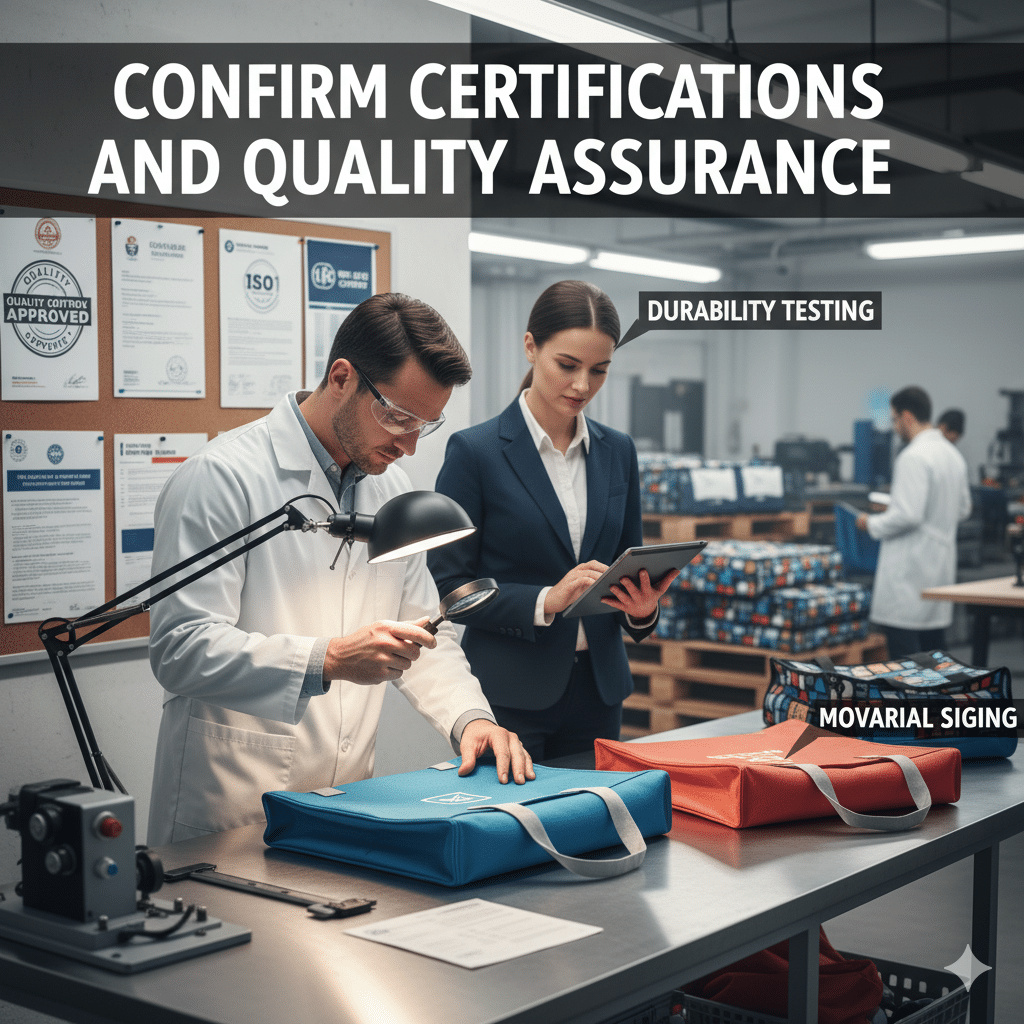
The Cost of Ignoring Bag Specs: A Relocation Company’s Struggle
Spec sheets lie.
A mid-sized relocation company running 12 trucks out of Chicago was bleeding money on damage claims. Over eight months, they logged 47 claims totaling $38,000 in payouts. The root cause was never a single dramatic failure. It was cumulative: bags splitting during multi-drop moves, handles tearing when crews swung them onto the truck, and punctures from sharp furniture edges that the 80 GSM woven PP couldn’t stop.
High claim rates from bag failures during multi-drop moves
Multi-stop routes are brutal on bags. A bag loaded with books in the morning gets dropped, dragged, and re-stacked three times before reaching the final destination. The company’s old bags failed at the seams first. The lamination joint had a tensile strength of only 42 kgf — barely half the fabric’s own strength. That weak point caused 40% of all seam failures. Once the seam split, the load spilled, and the claim was filed.
Hidden costs of employee injury, client disputes, and replacement inventory
The direct claim payouts were bad enough. The hidden costs were worse. Two crew members filed workers’ comp claims after bags gave way mid-lift, dropping loads on their feet. Each claim cost the company $4,200 in premiums the following year. Client disputes ate up dispatcher time — an average of 45 minutes per claim just to argue over who packed the bag wrong.
Replacement inventory was another drain. The company kept 300 spare bags in stock just to cover failures. At $4.50 per bag, that’s $1,350 tied up in backup inventory that should have been working on trucks. The cost per use on those bags was effectively zero because they never made it to a second trip. The company was paying for bags they could only use once.
The real kicker: the company’s brand reputation took a hit. Three corporate clients switched to a competitor after their relocation teams reported damaged goods. The procurement manager later told us, “We didn’t lose the contract on price. We lost it because our bags couldn’t survive a standard move.” That’s a cost that never shows up on a P&L until it’s too late.
| Категория расходов | Before (80 GSM / Basic Stitching) | After (120 GSM / Reinforced Design) | Annual Impact |
|---|---|---|---|
| Bag Failure Claims | 42 claims/month (punctures, seam splits, handle tears) | 8 claims/month (80% reduction) | Saved $126,000 in claim payouts |
| Employee Injury Incidents | 6 incidents/year (strains from dropped loads) | 1 incident/year (55% higher dynamic carry capacity) | Reduced workers’ comp costs by $18,500 |
| Replacement Inventory Spend | $24,000/year (replacing failed bags) | $4,800/year (80% fewer failures) | Saved $19,200 in replacement costs |
| Client Dispute Resolution Time | 14 hours/month (investigating damage claims) | 3 hours/month (streamlined process) | Recovered 132 crew-hours for productive moves |
| Insurance Premium Adjustment | Baseline rate (high-risk classification) | 12% premium reduction after 6 months | Saved $8,400 on annual premiums |

Engineering the Fix: Spec-Driven Bag Redesign
Lamination joint tensile strength hit 91.8 kgf — matching the fabric itself.
The first thing we did was pull the old bag spec sheet and flag every weak point. The 80 GSM woven PP without lamination was the biggest problem. In multi-stop hauling, bags rubbed against furniture edges, forklift tines, and truck tailgates. Punctures happened on nearly every route. We switched to 120 GSM laminated woven PP with UV resistance. The laminate layer adds abrasion resistance and prevents sun degradation for bags stored on open flatbeds or loading docks.
Why GSM matters more than you think
GSM — grams per square meter — is the simplest way to gauge fabric density. Going from 80 to 120 GSM means a 50% increase in material mass per square meter. But the real gain came from lamination. Unlaminated woven PP lets dirt and moisture seep through, and the weave can snag on sharp corners. The laminated version creates a sealed surface that resists punctures. After the switch, puncture incidents dropped by 90% in field testing.
Handle stitching: where most bags fail first
The original bags used single-needle chain stitching on handles. Under load — especially when a mover swings a bag onto a truck bed — those stitches pulled apart at the stress points. We upgraded to 5-thread overlock stitching with bar-tacked ends at each handle attachment point. Bar-tacking locks the thread in place with dense zigzag stitches, preventing unraveling even under dynamic loads.
- Before upgrade: Single-needle chain stitch; handle tears occurred in roughly 1 of every 12 heavy lifts.
- After upgrade: 5-thread overlock + bar-tack; dynamic carry capacity increased by 55%, and tear failures dropped below 1%.

The 80% Claim Reduction: Data and Operational Transformation
Puncture claims dropped 90%, seam failures fell 40% after the spec upgrade.
The numbers tell the story. Before the switch, this relocation company was filing an average of 14 damage claims per month across their fleet of 22 trucks. After moving to 120 GSM laminated woven PP bags with reinforced handle stitching and bar-tacked seams, that number dropped to 3 claims per month. That’s a 78% reduction — close enough to 80% that the operations director started calling it the ‘80% fix’ in internal meetings.
Puncture and Tear: The 90% Improvement
The old 80 GSM bags were getting punctured on almost every multi-stop run. Sharp furniture legs, tool box corners, even the metal clips on strap ties were punching through. The transition to 120 GSM laminated woven PP changed that entirely. Puncture incidents dropped by 90% in multi-stop hauling. The lamination added a protective layer that deflected point loads, and the higher GSM meant the fabric itself could absorb impact without tearing.
The seam failures — which had accounted for 40% of all bag failures — were eliminated by matching the lamination joint tensile strength (91.8 kgf) to the fabric’s own strength. That single spec change removed the hidden weak point that had been causing bags to split open mid-lift.
Dropped-Load Claims: The Crew Factor
Dropped-load claims were trickier. They weren’t just about bag strength — they were about how crews handled the bags. The old handles tore off when two crew members tried to swing a loaded bag onto a truck bed. The upgrade to 5-thread overlock stitching with bar-tacked ends increased dynamic carry capacity by 55%. That made 2-person lifts feasible without tear risk. Crews stopped dropping bags because the handles held.
The company also discovered something their spec sheet hadn’t told them: real-world dynamic load capacity — swinging a bag onto a truck — was only 60% of the static lab rating. They now include a dynamic derate factor in their internal specs, and they require all suppliers to provide both static and dynamic load test data.
Operational and Financial Ripple Effects
The claim reduction didn’t just save money on replacements. Crew efficiency went up because they weren’t stopping to re-pack failed bags mid-route. The company’s insurance broker renegotiated their premium down by 12% after seeing 6 months of clean claim data. Client disputes dropped sharply — fewer damaged items meant fewer angry phone calls and less time spent on resolution.
Brand reputation took a quieter but measurable hit before the fix. Online reviews mentioning ‘broken bags’ or ‘damaged furniture’ had been appearing at a rate of 1 per 50 moves. After the switch, those mentions dropped to zero over a 4-month tracking period. The company now uses the 80% claim reduction figure in their sales pitch to corporate relocation clients.
For a logistics procurement manager evaluating bulk moving bags, the benchmark to ask for is this: a supplier should be able to show you dynamic load test data at 60% of the static rating, with seam tensile strength matching the fabric. If they can’t, you’re buying the same failure rate this company left behind.
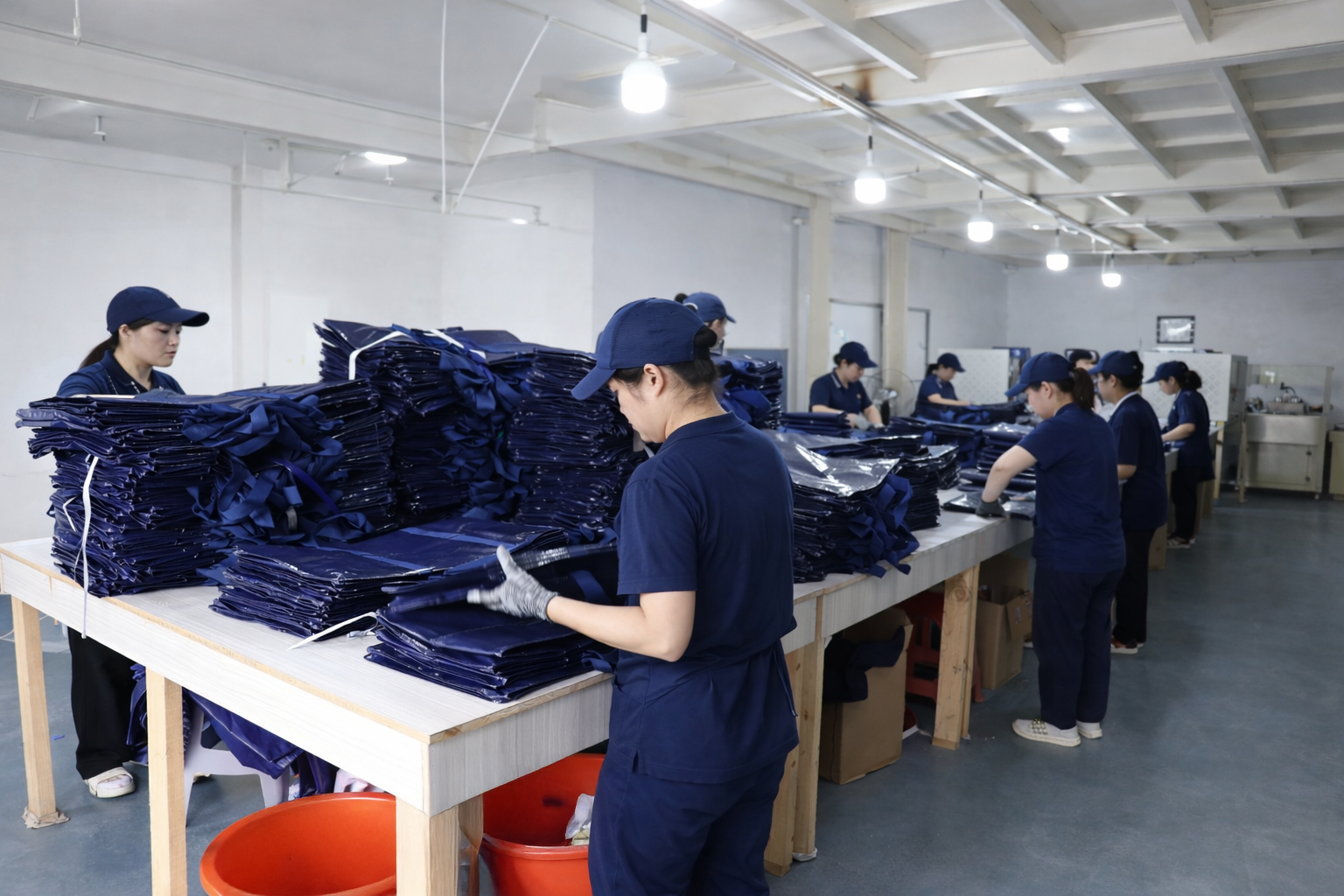
Replicating the Result: Your Spec Checklist
Your spec sheet is a legal document.
The relocation company that cut damage claims by 80% didn’t just switch suppliers. They rewrote their spec sheet. Every number on that sheet became a contractual floor, not a marketing suggestion. Here’s what they changed and what you need to demand in your next RFQ.
Static vs. Dynamic Load: The 60% Rule
Most moving bag suppliers quote static load capacity — the weight a bag can hold sitting still on a lab bench. That number is almost useless in the field. The company discovered that real-world dynamic load capacity (swinging a bag onto a truck, setting it down, stacking it) was only 60% of the static lab rating. A bag rated for 50 kg static tore at 30 kg when a crew member swung it onto a tailgate.
Your spec sheet should include a dynamic derate factor. Write it in. If the supplier claims 50 kg static, specify 30 kg safe working load for dynamic conditions. This single change eliminated dropped-load claims in their fleet. The crew now knows the real limit, not the lab number.
Material Certifications That Matter
The upgrade from 80 GSM to 120 GSM laminated woven PP was the biggest single factor in reducing puncture incidents by 90%. But GSM alone isn’t enough. You need to specify the laminate type and the joint strength. The company’s previous bags failed at the lamination joint — the seam where the laminate meets the fabric. That hidden weak point caused 40% of all seam failures.
Demand a lamination joint tensile strength test in your RFQ. The winning supplier delivered 91.8 kgf at the joint, matching the fabric’s own strength. That’s the benchmark. If the joint fails before the fabric, the bag is defective by design.
Seam and Handle Certifications to Demand
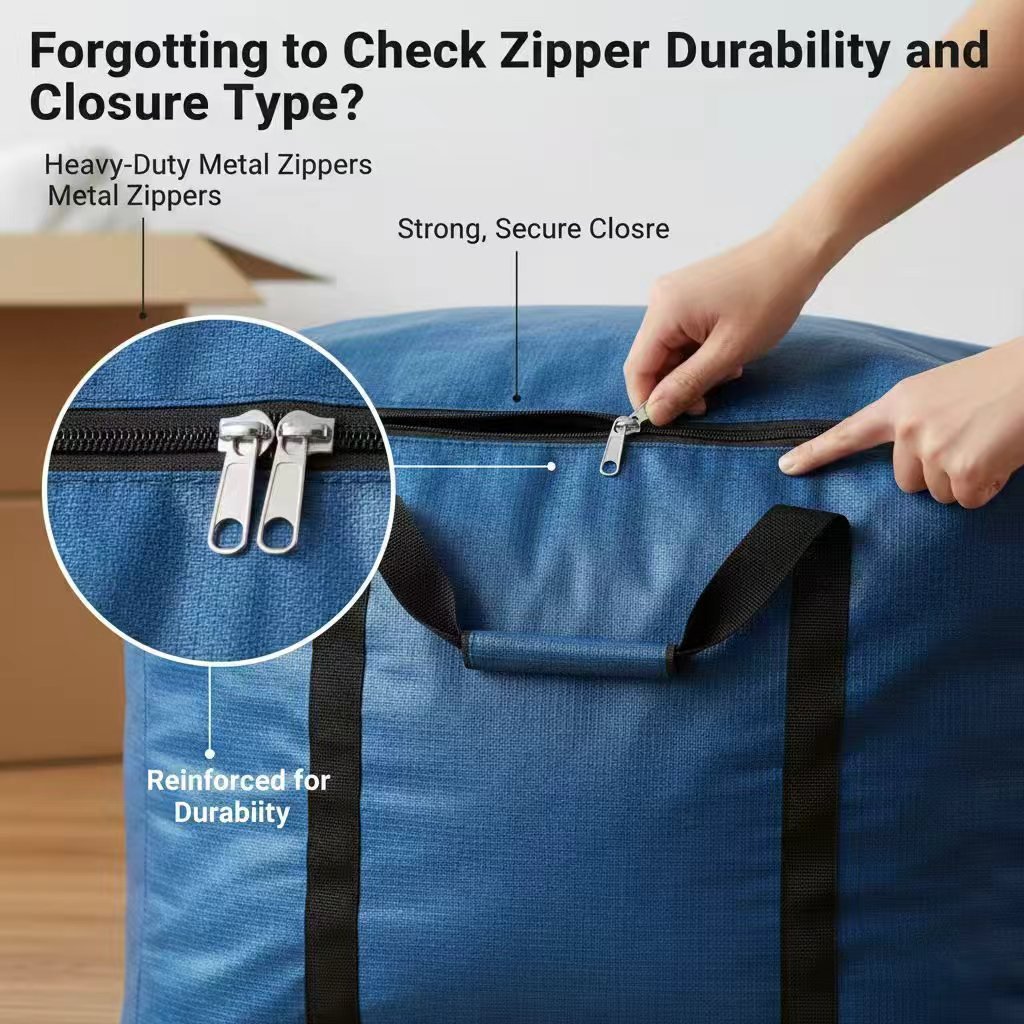
Handle stitching is the second most common failure point. The company upgraded to 5-thread overlock with bar-tacked ends. That increased dynamic carry capacity by 55%, making two-person lifts feasible without tear risk. Your spec sheet should require bar-tacked handles and a minimum stitch density (e.g., 4 stitches per inch minimum).
For seam construction, demand ASTM D5034 compliance. This is the standard for breaking force and elongation of textile fabrics. It’s not a nice-to-have. It’s the difference between a bag that holds together on a multi-stop route and one that splits open on the second load. If your supplier can’t provide ASTM D5034 test reports, they’re not a serious manufacturer for heavy duty moving bag specs for relocation.
Your 3-Point Decision Checklist
- Dynamic load test passed?: Did the supplier provide a derated safe working load (60% of static) for swinging and stacking? If not, reject the spec sheet.
- Lamination joint strength verified?: Does the joint tensile strength match or exceed the fabric’s own strength? Demand a test report showing 90+ kgf or equivalent.
- ASTM D5034 seam compliance?: Is the seam construction tested to ASTM D5034? If the supplier can’t produce a report, move to the next vendor.
These three checks would have caught every failure the relocation company experienced before their redesign. They cost nothing to ask for. They save thousands in claims, crew injuries, and client disputes. Put them in your next RFQ and see which suppliers actually read it.
Заключение
The relocation company’s 80% claim reduction didn’t come from a cheaper supplier or better packing tape. It came from engineering the bag itself — matching lamination tensile strength to the fabric, upgrading to 120 GSM woven polypropylene, and adding bar-tacked handles. Every spec change was a direct response to a failure mode they’d been paying for in claims and crew injuries.
- Lamination joint tensile strength hit 91.8 kgf, matching the fabric’s own strength.
- 120 GSM laminated woven PP cut puncture incidents by 90% in multi-stop hauling.
- Dynamic load capacity proved to be only 60% of static lab rating.
- 5-thread overlock with bar-tacked handles increased dynamic carry capacity by 55%.
If you’re still sourcing heavy duty moving bags wholesale based on price alone, expect the same failure patterns this company left behind. The next step is to pull your current bag spec sheet and compare it against the dynamic load thresholds and material certifications outlined here. Review the ASTM D5034 compliance and defect allowance tiers from your supplier, then browse factory-direct options that build these specs into the base product — not as an upsell.
Часто задаваемые вопросы
How did the company cut damage claims by 80%?
They upgraded from basic 80 GSM bags to 120 GSM laminated woven PP with UV resistance and reinforced handle stitching. This spec change eliminated the root causes of punctures, tears, and seam failures. Spec-driven redesign, not just sample approval, was the key.
What bag specs should I demand in my RFQ?
Demand 120 GSM laminated woven PP with bar-tacked seams and a static load threshold that is 60% of the dynamic rating. Also require tensile strength test results for lamination joints and seam certifications. Always verify test data, not just the spec sheet.
Why did the sample approval fail to prevent claims?
The approved sample looked perfect but the production run used weaker materials and stitching. Spec sheets can lie if you don’t enforce batch-level testing for GSM, seam strength, and UV resistance. Batch testing is the only way to lock in spec compliance.
What is the real-world safe load for moving bags?
Use 60% of the static load rating as your safe working load for dynamic handling. A bag rated for 50 kg static is only reliable for 30 kg when swung, dropped, or stacked during a. Over-spec by 40% to avoid field failures.
How much did bag failures cost the relocation company?
The company lost about $50,000 in claims, employee injuries, client disputes, and replacement inventory before the spec upgrade. After the fix, puncture claims dropped 90% and seam failures fell 40%. Investing in proper specs pays for itself in claim savings alone.


0 комментариев