




heavy-duty bag certifications is the first checkpoint buyers should lock before they approve a supplier, budget, or production slot. Every sourcing guide tells you to get a pre-production sample before a bulk order. That advice is incomplete. I’ve personally seen a distributor get burned on a $50K order because the mass production run didn’t match the perfect sample they signed off on. The sample approval process only proves a factory can make one good unit; it doesn’t prove they have the systems to make 10,000. This is where a real understanding of heavy-duty bag certifications becomes the most important tool you have for de-risking a new supplier.
Certificates only prove what the chain of custody shows; learn how to verify GRS claims in practice.
Relying only on a sample is a bet on a single data point. Relying on a verifiable certification like ISO 9001 is a bet on the factory’s entire system. These standards aren’t just a logo on a sales sheet; they are the auditable proof that a supplier has a documented process for maintaining quality tolerance from the first bag to the last. It’s how you move from hoping for quality to verifying it before you even discuss FOB pricing. A valid certificate number is your assurance that you’re dealing with a professional operation, not just a workshop that got lucky on one sample.
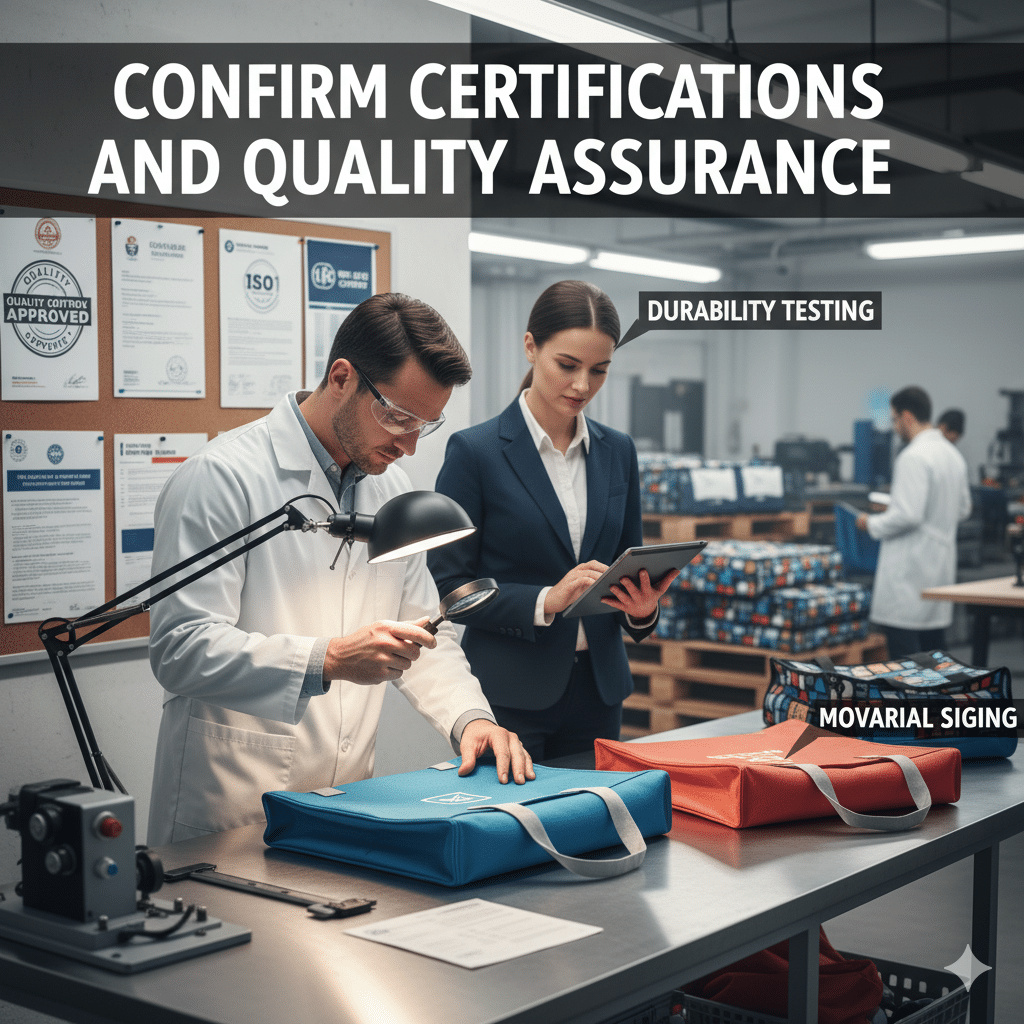
Why GS1 and ISO Certifications Matter for Heavy-Duty Bag Sourcing
Certifications aren’t just logos; they are verifiable systems that reduce your financial risk on bulk orders.
When you’re sourcing heavy-duty bags by the container load, a supplier’s certifications are the first line of defense for your investment. These aren’t just marketing fluff. They are externally audited proof that a factory has disciplined processes. For an industrial distributor, this is the clearest signal to separate a professional manufacturing partner from a trading company that has no control over production.
GS1: Ensuring Global Traceability and Authenticity.
Think of GS1 as the global passport for your products. It’s the organization behind the GTINs (Global Trade Item Numbers) that become the barcodes on every item. For a distributor, this is the backbone of modern inventory management. A GS1 certified packaging manufacturer provides bags that are ready for seamless integration into any automated logistics system, from your warehouse to your customer’s distribution center.
This directly impacts your operating costs. Bags with properly implemented GS1 barcodes enable automated warehouse scanning, which can reduce your receiving and inventory-taking labor costs by an average of 22% compared to manual tracking. It eliminates human error in counting and ensures what’s on the pallet matches the packing list, which is crucial for maintaining tight margins.
A key advantage for custom-printed moving bags is the ability to print the GS1 barcode directly onto the fabric itself
ISO 9001: Quality Management for Consistent Durability.
Let’s be clear: ISO 9001 doesn’t guarantee a single bag is perfect. It guarantees the is controlled. It’s an audited Quality Management System (QMS) that dictates everything from how raw materials are inspected to the final quality tolerance checks on the production line. For a distributor, this means batch-to-batch consistency. The 5,000th bag you receive in December will be made to the same standard as the one you approved during the sample approval phase in June.
My bullshit detector goes off when a supplier just puts an ISO 9001 logo on their website. It’s often meaningless. As a buyer, you must demand the certificate number and the name of the issuing accreditation body. Then, go to that body’s website or the International Accreditation Forum’s database to verify the certificate is active. Many claims are for expired or outright fake documents. This is the single most important step to verify an ISO 9001 bag supplier.
Without this verified system, you are exposed to significant risk. A factory without a QMS can easily substitute cheaper thread, reduce fabric density, or rush stitching to meet a deadline after your initial order. This is how you end up with a full container of heavy-duty bags that split at the seams on their first use, destroying your reputation and your margin.
Other Relevant ISO Standards (e.g., ISO 14001 for Sustainability).
Increasingly, other certifications are becoming commercially critical. ISO 14001, the standard for Environmental Management Systems, is a prime example. Once seen as a ‘green’ bonus, it’s now a hard requirement for many high-value contracts. It proves a factory manages its environmental impact, from waste reduction to resource consumption.
Here’s where it directly benefits you. Major corporations, especially in the EU and North America, now mandate ISO 14001 compliance for their entire supply chain in public tenders, particularly for services like corporate relocations. If your bags come from an ISO 14001-certified factory, you have a powerful competitive advantage that can help you win those bids. It’s no longer about ethics; it’s about market access.
Finally, look for ISO 45001 (Occupational Health and Safety). While it doesn’t directly affect bag quality, it’s a strong indicator of a stable, well-managed operation. Factories with poor safety records are prone to disruptions, accidents, and high worker turnover—all of which create unpredictable risks for your supply chain.

How to Verify Certifications Before Placing a Bulk Order
Don’t ask a supplier they are certified.
I’ve seen a $50,000 order for custom tote bags turn into a total loss because the supplier’s “ISO 9001 certified” factory couldn’t maintain the quality tolerance from the approved sample. The certificate they sent looked legitimate, but it was a clever fake. In procurement, a PDF of a certificate is just a claim. Your job is to treat it as an unverified invoice until you prove it’s real. Failing to do this is the fastest way to get burned.
Any supplier can email you a PDF. A professional buyer knows that the document itself is worthless without external validation. This isn’t about distrust; it’s about due diligence. Here’s the exact process my teams use across every country we source from, whether it’s for heavy-duty moving bags or complex components.
- Step 1: Identify the Issuing Body. The certificate is not issued by “ISO” or “GS1.” It’s issued by an accredited registrar. Look for the registrar’s name and logo on the document—common ones include SGS, Bureau Veritas, TÜV SÜD, or Intertek. If you can’t find a registrar, that’s your first major red flag.
- Step 2: Locate the Public Database. Go directly to the registrar’s website. They will have a public directory or a certificate validation tool. Do not use a link the supplier gives you; find it yourself via a search engine to avoid being sent to a fake validation page. For ISO certs, the International Accreditation Forum (IAF) can help you find accredited bodies.
- Step 3: Search the Certificate Number. Enter the certificate number exactly as it appears on the document. If the number returns no results, the certificate is invalid. Don’t accept excuses about database updates or system lags. A valid certificate will appear in the system.
- Step 4: Scrutinize the Details. This is where many buyers fail. Check these three things: the company name must be an exact match to your supplier’s legal entity, the certificate must be active (not expired), and—most critically—the “Scope of Certification” must cover the product you’re buying.
- Scope Mismatch: The certificate is for “Trading of Packaging Materials” but you’re buying custom manufactured bags. This tells you the company is a broker, not a factory. You have no visibility into the actual production quality system. This is a deal-breaker if you need direct factory engagement.
- Name Mismatch: The certificate belongs to a holding company or a sister company. While this can be legitimate, it requires more digging. You need to confirm the certified factory is the one actually producing your order, not a different, uncertified facility under the same corporate umbrella.
- GS1 Barcode Issues: For distributors, this is a huge one. A supplier might claim they are a GS1 partner, but if their prefix isn’t registered or they don’t understand barcode specifications, the codes printed on your bags won’t scan in your automated warehouse. This negates the entire labor-saving benefit of direct printing and adds cost back into your operation.
This verification discipline isn’t just for ISO 9001. It applies to all heavy duty tote bag quality standards and supply chain traceability standards. If you’re sourcing for clients with ESG mandates, for instance, you’ll need to verify ISO 14001 (Environmental Management). Being able to provide a validated ISO 14001 certificate from your bag supplier can be a deciding factor in winning bids for corporate relocation projects aiming for sustainable supply chains.
Similarly, while most moving bags don’t require the same level of certification as FIBC bags for hazardous materials, knowing a factory meet those higher standards is a powerful indicator of their process control. It means their quality management system is robust enough to handle demanding specifications, which gives you confidence they can consistently hit the quality tolerance required after your initial sample approval. Verification isn’t an obstacle; it’s the foundation of a reliable global supply chain.
Заключение
Ignoring the verification steps for ISO and GS1 isn’t a calculated risk; it’s a guaranteed future cost. A single container of defective bags, discovered three months after delivery when your clients start reporting failures, can easily wipe out a full quarter’s profit margin on that product line. The problem is the downstream cost of returns, replacement freight, and the permanent loss of a key account that no longer trusts your quality tolerance.
The difference between a reliable supply chain and a costly liability comes down to the due diligence performed before the sample approval stage. Before committing to your next large-volume order, review the specifications and documented certifications for properly manufactured bags to establish a clear quality baseline for your procurement team.
Часто задаваемые вопросы
What does ISO 9001 mean for my bag order?
An ISO 9001 certification indicates the factory has a documented quality management system to produce bags with consistent results. It does not guarantee a specific durability level, but it confirms processes. Always provide a detailed technical specification sheet to accompany the certification.
Why does a GS1 barcode matter for heavy-duty bags?
A GS1 barcode provides a globally unique identifier for your bags, ensuring full traceability throughout your supply chain. This is critical for logistics, inventory management, and authenticating products in global. Verify a supplier’s capability by requesting their GS1 Company Prefix during vetting.
How do I verify a supplier’s ISO certification?
You verify an ISO certification by requesting the certificate and checking its validity directly with the issuing accreditation body. Do not rely on a logo on their website; ask for the. Use the registrar’s official online database to cross-reference the certificate details.
Are certifications more important than a sample?
Certifications are more important for ensuring consistent quality across a large production run, which a single sample cannot guarantee. A pre-production sample confirms the spec, while. Use both: approve a sample to set the standard, and verify certifications to ensure it’s maintained.
For children’s drawstring bags sold in the US, CPSIA adds another layer on top of the certifications covered here: see our CPSIA compliance guide.




0 комментариев