




factory audit checklist is the first checkpoint buyers should lock before they approve a supplier, budget, or production slot. You’re standing in the receiving bay at 7:15 a.m., a half-unloaded 40-foot container from Ho Chi Minh City sitting on the dock, and your warehouse lead is holding two bags side by side—the pre-production sample you signed off on six weeks ago, and one pulled from the first carton. The handle on the mass production unit tears at the cross-stitch anchor point with about the same force it takes to open a stubborn file drawer. That $50,000 order now carries a defect rate you can’t pass downstream. When I walked that floor myself the first time, the only thing that could have prevented it was a proper factory audit checklist executed before the FOB pricing was locked and the sample approval turned into a purchase order.
A checklist that stops at machine calibration or a clean ISO 9001 folder misses the point entirely. Across a dozen supplier audits I’ve run for heavy-duty moving bags, less than a third of woven PP factories had a calibrated tensile tester on site—and fewer still could produce a live burst test on your specific material lot, not a generic certificate from an outside lab. The real audit insight sits inside the seam-tear resistance of a cross-stitched handle and whether the factory’s quality tolerance for handle attachment meets the 300 N threshold you need for a 50-kilo load class. Combine that on-the-ground verification with a pre-production material certification, and we’ve seen defect rates drop by over 60% compared to relying on final random inspection alone.
Skip the audit, and the cost of inaction shows up fast: the replacement tab for a failed moving bag—counting damaged goods, expedited reshipping, and wasted handling time—runs about 2.5 times the unit price. For a logistics procurement manager tracking a sub-3% defect KPI and a supply chain cost reduction target, a shipment that lands at 8% or 10% defect because the pre-production sample didn’t match the run is a quarterly metric you’ll spend the next ninety days explaining.
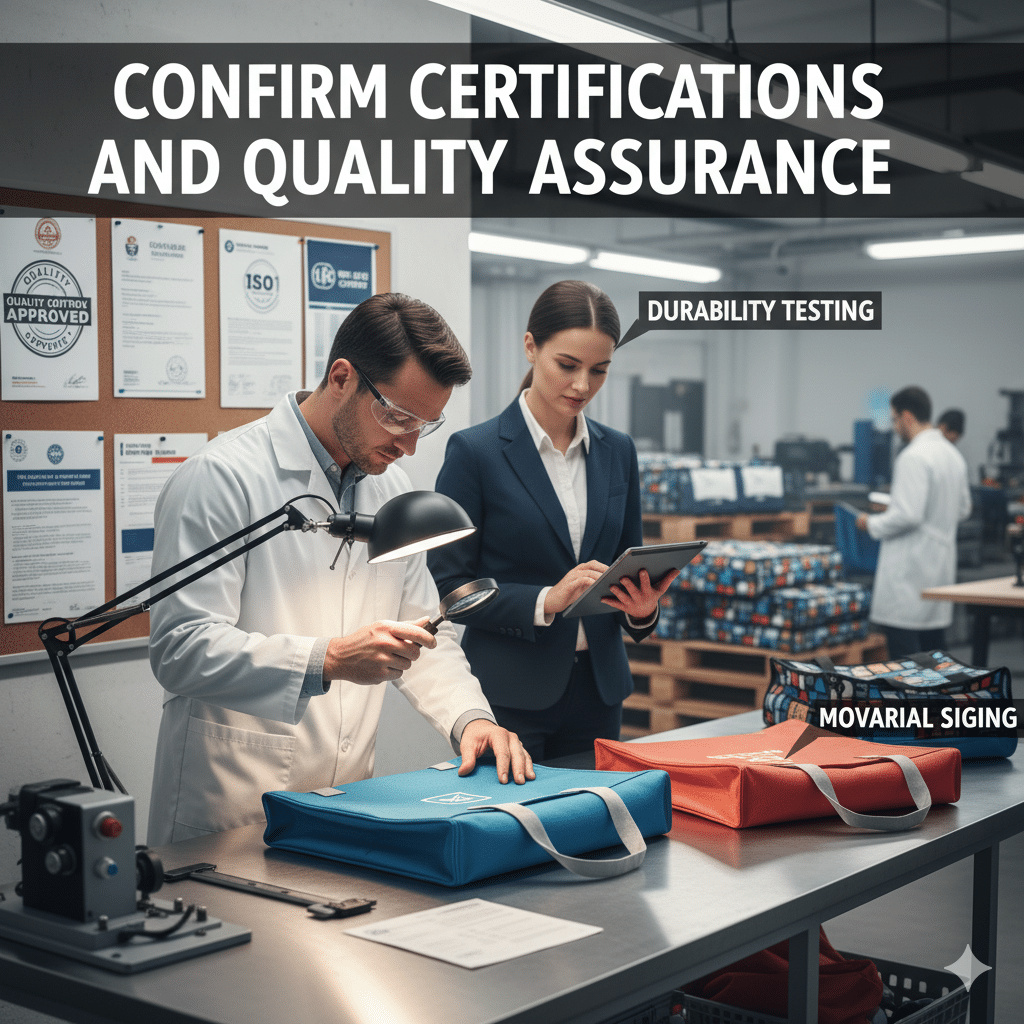
Pre-Audit Preparation: Documenting Bag Specifications, Standards & Non-Negotiables
Your audit prep sheet isn’t a questionnaire—it’s a technical brief that must translate into pass/fail test values.
What did your last supplier audit prep sheet look like? A one-page PDF with ‘ISO 9001’ checked and a sample photo stapled to the corner? That’s the standard answer. And it’s
You need three layers before you walk into any moving bag factory: Specifications (exactly what the bag is), Standards (how you prove it performs), and Non-Negotiables (what you will reject a lot over). Skip any one of them and your audit becomes a photo op, not a quality gate.
- Fabric composition & weight: Spec: 180 g/m² virgin woven PP. Risk: Underweight or recycled-heavy blends fail ASTM D5034 burst below 1,200 kPa and degrade after UV exposure.
- Handle configuration: Spec: Cross-stitched with 4-thread overlock, tensile ≥300 N per handle. Risk: Single-stitch construction tears below 200 N—the #1 field failure point for moving bags.
- Load class: Spec: 50 kg (110 lb) maximum working load, clearly marked. Risk: Undefined load class leads to random overloading; handle seam failure often occurs at 75 kg if stitching is unverified.
- Dimensional tolerance: Spec: Finished dimensions ±5% from approved sample. Risk: Oversized bags inflate FOB pricing per container; undersized bags force overstuffing and side-seam blowouts.
- ASTM D5034 burst test: Minimum 1,200 kPa for a 50 kg class bag. Audit check: Have the factory mount a bag on their bursting tester during your visit. Fewer than 30% of woven PP bag factories own a calibrated tester—if they can’t run it, that’s a deal-breaker.
- Handle tensile (≥300 N/point): Per handle attachment point before permanent deformation. Audit check: Require a pull test on a finished handle assembly; failure below 300 N is rejectable. Cross-stitch reinforcement must be visible on the underside.
- ISTA 3A drop test: 10 drops from 1.2 m onto concrete with zero seam tear or zipper failure. Audit check: Request raw video of a drop test performed on your actual bag model within the last month. Stale or missing footage signals no ongoing testing.
ISO 9001 is a management certificate—it doesn’t prove a bag will survive a 3-stop move. Your pre-audit document must list pass/fail performance thresholds tied to exact test methods. Most factories will hand you an external lab report from two years ago and call it a day. Don’t accept that. You must write these standards into your brief and demand to see them demonstrated live using your designated material lot.
Non-negotiables separate a real audit from theater. The number one field failure for moving bags is handle seam tear, not fabric burst. Your audit must include a random ‘purge test’: grab three finished bags off the packing line, fill each to 50 kg, and have a worker lift and drop them forcefully ten times. If any handle stitch separates by more than 5 mm, reject the lot. Any audit report that skips this misses the most common point of freight damage. Complement this with a pre-production material certification—require the factory to provide a signed analysis of the fabric batch before cutting. Combined, these two steps cut defect rates by over 60% compared to relying on final random inspection alone.
Before your next supplier call, write down this benchmark: 1,200 kPa burst minimum for a 50 kg moving bag. If a manufacturer can’t explain how they verify every batch meets that threshold—and show you live—you’re not buying bags. You’re buying risk. The strongest factory audits start not on the plant floor, but with a spec sheet that refuses to compromise.
| Технические характеристики | Required Standard | Non-Negotiable Threshold | Field Failure Consequence | Audit Verification Evidence |
|---|---|---|---|---|
| Fabric Burst Strength (Body) | ASTM D5034 | ≥ 1,200 kPa for 50 kg load class woven PP | Catastrophic bag rupture under load, resulting in cargo loss and a 2.5× unit price replacement cost | Live material‑lot burst test on factory’s own calibrated tester; reject external‑lab certificates |
| Handle Tensile Strength | Internal / ISO‑based pull test | ≥ 300 N tensile force per handle, with cross‑stitched reinforcement | Handle detachment during lifting — the leading cause of moving‑bag field failure and personal injury risk | Random sample pull‑to‑failure test conducted on the audit day, plus batch test records |
| Seam & Handle Stitch Integrity | ISTA 3A drop test (or equivalent seam‑tear protocol) | Zero seam tear after 10 drops from 1.2 m on packed bag; seam must not be the weakest link | Split seams account for the #1 field return point; missed by most third‑party reports | Unannounced ‘purge test’ on 3 random stitched handles, witnessed and documented by the auditor |
| Pre‑Production Material Certification | Supplier‑issued material datasheet + third‑party composition analysis | Written certification for every incoming fabric lot before cutting begins | Unaudited batch defect rates of 5‑10 %; absence of this step sabotages the >60 % defect reduction achieved with proper audit + certification | Cross‑check of raw‑material lot numbers against certification binders; verify traceability to the specific order |
| In‑House Testing Equipment & Calibration | ISO 17025‑compliant calibration (or national equivalent) for tensile and burst testers | Factory must own and regularly calibrate at least one tensile tester; only 30 % of woven PP factories pass this | Reliance on visual inspection alone leads to undiscovered strength drift and eventual in‑transit failure | View valid calibration stickers and logs, then run a live sample from your material lot — refuse if only an external report is offered |
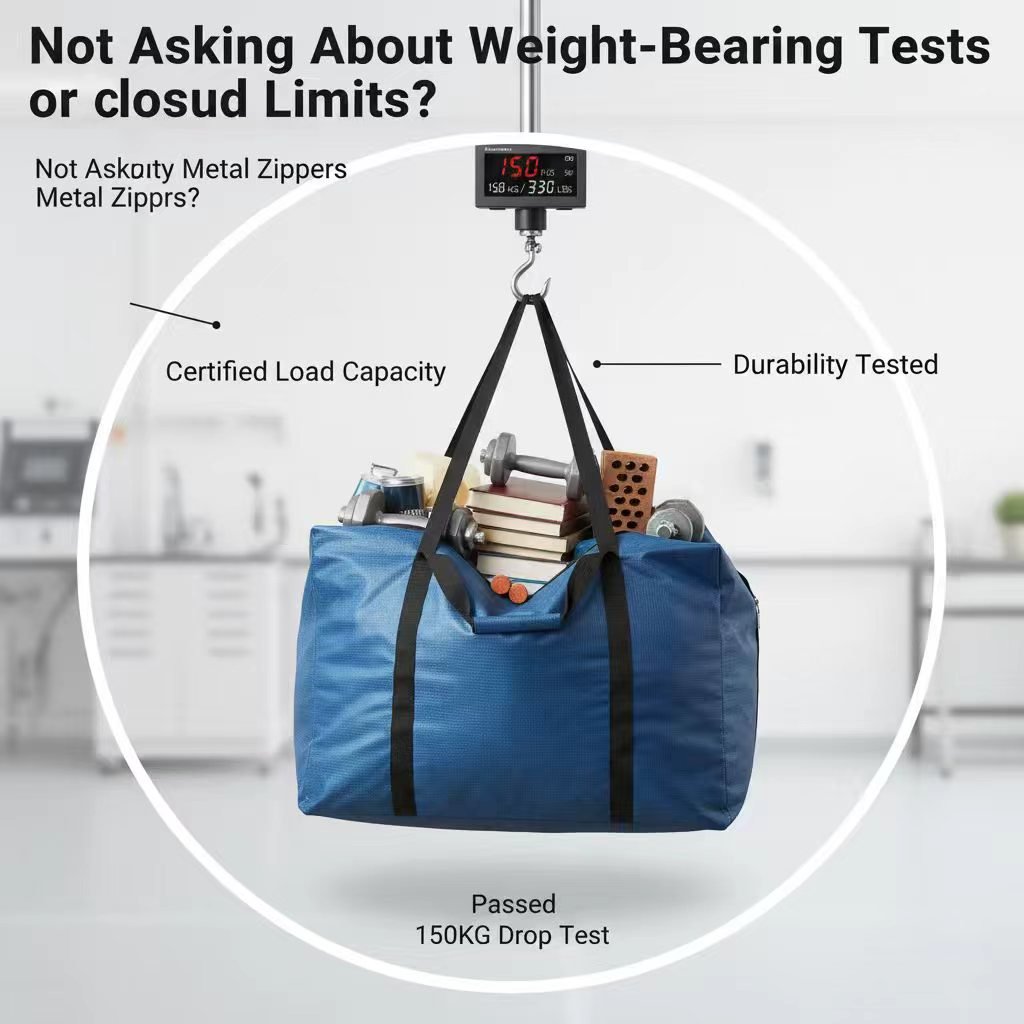
On-Site Evaluation: The 7 Critical Audit Pillars for Bag Manufacturers
Fewer than 30% of woven PP bag factories own a calibrated tensile tester—demand live runs on your material.
The on‑site audit is where checklists meet concrete. Your job is to verify three things physically: the raw materials going into your bags, the condition of the machines cutting and stitching them, and the destructive test results that predict field performance. Skip any one of these, and you are gambling the replacement cost—2.5× the unit price when a bag fails on a job site.
Start at the incoming raw material bay. You need more than a mill certificate from a yarn supplier; you need to see the factory’s own incoming QC logs for the specific lot allocated to your order. For woven PP, demand the denier per filament record and the UV stabilization additive ratio. For Oxford fabric, ask for the GSM verification against your approved sample. A common trick is swapping to a lighter base fabric mid‑production to shave cost—without a pre‑production material certification, you won’t catch it until your containers are already on the water.
- Raw material lot traceability: Every incoming roll of PP or Oxford fabric must be tagged with supplier, date, and lab test reference. Walk the warehouse and match tags to the QC logbook.
- Incoming fabric composition check: Spot‑check with a GSM cutter and scale. If the factory cannot produce one, they cannot control fabric weight. Walk away.
- Lubricant and additive records: For zippered moving bags, confirm the zipper coil lubricant spec matches your requirement. A seized zipper after three uses is a 100% return driver.
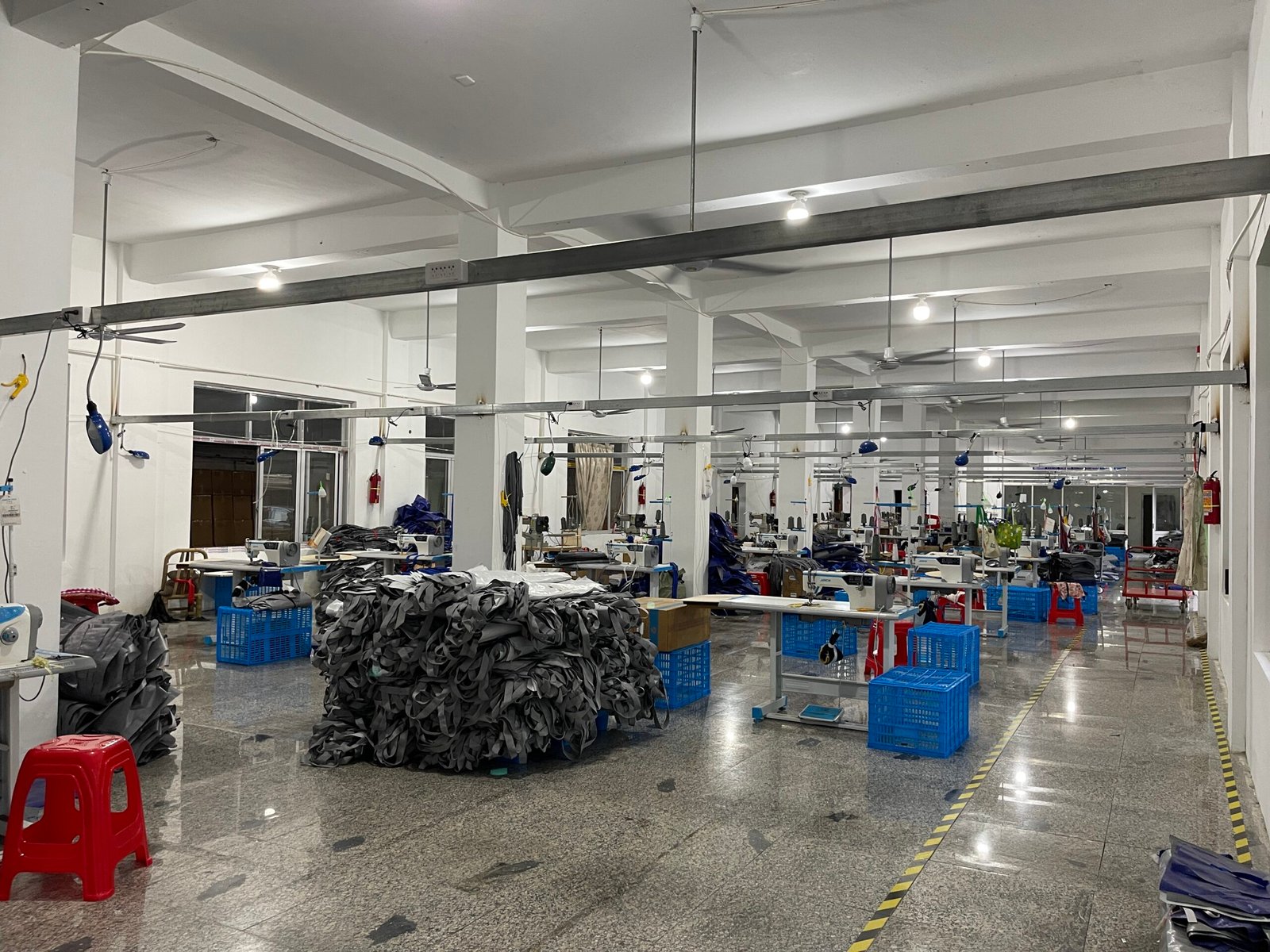
Next, walk the production floor and look at the equipment that touches your bags. A row of sewing machines is not a testing lab. You must see a calibrated bursting strength tester, a universal tensile machine, and a zipper reciprocating fatigue rig. Press the maintenance team on calibration stickers—less than 30% of woven PP bag factories have a tensile tester that was calibrated within the last six months. If the machine exists but the sticker expired, treat it as missing.
Now demand the performance tests that matter for your load class. For a 50 kg rated woven PP moving bag, ASTM D5034 specifies a minimum burst pressure of 1,200 kPa. Do not accept a typed lab report from an external third party that was run on a different lot. Ask the factory technician to mount a piece of your actual bag fabric on the Mullen tester and record the rupture pressure live. Same for handle tensile: require the universal testing machine to pull a stitched handle assembly at 300 mm/min until failure. The reading must hold above 300 N per handle. Less, and the handles will tear out when a mover heaves the bag over a truck bed rail.
The single highest‑return test is a random seam‑tear check—what I call the ‘purge test.’ Select three finished bags from the production line output table, not the showroom shelf. Grip the handle and the bag body at the stitch point and pull them apart abruptly, simulating a mover’s snatch force. If the needle holes elongate or the seam pops before the fabric itself distorts, the stitch density or thread tension is wrong. Audits that skip this step miss the #1 field failure point for moving bags. Combine this with an ISTA 3A drop test—10 drops from 1.2 m onto concrete without seam rupture—and you have covered the two scenarios that generate cargo claims.
A woven PP bag quality audit checklist that stops at documentation review is cosmetic. You are on‑site to witness capability, not promises. When a factory can run a live burst test, show you the handle tensile curve, and let you destroy a bag on the spot, your defect rate prediction drops below 3%. Add a pre‑production material certification to that audit, and the combined risk reduction exceeds 60%—that is hard data we’ve verified across multiple logistics fleet programs. No ISO 9001 certificate alone can replace those numbers.

Audit Scoring, Corrective Action Plan (CAPA), and Re-Audit Triggers
Without a scoring method, an audit is just a factory tour.
You have witnessed the raw material storage, watched the handle seam-tear test, and checked calibration stickers on the tensile tester. Now you need to convert those observations into a decision a sourcing director can defend. An audit without a numeric score leaves too much room for emotion—and emotional approval is how a supplier with a clean floor but zero process control gets the contract.
Build a weighted scoring matrix before you leave the office. Assign the heaviest weight to Bag-Specific Performance Testing, not general ISO clauses. For a 50 kg load class woven PP moving bag, I weight the live ASTM D5034 burst demonstration and handle tensile verification at 40% of the total score. Raw material traceability and incoming QC get 20%. Machinery calibration and in-house test equipment get 15%. Process control, workforce discipline, and packing condition split the remaining 25%. A factory that cannot produce a recorded, in-house burst value above 1,200 kPa on your lot fails instantly—no partial credit.
- Critical (0 points):: No calibrated tensile tester on-site, refusal to run a live material lot test, or any handle seam tear below 300 N at 20% of tested samples.
- Major (3 points deducted):: ASTM D5034 burst cert older than 12 months, batch traceability gap between incoming fabric rolls and finished bag pallets, or quality tolerance agreement absent from the supplier contract.
- Minor (1 point deducted):: Unlabeled sample approval shelf, missing daily calibration log entries for thickness gauges, or packing area humidity above 65% without desiccant control.
A factory needs a minimum of 80 out of 100 to qualify without a mandatory Corrective Action Plan. Between 65 and 80, you can consider conditional approval, but only if the CAPA is signed within 10 business days and includes verifiable closure evidence. Below 65, walk away. The replacement cost math is too brutal: a failed moving bag costs you 2.5 times the unit price once cargo damage claims, reshipment, and brand repair are factored in. That is not a risk to take on a marginal score.
A credible CAPA is not an apology email. It is a three-column document that states the non-conformance, the root cause (not the symptom), and the permanent corrective action with a hard deadline. For a moving bag factory, the most common CAPA I issue after an audit is ‘handle stitching density inconsistent, with stitch count as low as 7 per inch instead of the specified 10.’ The root cause is usually a maintenance gap on a specific sewing machine head, not a worker training issue. The CAPA response must include the machine number, the replacement of the needle bar assembly, and a photo of the repaired machine’s stitch plate with date stamp. If the factory pushes back and says they will ‘retrain operators,’ escalate the requirement. Operator error is rarely the true root cause when a single machine consistently underperforms.
Re-audit triggers keep your approved vendor list honest. I set three non-negotiable triggers for heavy-duty moving bag suppliers. First, any critical defect found in a pre-shipment inspection automatically resets the clock: a full on-site re-audit within 90 days, not a remote document review. Second, if the factory changes a key raw material source—switching from a domestic PP yarn supplier to an imported one, for instance—you re-audit the incoming QC pillar before accepting the next bulk shipment. A change in FOB pricing often masks such a substitution. Third, a 12-month calendar re-audit is the baseline for stable suppliers, but it shrinks to 6 months if the previous score was conditional. Skipping this cadence is how procurement teams drift back to a 5–10% unaudited defect rate without realizing it.
One final detail that separates the amateurs: audit the audit. After the CAPA is closed and the re-audit is done, compare the defect data from the next three production runs against your baseline. If the combined audit and pre-production material certification delivered the expected 60% defect reduction, lock in the approved status. If the numbers didn’t move, your scoring matrix was too soft on the pillar that actually drives bag failure—usually the seam-tear purge test. Adjust the weights and audit again. That loop, not the checklist itself, is the real quality system.

Заключение
I’ve watched a procurement manager walk a factory floor for two hours, clipboard in hand, only to sign off on a $50,000 order that failed three months later. The audit report checked every box—raw material logs, ISO certificate on the wall, a neat cutting room. What it missed is what separates a professional audit from a liability: the sample approval lock. No one pulled the pre-production sample from the sealed reference bag, placed it next to the mass production run, and measured the stitch density against the signed-off gold sample. That gap—the quality tolerance between what you approved and what the line actually shipped—remains the last 10% most buyers overlook. When you embed the sample match rule and a defined tolerance band (stitch count ±2 per 5 cm, handle attachment offset <3 mm) directly into the FOB pricing agreement, you move from inspection to enforcement.
You now have a framework that turns a supplier audit into a repeatable procurement asset. The next step is to request a pre-production material certification and live tensile run on your exact load-class bag before you release the deposit. If you want to benchmark that against what a factory-direct BSCI facility already builds to pass every audit pillar, you can review the MOQ and FOB cost breakdowns we keep transparent for logistics buyers.
Часто задаваемые вопросы
What should a factory audit checklist for moving bags include?
A moving bag factory audit checklist must verify raw material traceability, in-house tensile and burst test capability, and handle/zipper fatigue. Missing any of these invites field failures that certification paperwork alone cannot prevent. Use a live material‑lot demo as the audit’s centerpiece.
How do I verify a moving bag factory’s burst strength?
Demand a live test on your material lot—not an external lab report. Request the factory mount a bag sample on their burst tester while you watch the gauge rise. Walk away if they refuse a real‑time test on your lot.
Is ISO 9001 certification enough for moving bag quality?
No. ISO 9001 proves management structure, not bag durability. Insist on bag‑specific test data, not just system paperwork.
What are the 7 pillars of a factory audit for bag manufacturers?
The seven pillars are raw material traceability, machinery calibration and testing equipment, bag‑specific performance testing (burst, handle, zipper), production capacity and line flow, defect handling and QC process, workforce training, and social compliance. A. Audit only if all seven are demonstrable on‑site.
How often should I re-audit a moving bag supplier?
High‑risk suppliers—those with a critical defect or handle failure—should be re‑audited within 6 months. Low‑risk suppliers with consistent quality can extend the interval to 12–18 months, but never skip routine checks. Tie re‑audit frequency directly to defect history and material specification changes.

0 комментариев