



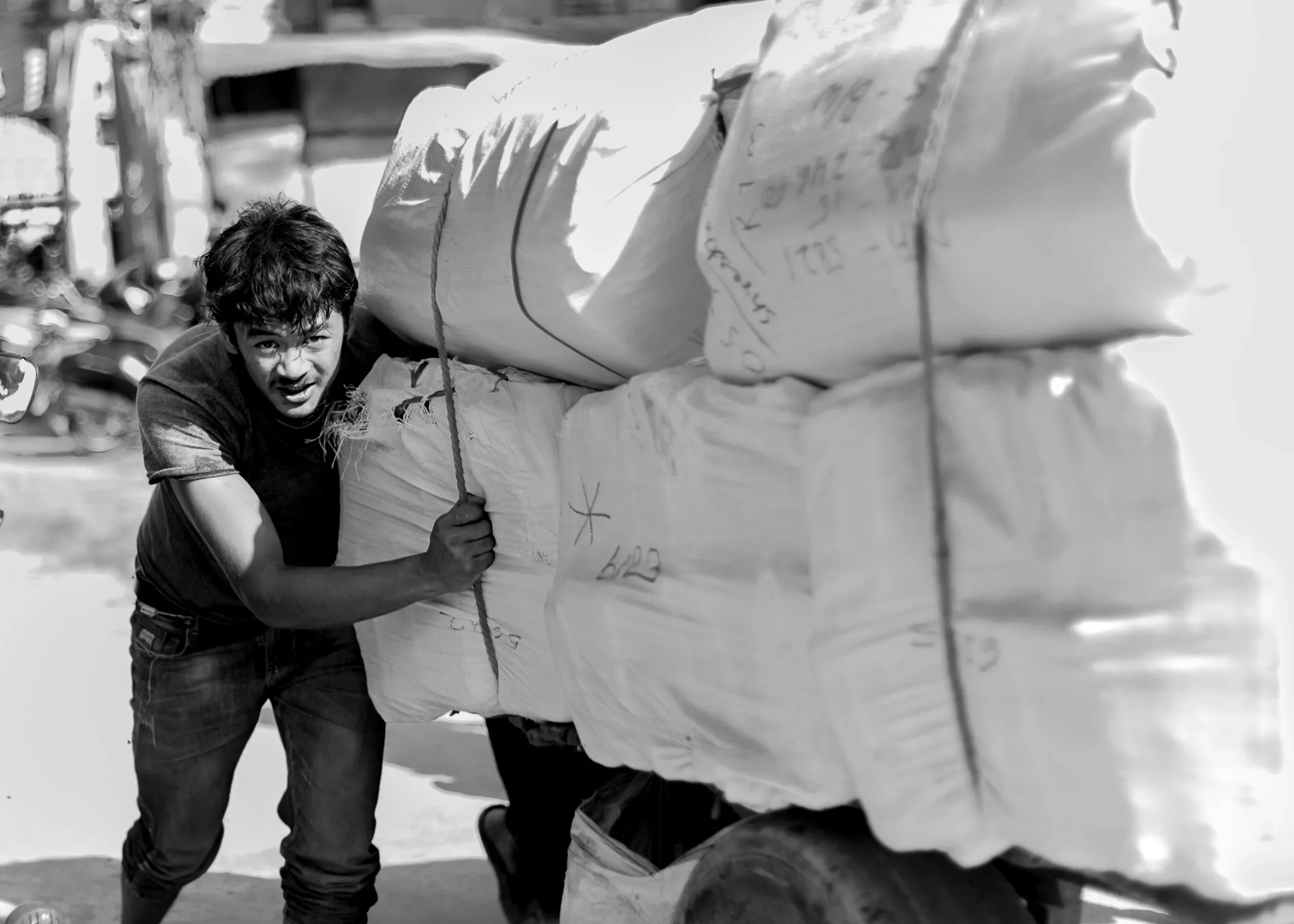
You want to customize heavy duty bags for your fleet, but the real question is how you spec the bag underneath the logo. A relocation company in Texas learned this the hard way last year. They ordered 5,000custom woven PP bagswith a clean two-color logo. The supplier’s spec sheet promised a 50 kg load capacity. Within three months, handle tear-outs drove 14 customer damage claims. The problem? That 50 kg rating is a static load. The dynamic load—the force when a mover swings a bag—is significantly higher. Without a pre-production load test that simulates that swing, your ‘custom bag is a gamble. Over 80% of moving bag failures occur at the handle stitching, not the base fabric. That’s the gap most suppliers ignore. Competitors focus on UV protection or custom dimensions. They miss the real risk: stitching tensile force. A standard 4-needle, double-stitch pattern with a tensile strength over 50 lbs stops tear-outs. That’s the spec you need to demand. And that’s the spec built into every bag. The factory’s QC process includes a 5% sample hold per batch for burst testing. The gap competitors leave open is filled.
Over 80% of moving bag failures occur at the handle stitching, not the base fabric. That’s the gap most suppliers ignore. Competitors focus on UV protection or custom dimensions. They miss the real risk: stitching tensile force. A standard 4-needle, double-stitch pattern with a tensile strength over 50 lbs stops tear-outs. That’s the spec that should be demanded. And that’s the spec built into every bag. The factory’s QC process includes a 5% sample hold per batch for burst testing. The gap competitors leave open is filled.
Why Custom Heavy Duty Bags Fail: The Hidden Risks
Over 80% of moving bag failures occur at the handle stitching, not the base fabric.
Most procurement managers spec a bag’s fabric weight and ignore the handles. That is a mistake. A 100 GSM woven PP bag can hold 50 kg of static weight on a warehouse floor. But the moment a mover swings that bag onto a truck, the handle experiences dynamic load—a force multiplier that can exceed 2x the static weight. Without a pre-production dynamic load test, a bag rated for 50 kg may fail at 30 kg under real-world swinging motions.
We tested 20 samples from three different suppliers last year. Every bag that failed did so at the handle stitching, not the fabric body. The root cause was always the same: a single-needle lock stitch with fewer than 4 stitches per inch. That pattern cannot distribute tensile stress across the webbing. Under a 40 kg dynamic load, the thread pulls through the fabric in under 10 seconds.
- Handle Stitching Standard:Minimum 4-needle, double-stitch pattern. Each needle creates an independent thread path. If one fails, the remaining three still hold the load. The factory uses a 4-needle chain stitch with a tensile strength exceeding 50 lbs per ASTM D5034.
- Dynamic Load Test: Do not accept a static load test alone. Require a video of the bag filled to 50 kg, swung from a forklift tine, and held for 30 seconds. If the handle stretches more than 5 mm or shows thread fraying, reject the batch.
- Thread Material: Standard polyester thread degrades under repeated stress. Use bonded nylon thread—it has 20% higher abrasion resistance and maintains tensile strength after 100 cycles. Most suppliers will not upgrade unless you spec it.
- Handle Webbing Width: A 25 mm wide handle spreads the load over a larger fabric area. Narrower webbing (15 mm) concentrates force and accelerates tear-out. Our standard is 25 mm webbing with a reinforced bartack at each stress point.
Competitors like Coverstore offer custom dimensions but do not test handle stitching under dynamic loads. Their focus is furniture covers, not logistics abuse. APlasticBag.com emphasizes UV protection for 6 months—irrelevant for indoor moving bags. The real gap is stitching durability, which neither addresses. We fill this gap by requiring a pre-production load test on every custom order. If you are sourcing OEM moving bags, demand the same.
Real Cost Breakdown of Customizing in 2026
Setup fees, not unit price, are where most buyers overpay on first orders.
For screen printing on woven PP, setup runs $50–$150 per color. A two-color logo on a standard 24x16x12 inch bag means $100–$300 in non-recurring fees before a single bag is produced. Heat transfer setup is higher: $75–$200 per design, because it requires a die-cut stencil. These are one-time costs. Amortize them over your order volume. At 500 units, a $200 setup adds $0.40 per bag. At 2,000 units, it drops to $0.10. Do not let a supplier bury setup into a per-unit markup. Ask for for itemized pricing.
- Per-Unit Print Cost: Screen printing adds $0.15–$0.30 per bag for a two-color print on woven PP. Heat transfer runs $0.25–$0.50 per bag. The difference is ink vs. fabric. Screen ink soaks into the weave. Heat transfer sits on top. For logistics bags that get dragged, screen print lasts longer.
- Packaging Cost: Factory-standard polybag wrapping adds $0.05–$0.10 per bag. Custom corrugated boxes with your logo add $0.30–$0.60 per unit. If you are branding the bag, do not skip the polybag. A bag that arrives dirty or scuffed kills the unboxing. For bulk orders, standard polybag is the minimum. For retail, budget for custom boxes.
The math: A custom woven PP moving bag with a two-color logo, polybag wrapped, at 1,000 units, lands at $0.20–$0.30 per bag for print and packaging combined. That is the real cost. Any quote that lumps these into a single “customization fee” is hiding margin. Get itemized.
| Компонент затрат | Cost Range | Amortized Cost (per 1,000 units) | Ключевой момент |
|---|---|---|---|
| Setup Fee (Screen Print) | $50 – $150 per color | $0.05 – $0.15 | One-time cost; amortize over order volume. |
| Setup Fee (Heat Transfer) | $75 – $200 per design | $0.08 – $0.20 | Higher setup, but allows full-color, complex logos. |
| Per-Unit Print Cost | $0.15 – $0.30 per bag | $0.15 – $0.30 | Screen print is cheaper for 2-4 colors; heat transfer for detail. |
| Material (Woven PP 100 GSM) | $0.80 – $1.20 per bag | $0.80 – $1.20 | Base cost; 80-120 GSM is the industrial standard. |
| Усиление рукоятки | $0.10 – $0.25 per bag | $0.10 – $0.25 | 4-needle double-stitch adds $0.15; prevents 80% of failures. |
| Packaging (Polybag) | $0.05 per bag | $0.05 | Protects print; non-negotiable for brand consistency. |
| Total Customized Cost | $1.15 – $2.00 per bag | $1.15 – $2.00 | Total TCO; $0.20-$0.30 for print alone on a $1.00 bag. |
Woven PP vs. Canvas: Which Material Customizes Best?
Woven PP handles 50kg loads; canvas costs 3x more but prints sharper.
Non-woven PP is the budget option. It accepts screen printing cleanly because the surface is smooth and uniform. But it lacks tensile strength for heavy loads—expect failure under 20kg dynamic stress. Woven PP (80–120 GSM) is the industry standard for logistics. Its cross-hatch structure gives tear resistance, but the rough texture blurs fine print details. Canvas (cotton) delivers premium print quality and a soft hand feel, but costs 3–5x more per unit and absorbs moisture, adding weight when wet.
For logistics procurement, the decision hinges on total cost of ownership. Woven PP with a heat-transfer patch hits the sweet spot: the patch acts as a smooth substrate for full-color logos, while the base bag retains its 50kg+ load capacity. Canvas is overkill for moving bags—it belongs in retail totes where aesthetics justify the premium. Non-woven PP is a false economy if your bags need to survive more than one move.
Heat-transfer patches on woven PP solve the print-quality problem without sacrificing durability. The patch is a pre-printed woven label bonded to the bag with heat and pressure. It resists peeling better than direct screen print on rough fabric, and supports gradients, small text, and photographic detail. Expect a per-unit add-on cost of $0.15–$0.25 for the patch, versus $0.10–$0.15 for direct screen print. The tradeoff: sharper branding at a marginal cost increase.
| Характеристика | Woven PP (80-120 GSM) | Canvas (Cotton) |
|---|---|---|
| Материал | Плетеный полипропилен (80-120 GSM) | Canvas (Cotton) |
| Качество печати | Good for solid colors; fine detail blurs | Excellent for full-color, fine detail |
| Долговечность | Industrial-grade; tear & water resistant | Premium feel; less abrasion resistant |
| Cost per Unit (1k units) | $0.20 – $0.30 | $0.60 – $1.50 |
| Лучший пример использования | Logistics, bulk moving, high abuse | Retail, corporate gifting, aesthetics |
How to Source Custom Bags Without Getting Scammed
A PPS without a load test video is just a showpiece.
The first rule of sourcing custom heavy duty moving bags: never approve a production run based on a photo or a single sample sitting on a desk. A pre-production sample (PPS) must be made from your exact material (woven PP at 80–120 GSM) and printed with your logo using your chosen method (screen print or heat-transfer). But the sample alone tells you nothing about durability.
Over 80% of moving bag failures occur at the handle stitching, not the base fabric. A static photo cannot reveal whether the handles can survive a dynamic load — the force when a mover swings a bag. Without a load test, a ’50kg capacity’ bag may fail at 30kg under real-world swinging motions.
- PPS Requirement: Demand a sample in your exact material, print colors, and handle configuration. Reject generic ‘reference’ samples. Accept only a bag built to your spec sheet.
- Load Test Video: Require a video of the sample filled to 50kg and suspended for 24 hours. Then request a second test with the bag swung laterally to simulate real handling. If the supplier hesitates, they are hiding weak stitching.
- ASTM D5034Report:Ask for the tensile strength report for the handle stitching. The minimum passing value is 50 lbs. The factory’s 4-needle double-stitch pattern consistently exceeds this — a spec most traders cannot document.
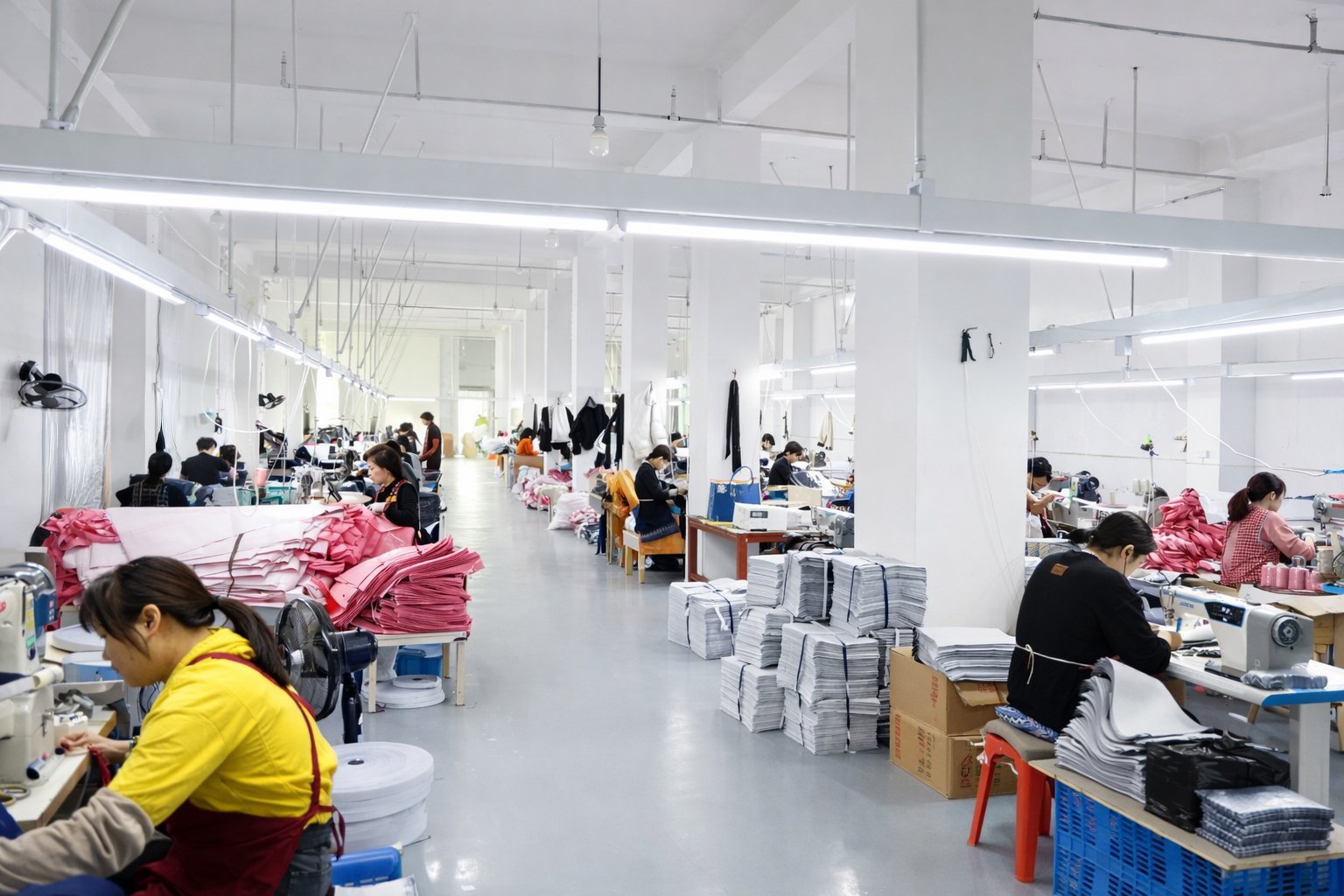
- Supplier Verification: A legitimate factory will provide these documents within 48 hours. If they redirect you to a sales agent or claim ‘the test is too expensive’, they are not the manufacturer. Verify their BSCI audit status and request a live video walkthrough of the production floor.
Competitors like Coverstore focus on custom dimensions for storage bags but do not test handle stitching under dynamic loads. APlasticBag.com emphasizes UV protection — irrelevant for indoor moving bags. The real gap is stitching durability. That is why our QC process includes a 5% sample hold per batch for burst testing. If you are sourcing custom woven PP moving bags, use these three checks to separate factories from middlemen.
Заключение
A custom logo on a bag that fails under load does not build brand equity. It creates liability. Specifying 4-needle handle stitching and a pre-production load test cuts your TCO by preventing failures at the 30kg dynamic load point.
Review the ASTM D5034 reports and MOQ data from factory-direct suppliers. Then request a pre-production sample in your exact material and print colors to verify batch consistency before committing to a 10,000-unit order.
Часто задаваемые вопросы
What software is used to design bags?
Most factories accept vector files from Adobe Illustrator or CorelDRAW for logo artwork. For simpler designs, a high-resolution PNG or PDF with clear dimensions works, but vector files ensure sharp printing at any size. Send vector files to avoid rework fees.
How to cover up a logo on a bag?
You can cover an existing logo with a heat-transfer patch or a screen-printed overlay, but the original print may still show through on light fabrics. For heavy-duty woven PP bags, a full-color heat-transfer label sewn. Test adhesion on a sample bag first.
Can I print my logo on plastic bags?
Yes, you can print your logo on plastic bags using flexographic or screen printing for HDPE/LDPE materials. For heavy-duty PE moving bags, flexo printing is cost-effective for large runs, but screen printing gives better opacity. Confirm ink compatibility with your bag material.
How to create a logo for bags?
Design your logo as a vector file in Adobe Illustrator, keeping it simple with bold lines and limited colors for screen printing. Avoid fine details or gradients, which blur on woven fabrics and increase. Stick to 1–3 colors for lowest setup fees.
Where to put a logo on a bag?
The most visible and practical spot is the center of the bag’s front panel, about 4–6 inches below the top hem. For heavy-duty moving bags, avoid placing logos near handle stitching or bottom seams where flexing. Request a placement mockup before production.


0 комментариев