



What Denier Means for Retail Tote Bag Buyers
Denier (D) is the unit that measures the weight of a yarn used in woven fabric. One denier equals 1 gram per 9,000 meters of yarn. A 300D yarn weighs 300 grams per 9,000 meters, a 600D yarn weighs 600 grams, and a 900D yarn weighs 900 grams. Higher denier means thicker, heavier yarn, which translates to a denser, stronger, and heavier fabric. For retail tote bag buyers, the denier specification determines the bag’s weight, feel, durability, and cost.
Oxford fabric is the most common polyester woven material used for retail totes, promotional bags, and branded packaging. It has a characteristic basketweave pattern that gives it a slightly textured surface and a structured drape. Oxford fabric comes in multiple denier ratings, and the three most relevant for retail totes are 300D, 600D, and 900D. Each occupies a distinct position on the cost-to-durability spectrum, and choosing the wrong denier for a retail application means either overspending on material that is stronger than needed or under-specifying material that fails prematurely.
300D Oxford Fabric: Lightweight and Economical
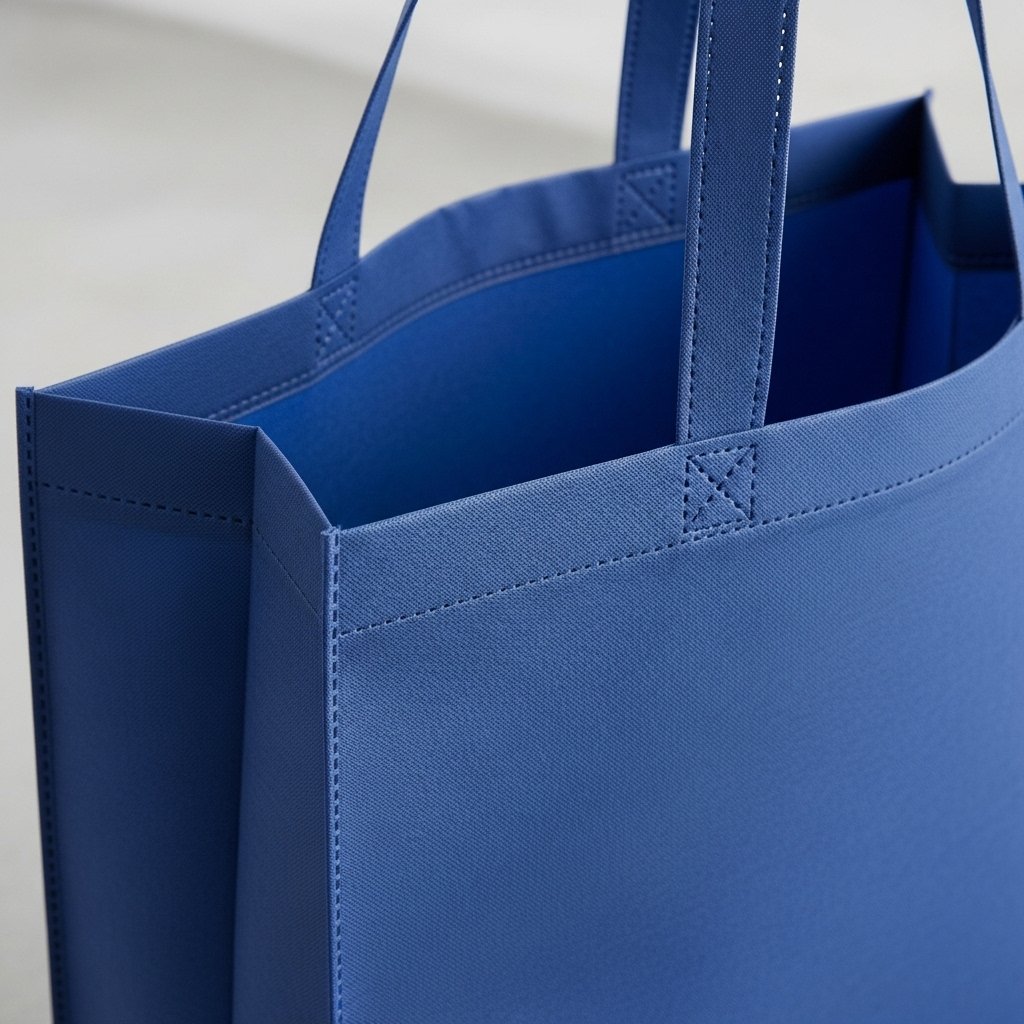
300D Oxford fabric is the entry-level weight for retail tote bags. With a GSM range of 130 to 180 grams per square meter, it is lightweight, flexible, and easy to fold. The finer yarn produces a smoother surface that takes printing well, making 300D the preferred choice for promotional tote bags where the print quality matters more than structural durability.
| Недвижимость | 300D Oxford |
|---|---|
| GSM (uncoated) | 130 to 180 |
| Durability rating | Средний |
| Tear resistance | Умеренный |
| Гибкость | High (easy to fold) |
| Waterproofing | Good with coating |
| Typical uses | Everyday bags, soft cases, liners, lightweight covers |
| Cost position | Lowest of the three |
For retail totes that carry lightweight goods like clothing, cosmetics, or promotional giveaways, 300D provides sufficient strength at the lowest material cost. The fabric’s high flexibility means it packs small, which is useful for foldable reusable shopping bags that shoppers keep in a pocket or purse. However, 300D’s moderate tear resistance means it is not suitable for heavy loads or sharp-edged contents. A tote bag made from 300D fabric carrying 8 kg of groceries with canned goods will show stress at the handle attachment points after repeated use.
The cost advantage of 300D comes from using less material per square meter. At 130 to 180 GSM versus 280 to 340 GSM for uncoated 600D, the fabric producer uses roughly half the yarn weight. This saving passes through to the bag manufacturer and then to the buyer. For orders of 10,000 or more promotional totes, the price difference between 300D and 600D can amount to $0.15 to $0.25 per bag, which adds up to significant savings on high-volume programs.
600D Oxford Fabric: The Industry Workhorse
600D is the most widely used Oxford fabric weight for bags. It occupies the middle ground between lightweight economy and heavy-duty performance, making it the default choice for retail totes, backpacks, and gear bags. Most branded tote bags sold at retail use 600D Oxford with a PU coating for water resistance.
| Недвижимость | 600D Oxford |
|---|---|
| Uncoated GSM | 280 to 340 |
| PU-coated GSM | 180 to 230 (coating adds weight separately) |
| Filament diameter | 0.27 to 0.29 mm |
| PU-coated thickness | 0.42 to 0.50 mm |
| Weave density | 28 x 16 per cm |
| Tongue tear strength (warp) | 90 to 130 N |
| Grab tensile strength (warp) | 650 to 850 N |
| Martindale abrasion | 15,000 to 20,000 rubs |
| Wyzenbeek abrasion | ~12,000 double rubs |
| FOB price (PU ~600mm) | $1.45 to $1.70 per meter |
For retail totes carrying moderate loads like books, electronics, or grocery items, 600D provides the right balance of strength, weight, and cost. The 90 to 130 Newton tongue tear strength (ASTM D2261) means the fabric resists puncture from typical retail contents. The 15,000 to 20,000 rub Martindale abrasion rating (ASTM D4966) means the bag’s surface will not pill or wear through after normal handling and use.
The PU coating on 600D Oxford adds water resistance measured by hydrostatic head. An 80 gram per square meter PU coating achieves 600 to 1,500 mm of hydrostatic head, which resists light rain and splashing but is not fully waterproof. For retail totes used in outdoor markets or rainy climates, this level of water resistance is usually adequate. Buyers who need heavier waterproofing can specify a thicker PU coating or switch to PVC backing, which raises the GSM to 350 to 550 and increases hydrostatic head significantly.
900D Oxford Fabric: Maximum Durability for Premium Totes
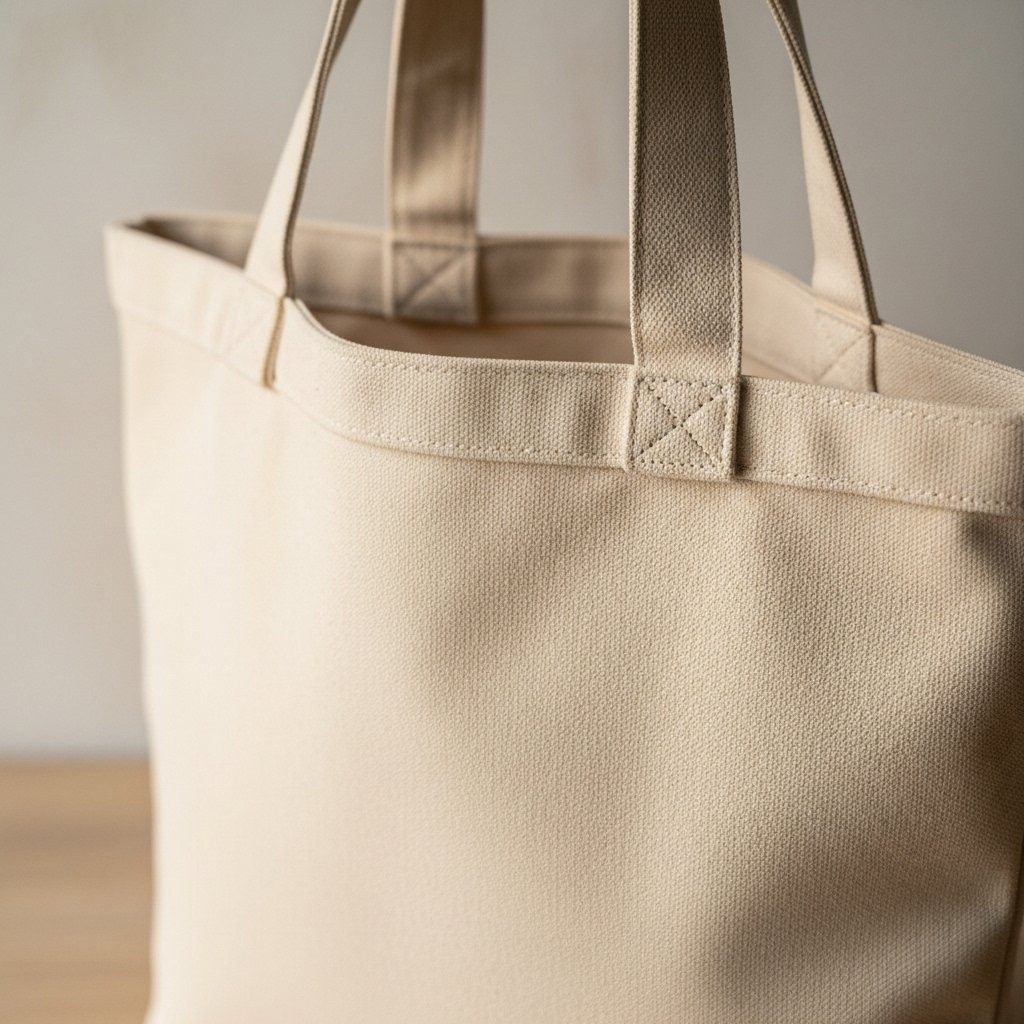
900D Oxford fabric is the heaviest of the three common retail tote weights. It uses thicker yarn that produces a denser, stiffer fabric with significantly higher tear and tensile strength. Retail brands that position their tote bags as premium or heavy-duty often specify 900D to communicate quality through the bag’s substantial feel and structured shape.
| Недвижимость | 900D Oxford |
|---|---|
| Uncoated GSM | 380 to 450 |
| Standard GSM | 220 to 280 |
| Filament diameter | 0.33 to 0.35 mm |
| PU-coated thickness | 0.55 to 0.65 mm |
| Weave density | 22 x 14 per cm |
| Tongue tear strength (warp) | 160 to 220 N |
| Grab tensile strength (warp) | 950 to 1,300 N |
| Martindale abrasion | 30,000 to 45,000 rubs |
| Wyzenbeek abrasion | ~25,000 double rubs |
| FOB price (PU ~600mm) | $1.75 to $2.10 per meter |
The performance gap between 600D and 900D is substantial. Tear strength nearly doubles, from 90 to 130 Newtons to 160 to 220 Newtons. Martindale abrasion resistance jumps from 15,000 to 20,000 rubs to 30,000 to 45,000 rubs. Grab tensile strength rises from 650 to 850 Newtons to 950 to 1,300 Newtons. For a retail tote bag that will be loaded to 10 kg or more, carried by the handles over distances, and subjected to daily wear, 900D provides a meaningful durability advantage over 600D.
The trade-off is weight and cost. A 900D fabric tote bag weighs roughly 40 to 60% more than the same bag in 600D, because the fabric is denser. The FOB price of $1.75 to $2.10 per meter versus $1.45 to $1.70 for 600D adds approximately $0.20 to $0.40 per bag depending on size and pattern efficiency. For a premium retail program where the bag is sold rather than given away, this cost is recoverable through the higher retail price the 900D bag commands.
Side-by-Side: 300D vs 600D vs 900D at a Glance
| Недвижимость | 300D | 600D | 900D |
|---|---|---|---|
| GSM range | 130 to 180 | 280 to 340 | 380 to 450 |
| Tear strength (N, warp) | Not specified (low) | 90 to 130 | 160 to 220 |
| Tensile strength (N, warp) | Not specified (low) | 650 to 850 | 950 to 1,300 |
| Martindale abrasion (rubs) | Not specified (low) | 15,000 to 20,000 | 30,000 to 45,000 |
| Hydrostatic head (mm) | Good with coating | 600 to 1,500 | 1,500 to 3,000 |
| FOB price per meter | Lowest | $1.45 to $1.70 | $1.75 to $2.10 |
| Best for | Promo totes, liners | Retail totes, backpacks | Premium totes, tool bags |
The comparison reveals clear breakpoints. 300D is the choice when cost and print quality are the priority and the bag carries light loads. 600D is the default for general retail totes that need to survive daily use with moderate loads. 900D is the choice for premium positioning, heavy contents, or applications where the bag must survive hundreds of use cycles without visible wear.
Sewing Specifications Differ by Denier
The denier of the fabric affects not only the bag’s performance but also how it is sewn. Heavier fabrics require larger needles, stronger thread, and different machine settings. A factory experienced in 600D production that switches to 900D without adjusting the sewing specifications will produce bags with skipped stitches, broken thread, or needle holes that compromise the fabric’s integrity.
| Sewing Parameter | 600D Oxford | 900D Oxford |
|---|---|---|
| Needle size | #14, #16 | #18, #21 |
| Thread specification | Tex 40 | Tex 60 bonded nylon |
| SPI recommendation | 7 to 9 | 6 to 8 |
| PU coating weight | 80 g/m2 for 600-1,500mm HH | 110 to 140 g/m2 for 1,500-3,000mm HH |
For retail tote bag buyers, these sewing specifications should appear in the tech pack so the factory knows exactly what needle, thread, and SPI to use. A 900D bag sewn with Tex 40 thread and #14 needles will have weaker seams than the fabric itself, creating a failure point at every stitch line. For more on specifying these details, see our guide on bag tech pack basics.
Which Denier Should You Choose for Retail Totes?
The selection depends on three factors: the weight of contents the tote will carry, the expected number of use cycles, and the retail positioning of the bag.
- Promotional giveaway totes (free to customer): 300D is the right choice. The bag needs to look good with a printed logo, survive light use, and keep the per-unit cost low. Expected lifespan: 20 to 50 uses.
- Retail-branded shopping totes (sold or reusable): 600D is the standard. The bag carries groceries, books, or retail goods weighing up to 8 kg and should survive 100 to 200 uses. PU coating provides rain resistance.
- Premium retail totes (sold at higher price point): 900D communicates quality through weight and structure. The bag carries heavier loads, resists abrasion from daily use, and survives 200+ uses. The higher material cost is recoverable through retail pricing.
For buyers sourcing custom shopping bags или холщовые тотализаторы from TIIOCTI, the factory offers all three denier specifications with custom printing, coating options, and hardware. The existing site also covers woven PP vs Oxford fabric comparison for buyers weighing material types, and the broader Oxford fabric failure prevention guide for handle reinforcement specifications.
Coating Options and Their Impact on Cost
The base fabric is only one cost component. The coating applied to the fabric affects both price and performance. PU (polyurethane) coating is the most common for retail totes, providing a soft, flexible backing that adds water resistance without stiffness. PVC (polyvinyl chloride) backing creates a heavier, stiffer fabric with higher waterproofing but adds significant weight and environmental concerns.
| Coating Type | 600D GSM with coating | 900D GSM with coating | Hydrostatic head | Cost impact |
|---|---|---|---|---|
| None (uncoated) | 280 to 340 | 380 to 450 | Not water resistant | Base price |
| PU coating | 180 to 230 (fabric) + 80 g/m2 | 220 to 280 (fabric) + 110-140 g/m2 | 600 to 3,000 mm | +15 to 25% |
| PVC backing | 350 to 550 | 450 to 650 | High (1,500+ mm) | +30 to 50% |
For most retail tote applications, PU coating is the right choice. It keeps the bag flexible and lightweight while providing adequate rain resistance. PVC backing is appropriate for applications where the bag will be exposed to heavy water or needs to stand upright on its own, such as cooler bags or structured shopping totes with rigid bases. The 30 to 50% cost premium of PVC should be justified by the application’s requirements.
Часто задаваемые вопросы
В чём заключается разница между тканями «Оксфорд» плотностью 300D, 600D и 900D?
The difference is yarn thickness. 300D uses the finest yarn (130-180 GSM), producing a lightweight, flexible fabric for promotional totes. 600D is the standard weight (280-340 GSM uncoated) for retail totes and backpacks. 900D uses the thickest yarn (380-450 GSM), producing a dense, durable fabric for premium and heavy-duty applications.
Какой денир ткани «Оксфорд» лучше всего подходит для сумок-тоут?
For retail tote bags sold to customers, 600D is the standard choice. It balances strength (90-130N tear), abrasion resistance (15,000-20,000 Martindale rubs), and cost ($1.45-1.70/m). For free promotional totes, 300D is more economical. For premium totes, 900D offers superior durability.
Сколько стоит ткань «Оксфорд» плотностью 600D?
600D Oxford fabric with PU coating (approximately 600mm hydrostatic head) costs $1.45 to $1.70 per meter FOB. 900D with the same coating costs $1.75 to $2.10 per meter. 300D is the least expensive option, with exact pricing depending on coating and order volume.
What does denier mean in bag fabric?
Denier is a unit of yarn weight. One denier equals 1 gram per 9,000 meters of yarn. A 600D yarn weighs 600 grams per 9,000 meters. Higher denier means thicker, heavier yarn that produces denser, stronger, and heavier fabric.
Is 900D Oxford fabric waterproof?
900D Oxford fabric with PU coating achieves 1,500 to 3,000 mm hydrostatic head, which is highly water resistant. With PVC backing, it can achieve even higher waterproofing. Uncoated 900D fabric is not waterproof. The coating, not the denier, determines water resistance.

0 комментариев