




custom tote bag quality checks is the first checkpoint buyers should lock before they approve a supplier, budget, or production slot. I still remember the call from a brand manager in Chicago. Three days before a 1,500-person product launch, they unzipped the cartons and found 4,000 custom tote bags with a logo that had shifted a full inch to the left. The pre-production sample they’d signed off on was perfect. The production run wasn’t. That $32,000 order—plus rush air freight to replace it—burned a hole in the budget and in their trust of the standard sample approval process. Those kinds of surprises don’t happen at the factory. They happen weeks later, when event crates are already loaded and the clock has run out.
This is where custom tote bag quality checks stop being a box-ticking exercise and become a buyer’s only real line of defense. When you’re managing FOB pricing, juggling tight printing deadlines, and accepting a normal quality tolerance of ±5% on a run of 10,000 units, you can’t afford to discover a mismatch between a swatch and a shipping container. A spec sheet means nothing if nobody verifies the GSM, the seam reinforcement, or the flatness of the fold before the shipment leaves port.

Why Pre-Shipment Quality Checks Are Non-Negotiable for Event Swag
A visible seam failure at an event isn’t a QC issue—it’s a brand equity write-off.
March last year, a tech conference in Austin. 500 custom-printed cotton totes, stuffed with swag, placed on every seat. By the first coffee break, 12 handles had torn clean off. Not at the stitching—the fabric itself gave way around the stress point. The remaining 488 bags did their job, but nobody talks about the bags that held up. Everyone discussed the ones that didn’t. The brand’s logo, printed neatly on the side, became a meme in the conference Slack channel before the keynote ended.
That $3.80-per-unit order turned into a $19,000 brand repair exercise—and that’s before calculating the lost goodwill from 500 decision-makers who now associate that logo with cheapness. Events compress time and attention. A failed bag isn’t a warranty claim you handle quietly over email. It’s a live product failure with an audience.
What most event buyers don’t realize is that the defect that kills you won’t show up in the pre-production sample. A single sample is hand-cut, hand-sewn, and inspected by a supervisor before it leaves the factory floor. It represents what the factory do, not what they do at 2 a.m. on a Thursday when they’re 3,000 units behind schedule. This gap—between sample capability and production consistency—is where pre-shipment inspection earns its keep.
- Print registration shift: On a sample, the operator takes 20 minutes to align screens perfectly. In production, they rush through 400 pieces per hour. A 2mm shift in screen alignment turns your crisp logo into a blurry mess. I’ve rejected entire batches where the PMS 186 red drifted into a muddy orange because nobody checked ink viscosity halfway through the run.
- Stitch density degradation: The sample shows 10 stitches per inch on the handle attachment—the spec you approved. Production units commonly drop to 6 or 7 when operators speed up. That difference isn’t cosmetic. A handle carrying 8 kg fails at 4,500 cycles with 10 SPI. It fails at 1,800 cycles with 7 SPI. Your attendee’s walk from the exhibition hall to the parking garage covers roughly 2,000 grip-release cycles if they shift hands.
- Fabric substitution within tolerance: You specified 140 GSM non-woven polypropylene. The factory ships 120 GSM because ‘it’s within standard tolerance.’ The spec sheet says ±10%, so technically they’re inside the range. But 120 GSM non-woven feels flimsy in the hand—the exact opposite of the premium impression you paid for. A GSM scale costs $40 on Amazon. Your inspection partner should bring one.
Here’s how quality checks integrate into a decision-stage vetting process without derailing your timeline. You’re not looking for perfection—you’re looking for patterns. An AQL 2.5 Level II random inspection pulls 50 units from a 1,000-piece order. If 3 bags show the same seam skip, that’s not a random defect. That’s a systemic production issue that’ll repeat across the other 950 units. You reject the lot, not the sample.
I’ve managed supplier audits across 12 countries, and the factories that push back hardest on pre-shipment inspection are the ones that need it most. A factory confident in its quality control will ship you inspection photos unprompted. A factory that argues about ‘trust’ is hiding rework piles behind the cutting table.
The benchmark to write down: if your supplier can’t provide a third-party inspection report at AQL 2.5 Level II with photographic evidence of all critical defect categories—print registration, seam strength, GSM verification, dimension tolerance—before releasing the container, their price advantage disappears the moment 500 VIPs watch your swag literally come apart at the seams.
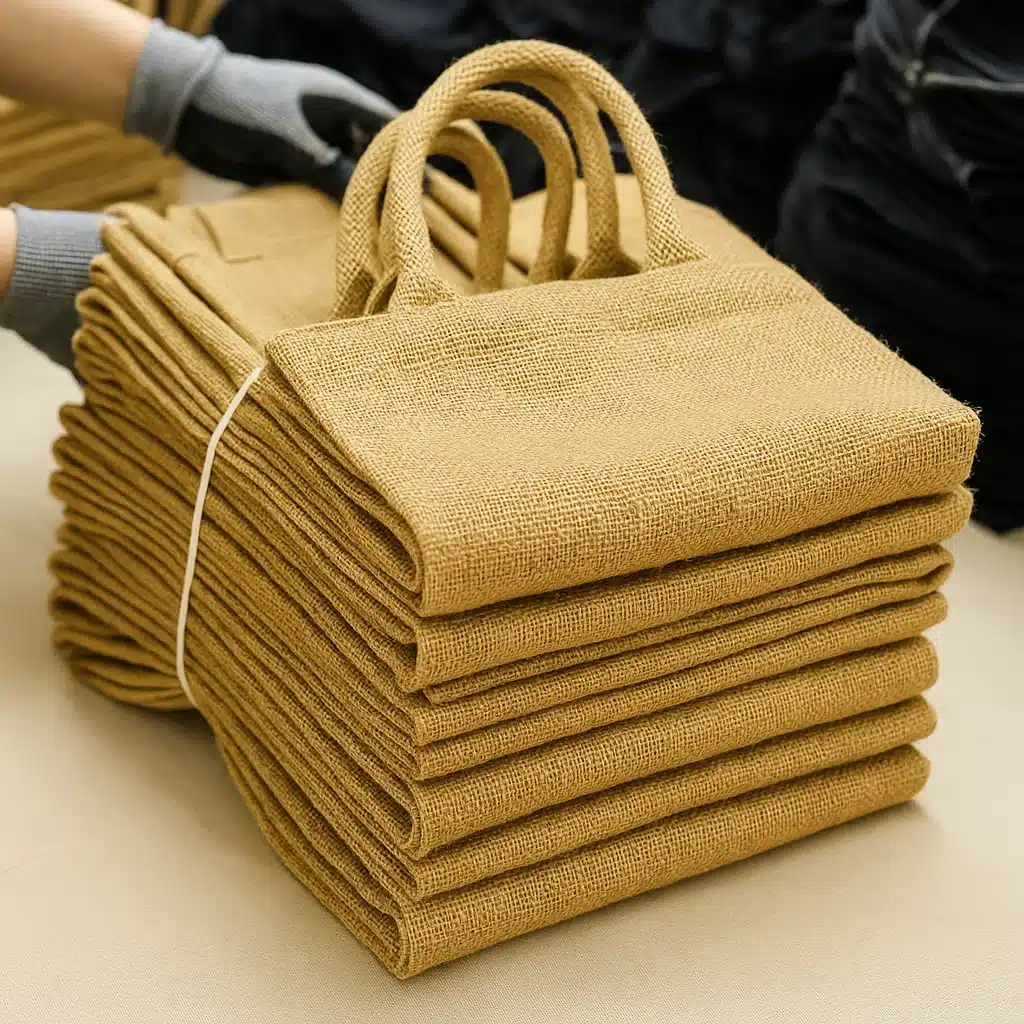
Check 1: Print & Color Accuracy
A PMS swatch approved on your desk means nothing under production lighting.
You’ve signed off on a crisp Pantone sample on your laptop screen, and the factory matched a CMYK proof on coated paper. Then the container arrives and the tote bags are a shade of blue your brand team already rejected. That moment reveals print accuracy is less about design talent and more about the factory’s screen setup.
- Misalignment: When the logo shifts 2mm off-center or registration marks don’t line up across colors, it’s usually incorrect screen tension or a warped platen. Compare at least 5 random bags from the production run against your spec sheet—not just the single perfect sample they sent.
- Smudging: If ink smears when you rub a finger across the print, drying time or oven temperature was off. Demand a spot test on the first 50 units to catch it before the full batch runs.
- Ink bleeding: Fuzzy edges or color seeping into the fabric signal over-thinned ink or wrong squeegee angle. On non-woven tote fabric, absorbency amplifies this; a printed swatch on the exact material is mandatory.
The fix is a printed swatch—not a digital mockup—produced on the same substrate under D65 / 6500K lighting that simulates factory-floor daylight. Set a clear PMS color matching tolerance for custom printing: ±2 is a realistic threshold for tote bags. Insist the factory runs a pre-production sample (PPS) and compares it to your swatch under the same light box. If they can’t hit that, they’re guessing. Once bulk starts, a final random inspection using AQL 2.5 sampling for event tote bags catches the rogue prints that photo samples miss—this is the difference between a sharp branded giveaway and a cheap bag destined for the trash.
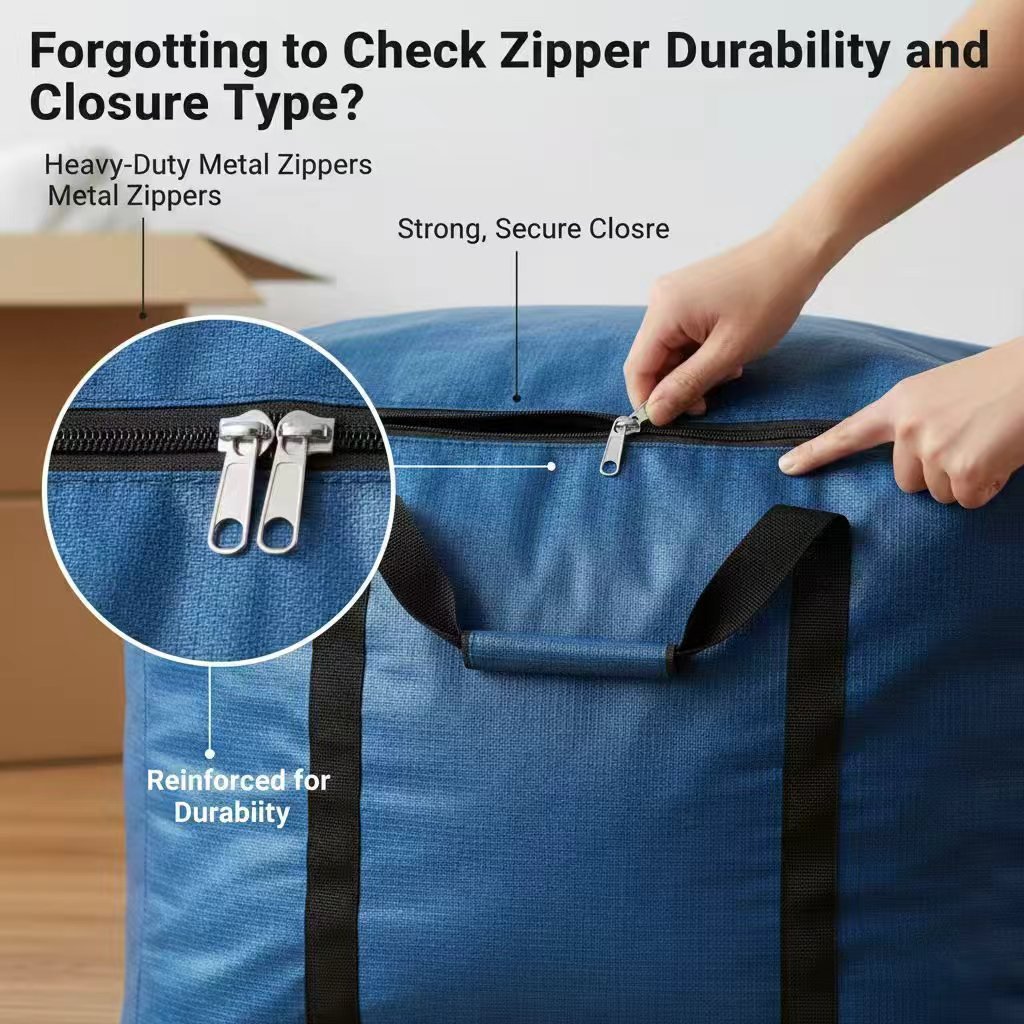
Check 2: Material Weight & GSM Verification
Spec sheets don’t fail—unverified GSM assumptions do.
I’ve audited a factory in Ningbo where the production manager handed me an 80 GSM non-woven tote and said, ‘This is 100 GSM. You can feel it.’ I handed it back with a GSM cutter and scale. It read 76. The buyer had paid for 100 GSM for three containers before anyone checked. This is the gap between what the spec sheet promises and what actually lands. For event organizers managing 2,000 attendee bags, that gap translates into a flimsy product that tears at the handle before lunch hour.
Fabric weight is the single most substituted variable in custom tote production. Factories know most buyers won’t verify it. A 10 GSM shortfall on a 120 GSM cotton canvas tote might not sound like much—until you realize that’s an 8.3% material reduction that directly weakens seam strength and load capacity. The math is simple: less fiber density equals faster handle failure under the weight of a conference binder and a water bottle.
The verification process itself is straightforward if you reject subjective language. ‘Feels thick’ is not a specification. Neither is ‘heavy duty feel.’ Those phrases give the supplier permission to make judgment calls that favor their margins over your brand presentation. Instead, lock in three measurable checkpoints: the exact GSM target, the acceptable tolerance band, and the verification method.
- GSM Target: Specify the exact grams per square meter—80 GSM, 120 GSM, 150 GSM. This number must appear on the purchase order, the packing list, and the sample approval sheet. If it’s not written, it’s not agreed.
- Tolerance Band: The industry norm is ±5%. On an 80 GSM non-woven tote, that means 76-84 GSM passes. Anything below 76 is a fail. For premium cotton canvas at 150 GSM, the same tolerance applies: 142.5-157.5 GSM. Reject anything outside that window. A factory that consistently delivers at the bottom of the band is not your partner—they’re optimizing cost at your expense.
- Verification Method: A GSM cutter and precision scale cost under $50 combined. Specify that your third-party inspector or factory QC must cut samples from three random bags—top panel, bottom gusset, and side panel—and weigh each. Averaging hides inconsistencies. Demand individual measurements documented in the inspection report. An AQL 2.5 level II random inspection catches batch-wide GSM drift before those 2,000 bags ship.
One reality that rarely makes it into sourcing guides: GSM tolerance stacks with dye lot variance. Dark-dyed fabrics—black, navy, deep burgundy—often gain 2-3 GSM from dye saturation alone. A factory that dyes after cutting a 78 GSM base might hit 80 GSM on paper and call it compliant. But the base fabric is still underweight. The correct approach is to test un-dyed greige fabric against the specification, then test finished dyed samples. If both readings sit inside the tolerance band, you have a genuine pass.
Event planners often skip this check, trusting the pre-production sample. That sample was hand-cut by the factory’s best operator, sewn under supervision, and shipped directly to your desk. It bears zero relationship to mass production. The only number that matters is the one pulled randomly from the bulk run. Your FOB pricing should have this inspection cost baked in—$150-$250 for a one-day check that prevents a $15,000 write-off on unusable event collateral.
| Тип ткани | Common GSM Range | Industry Tolerance | Verification Method | Key Insight for Event Swag |
|---|---|---|---|---|
| Non-Woven Polypropylene (NWPP) | 60 – 120 GSM | ±5 GSM or ±5% of nominal | Cut a 10x10cm swatch, weigh on a calibrated digital scale, convert to GSM | 80 GSM is standard for lightweight giveaways; 100+ GSM adds durability and premium hand-feel |
| Cotton Canvas (Natural) | 140 – 340 GSM | ±10 GSM for uncoated; ±15 GSM for coated | Use a GSM cutter and precision balance; compare against approved PP sample | 200+ GSM delivers a luxury feel for VIP gifting; request a pre-production swatch to confirm texture |
| Laminated / RPET Woven | 100 – 180 GSM | ±8 GSM due to lamination process | Measure base fabric and lamination separately; total thickness check with micrometer | Lamination boosts stiffness and print vibrancy — critical for high-impact brand presentation |
| Oxford / Polyester | 210 – 600 GSM | ±5% of nominal weight | Whole-bag weight check on bulk samples; cross-check against spec sheet density | Over 400 GSM suits heavy items; specify ‘flat-pack’ to avoid creases that undermine the premium look |
| Jute / Hessian | 250 – 450 GSM | ±20 GSM due to natural fiber variance | Average multiple samples; moisture content can affect weight — condition before weighing | Rustic aesthetic popular for eco-themed events; confirm consistent density to avoid flimsy spots |

Check 3: Stitching & Seam Strength
AQL 2.5 random sampling catches seam failures 3x more effectively than factory photos.
The first bag failure I witnessed at a live event wasn’t dramatic. A handle simply detached from a custom tote halfway through a conference hallway. The attendee didn’t complain. They just set the bag down on a chair and walked away. That bag, with your logo printed across the front, sat abandoned for three hours in full view of 2,000 industry peers. Stitching failures don’t announce themselves until the worst possible moment.
Skipped stitches happen when a sewing machine needle misses the fabric for a fraction of a second. To the untrained eye, the seam looks intact. Run your thumb along the stitch line with moderate tension. A properly locked stitch holds evenly. A skipped stitch creates a visible gap where the thread sits loose against the fabric. On a 12-inch handle attachment point, even three skipped stitches reduce the load-bearing capacity by roughly 20%. That turns a bag rated for 15 pounds into one that fails at 12.
The standard stitch density on a cotton or non-woven tote should be 8 to 10 stitches per inch (SPI). Anything below 6 SPI and you’re looking at a seam that will ladder-open under load. Loose threads at seam ends are a separate red flag. A properly back-tacked seam end has no tail longer than 3mm. If you can grab a loose thread and pull it free without resistance, the entire seam is at risk of unraveling.
- Handle attachment point: Requires a bar tack or cross-stitch reinforcement covering at least 1.5 inches of the handle base. Minimum 28 needle penetrations in the tack area. If the factory uses a single straight stitch here, reject the sample immediately.
- Bottom gusset junction: Where the side panel meets the bottom panel, stress concentrates at a single fold line. Demand a double-row lockstitch or a bound seam. A single-row seam at this junction will split open when the bag is loaded with more than 8 pounds of conference materials.
- Side seam bottom corner: The last inch of the side seam where it meets the bottom gusset needs a reverse stitch. Without it, the thread tension gradually releases from the bottom up. This is the most common failure point on bags that looked fine out of the carton.
- Webbing overlap: Cotton webbing handles should extend at least 2.5 inches past the bag rim before stitching begins. Shorter overlap concentrates all the load on a narrow strip of fabric. On a 500-unit order, reducing overlap from 2.5 inches to 1.5 inches saves the factory about $0.03 per bag and costs you your reputation.
Photo samples from the factory floor show you the best bag they made that day. A final random inspection at AQL 2.5 level II tells you what the full shipment actually contains. I’ve audited suppliers across Southeast Asia for over a decade, and the gap between the photo sample and the random pull is where most event organizers get burned. The factory QC worker selects the cleanest bag under the best lighting, takes three angles, and sends it off. The AQL 2.5 sampling for event tote bags pulls 200 units from a 3,000-piece order and inspects each one under production lighting. That sample size catches skipped stitches and loose thread tails that the curated photo never will.
One number to keep in your back pocket: demand a 5% overrun at no extra charge. On a 2,000-bag order, that gives you 100 extra units. If the inspection finds a defect rate of 3%, you still have enough clean bags to hit your attendee count without scrambling for a last-minute reprint. Factories that refuse this term are usually running such tight margins on material that they can’t absorb any variance. That tells you something about their quality tolerance before you even place the order.
For your next supplier call, here is the benchmark to write down: a properly reinforced tote bag handle attachment should survive a static load test of 25 pounds for 60 seconds without thread breakage or fabric tear. If the factory can’t confirm this test result in writing, you’re buying bags that were never engineered for load. They were engineered for a photo.

Check 4: Dimension & Shape Consistency
A 1cm deviation can make your insert cards slide out—check every dimension.
I’ve seen a $40K VIP event fall apart because the custom totes arrived half an inch too narrow. The предсерийный образец sat perfectly flat at 15 x 18 inches, but the mass production run came in at 14.5 x 17.5. The sponsor’s A5 catalog was designed to fit flush inside—now it stuck out, dog-eared on all 500 bags. That’s not a minor variance; it’s a brand-damaging embarrassment. When you approve a spec sheet, you need to lock in dimensional tolerance immediately. Anything beyond ±3mm on width and length changes how inserts, giveaways, and the bag itself look in a guest’s hand.
- External Width & Length: Measure at top, middle, and bottom seams. A variance over 5mm across points signals warped fabric tension or inaccurate panel cutting.
- Gusset Depth (Side & Bottom): Open the gusset fully and measure. If the gusset is 1cm shallower than spec, the bag loses capacity and the side panels won’t sit square when loaded.
- Handle Drop & Seam Alignment: Handle length must match across both sides. Off-spec handles cause the bag to hang tilted, which ruins the visual balance at a glance—especially critical when bags are displayed on retail racks or held by staff.
Warped panels are a silent threat. Factories often stack cut fabric in humid conditions; the outer panels absorb moisture and warp before stitching. The result is a tote that won’t lie flat on a table—one corner curls up, the mouth stays twisted. At an event, that translates to a reception desk piled with misshapen bags, undermining the premium aesthetic you paid for. Even worse, many suppliers fold totes aggressively for air freight to reduce volumetric weight—those folds leave a permanent crease right across the brand logo. To prevent this, specify flat-pack shipping with tissue inserts or rigid cardboard stiffeners inside each bag. It adds a few cents per unit on FOB pricing, but eliminates the crease factor that makes a $15 gift look like a promotional freebie. Before signing off on the shipment, pull a random AQL 2.5 level II sample and lay the bags out on a clean surface: if they don’t spring back to shape without creases, reject the lot. The cost of shipping replacements or apologizing to your client far outweighs the freight savings the factory was chasing.
| Проверка качества | Specification Requirement | Acceptable Tolerance | Verification Method | Consequence of Non-Conformance |
|---|---|---|---|---|
| Overall Bag Dimensions | Width, height, and depth must match approved tech pack | ±3% or ±5 mm (whichever is smaller) | Measure random samples per AQL 2.5 Level II using calibrated steel rule | Inconsistent brand presentation; bags may not fit planned inserts or display racks |
| Handle Drop & Alignment | Handle drop length and attachment points as per spec sheet | ±2 mm; symmetrical alignment within 2 mm | Steel rule measurement; visual alignment check on flat surface | Slanted carry, uneven weight distribution, and poor brand perception |
| Panel Flatness & Warping | Fabric panels must be free of stretch, skew, or fabric memory creases | No visible distortion when laid flat; no warp > 3 mm across panel width | Visual inspection under production lighting; flat-table test to detect warp | Off-spec folding or warped panels ruin the premium unboxing reveal at events |
| Folding & Crease Control | Flat-pack with acid-free tissue inserts (as specified) for crisp presentation | No sharp creases; fold lines must not break fabric or print surface | Inspect random cartons; unfold and examine for permanent fold marks | Wrinkled bags degrade brand image and require on-site steaming or reorder |
| Bottom Gusset Depth | Gusset depth (expanded) must match approved sample | ±3 mm | Measure gusset expansion with ruler during random sampling | Reduces usable volume; attendees cannot fit event materials, lowering utility |
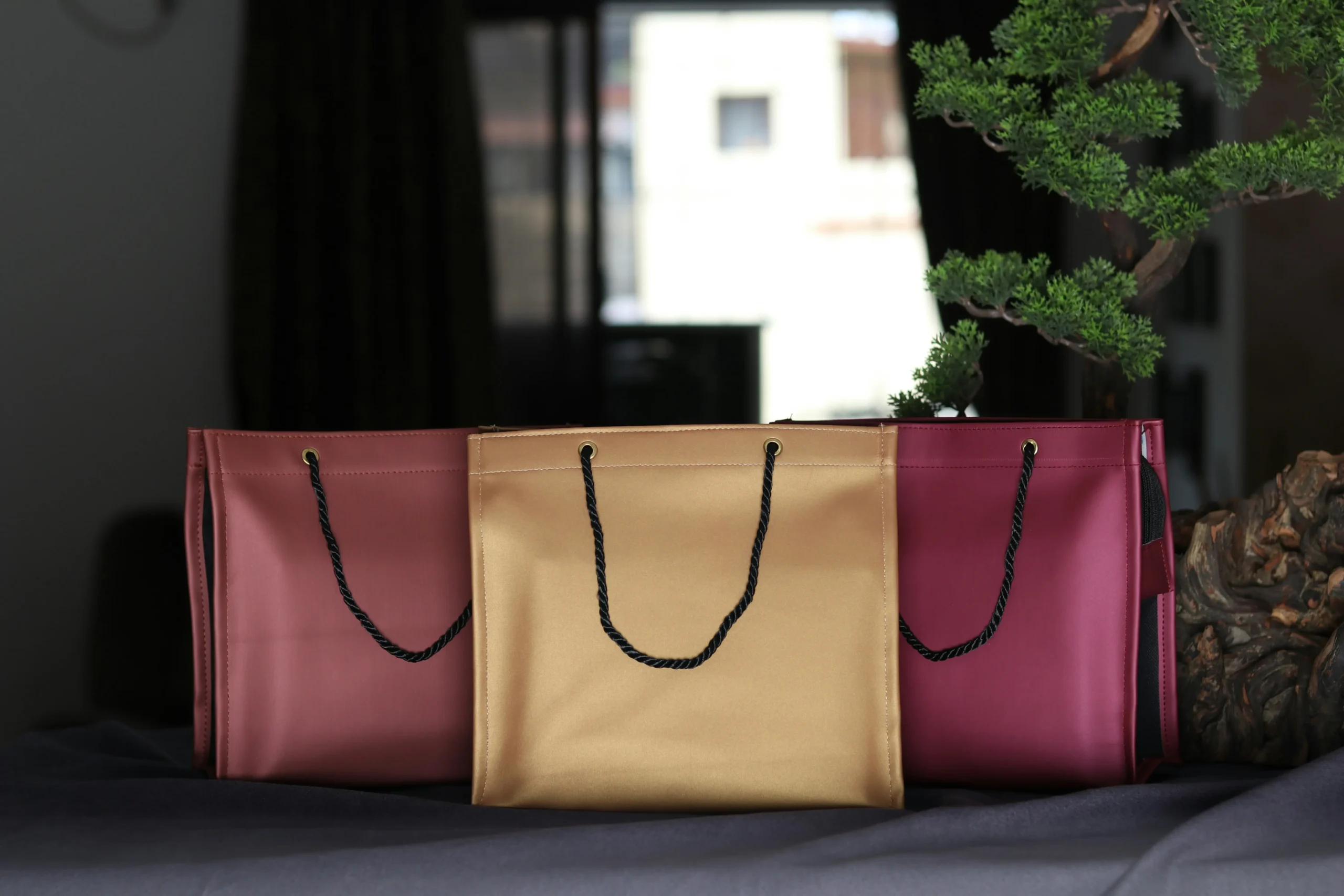
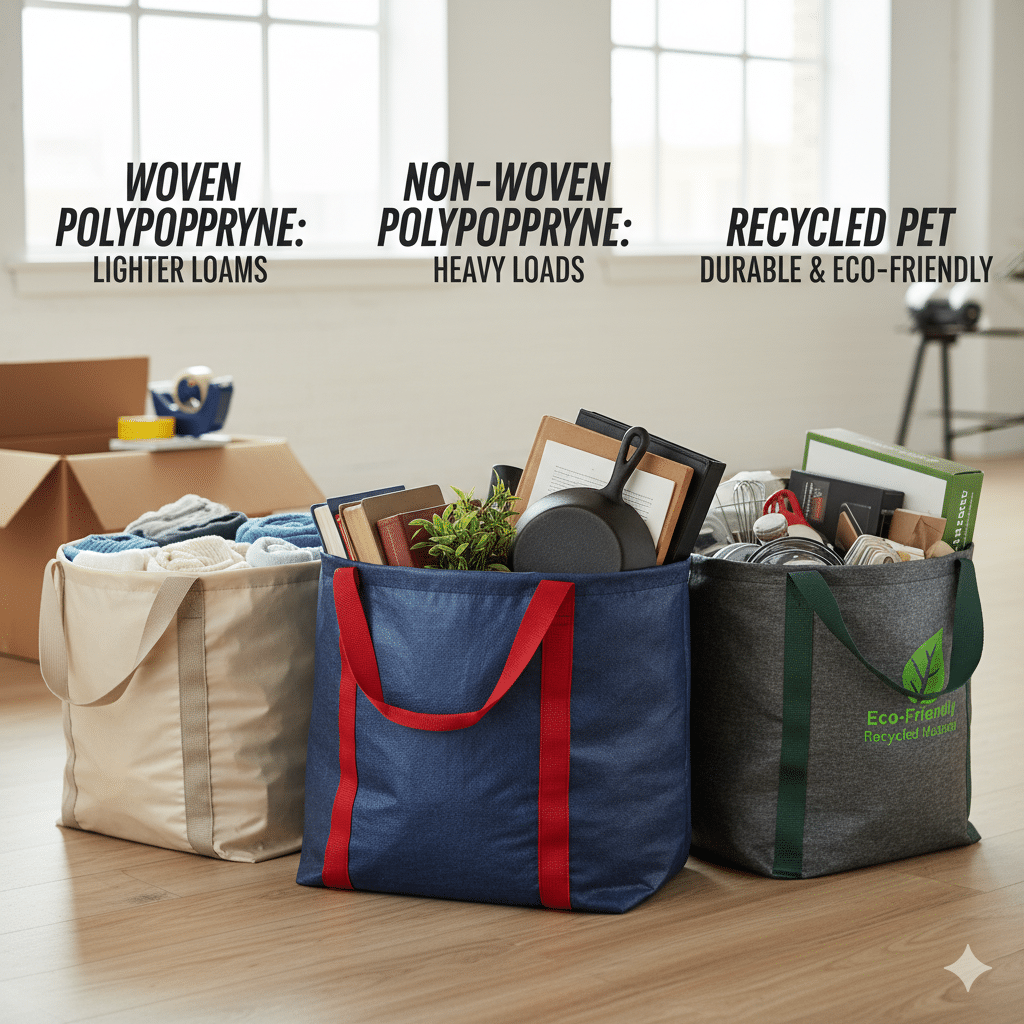
Check 5: Packaging & Wrinkle-Free Delivery
The biggest unboxing disaster at a conference isn’t the print—it’s the wrinkles.
Most event organizers I work with assume that a polybag is enough. It isn’t. I learned this after a $50K order for a tech summit arrived with diagonal fold creases running through every logo. The factory had flat-packed the pre-production samples but folded the entire production run to save air freight volume. Nobody caught it until the pallets were opened on-site. Specify flat-pack with individual tissue inserts on every purchase order. This adds about $0.08–$0.12 per unit but makes the difference between a polished brand moment and guests asking if the bags were recycled from last year’s event.
Polybagging alone doesn’t prevent creasing; it only controls moisture and dust. For rigid non-woven or laminated materials that hold memory, even light folding leaves a permanent dent. I require tissue paper placed between folded panels, then the bag laid flat in a corrugated master carton with shrink wrap around each stack of ten. Yes, the carton count goes up, but the per-bag presentation goes from ‘budget conference’ to ‘premium giveaway’. If your factory pushes back with a ‘standard practice’ argument, ask for a photo of the last folded shipment they sent to a beauty brand. They’ll usually switch to flat-pack without further negotiation.
- Carton labeling: Request outer cartons marked with PO number, quantity per carton, and ‘Flat Pack – Do Not Fold’ in English and destination language. Customs officers and warehouse staff treat a labeled carton with more care.
- Polybag specification: Specify 3 mil polyethylene bags with a ventilation hole. This keeps the tote crisp without trapping humidity that causes warping in laminated substrates.
- Overrun allocation: Factor in 5% overrun for any units that still arrive with damage. You need every attendee covered, and a no-cost overrun means zero budget surprises.
Turning Checks into Your Final Shipment Approval
A stack of photos isn’t a QC report.
I’ve watched too many event organizers treat the inspection phase like a formality. They flip through 20 factory photos, give a thumbs-up, and wait for the container. Then registration morning arrives and 300 bags have skewed logos. The inspection happened — the documentation didn’t. When you’re managing a 2,000-unit order for a conference with sponsor logos on every bag, your final shipment approval hinges on a piece of paper with clear pass/fail thresholds, not a WhatsApp gallery.
A proper pass/fail checklist doesn’t ask ‘does this look good?’ It asks measurable questions with defined quality tolerance ranges. For custom tote bags, I run every batch against three non-negotiable gates before I authorize release. If any gate fails, the factory reworks before the container gets sealed. No exceptions. No ‘we’ll fix it next time.’ The shipping deadline pressure is real, but it’s always cheaper to delay by five days than to air-freight replacements to a venue.
- Print Registration & PMS Delta: Using a Pantone book under D65 lighting, verify that color variance stays within a Delta E of 3.0 maximum. The human eye picks up a Delta E above 2.5 on solid color blocks — your sponsor will absolutely notice a logo that reads orange instead of their brand red. Check registration alignment across 10 random units from the AQL 2.5 level II sample pull. More than 1.5mm of drift on any axis is a fail.
- Seam Strength at Load Points: Grab 5 bags from the inspection sample and load each with 150% of the stated carry capacity. For a standard event tote rated at 8 kg, that means 12 kg of dead weight. Hold for 60 seconds by the handle. Listen for thread popping. Inspect the bartack reinforcement at handle attachment points. One seam separation across the sample set triggers a full recheck of the entire batch.
- Dimensional Stability & Crease Condition: Measure 3 bags flat against the approved spec sheet. Side panel variance beyond ±5mm means the cutting die drifted. Unfold each bag and check for permanent crease lines — the kind that don’t shake out. If you specified flat-pack with tissue inserts and the bags arrive folded into quarters, that’s a packaging spec failure. You don’t want volunteers ironing tote bags at 6 AM on event day.
Here’s where the real leverage lives: that inspection report becomes your institutional memory for the next reorder. I keep a running file on every supplier. When I reorder, I attach the previous batch’s documented tolerances and say ‘match or beat these numbers.’ Factories respect buyers who keep receipts. If batch #3 had 2 units with loose threads in a 200-piece sample, I specify that the next order’s acceptable thread defect count is zero — and I’ve got the signed-off report to back it up.
This is also how you negotiate the 5% overrun clause that saves your attendee count. Most factories will include a 3–5% production overrun at no extra charge if you stipulate it during sample approval. The overrun covers QC rejects, transit damage, and last-minute registration spikes. Without a documented inspection standard, the factory decides what counts as a reject. With one, you have a mutual definition of defective — and the overrun guarantees you hit your exact quantity even after pulling failed units.
One logistics coordinator I worked with learned this the hard way on a $50K order for a global tech summit. The pre-production sample looked flawless. Mass production had a different thread tension setting, and 40% of the bags had puckered seams along the gusset. No inspection report existed that defined the acceptable seam flatness tolerance. The factory argued the bags were ‘commercially acceptable.’ The venue had 2,800 attendees and 2,800 bags with visible defects. Documenting findings isn’t admin busywork — it’s the only thing standing between your FOB payment release and a ballroom full of compromised brand impressions.
Заключение
The five checks—print color accuracy, GSM material weight, seam strength, dimension consistency, and flat-pack packaging—protect the moment a VIP picks up your branded tote bag. A factory’s willingness to meet these pre-shipment standards reveals their production discipline faster than any factory tour. The only inspection benchmark worth saving for your next supplier call: AQL 2.5 level II with a 5% overrun at no extra cost.
Часто задаваемые вопросы
What should buyers look for when sourcing custom tote bag quality checks?
Focus on print accuracy, material GSM, stitching strength, dimension consistency, and wrinkle-free packaging. Missing any one of these checks can turn an event giveaway into a brand embarrassment. Approve shipment only after a completed pass/fail checklist on those five points.
How to verify factory certifications for custom tote bag quality checks?
Request current ISO 9001 and SGS material test reports directly from the production factory. Ensure documents list the actual manufacturing entity and match your order materials. Cross-check certificate numbers with the issuer’s database before you rely on them.
What are typical MOQ requirements for wholesale orders?
Custom tote MOQs typically start at 500 pieces for a simple one-color logo print. Multi-color or specialty constructions push the minimum higher to cover plate and setup costs. Ask for an MOQ matrix based on your exact material, print, and size combination.
How to handle international shipping and customs clearance?
Use DDP terms so the factory manages freight, duties, and customs clearance to your final address. Providing a complete commercial invoice speed things up, but DDP transfers the import burden to the. Lock in Incoterms and cargo insurance before confirming the order.
What quality inspection standards apply before shipment?
Apply a pass/fail inspection covering print, GSM, stitching, dimensions, and packaging, aligned with AQL 2.5 for critical defects. Any major failure in these five areas should halt shipment for a full reinspection. Get written agreement on acceptance limits before production starts.


0 комментариев