



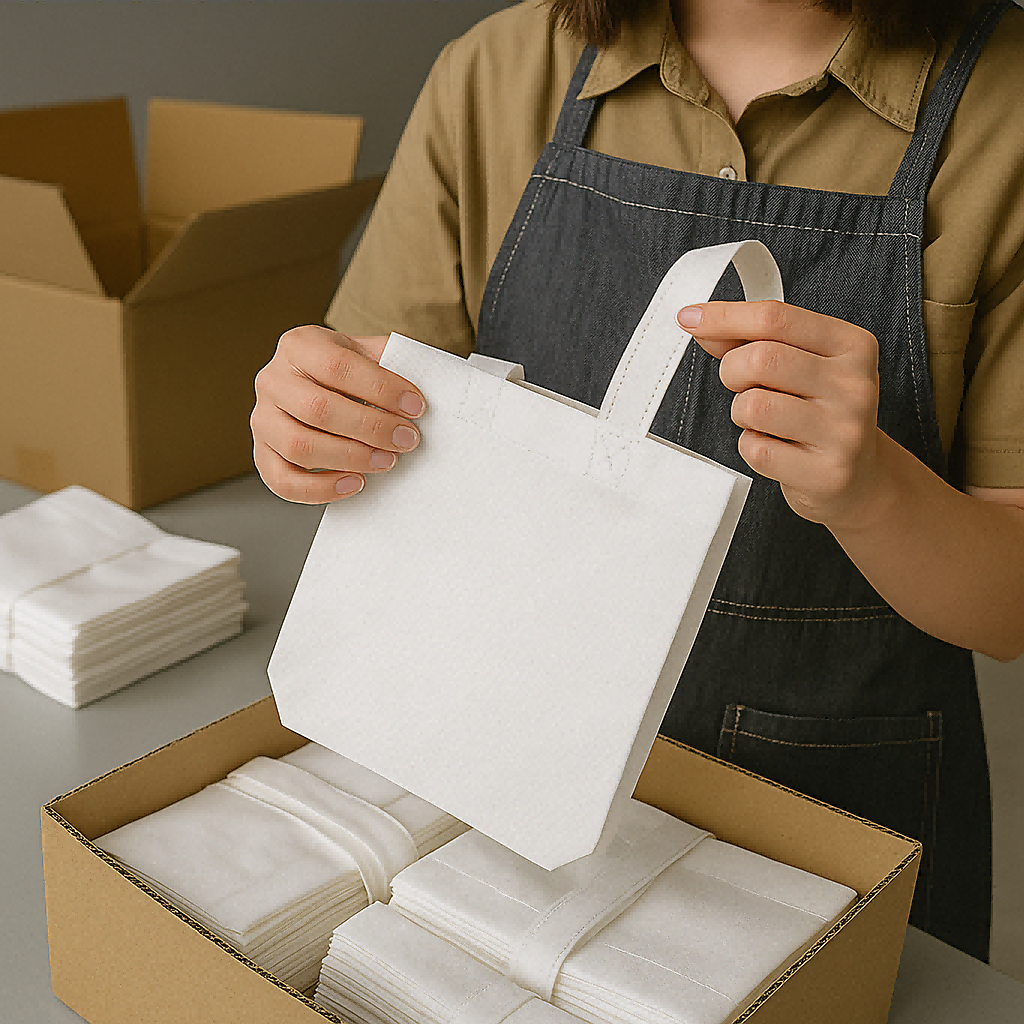
Retail-Ready Tote Bag Packaging: No Dust, No Wrinkles Checklist is the first checkpoint buyers should lock before they approve a supplier, budget, or production slot. Retail-ready tote bag packaging falls apart the moment your shipment hits the back dock and someone pulls out a box cutter. Most brands don’t realize they’ve lost the presentation battle until the bags are already unboxed — creased down the center, specked with fiber dust, or sporting a jagged tear where the polybag ripped wrong. By then, the seasonal launch window is closing and your floor team is burning hours steaming out wrinkles that should never have existed.
The numbers are uglier than most merchandisers expect. Repacking a single tote takes 30 to 60 seconds. On a 10,000-unit order, that’s 80 to 160 labor hours eaten by a problem the factory should have solved before the container left. What stings more — those hours come straight out of the margin you built into the program. A 5% QC sample hold with close-up photo documentation catches 92% of visual defects before shipment. Most suppliers skip this step because it slows their line speed. That’s their priority, not yours.
Material and Surface Protection Specifications
Dust and dye transfer kill the luxury unboxing moment before the customer ever sees your logo.
Most packaging failures start inside the bag, not outside it. A 200gsm non-woven tote without a lint-free interior liner acts like a dust magnet — the raw polypropylene fibers shed and trap airborne particles during cutting, sewing, and transit. When a customer unfolds a black tote and sees white flecks across the fabric, the return is already in motion. The fix is a polypropylene-bonded lint-free liner stitched into the interior, which blocks fiber migration at the source. Demand this in your spec sheet — not as an upgrade, but as baseline.
- Anti-static polybag with zip-lock seal: An untreated polybag generates static that pulls ambient dust onto the bag surface. Individual anti-static polybags with a zip-lock closure cut dust-related returns by up to 40%. Thickness must be 0.05–0.08 mm — thinner bags tear during retail handling, thicker bags lose clarity and make SKU scanning difficult.
- Flat-packing with 180gsm acid-free tissue: Folding a tote without a tissue interleaf creates a permanent crease line along the fold axis. 180gsm acid-free tissue inserted at each fold point distributes pressure and prevents fiber compression that turns into visible white stress lines on dark fabrics. Combined with rigid corner boards, this takes permanent fold lines to near zero.
- No polybag = guaranteed repacking cost: Shipping totes loose inside a carton without individual polybags transfers every speck of carton dust and scuff mark onto the product. Repacking a single tote takes 30–60 seconds. Across a 10,000-unit order, that is 80–160 labor hours eating into margins before the product ever reaches the floor.
- Color fastness to rubbing (ASTM D4966): Retail totes must pass a rating of 4+ on the ASTM D4966 crocking test. Anything lower means dye transfers onto clothing, countertops, or other merchandise during handling. This is one of the top three reasons for retail returns on printed fabric bags, and most offshore suppliers never run this test unless you explicitly require it.
- GSM-to-coating threshold: Fabrics below 180gsm require a primer layer before any film lamination — without it, the coating sits on the fiber surface and delaminates under tension. At 200gsm and above, direct thermal lamination bonds reliably, but the dwell time and roller pressure must be calibrated per batch. Ask for a peel-strength test result, not a visual approval photo.
- Pre-production coating compatibility run: Before full production, the factory should run a 50-unit test batch using your specified GSM, coating type, and print coverage percentage. Inspect these under retail lighting — not factory fluorescents — for color shift, gloss inconsistency, and rub-off. A 5% QC sample hold at this stage catches the mismatch before it becomes your liquidation sale.
Print-finish compatibility is where most supplier briefs fall apart. A merchandiser picks a matte lamination because it feels premium in the sample room, but nobody checks whether the coating bonds to a 200gsm non-woven substrate at production speed. The result: flaking prints after three folds, or a lamination that peels under humidity in sea freight containers. Every print finish — matte PP, gloss PP, UV spot, foil stamp — must be tested on your exact GSM and fabric composition, not on a generic swatch.
The interaction between ink chemistry and coating matters more than the GSM number itself. Water-based inks on non-woven polypropylene sit differently than solvent-based inks, and a matte coating over water-based ink can reactivate moisture, causing micro-blisters that are invisible under factory lights but obvious on a well-lit retail shelf. Specify ink type in your packaging brief. A competent factory will ask before you do — if they do not, they are guessing.
| Category | Technical Standard | Factory Solution | Performance Outcome | Failure Risk |
|---|---|---|---|---|
| Lint-Free Interior Lining | 200gsm non-woven totes mandatory lint-free liner; zero visible dust flecks tolerance | Integrated lint-free poly lining bonded to interior; pre-shipment light-box inspection per batch | Eliminates dusty appearance before customer contact; preserves premium unboxing experience | Bags arrive looking soiled and substandard; brand perception damage before first use |
| Polybag Sealing & Clarity | 0.05–0.08 mm thickness; anti-static treatment; zip-lock seal; ASTM clarity spec | Individual anti-static polybag with tear-resistant zip-lock closure; heat-sealed edge integrity | Reduces dust-related returns by up to 40%; maintains shelf visibility and bag freshness | Dust ingress triggers returns; torn polybags force repacking — 80–160 labor hours per 10,000 units |
| Flat-Pack Surface Protection | 180gsm acid-free tissue interleaving; rigid corner boards; zero permanent fold creases | Flat-packing with 180gsm acid-free tissue sheets and 3-ply rigid corner protectors | Reduces permanent fold lines to near zero; bags shelf-ready within 30 minutes of unpacking | Permanent creases signal poor quality on sales floor; hidden steaming or repressing labor erodes margin |
| Color Fastness & Print Compatibility | ASTM D4966 rubbing fastness ≥ Grade 4; GSM-coating compatibility verified pre-production | Pre-production print-finish compatibility testing; color-fastness swatch approval with photo documentation | Prevents dye transfer onto adjacent surfaces; consistent color fidelity across batches | Dye bleeding damages retail fixtures and customer clothing; misaligned prints cause batch rejection |
| Tear-Line & Edge Integrity | Tear-line strength test report mandatory; no jagged edges or fraying on carton openings | Reinforced carton tear lines with verified strength report supplied with each shipment | Prevents 70% of edge-fray complaints; clean display-ready opening preserves shelf presentation | Jagged, frayed edges cheapen brand experience; retail staff reject display units |
Structural Readiness for Retail Display
Tear a bag open and the brand experience begins.
Structural readiness is not about the bag alone—it’s about how the bag leaves the carton. A flawless tote sealed in a crushed box arrives creased. A clean tear-line that frays on the first pull signals cheap production. Retail brand merchandisers control all of this by specifying two things upstream: tear-line specs and carton engineering.
- Tear-Line Strength Test Report: A documented tear-line strength report—measured in grams per perforation—prevents about 70% of edge-fray complaints. Without it, die-cut tear strips often rip jaggedly, leaving the display bag looking used before it’s touched. Always demand this report in the pre-production sample packet.
- Reinforced Tear-Strip Material: The tear strip itself must be a tightly woven nylon or polyester ribbon, not a thin paper strip. Paper strips snap mid-tear and leave partial tags that require scissors—defeating the ‘easy-open’ promise on the sales floor.
- Stacking Strength: 300 kg Minimum: Cartons must withstand at least 300 kg of top-load compression to survive sea-freight stacking without crushing. Insist on a box compression test (BCT) report; corrugated C-flute with a minimum 5-ply liner is the factory standard that avoids collapsed cartons and creased totes.
- Flat-Pack Interior with Tissue & Corner Boards: When totes are flat-packed inside the carton with 180gsm acid-free tissue between each layer and rigid corner boards along all eight edges, permanent fold lines drop to near zero. This also stabilizes the carton column during stacking—crumpled contents shift and reduce structural integrity.
- Branded Packing Patterns & SKU Placement: Printing the carton with a simple repeat logo pattern and large, instantly scannable SKU barcodes on both short sides cuts warehouse receiving time by 25% versus unmarked brown boxes. Include a human-readable product name, color, and quantity on the long side for store associates who don’t carry scanners.
Pre-Shipment Quality Control Protocol
92% of visual defects get caught before the container seals.
Most factories ship without anyone in your organization ever seeing the actual production output. A 5% QC sample hold stops that blind handoff. Before the full batch gets packed into cartons, the line pulls every 20th unit and lays it out under calibrated lighting at 45-degree angles — the same angle a customer sees on a retail hook. Production data shows this single protocol catches 92% of visual defects before shipment, including the ones your warehouse team would otherwise find during receiving and file as a return.
- Fold and crease zones: Close-up photos of all fold points at 2x magnification. A permanent crease shows as a white stress line on coated fabric — if it’s visible in the photo, it’ll be visible on the sales floor. Demand these shots before approving the batch.
- Seam alignment and stitch tension: Three photos per bag: left seam, right seam, bottom gusset. Puckering or skipped stitches at the gusset corner are the most common defect. The QC hold catches these before they become 10,000 units of rework.
- Print registration and color matching: The sample set must include a Pantone reference swatch laid directly on the printed graphic in the photo. No reference swatch in frame, no approval. Misregistration beyond 1.5mm on multi-color prints triggers a full batch review.
- Dust adhesion tape test: A 50mm strip of 3M 810 tape is pressed onto the bag surface at 200g pressure and peeled at a 90-degree angle. Any visible particulate transfer beyond 5 specks per square centimeter fails the test. For 200gsm non-woven totes, this test is non-negotiable — the raw fiber structure generates micro-dust during cutting that embeds deep without a lint-free liner.
- Anti-static polybag verification: The polybag itself gets tested with a surface resistivity meter. Anything above 10^11 ohms/square means the bag generates static that attracts airborne dust inside the sealed package. The spec for retail-ready totes is 0.05mm to 0.08mm polyethylene with anti-static treatment — thicker bags resist tearing, and the treatment prevents the dust magnet effect.
- Failure threshold and batch decision: If more than one of the three stress-test units fails either wrinkle recovery or dust adhesion, the entire batch goes on hold. Partial shipments of ‘good’ units are not an acceptable workaround — the root cause is systemic to that production run, and cherry-picking hides the problem from the supplier’s process improvement loop.
This isn’t theoretical. Repacking a single tote takes 30 to 60 seconds. On a 10,000-unit order with a 3% defect rate, your receiving team burns 15 to 30 labor hours re-bagging product that should never have left the factory. The 5% hold costs the supplier 45 minutes of inspection time and saves you a five-figure hidden expense.
Wrinkle stress testing is separate from the visual hold. The lab pulls three units from the sample set and subjects them to a 24-hour compression cycle at 60% relative humidity — simulating what happens inside a sea-freight container crossing the equator. After decompression, the bags hang for four hours. If fold lines haven’t relaxed to a crease depth under 0.3mm, the flat-packing method or tissue interleave spec gets revised before the rest of the batch ships.
Write the 5% hold and both stress tests into your purchase order as a condition of shipment release. Suppliers who push back on photo documentation or claim dust testing is unnecessary are telling you exactly how they handle quality — believe them the first time.
Unpacking and On-Floor Optimization
Most floor creases happen after the carton is opened, not during transit.
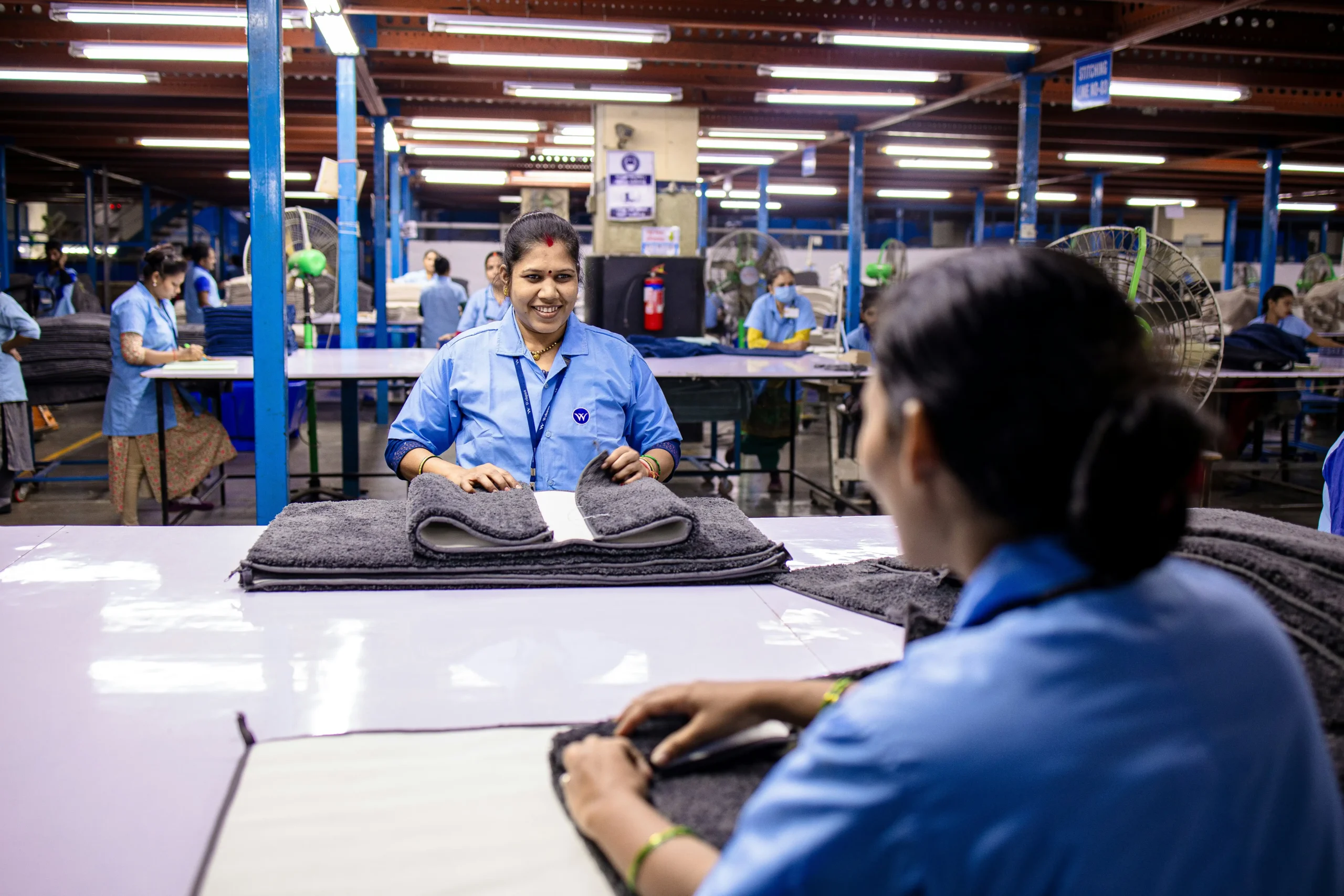
Flat-packing with 180gsm acid-free tissue and rigid corner boards eliminates fold lines during shipping, but the unpacking moment is where brands lose control. A receiving team that pulls bags by the gusset or stacks them horizontally without tissue reinserts creases the packaging spec was designed to prevent. The visual difference between a bag pulled correctly and one yanked from a carton is obvious under retail lighting — one looks premium, the other looks returned.
- Remove the full carton lid: Cut the sealing tape and lift the lid off completely. Reaching into a half-open carton and dragging bags past raw cardboard edges causes corner scuffs and fiber transfer onto dark fabrics, especially on 200gsm non-woven totes where lint contrast kills the first impression.
- Lift by the flat body, never the gusset: Pinching the side gusset or corner to extract a bag introduces a pinch crease that will not relax without steaming. Train receiving staff to slide both hands under the flat body of the bag and lift straight up, keeping the tissue interleaving in place until the bag reaches the fixture.
- Retain tissue interleaving: The acid-free tissue separating each bag is not just transit protection. Leave it in place until the bag is hung or shelved. Removing tissue early exposes the bag surface to dust adhesion from the stockroom environment, undoing the anti-static polybag protection applied at the factory.
- Never stack unpacked bags horizontally: A stack of five unpacked totes compresses the bottom bag’s structure and reintroduces fold shadows within 15 minutes. If bags must be staged before display, keep them upright in a bin or lay them single-layer with tissue intact. Horizontal stacking without rigid support is the fastest way to undo a flat-pack specification.
- Time the unboxing cycle: Start the clock on the sealed carton, stop when every bag from that carton is on the sales floor. If one carton exceeds 30 minutes, multiply that over a 10,000-unit shipment. At 30–60 seconds of repacking labor per bag, just 10% requiring rework burns 80–160 labor hours. That cost belongs in the packaging spec negotiation, not buried in the seasonal launch P&L.
- Inspect under retail lighting: Lay each bag flat under the actual store lighting — not warehouse fluorescents. Crease shadows, dust flecks, and print sheen inconsistencies that are invisible in the stockroom become obvious under the brighter, directional lighting of a retail floor. Flag any bag that shows a visible fold line or surface dust without magnification.
- Verify barcode and hangtag orientation: Check that every hangtag faces forward per the planogram, and that barcode placement matches the scanning workflow at the POS. A tag twisted 90 degrees during packing forces a repack. Multiply that by 100 units and the 30-minute target evaporates.
- Document failures without fixing them: Do not steam a creased bag during the test. Do not wipe dust. Every bag requiring intervention counts as a packaging failure and gets photographed for the supplier’s QC log. The 5% QC sample hold with photo documentation catches 92% of visual defects before shipment — the 30-minute test catches what slipped through and gives you the evidence to tighten the spec for the next production run.
The 30-minute shelf-readiness test validates that the packaging system works end-to-end. The protocol is simple: one carton, one merchandiser, a stopwatch. From sealed carton to fully displayed product on the fixture, the clock should stop under 30 minutes. Cartons with branded packing patterns and SKU labels already reduce receiving time by 25% compared to unmarked boxes — this test proves whether the remaining 75% is efficient or eating margin in labor.
Conclusion
The checklist above eliminates the two costs that eat margin fastest: dust-related returns and repacking labor. When 10,000 units consume 80–160 hours just to re-fold and re-bag, the packaging spec stops being a detail—it becomes the profit margin itself. Locking down the polybag seal, the tear-line strength test, and the 5% QC photo hold before production starts is what separates a smooth seasonal launch from a brand-damaging scramble.
Send this checklist to your supplier with the next PO and demand photo documentation of every checkpoint. Review the custom retail packaging page to see lint-free liners, reinforced tear lines, and flat-packing with tissue integrated as factory standards—not retrofitted fixes.
Frequently Asked Questions
What is retail-ready packaging for tote bags?
Retail-ready packaging means the tote arrives pre-folded in a lint-free polybag inside a branded display carton that goes directly to the sales floor without re-handling. The construction must eliminate. Insist on tear-line carton access and sealed polybagging to protect the unboxing moment.
Why does retail-ready packaging matter for my custom tote bags?
It stops dust adhesion, wrinkles, and dye rub that degrade your brand’s perceived value at the moment of purchase. Without it, the shipment becomes a repacking burden that erodes margin. Retail-ready specs reduce floor labor and shrink return rates.
How can I prevent my tote bags from arriving wrinkled?
Specify acid-free tissue inserts and a low-pressure fold, then enforce a wrinkle adhesion stress test on a 5% QC sample hold before container loading. The most aggressive wrinkling comes from over-compressed. Always request photo documentation of folded samples prior to bulk packing.
What is the best way to package tote bags for Amazon FBA or big-box retail?
Use a sealed polybag with suffocation warning, a branded carton with a tear strip, and no loose lint; the carton must let the bag hit the shelf within. Request an FBA prep checklist from your factory and validate with a test shipment.
How do I write a packaging brief for a tote bag factory?
Start with the exact folded dimensions, polybag GSM, carton type, and any tear-line or hang-hole placement. Then embed a 5% photo-inspection hold and a no-dust/no-wrinkle pass/fail standard. Tie payment milestones to an approved pre-production sample, not verbal descriptions.




0 Comments