



The short answer: post-consumer fiber blends let a heavy-duty bag carry recycled content without falling apart, because the blend is designed to recover the strength that recycled fiber loses. A single recycled fiber, used alone, is usually weaker and less abrasion-resistant than the virgin material it replaces. A blend pairs recycled content with a stronger partner fiber and adjusts the fabric weight, so the bag still meets the load and life the buyer expects. The mistake is treating recycled content as a drop-in swap rather than a re-specification.
What post-consumer fiber actually is
Post-consumer recycled fiber comes from material that has already been used by a consumer: PET bottles turned into rPET, worn garments turned into recycled cotton, or recovered polypropylene. It is different from pre-consumer waste, which is factory scrap that never reached a user, and the two are not interchangeable on a certificate. The recycling route matters too. Mechanical recycling shreds and re-melts the material, which shortens the polymer chains and reduces strength with every cycle. Chemical recycling breaks the polymer back to its building blocks and rebuilds it, which recovers more of the original performance but costs more and is less widely available. A supplier who can say which route and which feedstock the fiber came from is a supplier who can back the claim.
Why a blend, not a single fiber
Heavy-duty bags fail in three ways: the weave tears, the surface abrades through, and the seams pull. Recycled fiber tends to lose strength on all three, so the blend is where the engineering happens. Blending recycled PET with a share of virgin polyester restores tensile strength while keeping a meaningful recycled content. Blending recycled cotton with polyester adds the abrasion resistance that cotton alone lacks. Blending recycled polypropylene with virgin PP keeps the chemical resistance of the family while lifting the load the fabric can carry. The blend ratio, the yarn count and the fabric weight (GSM) are the three dials a supplier adjusts, and they should be quoted together, because a recycled bag at the same GSM as a virgin one is often the weaker product.

Comparing the common blends
The table below compares the fiber options that come up most often in heavy-duty bag programs. The exact values depend on the supplier and the blend ratio, so the columns are there to frame the questions to ask, not to replace a test report.
| Blend | Typical recycled content | Strength behaviour | Abrasion resistance | Best for | Watch-out |
|---|---|---|---|---|---|
| rPET + virgin polyester | Up to roughly half | Recovers most tensile strength | Good | Promotional and retail totes | Colour can shift with recycled feed |
| rPET alone | High | Lower tenacity than virgin | Moderate | Light and medium loads | Needs higher GSM to match virgin |
| Recycled cotton + polyester | Varies with cotton share | Strength from the polyester share | Good once blended | Canvas-style bags | Moisture regain can cause shrinkage |
| rPP + virgin PP | Up to roughly half | Keeps woven PP load rating | Good | Heavy-duty and moving bags | Recycled feed can vary by batch |
| Recycled cotton alone | High | Weakest in tension | Lower | Light retail bags | Not for heavy or abrasive loads |
The certification buyers now ask for
A recycled claim is only as good as the chain that supports it, which is why retail programs ask for a recognised standard rather than a supplier statement. The Global Recycled Standard, maintained by Textile Exchange, is the one most often requested for recycled-content textiles, because it covers the recycled content, the chain of custody and the social and environmental criteria behind it. A bag that can be delivered with a valid certificate and a transaction certificate for the production batch is far easier for a brand to use in its own reporting than one that carries a claim with no paperwork. Restricted-substance limits sit alongside the recycled standard, and OEKO-TEX publishes the limits many retail buyers reference for material that touches skin.
What recycled content does to the spec
Because recycled fiber loses some strength, the rest of the bag has to be re-specified rather than reused from the virgin version. Fabric weight usually goes up, so the bag meets the same load with a thicker weave. Stitch length and density are revisited, because a seam that held on virgin fabric can pull on a weaker recycled one. Handles and attachment points are the highest-stress areas, so the webbing and the bar-tack have to be matched to the new fabric rather than inherited. And colour has to be planned, because recycled feedstock carries variation that a virgin polymer does not. A supplier who quotes a recycled bag at the same weight, stitch and handle as the virgin version has not re-engineered it.
Test before you commit
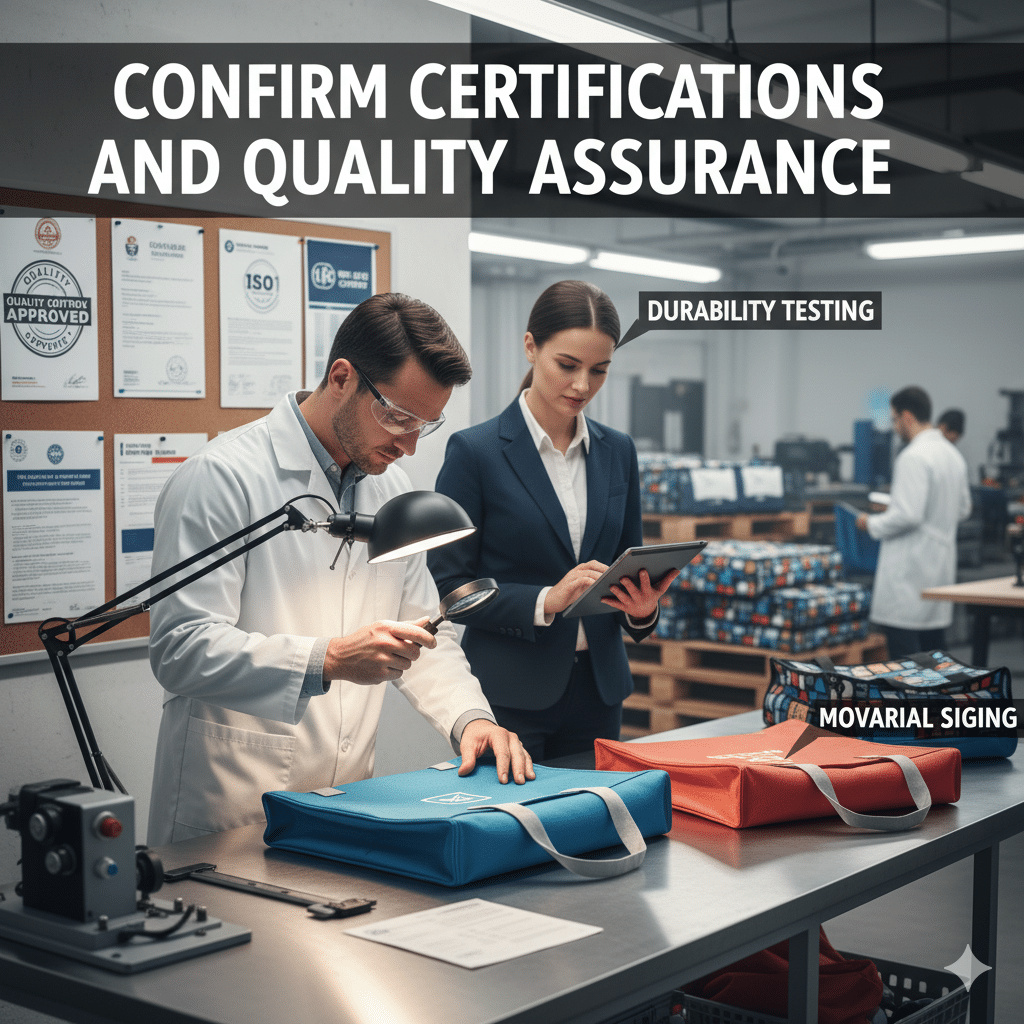
A recycled program should be proven on samples, not on a data sheet. Ask for a fabric test that covers tensile strength, tear strength and abrasion, and for a wash or wear cycle that matches how the bag will actually be used. Test the seam as well as the fabric, because the failure is usually at the joint. Compare the recycled sample against the virgin product it is replacing, at the same load, so the trade-off is visible before the order is placed. And confirm the certificate covers the batch you are buying, because a standard held by the factory is not the same as a transaction certificate for your shipment.
FAQs about post-consumer fiber heavy-duty bags
What is the difference between post-consumer and pre-consumer recycled fiber?
Post-consumer fiber comes from material a consumer has already used, such as PET bottles or worn garments. Pre-consumer waste is factory scrap that never reached a user, and the two are not interchangeable on a certificate.
Why are recycled fibers blended instead of used alone?
Recycling shortens the polymer chains, so recycled fiber alone is weaker and less abrasion-resistant. Blending with a stronger partner fiber recovers the strength the bag needs.
Do I need more fabric weight for a recycled bag?
Often yes. A recycled bag usually needs a higher GSM or a different blend to match the load of the virgin product, so the weight, stitch and handles have to be re-specified.
What certificate should I ask for on recycled content?
Ask for a recognised recycled-content standard plus a transaction certificate covering your production batch, rather than a supplier statement or a certificate held only by the factory.
Which recycled blend suits heavy-duty bags best?
For heavy-duty woven bags, recycled polypropylene blended with virgin PP keeps the load rating and chemical resistance. For lighter totes, recycled PET blended with virgin polyester is a common choice.
Re-specify, then claim the content
Treat post-consumer fiber as a new specification rather than a material swap: choose the blend, set the weight and stitch for the load, prove it on a tested sample, and support the claim with a recognised standard and a batch certificate. Done that way, the recycled content is a selling point instead of a warranty risk. If you want heavy-duty bags developed around a post-consumer fiber blend, talk to our bag manufacturing team.
Related reading: our guide to retail DC delivery requirements and our drawstring bags range.


0 Comments