



A bag order that left the factory by sea container changes hands at the warehouse door, and the last mile decides whether the landed cost holds. Domestic delivery comes down to two routes: palletized freight on a truck, or individual parcels through a small-package network. Picking the wrong one adds 20 to 40 percent to the domestic leg, and the mistake is usually the same one: routing by habit instead of by shipment math.
This guide compares pallet and parcel delivery for bag shipments, gives the thresholds that separate the two, and walks through the routing decision a buyer can apply to any domestic order.
Carrier thresholds and charges vary by network, class and lane; the numbers below are the working ranges used in distribution planning, and every quote should be confirmed against the carrier’s published terms.
What each network actually charges for
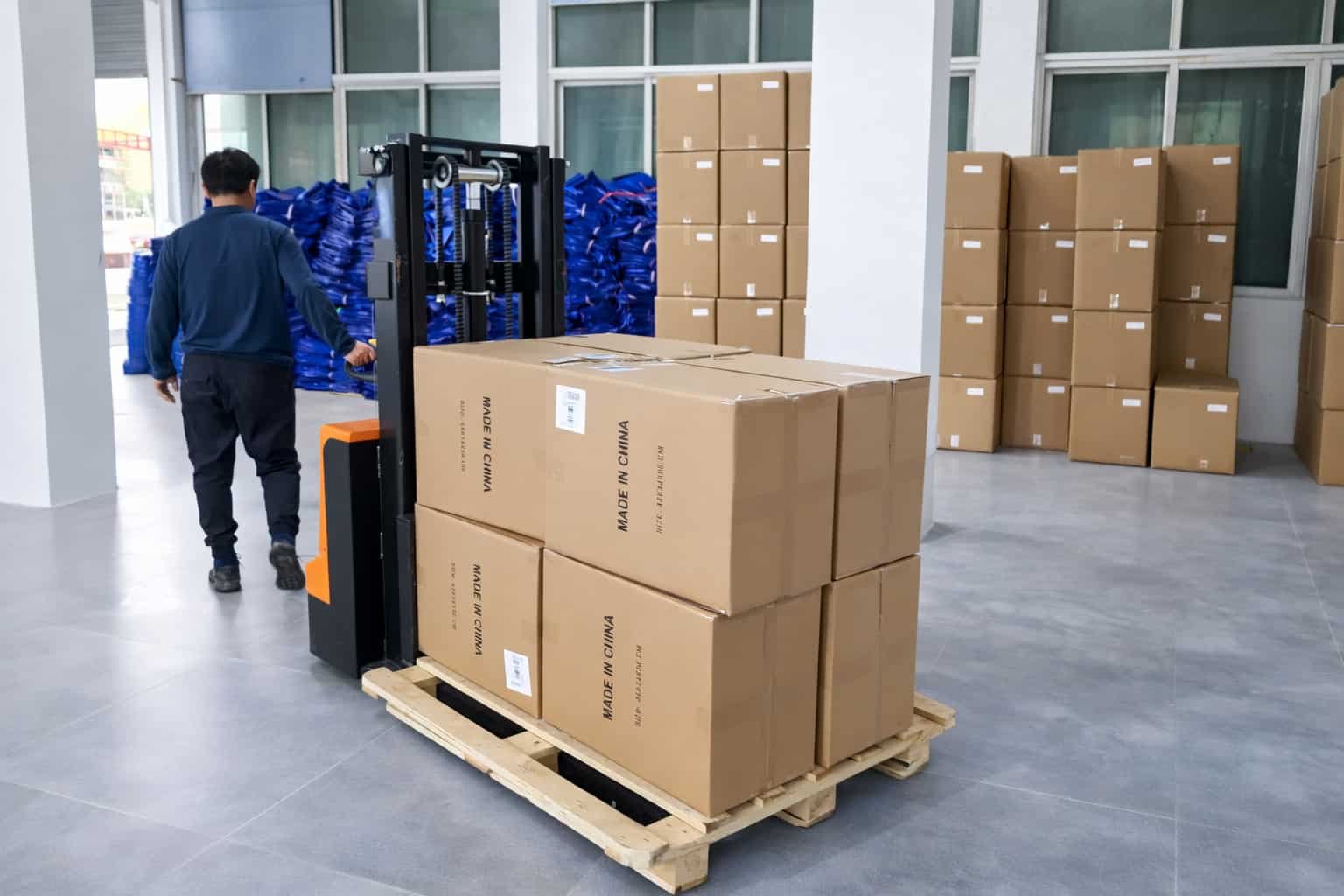
A parcel network charges per package: a base rate per piece, plus weight, plus a zone factor for distance, plus surcharges for size, residential delivery and fuel. A pallet network charges per shipment: a linehaul rate per hundredweight, plus accessorials such as liftgate, inside delivery and residential pickup, with a minimum charge that covers the truck’s floor space even when the freight is light. The two pricing engines behave differently as volume grows. Parcel cost rises almost linearly with pieces, because every carton pays its own base rate. Pallet cost rises in steps: the shipment fits one pallet or two, and the rate follows the heavier of weight and density. The structure of less-than-truckload service, including how class and minimum charges interact, is described in the reference on less-than-truckload shipping.
The weight and piece thresholds that decide the route
Three numbers do most of the routing work. First, the single-package ceiling: national parcel networks typically cap one package near 150 pounds, about 70 kilograms, with dimensional weight rules that effectively lower the ceiling for bulky cartons. Second, the pallet floor: most LTL carriers want at least one full pallet or roughly 150 pounds before a shipment qualifies for pallet pricing, and a single loose carton under that floor is a parcel by default. Third, the piece count: once a delivery runs past roughly 25 to 30 cartons, parcel base rates compound faster than pallet minimum charges, and the crossover lands earlier for heavy cartons. A common distribution planning rule is: under 100 pounds per carton and under 30 cartons, parcel; at or over one pallet, LTL; over about six pallets, full truckload becomes the question instead. The import leg that feeds these domestic decisions is covered in our bill of lading guide for textile bag shipments and the Canada duties and DDP guide.
When pallet freight wins
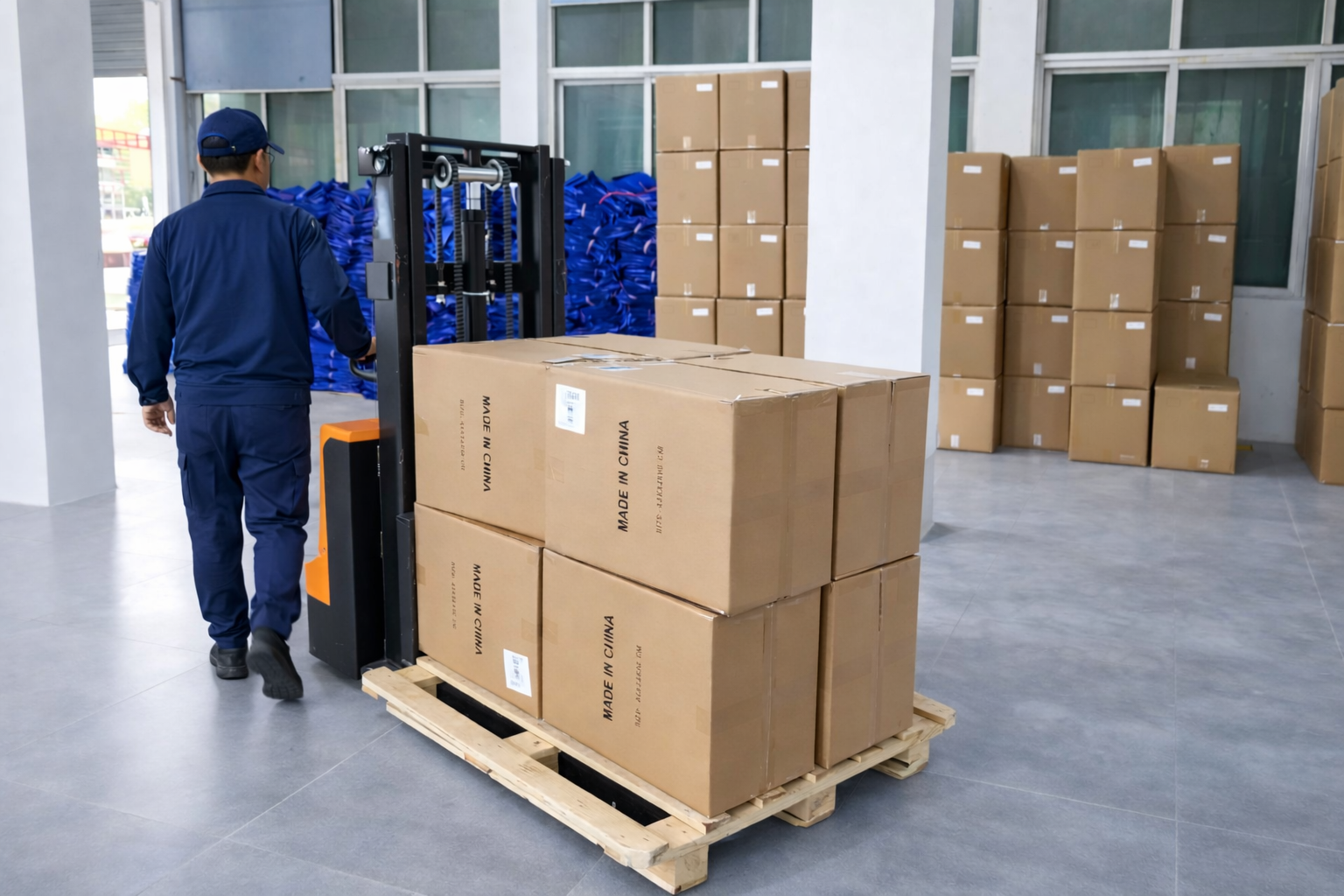
Pallet routing wins on four patterns. High density: a 40 by 48 inch pallet stacked four feet tall of flat-packed tote bags is heavy relative to its volume, and dense freight prices well on the hundredweight model. Single destination: one warehouse or one distribution center receives the whole order, so the truck stops once. Dock access: the receiver has a loading dock or forklift, which removes the liftgate and inside-delivery surcharges that erode pallet savings. Regular volume: a recurring weekly pallet earns consistent rates and predictable transit, where parcels stay at spot pricing forever. Buyers running any of these patterns should quote the pallet option even for small tonnage, because the minimum charge often beats 30 parcel base rates. The receiving side of the same logic, from FOB terms to who pays the domestic leg, is covered in our DDP versus FOB comparison for moving bags.
When parcel wins
Parcel routing wins on the opposite four patterns. Small and frequent: fewer than 25 to 30 cartons per delivery, especially when they ship weekly rather than monthly. Mixed destinations: 40 stores each need 50 bags, and only a parcel network can touch 40 addresses from one shipper. Residential or liftgate receivers: small shops and homes lack docks, and the accessorials on a residential pallet delivery erase its rate advantage. Speed and tracking granularity: parcel networks scan every package at every node, which matters for split orders and customer-level tracking. For multi-destination programs the parcel decision is often made before cost modeling, because no pallet route serves 40 drop points. The e-commerce leg of this logic is detailed in our Amazon FBA prep requirements guide.
A routing checklist for bag deliveries
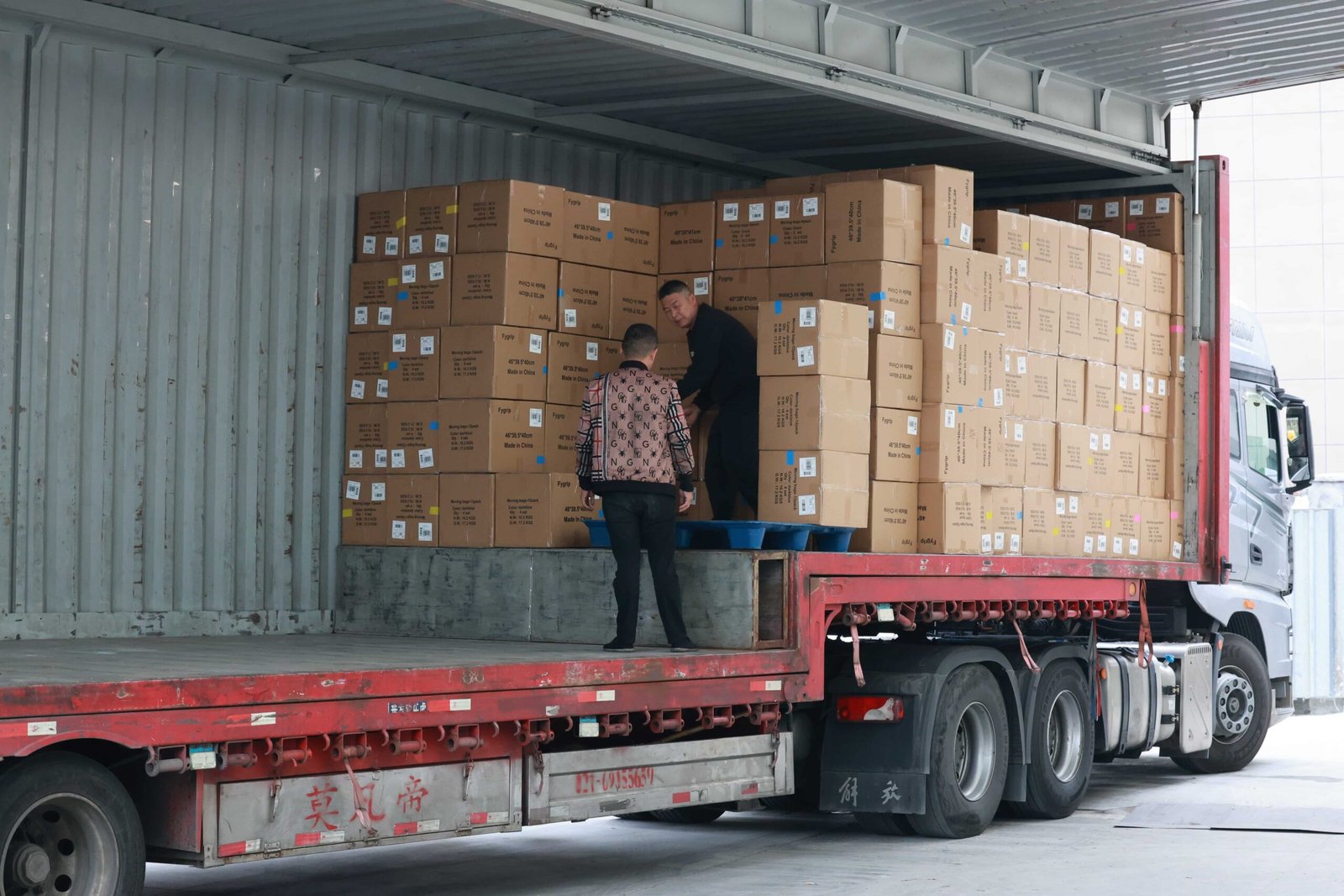
Run the five questions in order before quoting. One: what is the weight of the heaviest carton, and does it clear the parcel ceiling? Two: how many cartons and how many pallets does the order form? Three: how many delivery addresses, and does each have a dock? Four: how often does the same lane ship, weekly or once a season? Five: what did the last three shipments actually cost, parcel and pallet, on the same lane? The last question matters most, because lane history beats rule of thumb. When the domestic leg is part of a landed-cost model, fold these numbers into the comparison in our air versus sea freight guide for bag shipments, which covers the ocean side of the same cost stack. Programs that ship flat-packed totes in volume, in pallet or parcel mode, run on our canvas tote page and pp woven bag page.
Frequently asked questions
When should I ship bags by pallet instead of parcel?
Ship palletized when the order forms one or more 40 by 48 inch unit loads to a single dock-equipped address; below that volume, parcel base rates usually cost less.
What is the weight limit for parcel shipping of bag cartons?
National parcel networks typically cap single packages near 150 pounds, about 70 kilograms, with dimensional weight rules that lower the practical ceiling for bulky cartons.
Does pallet freight cost less than parcels for small orders?
Not usually; LTL rates carry a minimum charge plus accessorials, so orders under roughly 25 to 30 cartons to one address are often cheaper by parcel.
How many cartons make a pallet of bags?
A standard 40 by 48 inch pallet holds roughly 40 to 60 flat-packed tote cartons depending on carton footprint and stack height, which is the density that makes LTL pricing work.
Freight timing decides landed cost on woven bag programs; our bag import peak season calendar maps the booking calendar and surcharge windows.
For more detail, see our Dimensional Weight for Flat-Packed Bags.

0 Comments