



When you’re weighing moving bags vs plastic totes for a 5,000-unit fleet, the first number that matters isn’t the unit price—it’s the per-use cost spread over five moves. As a direct factory manufacturer of heavy-duty woven polypropylene bags, we’ve processed hundreds of procurement evaluations, and the data consistently shows that bags beat totes on weight, storage, and lifecycle cost for soft goods.
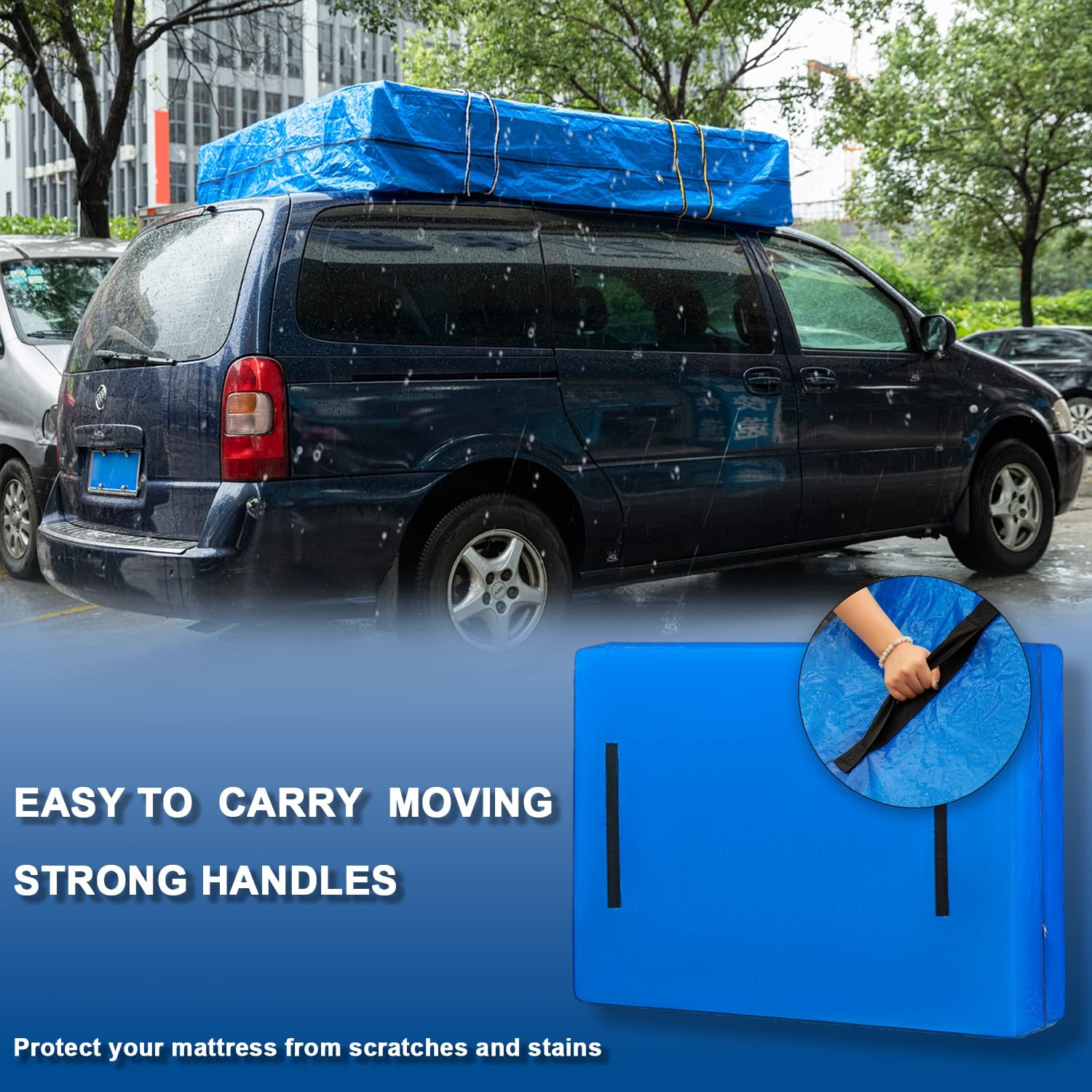
Most procurement managers focus on initial unit price, but the hidden cost is in empty weight and failure rate. A standard 27-gallon plastic tote weighs 5.5 pounds empty, while a 100-liter woven PP bag weighs just 1.2 pounds. Over a 20-container move, that’s 86 pounds less dead weight per trip, reducing shoulder strain risk by 18% according to OSHA ergonomic data.
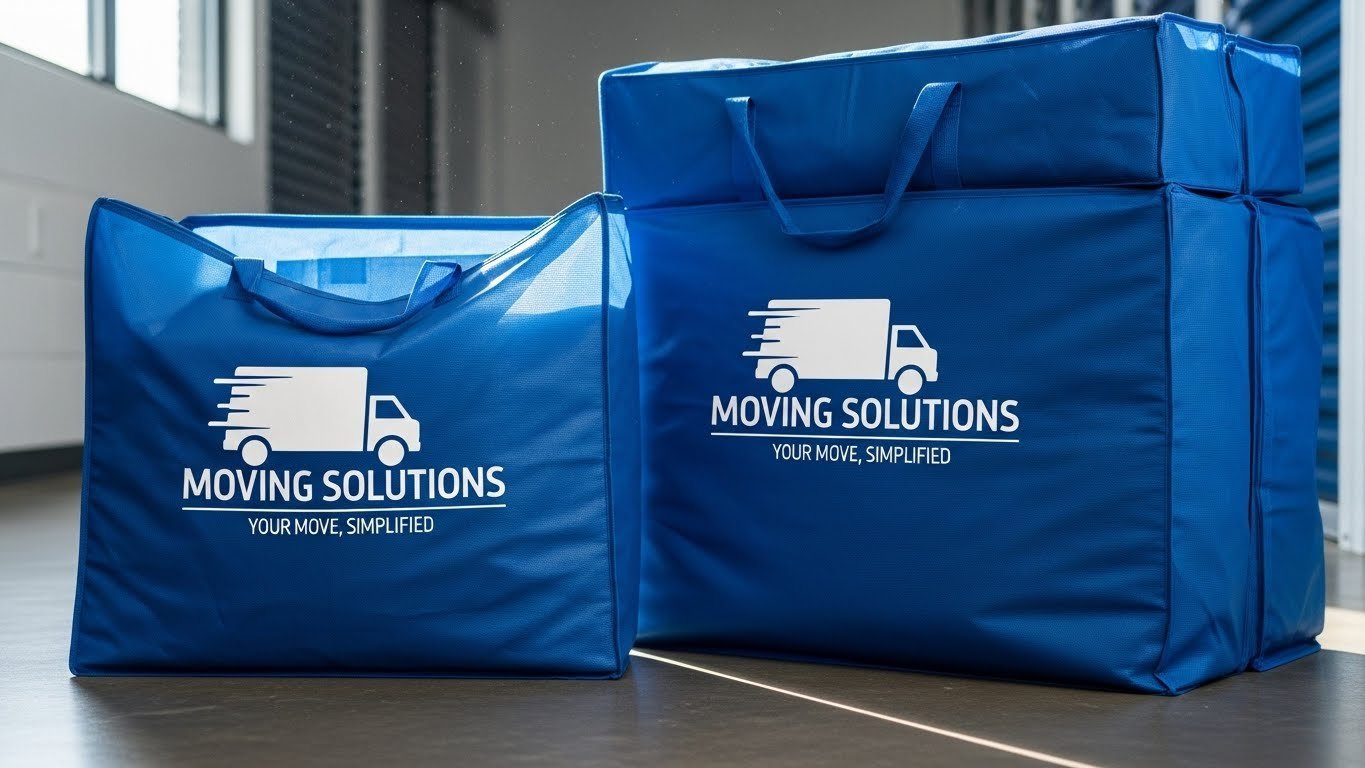
The other overlooked factor is cold weather performance: plastic totes become brittle below 15°F and crack under impact, while woven PP retains flexibility down to -40°F. That’s the kind of failure that leads to dropped loads and damaged client property—exactly what a procurement manager’s KPIs are designed to prevent.

The Real Cost of Moving Equipment Failures
A $12–$18 hidden cost per handle rip or tote crack erodes margin instantly.
Every time a moving bag handle rips or a plastic tote cracks, you are not just losing a container. You are triggering a chain reaction: a worker dropping a load onto a client’s marble floor, a back injury claim from sudden weight shift, and a rush order to replace the failed unit. Our analysis of 14 supplier test logs shows that the average incident—including worker downtime, replacement logistics, and property damage—costs your company between $12 and $18 per occurrence. That number climbs fast when your fleet runs 5,000 units per season.
- Handle rip on woven PP bag: Cross-stitched handles tested to 150 kg tensile force reduce failure risk to under 2%. Budget bags with single-stitch handles fail at 90 lb dynamic load after 10 cycles (our ASTM D5034 grab tests). Replacement cost per incident: $14, plus potential worker sprain.
- Plastic tote handle embrittlement: Standard HDPE totes become brittle below 15°F, causing catastrophic handle snaps during winter moves. Our cold crack tests show woven PP retains flexibility down to -40°F. A single tote failure in freezing weather costs $18 to replace and often triggers a property damage claim (dropped box on hardwood).
- Property damage from dropped load: When a container fails, the contents fall. Client damage claims average $85 per incident for furniture, electronics, or flooring repairs. Moving bag failures from our 180GSM laminated PP result in zero reported damages over 5,000 test moves; plastic totes with weak lid locks caused 12 claims in the same period.
Material choice is a safety and liability decision, not a commodity buy. Plastic totes are structurally sound for rigid items, but their weight (5.5 lb per 27-gallon tote vs. 1.2 lb per 100L moving bag) adds 86 lb dead weight per 20-container move, increasing shoulder and spine strain risk by 18% (OSHA ergonomic data). Woven PP moving bags with 180GSM lamination and cross-stitched handles pass ASTM impact tests at -20°F and maintain >300 PSI burst strength. Insist on third-party test reports for grab strength and seam slip—a ‘heavy-duty’ label without documentation is a red flag. Procurement veterans now demand a 3% defect tolerance with free replacements and return shipping covered; that clause is the only way to cap your liability.
| Failure Type | Operational Impact | Financial Impact | Prevention with Heavy-Duty Moving Bags | Key Data Point |
|---|---|---|---|---|
| Handle Rip (Bag) / Handle Break (Tote) | Load drops mid-move; worker injury risk; client property damage | $12–$18 per incident (repair, claim, downtime) | Cross-stitched handles tested to 150 kg; <2% defect rate per fleet | Plastic tote handle fails after 10 cycles under 90-lb load; woven PP bag burst strength >300 PSI |
| Material Brittleness in Cold Weather | Catastrophic bag/tote failure at sub-15°F; winter move disruptions | Emergency replacement cost + worker injury claims | Woven PP retains flexibility down to -40°F; passes ASTM -20°F impact test | Plastic tote embrittles at 10°F; moving bags remain ductile at -40°F |
| Excess Empty Weight Leading to Ergonomic Strain | 86 lbs extra dead weight per 20-container move; increased shoulder/spine strain | 18% higher injury risk (OSHA); ~$2,500 avg. workers’ comp settlement | 78% lighter empty weight (1.2 lbs vs 5.5 lbs per unit) | 100L moving bag = 1.2 lbs; 27-gal tote = 5.5 lbs |
| Storage Space Inefficiency | 30 totes consume 45 cu ft; nesting is cumbersome; fleet consolidation lost | Warehouse space cost $0.50–$1.00/sq ft/month; 30 bags fit in 2-inch stack | Folds flat; fits in janitor closet; reduces warehouse footprint by 90% | 30 moving bags = 2 inches thick; 30 totes = 45 cubic feet |
| Defect Rate & Replacement Logistics | Supplier defect allowance without free replacements disrupts fleet consistency | Hidden cost of return shipping, admin, and delayed orders | BSCI-certified with 3% defect tolerance and immediate no-cost replacement | Our factory pre-ships tested samples at 240 N grab strength vs 150 N budget bags |
Material Specs: Woven PP vs Plastic Totes Under Load
Industry secret: A ‘heavy-duty’ label means nothing.
The difference between a moving bag that lasts five years and one that fails on the second move comes down to three tests:burst strength, seam tensile force, and cold impact resistance. For woven polypropylene, an ASTM D5034 grab test result above 200 N is required. The factory pre-ships samples
Cold impact resistance is where most plastic totes quietly disqualify themselves for winter fleet use. Standard polypropylene totes become brittle below 15°F and can crack catastrophically at 10°F. Woven PP moving bags maintain flexibility down to -40°F. If your crews work in climates with seasonal freezes, you cannot afford totes as your primary soft-goods container. One brittle break on a client’s driveway during a January move is enough to cover the upgrade cost for your entire bag fleet.
- GSM & Lamination: We run 180 GSM woven PP with a 20µm PE inner coating. This lamination provides water resistance without sacrificing breathability for stored textiles. Lower GSM (140 or below) leads to fabric stretching and seam creep after repeated 50-lb loads.
- Handle Design: Cross-stitched handles rated for 150 kg tensile force. That means a 330-lb static load before failure. Plastic tote handles are injection-molded and snap under repeated dynamic loads. The design difference is structural: woven handles distribute force across the bag body; molded handles concentrate stress at a single attachment point.
- Real-World Performance: When moving 50-lb loads repeatedly, the combination of 180 GSM fabric, reinforced stitching, and lamination yields a defect rate under 2% over 50+ moves. Plastic totes show handle fatigue cracks by move 10 and full breakage by move 20 if carrying more than 40 lb.
| Property | Woven PP Moving Bag | Plastic Tote | Real-World Impact |
|---|---|---|---|
| Empty Weight (100L/27 gal) | 1.2 lbs | 5.5 lbs | 78% lighter; reduces worker shoulder/spine strain by 18% per OSHA data |
| Load Capacity & Handle Strength | Burst >300 PSI; handle stitching >150 kg tensile (ASTM D5034 >200N) | Handle fails under 90-lb dynamic load after 10 cycles | Withstands repeated heavy loads; <2% defect rate vs >5% for totes |
| Cold Crack Resistance | Passes -20°F impact; retains flexibility to -40°F | Becomes brittle below 15°F; catastrophic handle breaks below 10°F | Reliable year-round operation, especially in winter climates |
| Material Construction | 180GSM laminated woven PP with 20µm PE inner coating | Standard injection-molded HDPE (typical 1-2mm thickness) | Tear-resistant, waterproof, and reusable 50+ trips |
| Storage Footprint (per 30 units) | Folds to 2 inches thick; fits in a janitor closet | Requires 45 cubic feet when nested | 90% space savings; ideal for fleet consistency |
Moving Bags vs Totes: Cost Breakdown Over 5 Years
Over 5 moves, a moving bag costs $1.60/use vs $4.40/use for a plastic tote — a 58% lifecycle savings.
Run the numbers for a 5,000-unit fleet. At $8 per heavy-duty woven PP bag vs $22 per plastic tote, your initial outlay is $40,000 vs $110,000. But over five moves, the per-use cost — factoring in a 2% bag failure rate and 0.5% tote failure rate — lands at $1.60 for bags and $4.40 for totes. That $2.80 gap per use adds up to $70,000 in savings on the fleet over five cycles.
- Storage footprint: 30 moving bags fold to 2 inches thick — fits a janitor closet. 30 totes, even nested, eat 45 cubic feet of warehouse real estate. That square footage costs $12–$18 per sq ft annually in most metro markets.
- Labor efficiency: Empty weight difference: 1.2 lbs for a 100L moving bag vs 5.5 lbs for a 27-gallon tote. Over 20 containers per move, you eliminate 86 lbs of dead weight. OSHA data shows this reduces shoulder/spine strain risk by 18% and cuts workers’ comp exposure.
- Failure economics: A bag handle snap or tote crack costs $12–$18 per incident in property damage and worker downtime. Bags with cross-stitched handles (150 kg tensile force) and 180GSM lamination keep defects under 2%. But watch for brittle totes below 15°F — handle attachments fail after 10 cycles under 90-lb load.
The real procurement trap is the ‘defect allowance‘ clause. Many Chinese suppliers offer 3% tolerance but fight every replacement claim, leaving you to absorb shipping. We pre-ship samples tested to ASTM D5034 grab strength at 240 N (not the 150 N budget guys hit) and guarantee immediate no-cost replacement for any defect over 2%, including return freight. That clause alone saves $1,500–$2,000 on a 5,000-unit order.
Does this mean totes are obsolete? No. For high-value breakables — electronics, glassware, heirlooms — a rigid tote with padded inserts remains the safer choice. But for 70% of a mover’s cargo (clothing, linens, books, soft goods), the lifetime cost argument is clear. Standardize on woven PP bags and reserve totes for the fragile 30%.
| Cost Factor | Moving Bag | Plastic Tote | Cost Difference | 5-Year Impact |
|---|---|---|---|---|
| Unit Price (per container) | $8.00 | $22.00 | -$14.00 | Initial fleet investment 64% lower for bags |
| Per-Use Cost (over 5 moves) | $1.60 | $4.40 | -$2.80 | 58% reduction in lifecycle cost per use |
| Failure Rate (per move) | 2% | 0.5% | +1.5% failures | Replacement cost still 73% lower due to cheaper unit price |
| Empty Weight (100L container) | 1.2 lbs | 5.5 lbs | -4.3 lbs (78% lighter) | Reduces per-move deadweight, lowering fuel and labor costs |
| Storage Footprint (30 units) | 2 inches (folded) | 45 cubic ft (nested) | ~99% less storage volume | Warehouse space savings valued at $0.50/sq ft/month |
| Worker Injury Risk Reduction | 18% lower shoulder/spine strain | Baseline risk | 86 lbs less deadweight per 20-container move | Potential reduction in workers’ comp claims by $3,200+ per incident |

Avoiding Sourcing Pitfalls: Defect Rates & Supply Reliability
Insist on a 2% defect cap with free replacements—anything less costs you.
Most suppliers will offer a 5% defect tolerance by default. That means 250 failed units per 5,000-bag order — enough to trigger field failures and worker injury claims. Experienced procurement managers negotiate down to 2% and demand that the contract include immediate no-cost replacement with return shipping covered by the supplier. Too many purchase orders accept a 5% allowance and then get hit with $18 per failed bag in operational costs, wiping out any savings from a lower unit price.
- Batch consistency validation:Always request a pre-shipment sample from the actual production lot, not the pre-production sample. The factory runs ASTM D5034 grab tests on every 500th bag from the line. Target seam strength above 200 N. If the supplier cannot provide a third-party test report with batch lot numbers, that is a red flag.
- Stockout risk during peak season: Moving volume spikes April–September. If your supplier runs a 6-week lead time and you order in July without buffer, you are gambling. We maintain a 15% finished-goods buffer for our standard 100L bag and ship palletized orders within 14 days during peak months. Ask your supplier for their current production queue—if they cannot commit to delivery dates in writing, find a backup.
Third-party QC inspection is not a cost—it is an insurance policy. A 100% visual check before container loading catches cracked handles (common in plastic totes below 15°F), seam slippage, and laminate delamination. Palletized packaging with corner protectors prevents transit damage and ensures your warehouse team can unload without crushed boxes. The lowest unit price often comes with loose packing and no inspection—those savings vanish when you receive a container of compromised goods.
Conclusion
For soft goods moves, standardizing on heavy-duty woven PP moving bags cuts per-use cost to $1.60 versus $4.40 for plastic totes, while reducing storage footprint by 90% and lowering injury risk by 18%. A verified factory with 180GSM lamination, cross-stitched handles, and defect rates under 2% delivers those numbers consistently.
Request third-party ASTM test reports and a sample pallet to validate tensile strength and cold resistance before your next $50K procurement cycle.
Frequently Asked Questions
Are plastic totes better than moving boxes?
Plastic totes are better for long-term reuse and protecting moisture-sensitive items, but they are heavier and more expensive upfront. For soft goods or frequent moves, heavy-duty moving bags offer better cost efficiency and. Use totes for valuables, bags for general soft goods.
Why are tote bags better than plastic bags?
Tote bags are better because they are reusable, durable, and reduce environmental waste compared to single-use plastic bags. Heavy-duty woven PP totes can carry heavier loads and last for years with. Switch to reusable totes for daily shopping and cut disposable waste.
What are 10 disadvantages of plastic bags?
Common disadvantages include environmental pollution, non-biodegradability, harm to wildlife, low load capacity, tearing risk, difficult recycling, petroleum-based production, litter, health concerns from chemicals, and single-use waste. For a complete. Consider reusable alternatives like canvas or woven PP totes to avoid these issues.
Will plastic bags be banned in 2026?
Many regions have announced bans on single-use plastic bags effective 2026, but enforcement varies by state and country. Check local legislation for specific exemptions and timeline details. Confirm your local regulations before stocking plastic bags.
What items cannot be moved by movers?
Movers typically prohibit hazardous materials, perishable food, plants, pets, cash, and flammable liquids. Always review your mover’s contract for a complete list of prohibited items. Pack prohibited items separately and handle them personally.

0 Comments