



A first bag order rarely fills a container, and LCL looks like the obvious answer: pay for the space you use rather than the whole box. On a low-volume shipment it usually is the right call. But the gap between LCL and FCL closes faster than most buyers assume.
The comparison has to include the charges that only appear on LCL, and the handling risk that comes with sharing a container. Both change the decision at around the volume where a buyer starts thinking about a second order.

How the Two Are Priced
Less than container load is priced by measurement or weight, whichever yields the higher charge, with fees added for consolidation at origin and deconsolidation at destination. A full container load is priced as a flat rate for the box, so freight per unit falls as the container fills.
That structure creates a crossover. Below a certain volume, LCL is cheaper because a partial container rate spread over few units would be worse. Above it, the flat FCL rate spread across a full container becomes the lower number, and the crossover often arrives before the container is genuinely full.
The practical way to find it is to ask the forwarder for both figures on the actual shipment volume rather than on a rate card. The answer depends on the route, the season and the cargo, and it moves. A buyer who asks once and remembers the answer will eventually get it wrong.
The Charges That Only Appear on LCL
The headline LCL rate is not the cost. Consolidation and deconsolidation fees apply at both ends, documentation is charged separately, and destination handling charges are frequently billed to the consignee rather than included in the quoted rate. For a small shipment, these can add a substantial proportion to the total.
Timing adds another cost. LCL cargo waits for a consolidation to fill before it sails, and waits again at destination for deconsolidation. On a schedule where a launch date or a retail delivery window is fixed, that variability is a real cost even though it never appears on an invoice.
Where the cargo is destined for a project rather than a warehouse, the delay risk compounds. Construction and industrial programmes often run to dates, and the bag orders attached to them inherit those dates. The relationship between the shipment plan and the delivery sequence is described in our notes on woven PP debris bags for jobsite programmes.
Handling Risk on Shared Containers
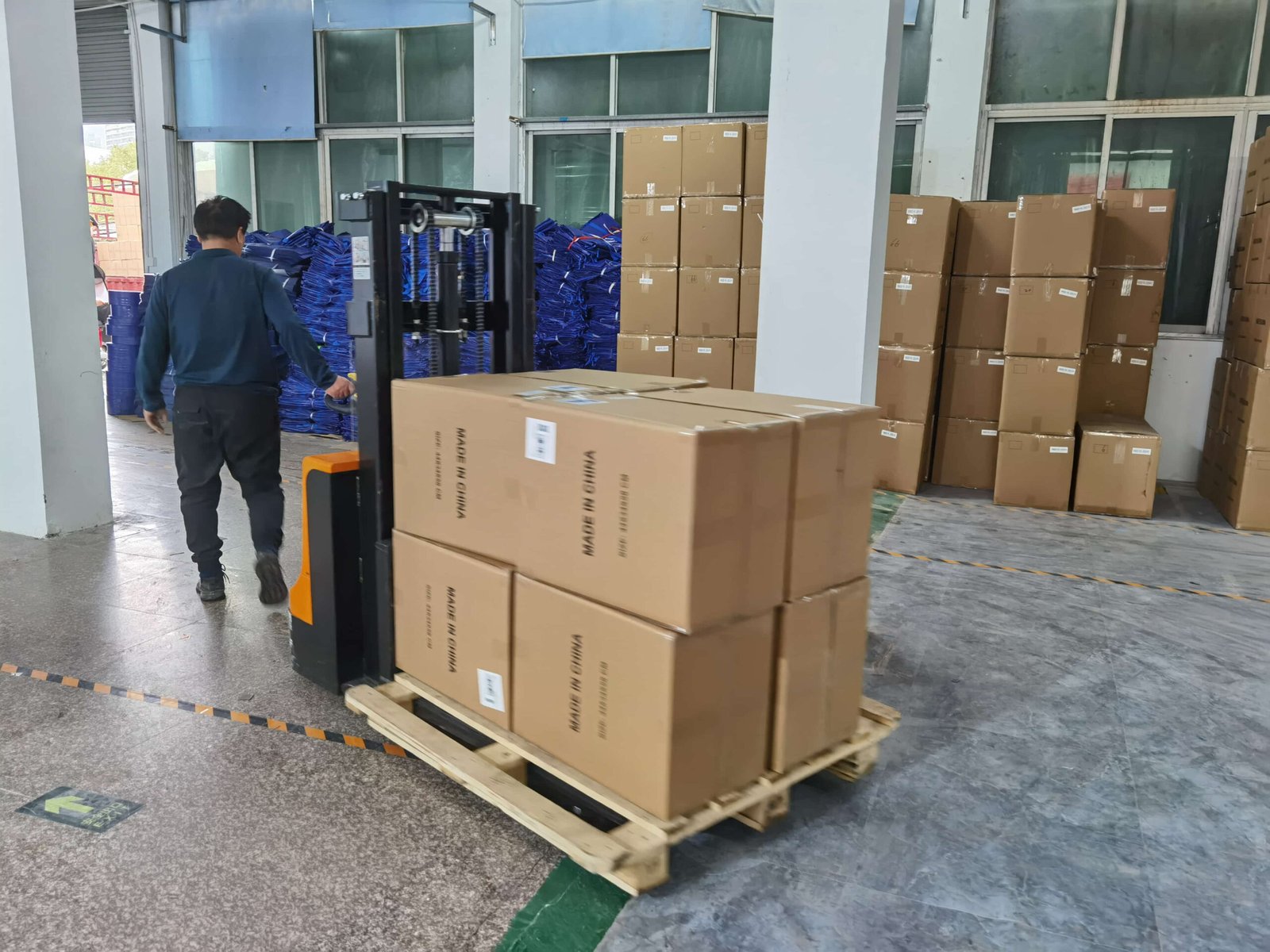
In a full container the cartons travel as they were packed. In a consolidation they are handled again: loaded, possibly restacked, and unloaded alongside other cargo, some of which may be heavier or harder-edged than bags.
Bag cartons are typically lightweight and often single-wall, which makes them willing to deform under a load. Crushed corners and scuffed print are the usual results, and the print is usually the part that matters to a retail customer.
Three controls reduce the exposure. Specify carton compression strength rather than thickness alone. Palletise the consignment if the consolidator will accept it, so that the load travels as a unit. And photograph the load before it leaves the factory, so that any later damage can be attributed rather than argued. Weight and dimension verification, described in our notes on finished bag verification, provides the record that a claim needs.
When to Consolidate Two Orders Instead
The most useful alternative to LCL is not FCL but better planning. Two orders placed a few weeks apart can often be produced and shipped together, turning two LCL shipments into one full container at a lower total freight cost and with less handling.
That requires the order calendar to allow it. Where a buyer has several SKUs with different reorder points, aligning production for a combined shipment is a scheduling decision that saves money every time it is possible, and the packing implications are covered in our notes on container loading for bag cartons.
Consolidation also suits mixed ranges. When a container carries several bag types, the load can be sequenced so that the fastest-moving SKU sits at the door, which makes the destination unload faster and reduces the labour cost of receiving. The documentation conventions for either mode are set out in US CBP basic import and export guidance for the United States, and the practical point is that the mode should follow the commercial plan rather than the other way round.

A Decision Framework
Four questions settle most cases. What is the total volume and how full would a container be. What is the all-in LCL figure including consolidation, deconsolidation and destination handling. How firm is the delivery date. And how sensitive is the product to handling damage.
Where volume is low and the date is flexible, LCL usually wins. Where volume approaches anything like a full container, or where the date is fixed, the full container wins once the additional LCL charges are counted. Where the product is retail-printed and cartons are light, the handling risk argues for either a full container or a palletised LCL booking.
The framework produces a decision rather than a habit, which matters because the right answer changes as a programme grows. Our logistics programme quotes both modes on the actual volume so the comparison is made on figures rather than on assumptions.
FAQ
Is LCL always cheaper for small orders?
Usually, but the gap is narrower than the headline rates suggest once consolidation, deconsolidation, documentation and destination handling charges are included.
Why do bag cartons get damaged in LCL?
Loose cartons are handled repeatedly during consolidation and travel alongside other cargo. Light single-wall cartons deform easily, and the print is usually what shows the damage.
How can I reduce LCL damage risk?
Specify carton compression strength, palletise the consignment so it travels as a unit, and photograph the load before dispatch so later damage can be attributed.
What is the alternative to shipping LCL?
Consolidating two orders into one full container. It requires a little scheduling flexibility and typically reduces both freight cost and handling.
Does LCL affect transit time?
Yes. Cargo waits for a consolidation to fill at origin and for deconsolidation at destination, so the schedule is less predictable than a full container.
Video: FCL versus LCL: Full Container Load and Less than Container Load
If a bag order is sitting near the LCL and FCL break-even, send the volume and the delivery date. Our logistics team will quote both modes all-in so the comparison is made on delivered cost.




0 Comments