
Paying retail for moving and shipping supplies often means losing money to a significant retail markup. The convenience of a local store can add 40% or more to the actual cost, an expense that directly cuts into your business’s profit margins with every purchase.
This guide examines the supply chain costs, breaks down the convenience premium you pay at local stores, and shows you how to buy directly from wholesalers. You’ll learn how to bypass the middlemen and reduce your operational expenses.

The Supply Chain of a Cardboard Box: From Factory to Retail
The cardboard box supply chain involves multiple cost layers, starting with raw materials (60% of total cost), followed by manufacturing expenses like labor and overhead. A manufacturer markup is then applied before the box reaches retailers, with factors like bulk ordering and customization significantly impacting the final price.
Breaking Down Production Costs
Before a box ever gets a price tag, its base cost is determined by a few core manufacturing expenses. Understanding this breakdown helps clarify where your money goes. The primary cost is always the material itself.
- ✅ Raw Materials: Corrugated fiberboard makes up the bulk of the expense, typically accounting for about 60% of the total production cost.
- ✅ Labor & Overhead: The remaining 25-35% covers everything from machinery and energy consumption to facility costs and the wages of the team operating the equipment.
- ✅ Manufacturer Profit: Due to a competitive market, the profit margin for a packaging manufacturer is often a slim 4-10%.
How Order Volume Influences Per-Unit Pricing
One of the most effective ways to lower packaging costs is through bulk purchasing. Manufacturers achieve greater efficiency with larger production runs, and they pass those savings on to you. The per-unit price drops significantly as order volume increases.
Here’s how this plays out financially:
- 🚀 Major Savings Potential: Ordering in bulk can reduce your per-unit costs by 30-50%. For example, increasing an order from 100 units to over 1,000 can easily slash the price per box by 25% or more.
- 💡 Negotiable Markups: While manufacturers typically apply markups of 30-50% over their material costs, these rates are often flexible for high-volume orders. Larger commitments give you more leverage to negotiate a better price.
The Added Costs of Customization
A standard brown box is one thing, but custom branding and design features introduce new costs. These additions require specialized tools, materials, and processes, which are factored into the final price.
Key customization costs include:
- ⚠️ Initial Setup Fees: Expect one-time charges for creating custom die-cutting tools and printing plates, which can add several hundred dollars to the first order.
- Premium Finishes: Features like embossing or foil stamping can add an extra $0.50 to $1.50 per unit, depending on the complexity and coverage.
The printing method you choose also has a direct impact on the unit price, especially when considering your order size.
| Printing Method | Typical Cost Per Unit | Best For |
|---|---|---|
| Digital Printing | $1.50 – $3.00 | ✅ Small runs and complex, multi-color designs without high setup fees. |
| Offset Printing | $0.80 – $2.00 | ✅ Large volume orders where the lower per-unit cost outweighs the initial plate setup fees. |

Why “Convenience” Costs You 40% More at Local Stores
💡 The “40% more” figure is an oversimplification. While consumers pay a premium for convenience, actual markups vary widely from 15% to over 200% by item. The highest margins are on ready-to-eat foods, not all goods, and overall store profitability remains modest at 5-10% due to high operational costs.
The Price of Speed: What Drives the Convenience Premium?
The higher prices at convenience stores aren’t arbitrary; they are a direct reflection of the value offered. That value is immediate access. Research shows that 77% of consumers cite convenience as a primary reason for their purchasing decisions, and they are willing to pay for it.
This “convenience premium” is a calculated strategy designed to cover the significant operational costs associated with:
- ✅ Prime Locations: Higher rent for easily accessible spots.
- ✅ Extended Hours: Increased labor and utility costs for being open 24/7 or late at night.
- ✅ Fast Service: Investment in systems and staffing for quick in-and-out transactions.
In this model, you’re not just buying a product; you’re buying back time.
A Look at the Data: How Markups Vary by Product
The 40% markup idea falls apart when you examine pricing on an item-by-item basis. The strategy is far more nuanced, with markups tailored to what the market will bear for a specific product category.
Here’s a breakdown of typical markup ranges for common convenience store items:
| Product Category | Typical Markup Range |
|---|---|
| Publications (Magazines, Newspapers) | ~15% |
| Snacks & Candy | 40% – 100% |
| Beverages (Soda, Water) | 50% – 100% |
| Bagged Ice | Up to 262% |
Even with these high-margin items, the average transaction size is just $7.34, highlighting the store’s reliance on high volume.
Foodservice: The Real Profit Center
While packaged snacks and drinks are staples, the true financial engine of a modern convenience store is prepared foodservice. This is where the value of “immediacy” is highest and margins are healthiest.
The numbers clearly show this imbalance:
- 🚀 Sales Volume: Prepared food makes up 25.6% of in-store sales.
- 🚀 Gross Margin: Yet, it contributes a disproportionately high 36.1% of the in-store gross margin.
Items like hot dogs, coffee, and fresh sandwiches carry the highest premiums because they save the customer a trip to a restaurant, delivering maximum convenience.
Putting It in Perspective: Store Profitability
After seeing markups that can exceed 200%, it’s easy to assume convenience store owners are making massive profits. The reality is quite different.
Despite high markups on individual items, the overall net profit margin for a typical store is a surprisingly slim 5-10%. High operational costs—rent, labor, utilities, security, and inventory spoilage—consume the vast majority of the revenue generated by the convenience premium. This pricing model isn’t about getting rich on a single sale; it’s a survival strategy for a business built on low average transactions and high overhead.

UPS Store vs. Factory Direct: A Price Comparison Table
💡 Shipping through a UPS Store can cost more than double the rate of buying a label directly from UPS.com. This price difference exists because UPS Stores are independently-owned franchises that add their own markup to UPS’s base rates, while buying online eliminates this middleman.
Key Price Differences at a Glance
The cost difference isn’t minor; it can significantly impact your shipping budget. Here’s a direct comparison of what you can expect.
| Feature | ❌ The UPS Store (Franchise) | ✅ UPS.com (Direct) |
|---|---|---|
| Retail Cost | Often double, sometimes triple, the direct rate due to added markups. | Standard UPS retail pricing without any franchise markup. |
| Pricing Model | UPS base rate + Franchisee profit margin. | Direct-to-consumer base rate. |
| Real-World Example | An international shipment quoted at over $300. | The same shipment was quoted at $121-$189 online. |
Why the Price Gap Exists: Franchise vs. Direct
Understanding the business model behind The UPS Store clarifies the price disparity. It’s not about getting different service; it’s about paying for an extra layer of business operations.
- Franchise Network: The UPS Store locations are not owned by UPS corporate. They are independently owned and operated businesses that license the UPS brand.
- Profit Markup: To cover rent, staff, and other overhead—and to generate profit—franchisees add a significant markup to the standard UPS shipping rates.
- Bypassing the Middleman: When you buy a label on UPS.com, you are purchasing directly from the source, completely avoiding the franchisee’s additional fees.
- ⚠️ Seasonal Spikes: These markups often increase during peak seasons, such as the holidays, further widening the price gap.
How to Avoid Markups and Save on Shipping
Getting the best rate is simple. You can still use the convenience of a local UPS Store for drop-offs without paying their premium prices by following a three-step process.
- 🚀 Purchase Online: Always create your shipment and pay for the label directly on the UPS.com website.
- Print at Home: Print your pre-paid shipping label from your home or office printer.
- Drop Off for Free: Take your sealed and pre-labeled package to any UPS drop-off point. This includes The UPS Store, which will scan it and accept it without any extra charges.
Get Your Custom-Branded Bags, Built to Last.
We engineer tear-resistant, fully customizable bags for logistics, moving, and storage professionals who demand reliability. Start your project and receive a free, professional design mockup within just 12 hours.

Hidden Costs: Why “Free Shipping” Isn’t Really Free
Quick Answer
“Free shipping” is a pricing strategy where fulfillment costs are shifted, not eliminated. Retailers cover these expenses by increasing product prices, setting minimum order thresholds, or optimizing logistics, meaning the customer or the business ultimately pays.
The Anatomy of Fulfillment Expenses
The sticker price for a carrier is just the beginning. True fulfillment costs are a mix of direct and indirect expenses that can quickly eat into your margins. In our experience shipping bulk orders, these hidden fees add up fast.
Understanding the full picture is key to making “free shipping” work for you.
- ✅ Direct Costs: This includes more than just the carrier fee. You have to account for packaging materials (boxes, tape, void fill) and the labor required to pick, pack, and handle each order.
- ⚠️ Carrier Surcharges: Shipping companies often add surcharges for fuel, residential delivery, or oversized packages. These fees can spike dramatically during peak seasons, turning a profitable sale into a loss if you’re not prepared.
- ❌ Indirect Costs: Managing inventory and processing returns are significant expenses. A return not only reverses the revenue from a sale but also doubles the handling and shipping costs to get the product back into stock.
How Retailers Offset Free Shipping Costs
Since shipping is never actually free, businesses use several proven strategies to cover the expense without adding a separate line item at checkout. The goal is to make the customer feel like they’re getting a deal while protecting your profitability.
Here are the most common methods:
- Increase Product Prices: This is the simplest approach. You calculate your average shipping cost per order and bake it directly into the retail markup of your products. The customer pays for it, but it’s built into a single, transparent price.
- Set Minimum Spending Thresholds: Offering free shipping on orders over a certain amount (e.g., “$50 or more”) is a powerful incentive. It encourages customers to add more items to their cart, which increases the average order value (AOV) and helps absorb the fulfillment cost.
- 🚀 Optimize Fulfillment Logistics: Savvy businesses lower their costs behind the scenes. Using regional fulfillment centers to be closer to customers or employing strategies like zone skipping can significantly reduce transportation and last-mile delivery expenses.
The Profitability Challenge with Low-Margin Goods
Offering free shipping is especially risky for businesses selling low-cost or low-margin products. When the profit on an item is only a few dollars, a $5 or $10 shipping fee can instantly erase it. Absorb that cost, and you’re essentially paying the customer to take your product.
The math has to work. If you bake the shipping cost into the item price, you risk making a low-cost product seem uncompetitively expensive. This is where careful calculation becomes critical. You must analyze whether your profit margins can truly sustain the “free shipping” offer without leading to long-term, unsustainable losses. Ultimately, your success depends on the final order value being high enough to cover the product cost, fulfillment expenses, and still leave a healthy profit.

How to Buy Like a Wholesaler (Even for Small Businesses)
💡 Buying like a wholesaler allows small businesses to purchase products in bulk at steep discounts, typically saving 25-35%. This strategy enables reselling for a profit or reducing operational costs, but it requires careful supplier vetting, logistics planning, and managing minimum order quantities (MOQs).
Understand Key Metrics: MOQs, Price Breaks, and Savings
Shifting from retail to wholesale purchasing means learning a new set of rules. The savings are significant, but they are tied to specific purchasing thresholds. Understanding these core concepts is the first step to unlocking better margins.
- ✅ Potential Savings: Businesses can expect to save between 25% and 35% on products when buying wholesale instead of from standard retail channels.
- ✅ Minimum Order Quantities (MOQs): This is the smallest order a supplier will accept. In our experience as a manufacturer, MOQs can range from a few units to full cases. For example, our promotional MOQ for custom bags starts at 500 pieces, a volume that unlocks production efficiencies and lower costs for you.
- ✅ Price Breaks & Bulk Discounts: The more you buy, the more you save. Price breaks often trigger at certain volumes, like 100 units. For larger commitments, such as orders over $10,000, savings become even more substantial. Some suppliers also offer programs like Subscribe & Save, which can provide an additional 15% discount on recurring orders.
Find and Vet the Right Wholesale Suppliers
Your supplier is more than just a vendor; they are a partner in your business’s success. Finding the right one involves research and asking the right questions. A reliable partner ensures product quality, timely delivery, and smooth operations.
- Source Potential Partners: Start by identifying suppliers through various channels. Online B2B platforms like Alibaba and Faire are great starting points. You can also use targeted Google searches for your specific industry or join professional forums to get recommendations from other business owners.
- Vet Your Shortlist: Once you have a list of potential suppliers, it’s time to dig deeper. A trustworthy partner should be transparent about their capabilities.
When vetting, look for clear answers to these questions:
- ✅ Customer Support: Is their team responsive and helpful?
- ✅ Production & Quality: Do they have industry certifications (like SGS or amfori BSCI) that prove their commitment to quality and ethical standards?
- ✅ Logistics: What are their shipping policies, and can they provide a clear delivery history or testimonials?
- ✅ Design & Customization: Can they provide free mockups or samples to confirm product specs before a full production run? This is a key sign of a professional operation.
⚠️ A supplier who is hesitant to share this information may not be a reliable long-term partner.
Manage Logistics and Forecast Demand
Placing a large wholesale order is only half the battle. You also need a solid plan for storing, managing, and selling the inventory once it arrives. Without proper planning, the costs of storage and wasted product can erase your bulk savings.
- 🚀 Plan for Storage: Before your shipment arrives, make sure you have enough physical space to store it properly. For example, our extra-large moving bags are designed with a sturdy rectangular frame to make them easy to stack and organize on shelves, maximizing storage efficiency for our clients.
- 🚀 Forecast Accurately: Avoid overstocking by using data to predict your needs. You can use stock forecasting software or lean on strategies like pre-orders or made-to-order arrangements to align your purchases with actual demand. This is especially critical for products with a limited shelf life.
- 🚀 Budget Realistically: Your total cost is more than just the unit price. Factor in all related expenses, including shipping, import fees, marketing promotions, and the potential cost of slow-moving inventory. A clear budget prevents unexpected cash flow problems.
Is It Worth Buying Supplies in Bulk?
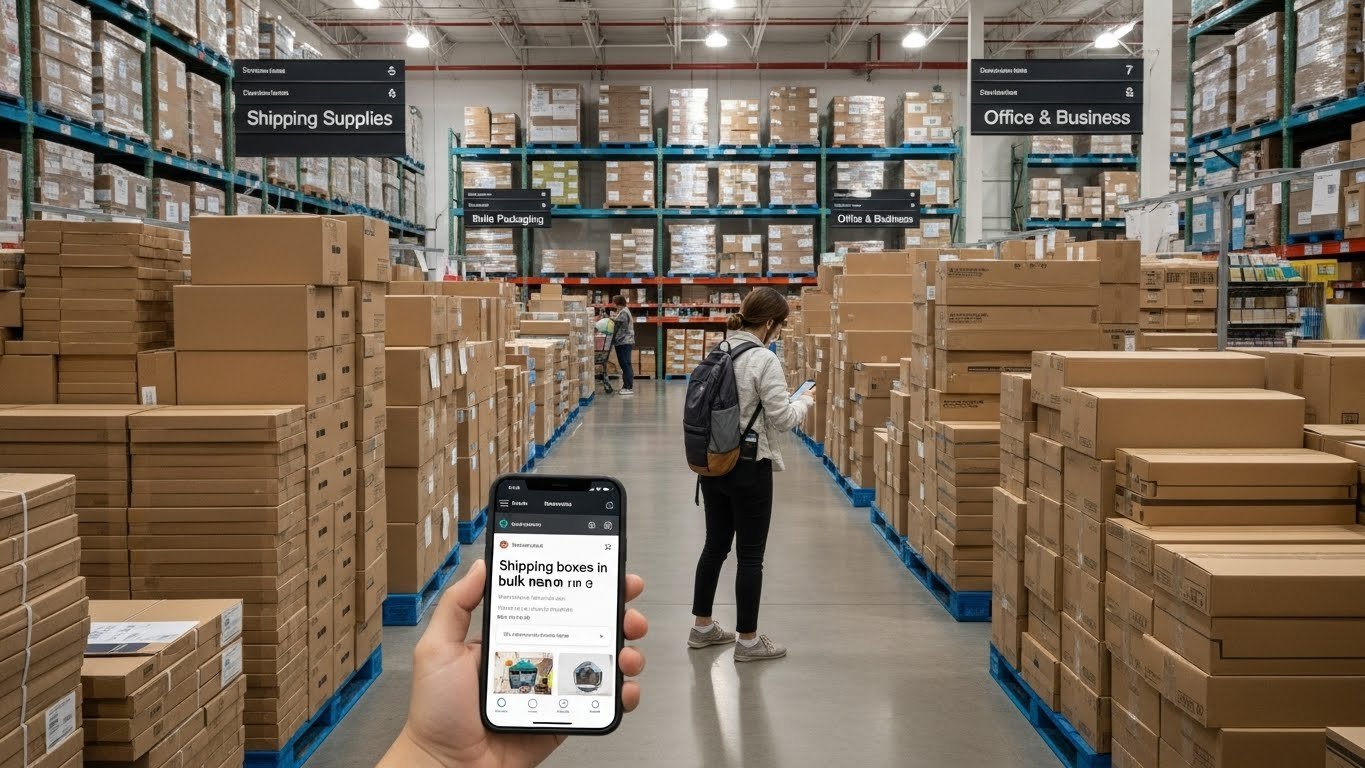
Yes, buying supplies in bulk is generally worth it for businesses because it lowers the per-unit cost through economies of scale. This strategy helps you qualify for supplier discounts and spread fixed costs over a larger volume, directly increasing your potential profit margins on each item sold.
The Financial Advantage of Bulk Purchasing
When you buy products in larger quantities, you tap into the power of economies of scale. This principle lowers the cost for each individual unit because your supplier’s fixed costs—like machine setup and administrative work—are spread across a bigger order. In our experience, this is the most direct way for a business to reduce its cost of goods sold (COGS).
Larger orders don’t just reduce per-unit costs; they also unlock better business terms.
- ✅ Supplier Discounts: Most manufacturers and wholesalers offer tiered pricing, rewarding larger orders with significant discounts.
- ✅ Lower Operational Strain: Spreading fixed costs over more units improves your overall efficiency.
- 🚀 Increased Profit Potential: Every dollar saved on procurement is a dollar that can be added to your profit margin or reinvested into the business.
How Bulk Buying Impacts Retail Pricing and Profit Margins
A lower wholesale cost directly translates into a healthier bottom line. Securing a better base price gives you a major competitive advantage, especially since distributors often add an average markup of 20% before products even reach you. This initial saving allows you to either offer more competitive prices to attract customers or simply enjoy a higher profit on every sale.
The impact varies dramatically across industries, depending on their standard retail markup.
| Industry / Sector | Typical Retail Markup |
|---|---|
| Boutique Fashion | Up to 350% |
| Clothing & Apparel | 100%+ |
| Cosmetics | ~78% |
| Groceries | 5-8% |
Strategic Considerations for Your Business Model
Bulk purchasing is a powerful tool, but its effectiveness depends entirely on your business model. For a low-margin business like a grocery store, efficient bulk buying is essential for survival. For a high-markup business like a fashion boutique, it’s a direct path to maximizing profitability on every item sold.
⚠️ Before committing to a large order, make sure the strategy fits your operational reality. Ask yourself these questions:
- Sales Volume: Do you have consistent and predictable demand for the products? High-volume sellers are ideal candidates.
- Storage Costs: Do you have the physical space to store the inventory? Factor in warehousing, insurance, and potential spoilage costs.
- Product Diversity: Will tying up capital in one product limit your ability to stock a healthy variety of other items?
Frequently Asked Questions
Why are moving boxes so expensive?
The primary reason for the high cost of moving boxes is retail markup. Suppliers often add 100% to 200% on top of the wholesale price. For example, a moving box that costs a retailer $0.50 wholesale can easily be sold for $1.25 or more, which is a 150% markup. This added cost covers the retailer’s operating expenses and profit margins rather than an unusually high production cost.
Is it cheaper to buy moving supplies online or in store?
Buying online is generally cheaper for bulk purchases. Walmart.com, for instance, offers medium boxes for as low as $1.28 each when you buy a 25-pack. However, in-store pickup from retailers like Home Depot can be more cost-effective because it eliminates high shipping fees for heavy supplies. The cheapest options are typically Walmart.com for bulk online orders and Home Depot for in-store pickup.
How much markup do moving companies charge for boxes?
Moving companies typically charge a markup of 100% to 200% on boxes, making them 2 to 3 times more expensive than retail prices. A box that costs $1 to $3 at a retail store might be sold for $3 to $6 by a moving service. This higher price covers the convenience of supplying materials directly to you and the overhead costs of managing inventory.
Where is the cheapest place to get packing supplies?
For standard moving boxes, Home Depot and Walmart.com offer the best prices, often between $1.28 and $1.44 per box. For other supplies like tape, mattress bags, and packing paper, U-Haul and Amazon tend to have more competitive pricing. A common cost-saving strategy is to buy boxes from Home Depot and source all other packing materials from Amazon or U-Haul.
Do U-Haul boxes cost more than Home Depot?
Yes, U-Haul boxes are consistently more expensive than Home Depot boxes for comparable sizes. A medium U-Haul box costs around $3.10, while a medium box from Home Depot is priced at about $1.98. This price difference applies across various box types and reflects U-Haul’s premium for brand recognition and convenience.
Can I buy wholesale moving supplies without a license?
You can purchase wholesale moving supplies for personal use without a license. However, if you operate a moving company or plan to resell the supplies commercially, you must obtain the appropriate business or wholesale licenses. Licensing requirements vary by state and local regulations, so it is important to check with your local government.

Final Thoughts
The high price of local moving supplies isn’t tied to manufacturing but to a series of retail markups. From the convenience premium at local shops to franchise fees at places like The UPS Store, each middleman adds a layer of cost. Understanding this retail trap is the first step toward breaking free from paying for unnecessary overhead.
Adopting a wholesale mindset allows your business to bypass these inflated costs. By planning purchases, vetting direct suppliers, and buying in bulk, you directly lower your cost of goods. This strategic shift isn’t just about saving money on boxes—it’s about protecting your profit margins and gaining a competitive edge in your market.