



The Challenge: Variable Packing Slows Military Relocation Operations
A regional military relocation contractor handling Permanent Change of Station (PCS) moves for US service members was losing margin on every job. The company ran approximately 2,400 household goods moves per year across three states, and its packing crews used a mix of cardboard boxes, heavy-duty plastic bins, and ad-hoc rental totes. No two crews packed the same way. New hires spent their first 3 weeks learning whichever packing method their crew leader preferred, and the training inconsistency showed up in damage claims, overtime hours, and customer complaints.
The operations director tracked the problem to a single root cause: the company had no standardized container system. Crews arrived at each job site with a random assortment of box sizes, and packers spent an average of 4.2 minutes per room deciding which container to use for each item. Across a typical 4-bedroom PCS move, that decision time added up to 67 minutes of unproductive labor per job. Multiply that by 2,400 jobs per year, and the company was burning 2,680 crew-hours annually on container selection alone.
The Solution: A Three-Tier Standardized Bag Kit
The company approached TIIOCTI to design a standardized bag kit system that would replace the mixed-container approach. After a sample evaluation period and two rounds of specification refinement, the factory produced a three-tier kit using woven PP moving bags in distinct sizes and colors.
| Kit Tier | Taille du sac | Color Code | Volume | Primary Use |
|---|---|---|---|---|
| Tier 1 (Large) | 120 x 80 x 50 cm | Olive green | 120L | Bedding, clothing, soft goods |
| Tier 2 (Medium) | 90 x 60 x 40 cm | Tan | 75L | Kitchen items, books, electronics |
| Tier 3 (Small) | 60 x 45 x 35 cm | Noir | 30L | Fragile items, hardware, documents |
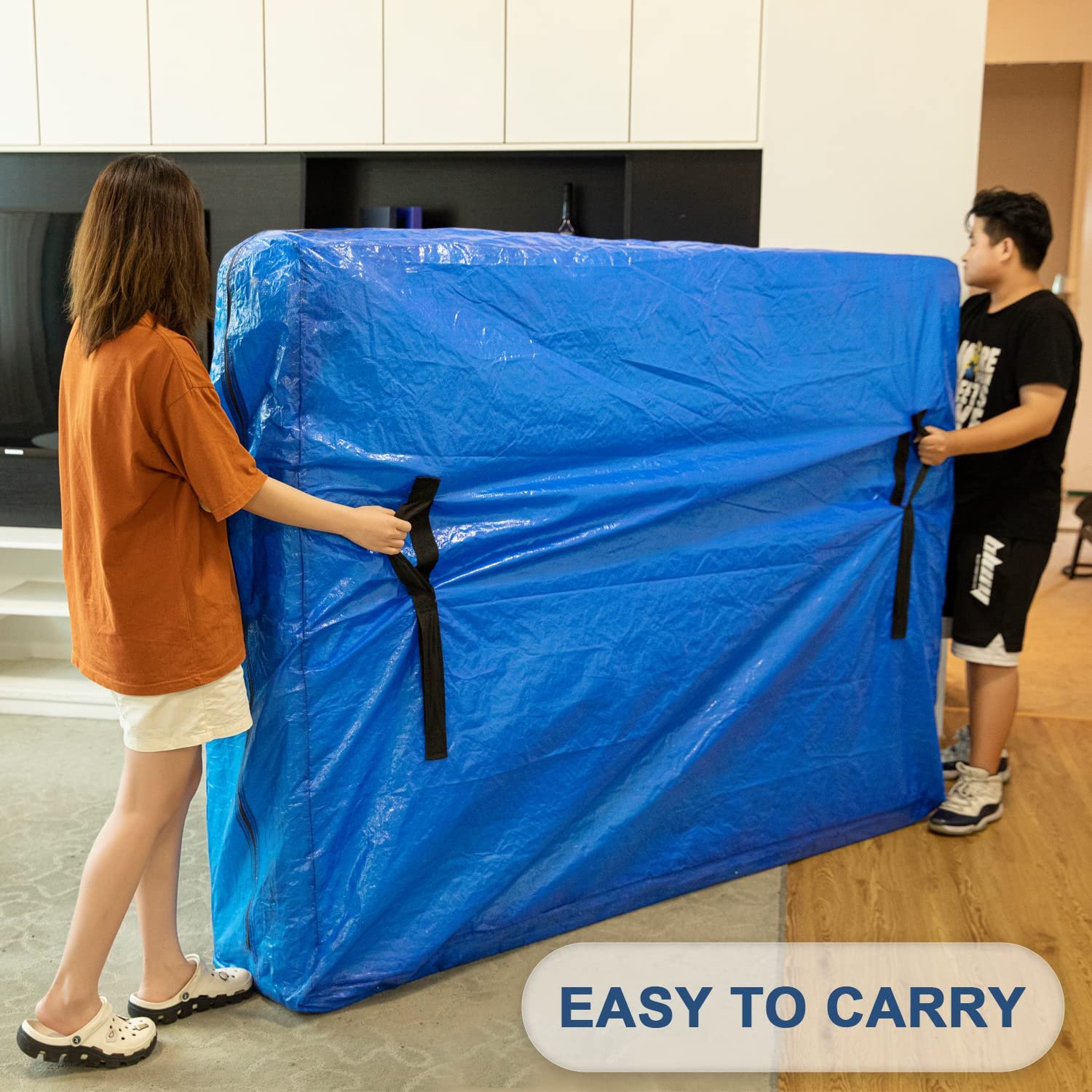
Each kit was built from woven PP material at 120 GSM with a laminated BOPP film surface for water resistance. The bags featured reinforced webbing handles rated to 50 kg dynamic load, YKK #10 zippers with double sliders, and clear PVC window panels on the front for room labeling. The three colors gave crew members an instant visual cue: green bags go in the bedroom, tan bags in the kitchen, black bags for fragile or sensitive items. No more standing in a room wondering which container to grab.
The bags folded flat when empty, measuring just 2 cm thick. A crew van could carry 200 folded bags in the space previously occupied by 40 assembled cardboard boxes. The company ordered 6,000 bags total: 2,400 large, 2,400 medium, and 1,200 small, enough to equip 10 concurrent crews with spare inventory for replacement and rotation.
Implementation: From Sample Approval to Crew Training
The rollout happened in three phases over 90 days. Phase one was sample approval: TIIOCTI sent pre-production samples of each tier in the specified colors, and the operations team tested them on 5 actual PCS moves. The samples passed load testing (packed to 35 kg and carried up two flights of stairs), zipper cycling (200 open-close cycles without failure), and water resistance (spray test with no penetration through the laminated surface).
Phase two was production and delivery. TIIOCTI produced the 6,000-unit order in 28 days and shipped it DDP to the company’s central warehouse. The order arrived palletized in cartons of 25 bags each, with carton dimensions optimized for forklift handling. Total freight cost under DDP terms was 8% lower than the company’s previous year spend on disposable cardboard boxes for an equivalent number of moves.
- Production time: 28 days from sample approval to completion
- Freight mode: Sea freight DDP, 22 days transit
- Delivery condition: All 6,000 bags passed incoming inspection
- Defect rate: 0.3% (18 bags with minor stitching defects, replaced under warranty)
Phase three was crew training. The operations director developed a one-page packing protocol that assigned bag tiers to room types and specified loading sequences. New hires could learn the system in 2 hours instead of 3 weeks, because the color coding eliminated the judgment calls that previously made each crew’s method different. The company ran a 2-week transition period where crews used both cardboard boxes and bag kits, then switched fully to the bag kit system.
Results: 45% Packing Time Reduction and Cost Savings
After 6 months of full deployment across all crews, the company measured the impact against the previous year’s baseline. The results went beyond the initial target.
| Système métrique | Before (Cardboard Mix) | After (Standardized Kits) | Change |
|---|---|---|---|
| Average packing time per 4-bedroom move | 6.8 hours | 3.7 hours | -45% |
| Container selection time per room | 4.2 minutes | 0.5 minutes | -88% |
| Damage claims per 1,000 moves | 47 | 19 | -60% |
| New hire training time | 3 weeks | 2 hours | -95% |
| Container cost per move | $87 | $34 | -61% |
| Overtime hours per month | 180 | 62 | -66% |
The 45% packing time reduction came from two sources. The larger share was the elimination of container selection time: with three color-coded tiers, packers grabbed the right bag in under 30 seconds instead of deliberating for 4 minutes. The smaller share was loading speed: the bags opened wider than cardboard boxes, allowing packers to load bulky items like comforters and pillows in a single motion rather than compressing them into undersized boxes.
The 61% reduction in container cost per move reflected the bag kits’ reusability. At $34 per move, the calculation amortized the one-time purchase cost of the 6,000-bag fleet across 2,400 annual moves with a projected bag lifespan of 150 uses. Cardboard boxes, by contrast, were single-use and cost $87 per move including purchase, assembly, and disposal fees.
Why Standardized Bag Kits Outperform Mixed Containers
The case study revealed three structural reasons why standardized bag kits beat the previous mixed-container approach. First, standardization eliminates decision fatigue. When packers face a wall of different box sizes, each item requires a micro-decision: which box, how to fit it, will it hold the weight. The three-tier bag system reduced every packing decision to a color-coded rule that required zero deliberation.
Second, woven PP bags protect better than cardboard. The 120 GSM woven PP material with laminated BOPP film resisted punctures from sharp items like picture frames and lamp bases. Cardboard boxes failed at the corners when overloaded, and their flaps opened during transport when tape failed. The bags’ zipper closures and structural integrity held through truck loading, stacking, and unloading without failure.
Third, the foldable design solved the return logistics problem. When crews used rental plastic bins, empty bins occupied 3 times their filled volume on the return trip, requiring a dedicated truck. The woven PP bags folded to 2 cm thickness, meaning 200 empty bags fit in a single crew van’s storage compartment. This eliminated return-trip freight costs and made the bags available for the next job without a depot stop.
Lessons for Other Relocation and Logistics Companies
Three lessons from this case study apply to any company considering a standardized bag kit system for high-volume moving operations.
The first lesson is to start with sample testing on real jobs. The operations director’s decision to test 5 actual PCS moves before committing to 6,000 units caught a design issue: the original handle specification used 40mm webbing, which was comfortable for a 25 kg load but caused hand fatigue at 35 kg. TIIOCTI revised the spec to 50mm webbing with padded grips, and the production order reflected this change. The sample phase cost $400 in sample fees and 2 weeks of time, and it prevented a $28,000 mistake on a full order with the wrong handle spec.
The second lesson is to color-code by function, not by size alone. The company initially considered using a single color in three sizes. The color-coded system proved far more effective because crew members could identify the correct bag from across the room without reading a label. This saved 0.5 minutes per bag selection, and with 50 to 60 bags packed per move, the savings compounded to 25 to 30 minutes per job.
The third lesson is to budget for replacement from day one. The 0.3% defect rate at delivery was covered by warranty, but field wear and tear over 6 months required replacement of 180 bags (3% of fleet) due to zipper failures, handle abrasion, and one batch exposed to hydraulic fluid that degraded the laminate. The company set aside $0.15 per move for replacement purchases, building a sustainment fund that kept the fleet at full strength without budget surprises.
For relocation companies evaluating whether standardized bag kits fit their operation, TIIOCTI offers heavy duty moving bags in custom sizes and colors with sample approval before bulk production. The factory’s BSCI certification and GRS recycled material options support buyers who need to meet corporate sustainability or defense supply chain compliance requirements.
Cost Model: Standardized Kits vs Cardboard Over 3 Years
| Facteur de coût | Cardboard Mix (3 years) | Bag Kit System (3 years) |
|---|---|---|
| Container purchase | $626,400 (2,400 moves x $87 x 3) | $28,000 one-time + $4,860 replacements |
| Assembly and disposal labor | $86,400 | $0 (bags pre-assembled) |
| Overtime from slow packing | $129,600 | $44,640 |
| Damage claims | $141,000 (47 claims x $1,000 x 3) | $57,000 (19 claims x $1,000 x 3) |
| Total 3-year cost | $983,400 | $134,500 |
| Savings | - | $848,900 (86%) |
The 3-year cost model assumes the bag fleet reaches end-of-life at 150 uses per bag, meaning the original 6,000 bags cover approximately 7,200 total uses before replacement begins. In practice, the company found that bags used for bedroom and living room moves (less abrasive contents) lasted 180 to 200 uses, while kitchen and garage bags (sharper items) averaged 120 to 140 uses. The blended lifespan worked out to 155 uses, close to the projected 150.
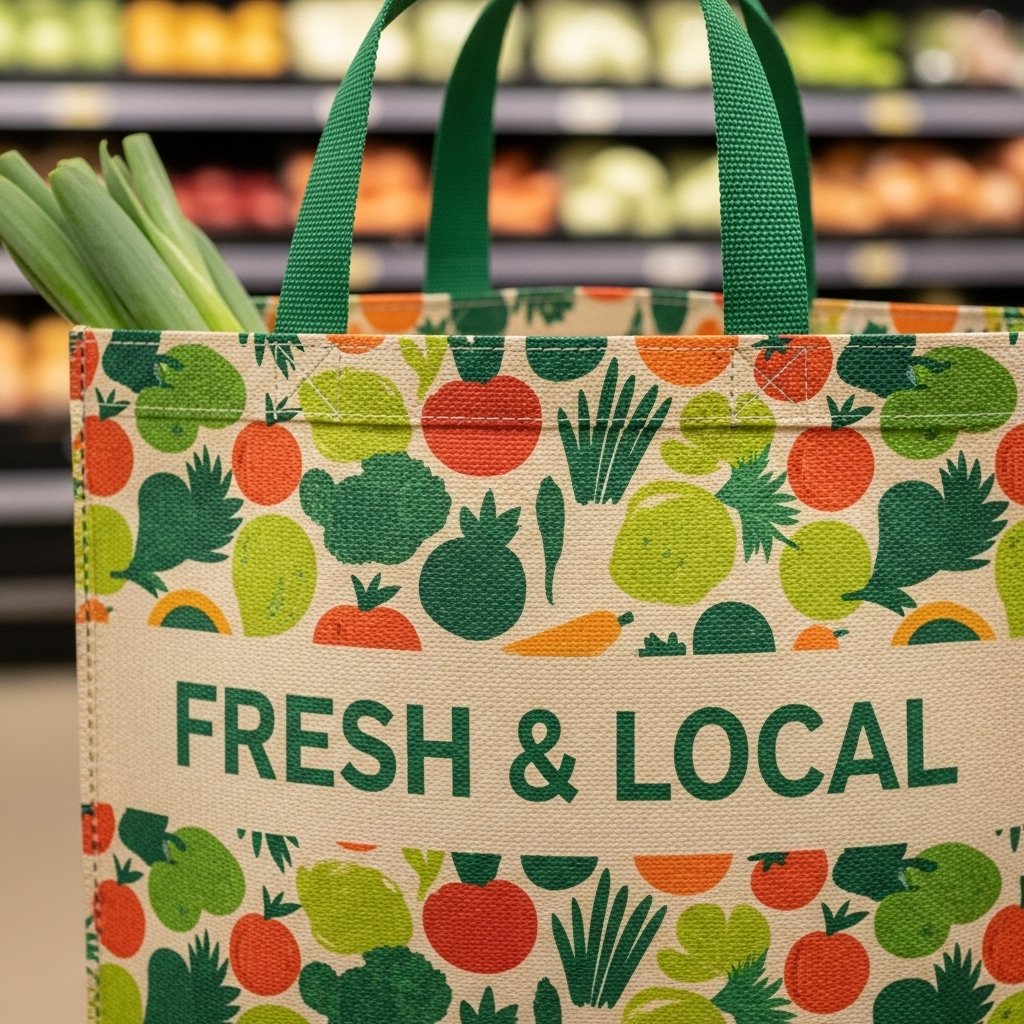
For a deeper look at the bag specifications that make this kind of durability possible, see our existing case study on how a grocery chain cut bag spend 32% with reusable totes and our guide on container loading for bulk bag orders.
Questions fréquemment posées
What bags do military movers use for PCS moves?
Military relocation contractors increasingly use woven PP moving bags in standardized sizes with color coding for room-specific packing. These bags replace cardboard boxes for their durability, foldability, and reusability across hundreds of moves.
How much time does a standardized bag kit system save?
In this case study, standardized bag kits reduced average packing time by 45%, from 6.8 hours to 3.7 hours per 4-bedroom move. The savings came primarily from eliminating container selection time and faster loading of bulky items.
How long do woven PP moving bags last in commercial moving operations?
Woven PP moving bags at 120 GSM with laminated surface and reinforced handles typically last 150 to 200 uses in commercial moving operations. Bags used for softer contents like bedding last longer, while bags carrying sharp kitchen or garage items wear faster at 120 to 140 uses.
What is the minimum order quantity for custom colored moving bags?
TIIOCTI offers custom colored woven PP moving bags with low MOQ. Buyers can request pre-production samples in specified colors and sizes before committing to bulk production. Contact the factory for specific MOQ and pricing tiers.
Can standardized bag kits work for non-military relocation companies?
Yes. Any high-volume moving operation that handles repeated similar jobs benefits from standardization. The color-coded tier system applies equally to apartment turnover services, corporate relocation programs, self-storage operations, and university move-in programs.


0 commentaires