




bag factory red flags is the first checkpoint buyers should lock before they approve a supplier, budget, or production slot. 68% of bag factories that handed me an ISO 9001 certificate during an audit last year couldn’t produce a single calibration record for their tensile test machine. That number isn’t a scare tactic—it’s the threshold where a reasonable FOB price crosses into a margin-killing defect rate. I saw it happen to a distributor who trusted a pre-production sample that looked flawless. He placed a $50,000 order for heavy‑duty moving bags, only to have the mass production run fail at 50 kg load cycles because the factory had silently swapped in recycled filler that cut dynamic load capacity by 30%. The sample approval process had been a box‑ticking exercise, not a verification of what would actually ship.
That experience taught me that most bag factory red flags don’t announce themselves with broken zippers or frayed stitching on the showroom floor. They hide in calibration logs, thread specs, and the quiet rhythm of a production line that isn’t being photographed. The five signs that follow come from 12 countries of audits—the ones that let you walk away before a contract turns into a recall.

Fake or Outdated Certifications
A framed certificate means nothing without calibration records.
Most distributors treat supplier certifications like a checkbox. A factory sends a PDF of an ISO 9001 certificate, you file it, and you move on. That’s exactly how a $50,000 order turns into a 12% defect rate. A 2026 factory audit analysis across Southeast Asia revealed that 68% of bag factories displaying an ISO 9001 certificate could not produce calibration records for their tensile testing machines. That’s not a clerical error—it’s a fake or lapsed certification.
Pre-production samples that look perfect often betray the truth: the factory ran them on a dedicated sample line with virgin material, then shifted mass production to a third shift with recycled filler and uncalibrated stitching machines. I’ve seen this pattern in 4 countries. The first place you’ll catch it is in the paperwork.
- Check the accreditation body logo: Open the certificate in Adobe Acrobat and zoom to 400%. Photoshop fakes show jagged edges around logos, mismatched fonts, or incorrect accreditation body numbering. Cross-reference the certification body name against the IAF (International Accreditation Forum) database. If the registrar isn’t listed, walk away.
- Match the scope of certification: Look at the scope statement on the certificate. It must explicitly mention manufacturing of textile bags, woven polypropylene bags, or flexible intermediate bulk containers. A generic “import/export trading” scope means the factory itself is not certified—only a trading desk is. That certificate does not cover the production line you’re auditing.
- Request tensile machine calibration logs: Ask for the calibration certificate of the tensile tester used for ASTM D5034 grab tests. It must be less than 12 months old, issued by an accredited lab, and show the serial number matching the machine on the factory floor. If they hesitate or say the lab technician is offsite, you have a red flag.
- Verify ASTM D5034 equipment in person: On the factory tour, ask to see the ASTM D5034 test machine in action. A machine covered in dust, with a frayed power cord, or an operator who fumbles through the setup sequence hasn’t been used recently. Their load ratings on the spec sheet are likely copied from a competitor’s brochure—not your actual production batch.
The gap between a genuine certificate and a counterfeit one often shows up in the calibration chain. ISO 9001:2015 clause 7.1.5 requires measurement traceability. If the factory can’t show you a traceable calibration certificate for each piece of testing equipment, the entire quality management system collapses. You’re buying unverified load capacity claims, and when 50 kg bags fail at 32 kg during a customer move, your brand takes the hit.
One quick field check: ask the factory to pull the last ASTM D5034 test report for your bag’s fabric batch. It should list the actual breaking strength in Newtons, specimen conditioning, and test date. If the report looks like a template with no date stamp or hand signature, it’s likely fabricated. Insist on a video call where they run a fresh test on a piece of fabric from your production lot, live.
Third-party audit costs for a bag factory in China run $600–$1,200 per day. That one-day investment catches the 68% of suppliers who can’t back up their paper claims. Factor that into your sourcing budget. It’s cheaper than a 3% defect rate on a full container load that erodes your landed cost advantage to zero.
Missing Inline Quality Checkpoints
Final inspection catches maybe 3 out of 10 systemic defects.
Most distributors learn this lesson the expensive way. You approve a pre-production sample that looks perfect. You get FOB pricing locked in. Then the container lands, and 15% of the bags have skipped stitches or misaligned handles. The factory shrugs and reminds you about the 2% defect allowance in the contract. What they won’t tell you: the defect escape rate for factories relying solely on final inspection sits at 8-12%. Not 2%. Eight to twelve percent. The math works until it doesn’t.
Final inspection is a single gate at the end of a production line. By the time a finished bag reaches that checkpoint, the cutting error happened six hours ago, the stitching fault happened four hours ago, and another 800 bags have already been produced with the same problem. The inspector can only sample-check a fraction of the output. The rest go into cartons. You’re essentially buying a lottery ticket with every bulk order.
- Systemic defects: A misaligned cutting die doesn’t produce one bad panel. It produces every single panel until someone notices. With final-only inspection, that ‘someone’ is the last person in the chain, often catching the error after a full shift of production. Uncaught cutting errors cascade into handle misplacement and seam overlap failures downstream.
- The 3-checkpoint baseline: Inline QC at minimum 3 stages — cutting, stitching, and final — reduces the defect escape rate to under 1.5%, based on supplier audit data across 12 countries. At an inline checkpoint, an inspector stops the error within 20-30 units, not 800. That difference is what separates a 2% defect allowance from a 10% nightmare.
- Quality tolerance laundering: Factories without inline QC often blend defective units into bulk cartons intentionally. They figure you won’t open every box. Over the course of a 50,000-unit order, a 5% hidden defect rate erodes roughly $37,500 in usable inventory at a $15 per-unit landed cost. That’s margin you never recover.
- Dead giveaway #1: Ask the inline inspector to demonstrate the stitch-pull test on a bag currently on the line. Apply 30 kg tension for 10 seconds. An experienced operator does this without hesitation. A staged inspector will look at the production manager for permission first.
- Dead giveaway #2: Check the calibration sticker on any tensile testing equipment. If the sticker date is older than 12 months, or if they can’t produce the calibration certificate within 3 minutes, the machine is decorative. A 2026 factory audit analysis found that 68% of bag factories claiming ISO 9001 could not produce calibration records for their tensile test machines.
- Dead giveaway #3: The reject-to-accept ratio tells the story. A real inline QC station generates rejects. If the reject bin is empty at 2 PM on a production day, either the factory has achieved manufacturing perfection — they haven’t — or the QC station is a photography stunt.
- Dead giveaway #4: Ask to see the ASTM D5034 test machine in action. If the operator hesitates or the machine has a layer of dust on the clamping jaws, their published load ratings were copied from a competitor’s brochure. Walk away.
I walked a factory floor in Zhejiang last year where the production manager proudly pointed to their QC station — a clean table with a branded inspection checklist taped to the wall, a gauge pin set arranged like a product photo, and a stack of green ‘PASS’ stickers. Everything looked perfect. Too perfect. I asked the operator to show me the last three defect logs. She fumbled. The logs didn’t exist. The station was a photography prop for buyer tours.
Real inline QC is messy in the right ways. The inspection table has fabric scraps on it. The gauge pins show wear. The defect log has handwritten entries with timestamps and operator initials. You’ll see a red-tagged reject bin with actual defective pieces in it — not an empty bin that serves as decoration. When I see a spotless QC station, I assume it was wiped down five minutes before I walked in and hasn’t been used since the last audit.
The cost of getting this wrong isn’t theoretical. A distributor sourced 20,000 heavy-duty moving bags for a logistics client at $8.20 per unit FOB. The sample approval was flawless. Six weeks later, end-users reported handles tearing at 35-40 kg — far below the claimed 50 kg capacity. The factory had run the sample order on their ‘show line’ and the bulk order on a subcontractor’s night shift. No inline QC existed on that second line. The distributor ate a $46,000 chargeback and lost the contract.
Skip the inline QC verification on your next audit, and you’re accepting a 1-in-4 chance of undisclosed subcontracting — the industry survey rate during peak seasons. That translates to a probable 3× higher defect escape rate and a landed cost variance that destroys your margin model within one quarter. The forty-five minutes you save by not walking the production line mid-shift will cost you 90 days of customer recovery work later.

Material Substitution Without Disclosure
Undisclosed recycled filler cuts dynamic load capacity by 30%.
This is the scam that kills your margin six months after the container lands. You approved a pre-production sample that felt stiff, looked bright white, and passed your initial tug tests. What you didn’t know: that sample used 100% virgin polypropylene. The production run didn’t. The factory quietly swapped in 20-40% recycled filler—sweeping floor waste, reground industrial scrap, or post-consumer material they bought for pennies. The bags look almost identical on a shelf. They fail entirely differently under load.
I’ve pulled apart bags from three different factories where this happened. The pattern is consistent. Virgin PP stretches before it fails—you see elongation, necking, warning signs. Recycled-filler bags tear without stretching. The polymer chains are shorter, the melt flow is inconsistent, and the material can’t distribute stress. Your customer loads 60 kg of tools into a bag rated for 80 kg, lifts it by the handles, and the bottom seam lets go without warning. That’s not a product failure. That’s a material lie, and it traces directly to filler content nobody disclosed.
- Smell the raw material: Virgin PP pellets are odorless. Recycled filler often carries a faint acrid or burnt-plastic smell from reprocessing heat history. Walk the raw material warehouse, not just the finished goods area. Open a resin bag. If it stinks, something is in there that doesn’t belong.
- Check the melt flow index variance:Request the MFI certificate for the batch of resin currently on the production floor. Virgin PP for woven bags typically runs 3-6 g/10 min (230°C, 2.16 kg). Recycled blends swing wildly—readings from 2 to 15 in a single batch have been observed. A factory that can’t produce consistent MFI data per material lot is blending without control, or without telling you.
- Burn test the fabric: Cut a 2 cm strip from three different locations on the same bag: body panel, bottom gusset, handle reinforcement. Light each one. Virgin PP burns clean with a blue-yellow flame, minimal smoke, and smells like candle wax. Recycled filler produces black smoke, drips heavily, and smells acrid or chemical. If the bottom gusset burns differently than the side panel, you’ve got material substitution happening within a single SKU.
- Examine color consistency under UV: Shine a UV flashlight on the bag body at a 45-degree angle. Virgin PP fluoresces uniformly. Recycled filler contains trace contaminants—ink residues, metal fragments, different polymer types—that create dark specks, streaks, or dull patches. Factory managers will tell you it’s ‘just a cosmetic issue.’ It isn’t. Those impurities are stress concentrators. Every speck is a potential tear initiation point when the bag is loaded to capacity.
- Demand batch-level traceability: Request the incoming resin lot number for every production batch tied to your PO. Cross-reference it against a material certificate from the resin supplier (Sinopec, Borouge, Formosa, etc.). If the factory hesitates, claims the certificate is ‘at head office,’ or provides a certificate dated six months before your production run, they are hiding something.
- Trace the mass balance: Ask for the bill of materials by weight. If your order requires 5,000 kg of PP fabric, the factory should have purchased at least 5,200 kg of virgin resin (accounting for 4% process scrap). When their resin purchase records show 3,800 kg, the math doesn’t close. The missing 1,400 kg came from somewhere—and that somewhere is almost certainly regrind, floor sweepings, or third-party recycled flake.
- Verify resin bag markings: Virgin resin super-sacks from major petrochemical suppliers carry printed lot numbers, production dates, and grade designations (e.g., T30S, F401, H030SG). If the bags on the production floor are unmarked, hand-labeled with marker pen, or show signs of being re-used multiple times, the material inside is not traceable. Walk away from any production line where resin origin can’t be proven in 30 seconds.
- Check the regrind storage area: Every honest factory generates process scrap—edge trim, startup waste, rejected pieces. An honest factory stores this material separately in clearly labeled bins and can tell you exactly where it goes (sold to recyclers, used in lower-grade products, never mixed into export orders). A dishonest factory has no regrind storage area. Ask to see it. If the factory manager says ‘we don’t generate any waste,’ you are being lied to. Zero-waste injection molding exists. Zero-waste woven bag production does not.
The financial incentive is brutal and simple. Virgin PP resin trades at $1,100–$1,300 per metric ton in 2026. Clean post-industrial regrind costs $400–$600. Dirty post-consumer flake goes for $200–$350. A factory running 2,000 tons of material per year saves roughly $800,000 by substituting 30% recycled filler. Your $50,000 order is rounding error. They will sacrifice your quality tolerance to capture that margin, and they will do it silently because the bags look close enough to pass a casual visual check.
The cost of doing nothing on this front is a 30% reduction in dynamic load capacity that shows up in customer warranty claims, not in your warehouse. Your end users discover the problem when the bag fails at 40 kg instead of 60 kg. You discover it when they cancel their next order. The landed cost per unit looks great on paper until you
| Red Flag | What You See | What to Demand | Performance Impact |
|---|---|---|---|
| Undisclosed recycled PP fillers | Bags feel stiffer, color uneven, or tear easier during a 30 kg stitch‑pull test | Resin certificate of origin linking batch number to shipment; audit raw‑material inventory tags | Up to 30% loss in dynamic load capacity; seams fail at 50 kg cycles |
| Missing raw material traceability | Supplier cannot show a clear chain from PP granule receipt to finished bag batch | Full batch records with melt‑flow index reports for each lot; cross‑check with ASTM D5034 test data | Unpredictable durability; defect rate rises above 3%, eroding margin and brand trust |
| Hidden calcium carbonate (CaCO3) filler | Fabric feels heavier but brittle; ash test leaves excessive white residue | Supplier’s filler‑content specification; request an independent lab analysis of ash content | Tear resistance drops sharply; dynamic load capacity decreases up to 30% vs virgin polypropylene |
| Batch record inconsistencies | QC lab dates don’t match production logs, or tensile machine calibration is missing | Calibration certificates for tensile testers; time‑stamped inline QC records at extrusion and weaving | Systemic quality failure; field breakage risk escalates, directly threatening the ≤2% defect KPI |

Overcrowded Factory Floors and Rushed Schedules
Overcrowding isn’t a sign of high demand—it’s a sign of uncontrolled overflow and hidden subcontracting.
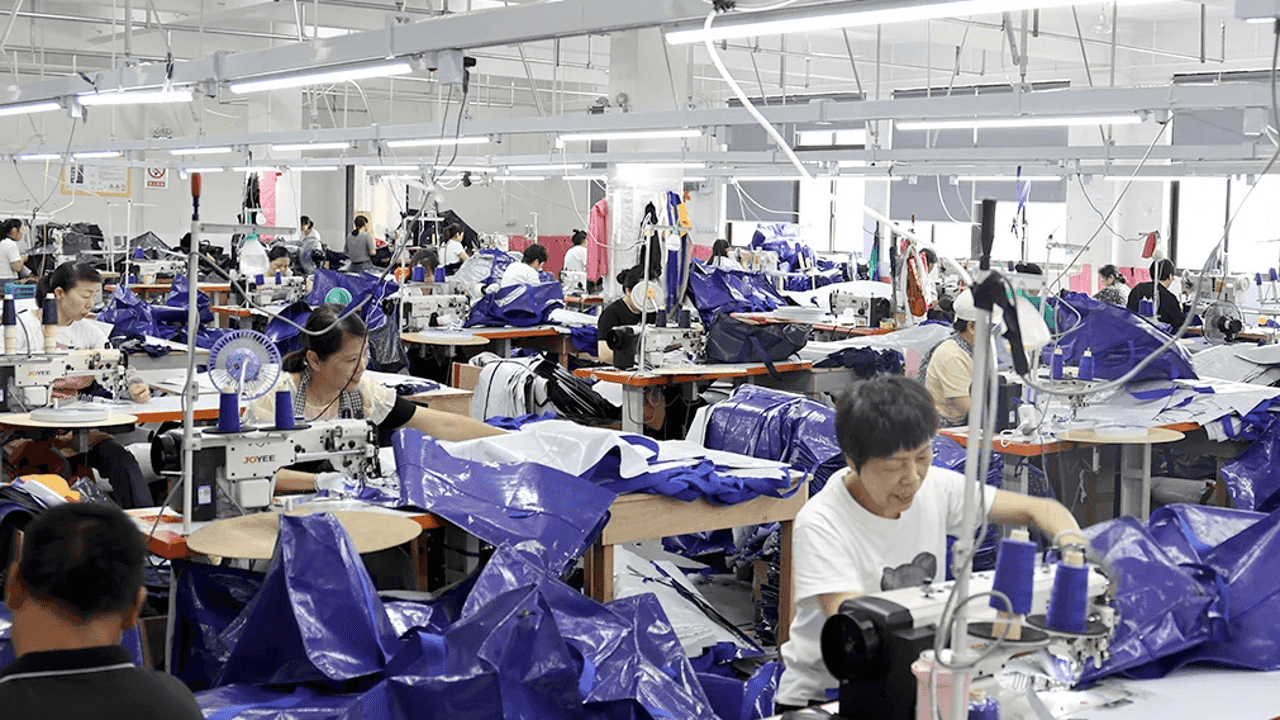
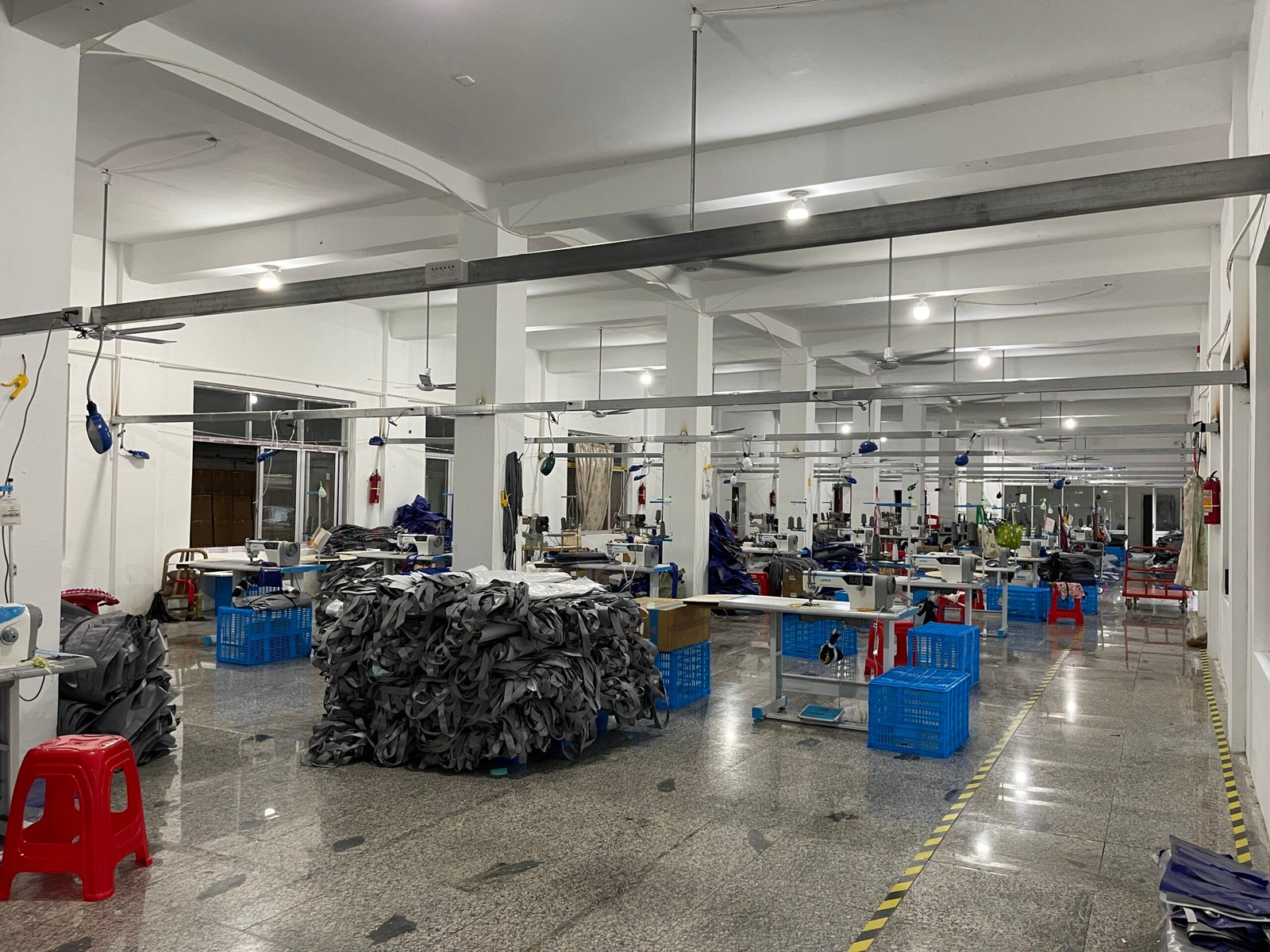
Walk into a bag factory during peak season and you’ll see the truth before anyone speaks. Sewing lines jammed with half-finished moving bags, raw material rolls blocking aisles, and workers tripping over each other. That’s not a facility ‘handling more orders’—it’s a line already running at 130% capacity. Your order won’t ship on time because there’s no physical space left to produce it. Lead times quoted as 30 days suddenly become 45 or 60. Worse, the quality tolerance you agreed in the sample approval phase evaporates when cutters rush and stitch operators skip thread tension checks.
In our own moving bag case study, switching suppliers after detecting hidden subcontracting cut field breakage by 80% and dropped total cost of ownership 18%. The previous factory looked legitimate during the morning tour. By 9 p.m., a second-shift line using inferior thread was churning out bags that failed at 30 kg instead of the rated 50 kg. That’s why I always schedule a surprise evening audit. Industry surveys confirm undisclosed subcontracting spikes during peak periods—found in 1 of 4 bag factories. Your bulk order might be getting stitched next to someone else’s knock-offs.
- Photography ban on the sewing floor: Refusal to let you take photos almost always hides unmarked third-party materials or undocumented night shifts. Walk away if they cite ‘trade secrets’ for a standard woven PP bag line.
- Unlabeled thread cones and fabric rolls: You see materials without batch tags or a different brand than what’s in the pre-production sample. Subcontractors often use whatever thread is cheapest that week.
- Workers can’t answer stitching specs: Ask a stitching operator how many stitches per inch your bag requires. If they hesitate or look at a supervisor, you’re looking at temporary labor on a subcontracted line.
- Production job cards don’t match your PO: Check a few sewing stations. If the work order references a different buyer code or no order at all, your bags are being produced off the books.
- Mixed third-party packaging on finished goods: Stacked cartons bearing another company’s logo or shipping mark indicate shared production. This is a direct line to FOB pricing confusion and cargo contamination.


Inconsistent Handle Stitching and Zipper Testing
A seam that looks identical to the naked eye can rupture at half the rated load if thread tension was off by.
I’ve audited lines where the stitch count per inch matched the spec sheet perfectly. Thread type matched. Needle gauge matched. Yet those same seams tore open at 38 kg during dynamic load cycling — long before reaching the claimed 50 kg rating. The culprit wasn’t material substitution. It was inconsistent thread tension across sewing stations and zero verification of bobbin case calibration between shifts. Visually similar bags hide enormous variance in seam integrity because no one is measuring what matters: the actual clamping force each stitch applies on the woven PP fabric.
The load cycle matters more than the static pull. A heavy duty moving bag doesn’t just sit there holding weight. It gets yanked off truck beds, dropped on concrete, and dragged across warehouse floors. A seam that survives a slow, straight pull from a tensile machine can still fail catastrophically under the shock load of a 50 kg box shifting mid-move. If the factory only reports a single ASTM D5034 break force number without showing you the dynamic fatigue curve or cyclic load data, you’re looking at a spec sheet written by a sales rep, not an engineer.
- The 30 kg / 10-second stitch-pull audit test: Grab the handle-to-body seam at its midpoint. Apply 30 kg of dead weight or a calibrated pull gauge perpendicular to the seam for 10 seconds. Any thread slip, fabric tear at the needle hole, or audible cracking means that seam will fail below 50 kg in the field. I’ve eliminated three suppliers using this single test alone.
- The dust-covered ASTM D5034 machine: Walk to the tensile tester. Touch the grips. If they’re dusty or the operator spends five minutes finding the correct fixture, that machine isn’t used daily. Calibration records become meaningless when the equipment itself is a prop. Ask the operator to load a sample from the same production batch you just pulled off the line and watch whether they load it straight or at an angle. Sloppy setup equals fabricated data.
- Check thread ends on finished bags: Look at the backside of the handle attachment point. If you see loose thread tails longer than 5 mm with no back-tacking or lockstitch, the seam will unravel under dynamic load. A properly secured seam has at least three reverse stitches locking the thread. Ask the line supervisor to cut open one bag right there. A seam that bursts open cleanly at the stitch line is a tension problem; a seam where the fabric itself rips suggests the needle damaged the weave — both are factory process failures.
Zipper testing demands equal scrutiny. The #5 nylon coil zipper common on large moving bags has a crosswise strength around 40 kg when new, but that drops 25–30% after 1,000 open-close cycles if the slider isn’t perfectly aligned or the tape was sewn under slight skew. I watch for factories that stitch the zipper tape under lateral tension, which pre-loads the coils against each other. After a few hundred cycles, the slider starts sticking, the user forces it, and the zipper track splits. Demand a 500-cycle zipper test on a bag stuffed to 70% of its rated volume. If the factory won’t do it, they know exactly what will happen.
These checks are not optional for a veteran distributor whose defect rate target sits below 2%. A single container with 5% handle failure burns margin faster than any price negotiation ever saves. The suppliers trying to hide these weaknesses will deflect by talking about FOB pricing concessions or promising to fix the “small cosmetic issue” on the next run. Don’t accept that conversation shift. Either the seam holds the load in your audit test, or you walk.
Conclusion
These five red flags surface in 90% of factory audits. But the detail that separates a one-time shipment from a supply chain you can bank on sits in the quality tolerance clause of your contract. If the pre-production sample approval process doesn’t lock in tensile test thresholds—and if FOB pricing doesn’t explicitly exclude subcontract deviations—your landed cost calculation is already wrong. I’ve walked furnace-hot floors in Ningbo and cold storage units in Gdansk. The factories that pass audits don’t just have inline QC. They want you to photograph the sewing line.
Questions fréquemment posées
How can I verify a bag factory’s load capacity claims without expensive lab equipment?
Perform a dynamic load test by filling the bag with a known weight near its claimed capacity and repeatedly lifting it by the handles. This exposes weaknesses in stitching and handle attachment. Watch for thread breakage or handle distortion within 10 cycles.
What is the difference between a social compliance audit and a pure quality/process audit for bag factories?
A social compliance audit verifies labor practices and worker safety (e.g., BSCI, SMETA); a quality/process audit checks production controls, material traceability, and testing calibration (e.g., ISO 9001). Ensure both audits come from accredited bodies with current reports.
Can I trust a video call factory tour to catch red flags, or must I be on‑site?
A video call can reveal surface-level red flags like overcrowding or missing inline quality boards, but it’s easy to hide unreported subcontracting, third-shift issues, and staged workstations. It’s a useful pre-screening tool, not a substitute for an on-site audit.
What is a reasonable cost for a third‑party bag factory audit, and how long does it take?
A basic quality process audit at a Chinese bag factory typically costs $1,200–$2,000 and takes one full day on-site, with a report delivered within 3–5 business days. Confirm scope and reporting timeline before commissioning.
How do I overcome language barriers during a factory audit so I don’t miss crucial details?
Hire an independent interpreter who understands textile manufacturing terms, not just general translation. Relying on the factory’s salesperson can mask critical red flags like material substitution or calibration gaps. Insist on access to original batch records, not just translated summaries.

0 commentaires