



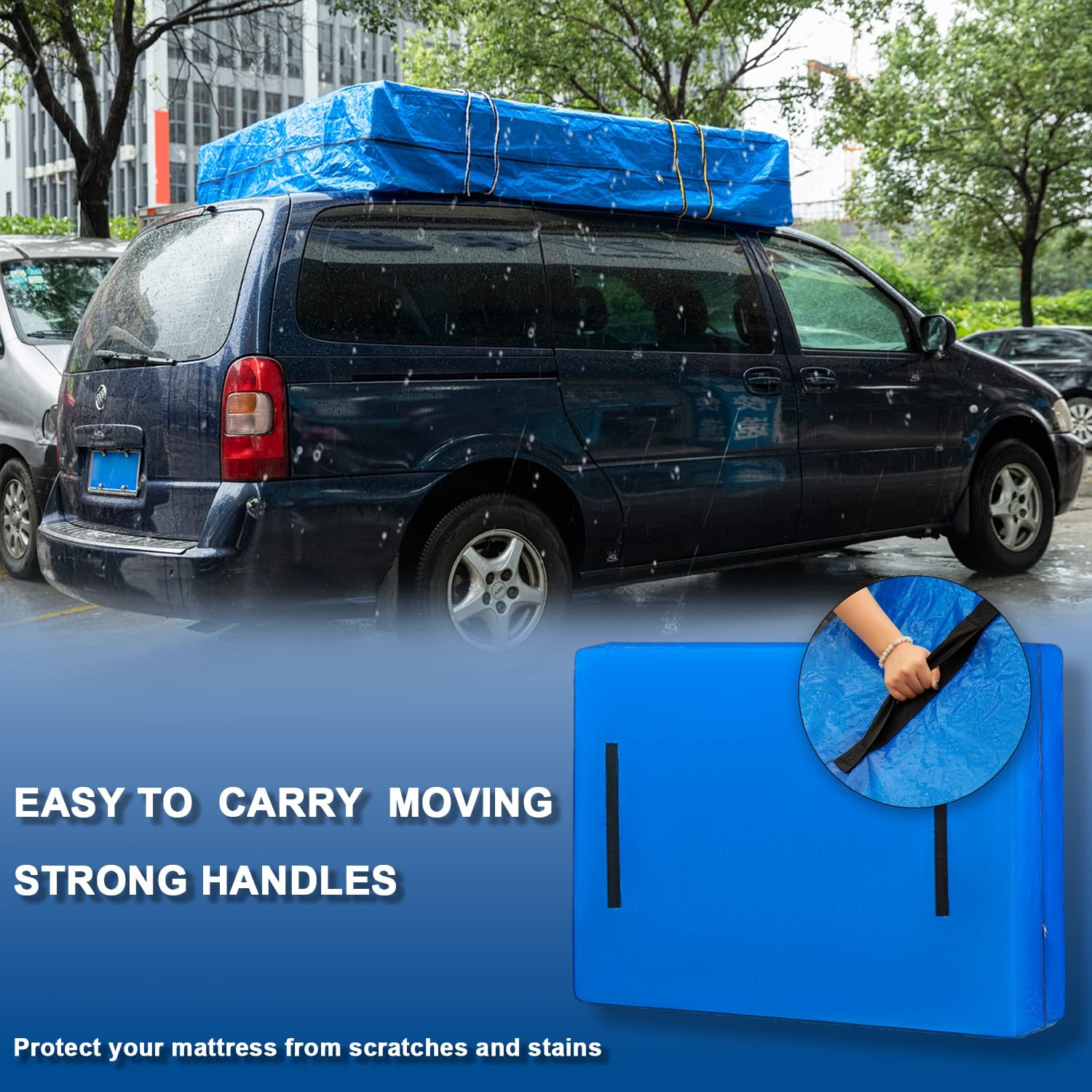
oem vs odm moving bags is the first checkpoint buyers should lock before they approve a supplier, budget, or production slot. It is a familiar scenario. For instance, a buyer in the retail space got burned on a $50K order
Choosing between OEM and ODM is your primary lever for controlling that outcome. It’s not just a line item on a sourcing checklist; it’s a strategic decision about risk, intellectual property, and speed. Going OEM gives you granular control over every stitch and fabric spec, but it also puts the onus of a rigorous custom moving bag manufacturing process squarely on your shoulders. ODM gets you to market faster with a proven design, but you’re often limited to cosmetic changes and inherit the factory’s existing component choices.
So, how do you make the right call? It starts by defining your non-negotiables before you even request a quote. Here’s a simple benchmark I’ve used for years: if your bag requires specific load-bearing capabilities for heavy-duty use, don’t even consider a factory for an OEM project unless they can commit to a specific burst strength target, like an ASTM D5034 report, directly on the purchase order. That one line item separates the serious partners from the risks.
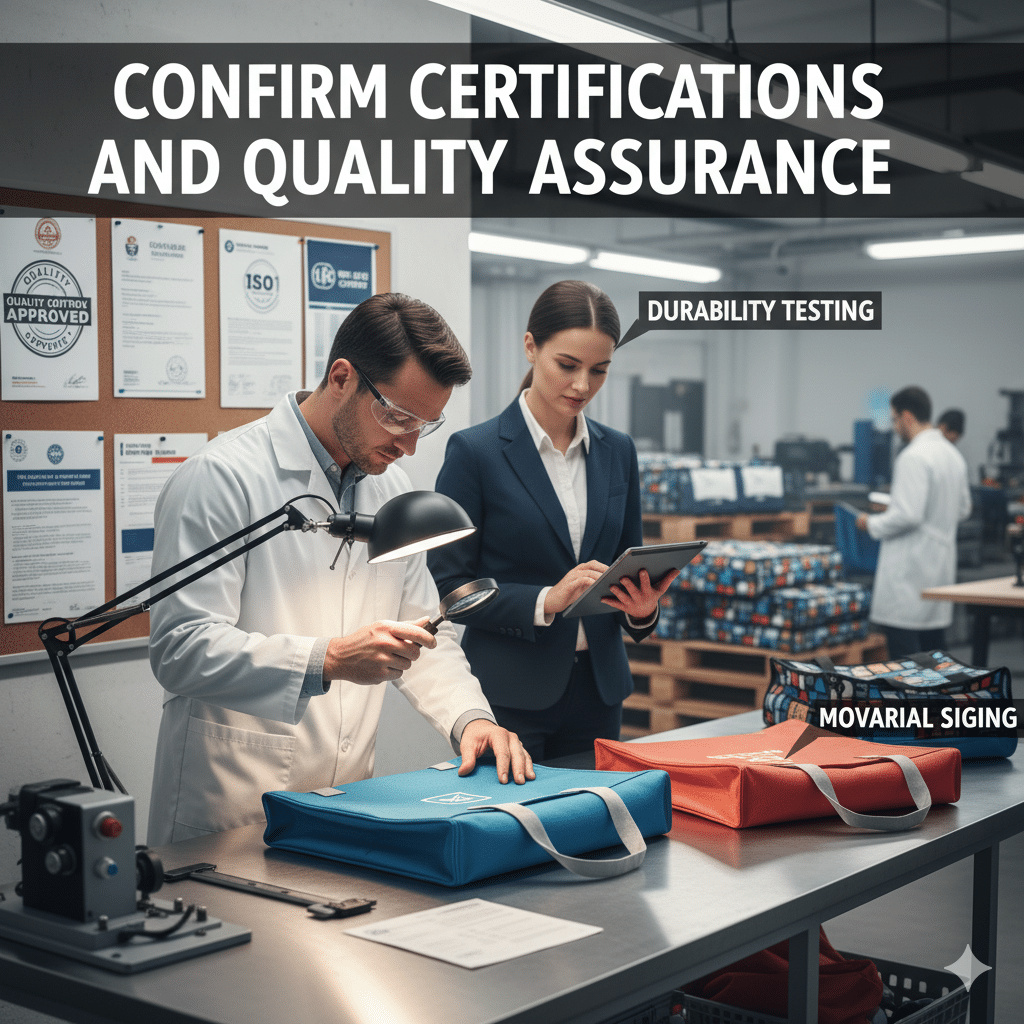
OEM for Moving Bags: End-to-End Custom Design Control
OEM means your design is your intellectual property.
Original Equipment Manufacturing, or OEM, isn’t about picking a bag from a catalog. It’s about acting as the architect for a product that doesn’t exist yet. You’re not just a buyer; you’re the commissioner. This route is for brands that see their packaging and transport bags as a competitive asset, not a line-item expense. It’s where you have absolute control, but also absolute responsibility for the outcome.
The OEM process is rigorous and front-loaded with decisions. It’s not for teams looking for a quick turnaround. The custom moving bag manufacturing process starts with a detailed technical pack (tech pack). This document is your contract with reality, specifying everything from the fabric denier and coating to the stitch count per inch and the exact zipper model. Leaving any detail ambiguous is an invitation for costly assumptions by the factory.
From there, you move to sampling. This is a multi-stage loop. The first sample rarely hits the mark. You’ll go through several iterations, adjusting dimensions, confirming material feel, and testing construction. The final, perfect sample is the “golden sample.” The crucial next step is a formal sample approval , which becomes the legally binding standard for the entire production run. Without this, you have no recourse if the mass-produced bags don’t match what you were shown.
- Full IP Ownership: Your design is exclusively yours. This prevents competitors from sourcing a knock-off from the same factory and protects your brand’s uniqueness in the market. For a retail brand merchandiser, this is the most effective way to ensure your custom tote remains a signature item.
- Tailored Durability: You’re not hoping the bag is strong enough; you’re defining its strength. You can specify load-bearing requirements and demand verification, such as a burst strength report using the ASTM D5034 standard. This lets you align the bag’s performance—and cost—precisely with its intended use, whether for consumer retail or industrial logistics.
- Precise Fleet Branding: For companies managing a fleet of bags, like rental moving services, brand consistency is non-negotiable. OEM allows you to lock in exact Pantone colors for fabrics and webbing across all bag sizes. This ensures every bag, from the smallest tote to the largest moving bag, perfectly matches your brand guidelines, reinforcing your identity at every customer touchpoint.
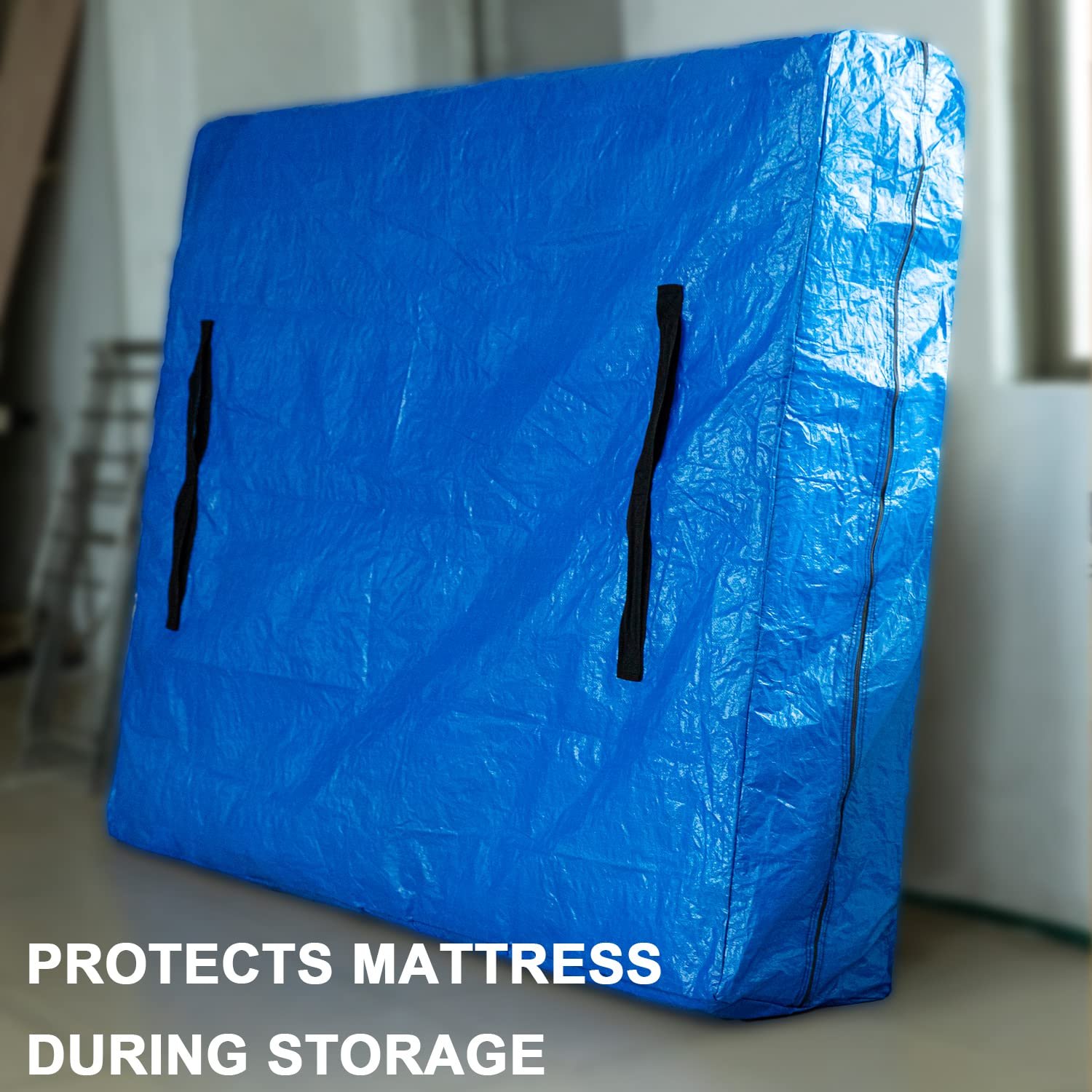
ODM for Moving Bags: Off-the-Shelf Manufacturing with Branding
Think of ODM (Original Design Manufacturing) as picking a battle-tested vehicle from the lot and having the dealer add your company’s logo and custom paint. You’re not designing the engine; you’re leveraging a design that’s already proven to work. For retail brands needing reliable tote bags or moving companies needing durable gear without a 12-month R&D cycle, this is often the most direct path to market.
The customization limits for ODM are defined by the factory’s existing tooling and processes. Anything that doesn’t require a new production line or significant re-tooling is usually on the table. This isn’t about creating a new product; it’s about personalizing an existing one.
The standard options are straightforward: adding your logo via screen printing or embroidery and selecting from the factory’s range of available fabric colors. However, many retail brands don’t realize there’s a middle ground. We often upgrade clients from a pure ODM to a “semi-OEM” model by making minor modifications like adjusting handle length, adding an internal zipper pocket, or making small dimensional tweaks. These changes don’t require full re-tooling and offer a degree of uniqueness without the full cost and timeline of an OEM project.
The primary advantages of the ODM model center on efficiency and risk reduction. You are essentially piggybacking on the manufacturer’s existing expertise and supply chain efficiencies.
- Lower MOQs and Costs: Since the R&D is done and the tooling is owned by the factory, you aren’t paying for it. This makes ODM significantly cheaper for bulk orders and allows for smaller minimum order quantities, as the factory is already producing these items and can fit your branded run into their existing schedule.
- Faster Moving Bag Factory Lead Times: An OEM project can take months of prototyping and sample approval. With ODM, the design is already approved. The process is reduced to confirming your branding, color, and placing the order. This can cut lead times by 50-70% compared to a ground-up design.
- Proven, Predictable Quality: This is the most underrated benefit. A factory’s ODM products are their core business. They’ve already worked out the kinks. Our standard ODM moving bags, for example, already include reinforced stitching and use specific tear-resistant fabrics because we’ve identified those as common failure points. You’re buying a product where the quality tolerance has been tested and refined over thousands of production cycles, dramatically reducing your QC risk.
OEM vs ODM Head-to-Head: Costs, Lead Times, Risks, and IP
The choice isn’t just about custom vs.
Stripping away the complexities, the OEM vs. ODM decision comes down to a clear-eyed assessment of four factors
The budget conversation is where most buyers make their first mistake, focusing only on the per-unit price. The real story is in the non-recurring costs and volume.
- OEM Costs: Expect significant upfront investment for tooling, molds, and engineering. For a unique heavy-duty bag design, this can range from $3,000 to over $10,000. This is your cost to create the intellectual property. The per-unit price may be lower on high-volume runs (e.g., 20,000+ units) because you’ve already paid for the development and are just paying for materials and labor.
- ODM Costs: Zero tooling fees. The factory amortized that cost long ago. Your cost is baked into a slightly higher per-unit price. This makes ODM the clear winner for lower volume orders or for testing a new market without a heavy capital outlay. The OEM vs. ODM cost comparison for bags only favors OEM when your bulk order is large enough to offset the initial tooling investment.
- OEM Lead Time: Be prepared to wait. A typical OEM bag project timeline is 120-150 days for the first order. This breaks down into: design finalization (2-4 weeks), tooling creation (4-6 weeks), sample approval cycles (3-4 weeks), and finally, mass production (30-45 days).
- ODM Lead Time: This is the fast track. Since the design and tooling are established, the process is simple: confirm your logo/color, approve a pre-production sample with your branding, and move to production. A typical ODM order can be ready for shipment with FOB pricing in 45-60 days.
- OEM Risk: The primary risk is functional failure. Your new design might look great but fail under load. This is why for any custom heavy-duty bag, your spec sheet must demand performance validation. Insist on a burst strength test report compliant with a standard like ASTM D5034 . If the bag fails, the responsibility is on the design—which is yours. The quality tolerance is defined by you, and you bear the risk if your specs are wrong.
- ODM Risk: The product risk is low. A good factory’s ODM bags have been field-tested by other clients. For example, our standard ODM models already include reinforced stitching and tear-resistant fabrics because we’ve engineered out common failure points. The real risk is to your brand: if your bag is identical to five others on the market, you’re competing solely on price.
- OEM IP Protection: You own the design, the molds, the tooling. A robust manufacturing agreement will state this explicitly, preventing the factory from selling your proprietary design to anyone else. This is critical for logistics companies needing consistent fleet branding or retail brands building a signature product line.
- ODM IP Protection: The factory owns the design. You own your logo. That’s it. They have the absolute right to sell the exact same bag (minus your logo) to your biggest competitor tomorrow. If brand uniqueness is a core part of your strategy, a pure ODM private label approach is a significant liability.
Many retail brands miss a hybrid option: what I call “ODM-Plus.” You can take a factory’s existing ODM tote and request modifications like a longer handle or an internal zipper pocket. This involves minimal retooling and might cost a few hundred dollars in setup fees, not the thousands for a full OEM project.
Time is a resource you can’t get back. Your choice here dictates your entire launch calendar.
Risk in manufacturing isn’t just about defects; it’s about performance failure versus brand dilution.
This is the most overlooked and potentially costly aspect of the decision. Ownership is everything.
| Comparison Factor | OEM (Your Design, Our Factory) | ODM (Our Design, Your Brand) | Key Insight for Retail Merchandisers |
|---|---|---|---|
| Upfront Costs & MOQs | Higher initial investment due to new tooling, R&D, and material sourcing. Typically requires higher Minimum Order Quantities (MOQs). | Significantly lower upfront costs as tooling and design are pre-existing. Lower MOQs are often available, making it ideal for market testing. | ODM is cheaper for initial bulk orders. Choose OEM when a unique, proprietary bag design is a core part of your brand’s value proposition and justifies the investment. |
| Lead Time to Market | Longer (12-24 weeks). Involves a full custom moving bag manufacturing process: design, spec creation, material selection, sample iterations, and testing. | Faster (4-8 weeks). The process is streamlined to customization of existing models, such as logo printing/embroidery and color changes. | For seasonal collections or quick-to-market promotions, ODM offers unmatched speed. OEM is a strategic, long-term play for flagship product lines. |
| Design Control & Customization | Total control. Specify exact dimensions, materials (e.g., tear-resistant fabrics), handle length, pocket additions, and Pantone-matched colors for brand consistency. | Limited to factory-defined parameters. Typically includes logo placement, colorways, and sometimes minor modifications like adding a pre-designed zipper. | Don’t overlook ‘Semi-OEM’ options. Ask if an ODM tote can be upgraded with custom handles or pockets without incurring full retooling costs. |
| Intellectual Property (IP) Ownership | You own 100% of the design IP. The unique bag design is your exclusive asset, preventing competitors from copying it. | The factory owns the IP for the base bag design. Other brands can potentially use the same base model with different branding. | OEM bag manufacturer IP protection is critical for building a defensible brand. If your bag’s unique look is a key differentiator, OEM is non-negotiable. |
| Risk & Quality Assurance | Higher initial risk if the design has functional flaws. Mitigated by rigorous sampling and performance testing (e.g., ASTM D5034 burst strength reports). | Lower risk as the product is already proven and market-tested. Quality is based on the factory’s established standard (e.g., reinforced stitching as standard). | ODM provides a reliable quality baseline for functional items like private label tote bags. OEM allows you to define and verify a higher, custom standard for premium lines. |

Decision Guide: When Retail Brands Choose OEM, When Logistics Managers Choose ODM
This isn’t a theoretical choice.
Buyers have been burned on $50K orders because the mass production run had a 0.
As a retail merchandiser, your bag isn’t just a container; it’s a brand statement. Your customer interacts with the texture of the fabric, the feel of the handle, the quality of the zipper. This is where OEM is often the only path. You aren’t just buying a product; you’re commissioning the creation of your intellectual property. This means you dictate the exact fabric weave, the Pantone of the thread, and the specific die-cast metal for the hardware. It’s your design, your spec, your asset.
However, most brands don’t need full OEM for every tote. Here’s the insider secret:
If you’re managing a fleet of moving or delivery bags, your priorities are different. You care about one thing above all: predictable failure rates. A bag that rips mid-move doesn’t just cost you the bag; it costs you in damaged goods claims, operational delays, and customer trust. This is where the OEM conversation shifts from aesthetics to engineering.
For a rental moving service, OEM is the recommended choice. Why? Because it allows the service to lock in non-
ODM works for logistics when the application is less critical. For internal warehouse transport or storing supplies, a high-quality, off-the-shelf design with reinforced stitching is more than enough. The design is already proven, the lead times are shorter, and the cost per unit is lower because the factory’s R&D is amortized. You’re buying a reliable tool, not reinventing one.
Stop debating and ask your team these three questions. The answers will point you directly to the right model.
- Is the unique design of the bag itself a core part of your product’s value proposition? If yes, you are on the OEM path. You need to protect your IP and control every detail. If no, a branded ODM is likely more efficient.
- Does the bag need to meet a specific, quantifiable performance standard (e.g., load capacity, tear resistance) that is critical to your service’s safety or reliability? If yes, you need OEM to write those standards into the contract and demand verification. If no, a quality ODM product’s standard specs are probably sufficient.
- Do you have the internal resources (time, design talent, technical expertise) to manage a multi-stage sample approval process and co-develop a product from scratch? If yes, OEM is manageable. If no, the speed and reduced complexity of ODM will be a significant advantage for your team.
| Attribut | Choose OEM If… | Choose ODM If… | Primary Stakeholder |
|---|---|---|---|
| Primary Goal | Your goal is to create a proprietary, brand-defining product with unique features and full intellectual property (IP) ownership to establish a market advantage. | Your priority is speed-to-market. You need to launch a reliable, market-tested product quickly by simply applying your brand to a pre-existing design. | Retail Brand Merchandiser (OEM) / Logistics Manager (ODM) |
| Customization & Aesthetics | You require absolute control over aesthetics: precise Pantone color matching, unique material textures, custom handle lengths, or specific zipper placements. | Standard color options and logo application (e.g., screen printing, embroidery) on a high-quality, pre-designed bag are sufficient for your branding needs. | Retail Brand Merchandiser |
| Performance & Durability | Your bags must meet specific, non-standard load capacities or pass certified tests like ASTM D5034 for burst strength, requiring custom engineering. | A factory-standard heavy-duty build with proven features like reinforced stitching and tear-resistant fabric already meets your durability requirements. | Logistics Procurement Manager |
| Budget & Investment | You have the budget for upfront investments in tooling, mold development, and R&D, and can commit to higher Minimum Order Quantities (MOQs). | You need to minimize upfront investment, require lower MOQs, and want to leverage the manufacturer’s existing economies of scale for a lower initial cost. | Logistics Manager / Start-up Brands |
| Délai de livraison | Your project timeline is flexible (e.g., 6+ months) to accommodate a full cycle of design, prototyping, testing, and production setup. | You are operating on a tight deadline (e.g., 1-3 months) and need product ready for a specific event, season, or immediate fleet deployment. | Event Organizer / Logistics Manager |
Conclusion
Your decision between OEM and ODM hinges on balancing IP control with speed to market. Here’s a benchmark from my own audits: if your required modifications—beyond logos and colors—impact more than 20% of a bag’s core structure or materials, the total cost of ownership almost always favors a full OEM process. This accounts for tooling fees and the risk of a failed production run when trying to stretch an ODM product beyond its intended quality tolerance.
Before your next supplier call, use this 20% rule to clarify your own strategy. Map out your ideal bag’s features to determine if you are simply branding a proven design or creating something genuinely new for your brand’s specific needs.
Questions fréquemment posées
Which is cheaper, OEM or ODM for moving bags?
ODM is almost always cheaper for the initial order because you are using the factory’s existing design and tooling. OEM requires a significant upfront investment in mold development and. Factor in tooling and development costs for OEM, not just the per-unit price.
Which model is faster for getting bags to market?
ODM is significantly faster as you are selecting a production-ready bag and simply adding your logo or changing colors. A full OEM project involves months of design, sampling, and. Choose ODM if your deadline is tight and a standard design is acceptable.
When should I choose OEM for my moving bags?
Choose OEM when you need a unique design with specific performance features or want to own the intellectual property. This is critical for retail brands creating a signature product or logistics firms. Use OEM for long-term brand differentiation and complete design control.
Does ODM allow for any customization?
Yes, but customization is limited to surface-level changes on a pre-existing bag design. You can typically specify the logo, fabric color, and sometimes make minor adjustments to dimensions. Do not expect to change the core structure or materials with an ODM partner.

0 commentaires