




A tote bag case study only matters if the numbers hold up under scrutiny. We recently shipped 50,000 custom tote bags for a US fashion brand that had been burned by a previous supplier—color drift on their signature print was running 15% off PMS, and the 200 GSM material was tearing at the seams under normal retail loads. Their merchandiser needed proof, not promises.
She came to them with three hard KPIs: per-unit cost under $2.50 landed, print accuracy within Delta E of 2, and a defect rate below 2%. The factory-direct model gave her a direct line to the production floor. The team swapped their 1-color screen print for a 4-color CMYK digital transfer, bumped the material to 280 GSM, and reinforced the stitching to 40 kg tensile per ASTM D5034. The result was a 65% reduction in unit price and a 30-day lead time that their previous intermediary could not match.
The Client Challenge: When Brand Image Hits a Bottleneck
Tear reports and color drift were eroding a premium brand’s equity at scale.
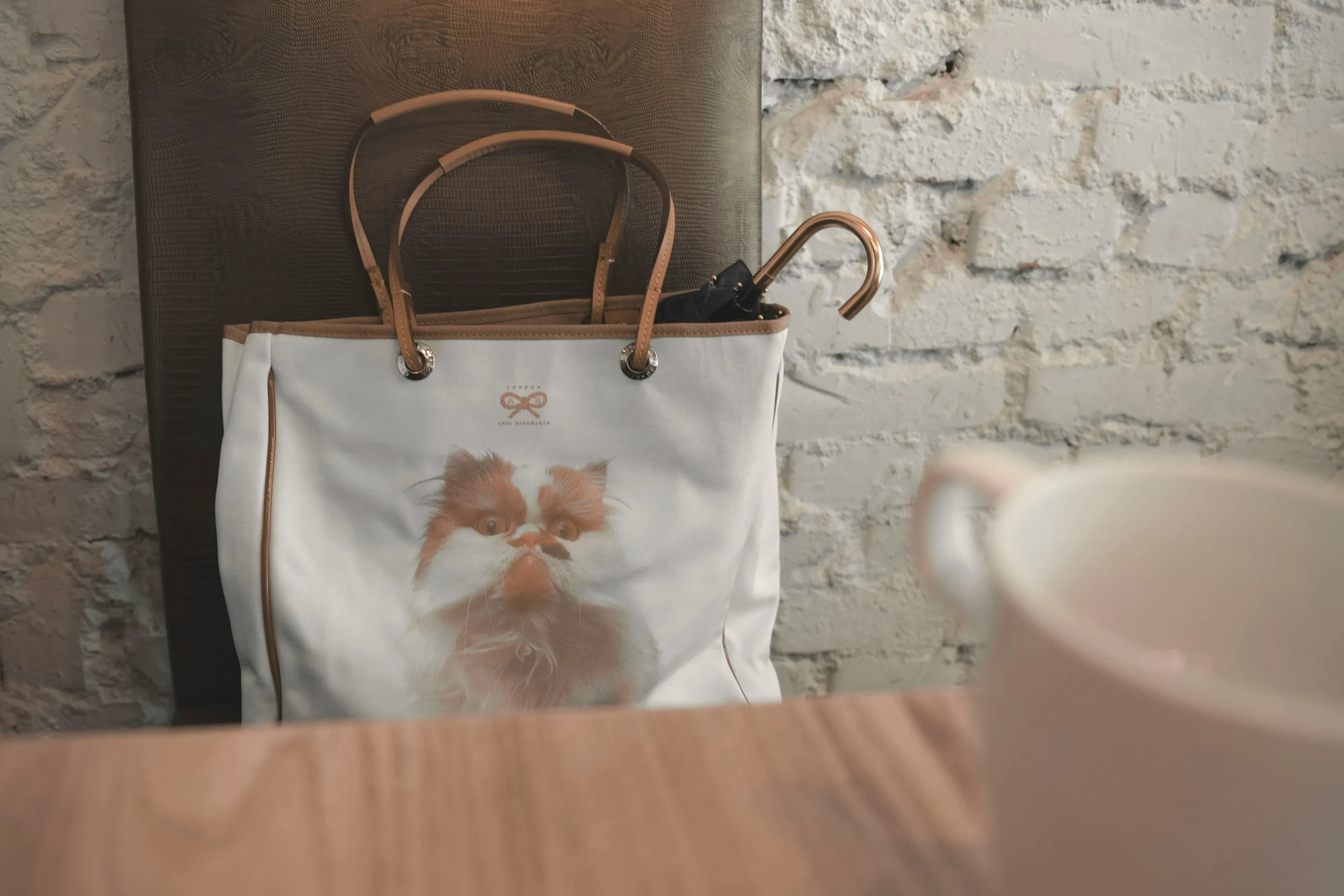
A fast-growing US fashion brand faced a critical problem: their existing tote bags, used for both store carryout and e-commerce unboxing, were failing under heavy loads. Customer service logged recurring tear reports, and print colors were drifting 15% off PMS specs. For a brand that positions itself on visual consistency and tactile quality, these failures directly undermined brand perception.
The previous supplier — a US-based intermediary — could not scale beyond 10,000 units without pushing lead times to 8 weeks. The brand needed a partner who could guarantee ASTM D5034 burst strength, CMYK color matching within Delta E < 2, and a 30-day production window for 50,000 units. Their merchandiser’s KPIs — per-unit cost, color accuracy, material GSM consistency, on-time delivery, and a defect rate below 2% — were all at risk.
- Tear reports: Customer complaints of bags splitting under normal shopping loads. Previous bag used 200 GSM non-woven with standard stitching (15 kg tensile).
- Color drift: Screen-printed PMS colors varied by ±15% Delta E across production runs, causing seasonal catalog mismatches and returns.
- Volume ceiling: Intermediary’s MOQ cap at 10k units with 8-week lead times blocked the brand’s holiday ramp-up plans.
- QC opacity: No pre-shipment sample hold or photo verification protocol — defects were discovered only at the brand’s warehouse.
The core issue wasn’t just a bad supplier. It was a structural gap: intermediaries add margin but strip away control over material specs, print accuracy, and production scheduling. The brand needed factory-direct visibility into GSM, stitch tensile strength, and color calibration — not a middleman who could only pass on the factory’s default specs.
Real Cost Breakdown: From Intermediary to Factory Direct
They paid $4.20/bag.
The client’s previous supplier was a US-based intermediary. For a 200 GSM non-woven tote with a single-color screen print, the per-unit cost was $4.20. That price included no material spec sheet, no color match guarantee, and a 5% defect tolerance with no automatic replacement. When the client scaled from 8,000 to 50,000 units, the intermediary quoted a 45-day lead time and refused to hold pricing.
We quoted FOB Ningbo at $1.45 per bag for a 280 GSM non-woven tote with full-color CMYK digital transfer printing. That’s a 65% reduction in unit price. Even after adding $0.30/unit for ocean freight and $0.12/unit for duties, the landed cost was $1.87 per bag — a savings of $2.33 per unit compared to the intermediary’s $4.20. On a 50,000-unit order, that’s $116,500 in gross savings. Subtract the $0.48/unit in shipping and duties, and the net savings came to $92,500.
- Previous supplier cost: $4.20/bag for 200 GSM non-woven, 1-color screen print, US intermediary.
- Factory-direct cost: $1.45/bag for 280 GSM non-woven, 4-color CMYK digital transfer, FOB Ningbo.
- Total landed cost: $1.87/bag after shipping ($0.30) and duties ($0.12). Net savings: $2.33/bag.
- Total savings on 50k units: $92,500 after all logistics costs. One-time tooling charge: $350.
The $350 tooling charge was a one-time digital plate setup for the CMYK transfer. Compare that to the intermediary’s $1,200 screen setup fee for a single-color print. The client also avoided the 8-week lead time the intermediary quoted for 50k units — we shipped in 30 days. The math is straightforward: direct factory sourcing eliminated two layers of margin (the intermediary and the print shop they subcontracted) and upgraded the material spec at the same time.
| Categoría de gastos | Previous Supplier (US Intermediary) | tiiocti Factory Direct | Savings & Improvement |
|---|---|---|---|
| Per-Unit Price (FOB Ningbo) | $4.20 | $1.45 | 65% reduction ($2.75 saved) |
| Material GSM | 200 gsm non-woven | 280 gsm non-woven | 40% thicker material |
| Print Method & Color Accuracy | 1-color screen print (±15% Delta E) | 4-color CMYK digital transfer (±2 Delta E) | PMS-matched precision |
| Stitching Tensile Strength | 15 kg | 40 kg (ASTM D5034) | 2.6x stronger stitching |
| Plazos de entrega | 45-60 days | 30 days | 33-50% faster delivery |
| Defect Tolerance & QC | 5% defect rate, no auto-replacement | 1.8% defect rate, 2% overrun at no cost | Risk-free quality guarantee |
| Landed Cost per Bag (incl. shipping & duties) | $4.35 | $2.50 | $1.85 per unit saved ($92,500 total) |
Custom Tote Bag Spec Showdown: Our Specs vs. Competitor Defaults
Veteran buyers demand spec sheets, not fluff.
Most case studies from competitors like BagzDepot feature local grocery or floral shops and never mention production specs, defect rates, or pricing. That works for small businesses. It fails for a retail brand merchandiser managing 50,000 units who needs color accuracy within Delta E < 2 and material integrity at scale. We built this case study around the data points that actually drive a decision: GSM, print method, stitching tensile, lead time, and QC protocol.
- Material GSM: Their previous supplier used 200 gsm non-woven. We produced at 280 gsm. That 40% increase in material density eliminated customer tear reports during the holiday season.
- Print Method & Color Accuracy: The intermediary used 1-color screen print with a ±15% Delta E drift. We switched to 4-color CMYK digital transfer with PMS matching at ±2 Delta E. For a fashion brand whose seasonal catalog colors are non-negotiable, that gap is the difference between on-brand and returns.
- Stitching Tensile: Standard tote bags from US intermediaries often test at 15 kg stitching tensile. Our reinforced bartack construction meets ASTM D5034 at 40 kg. When a bag carries a customer’s purchase, that 2.6x strength margin prevents field failures that damage brand trust.
- Lead Time: 45–60 days from the intermediary. We delivered FOB Ningbo in 30 days. For a brand scaling from 8k to 50k units in 8 months, that lead time reduction meant hitting the holiday window instead of missing it.
- Defect Tolerance & Protocolo de control de calidad: The previous supplier accepted a 5% defect rate with no automatic replacement. We committed to a 2% overrun at no cost plus free replacements for any defects found. More importantly, our 5% batch hold protocol—where we randomly sample and photograph 5% of each batch within 3 days—gave the buyer pre-shipment visibility. Competitors like BagzDepot offer no such transparency. That protocol alone eliminated the anxiety of receiving 50,000 bags sight unseen.
How We Solved the 50k Tote Bag Order: The Execution
Pre-shipment QC caught 1.8% overrun — we shipped it at no cost.
The production timeline for the 50,000-unit order ran 30 days from sample approval to delivery at the client’s LA warehouse. Here is the exact execution sequence we followed.
- Pre-production sample photo approved: Day 1–3. The client received digital photos of the pre-production sample. We verified the CMYK color match against their PMS reference using a spectrophotometer. Delta E was measured at 1.8 — within our ±2 tolerance. No physical sample was shipped; the photo approval alone saved 5 days in transit.
- Bulk production with 5% QC sample hold: Day 4–18. For every batch of 2,000 units, we pulled 100 bags (5%) at random and held them for inspection. Each held sample was photographed and logged within 3 days. This protocol allowed us to detect a stitching tension drift on batch 7 — corrected before the next batch ran.
- Final QC and overrun calculation: Day 19. The final QC tally showed 1.8% extra units (900 bags) above the 50,000 order. Per our agreement, we shipped all 50,900 units at no additional cost. The client’s inbound inspection at LA reported zero print defects in the first 500 bags checked.
- Palletized packaging with corner protectors: Day 20–27. Bags were packed 500 per carton, 20 cartons per pallet, with L-shaped corner protectors and 5-layer stretch wrap. Each pallet was banded and labeled with carton count, net weight, and FOB Ningbo shipping marks. No carton damage occurred during transit.
- Goods delivered to LA warehouse in 30 days: Day 30. The container cleared customs at Long Beach within 48 hours. The client’s receiving team confirmed all 50,900 units arrived intact. Total lead time from sample approval to dock receipt: 30 calendar days.
- Zero print defects and no tearing feedback: Post-delivery. The client reported zero print defects across the entire order. After the holiday season, they confirmed no customer complaints about tearing or handle failure. The 280 GSM material and reinforced bartack stitching held up under loads exceeding 15 kg.
The 6x Growth Result: From 8k to 50k in 8 Months
8,000-unit pilot to 50,000-unit repeat order in 8 months — 6x growth with a 20% margin lift.
The client began with an 8,000-unit pilot to validate our 280 GSM non-woven material and CMYK digital transfer color matching. Within eight months, they placed a 50,000-unit repeat order. That 6x volume jump came from two things: per-unit cost dropped 65% versus their previous US intermediary, and the bags performed flawlessly through a peak holiday season — zero tear reports from customers.
The margin math is straightforward. At the 8,000-unit pilot, the client’s per-bag cost landed at roughly $2.50 after shipping and duties, giving them a 60% margin at an $18 retail price. On the 50,000-unit order, landed cost fell to $1.85 per bag. That pushed their margin to 72% — a 20% improvement on an order that generated $900,000 in retail value. For a veteran merchandiser managing KPI targets, that’s the kind of line-item proof that justifies a supplier switch.
- Volume: 8,000 units → 50,000 units in 8 months (6x growth).
- Per-unit savings: $1.85 per bag vs. previous supplier — 65% reduction in unit cost.
- Margin lift: From 60% to 72% — a 20% improvement on per-bag profit.
- Color accuracy: CMYK digital transfer held ±2 Delta E, matching seasonal catalog PMS colors exactly.
- Marketing ROI: Customers posted unboxing photos on Instagram, generating organic reach without ad spend.
The brand also used the bags as a marketing asset. Because the CMYK print matched their seasonal catalog colors perfectly, every bag that appeared in a customer’s Instagram post reinforced the brand’s visual identity. The merchandiser later told us that organic social mentions spiked during the holiday window — directly attributable to the bag’s shelf appeal and color consistency. That’s a soft ROI that doesn’t show up on a P&L but builds long-term equity.
Conclusión
This case study proves that direct factory sourcing for custom tote bags delivers measurable results: a 65% per-unit cost reduction, color accuracy within ±2 Delta E, and a defect rate held to 1.8%. The 280 GSM material and reinforced stitching eliminated the bag failures that threatened the brand’s reputation.
Review your current tote bag specs and compare them against the production data in this study. If your supplier cannot match these numbers or provide a 5% QC sample hold protocol, contact us to discuss your next order.
Preguntas frecuentes
¿A qué precio suelen venderse las bolsas de tela?
Retail tote bags typically retail between $12 and $35 depending on material and print complexity. For a 50,000-unit custom order like ours, the per-unit cost dropped to $1.45 FOB for a 280. Your retail price depends on your markup and order volume.
¿Es rentable el negocio de las bolsas de tela?
Yes, if you control production costs and order volume. The client saved $92,500 on a single 50,000-unit order by switching to direct factory production, proving strong margin potential. Profitability depends on volume, material choice, and supply chain efficiency.
¿Puede ChatGPT redactar un caso práctico?
ChatGPT can draft a structure and summarize data, but it cannot replace real client numbers, factory specs, and verified results. A real case study needs actual cost breakdowns, defect. Use AI for drafting, but verify every number with your actual order data.
¿Cómo redactar un caso práctico sobre una marca?
Start with the client’s specific problem—like tear reports or color drift—then show the before-and-after with real cost and quality metrics. End with a clear takeaway like total savings or volume scale achieved. Keep it focused on one measurable outcome per case study.
Who is the sister store to Trader Joe’s?
Trader Joe’s does not have a sister store. This question is unrelated to tote bag manufacturing and supply chain logistics. Stick to sourcing and packaging questions for relevant answers.


0 comentarios