




California Proposition 65 applies to printed bags the moment they are sold, offered, or shipped to anyone in California: if the bag exposes a consumer to a chemical on the state’s list without a warning, the seller is liable. The core rule sits in California Health and Safety Code Section 25249.6, which forbids knowingly exposing any individual to a listed chemical without first giving a clear and reasonable warning. For a bag brand, compliance is a fork: test the product below the safe harbor levels, or print the warning.
This guide is written for importers and brands buying custom printed totes, not for lawyers. It explains when the law reaches your bag program, where the chemicals come from, what the warning labels must say, and what to request from the factory so the decision is based on test data instead of guesswork. The statute text and the enforcement numbers below are grounded in the California code and in the state’s official compliance guidance, and the practical checks are what compliance teams run on printed textile programs.
What Prop 65 Requires of a Seller
The operative language of the law is short. Section 25249.6 of the California Health and Safety Code states that no person in the course of doing business shall knowingly and intentionally expose any individual to a chemical known to the state to cause cancer or reproductive toxicity without first giving clear and reasonable warning. The law, enacted by initiative in November 1986, has been operative since January 1, 1987. The full text is published in the California code on leginfo.legislature.ca.gov.
Three scope rules decide whether your bag program is inside the law. First, the business must be caught by the statute; enforcement guidance applies it to businesses with 10 or more employees. Second, the exposure must be to a chemical on the list maintained by the California Office of Environmental Health Hazard Assessment, which holds roughly 900 entries. Third, the exposure must come without a warning or below the safe harbor level. Fail any of the three and the product needs either a warning or test data proving the exposure sits under the limit.
The enforcement reality shapes how brands treat this. Violations carry penalties up to $2,500 per day per violation, and both the state Attorney General and private parties can bring actions, which is why demand letters to retailers and online sellers are common. The compliance guide published by QIMA, the testing and inspection firm, walks through the same warning mechanics used in retail enforcement cases.
Where Listed Chemicals Come From in a Printed Bag
Printed bags carry three exposure routes: the ink, the substrate, and the hardware. Screen printing inks, especially plastisol formulations, can contain phthalates used as plasticizers. Dyes on synthetic fabrics can release listed substances during handling, though the exposure pathway for a finished tote is usually incidental contact. Hardware is the most concrete route: metal snaps, zippers, and buckles can contain lead in the alloy or the plating, and PVC-coated components can carry phthalates.
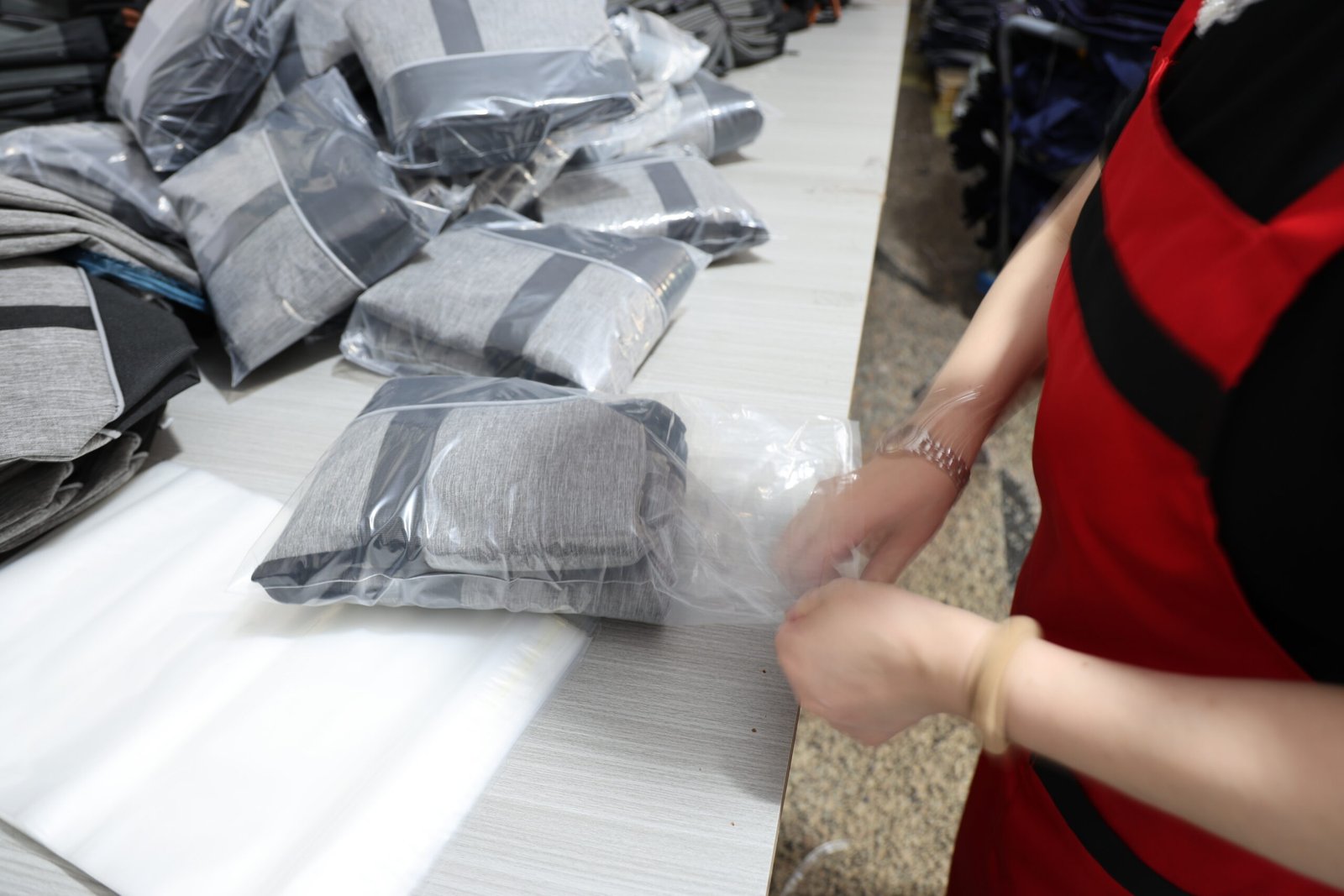
The practical consequence: the compliance question is not “is my bag safe,” it is “what is in the ink, the fabric, and the hardware.” That is why the factory request list starts with documents, not tests. Ask for the ink supplier’s safety data sheet, the hardware supplier’s material declaration, and any existing test reports for lead, cadmium, and phthalates. On the fabric side, the REACH SVHC testing workflow covers the same substance families for the EU market, and the CPSIA lead and phthalate limits apply to children’s products in the US, so one testing program can feed several compliance files.
Warning Labels: Standard and Short-Form
When a warning is required, the label must be clear and reasonable, and the current format rules come from the state’s warning regulations. The standard warning states that the product can expose you to a named chemical, pairs that statement with the yellow triangle exclamation symbol, bold capital WARNING text, the name of at least one listed chemical, and the www.P65Warnings.ca.gov URL. The symbol may not be smaller than the height of the word WARNING.
| Warning Type | Required Elements | Typical Use |
|---|---|---|
| Standard warning | Triangle symbol, bold WARNING, chemical name(s), exposure language, P65Warnings.ca.gov URL | Labels, hang tags, packaging |
| Short-form warning | Symbol, WARNING, exposure type (Cancer / Reproductive Harm / both), URL; no chemical name needed; type no smaller than 6 point | Small products, limited space |
The short-form warning exists for small products and tight label space. It replaces the chemical name with the exposure type, stating Cancer, Reproductive Harm, or Cancer and Reproductive Harm, and it must include the same symbol and URL. Its type cannot be smaller than 6 point, and it must be no smaller than the largest type used for other consumer information on the product. For bags, the warning can sit on a printed tag sewn into the seam, on a hang tag, or on the packaging, and for online sales it must also appear on the product page.
Safe Harbor Levels and the Testing Decision
A product does not need a warning if the exposure stays below the regulatory safe harbor level for the chemical in question. Safe harbor numbers exist for a subset of listed chemicals, such as lead and certain phthalates, and they are expressed as intake levels per day. The catch is that not every listed chemical has a safe harbor number. For those chemicals, the business must assess whether the exposure poses a significant risk, which is a judgment call best made with test data and, when in doubt, counsel.
The testing decision for a printed bag program is a scoping exercise. A standard retail program tests the finished bag, including print and hardware, for lead, cadmium, and phthalates, the substance families most likely to appear. Request the test from an accredited third-party lab, specify the test method and the safe harbor threshold you are comparing against, and keep the report with the product file. If the results come back above a threshold, the fallback is the warning label, which is a design task, not a crisis.
Compliance Clauses to Put in the Factory RFQ
Five clauses turn Prop 65 from a surprise into a spec. First, ink compliance: the factory must provide the ink supplier’s SDS and confirm the print formulation contains no listed phthalates. Second, hardware declarations: snaps, zippers, and buckles must come with material declarations covering lead and cadmium. Third, test reports: the factory must supply third-party test reports for the finished bag, or agree to cover the cost of testing your samples before bulk production. Fourth, warning placement: if the artwork includes a warning, the label position and size are approved on the pre-production sample, not found on the shipping carton. Fifth, change control: any change in ink supplier, hardware source, or coating during production must be notified before the batch ships, because a substitution can change the compliance picture.
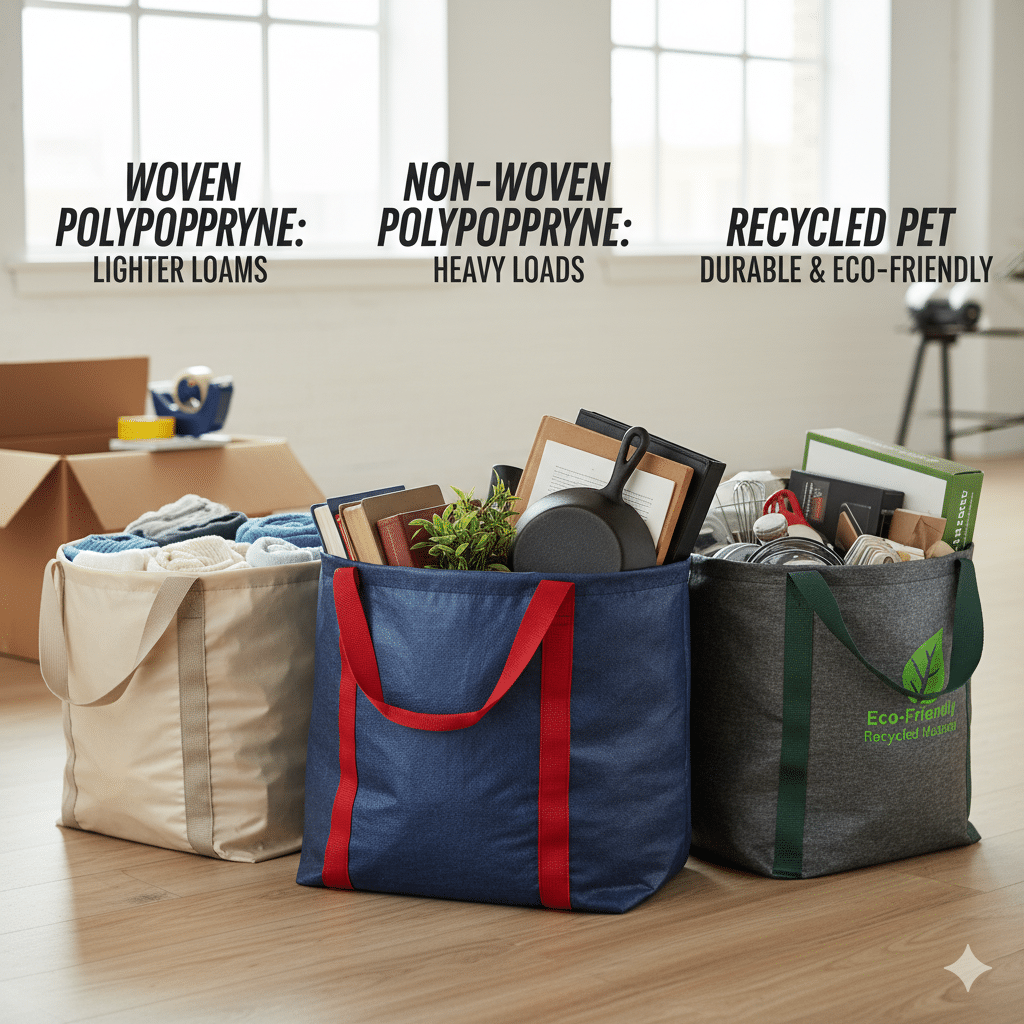
The same file discipline that supports state bag ban compliance maps applies here: one product file per SKU holding the SDS, the test report, and the warning artwork. Retailers increasingly ask for these files during vendor onboarding, so the cost of building them once is lower than the cost of answering requests per order.
Risk Scenario: A Warning-Free Program Built on Test Data
Walk a concrete case. A brand orders 10,000 printed canvas totes with metal snaps, selling through California retailers and a DTC store. The program ships without warnings and without test data. A compliance letter arrives citing lead in the snap plating and phthalates in the plastisol print. The brand faces three costs: the penalty exposure up to $2,500 per day per violation, a product hold at the retailer, and a redesign of the label for the remaining stock. The alternative path: the factory provides the ink SDS and hardware declarations at sampling, the brand tests two finished samples for lead, cadmium, and phthalates, the results sit below the safe harbor numbers, and the program ships warning-free with the reports on file. The second path costs one testing quote and two weeks of lead time.
One more layer matters when the demand letter does arrive: the retailer will ask for the test report, and the report only counts if it comes from an accredited laboratory. Check the lab’s accreditation scope before ordering the test, because a report from a lab whose scope does not cover textiles or coated products can be challenged. Keep the report, the sample photographs, and the certificate of analysis in one file per SKU, and keep the file for the life of the product. Compliance files are the cheapest insurance a printed bag program can buy, and they turn a demand letter into a one-page reply instead of a negotiation.
The same review applies to print methods. Water-based inks generally carry a smaller chemical footprint than plastisol, which is one reason the printing method comparison lists formulation alongside cost and durability. When the brand does need the warning, the label becomes part of the artwork package: the factory prints it in the same pass, and the custom shopping bag program carries it on the hang tag or side seam without disturbing the design.
Conclusión
Prop 65 reaches printed bags through three facts: California sales, listed chemicals, and missing warnings. The statute has required clear and reasonable warnings since January 1, 1987, the list holds roughly 900 chemicals, penalties run up to $2,500 per day per violation, and the escape hatch is testing below safe harbor levels. For a bag brand the practical program is short: collect the ink and hardware documents, test the finished sample, and design the warning in when the data says it is needed.
Send your tote artwork and target retail states to TIIOCTI with the compliance request, and the factory will quote the testing scope and confirm the warning placement on the pre-production sample. The compliance file is built before bulk production, not after the first demand letter.
Ink SDS, hardware declarations, and test-ready samples.
Preguntas frecuentes
Does Proposition 65 apply to printed tote bags?
It applies when bags sold into California expose a consumer to a listed chemical above its safe harbor level without a warning. Inks, dyes, and metal hardware are the usual exposure sources on printed bags, so the risk depends on the materials and the test results.
What is the penalty for missing a Prop 65 warning?
Violations carry penalties up to $2,500 per day per violation for businesses with 10 or more employees. Both the California Attorney General and private parties can enforce the law, which is why compliance letters are common in retail.
Do all printed bags need a Prop 65 warning?
No. If the bag tests below the safe harbor level for every relevant listed chemical, no warning is required. The catch is that not every listed chemical has a safe harbor number, so the testing scope matters.
What should a Prop 65 warning label say?
The standard warning states that the product can expose you to a named chemical, uses the yellow triangle symbol, bold WARNING text, and the www.P65Warnings.ca.gov URL. A short-form version may state only the exposure type: Cancer, Reproductive Harm, or both.
Can my bag factory provide Prop 65 compliance support?
Yes. Ask for ink safety data sheets, hardware material declarations, and third-party test reports for lead, phthalates, and other listed chemicals, and confirm the warning label position on the artwork before bulk production.




0 comentarios