



A printed bag has limited space, and the information a product is expected to carry does not shrink to fit it. Care instructions, composition, origin, recycling guidance and any regulatory statements all need somewhere to live, and the usual answer is an insert card.
The card is a small piece of print with an outsized set of jobs. It has to be legible enough to satisfy a labelling requirement, small enough not to distort the pack, and clear enough to be read by a customer who did not ask for it.
What Belongs on the Card
Four categories of content typically land on an insert. Practical information such as care and cleaning. Disclosure information such as material composition and country of origin. Guidance such as recycling or reuse instructions. And brand content such as a story, a campaign message or a QR code.
The disclosure items drive the specification, because they have to be legible rather than merely present. Where a market requires care text or a composition statement, a card that is technically correct but printed at an unreadable size does not satisfy the requirement, and the difference is decided by the card’s dimensions and the print size, not by good intentions.
Brand content is the flexible part. It can be reduced or moved to a QR code when space is tight, whereas disclosure text cannot. Deciding which category yields first is a useful discipline, and it prevents the common situation where the card is designed around a campaign message and the required text is compressed into the remaining corner.
Sizing the Card to the Pack and the Text
Two constraints set the size. The first is the information: the text has to be readable, which fixes a minimum area for a given content. The second is the pack: a card that is too large for the bag opening will be folded by whoever packs it, and folding is what makes text unreadable.
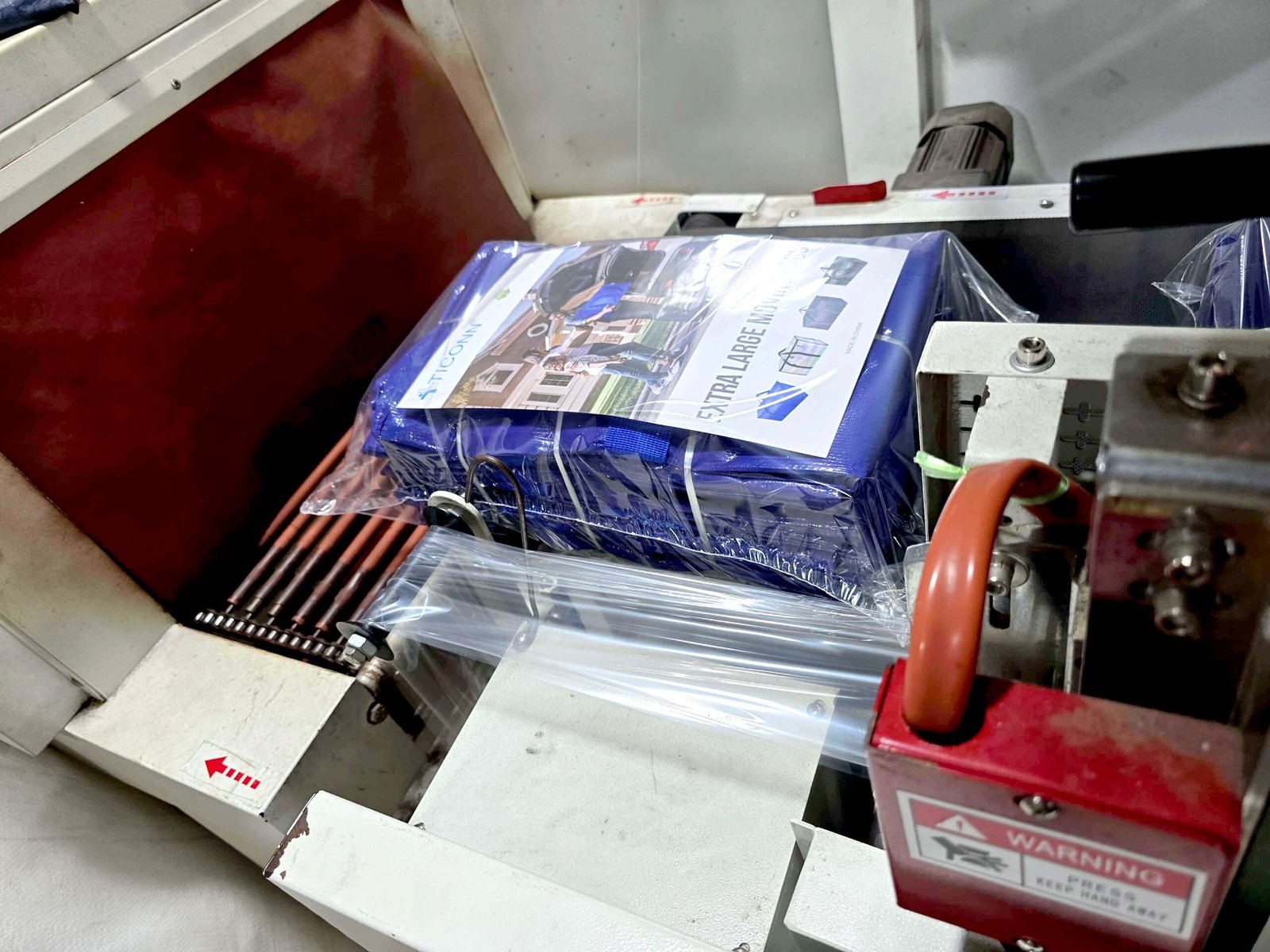
Cards also have a physical role in the pack. A card placed at the base of a bag can stiffen it, which overlaps with the purpose of a base board, while a card placed against a printed panel can protect the print during handling. Our notes on bag base boards and reinforcement cover that overlap, and it is worth deciding deliberately rather than treating the card as decoration.
Where the pack hangs on a peg, the card size interacts with the hanging arrangement and the header. The dimensional requirements for peg display are described in our notes on header cards and euro hooks. A card intended for both inside and outside the pack is usually a compromise on both, and two cards designed for their jobs often work out cheaper than one card that does neither well.

Print Specification and Durability
The print method follows the quantity and the substrate. Digital print suits short runs and version changes, offset suits larger runs of a stable design, and a coated stock resists scuffing where the card will be handled.
Finish matters more than it sounds. An uncoated card in a handled bag scuffs and picks up marks, and the disclosure text is usually the first thing to become difficult to read. Lamination or a varnish protects the print at a cost per unit that is small against the value of the information printed on it.
Where a recycled or recyclable pack is the objective, the card’s material and finish have to fit that story. A plastic-laminated card inside a recyclable bag is a contradiction that a customer may notice, and the material options are set out in our materials reference. For markets with labelling expectations, the requirements that govern care and content information sit broadly within eCFR Title 16, commercial practices and its associated rules.
Version Control on a Small Item
Insert cards change often: a new campaign, a revised care instruction, a reformulated material, a new market requirement. Each change is a print run, and each print run has a quantity that will sit in stock until it is used.
That creates the familiar problem of a programme holding several versions at once. The mitigations are simple: print version codes on the card so mixed stock is detectable, keep quantities proportionate to the rate of change, and avoid printing content on the card that changes more often than the card.
Where content changes frequently, a QR code carrying the volatile information and a fixed card carrying the stable disclosure is a good division. The disclosure text stays printed and legible; the campaign changes without a reprint. That structure also supports a market-by-market approach where disclosure requirements differ.
Specifying an Insert Card
Six lines make the specification complete: card size, stock and finish, print method, the content with its required text sizes, the version code and control, and how the card is placed in the pack.
Content is where the specification most often fails, because a designer supplies artwork rather than a text size. Stating a minimum type size for the disclosure block, and requiring a proof at final size, catches the problem before a print run rather than after a customer complaint or a retailer query.
Finally, decide the placement method and write it down. Loose, stapled to the handle, tucked into a pocket, or bound with the base board: each changes the packing operation and the labour cost, and each behaves differently when the pack is compressed in transit. Our retail branding team specifies the card alongside the pack so that the print, the placement and the disclosure requirement are settled together.
Preguntas frecuentes
What should go on a bag insert card?
Practical information such as care, disclosure information such as composition and origin, guidance such as recycling, and brand or campaign content. Disclosure text drives the specification because it must be legible.
How large should the card be?
Large enough for the required text to be readable and small enough to sit in the pack without folding. A card that has to be folded defeats the purpose.
Does the print finish matter?
Yes. An uncoated card in a handled bag scuffs, and the disclosure text becomes unreadable first. Lamination or varnish protects it at a small per-unit cost.
How do I control multiple card versions?
Print version codes on the card, keep print quantities proportionate to the rate of change, and move volatile content to a QR code rather than printing it.
Where should the card sit in the pack?
Decide deliberately. A base card can stiffen the bag, a panel card can protect print, and the placement affects both packing labour and behaviour under compression.
Video: Printing Custom Packaging and Subscription Box Inserts
If a retail pack needs an insert card and the disclosure text is fighting for space, send the content and the pack dimensions. Our retail team will specify the card size, stock and print so the required text stays legible.


0 comentarios