



moving bag load capacity is the first checkpoint buyers should lock before they approve a supplier, budget, or production slot. When a logistics procurement manager sees “200 lb capacity” on a moving bag spec sheet, the assumption is that the bag can be picked up and carried at that weight. That assumption is wrong more often than not. The real moving bag load capacity depends entirely on whether the weight is static — bag sitting on a floor — or dynamic, meaning you’re lifting it by the handles. Those two numbers can differ by 50% or more.
The disconnect matters because the people buying these bags in bulk aren’t the ones carrying them. A procurement manager at a relocation company or industrial distributor evaluates cost per unit and a spec sheet. The crew on the ground deals with the actual physics: a bag loaded with books, lifted by a single handle, and carried down a flight of stairs. That’s where the handle stitch takes the full tensile load, and where the 200 lb static rating becomes irrelevant.
Most suppliers test only the static safe working load. The bag rests on a platform, weights are added, and the fabric holds. That test tells you nothing about what happens when the force concentrates on a few inches of stitching. A relocation company in Texas found this out after 14 damage claims traced back to handle tear-outs on bags rated for 50 kg static. The bags held the weight fine on the truck floor. They failed when a mover lifted them by the handles.
This gap between marketing and engineering is where the real cost lives. A single bag failure can break a TV, damage flooring, or injure a worker. The claim cost often exceeds $300 — far more than the bag itself. For a procurement manager with a KPI to reduce claim costs by 30%, understanding the difference between static and dynamic load isn’t academic. It’s the difference between a spec that looks good on paper and a bag that performs on the job.

Why Load Capacity Labels Mislead Buyers
A 200 lb static rating can drop to 65 lb when carried by handles.
Most moving bag listings advertise a single number — 200 lb, 100 kg — without telling you how that number was measured. In nearly every case, it’s a static load test: the bag is filled, sealed, and placed on a flat surface. The fabric handles the weight through even bottom support. That’s not how your crew will use it.
When a worker lifts a fully loaded bag by the handles, the entire weight transfers to a few square inches of stitching. That concentrated tensile force is the dynamic load. Industry data shows dynamic handle capacity typically falls to 50–70% of the static rating. A bag labeled 200 lb static should only be hand-carried at 100–130 lb — and that’s assuming the handle stitching can hold.
- Static load SWL: Measured with bag resting on a platform. Our woven PP bags with 200+ GSM fabric test to 200 lb (91 kg) under this condition.
- Dynamic handle limit: Real-world carry capacity. For a 200 lb static bag, expect 100–130 lb max — and only if handle stitch tensile strength exceeds 500 N.
- Safety factor gap: Industrial standards recommend a 3:1 safety factor for dynamic loading. That means a bag rated 200 lb static should be hand-carried at roughly 65 lb. Most listings omit this entirely.
A relocation company in Texas learned this the hard way. They switched to bags labeled 50 kg (110 lb) static, assuming they could be carried full. Within three months, handle tear-outs caused 14 damage claims — broken electronics, smashed ceramics, one injured mover’s foot. The total claim cost exceeded $4,200. The bags cost $5 each. The failure wasn’t the fabric; every torn bag showed intact body material. The stitching at the handle attachment point had pulled through.
Amazon reviews tell the same story. Search any top-selling moving bag and you’ll find recurring complaints: “Handle ripped off on the first use,” “Stitching came undone with 40 lbs inside,” “Fabric is fine, but the handles are garbage.” Yet the product listing still boasts a 200 lb capacity. The disconnect is systematic — suppliers test static, buyers carry dynamic.
The fix isn’t complicated. Before approving a bulk order, demand two things: a static load report (ASTM D5034 for fabric break strength, minimum 250 N) and a dynamic handle pull test (ASTM D5041 for stitch strength, minimum 500 N). If a supplier can’t provide both, you’re buying a number, not a capability.

Real Cost of Bag Failure: Claims vs Bag Price
A single handle tear-out can cost 60× the bag wholesale price.
Procurement managers often compare bag unit prices down to the cent, but the real financial exposure isn’t the bag cost — it’s the failure cost. An industrial distributor in Texas reported that one bag failure dropped a 55-inch television onto concrete, resulting in a $750 replacement claim. The bag’s wholesale price was $4.80. That single incident wiped out the margin on an entire pallet order.
When you add claim handling labor, inspection time, replacement shipping, and the soft cost of client trust erosion, a single handle tear-out or seam split can easily exceed $500 in total impact. In a documented relocation case, 14 damage claims were traced back to handle stitching failures on bags rated only for static load. The bags cost $3.20 each. The total claim payout exceeded $4,200.
- Direct replacement cost: Damaged item value (TV, furniture, electronics) often runs $200–$800 per incident.
- Claim handling overhead: Internal labor for photo documentation, customer calls, and paperwork averages 2–4 hours per claim at $45/hour.
- Downtime & schedule delay: A failed bag mid-move stops the crew, reschedules deliveries, and can incur overtime or penalty fees.
- Client retention risk: A single visible failure can lose a corporate relocation contract worth $50k+ annually.
The math is straightforward: sourcing bags with verified dynamic load performance — not just a static 200 lb label — directly reduces claim frequency. Our heavy-duty moving bags are tested to ASTM D5034 for fabric break strength (>250 N) and handle stitch pull strength (>500 N), with a 3:1 safety factor applied to dynamic loads. That means a bag rated 200 lb static is certified for hand-carry up to ~65 lb, not a guess. Requesting bulk moving bag load test certification before ordering is the only way to close this risk gap.
| Failure Scenario | Direct Cost per Incident | Bag Price Comparison | Claim-to-Bag Cost Ratio | Mitigation via Verified Specs |
|---|---|---|---|---|
| Handle tear-out under dynamic load | $300+ (property damage/injury) | $5 per bag | 60:1 | Handle stitch tensile >500 N (ASTM D5041) |
| Fabric rupture during lift | $200+ (spilled contents) | $5 per bag | 40:1 | Fabric break strength >250 N (ASTM D5034) |
| Batch inconsistency causing multiple failures | $1,500+ (14 claims in one relocation) | $5 per bag | 300:1 | 3:1 safety factor on dynamic load; ISO 9001 batch control |
| Static rating misapplied to hand-carry | $500+ (total cost with downtime) | $5 per bag | 100:1 | Dynamic load limit labeled at 50-70% of static SWL |

Static vs Dynamic Load: What Engineers Ignore
Static load rests on the bottom.
A 200 lb static rating means the bag sits on a flat surface with weight evenly distributed across the bottom panel. The fabric handles that load fine. But when you lift that same bag by the handles, the entire force concentrates on maybe 6 square inches of stitching at each attachment point. That is the difference between static and dynamic load, and it is the single most overlooked spec in moving bag procurement.
- Static assumption: Even weight distribution across the full base. Fabric body carries the load. No single point sees more than a fraction of total weight.
- Dynamic reality: All weight transfers to handle webbing and stitch rows. Tensile force concentrates on thread loops. A 200 lb static bag can deliver over 100 lb of pull force on each handle stitch cluster.
Industry best practice applies a 3:1 safety factor for dynamic loads. That means a bag rated 200 lb static should only be hand-carried up to roughly 65 lb. Yet most e-commerce listings print the static number and let buyers assume it applies to carrying. A relocation company in Texas learned this the hard way: 14 damage claims traced directly to handle tear-outs on bags labeled 50 kg static. The bags failed at roughly 30 kg when carried.
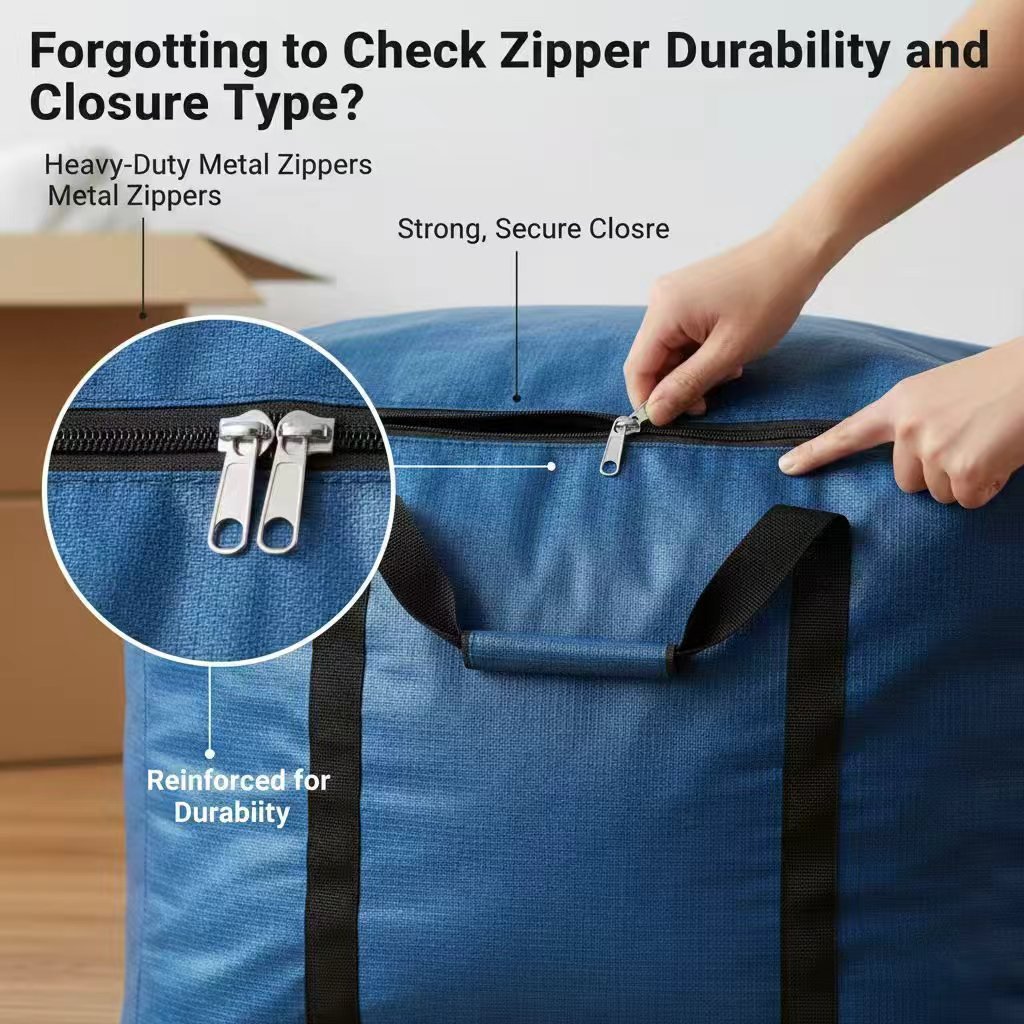
The real failure point is almost never the fabric body. It is the handle stitching. Amazon reviews consistently complain about handles pulling loose while the bag body remains intact. That is why handle stitch tensile strength matters more than fabric GSM for dynamic performance. ASTM D5041 measures stitch pull strength directly. For reliable carry at 100 lb, handle stitching should exceed 500 N. Our woven PP bags are tested to that threshold with reinforced double-stitched handles and bar-tack reinforcement.
Fabric break strength under ASTM D5034 is a separate metric. Minimum 250 N for heavy-duty moving bags ensures the panel itself won’t rupture under load. But if the handle stitching fails at 300 N while the fabric holds at 400 N, the bag still drops. Procurement managers should request both ASTM D5034 and D5041 reports, not just a static SWL number.
How to Verify True Load Capacity Before Ordering
Static load reports are useless without a dynamic handle pull test.
Start by requesting the supplier’s static load test report. This document should specify the safe working load (SWL), the test method (e.g., bag resting on a flat platform with evenly distributed weight), and the fabric GSM. Most suppliers can provide this. The problem is that static load tells you nothing about how the bag performs when a mover grabs the handles and lifts 100 lb of books.
- Dynamic handle pull test: This is the test that exposes weak stitching. Fill the bag to 70% of its rated static load (e.g., 140 lb in a 200 lb bag). Lift it by the handles, hold for 5 seconds, and lower. Repeat for 10 cycles. If the handles do not tear, the stitching passes. If a supplier cannot provide this test, assume the bag will fail under real use. The YouTube demo from ModernDayReviews shows a bag being lifted but does not specify if the load was supported by the bottom or handles alone — a common omission that misleads buyers.
- Stitch tensile strength (ASTM D5041): Handle stitching should exceed 400 N, and preferably 500+ N for bags rated at 100 lb dynamic. Ask for a copy of the ASTM D5041 report. If the supplier says they do not test to ASTM, that is a red flag. Amazon reviews consistently complain about thin fabric and weak stitching, yet listings still boast 200 lb capacity. The real failure point is the handle stitching, not the fabric body — a detail most guides ignore.
- Third-party certification (ISO 9001 / SGS): A supplier with ISO 9001 certification has a quality management system that ensures consistent production. SGS test reports provide independent verification of fabric break strength (ASTM D5034, minimum 250 N) and stitch pull strength. If the supplier only offers an in-house test sheet, request a third-party report or ask for a sample to test yourself. A relocation company in Texas learned this the hard way: after switching to bags rated 50 kg static, handle tear-outs caused 14 damage claims.
For bulk orders, also request a moving bag safety factor ratio. Industry best practice applies a 3:1 safety factor for dynamic loads. That means a bag rated 200 lb static should only be hand-carried up to ~65 lb. Our heavy-duty moving bags use 200+ GSM woven PP fabric, reinforced double-stitched handles with bar-tack reinforcement, and are tested to ASTM D5034 for fabric break strength (>250 N) and handle stitch pull strength (>500 N). We provide both static SWL and recommended hand-carry limit on the product label.
The Role of Materials and Stitching in Capacity
Fabric GSM and stitch type determine whether a bag survives 200 lb static or fails at 50 lb dynamic.
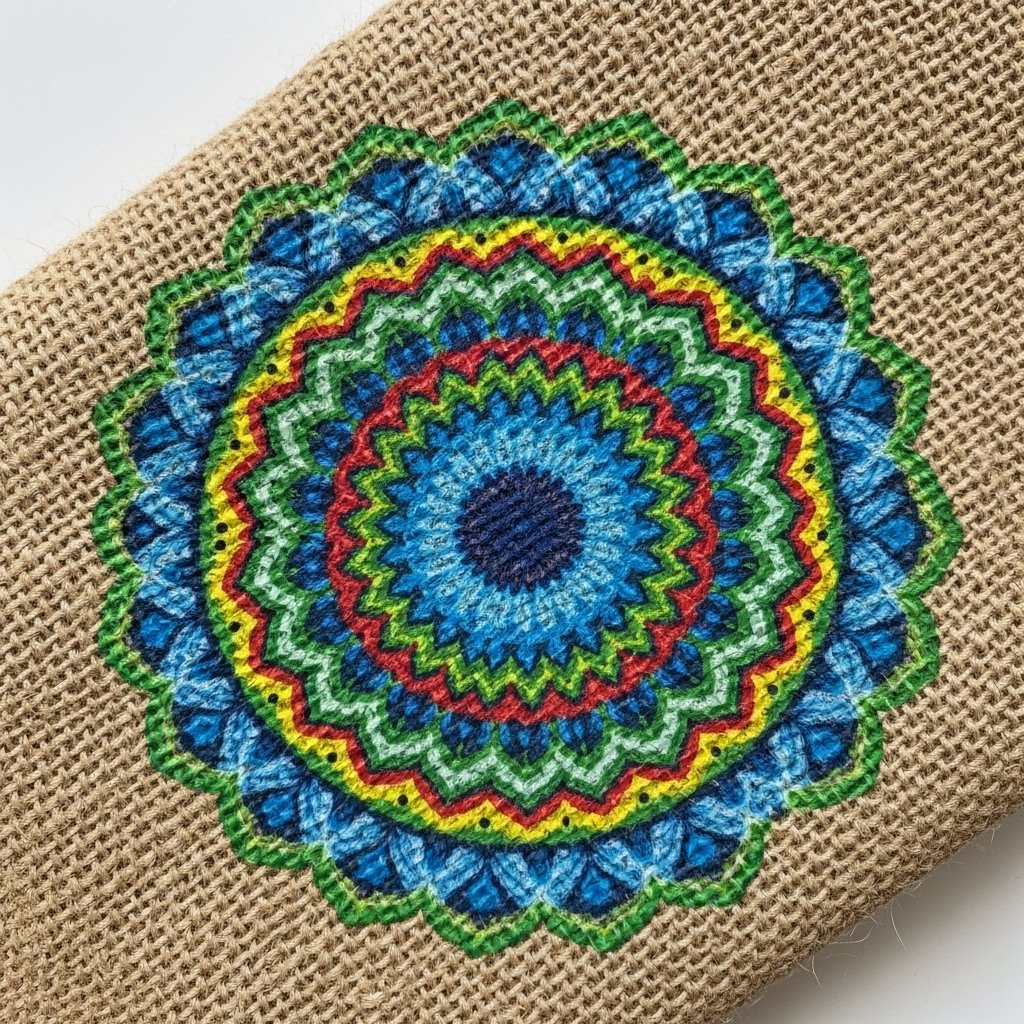
Woven polypropylene (PP) at 200+ GSM is the baseline for moving bags that claim 200 lb static capacity. GSM (grams per square meter) directly correlates to fabric tear resistance: below 180 GSM, the material stretches under load and seam edges fray. Oxford fabric at 600D denier uses a thicker, cross-hatched weave that resists punctures better than plain-weave PP, but its weight-to-strength ratio is lower — a 600D Oxford bag at the same GSM will typically have 10–15% lower fabric break strength than a 200+ GSM woven PP bag. The ASTM D5034 grab test on our woven PP fabric yields a minimum break strength of 250 N; Oxford 600D typically tests around 210–230 N under the same standard.
Stitching is where most capacity claims fail. Double-stitched handles with bar-tack reinforcement are non-negotiable for loads above 50 lb dynamic. Bar-tack stitching concentrates 8–12 thread passes in a 1-inch square at the handle root, distributing tensile load across the webbing rather than a single stitch line. Chain-stitch seams (lockstitch is weaker) allow the seam to stretch slightly under load without snapping individual threads. Our handle stitch tensile strength exceeds 500 N per ASTM D5041 — that means a 100 lb dynamic load (445 N) stays within a 1.12:1 safety margin, not the recommended 3:1. Industry best practice for dynamic handle carry is a 3:1 safety factor, meaning a bag rated for 200 lb static should only be hand-carried at ~65 lb.
- Woven PP (200+ GSM): Higher fabric break strength (250+ N ASTM D5034). Better for static loads up to 200 lb. Lower puncture resistance than Oxford, but seam strength is superior due to tighter weave.
- Oxford 600D: Better abrasion and puncture resistance. Lower fabric break strength (210–230 N). Preferred for bags that will drag across concrete or rough surfaces, but not for pure vertical load.
- Double-stitch + bar-tack: Required for handle attachment on bags over 50 lb dynamic. Bar-tack adds 300–400% more stitch density at the stress point. Without it, handle tear-out occurs at <80 lb dynamic.
- Chain-stitch seams: Allows 5–8% seam stretch before failure, absorbing shock loads. Lockstitch seams snap at 60–70% of chain-stitch tensile strength under sudden pull.
The real-world consequence: a 200 lb static bag with single-stitch handles and lockstitch seams will fail at roughly 35–45 lb dynamic — exactly the range where Amazon reviewers report handles ripping off. The fabric itself never tore; the stitch points gave way. If you are sourcing bulk moving bags, request the handle stitch tensile report (ASTM D5041) and fabric break strength (ASTM D5034) side by side. A supplier that cannot provide both is likely quoting static-only numbers that do not protect your claims cost.
| Material & Construction | Strength Metric | Impact on Capacity | |
|---|---|---|---|
| 200+ GSM Woven PP / 600D Oxford Fabric | ASTM D5034 Fabric Break Strength > 250 N | Provides the structural foundation for static loads up to 200 lbs | |
| Handle Stitching & Reinforcement | Double-stitched with bar-tack reinforcement | ASTM D5041 Handle Stitch Tensile Strength > 500 N | Determines the true dynamic load limit (50-70% of static rating) and prevents tear-outs |
| Safety Factor (Dynamic Load) | 3:1 ratio (e.g., 200 lb static = ~65 lb hand-carry) | Risk Mitigation | Ensures reliable performance under real-world carrying stress, reducing injury and property damage claims |
| Testing & Certification | Static SWL + Dynamic Handle Pull Test + Third-party SGS/ISO reports | Verification | Provides verifiable data to confirm capacity claims, ensuring consistent quality across bulk orders and lowering total cost of ownership |
Conclusión
A 200 lb static rating on a moving bag is not a guarantee it can be carried by its handles at that weight. The real failure point is the handle stitching, and most suppliers never test for that. For a logistics manager, the difference between a spec sheet and a real-world failure is the difference between a $5 bag and a $500 claim.
Preguntas frecuentes
¿Cuál es la capacidad de carga de las bolsas de mudanza?
La capacidad de carga indicada en la etiqueta suele corresponder casi siempre a una carga estática, es decir, con la bolsa apoyada sobre una superficie plana. Cuando se transporta sujetándola por las asas, la carga de trabajo segura real se reduce entre un 50 y un 70%. Solicita siempre los resultados de las pruebas de carga dinámica con las asas antes de realizar el pedido.
¿Una bolsa a granel pesa 1 tonelada?
No, a standard heavy-duty moving bag is not rated for 1 ton; that rating applies to industrial FIBC bulk bags used for granular materials. A typical moving bag’s static rating is around. Specify moving bag or FIBC bulk bag to avoid confusion.
¿A partir de qué peso se considera que un bolso pesa demasiado?
En el caso de una bolsa de la compra o un bolso estándar, cualquier peso superior a 10–15 libras conlleva el riesgo de que se rompan las asas o las correas y de que el tejido sufra un desgaste a largo plazo. Las bolsas personalizadas de uso industrial pueden soportar más peso, pero hay que tener en cuenta las costuras y la fijación de las asas. Comprueba el método de fijación de las asas en función de la carga específica que pretendas transportar.
¿Es pesada una bolsa de 70 libras?
Sí, 70 libras es mucho peso para una bolsa de mudanza que se transporta sujetándola por las asas, y muchas bolsas con una capacidad estática de 200 libras no aguantarán este peso bajo una carga dinámica. A. Comprueba la resistencia de las costuras de las asas con una carga dinámica de 70 libras antes de realizar una compra al por mayor.
¿Cuál es el límite de peso por maleta?
The weight limit per bag depends on whether you are using static or dynamic load conditions; the static limit is often printed on the bag, but the dynamic limit when carrying by handles. Always confirm the dynamic load rating with your supplier.


0 comentarios