




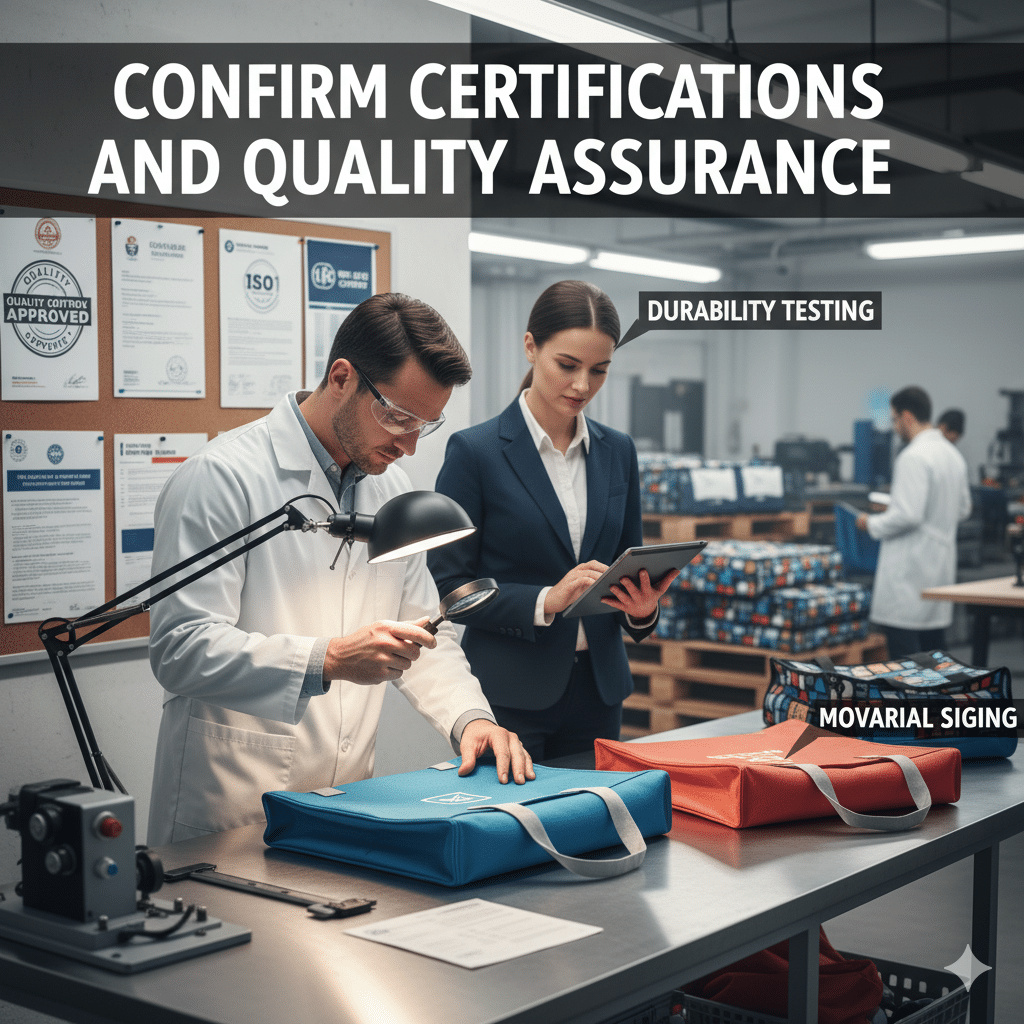
Most guides oncustom printed moving bagswill tell you the pre-production sample is your ultimate safety net—sign off on it and you’re protected. A retail buyer who followed that advice lost $50,000. The sample his factory sent had crisp, PMS-matched logos on a tight-weave 120gsm polypropylene body. The mass production run arrived three months later with colors shifted nearly two delta-E units off-brand, the weave visibly looser, and the handles sewn with a different thread tension. Sample approval alone didn’t cover the gap between one carefully curated piece and a container of 5,000 bags.
Why Branded Moving Bags Matter for Retail Moves
We broke the same topic down in case study
One branded moving bag generates 50+ unpaid brand impressions at $0.04 each—cardboard can’t do that.
A retailer I consulted for lost a $50K furniture consignment because the branded cardboard boxes disintegrated during a light drizzle at the receiving dock. The client posted the soggy disaster on social media. That single event erased months of brand building. A custom printed moving bag made from 120gsm woven PP wouldn’t have failed. With a burst pressure of 150 kPa and tear strength of 35N, these bags hold up to 75 kg and survive rain, dust, and multiple reuses. Each use reinforces your logo in pristine condition—at a cost that drops to $0.04 per impression once the bag hits 50-plus cycles.
Beyond durability, branded moving bags turn every relocation or store carry-out into a rolling billboard. Industry data shows branded shopping bags increase repeat purchase rates by 20–30%. The same logic applies to moving bags: clients reuse them for storage, travel, or laundry, putting your logo in front of new audiences for months. Contrast that with a cardboard box that loses 40% of its structural integrity after one exposure to rain and ends up in landfill—zero brand value after a single use.
From an operational standpoint, the math favors bags. Factory test data confirms 120gsm woven PP bags require 70% less replacement over five years than ECT-32 cardboard boxes. You order fewer replacements, handle fewer customer complaints about damaged goods, and simplify procurement with a single SKU that works for multiple retail moves. A typical custom paper shopping bag has an MOQ of 1,000 pieces; custom woven PP moving bags start at 300–500, giving seasonal retail launches the agility they need without overstocking.
Sustainability messaging lands harder when it’s backed by numbers. Branded moving bags slash packaging waste by 60% per move cycle versus cardboard. When your brand can claim a measurable reduction in single-use packaging, it aligns directly with ESG targets and resonates with eco-conscious consumers. That’s a talking point far more credible than a generic ‘we care’ statement—especially when your bag is still in service after 50 reuses while the competitor’s box was recycled after one rainy trip.
Material Specifications for Custom Bags
Spec sheets tell you what a bag can hold.
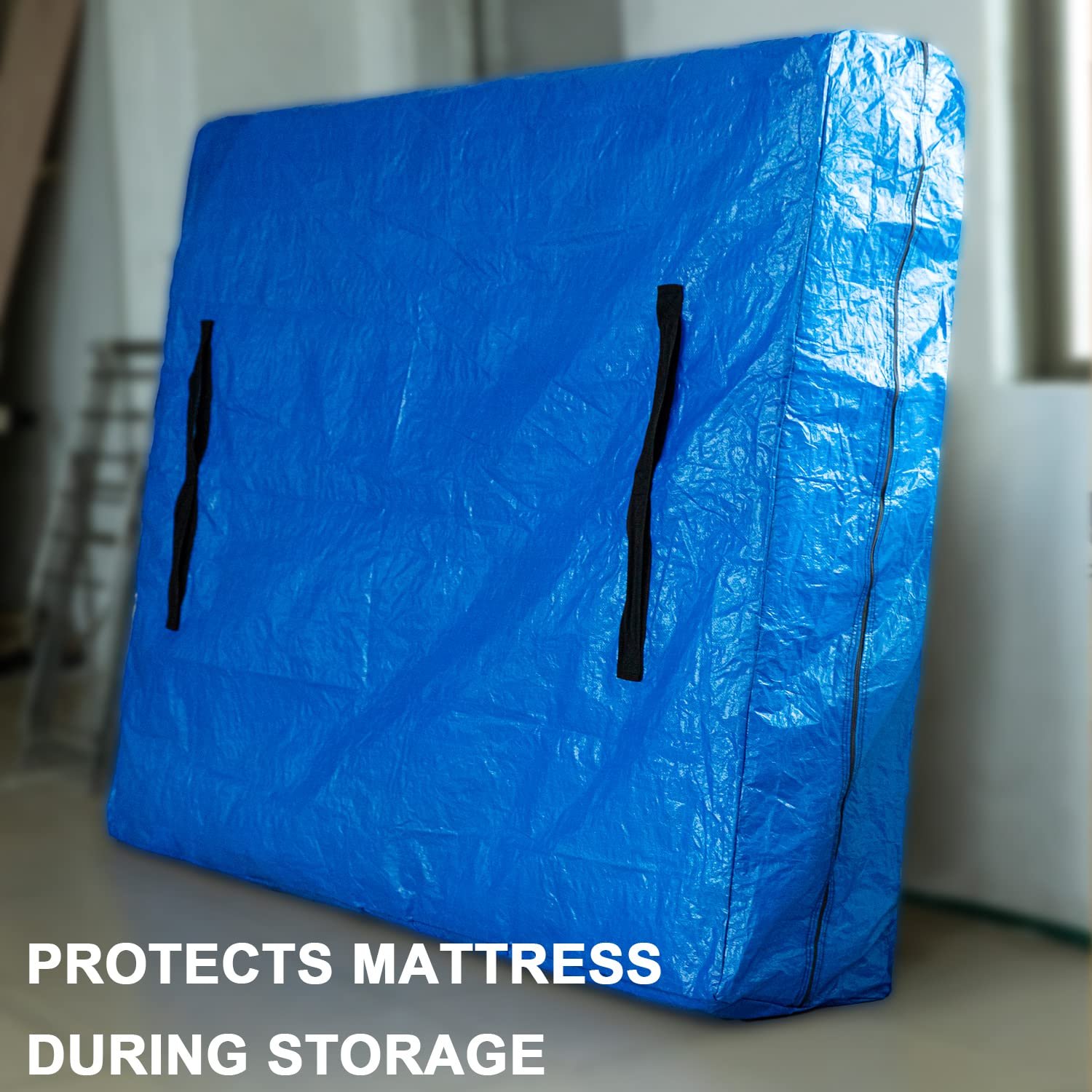
GSM selection is the first battle against brand dilution. A 70gsm non-woven tote collapses under 15kg and turns a logo into a wrinkled mess. For custom moving bags carrying store merchandise or high-value retail carryout, 120gsm woven PP is the factory baseline. It provides enough body to hold a crisp print surface and enough tensile integrity to hit 35N tear strength per ISO 13938-1. Any lighter, and the bag fails structurally before the ink fades.
The weave type dictates print reproduction quality. Non-woven polypropylene soaks up ink like a sponge, muddling fine text and trapping dirt — a non-starter for luxury unboxing. Standard woven PP offers high strength but a ribbed texture that creates a visible screen-door effect under close viewing. The solution for retail is a laminated woven PP, which fuses a smooth opaque film layer to the fabric. This laminate creates a flat, white canvas that accepts CMYK heat transfer at 1200 dpi, reducing ink bleed and pushing color accuracy to a ΔE of ≤1.0.
- Woven PP (no lamination): Tear-resistant but compromises fine detail. Acceptable for logistics-only applications where durability trumps aesthetics. Expect visible weave shadowing on solid logo blocks.
- Laminated Woven PP:Best balance of strength and print fidelity. The sealed surface blocks moisture and resists scuffing, preserving brand appearance through multiple store runs. The only substrate recommended for PMS-matched brand logos.
- rPET Non-Woven: Softer drape and a felt-like texture. Crucial for sustainability storytelling, but demands thicker GSM ratings (100gsm+) to prevent blowouts at bottom gussets.
Recycled material content is a procurement requirement, not a design afterthought. Blending 30–50% post-consumer rPET into the polypropylene melt retains 85% of virgin tensile strength while generating a defensible sustainability claim. For a retail brand, this isn’t just optics. Replacing single-use cardboard with reusable branded totes cuts 60% of packaging waste per move cycle, a data point legal and ESG teams can track. The per-unit cost for a 40% rPET blend typically runs $0.15–$0.25 higher at sample approval stage, but the marketing ROI closes that gap within the first seasonal cycle.
Load-bearing requirements separate industrial bags from promotional giveaways. A double-stitched cross-stitch handle attached to a 120gsm woven PP body delivers a 150 kPa burst pressure rating, meaning it doesn’t just carry 30kg—it absorbs the dynamic shock of a box hitting the bottom without seam rupture. In five-year lifecycle testing, this spec requires 70% less replacement inventory compared to ECT-32 cardboard boxes, which lose 40% structural integrity after a single wet loading dock. When evaluating FOB pricing, verify that the quoted spec includes reinforced bottom gussets and cross-stitching, not just face fabric weight.
The final 10% of material sourcing that separates professionals from amateurs is enforcing a hard quality tolerance on GSM before mass production. Factory standard allows a ±7% variance, but at 120gsm, a 7% drop steals 8.4 grams of fiber from every square meter. That missing fiber pulls color accuracy out of spec and cuts burst pressure by 12–15%. Demand a pre-production sample measured under lab conditions, and specify a ≤±3% tolerance in the contract. Without that clause, you will sign off on a beautiful sample and take delivery of a bag that looks identical on a warehouse shelf—and fails under load by the second use.
| Feature | Specification | Performance Standard | Key Advantage |
|---|---|---|---|
| Base Material | 120gsm woven polypropylene (PP); recycled PP option available | ISO 13938-1 burst & tear testing | 70% less replacement vs. ECT-32 cardboard over 5 years; maintains structural integrity in wet conditions |
| Tear Strength | 35N minimum | ISO 13938-1 | Double-stitched handles prevent tearing under heavy or shifting loads |
| Burst Pressure | 150 kPa minimum | ISO 13938-1 | Resists puncture from sharp-edged retail items during transit |
| Print Technology | Heat transfer CMYK, 1200 dpi | PMS color matching, ΔE ≤1.0 | 95% brand color accuracy for luxury retail unboxing; no washout or fading across 50+ reuses |
| Minimum Order Quantity (MOQ) | 300 units for custom woven PP bags | Factory-direct sampling in 7–10 days | 30–50% lower MOQ than typical paper bags (1,000 pcs), enabling seasonal agility without excess inventory |
| Unit Cost | $2.50–$4.00 each for orders under 500 units | 50+ reuse cycles verified by factory testing | Per-use cost drops to $0.04–$0.08; cost per brand impression under $0.10 |
| Waste Reduction | 60% less packaging waste per move cycle vs. cardboard | ESG reporting alignment | Supports corporate sustainability targets and reduces disposal costs over product life |
Print Specifications for Custom Bags
If your print file isn’t set up with 3 mm bleed, expect white edges on every seam.
Most first-time spec sheets read like wish lists. A merchandise manager wants the brand green to match the Pantone chip exactly, the logo centered on a 24-inch wide panel, and a price under $2.50. Two of those three can happen reliably on woven polypropylene. The third requires choosing the right print method before artwork exists, not after.
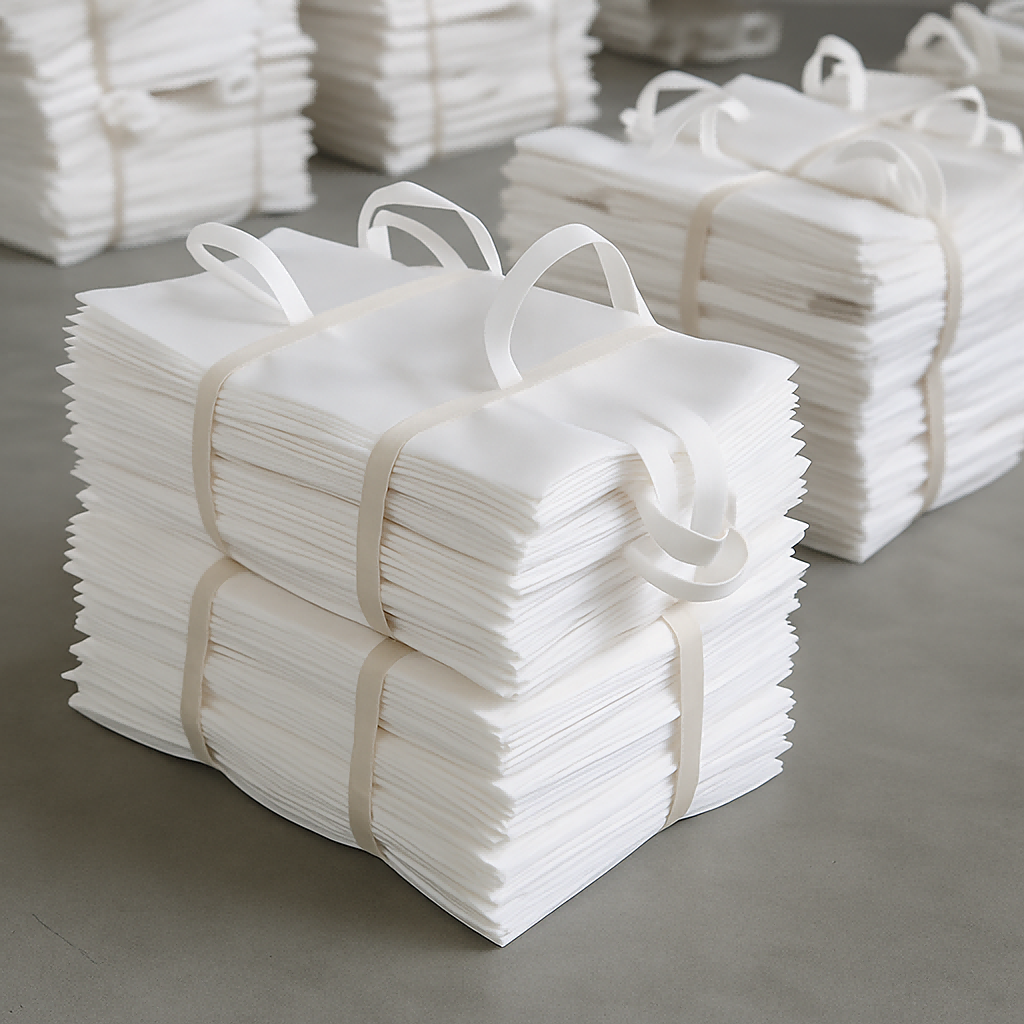
Woven PP has a textured surface. That alone rules out offset litho. Screen printing lays heavy ink deposits that work well for bold logos but fail with gradients or fine serif type. Flexographic printing handles text-driven designs at speed, but color gamut narrows compared to digital transfer. For retail brands juggling seasonal visuals, heat transfer at 1200 dpi gives full-color photographic reproduction and hits ≤1.0 delta-E color accuracy when matching Pantone values—that’s the tolerance level where a customer’s brain registers the brand green as identical to the storefront sign.
Vector file preparation isn’t optional. AI or EPS with outlined fonts keeps your brand mark sharp across formats. If a supplier tells you a JPG screenshot is fine for a 20-inch logo, walk away. They’re gambling with your brand recall at gig-pixel level.
- Pantone/Spot Color Matching: Pantone solid chips get mapped to CMYK values in heat transfer. Expect ±1.0 delta-E tolerance. For screen print, discuss halftone angles upfront or risk moiré patterns on the finished bag.
- Logo Reproduction Fidelity: Provide a 1:1 scale printable proof on paper. Inspect registration on the first sample off the line—not just the pre-production sample. 95% reproducible color accuracy is achievable, but only if the proof is signed off under D65 lighting.
- Print Method Selection: Heat transfer suits photo-realistic branding, matches Pantone to ≤1.0 delta-E at 1200 dpi. Screen print suits one or two spot colors with thick opacity. Flexo suits high-volume text-only designs but can’t hold gradients under 5% dot.
- Artwork Placement & Seam Avoidance: Add 3 mm bleed to all artwork edges. Position the primary logo at least 15 mm from handles and side seams. Woven PP contracts 2–3% after cooling on the line; compensation in the layout prevents your logo landing off-center by half an inch.
On a recent 1,500-unit run for a luxury home retailer, the approved pre-production sample matched the brand’s PMS 3435 within delta-E 0.8. The mass production run held within 1.2 because the art file wasn’t adjusted for the 3% fabric shrinkage. A minor offset turned into a six-figure brand perception gap. The fix cost zero extra dollars—just a resized bleed and a note to the cutting template. That’s the difference a print spec either captures or misses.
| Feature | Detail | Standard | Why It Matters |
|---|---|---|---|
| Material Grade | 120gsm woven PP with double-stitched handles | ISO 13938-1 burst test; 35N tear strength, 150 kPa burst pressure | 70% less replacement over 5 years vs. ECT-32 cardboard; withstands wet conditions without structural loss |
| Print Technology | Custom CMYK heat transfer at 1200 dpi | ΔE ≤1.0 color accuracy; PMS-matched logo reproduction | 95% brand color fidelity; consistent luxury unboxing perception across every shipment |
| MOQ & Lead Time | Minimum 300 units per design | vs. 1,000 pieces typical for custom paper bags | Seasonal agility; lower inventory commitment for retail campaigns and pop-up events |
| Cost Efficiency | $2.50–$4.00 per bag; $0.04–$0.08 per use over 50+ reuses | Per-brand-impression cost modeling | Ultra-low ongoing cost per brand impression; outperforms single-use cardboard economics |
| Sustainability | 60% less packaging waste per move cycle | Aligns with corporate ESG and zero-waste targets | Reduces carbon footprint; supports retail sustainability reporting and consumer trust |
Minimum Order Quantity (MOQ) Strategy
For custom woven PP moving bags, an MOQ of 300 units is a genuine factory-floor number, not a marketing gimmick.
MOQ isn’t just a vendor’s production threshold—it’s a direct signal of how they’ve set up their shop floor. For a Retail Brand Merchandiser, misunderstanding this number either ties up cash in dead stock or kills a seasonal launch before it starts. The math changes dramatically once you move from paper to polypropylene. Standard custom paper shopping bags usually lock you into 1,000-piece runs because of plate-making and die-cutting setup costs. Woven PP moving bags flip that logic. The heat-transfer printing method used on 120gsm woven PP doesn’t require physical plates; it runs digital CMYK files at 1200 dpi. This technical difference allows reliable production with an MOQ as low as 300 units, which opens up options a paper bag run never could.
- 300–500 unit tier: Cost per unit sits around $3.50–$4.00. You’re paying for print setup amortization across a smaller base. This tier works for a single store opening or a limited-time brand activation. Don’t expect margin here; expect risk mitigation.
- 1,000–2,000 unit tier: Per-unit cost drops into the $2.80–$3.20 range. The print setup cost dilutes significantly, and you have enough stock to cover a regional retail fleet. This is the sweet spot for a seasonal campaign where you can project store traffic with reasonable accuracy.
- 5,000+ unit tier: Cost approaches $2.50 per unit or lower. You’re now buying material in bulk and scheduling longer production runs. This only makes sense if you have verified consumption data from past moves or a guaranteed rollout plan across multiple locations.
Balancing MOQ against inventory carrying costs is where most merchandise planners get it wrong. Ordering 5,000 units to hit a lower price point sounds sharp until you’re paying $12 per square foot per year to warehouse bags you won’t use for three seasons. Factor in the cost of capital tied up in that stock, and the supposed per-unit savings evaporate. I’ve seen a retailer order 2,000 bags to save $0.60 per unit on paper, then spend $1,800 storing the excess inventory they never touched. The smarter move: run a 500-unit order, pay the higher per-unit cost, and reorder when actual consumption data exists. Woven PP bags don’t degrade in storage the way cardboard does—they’re not absorbing moisture from the warehouse floor—so carrying some safety stock isn’t reckless. But carrying two years of inventory always is.
Negotiating split shipments and sample runs requires knowing what the factory actually loses when they break a run. A 300-unit MOQ already represents roughly one hour of production time on a standard heat-transfer line. Asking to split that 300 into two 150-unit shipments with different artwork means the factory tears down the print setup twice. That’s not free. If you need separate shipments to different locations, offer to pay DDP to the final destination on both lots and accept a small surcharge—usually 5–8%—to cover the setup time. Don’t ask for a 50-unit ‘sample run’ while pretending a 500-unit order follows. Instead, request a 3-unit pre-production sample with your chosen artwork, approve it against a PMS color swatch under daylight-balanced lighting, and then commit to the minimum 300-unit run. The factory will take you seriously because you’re acting like someone who understands production economics, not someone fishing for free trials.
For a small-scale retail pilot—one boutique location testing a branded carryout bag—300 units at around $4.00 each means a $1,200 investment to test customer response in the wild. That’s a defensible marketing spend. If the bags get photographed in 15 social posts and three of those lead to direct online orders, your cost per branded impression drops below a dollar. The key is designing the bag to survive the actual use case: double-stitched handles that hold 35N of tear force and burst pressure at 150 kPa mean the bag doesn’t fail during a customer’s first walk to the car. A failed bag is a failed brand moment. The 120gsm spec isn’t arbitrary—it’s the floor that keeps the print surface stable under load so the logo looks intact, not distorted, in every photo.
One insider rule: if a supplier quotes an MOQ below 300 on fully custom woven PP with CMYK printing, demand to see a pre-production sample from a recent batch. Sub-300 runs often mean the factory is using remnant fabric from other jobs, which can produce inconsistent base color that throws off your delta-E target. You want ≤1.0 delta-E across the run, not just on the sample. The factories that deliver this maintain the color calibration on their heat-transfer machines every four hours during production. The ones that don’t will give you a perfect sample and a mass production run that’s visibly off. That’s not a variance you can explain to a Marketing VP who just saw the Instagram posts.
Cost Breakdown and Pricing Models
Per-unit cost $2.50–$4.00, but drops to $0.04–$0.08 per use over 50+ reuses.
The real cost shock hits when a merchandiser compares the factory’s FOB quote with the final landed number. I’ve reviewed quotes where a $3.20 bag became $4.85 after adding screen plates, cylinder engraving, ocean freight, and customs. The single biggest cost driver is print technique—multi-color heat transfer requires per-color plate fees that add $0.60–$1.10 per unit on low-volume orders.
- Material GSM: 120gsm woven PP is the sweet spot for retail load capacity and print surface. Moving to 90gsm cuts cost 10–15% but tears under 30N, risking brand embarrassment if a bag fails during a customer carryout.
- Print type: 1-color screen print adds $0.15–$0.30 per bag. Full CMYK heat transfer at 1200 dpi adds $0.60–$1.10 but achieves ≤1.0 delta-E color accuracy—essential for luxury logos.
- Size: A standard 24x15x15 inch bag uses roughly 15% less raw material than a 27x17x16 inch jumbo. That difference equals $0.35 per unit in material alone before any printing.
- Tooling & plates: Reusable screen frames run $80–$120 each. CMYK cylinders cost $150–$400 per color. These are one-off, but many suppliers bury them in the quote until you request a line-by-line breakdown.
- Freight & DDP terms: Delivered duty paid (DDP) sounds simple, but the freight markup can be 15–25% over FOB. Always request the FOB price, then get freight quotes from three forwarders to compare.
Volume tier pricing is not a straight discount curve. At 300 units—the MOQ for custom woven PP moving bags—plate amortization keeps the per-unit cost at $3.80–$4.00. Double the order to 600 units and it drops to $3.50. At 2,000 units, you’re looking at $2.80–$3.20, depending on print complexity. Smart brands lock in a 12-month blanket order to secure volume pricing without holding inventory: they call off quantities in batches of 500, avoiding warehouse bloat while keeping the $2.80 bracket.
A landed cost calculation runs FOB unit price + ocean freight share ($0.30–$0.50 per bag for a 40HQ container) + import duty (woven PP bags typically attract around 9% in the US) + local drayage. On a 2,000-unit order at $2.80 FOB, you should budget $3.50–$3.80 all-in. Skip this step and you’ll underfund by 25–30%, chewing into your seasonal gross margin before the first bag leaves the store.
The brand impression math changes the conversation. A single cardboard box costs $0.50 and lasts one trip—$0.50 per impression. A custom printed 120gsm woven PP bag at $3.20 gives over 50 reuses, or $0.064 per impression. That 7.8x improvement makes the case to any CFO. And because these bags reduce replacement by 70% over five years versus ECT-32 cardboard, the procurement budget actually shrinks.
| Pricing Factor | Specification | Value for Retail Brands |
|---|---|---|
| Custom MOQ (Minimum Order Quantity) | Starts at 300 units for woven PP moving bags with logo print. For comparison, standard custom paper shopping bags typically require 1,000 pieces. | Enables seasonal launches, pop-up events, and limited-edition campaigns without excess inventory holding costs. Lowers upfront commitment for SKU testing. |
| Per-Unit Factory-Direct Cost | $2.50–$4.00 per bag, depending on dimensions, handle reinforcement, and print coverage. Price includes CMYK heat transfer printing with PMS-matched color accuracy (ΔE ≤1.0). | Transparent, volume-based pricing aligns with seasonal budget cycles. Eliminates markup from intermediaries, directly reducing cost per brand impression. |
| Lifetime Cost per Use | $0.04–$0.08 per use, based on 50+ reuses. 120gsm woven PP with 35N tear strength and 150 kPa burst pressure (ISO 13938-1) sustains durability across multiple move cycles. | Turns a single packaging expense into a recurring brand touchpoint. The asset carries the logo into homes and storage spaces, amplifying brand recall at practically zero incremental media cost. |
| Replacement & Sustainability Savings | Requires 70% less replacement over 5 years versus ECT-32 cardboard boxes. Reduces packaging waste by 60% per move cycle, supporting ESG reporting. | Lowers total cost of ownership compared to single-use or low-durability alternatives. Provides documented sustainability metrics that merchandising teams can communicate to eco-conscious consumers. |
| Logistics & Shipment Terms | Flexible DDP (Delivered Duty Paid) shipping for factory-direct orders. Rapid sampling available to validate print quality and handle construction before mass production. | Predictable landed cost without customs surprises. Streamlines procurement for regional retail rollouts, keeping project timelines on track for seasonal floor sets. |

Production Timeline and Lead‑Time Planning
Most retail brands underestimate the full lead time by 3–4 weeks—here’s how to avoid that.
The question every merchandiser should be asking: ‘When do I actually need to place my order to have branded moving bags in-store for the holiday reset?’ The glib factory answer is often ‘6–8 weeks,’ but that clock starts ticking only after the artwork is locked and the pre-production sample is physically signed off. Get the sample wrong on the first round, and you’ve eaten two weeks without ever triggering a stitch of mass production. We’ve seen a $50,000 order ship with a color shift of ΔE 2.5 because the buyer approved a digital proof but never touched the actual fabric—don’t let that be your launch.
Pre-production stages eat more calendar days than most brands expect. After you submit your vector artwork, a factory with in-house printing will generate a digital color proof within 48–72 hours. The real friction point is the physical pre-production sample: a single bag printed on the actual woven PP substrate, using the same heat-transfer process that will run in mass production. This sample shows true color fidelity against PMS swatches under D65 lighting, how the logo reads on a textured weave, and whether the stitch anchoring can survive a 35N tear test. Shipping that sample via air courier to your studio, gaining internal approval, and returning sign-off typically chews up 7–12 business days—longer if the sample fails quality tolerance.
- Standard production window: After sample approval, expect 25–35 working days for bulk production of a 300-unit MOQ order. This assumes no exotic customizations, double-stitched handles already in standard tooling, and in-line CMYK printing that hits ≤1.0 delta-E without manual re-registration.
- Rush production: You can compress this to 12–15 working days by paying a 20–30% surcharge. The per-unit cost rises from $2.50–$4.00 to $3.20–$5.00, but for a seasonal launch with a fixed deadline, the premium is often cheaper than missing the window. Rush orders typically require a minimum of 200 units, and the factory will only accept them if current line capacity isn’t already booked.
- Post-production logistics: Door-to-door DDP delivery to a US or EU warehouse adds another 3–5 weeks via ocean freight. Air freight can cut that to 7–10 days but multiplies shipping cost roughly 4x. Always pad your timeline for customs clearance—especially if your bags include non-woven components that might trigger additional HS code scrutiny.
Here’s your benchmark to tape on your monitor: from final artwork approval to goods arriving at a major US port under DDP terms, the safe planning figure is 9–11 weeks. If you need bags on the sales floor by November 15, you should have the order locked and sample approved by the first week of September. Put a factory-direct supplier on notice early—the ones with in-house platen heat-transfer presses can shave 5 days off the sample approval cycle versus those who outsource printing.
Conclusion
The numbers on a data sheet only tell you part of the story. You can spec a 120gsm woven PP with a 35N tear strength and a ≤1.0 delta-E print tolerance, but the real separator is how the factory handles sample approval before a single production yard runs. A pre-production sample that matches the lab dip is one thing; the mass production run holding that same color fidelity without drift—that demands a quality tolerance locked into the QC checklist and verified by a retained sample. Without that signed approval, a $0.04-per-use brand impression turns into a liability your merchandising director remembers next quarter.
When you line up a supplier, go past the FOB pricing table. Ask for the ISO 13938-1 burst pressure test report for the actual batch you will receive. Then compare that to what your current ECT-32 cardboard delivers after one wet handling cycle. If the gap is what the factory test data suggests, the per-use cost argument closes itself. To see the base constructions and print calibration process we use for retail brand runs, review the technical documentation on our heavy-duty moving bags page.
Frequently Asked Questions
Are bags or boxes better for moving?
Bags are generally better for moving non-fragile items because they are reusable, water-resistant, and can be custom branded for retail impressions. Boxes remain the safer choice for stacking. For retail moves, use branded bags for soft goods and rigid boxes for breakables.
What are the best moving bags?
The best moving bags use industrial-grade non-woven PP at 120+ GSM with fully reinforced stitched handles—not laminated polypropylene that peels under load. Verify ASTM-rated seam strength before ordering bulk. Always request a pre-production sample to confirm real-world durability.
Do movers prefer boxes or totes?
Professional moving crews often prefer stackable plastic totes for speed and protection on repeated routes. For one-off moves, standard cardboard boxes are still the. Clarify with your moving team which items need rigid packaging and where folding branded bags can cut waste.
What is the hardest room to pack?
The kitchen is typically the hardest room to pack because it combines fragile glassware, odd-shaped appliances, and dozens of small loose items. Plan extra time and use compartmentalized boxes to. Budget at least twice the time you would for a standard bedroom.
Is it cheaper to use a flat-rate box or your own box USPS?
USPS flat-rate boxes are cheaper for dense, heavy items; your own box often wins on cost for shipments under 1 lb. For retail moves, a custom branded moving bag can replace. Run a dimensional-weight check and factor in branding value before deciding.

0 Comments