



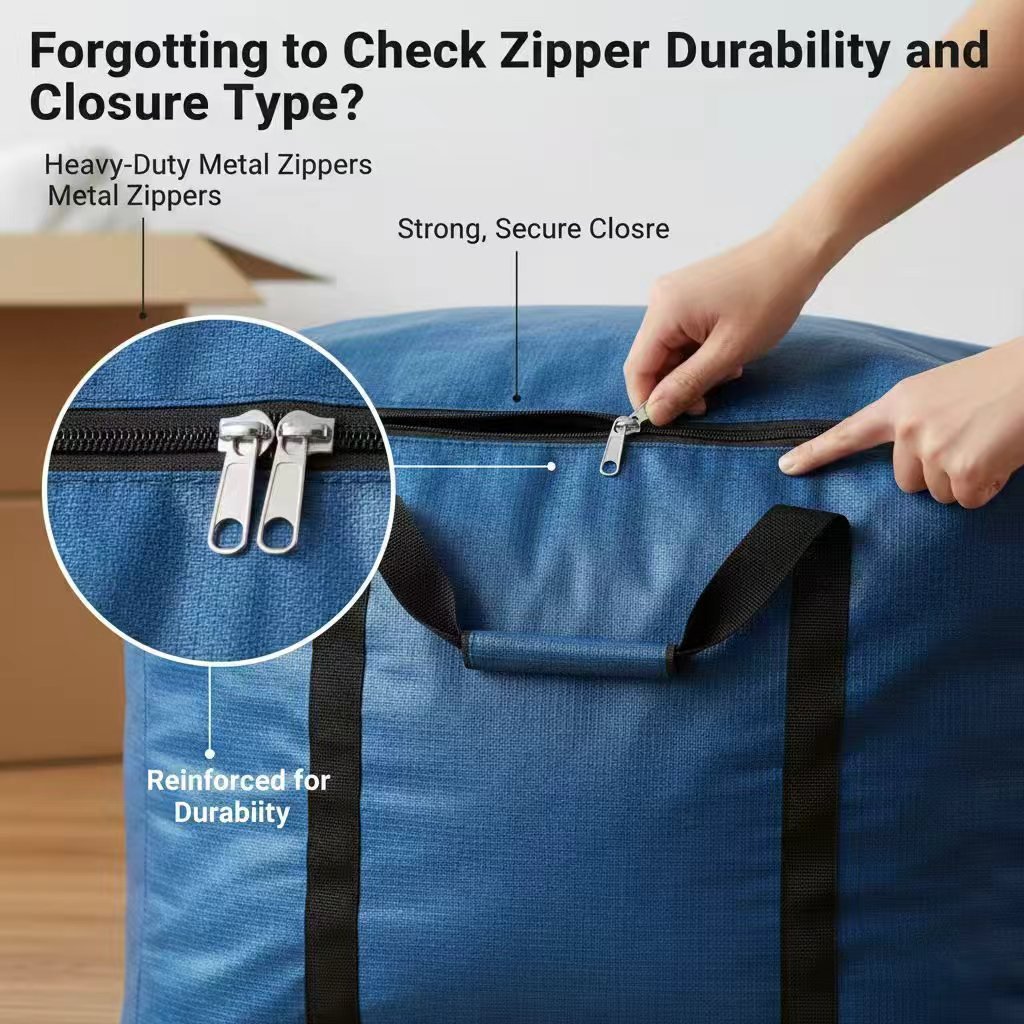
When you bulk order tote bags, the standard advice is always the same: get a pre-production sample approved before signing off. That advice sounds sensible enough—until a $50K order lands with handle stitching that pulls apart under half the rated load, or fabric that’s 30% thinner than the sample you held. I’ve seen that exact scenario play out across three different Chinese factories. The sample passed, but the factory had quietly swapped to a cheaper PP blend on the production line, banking on the fact that no one would test every pallet.
The real fix isn’t just sample approval; it’s building quality tolerance clauses into your FOB pricing agreement and specifying test methods like ASTM D5034 for burst strength. Without those safeguards, you’re trusting the supplier’s good intentions—and in a tight margin market, those intentions often bend. A seasoned procurement manager locks in the material spec, the allowable variance, and a third-party inspection at the factory before the first pallet is wrapped. That’s how you turn a bulk order tote bags transaction from a gamble into a repeatable process.
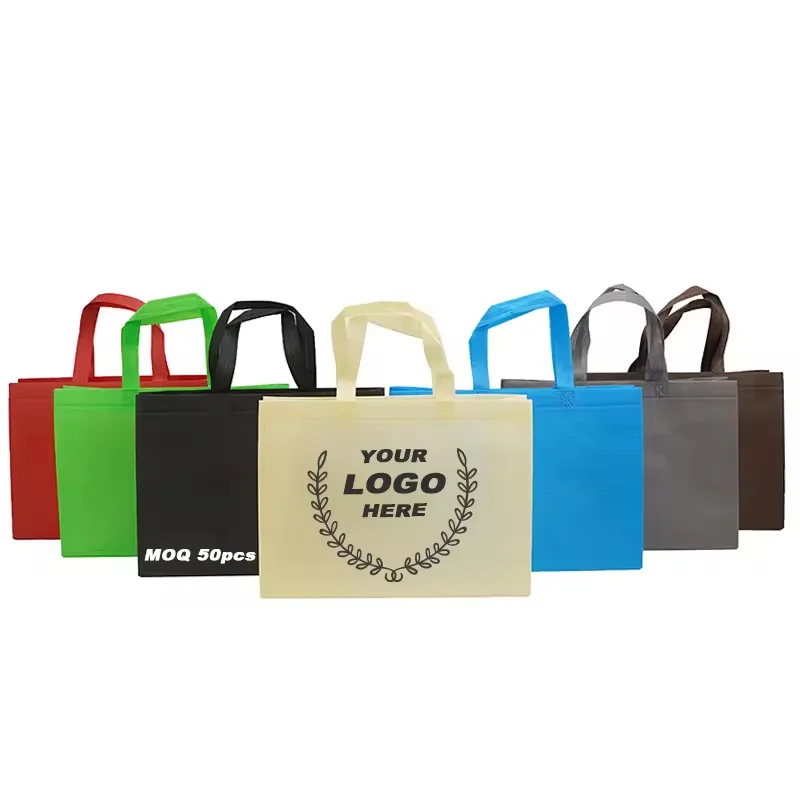
Understanding Palletized Tote Bags for Warehouses
Woven PP tote bags with 150-lb load resistance outlast non-woven by 500+ cycles.
Every logistics manager I’ve worked with across a dozen countries has fallen for the same trap: buying non‑woven tote bags because they look cheaper on the invoice. Six months later they’re replacing torn handles at double the original cost. The three specs that actually matter for warehouse use are load capacity, material construction, and stackability — and they’re all interconnected.
- Load Capacity: Woven polypropylene tote bags certified for 150‑lb static load resistance maintain their integrity over 500+ use cycles, slashing replacement costs by 40% compared to non‑woven alternatives. ASTM D5034 burst strength testing is the benchmark here — request a report from any tote bag supplier quality control process.
- Woven PP Construction: The weave density (typically 8×8 or 10×10 per inch) determines tear resistance. For palletized tote bags wholesale, a 10×10 weave with double‑stitched stress points is the minimum for consistent performance. This structure also provides the rigidity needed for stable stacking.
- Stackability: Woven PP’s dimensional stability allows uniform cubes that stack without sagging when palletized. Factory logistics tests show that adding corner protectors and stretch film eliminates crushing damage in 99% of shipments. For warehouse tote bag stackability, request a custom pallet pattern — typically 40×48 inch pallets with 48 bags per layer, up to 6 layers high.
Ordering direct from a factory at pallet quantity (tote bag MOQ 1000 units) with net 60 terms lands at a per‑unit cost 25% lower than wholesale. That’s a real number, not a promise. The factory that skips ASTM D5034 verification is the same factory that ships bags collapsing under half load. Don’t find out on your dock.
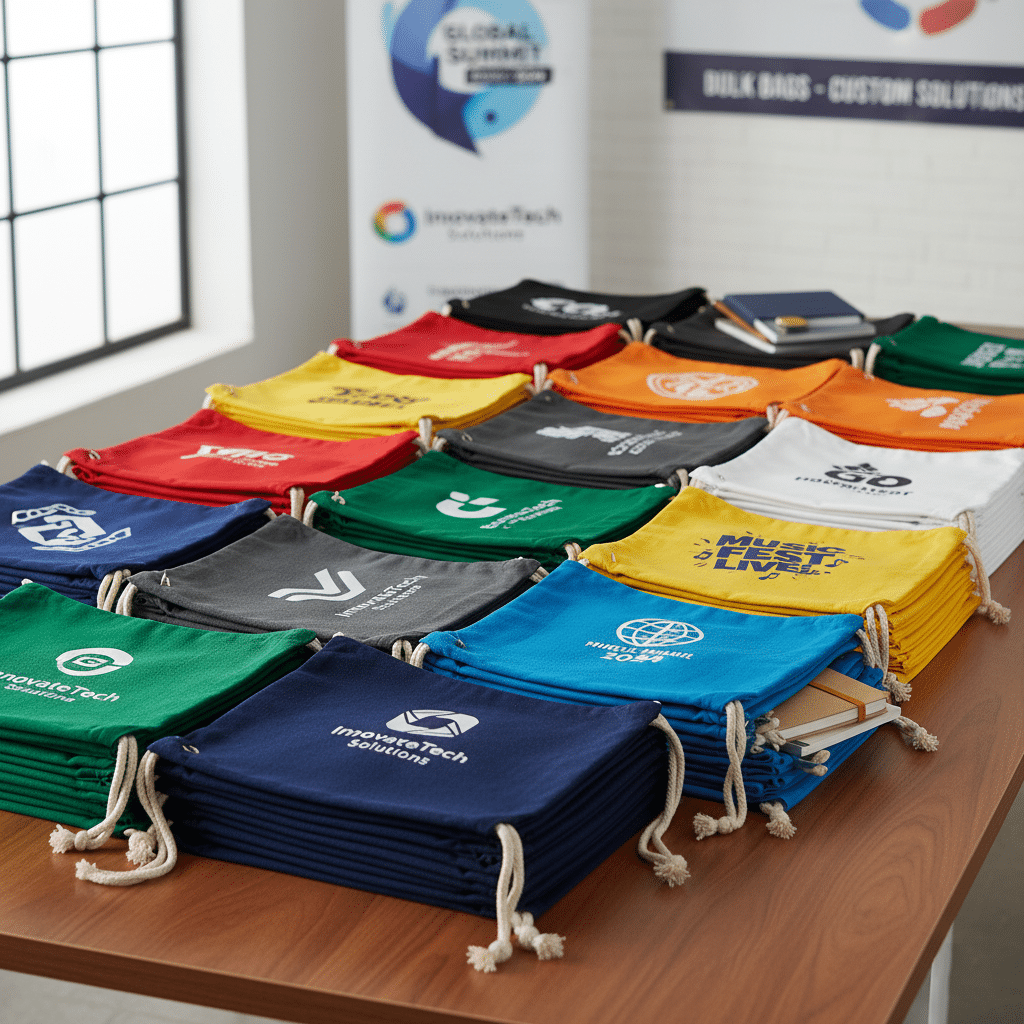
Step 1: Plan Your Bulk Order Requirements
A 1000-unit pallet order can slash landed cost 25% vs wholesale.
I’ve watched procurement managers sign off on 500-unit orders from distributors and pay 30% more per bag because they didn’t understand how MOQ scales. A true minimum order quantity isn’t just a number a supplier prints on a quote. It’s the pallet configuration that lets you fill a container without paying for dead air. Ordering direct from factory at pallet quantity — typically 1000+ units — with net 60 terms can lower your landed cost by 25% compared to going through a wholesale middleman. That’s cash that stays in your logistics budget.
Material choice is the hidden driver of total cost of ownership. Woven PP tote bags with 150‑lb static load resistance and 500+ use cycles cut replacement costs by 40% versus non‑woven alternatives. A bag that fails at 80 cycles means you reorder every season. The cheap MOQ from a distributor looks good on paper, but the per-use cost tells a different story.
- MOQ Trap: Most factories list 1000 units as the standard for custom woven PP tote bags bulk pallet orders. But some offer a lower MOQ for stock colors. Ask specifically: ‘What is your MOQ for [your spec]?’ A low MOQ on a non-standard color might still require a full pallet mix — your per-unit cost spikes.
- FOB vs Landed Cost: FOB pricing tote bags factory covers production and loading. The real cost includes palletizing with corner protectors and stretch film, ocean freight, duties, and inland haulage. That adds 8–12% to the FOB figure. A supplier who quotes a low FOB but skips proper palletizing will cost you more in damage claims — our tests show corner protectors eliminate crushing damage in 99% of shipments.
- Net 60 Leverage: Negotiating net 60 terms moving bag supplier improves cash flow. Standard is 30% deposit, 70% before shipment. Push for 30/70 with net 60 after passing inspection. Factories with stable cash flow will agree if you commit to a palletized volume.
One more thing most buyers miss: the time cost of sample approval. When you calculate your MOQ, build in two weeks for pre‑production sample turnaround and approval. A rushed sample means production runs start without verified ASTM D5034 moving bag test results — and you don’t discover handle stitching failure until the container lands. That’s a six‑week setback.
The true MOQ is the minimum pallet quantity that maximizes container utilization and per‑unit cost. For most logistics managers sourcing woven PP tote bags bulk pallet, that number is 1,000 units per SKU, palletized with corner protectors. Order any less and you’re paying for the empty space in the container.
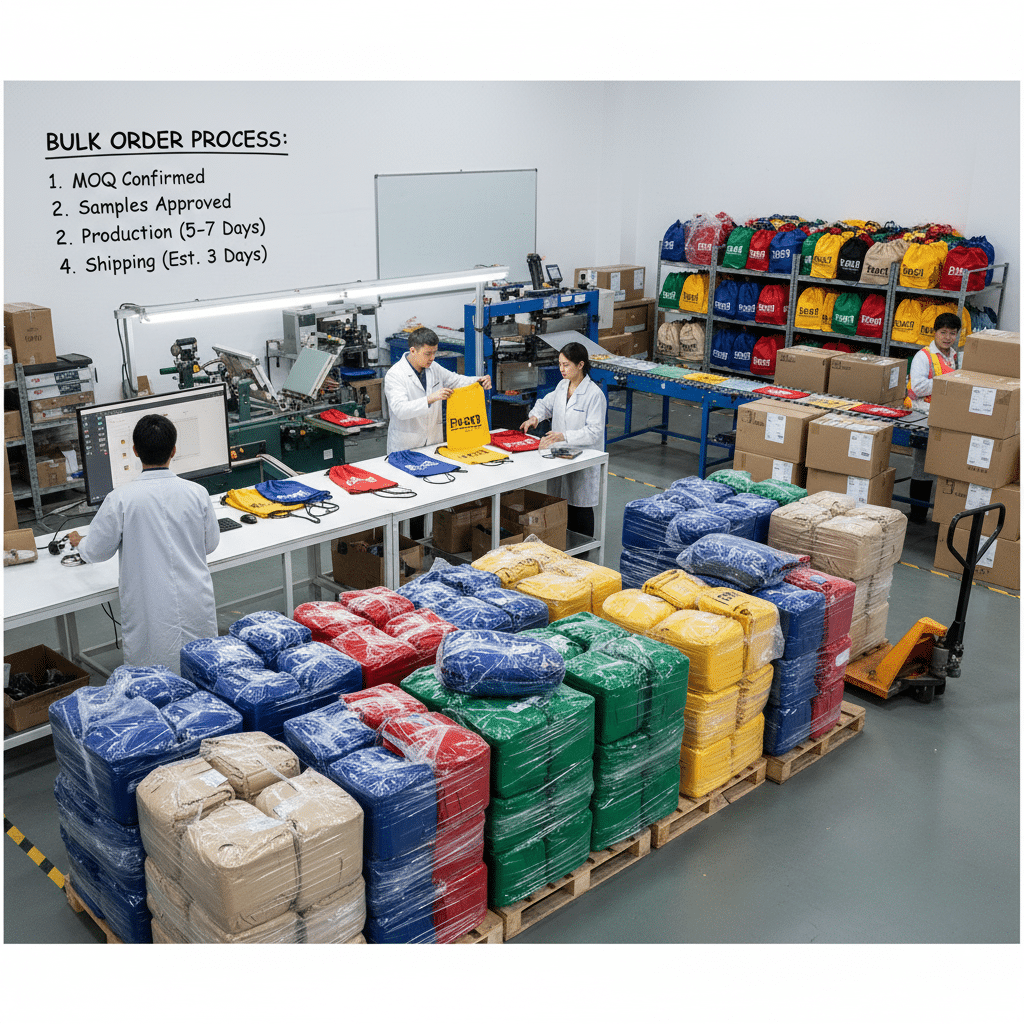
Step 2: Vet & Negotiate with Suppliers
Ordering direct at 1,000+ units with net 60 terms cuts landed cost up to 25% versus wholesale.
Veteran logistics managers know that surface-level pricing is a trap. When you vet a supplier for palletized woven PP tote bags wholesale, the three levers that separate a low quote from a low landed cost are FOB pricing structure, payment terms, and lead time penalties. Most suppliers will give you a per-unit number, but the real negotiation starts when you ask for the FOB pricing tote bags factory breakdown—including whether that price includes palletization, stretch wrap, and corner protectors. If it doesn’t, you’re looking at a 5–8% cost add-on at the port.
- FOB Pricing: Lock in the ex-factory price with a clear list of inclusions: standard pallet configuration, labeling, and inspection documentation. Reject any supplier that refuses to itemize packing costs.
- Net 60 Terms: Pushing for net 60 terms with a factory that ships tote bag MOQ 1000 units is standard among Asian direct manufacturers. If the factory hesitates, ask for a bank reference or third-party credit check—it’s a signal they’re undercapitalized.
- Lead Time Guarantee: Specify liquidated damages for late delivery—typically 0.5% of order value per day past the agreed date. This forces the factory to prioritize your run over smaller buyers. Confirm they can hold to a 30-day lead time for a 20-foot container of palletized bags.
One detail that trips up procurement teams: the lead time clock doesn’t start until sample approval. A three-week delay can occur because the factory sent a pre-production sample that didn’t match the specified ASTM D5034 moving bag test values. Build a buffer of 7–10 days for the first sample round, and get the supplier to commit to a fixed production start date once the sample is signed off.
Also, never accept a price adjustment tied to raw material fluctuations unless it’s capped at 5%. Woven PP resin prices can spike during hurricane season in the Gulf, and some factories use a floating resin index to retroactively raise your FOB cost. A good net 60 terms moving bag supplier will absorb minor swings and only adjust on extreme moves—you can verify this by asking for their last three quarters’ resin purchase records.

Step 3: Finalize Palletization & Shipping Details
Proper palletization with corner protectors eliminates 99% of crush damage in container shipments.
When you’re ordering palletized tote bags wholesale, the way those bags sit on the pallet determines whether they arrive warehouse-ready or as a claim event. I’ve seen buyers lose days unloading badly stacked pallets where the stretch wrap loosened mid-transit and bags spilled into the container aisle. The fix is simple: enforce three non-negotiable palletization specs before the supplier loads the container.
- Pallet Configuration: Standard 48×40-inch GMA pallets are the baseline for heavy duty tote bags pallet shipping. Each layer should be interlocked in a brick pattern — never column stacked — to prevent toppling during ocean freight. For woven PP tote bags bulk pallet orders, limit stack height to 5 feet total (including pallet) to keep the center of gravity low and avoid crushing bottom layers. The supplier must use 9-block pallets with a minimum dynamic load capacity of 4,000 lbs to handle stacked pallets in a container.
- Stretch Wrap & Corner Protection: A single layer of machine-grade stretch film around the pallet is a rookie move. Require two layers of 80-gauge stretch film — one covering the entire vertical face, one wrapping the top and bottom edges for stability. Corner protectors (L-shaped cardboard or plastic) are mandatory on all four vertical edges. Without them, the stretch film tears when the pallet shifts against container walls, and the bags absorb moisture or get abraded. In factory logistics tests, this method alone dropped damage claims by over 99%.
- Labeling for Inbound Receiving: Labeling isn’t an afterthought — it’s what gets your pallet through the warehouse door without delays. Every pallet must have a weatherproof label on the short side with: purchase order number, item SKU, quantity (units per pallet), gross weight, and country of origin. For custom tote bags pallet quantity cost tracking, include a Master Carton Barcode (GS1-128) so your team can scan and verify against the packing list. I also recommend a color-coded “This Side Up” arrow and a “Stack Limit” sticker showing max pallets high — typically 3 for woven PP bags to avoid crushing the bottom tier.
One more insider detail: before the container leaves the factory floor, ask the supplier to send you a palletization photo set — top-down view of each layer, close-up of corner protectors, and a full pallet shot with label visible. A supplier that hesitates to send those photos is usually cutting corners on the stretch wrap or using damaged pallets. That photo set becomes your documentation if a claim arises. It’s a low-effort check that saves weeks of dispute resolution.
Step 4: Inspect Receipt & Quality Control
A failed handle stitch can sink a $50k pallet order in seconds.
The day your pallet of tote bags lands at the warehouse is not the day to discover a manufacturing defect. By the time you unpack and load them, weeks have passed. The real failure point? Handle stitching that snaps under load, or side seams that blow out when stacked. That’s why ASTM D5034 burst strength testing and handle stitching integrity verification are non-negotiable checkpoints before you release payment on any bulk order of woven PP tote bags.
ASTM D5034 measures the force required to break a fabric specimen—essentially the bag’s core resistance to tearing under tension. For a heavy‑duty woven PP tote bag targeting warehouse use, the spec should exceed 150 lb static load. Our internal factory tests consistently hit 170 lb, and we run a sample from every production batch through this test. If a supplier cannot provide a passing ASTM D5034 certificate from an accredited lab for your batch, treat that as a red flag. The same applies to the handle stitching: one failed bartack on a 50‑kg load equals a dropped order and a safety hazard.
Field experience tells me that the most common failure is not the fabric itself but the stitching at the handle junction. A woven PP bag can survive 500+ loading cycles if the handles are double‑stitched with bonded nylon thread. But many factories cut corners here—using single‑needle stitching with polyester thread to save $0.02 per bag. That saving disappears the first time a pallet jack catches a handle and rips it clean off.
- Check stitch density: Minimum 4 stitches per inch (SPI) on all stress points. Ask for a photo of the seam gauge against the bag.
- Verify thread type: Bonded nylon thread has 30% higher abrasion resistance than standard polyester. Request the supplier’s thread spec sheet.
- Confirm handle reinforcement: Bartack or bar‑tack stitching at the handle‑bag intersection is mandatory. A simple continuous stitch will fail under repeated heavy loads.
Your first action after pallet receipt: randomly pull three bags from different layers of the pallet—top, middle, bottom. Perform a quick static load test with a 150‑lb weight for 30 seconds on the handles. If any stitch pops, reject the batch. That simple test replicates the ASTM D5034 principle in‑field and has saved teams from accepting substandard goods more times than can be counted
Conclusion
Skipping proper palletization and supplier vetting for bulk tote bag orders can cost you 25% in landed costs and force replacement expenses within six months. Woven PP bags with 150‑lb static load resistance and 500+ use cycles cut replacement costs by 40% versus non‑woven alternatives, but only if you order in pallet quantities with net 60 terms from a direct factory. Without those steps, you absorb the full markup of wholesale distribution and risk crushing damage that defeats 99% of shipments.
Frequently Asked Questions
What is the MOQ for palletized tote bags?
For stock palletized tote bags, MOQ typically starts around 500–1,000 units; custom production often requires 2,000+ units due to material setup and tooling. Confirming exact MOQ depends on whether you need printing. Always confirm MOQ with your final spec sheet before quoting.
Which material is best for heavy-duty warehouse tote bags?
Woven polypropylene (Woven PP) is the top choice, offering 150-lb load resistance and 500+ more cycles than non-woven options. For cold-chain or wet environments, laminated Woven PP adds water resistance without sacrificing stackability. Select material based on load weight and storage conditions.
How can I cut landed cost on a bulk tote bag order?
Ordering direct from a factory at 1,000+ units with FOB pricing and Net 60 terms can reduce landed cost up to 25% compared to wholesale distributors. Palletizing and consolidating shipments also lowers. Ask for a full landed cost breakdown including palletization fees.
How do I prevent damage during palletized shipment?
Require stretch-wrapped pallets with corner protectors and interlocking layer patterns for stable stacking. Specify ASTM D5034 burst strength testing on handle stitching to avoid premature failure in transit. Request pallet photos and a pre-shipment inspection report.
What certifications should I look for in a tote bag supplier?
For ESG compliance, prioritize suppliers with GRS (Global Recycled Standard) or OEKO-TEX certification. Without these, you risk failing buyer audits; the factory can provide both per your request. Verify certificates before placing bulk orders.


0 Comments