



Most heavy bag failures do not start at the fabric. They start at the seam: a handle that pulls out at the attachment point, a bottom seam that splits under a packed load, or stitching that abrades and parts after a few trips. The thread is the smallest component in the bag and the one that carries the whole load in tension, and choosing it by habit instead of by specification is how a good fabric becomes a failing bag.
This guide compares bonded nylon and bonded polyester sewing thread for heavy bags, explains ticket sizes and tex ratings, and lists what belongs in the purchase contract so the seam survives the load. Tensile figures cited are typical industry ranges for bag-weight threads; the exact grade for a given program should be confirmed with the thread mill and validated by seam testing on the actual fabric.
The material families and sizing conventions of sewing thread, from ticket numbers to tex units, are summarized in the reference on sewing thread.

Why the seam, not the fabric, decides bag life
A heavy bag rated for 15 kilograms or more only holds that load if every seam in the load path holds its share. Two stitch types cover most industrial bag construction. Lockstitch 301: the classic single-thread-on-top, bobbin-below stitch used for main panels and bottom seams, where both threads interlock inside the fabric and resist unraveling from either side. Chainstitch 401: a two-thread construction with a looper underneath, used where stretch and speed matter, such as handle attachment and hemmed openings, because the looper thread takes the elongation the fabric cannot. Seam strength is tested as a seam, not as thread strength in isolation: the standard method is a strip test that pulls a sewn seam until it breaks, the procedure for which is documented in our seam strength testing guide based on ASTM D1683. The stitch and the seam work together, and the thread spec is the input the test measures.
Three thread families and what each gives a heavy bag
Bag-weight threads come in three families, and the choice is a trade between strength, abrasion resistance and cost. Bonded nylon: the highest tenacity per tex of the common bag threads, with tenacity figures in the range of 8.5 to 9.5 grams per denier in typical bonded constructions, plus high abrasion resistance; it is the default for canvas totes, drawstring bags and any seam that takes repeated handling. Bonded polyester: slightly lower tenacity than nylon at equal size, typically 7.5 to 8.5 grams per denier, but with better resistance to UV, mildew and some chemicals, which matters for outdoor and food-adjacent programs; it also holds color better under washing. Cotton-covered polyester: a polyester core wrapped in a cotton sheath, used where the thread must sit flat against soft fabrics or where the brand wants a matte, natural look; it sacrifices some tenacity and abrasion resistance, so it belongs on light and medium bags, not on load-rated seams. The fabric being sewn sets the frame for the choice, which is why the woven versus non-woven polypropylene comparison and the fabric weight and durability guide matter before the thread is picked.
Ticket sizes and tex: reading a thread label
Thread labels carry two numbers that buyers confuse. Ticket size: a series number such as T-40, T-60, T-69, T-90 or T-135 that maps to a diameter band; higher numbers mean heavier thread. Tex: the international linear density unit, grams per 1,000 meters of thread; a T-69 ticket typically corresponds to roughly 69 tex, T-90 to around 90 tex, and the number is the weight of a 1,000 meter length. For heavy bags the practical band runs from T-60 for light drawstring channels to T-135 for load-rated bottom seams and handle wraps; dropping below the specified ticket size on a load seam is the most common silent substitution in production, because thinner thread sews faster and costs less per spool. The same logic of specifying the physical property instead of accepting a look-alike applies to fabric weight, covered in our fabric weight and durability guide, and to every other consumable in the build.
Bonding and finish: dressed thread versus naked thread
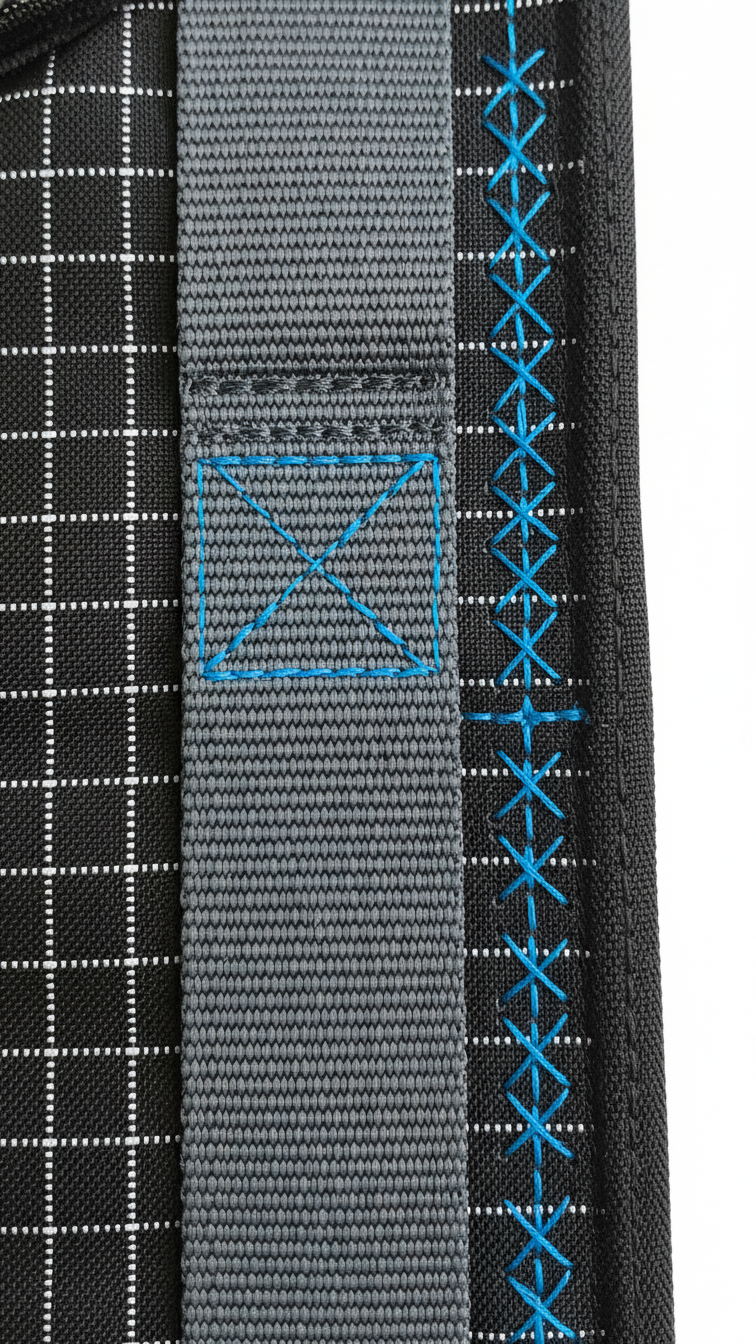
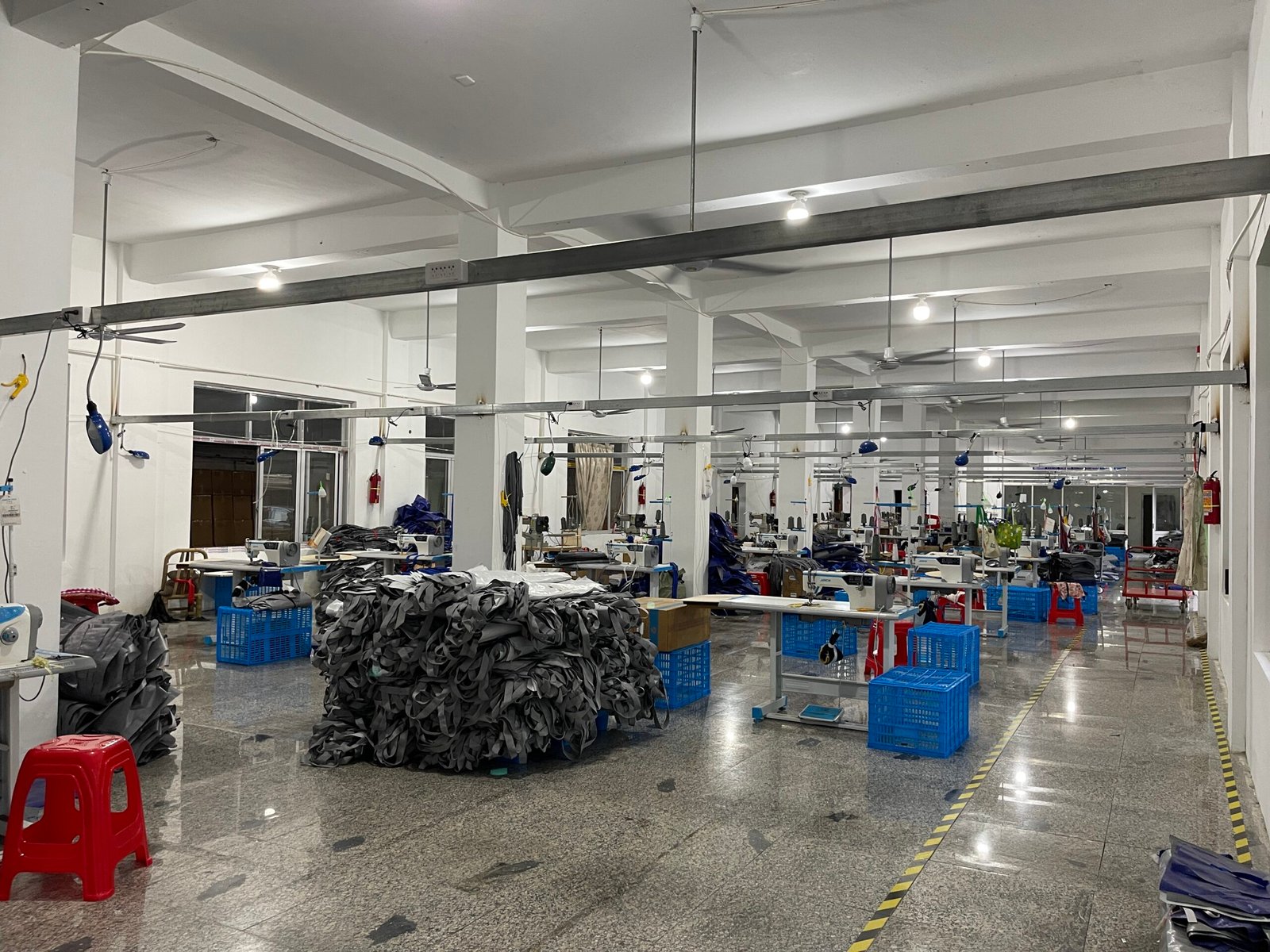
Bonding is the finish that keeps a heavy seam alive. Raw twisted nylon or polyester abrades against the needle, the fabric and itself; bonded thread is passed through a resin or silicone bath and cured, so the plies are fused and the surface runs smooth. The practical difference: bonded thread survives high-speed sewing without fraying, keeps tension consistent at the needle, and resists the chafe of a loaded bag rubbing against truck floors and shelves. Silicone-bonded finishes add lubricity for difficult fabrics, while wax-dressed cotton-covered threads suit softer goods. Bonding is not free, but the cost delta is cents per bag against a seam failure that writes off the whole unit. The factory’s machine setup also decides whether a given thread runs correctly: needle size, tension and speed are tuned to the thread, which is the topic of our automation versus manual sewing factory comparison.
Specifying thread in the purchase contract
A thread spec that survives production has six lines. Material: bonded nylon or bonded polyester, named, with the bonding type. Ticket size per seam: one size for main panels and bottom seams, another for handle wraps, written per seam location. Tenacity or strength band: the grams per denier range, so a substitute spool cannot drop below the load rating. Color fastness: the thread shade must match the approved sample under the same wash and rub tests as the fabric, because thread that bleeds ruins an otherwise clean print program. Stitch density: stitches per inch per seam type, because density, not just thread size, determines seam strength. Verification: the mill’s test certificate per lot, cross-checked against an independent seam strength test on the production fabric, the reading of which is explained in our lab test report guide for SGS and Intertek reports. A thread spec with all six lines is auditable; a thread spec without them is a hope. Load-rated production for these programs runs on our pp woven bag page and drawstring bag page, and program-specific questions go through the contact page.
Frequently asked questions
What sewing thread is strongest for heavy bags?
Bonded nylon generally carries the highest tenacity per tex among common bag threads, with bonded polyester close behind; both outperform cotton-covered constructions at equal ticket size.
What does T-69 mean on a thread label?
It is the ticket size, a diameter band used across the sewing industry; T-69 typically corresponds to roughly 69 tex, or about 69 grams per 1,000 meters of thread.
Can a factory substitute a different thread size?
Substitution changes seam strength even when the seam looks identical, so the contract should name the ticket size per seam and require re-testing under ASTM D1683 if the mill proposes a change.
Why do heavy bag seams need bonded thread?
Bonding fuses the plies and smooths the surface, so the thread resists abrasion, keeps tension at the needle and survives the chafe of loaded handling without fraying.
Load specs decide whether a moving program survives relocation season; our woven PP moving bag load specs guide lists the 15 to 50 kg classes honestly.
Tooling quotes hide in the line items; our custom bag tooling and setup costs breaks down screens, molds, and dies so the comparison is honest.
For more detail, see our Handle Webbing 101.

0 Comments