



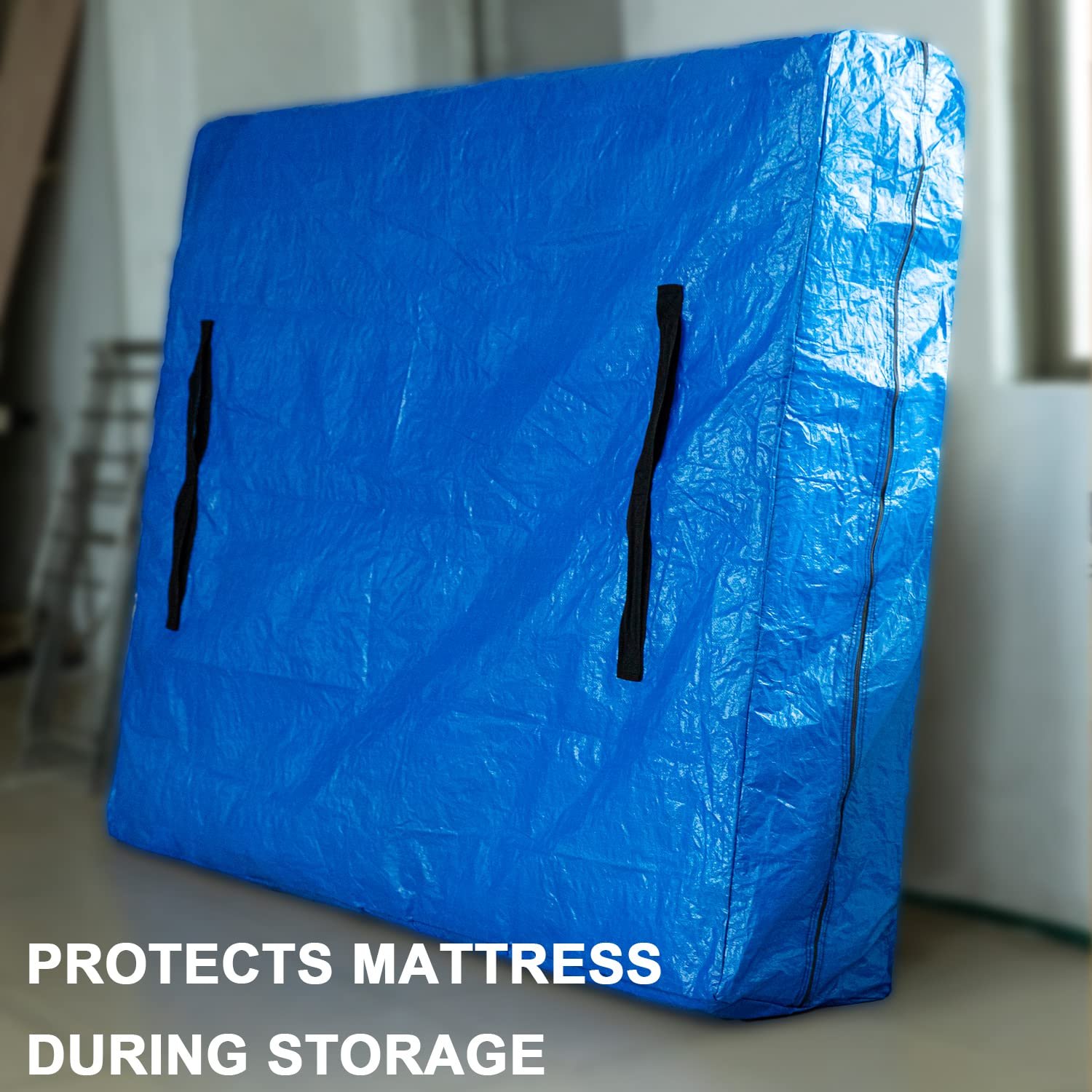
Every guide on vetting china bag suppliers tells you to start with a sample approval process. But that advice left a distributor I know staring at a $50K order of moving bags where the handles ripped on the first lift. The problem isn’t the sample—it’s that the mass production run used cheaper webbing and a different stitch density. What actually protects you is a checklist that forces suppliers to lock in quality tolerance parameters before you agree on FOB pricing. Sample approval only works if the factory commits to holding those specs across every production batch, and most won’t unless you build that into your audit process.
Add capacity checks to the supplier checklist; read how to confirm a factory can hit your deadline.
Over 40% of moving bag quality failures stem from handle stitching that can’t handle repeated 25kg loads. A sample alone won’t catch that if the factory cuts thread tension during bulk production. So instead of just asking for a sample, start by requesting a handle tensile force test report. That’s the kind of specific, data-backed requirement that separates real manufacturers from traders who can’t back up their claims. Get that test in hand, and you’ve got a benchmark to hold against every shipment.
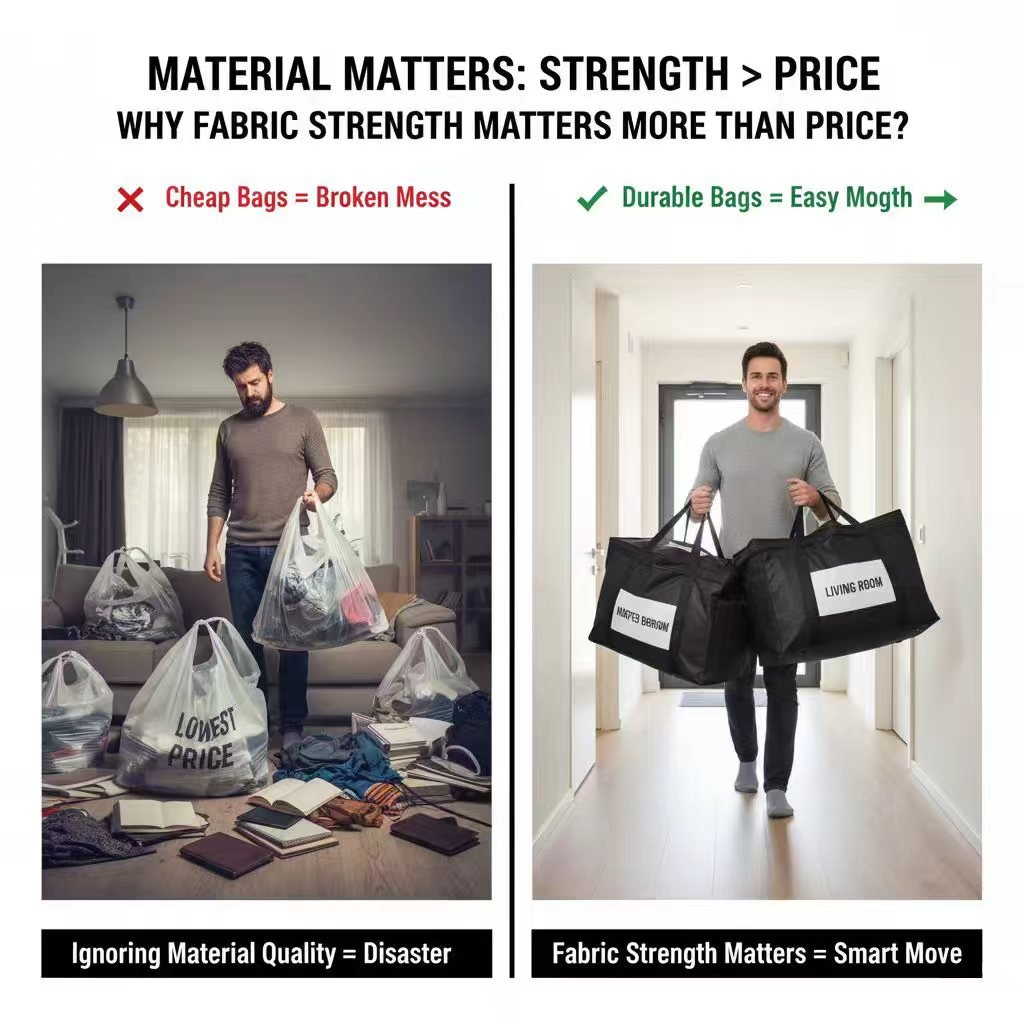
Why a Verified Supplier Checklist Prevents Costly Mistakes
Over 40% of moving bag failures come from handle stitching that can’t handle 25kg.
You land a $50K wholesale contract for heavy duty moving bags. First shipment arrives, and 15% of the bags have handles tearing at the seams. Your buyer rejects the lot. The supplier blames shipping. You eat the loss. That scenario plays out every month in this industry because most buyers skip a verified supplier checklist. The fix is simple: verify three specific things before you place a bulk order.
- Handle & Seam Tensile Force: Handle stitching must survive repeated 25kg lifts. Many Chinese bag factories do not test this. Require a third-party report per ASTM D5034 or ISO 13934 showing minimum 60kg break force on the handles and side seams. Without it, you are gambling 40% failure rate.
- HS Code Classification: Misclassifying heavy duty moving bags as consumer luggage (4202) adds 3–7% duty. Correct HS code 3923.21 for plastic sacks and bags. Request the supplier’s export customs history or a broker’s classification note to avoid surprise tariff costs.
MOQ is another tell. Genuine factories producing heavy duty moving bags accept 500-unit MOQ per design. Trading companies push for 2000+ and cannot negotiate. Use a heavy duty moving bag factory audit checklist to separate real manufacturers from intermediaries before you commit.
| Data |
|---|

Factory Verification: Separating Manufacturers from Trading Companies
The difference between a manufacturer and a trader shows up in the paperwork—and the factory floor.
Separating a genuine heavy duty moving bag manufacturer from a trading company starts with two documents: the business license and the export registration certificate. Many buyers skip this step and later discover their supplier has no production line—just a desk and a shipping agent. A China moving bag manufacturer verification process must begin with the license. Look for the words ‘production,’ ‘manufacturing,’ or ‘processing’ in the business scope. If the license says ‘trading’ or ‘import/export’ only, you are dealing with a middleman. The export registration filing confirms the company is legally allowed to export goods. Without it, you risk customs delays or fraudulent documentation.
- Business License Check: Verify the registered capital, factory address, and business scope explicitly includes manufacturing. A minimum registered capital of 1 million CNY is common for legitimate bag factories. Also check the establishment date—companies less than 1 year old may lack production experience.
- Export Registration: Request a copy of the Foreign Trade Operator Filing Registration Certificate (also called the 进出口权). This proves the supplier can legally handle international shipments. Without it, they must use a third-party export agent, adding a layer of risk.
- Video Walkthrough: Demand a live video tour of the production floor—not a pre-recorded sample. Ask to see the specific machines used for handle stitching and seam sealing. Many factories have separate showrooms; the actual workshop may be a rented space. A genuine factory will have a consistent production line with workers, cutters, and sewing stations. As part of your heavy duty moving bag factory audit checklist, insist on seeing handle stitching in progress.
- Third‑Party Audit: Hire an independent inspection agency like SGS or Bureau Veritas to conduct a factory audit. Cost ranges from $500 to $1,000 but can prevent a $50,000 order from failing due to misaligned quality. The audit report should confirm production capacity, equipment inventory, and quality control processes. Many Chinese bag factories lack in‑house burst strength testing; an audit will reveal if they rely on third‑party labs or skip testing altogether.
A supplier that hesitates to show their floor or refuses a third‑party audit is almost certainly a trading company sourcing from multiple factories. That adds variability to your bulk orders. Stick with factories that pass this verification step—they own the line and the risk. This approach to industrial moving bag supplier quality control reduces sourcing surprises and keeps your margin intact.
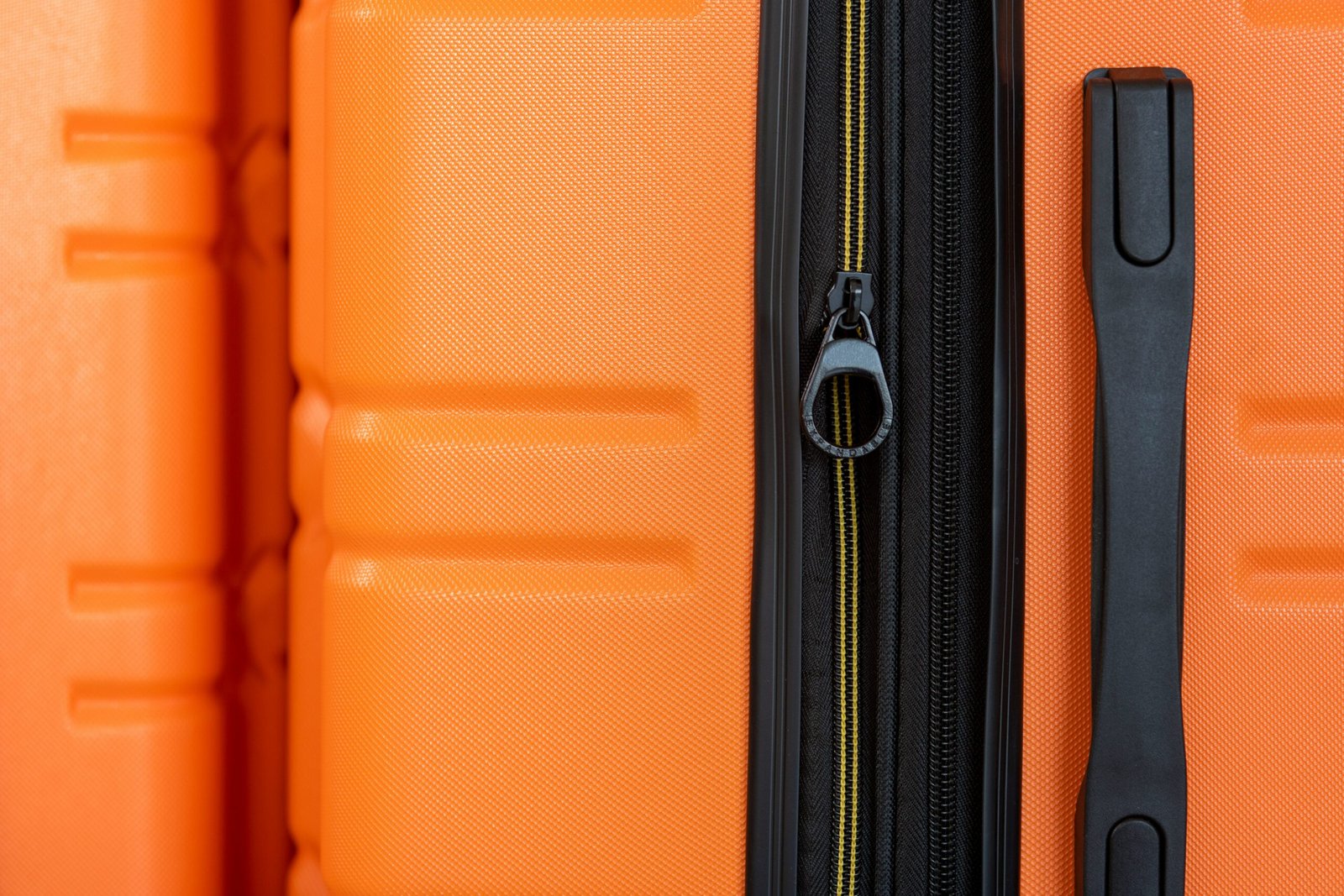
Quality Control: Testing Materials and Stitching Under Load
40% of moving bag failures trace back to handle stitching that can’t take 25kg load cycles.
Industrial distributors sourcing heavy-duty moving bags from China need more than a visual check. The difference between a bag that lasts 20 trips and one that splits on the second lift comes down to two specific test protocols: ASTM D5034 for burst/tear resistance and multi-cycle handle tensile force testing. Many Chinese bag factories skip these or run them only on pre-production samples—not on bulk production lots.
- Burst Strength (ASTM D5034): Measures the force required to rupture the fabric. For heavy-duty moving bags, a minimum of 250 N is standard. Anything below 200 N and you’re looking at blowouts when the bag is packed tight against furniture corners. Insist on a third-party lab report—most factories don’t own the equipment.
- Tear Resistance (ISO 13934): Tests how well the fabric resists propagation of a cut. Acceptable threshold for woven polypropylene moving bags is 50 N in both warp and weft directions. A bag that fails this test will tear from a single snag, spilling contents mid-transport.
- Handle Tensile Force (Multi-Cycle): Require a test protocol that simulates real use: 25 kg load, 500 cycles, no handle separation. Request a video of the actual test being performed on your production batch. If the supplier can’t produce one, that’s a red flag.
- Seam Strength (ASTM D1683): Minimum 150 N per seam line. Weak seams cause side-splits when bags are stacked in a truck. Verify with incoming inspection on your first order—test 5 bags per pallet.
Handle stitching is where the real world breaks cheap bags. A static load test is useless—what matters is multi-cycle endurance. Your supplier should be able to provide a test report showing handle seams holding a 25 kg load for at least 500 cycles without stitch rupture or fabric elongation beyond 10%. Over 40% of quality failures in this category originate from handle stitching that looks solid on day one but fails after repeated lifting.
For a detailed breakdown of material specs and test reports, check the Heavy Duty Moving Bags product page for downloadable certifications.
| Test Type | Standard/Metric | Specification/Requirement | Why It Matters |
|---|---|---|---|
| Burst Strength & Tear Resistance | ASTM D5034 / ISO 13934 | Minimum 250 N burst pressure; tear resistance > 80 N | Prevents catastrophic failure under 25kg+ loads; many Chinese factories lack in-house testing |
| Handle Tensile Force (Multi-Cycle) | Custom protocol: 25 kg × 100 cycles | No stitch breakage or handle detachment after 100 cycles | Over 40% of moving bag failures originate from handle stitching; simulates repeated real-world lifting |
| Seam Tensile Force | ISO 13935-2 (grab test) | Seam strength ≥ 350 N for double-stitched seams | Guarantees side seams withstand heavy contents during transport and stacking |
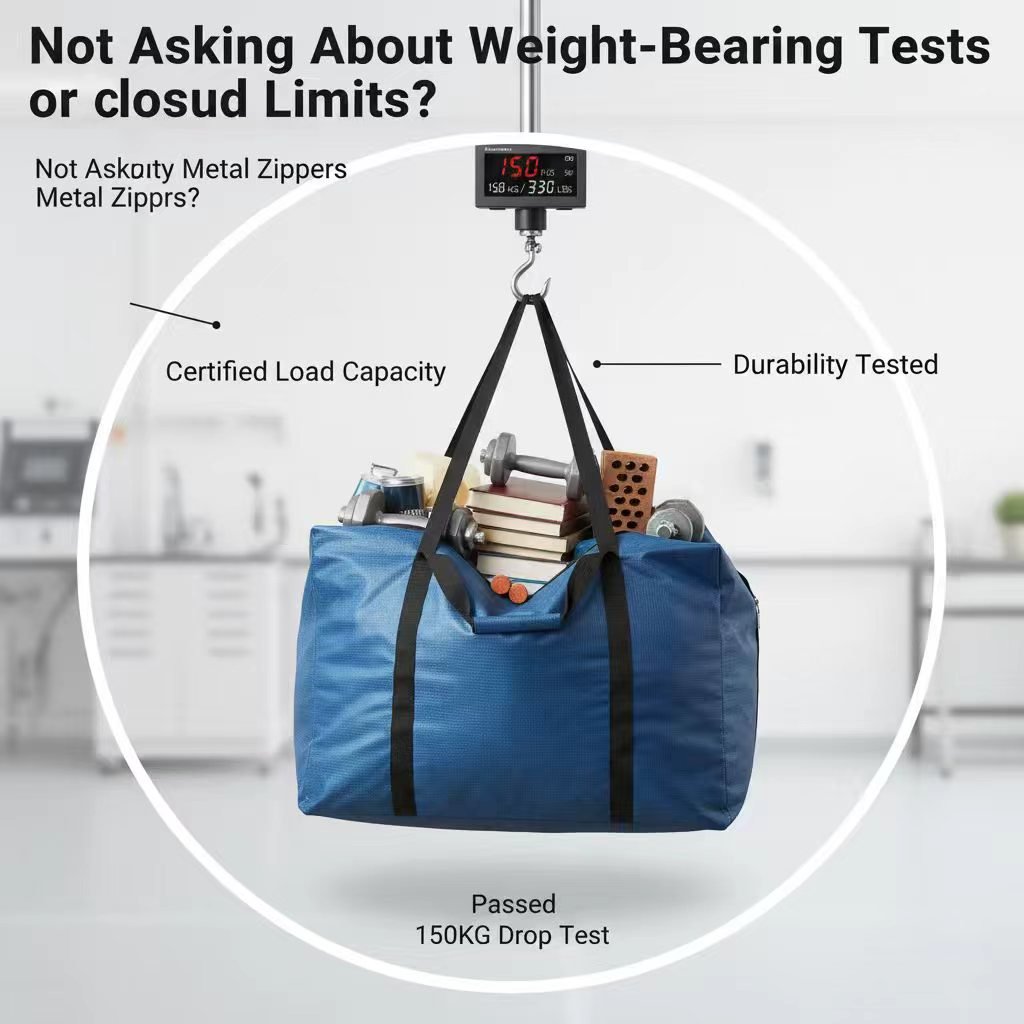
Logistics and Documentation Readiness
Correct HS code 3923.21 saves 3–7% in duties — verify before shipping.
Heavy duty moving bags fall under HS code 3923.21 for sacks and bags of plastics. I’ve seen distributors lose 3–7% margin because their supplier declared the bags as consumer luggage (4202) or other plastic articles (3926). The distinction matters at customs. Code 3923.21 covers bags designed for packing goods — moving bags fit that definition. Work with your supplier to confirm the HS code and request the customs ruling if available.
- Duty rate advantage: Tariff under 3923.21 typically ranges 0–6.5% depending on origin and trade agreements. Misclassifying as luggage triggers 8–20% plus anti-dumping risk.
- Documentation requirement: Ask for a HS code confirmation in the proforma invoice. For DDP shipping from China, your forwarder needs the exact code to pre-clear customs and avoid port demurrage.
- Pallet packaging standard: Insist on heat-treated (HT) pallets with ISPM-15 stamp. If you’re shipping to Europe or Australia, untreated wood gets fumigated at port — typically a 2–3 week hold and $200–500 fee. Plastic pallets avoid this but cost more upfront.
- Loading plan request: Ask the factory for a container loading diagram showing bag count per pallet, pallet positions, and total cube utilization. A reliable factory can provide this in PDF. If they cannot, it’s a red flag on their export experience.
Container loading plans are another area where unprepared suppliers cause delays. For a 40HQ container, standard pallet dimensions (1200 x 1000 mm) with 10–12 layers per pallet yield roughly 22–24 pallets per container. A poorly planned load leaves empty cube space, increasing per-unit freight cost.


Red Flags That Signal Risky Suppliers
A supplier that hides material specs is already costing you margin.
You place a sample order for heavy-duty moving bags, the pre-production sample looks solid. Two months later, your customer reports handles tearing after their third move. You check the supplier’s spec sheet — it says ‘woven polypropylene’, but no GSM, no denier, no tensile data. This is the exact moment when a vague raw material breakdown costs you a client.
In a proper factory audit, you should see a material declaration that includes fabric weight (GSM), weft density, yarn denier, coating type (e.g., PE lamination), and a confirmed burst strength standard like ASTM D5034 or ISO 13934. Many suppliers skip this because they blend virgin and recycled content without telling you. A reliable manufacturer for bulk moving bags will provide a third-party test report matching the internal QC spec.
- Red flag #1: Supplier lists ‘high-quality fabric’ with no measurable spec. Demand GSM, denier, and a reference to a published test method.
- Red flag #2: They reject a request for a moving bag burst strength standard document. Any genuine moving bag manufacturer can share a recent lab report.
- Red flag #3: When you ask for a handle tensile force test result (critical since over 40% of failures come from handle stitching at 25kg loads), they say ‘our bags are strong’ with no data.
The second signal is MOQ inconsistency. A legitimate Chinese bag factory running its own production lines typically accepts 500 units per design for standard heavy-duty moving bags. Trading companies, who work on markup and minimum supplier commitments, push for 2000+ units without room to negotiate. They justify it with ‘material sourcing’ — but a real factory manages raw material rolls that fit 500-unit runs easily.
When a supplier won’t budge from a 2000-unit MOQ and can’t break down the cost per component (fabric, stitching, handles, packing), assume they are a middleman. During your heavy duty moving bag factory audit checklist, always confirm MOQ flexibility per design and ask for FOB pricing at 500 vs 2000 units. A transparent manufacturer will share the per-unit cost drop due to material waste reduction, not a fixed margin play.
- Industry benchmark: A verified moving bag supplier should offer 500 MOQ per design and provide a detailed raw material breakout (GSM, denier, coating type, handle stitch count). If they refuse both, treat it as a non-starter for your sourcing pipeline.
Conclusion
The checklist cuts through the noise. It’s not about finding the cheapest supplier—it’s about catching the 40% of handle stitching failures before they hit your warehouse. Correct HS code 3923.21 saves you 3-7% in duties, and a real factory works with MOQ 500, not 2000+.
Ask your supplier these three yes/no questions: Did your last sample approval include a signed quality tolerance sheet? Is the FOB pricing locked per unit with no hidden surcharges? Does the handle stitching pass a 25kg multi-cycle tensile test? One “no” is a flag. Three “no’s” is a hard pass.
Frequently Asked Questions
How to get a quote for Heavy Duty Moving Bags China Supplier Checklist?
The exact answer depends on the product specification, quantity, and order setup. The safest approach is to confirm the commercial terms only after the final requirement sheet is. Final tax should be checked against the HS code and destination country’s tariff rules.
Can I request samples first?
The exact answer depends on the product specification, quantity, and order setup. The safest approach is to confirm the commercial terms only after the final requirement sheet is locked. Sample availability should be confirmed against the current stock and shipping plan.




0 Comments