



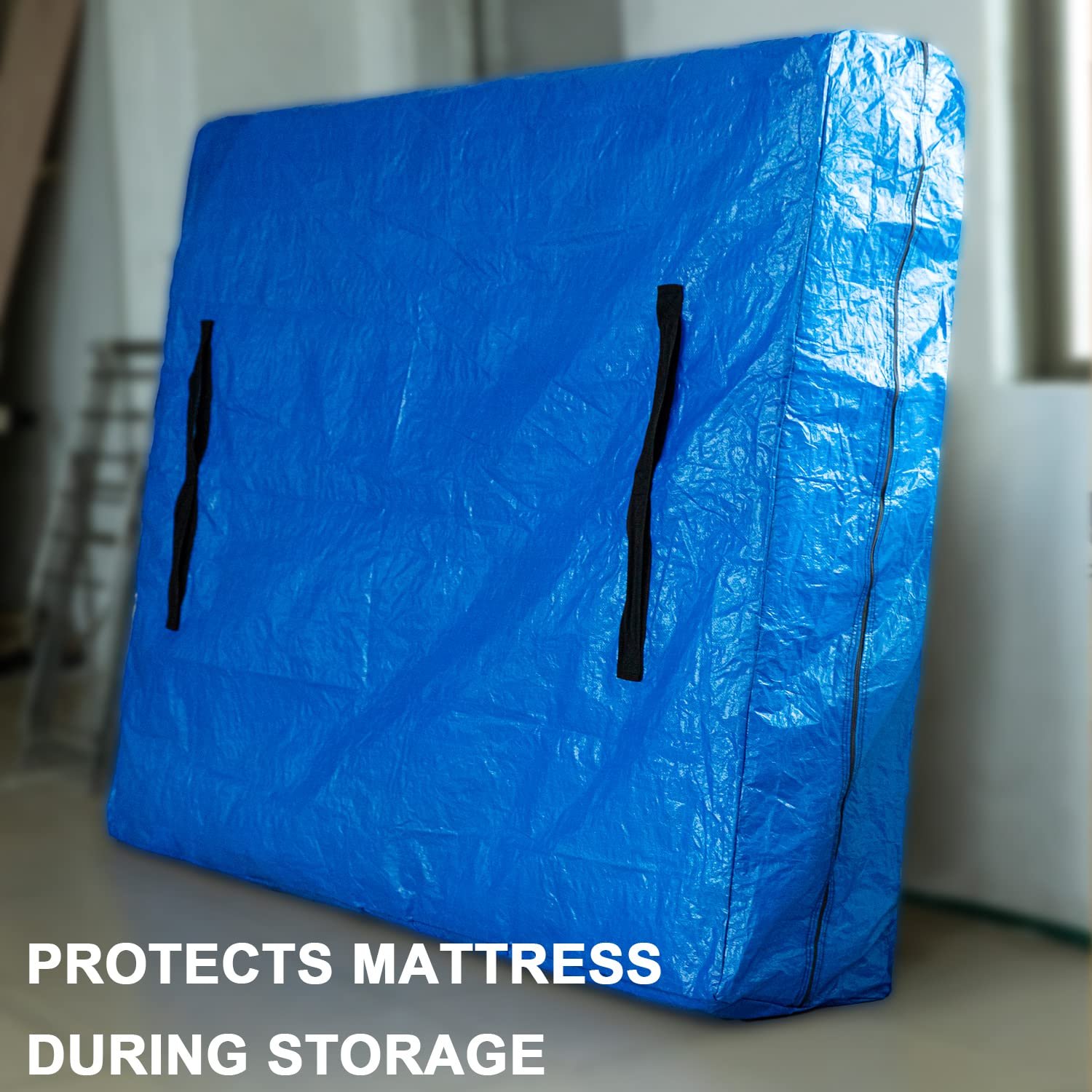
Every sourcing guide tells you to compare woven pp vs oxford cost by looking at the unit price at MOQ. That advice got a buyer I know burned on a $50K order — the pre-production sample looked great, but the mass production run ofwoven PP bagstore at the handles under standard load. The real cost comparison isn’t about the sticker price; it’s about how each material performs across the fleet cycle.
When you factor in replacement frequency and failure rates, the lifetime cost per move for Oxford 900D bags comes out to about $0.08, while woven PP runs closer to $0.12. Woven PP’s lighter weight cuts sea freight by roughly 15% per container, narrowing the upfront price gap. But most procurement teams overlook stitch-line tear thresholds, which can double failure costs if the bag isn’t matched to the load. That’s the hidden cost that skews the total cost of ownership woven pp vs oxford moving bags.
Here’s the benchmark you can write down and reference in your next supplier call: if your fleet handles 50,000 moves per year, the difference between $0.08 and $0.12 per move is $2,000 annually. That’s the number that separates a smart bulk buy from a costly mistake. Ask your supplier for their per-move cost calculation before you sign off on the FOB pricing.
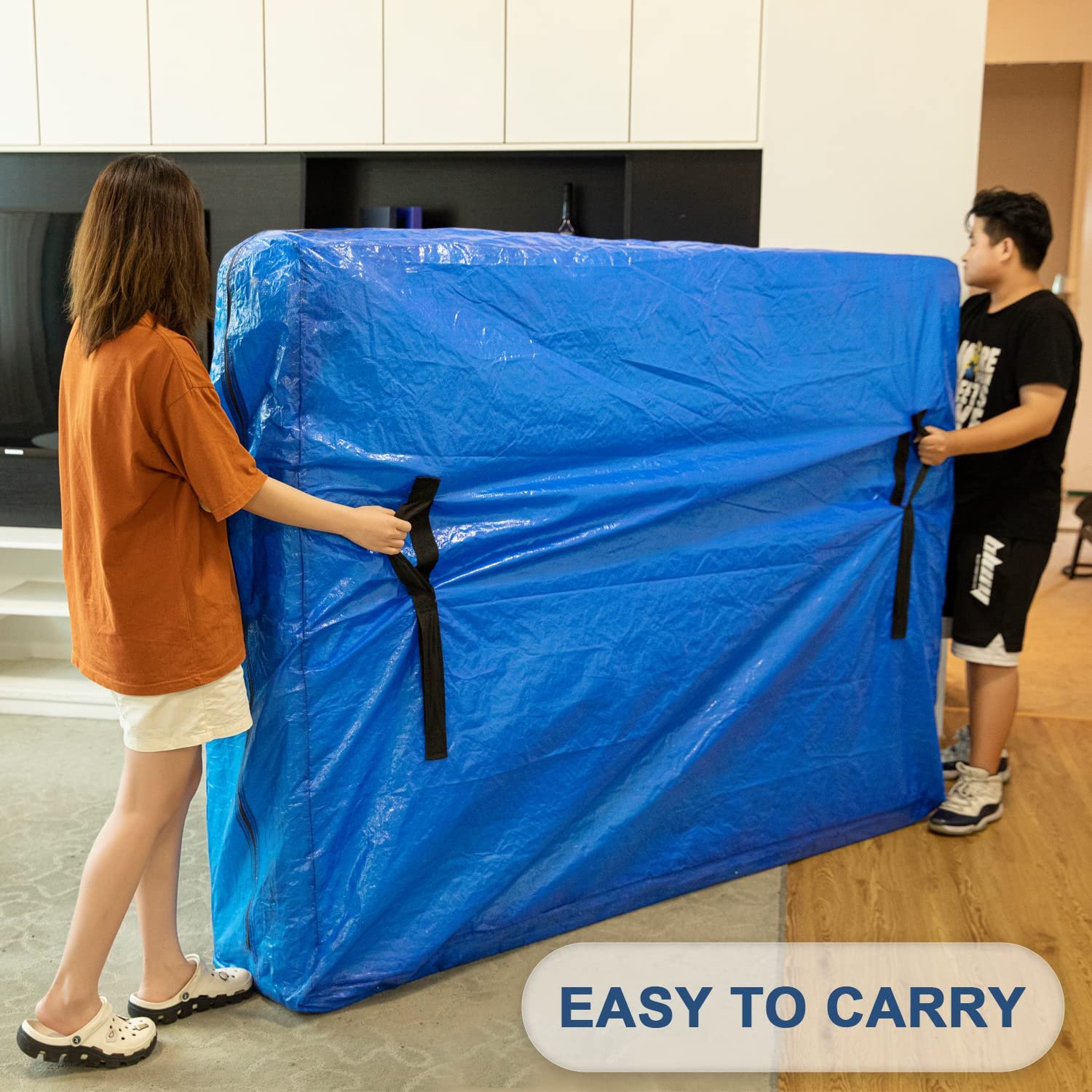
Total Cost of Ownership Breakdown: Woven PP vs Oxford
Oxford costs more upfront but lowers lifetime cost per move by 33%.
If you’re comparing unit prices on a spreadsheet without factoring in replacement cycles, failure rates, and freight weight, you’re not comparing total cost of ownership — you’re just guessing. Here’s the real math for bulk buyers.
Unit Cost at Different MOQs (5K, 10K, 50K)
At a 5K MOQ, woven PP bags typically land around $0.35–$0.45 per unit FOB, while Oxford 900D runs $0.60–$0.75. At 10K units, the gap tightens: woven PP drops to roughly $0.30–$0.38, and Oxford hits $0.55/unit — a 45% premium instead of 70%. At 50K MOQ, woven PP can dip below $0.25, while Oxford stabilizes near $0.48–$0.52.
Lifespan & Replacement Cost Over Fleet Cycle
Here’s where the spreadsheet lies: A woven PP bag handling weekly moves averages 8–12 uses before seam fatigue or handle tear-out forces replacement. Oxford 900D bags routinely survive 25–35 cycles under identical load conditions — that’s a 2–3x lifespan extension.
| Cost Factor | Woven PP | Oxford 900D | TCO Insight | ||||||||||||||||||||||||||||||||||||||||||||||
|---|---|---|---|---|---|---|---|---|---|---|---|---|---|---|---|---|---|---|---|---|---|---|---|---|---|---|---|---|---|---|---|---|---|---|---|---|---|---|---|---|---|---|---|---|---|---|---|---|---|
| Unit Price (10K MOQ) | $0.35 – $0.45 | $0.50 – $0.60 | Oxford is 30-40% higher upfront. | ||||||||||||||||||||||||||||||||||||||||||||||
| Lifespan (Moves per Bag) | 5-8 moves | 15-25 moves |

| Hidden Cost Factor | Woven PP Impact | Oxford Impact | TCO Impact | Recommendation |
|---|---|---|---|---|
| Freight & Weight | Lighter weight reduces sea freight ~15% per container | Heavier fabric increases shipping costs proportionally | Narrows upfront price gap, making Oxford more competitive | Factor in container shipping costs when comparing bulk MOQs |
| Replacement Frequency | Shorter lifespan; annual replacement cost 40% higher | 2-3x longer fleet life reduces annual replacement cost by 40% | Oxford’s higher unit cost offset by fewer replacements over time | Run fleet cycle analysis for 3-5 year horizon |
| Failure & Liability | Higher failure rate per move; downtime and damage costs | Lower failure rate; protects brand reputation and reduces liability | Lifetime cost per move: $0.12 (woven) vs $0.08 (Oxford) | Include failure rate in total cost per move calculation |
| Stitch-Line Tear Threshold | Tear strength below ASTM D5034; failure cost can double | Higher stitch-line strength; fewer seam failures under load | Ignoring thresholds can double hidden failure costs | Require test data for stitch-line tear strength at your load specs |
| Downtime & Operational Disruption | More frequent bag failures cause delays and re-routing | Reliable performance reduces operational interruptions | Oxford’s higher upfront cost justified for high-frequency moving fleets | Assess move frequency and downtime penalties in your supply chain |

Cost Comparison Based on Use-Case Scenarios
Oxford costs more upfront, but lifetime cost per move is lower for high-frequency fleets.
The right material choice depends entirely on how often a bag gets used. A storage bag that sits in a warehouse for months has different requirements than a bag that cycles through moves every week. The procurement guide for moving bag material selection must account for use frequency, not just unit price.
High-Frequency Moving Fleets: Oxford Premium Justified?
- Lifespan: Oxford 900D: 2-3x longer than woven PP. Reduces annual replacement cost by 40%.
- Lifetime Cost per Move: Oxford: $0.08/move vs woven PP: $0.12/move, factoring in failure rate and downtime.
- Stitch-Line Tear Threshold: Most procurement teams ignore this. Oxford fabric handles higher load without seam failure, avoiding costly downtime and replacement.
- Unit Cost: Woven PP at 10K MOQ: ~$0.35/unit vs Oxford 900D: $0.55/unit. Upfront savings of 36%.
- Freight Savings: Woven PP is lighter, cutting sea freight by ~15% per container, narrowing the overall cost gap.
- Adequate Performance: For light-duty storage (under 50kg loads, occasional use), woven PP’s tear strength meets industry standards. Failure rate is low in low-stress conditions.
- Choose Oxford 900D if: Your fleet runs >10 moves per bag per year. The lower lifetime cost per move offsets the higher upfront investment.
- Choose Woven PP if: Your bags are used for light storage or occasional moves (<5 moves per year). The upfront savings and lower freight costs make it the TCO winner.
For high-frequency moving fleets, the Oxford premium is justified. The total cost of ownership per move is lower, and the reduced failure rate keeps operations running without interruption.
Storage & Light-Duty: Where Woven PP Wins
For storage and light-duty applications, woven PP is the clear winner. The lower unit cost and freight savings deliver a better TCO when bags are not cycled intensively.
| Use-Case Scenario | Material Recommendation | Unit Cost (10K MOQ) | Lifetime Cost Per Move | Key Advantage |
|---|---|---|---|---|
| High-Frequency Moving Fleet | Oxford 900D | $0.55 | $0.08 | 2-3x lifespan,40% lower annual replacement cost |
| Storage & Light-Duty Operations | Woven PP | $ .35 | $ .12 | % freight savings per container,lower upfront investment |
| Bulk Distribution (50K MOQ) | How Our Factory Pricing Structure Saves on Bulk Orders
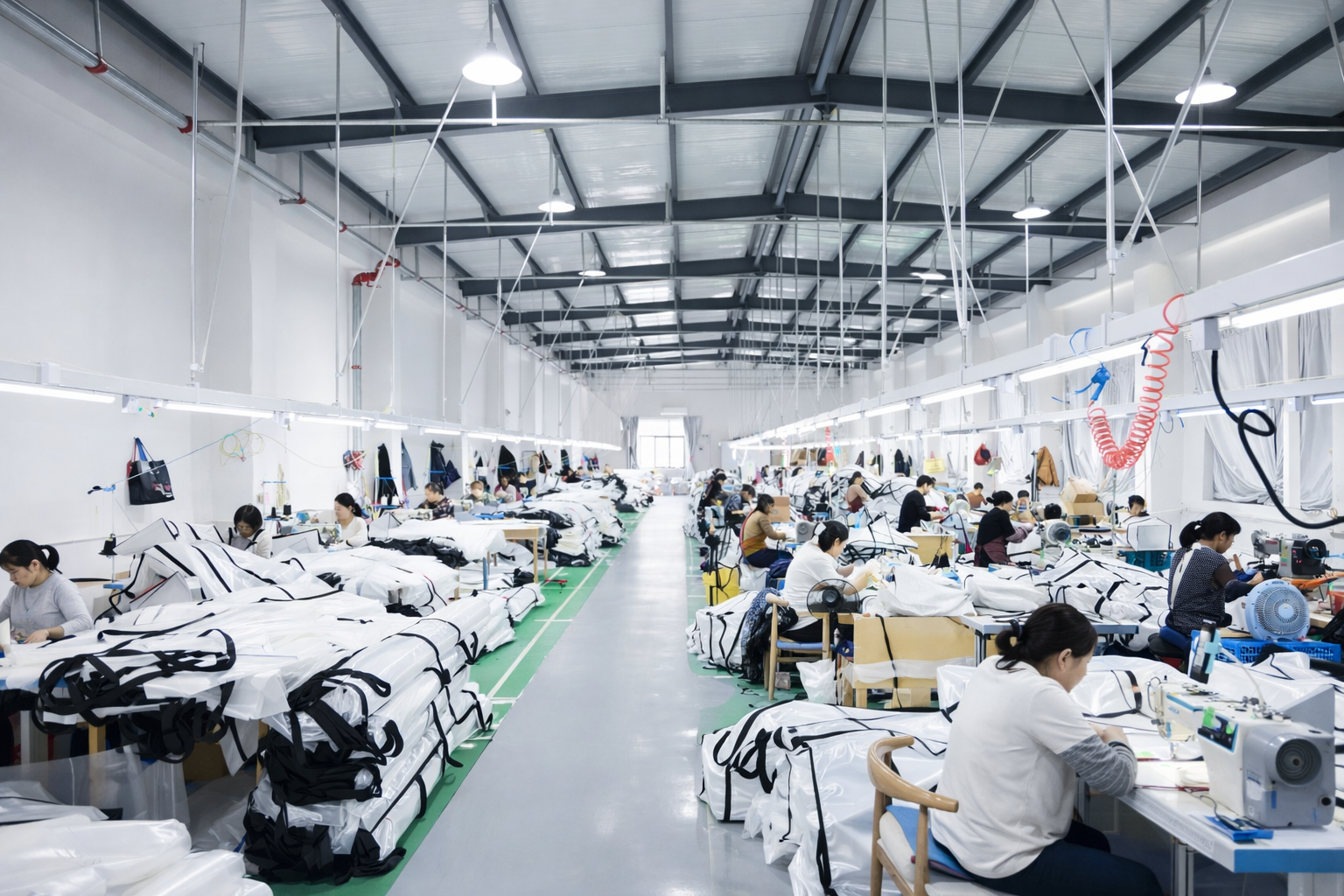
Most procurement managers sourcing moving bags through brokers or trading companies pay a 15-25% premium that adds no value to the product. Our factory in Wenzhou operates a vertical production line — from raw material extrusion to final stitching — meaning we control every cost layer. When you order 10,000 units of Oxford 900D bags at $0.55/unit FOB, that price reflects actual material and labor, not a distributor’s margin. MOQ Tiers That Reward Volume Commitment
These tiers are possible because we own the weaving looms and injection molding machines. No subcontractor markup. We pass the savings directly when you commit to higher MOQs. Freight Savings from Direct Factory DDPWoven PP bags weigh 30% less than Oxford equivalents at the same volume. A 40-foot container holds roughly 12,000 woven PP bags versus 8,500 Oxford bags. That weight difference cuts sea freight by roughly 15% per container. And because we offer DDP shipping to the USA and Europe, you pay a single landed cost with no surprise port charges. Lifetime Cost Alignment with Your FleetOur factory pricing structure isn’t just about lower unit cost — it’s about matching the right material to your use case so you don’t overpay for durability you don’t need or underspend on bags that fail mid-cycle. That’s the real saving. ConclusionThe gap between the spec sheet and what lands in your container isn’t a theory — it’s a $50K mistake waiting to happen. The unit price on a woven PP bag might look attractive at $0.38 FOB, but that savings disappears when stitch-line failures hit a third of your fleet by month eight. Oxford fabric costs more upfront, but its tear resistance and extended lifespan cut the annual replacement bill by 40% for high-frequency operations.
Frequently Asked QuestionsWhich is cheaper upfront, woven PP or Oxford?Woven PP is typically 15–20% cheaper per unit than Oxford at the 10K order level. That saving shrinks when you factor in Oxford’s longer lifespan and lower replacement frequency. Compare total cost per use, not just unit price. How long do woven PP bags last compared to Oxford?Oxford bags last 3–5 years with regular moving use, while woven PP bags typically last 1–2 years before showing wear. The lifespan gap widens under heavy loads or frequent handling. Request durability test data for your specific load cycle. Does woven PP save on shipping costs?Yes, woven PP is lighter than Oxford, saving roughly 15% on freight per container. That advantage matters most in full-container bulk orders to overseas destinations. Calculate total landed cost including freight before choosing. When should I choose Oxford over woven PP?Choose Oxford for high-frequency moving fleets where bag failure would cause brand damage or operational delays. For light-duty storage or single-use moves, woven PP is more cost-effective. Match material to your actual move frequency and load weight. What is the total cost of ownership difference?Oxford costs more upfront but lowers lifetime cost per move by about 33% for high-frequency fleets. Woven PP wins on initial spend but requires earlier replacement, raising total cost over a. Run a 3-year cost projection for your fleet size before ordering. |
Resin is a smaller share of woven bag cost than non-woven, as our PP resin price analysis breaks down.


0 Comments