



Wine bottle totes are the retail category most bag programs ignore and the best ones quietly profit from. Bottle carry is a structural problem, glass is heavy, rigid, and clinking, and the bag that solves it earns a permanent place in a customer’s shopping rotation. Wineries, wine shops, bottle shops and grocery programs all need it, and the sourcing requirements differ enough from standard totes that buyers who treat them as a variant often get a bag that fails at exactly the bottle’s weak points. This article covers the wine tote category from a program buyer’s perspective: the structural options by bottle count, the material and reinforcement choices that matter, and the customization that turns a carrier into a brand asset.
The Structural Options by Bottle Count
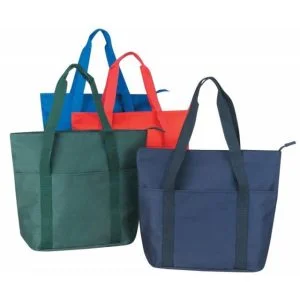
Wine totes divide by capacity, and each count carries its own construction demands. Single-bottle totes are the entry product, and their engineering centers on base support: a bottle concentrates its whole weight on a small circle, so the base needs a reinforced panel or a molded insert that keeps the glass off the seam. Two-bottle and four-bottle totes add divider walls, stitched separators that stop bottle-to-bottle contact, the clink that chips rims and the swing that breaks shoulders. Six-bottle formats approach a small case, and their handles and base must carry roughly a case of wine’s weight, which puts them into webbing-and-box-bottom territory. Standard bottle dimensions are consistent enough across the industry that one well-designed pattern serves most 750 milliliter bottles, and the design references collectors and trade buyers use are documented by industry bodies such as the Wine Institute, whose members ship bottles by the millions and know exactly where bags fail. Our guide to tote structure upgrades covers the base-board and stiffener options that bottle totes borrow.
Materials and Reinforcement Choices That Matter
Material selection for wine totes balances structure, appearance and wash behavior. Canvas and heavy cotton remain the retail favorite because they carry weight without stretching and print crisply for branding. Non-woven polypropylene serves volume grocery and winery-tasting programs at commodity prices. Jute brings the natural-fiber look that premium wine gifting uses, with the caveat that jute’s texture and odor need a liner for food-adjacent retail. Reinforcement is where quality separates: bottle totes need base panels, stitched dividers, and handle attachments anchored below the rim line, because handles anchored only to the top hem tear out when a full bottle’s weight swings. Our comparison of jute versus canvas totes covers the material trade-offs in depth for buyers choosing between them.

Customization That Turns a Carrier Into a Brand Asset
Wine totes are brand assets because they circulate: a customer carries the bottle to a dinner, and the tote carries the winery’s name onto another customer’s table. The customization hierarchy runs from screen-printed logos, the volume standard, through woven labels and embroidered marks for premium gifting, to full-color sublimation for gift-box programs. Placement matters in this category more than most, because dividers and bottle shoulders interrupt print panels; the logo belongs on the outside face above the divider line, and programs that also sell the tote empty add interior printing for the reveal moment. Complementary programs that use the same customization playbook include our subscription box tote designs, where the bag carries the brand into the customer’s home on the same recurring logic.
Specifying a Wine Tote Program
The program specification adds three lines to a standard tote spec. First, bottle count and bottle format: standard 750 milliliter versus sparkling bottles, whose wider shoulders change the divider spacing. Second, divider construction: stitched fabric dividers, removable boards, or molded inserts, matched to the price tier. Third, base construction and handle attachment, rated for a filled case’s weight with a safety margin, and tested by actually carrying a loaded tote across a showroom, the test that predicts field failures better than any fabric swatch. Buyers running winery, bottle shop and grocery programs in parallel typically standardize one pattern across all three, varying only color and print, which concentrates tooling and drives the per-unit price down across the family, and it also simplifies the reorder path, because a program that re-orders the same pattern with new print color skips sampling entirely and moves straight into the production queue.
FAQ
What fabric is best for wine bottle totes?
Heavy canvas for retail and gifting, non-woven polypropylene for volume tasting-room programs, and lined jute for premium natural-fiber gifting. Base reinforcement matters more than the fabric name.
Do multi-bottle totes need dividers?
Yes for glass bottles. Stitched dividers stop bottle-to-bottle contact that chips rims and breaks shoulders during carry, which is the failure customers remember.
How much weight must a six-bottle wine tote carry?
A standard 750 milliliter bottle weighs roughly three pounds, so a filled six-bottle tote carries close to twenty pounds before packaging, which sets the handle and base specification.
Where should the logo go on a wine tote?
On the outside face above the divider line, where it stays visible when the tote is carried and set down, and interior printing adds a premium reveal for gift programs.
Can sparkling wine bottles fit standard wine totes?
Not always. Sparkling bottles have wider shoulders and a heavier build, so programs stocking them should spec wider divider spacing and a higher base load rating.
Video: Wine Bottle Gift Packaging
Adding a wine tote line to your retail or winery program? Our custom bag product range covers single to six-bottle formats with divider and reinforcement options quoted to your case mix.



0 Comments