Skip to content

Choosing between recycled and virgin plastic for moving supplies is a critical decision for brand managers. While consumer demand for eco-friendly options is clear, balancing material strength with budget constraints presents a major challenge. The right choice protects both brand perception and your bottom line.
This guide compares material strength, breaks down the true cost of sustainable options, and explains GRS certification, giving you the data to select supplies that are both effective and genuinely green.
The Rise of Eco-Friendly Moving: Why It Matters
Eco-friendly moving is a shift in the relocation industry towards sustainable practices, driven by consumer demand and climate concerns. As of 2026, it’s a core priority involving electric vehicles, reusable materials, and optimized logistics to reduce environmental impact and waste.
Key Drivers: Consumer Demand and Climate Responsibility
The primary catalyst for sustainability in the moving industry is changing consumer behavior. Today, a significant 60% of customers actively choose moving providers who can demonstrate genuinely sustainable operations. This isn’t just a preference; it’s a market demand.
At the same time, climate change is shaping relocation decisions. Data shows that 46% of people moving in 2026 are selecting new locations based on environmental factors. In response, moving companies are embedding sustainability into their core strategy to gain a competitive edge and meet these new market expectations.
Core Components of a Sustainable Move
Making a move eco-friendly involves practical changes to equipment, materials, and logistics. The goal is to reduce both carbon emissions and physical waste.
- 🚀Fleet Modernization: Companies are deploying electric and hybrid trucks, which can cut carbon emissions by up to 60% compared to older diesel fleets.
- ✅Waste Reduction: The industry is systematically replacing single-use items. In our experience, the switch from cardboard boxes to heavy-duty, reusable moving bags made from woven polypropylene is a simple but highly effective change. These bags, along with plastic crates and biodegradable packing materials, drastically cut down on landfill waste.
- 💡Operational Efficiency: Logistics technology plays a major role. AI-powered route optimization minimizes fuel consumption by finding the shortest and most efficient paths. Moving to digital contracts and paperwork also eliminates a significant source of paper waste.
The Economic and Environmental Benefits
Adopting sustainable practices delivers clear business advantages while protecting the environment. These benefits create a powerful incentive for moving companies to invest in greener operations.
The results are tangible on multiple fronts:
- ✅Reduced Operational Costs: Lower fuel expenses from efficient vehicles and long-term savings from reusable packing materials make eco-friendly moves more profitable. These savings can also be passed on to customers.
- ✅Enhanced Brand Value: Companies that commit to sustainability attract a larger, more conscious customer base. This improves brand reputation and builds lasting loyalty, which is critical for brand managers.
- ✅Meaningful Impact: Beyond the bottom line, these practices lead to significant reductions in the industry’s overall carbon footprint and the amount of waste sent to landfills each year.
Virgin vs. Recycled Plastic: Strength Comparison
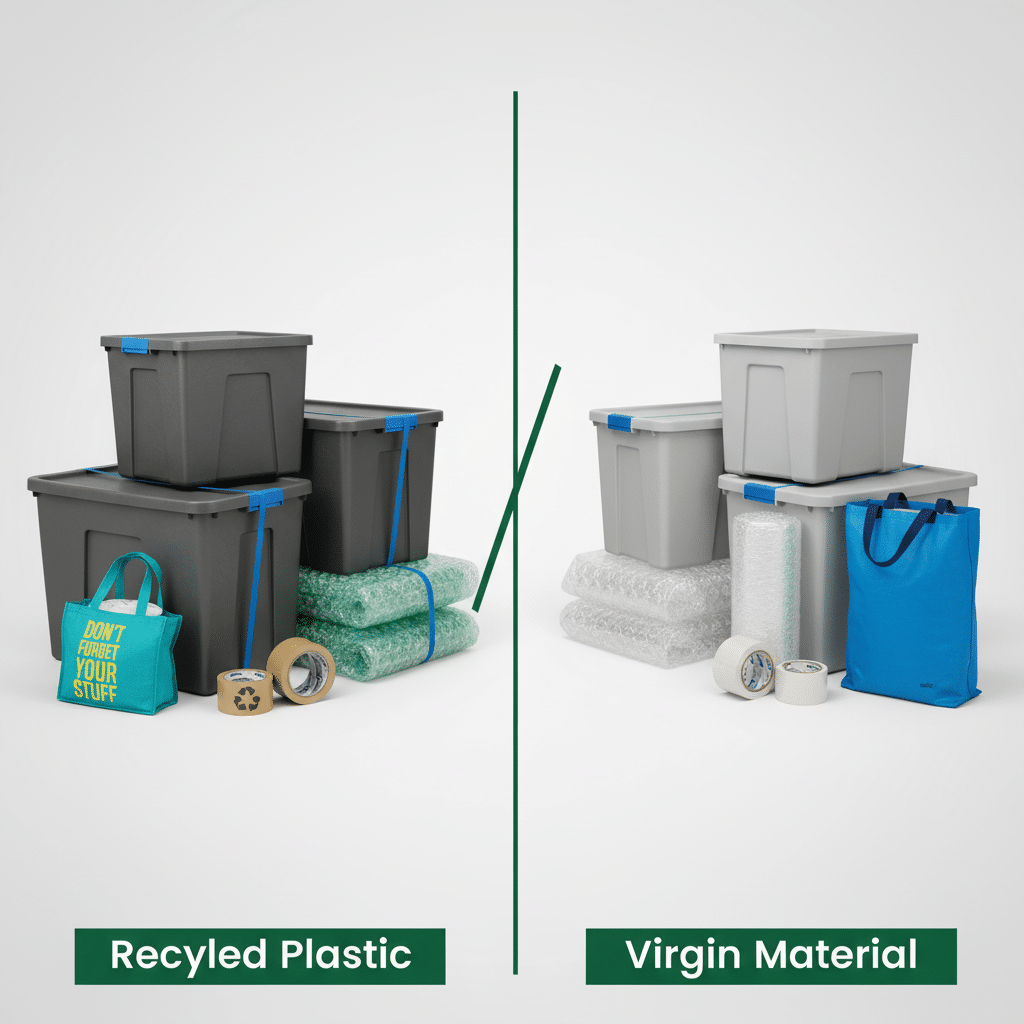
💡 Virgin plastics generally have higher tensile strength and greater material consistency. High-quality recycled plastics, however, retain 85-95% of their impact resistance. This makes them a functionally strong and viable alternative for many B2B applications where peak performance is not a strict requirement.
| Performance Metric | Virgin Plastic | Recycled Plastic |
|---|---|---|
| Tensile Strength | ✅ Peak Performance: Exhibits maximum material strength. For example, virgin ABS shows a tensile strength of 40-50 MPa. | ⚠️ Slight Reduction: Typically sees a 5-15% reduction in strength, but remains highly functional for most commercial products. |
| Impact Resistance | ✅ Maximum Durability: Provides the highest possible resistance to impact and stress. | ✅ Excellent Retention: Maintains 85-95% of virgin material performance, making it durable enough for demanding uses like heavy-duty bags. |
| Material Consistency | ✅ Guaranteed Uniformity: Offers a precise Melt Flow Index (MFI) and perfect color matching from batch to batch. | ⚠️ Potential Variation: Requires stringent quality control to manage potential variations in MFI, color, and contaminants. |
| Thermal Stability | ✅ Optimal Stability: Shows the highest resistance to heat. Virgin HDPE degrades at 99.6 wt%. | ⚠️ Slightly Lower: Degrades a bit sooner due to impurities. Recycled HDPE degrades at 92.7 wt%. Heat deflection temperatures are often similar. |
| Structural Purity | ✅ High Crystallinity: Features higher crystallinity levels (e.g., 79.8% in HDPE), which contributes to rigidity and strength. | ❌ Reduced Crystallinity: The recycling process can lower crystallinity by around 19%, which may slightly alter the final material’s structural properties. |
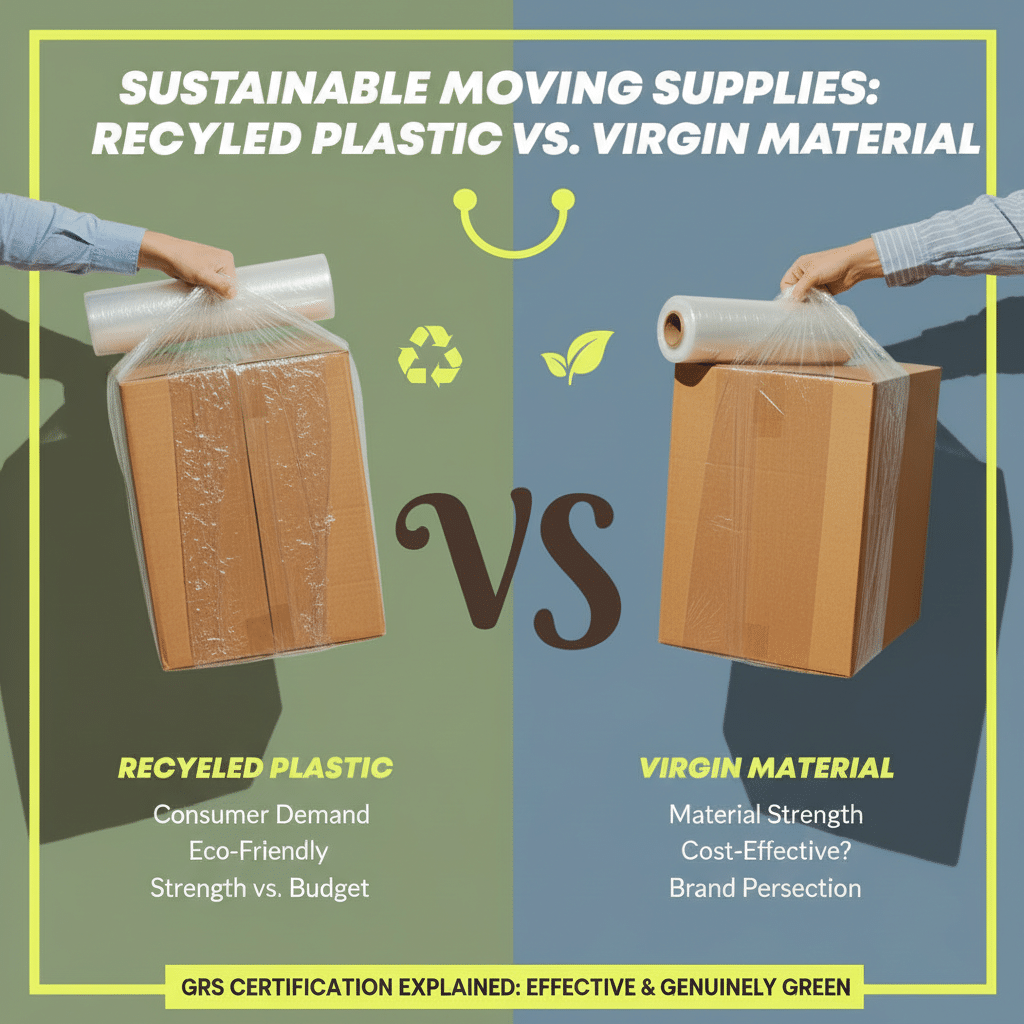
What is GRS Certification? (And Why You Need It)
The Global Recycled Standard (GRS) is an international product standard that verifies recycled content while ensuring responsible social, environmental, and chemical practices in production. For brands, it provides third-party credibility, enhances supply chain transparency, and builds consumer trust in sustainability claims.
Defining GRS: A Full Chain of Custody Standard
The Global Recycled Standard (GRS) isn’t just a label; it’s a comprehensive verification system for products with recycled content. Managed by the global nonprofit Textile Exchange, its primary goal is to create a trusted and consistent definition of “recycled” for the entire industry.
It operates on a strict chain of custody model, tracking recycled material from the source all the way to the final product. This ensures the integrity of the material at every step. If even one facility in the supply chain—from the processor to the final stitcher—lacks GRS certification, the final product cannot carry the GRS label.
- Material Threshold: Verifies products containing a minimum of 20% recycled material. A product must contain at least 50% recycled material to feature the GRS logo.
- Scope: Tracks recycled inputs through every stage of production to guarantee the claim’s authenticity.
The Strategic Value of GRS for Brand Managers
For brand managers, GRS certification is a powerful tool that transforms sustainability goals into a tangible market advantage. It moves beyond simple marketing claims and provides verifiable proof of commitment, which resonates with modern consumers and business partners.
Adopting this standard helps you build a more transparent and resilient supply chain. It acts as a clear signal to your customers that your brand prioritizes accountability.
- ✅ Builds Credibility: Third-party verification makes your sustainability claims trustworthy and defensible.
- ✅ Informs Purchasing Decisions: Empowers both B2C and B2B customers to choose genuinely sustainable products.
- ✅ Creates a Competitive Edge: Demonstrates a clear commitment to environmental responsibility, setting your brand apart.
- ✅ Drives Innovation: Encourages suppliers to improve the quality and application of recycled materials in products like packaging, apparel, and custom bags.
Key Pillars of the GRS Framework
GRS certification goes far beyond just verifying recycled content. To achieve certification, every facility in the supply chain must comply with stringent requirements across three core areas. This holistic approach ensures that products aren’t just eco-friendly but are also produced ethically and safely.
💡 The standard audits for more than just materials; it inspects the entire operational footprint.
- Social Requirements: Based on principles of the International Labour Organization (ILO), this pillar mandates fair labor practices, prohibits child labor, and ensures safe and hygienic working conditions for all employees.
- Environmental Requirements: Certified facilities must have systems to manage their environmental impact. This includes monitoring and improving energy and water consumption, implementing effective wastewater treatment, and controlling emissions.
- Chemical Requirements: GRS restricts the use of potentially harmful chemicals. It references a Manufacturing Restricted Substances List (MRSL) to eliminate hazardous inputs from the production process, protecting both workers and end-users.
Engineer Your Custom Heavy-Duty Moving Bags
We build durable, fully branded moving solutions engineered to your exact specifications for load capacity, materials, and performance. Get a free, professional digital mockup in just 12 hours to see your design come to life.

Biodegradable vs. Recyclable: Clearing the Confusion
Quick Answer: Recyclable materials are repurposed into new products, conserving resources. Biodegradable items break down naturally, but this can take months or years with no set timeframe. Critically, biodegradable plastics often contaminate recycling streams and are generally less effective than recyclable or compostable options for commercial packaging.
What Are Recyclable Materials?
Recyclable materials are items that can be collected, processed, and remanufactured into new products. Instead of ending up in a landfill, they re-enter the supply chain as raw materials. This circular approach is a cornerstone of sustainable packaging for businesses focused on resource management.
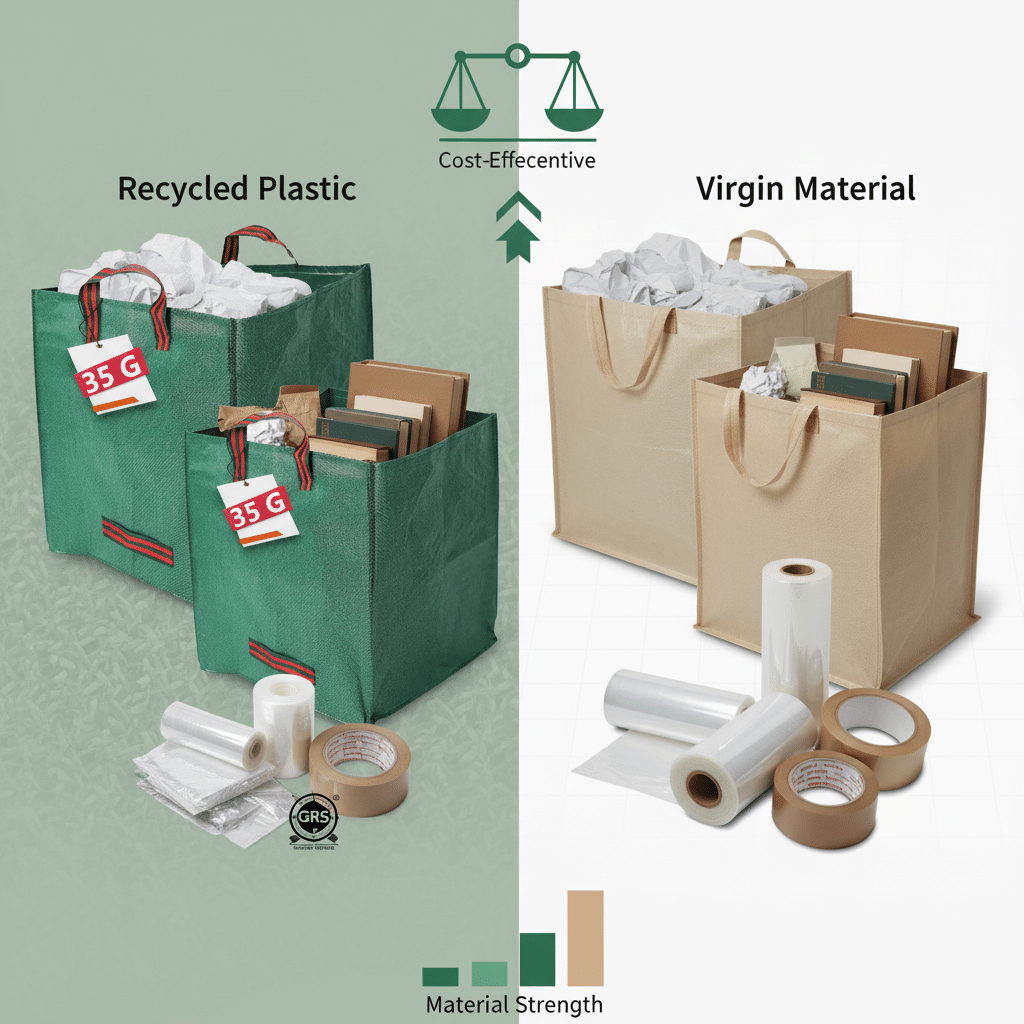
The core benefits directly impact both environmental goals and operational efficiency:
- ✅ Resource Conservation: Recycling reduces the demand for extracting virgin materials, such as harvesting lumber or mining for metals.
- ✅ Lower Emissions: Manufacturing products from recycled materials typically uses significantly less energy and produces fewer greenhouse gas emissions compared to creating them from scratch.
What Are Biodegradable Materials?
Biodegradable materials are made to be broken down by microorganisms like bacteria and fungi, eventually decomposing into water, carbon dioxide, and organic matter. While this sounds good in theory, the practical application has serious limitations that brand managers need to understand.
The main drawbacks include:
- ⚠️ Uncertain Timelines: There is no standardized timeframe for decomposition. An item might break down in months or take several years, depending on the material and environmental conditions.
- ⚠️ No Secondary Value: Unlike compostable materials that enrich the soil, biodegradable items offer no nutrient value upon breaking down. They simply disappear over time.
- ❌ Contamination Risk: These materials cannot be recycled and can contaminate entire batches of recyclable plastics if mixed in, creating significant issues for waste management facilities.
Key Differences: Timeframe, Contamination, and Hierarchy
For brand managers, choosing the right material depends on understanding the functional outcomes. The environmental hierarchy generally places compostable and recyclable options far above biodegradable for most packaging applications. This table breaks down the critical distinctions.
| Feature | Recyclable | Biodegradable | Industrial Compostable |
|---|---|---|---|
| Decomposition Time | N/A (Repurposed) | ⚠️ No guaranteed timeframe (months to years) | ✅ 6–12 weeks in a commercial facility |
| Resource Value | ✅ High (Creates new raw material) | ❌ None (Breaks down into base elements) | ✅ High (Creates nutrient-rich soil) |
| Contamination Risk | Low (If streams are kept clean) | ❌ High (Contaminates recycling streams) | ❌ High (Contaminates recycling streams) |
| Environmental Hierarchy | 🚀 Preferred (Tied with compostable) | 💡 Last resort (Often less effective than landfilling) | 🚀 Preferred (If commercial composting is available) |
Cost of Going Green: Is Sustainable Packaging More Expensive?
Sustainable packaging typically costs 15% to 50% more than traditional options due to material expenses, smaller production scales, and certification needs. While the initial investment is higher, this gap is narrowing. Businesses can achieve long-term savings through reduced waste fees and better regulatory compliance.
A Look at the Price Premium on Sustainable Materials
The switch to eco-friendly packaging often comes with a noticeable price difference. The premium varies widely depending on the material you choose. Below is a breakdown of common sustainable alternatives compared to their conventional counterparts.
| Sustainable Material | Typical Price Premium |
|---|---|
| Bioplastic Tubes | ✅ 40–50% more than standard PE tubes |
| Plant-Based Plastics | ✅ 20–50% more than petroleum-based plastics |
| Recycled Paper Boxes | ✅ 20–30% more than virgin paper |
| rPET (Recycled PET) | ✅ 15–20% more than virgin PET |
| Glass Jars | ⚠️ 2 to 3 times the price of plastic jars |
Key Factors Driving Higher Costs
The price premium on sustainable packaging isn’t just about raw materials. Several operational and supply chain factors contribute to the higher initial investment.
- Supply Chain Maturity: Many eco-materials have limited supply chains that are less developed than those for traditional plastics and paper.
- Economies of Scale: Production runs for sustainable options are often smaller, preventing them from achieving the cost efficiencies seen in mass-produced conventional packaging.
- Certification Expenses: Materials requiring specific certifications, like compostability (e.g., BPI), come with added testing and administrative costs passed on to the buyer.
- Logistics and Weight: Some green options, like glass, are heavier and bulkier. This directly increases freight and shipping expenses.
Long-Term Savings and Financial Benefits
The upfront cost doesn’t tell the whole story. Adopting sustainable packaging can unlock significant financial advantages over time, turning an initial expense into a valuable investment.
- 🚀 Regulatory Compliance: Avoid emerging plastic packaging taxes and other environmental fees that penalize the use of virgin materials or low recycled content.
- ✅ Reduced Waste Fees: Using reusable or recyclable packaging can lower your business’s waste management and disposal costs.
- 💡 Enhanced Brand Image: Attract and retain a growing segment of eco-conscious consumers who prioritize brands committed to sustainability.
- Operational Efficiency: Improving your upstream value chain can reduce overall plastic packaging expenses by an average of 15%.
Strategies to Mitigate Higher Costs
For brand managers looking to make the switch without absorbing the full price premium, a few smart sourcing and planning strategies can make a big difference.
- Leverage Bulk Orders: Placing larger orders can help you access better volume pricing and reduce the per-unit cost, mimicking the economies of scale of traditional packaging.
- Source Locally: Sourcing materials from local or regional suppliers helps minimize freight expenses, especially for heavier items.
- Conduct a Cost-Benefit Analysis: Look beyond the sticker price. Weigh the upfront investment against long-term savings from regulatory compliance, improved brand loyalty, and operational efficiencies.
- Partner with Scaling Suppliers: The cost gap for sustainable materials is constantly narrowing. Work with suppliers who are actively scaling up production, as their costs are likely to decrease over time.
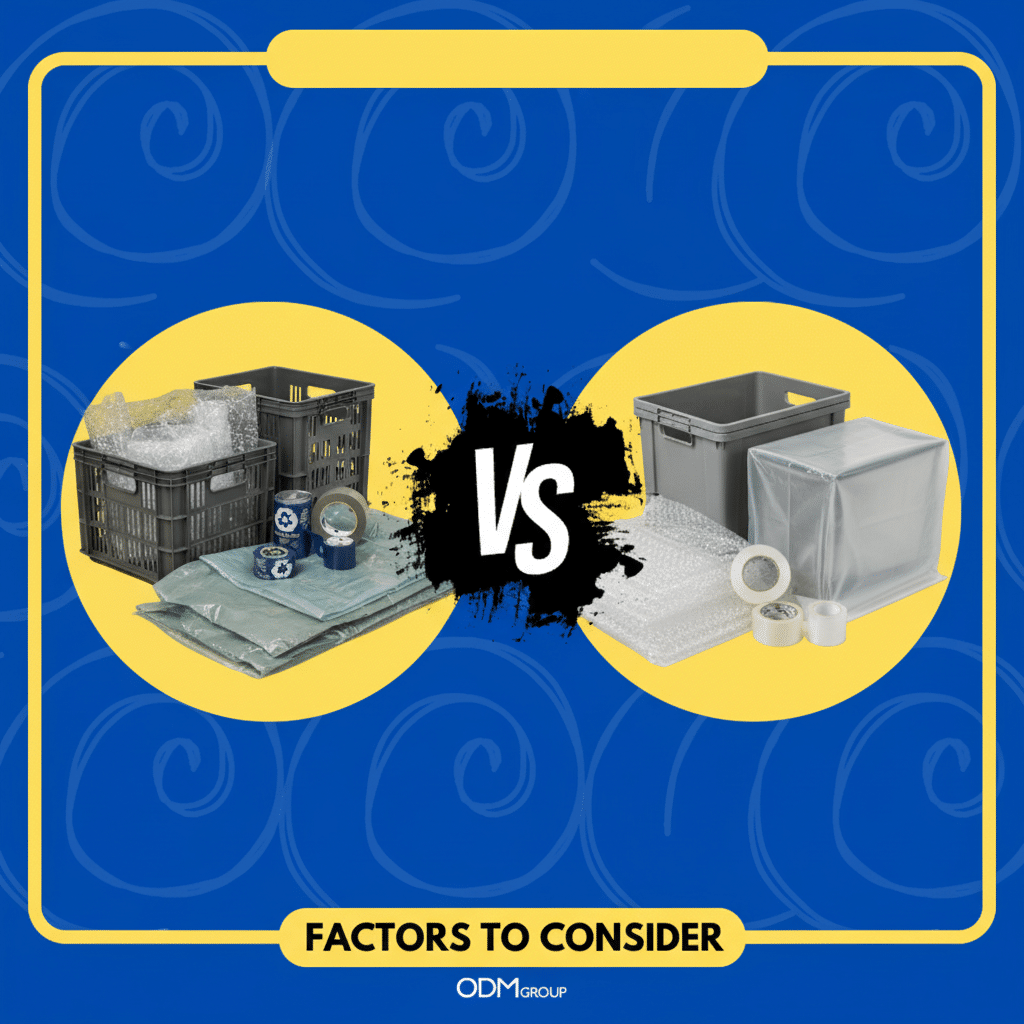
Top Eco-Friendly Packaging Trends for 2026
Quick Answer: In 2026, eco-friendly packaging is moving from single-use to circular systems, driven by powerful consumer demand where 78% actively seek sustainable options. Key trends include the mainstream adoption of bio-based materials, refillable models, single-material designs for better recycling, and smart packaging for supply chain transparency.
For brand managers, navigating the shift toward sustainability is no longer optional. Consumer and regulatory pressures are accelerating the demand for responsible packaging. From our experience manufacturing durable, reusable bags, we see a clear move away from disposable solutions and toward systems that value longevity and resource efficiency.
Here’s a breakdown of the four key trends shaping the future of sustainable packaging.
| Packaging Trend for 2026 | Key Developments & Market Impact |
|---|---|
| 💡 The Rise of Bio-Based & Compostable Materials | Next-generation biodegradable materials are becoming commercially viable and accessible. This moves beyond niche applications into mainstream supply chains.
|
| ♻️ Circular Systems: Refillable & Single-Material Designs | The focus is shifting from disposability to reuse and simplified recycling. This approach designs waste out of the system from the beginning.
|
| 📲 Smart Packaging for Transparency & Safety | Technology is being integrated directly into packaging to empower consumers and ensure product integrity throughout the supply chain.
|
| 📈 Key Market Drivers & Statistics | The push for sustainable packaging is backed by significant economic, consumer, and regulatory forces.
|
Frequently Asked Questions
Are moving bags recyclable?
Yes, many moving bags made from #2 or #4 polyethylene (PE) plastic are recyclable. They cannot go into your standard curbside bin, though. You must take them to a special drop-off location, like a grocery store collection point. For the recycling process to work, the bags must be completely clean and dry.
💡 While recycling is good, reusability offers a greater environmental benefit. Some durable plastic moving containers can be used up to 400 times, significantly reducing waste.
Where to buy eco friendly moving supplies?
You can find eco-friendly moving supplies in several places. Large online retailers like Amazon and U-Haul offer options, alongside specialty e-commerce stores such as EcoEnclose and Urban Green Box. Physical stores, including home improvement and office supply chains, also carry sustainable packing products.
For a very sustainable and budget-friendly approach, check community platforms like Facebook Marketplace or Freecycle. You can often find used boxes and packing materials for free.
Is recycled plastic strong enough for moving?
✅ Absolutely. Recycled plastic moving boxes are typically made from high-density polyethylene (HDPE), a material engineered for strength. They can handle heavy items without buckling or tearing. Unlike cardboard which weakens when wet, recycled plastic is waterproof and heat-resistant, offering superior protection for your belongings.
Industrial-grade recycled plastic containers are even tougher, designed to handle loads between 1,500 and 2,500 pounds.
What is GRS certified packaging?
GRS stands for Global Recycled Standard. It’s a third-party certification that verifies a product contains a minimum percentage of recycled materials—at least 20% for any product, and 50% if the GRS logo is displayed for consumers. The standard goes further by ensuring the entire supply chain adheres to strict environmental, social, and chemical processing requirements.
For brands, GRS certification is a credible way to demonstrate a real commitment to sustainability and build trust with environmentally conscious customers.
Biodegradable packing peanuts vs air pillows?
Air pillows are generally the more sustainable option. They consist of 99% air and only 1% recyclable plastic film, which drastically minimizes material waste. Because they are so light, they help reduce shipping costs and carbon emissions. They also take up very little warehouse space since they are inflated on-demand.
From a functional standpoint, air pillows provide better protection by locking items in place and offer a cleaner, less messy unboxing experience for the end customer.
How to market sustainable packaging?
Effective marketing for sustainable packaging goes beyond just mentioning it. Here are a few strategies:
- Integrate it into your brand story. Don’t treat it like a side feature. Make sustainability a core part of your brand’s identity and values.
- Create a shareable unboxing experience. Design your packaging to be visually appealing and memorable, encouraging customers to share photos or videos on social media.
- Use QR codes. Add a QR code to your packaging that links customers directly to a page detailing your sustainability mission, the materials used, or recycling instructions. This bridges the gap between the physical product and your digital story.
Final Thoughts
Choosing sustainable moving supplies is now a core strategic decision for brand managers. Recycled plastics offer a strong, viable alternative to virgin materials, and understanding key differences—like recyclable versus biodegradable—is critical for making an impact.
Certifications like the GRS provide essential verification to build consumer trust in a market where shoppers actively seek eco-friendly products. While sustainable options may have a higher initial cost, the long-term value in brand loyalty and regulatory compliance is undeniable.
Successfully navigating this shift means balancing material performance with market expectations and supply chain realities. The growing shortage of recycled content makes securing a reliable source a competitive advantage.
Partnering with a supplier who provides durable, reusable, and certified solutions helps mitigate these risks, ensuring your brand meets its ESG goals and captures the loyalty of today’s conscious consumer without compromising on quality or consistency.