




Last quarter, I watched a logistics manager for a regional moving company try to justify a switch from cardboard to reusable tote bags vs cardboard. He had the spreadsheets out—cost per unit, FOB pricing from three factories, the whole routine. But he was missing the real numbers. He hadn’t factored in the labor for taping every box, the disposal fees for collapsed units, or the time his crew spent hunting for intact boxes in a humid warehouse. By the time we added up the true cost, his $0.85 per cardboard box turned into nearly $0.17 per use after tape, labor, and replacement. That’s before we even talk about a 500-use woven PP tote that runs under $2.00 from a direct factory.
Cardboard boxes lose up to 80% of their stacking strength after one humid warehouse cycle. That’s not a theory—it’s what happens when a forklift driver stacks three-high on a damp concrete floor. Meanwhile, our in-house QC testing shows that 98% of 500-use totes survive full load cycles without handle tear-out, validated by ASTM D5034 burst strength standards. A metric impossible for cardboard. So when a distributor asks me about the reusable tote bags vs cardboard debate, I tell them to stop looking at unit price and start looking at cost-per-cycle, load capacity in real conditions, and what happens to their waste stream after year one.

Total Cost of Ownership: Tote Bag vs Cardboard Over 500 Cycles
Cardboard’s per-use cost hides $0.12-$0.17 in tape, disposal, and collapse replacement.
Most buyers compare the upfront price of a cardboard box against a reusable tote and conclude cardboard is cheaper. That calculation misses 70% of the real cost. Over 500 cycles — the realistic lifespan of a woven PP tote from the factory — the hidden expenses of single-use cardboard push its total cost above the reusable alternative.
- Tape & labor: Each cardboard box requires sealing tape ($0.03-$0.05) and labor to fold, tape, and dispose ($0.06-$0.09 per box in warehouse wages). Over 500 boxes that’s $45-$70 in non-recoverable consumables.
- Disposal fees: Cardboard waste removal costs $0.04-$0.07 per box (recycling or landfill). After 500 boxes, another $20-$35 vanishes.
- Collapse & rework: In humid warehouses or multi-stop moves, cardboard loses up to 80% stacking strength after one use cycle (source: ASTM D4169 testing guidelines). Collapsed boxes mean re-packing labor, damaged goods claims, and emergency box purchases — easily $0.05-$0.10 extra per cycle.
- Double-wall over-spec: To compensate for weakness, many operations buy double-wall corrugated at $1.20-$2.00 each instead of single-wall at $0.60-$1.00 — effectively paying a durability tax that still fails after one trip.
| Cost Element | Картонная коробка | Woven PP Tote | 500-Cycle Impact |
|---|---|---|---|
| Initial Unit Price | $1.20 – $2.00 | $2.50 – $4.00 (bulk) | Tote upfront higher, but reusable |
| Tape & Supplies per Use | $0.05 – $0.08 | Load Capacity & Structural Integrity in Real Warehouse Conditions
I’ve watched a pallet of double-wall corrugated boxes collapse in a non-climate-controlled warehouse just three days after delivery. The humidity from a morning fog saturates the paper fibers, and the stacking strength — which looked fine on the spec sheet — drops by 80%. For an industrial distributor buying in bulk, that means crushed lower tiers, product damage, and a forklift operator spending extra time restacking or discarding compromised boxes. This isn’t a theoretical risk; it’s the reality of any facility that isn’t a sealed, climate-controlled clean room. Now compare that to a 180 GSM woven polypropylene tote. Our in-house QC lab runs accelerated humidity cycles that simulate 500 uses in a moist environment. After each cycle, we test load capacity to ASTM D5034 burst standards. The tote retains full structural integrity — no softening, no edge crush failure. The reason is simple: woven PP is hydrophobic. Water beads and runs off. The fiber matrix doesn’t swell or lose tensile strength. That’s why a bulk tote bag supplier can guarantee consistent 150 lb tear-out resistance for the entire lifecycle, while cardboard handholds rip out after the first wet handling.
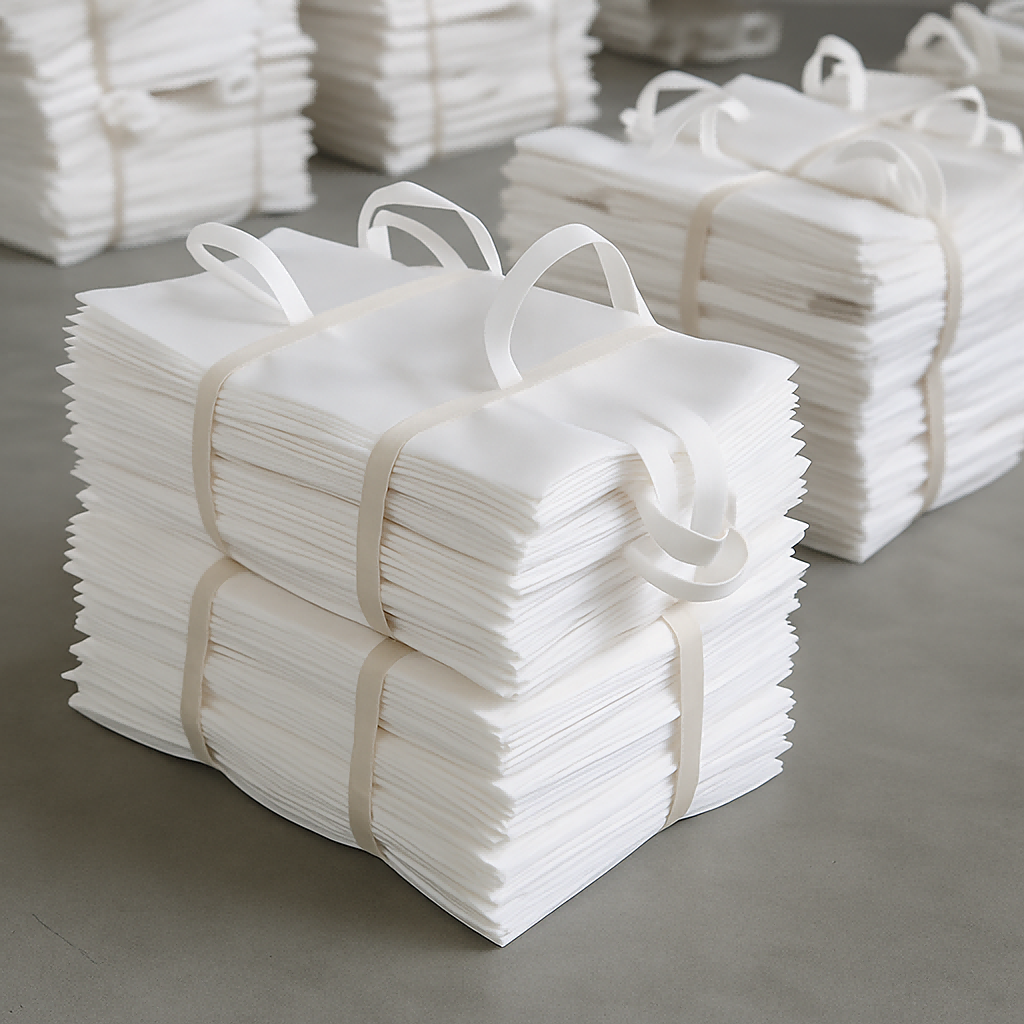 Warehouse Space Efficiency: Nesting vs Flattening
Every square foot of warehouse floor costs money. When you’re comparing reusable tote bags vs cardboard for a high-volume operation, the space efficiency difference between nesting and flattening is not a minor detail — it directly impacts your pallet density and picking speed. Here’s the hard data from real warehouse layouts.
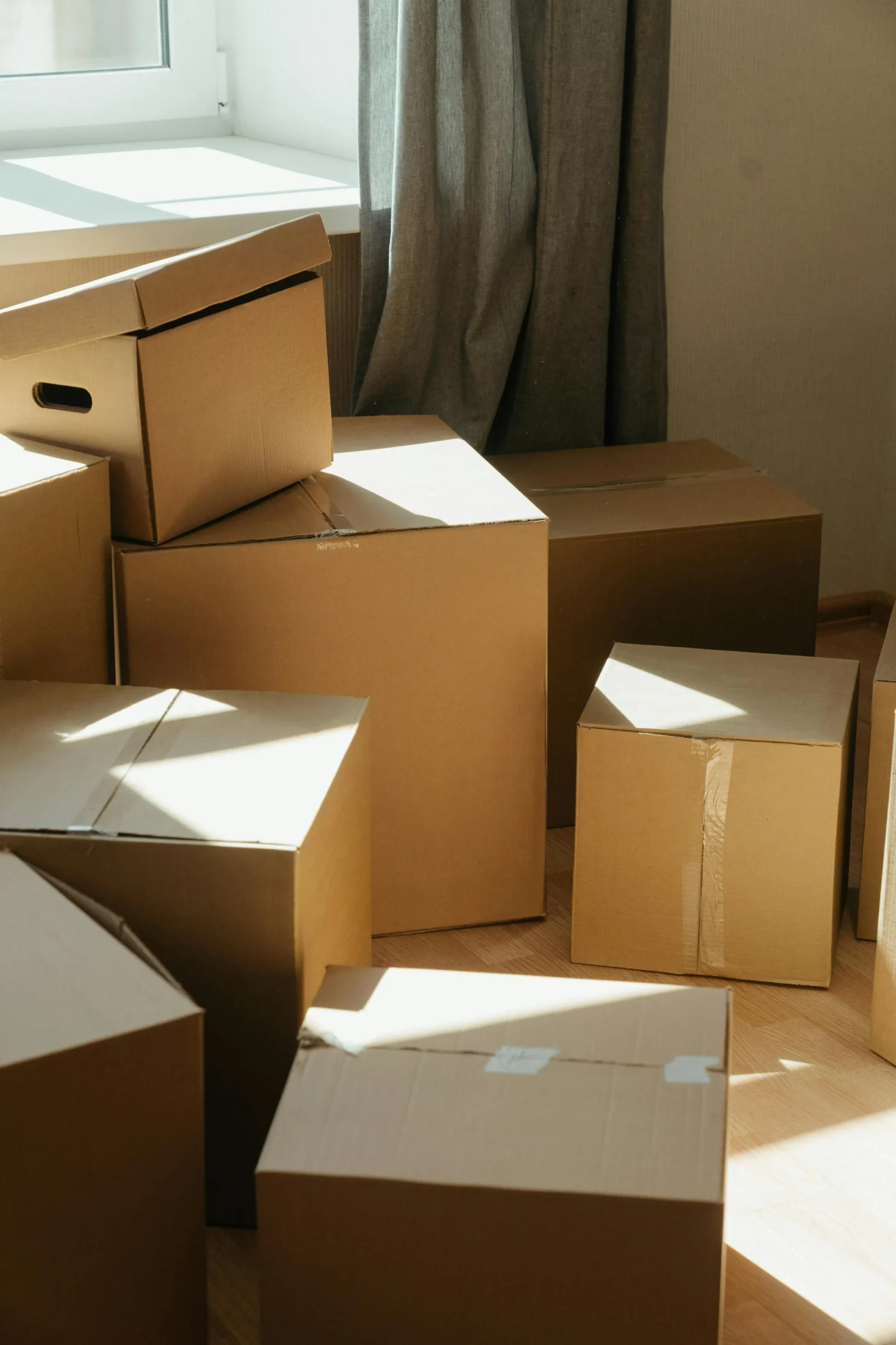 Environmental Impact & ESG Compliance
ESG reporting is no longer optional for industrial distributors servicing corporate logistics accounts. Every ton of packaging waste carries a carbon accounting cost that hits both your P&L and your client’s sustainability scorecard. Here is the direct comparison: one standard corrugated box weighs roughly 0.5 kg and lasts one trip. Over 500 cycles, you throw away 250 kg of cardboard per box position. Replace that with a woven PP tote rated for 500 uses — same load, zero disposal events.
Comparing 500-Use Tote Bags vs Single-Use Cardboard Boxes Просмотрите эту страницу, посвященную продукту, решению или услуге, чтобы ознакомиться с соответствующими предложениями. 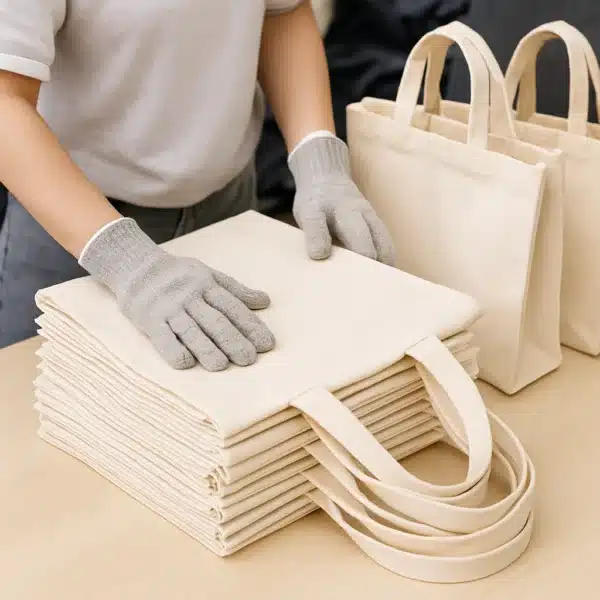 Branding & Professionalism for Client-Facing Moves
When your client’s moving crew shows up with branded woven PP totes instead of collapsing cardboard boxes, you’ve already won half the trust battle. I’ve watched logistics managers burn through $50K orders because the pre-production sample looked sharp but the mass production run arrived with misaligned prints and handles that tore at 80 lbs. That’s the gap between ‘custom printed’ and ‘custom engineered.’ For industrial distributors, this isn’t just aesthetics — it’s a recurring revenue model.
ЗаключениеThe numbers don’t lie: a $0.14 per-use tote outlasts and outperforms cardboard that costs $0.12–$0.17 per cycle once you factor in tape, disposal, and collapse replacements. Over 500 cycles, that’s a 20% savings or more, plus the reliability of a bag that holds 150 lbs even after a humid week in the warehouse. The benchmark to beat: $0.12 per use. Anything above that on a per-cycle basis is a candidate for replacement. Run your own total cost of ownership calculation with your current order volume. Compare FOB pricing from factory-direct suppliers against your cardboard spend. If your cost per cycle exceeds $0.12, it’s time to request sample approval and test a run of 500-use totes against your quality tolerance standards. Часто задаваемые вопросыWhat’s the real cost of cardboard over 500 uses?Cardboard’s per-use cost hides $0.12–$0.17 in tape, disposal, and collapse replacement. A quality tote bag typically pays for itself within 150 cycles based on bulk factory pricing. Run your own TCO calculation with your current box spend to confirm savings. How does humidity damage cardboard boxes?Cardboard boxes lose up to 80% of stacking strength after just one humid warehouse cycle. A woven PP tote bag maintains full load capacity regardless of moisture or temperature. Humidity is a deal-breaker for cardboard in long-term storage or damp environments. How many tote bags fit on a pallet vs boxes?Nesting tote bags reclaims 40% more vertical space than storing flattened cardboard boxes. That means roughly 250 collapsed totes on a standard pallet versus about 150 flattened boxes. Optimize warehouse volumetric efficiency by switching to nestable totes. Are tote bags more eco-friendly than cardboard?A single tote used 500 times eliminates 500 cardboard boxes from the waste stream. While cardboard is recyclable, the energy and water required over 500 cycles far exceeds a tote bag’s. If ESG reporting matters, tote bags reduce waste per shipment significantly. |


0 комментариев