



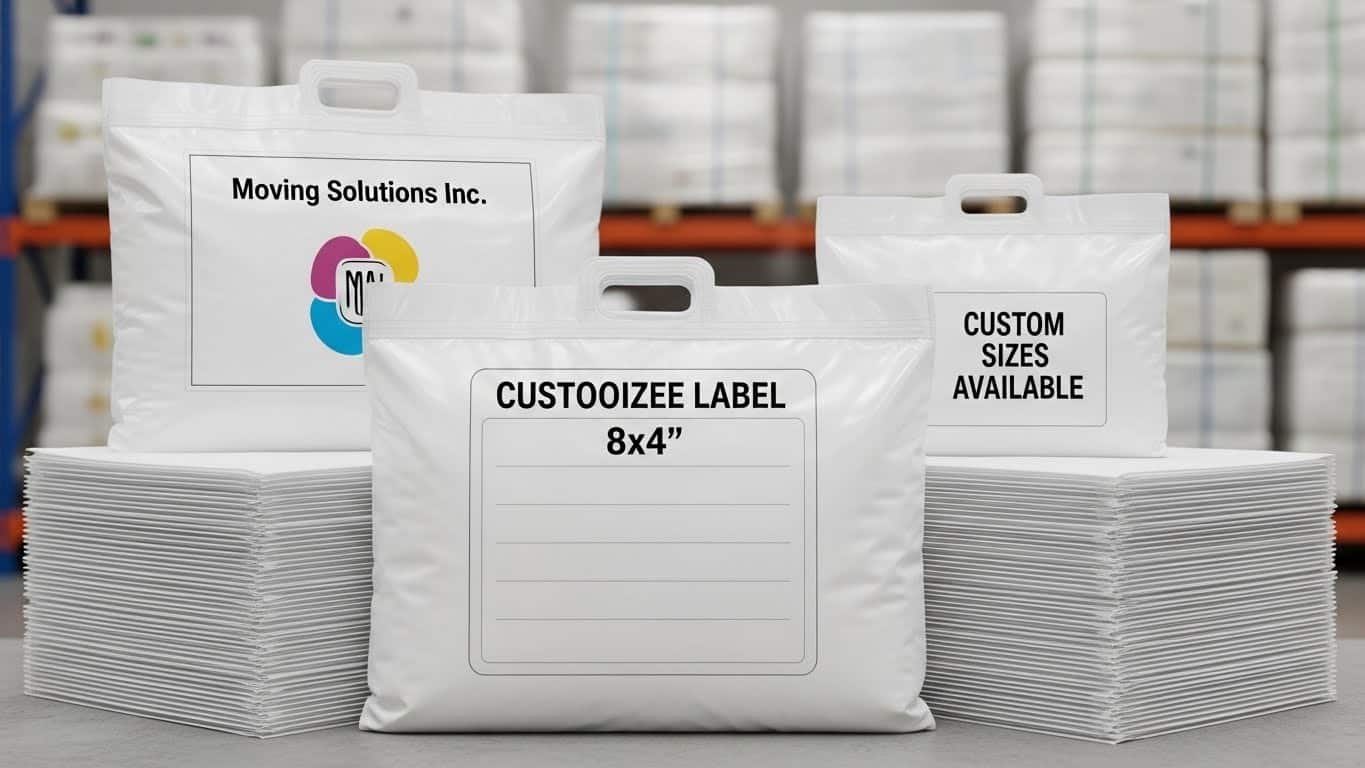
Clothing donation drives live and die on friction: every step a donor has to think about costs participants, and every unsorted bag costs volunteers hours. A regional nonprofit’s clothing donation drive in clear bags collected 25,000 items in a single season by attacking exactly those two frictions – and the clear bag was the piece that made both ends of the drive work. Here is how the program ran.

Why clear bags for donations
Donation drives receive everything, and sorting is where volunteer hours disappear. Clear bags changed the intake math: volunteers at collection points could see contents without opening anything, route bags to textile recycling, resale shops or export bales at a glance, and reject the contaminated bags – the ones with wet items or hazardous waste – before they entered the stream. Donors liked the format too, because a clear bag is its own receipt: the donation is visible, which builds the trust that brings the same donor back for the next drive. The bags also solved the marketing problem – each bag printed with the drive’s logo and dates became an advertisement sitting in a donor’s hallway for the two weeks before drop-off.
How the 25,000-item season actually ran
The program had three moving parts. Distribution: clear bags went out through partner schools, gyms and shops two weeks before collection weekend, with the logo, dates and a what-belongs list printed on the bag itself – the instructions travelled with the container. Collection: weekend drop-off points staffed by volunteers, where sealed clear bags were counted, logged and palletised without opening. Processing: the bags went from pallet to sorting table, where the visible contents let three volunteers do the work six used to. The full season – two distribution waves, one collection weekend, and the processing tail – ran on the wholesale clear bag program described in our guide to large-format logistics bags, with 20,000 bags printed for a 25,000-item result.

The numbers behind the volunteer saving
The sorting-time claim deserves its arithmetic. Unsorted donation bags get opened, contents assessed, and either routed or repacked – call it several minutes per bag across thousands of bags, which is volunteer-days per drive. Clear bags with printed routing collapse that to a glance and a pallet move, and the saved hours are the hours that staffing budgets never quite cover. The 25,000-item season ran its processing tail with a fraction of the volunteer roster the previous drive needed, and the leftover hours went where they do the most good: donor thank-you calls, which is the work that actually grows the next drive.
What other drives copied from this one
The clear-bag structure has repeated across other donation categories with small adaptations. Book drives print the accepted-conditions list on the bag, because damaged books contaminate a pallet invisibly. Toy drives for holiday programs use the bag’s printed panel for the age-range guidance, which sorts at the collection point instead of the distribution centre. Food pantry drives – where regulations get stricter – use the bag purely as the carrier and keep food in original packaging inside, and their printed panels carry the do-not-donate list verbatim from the health department. The environmental framing matters to more drives every year, and the EPA’s sustainable materials management guidance gives programs the language to describe textile reuse accurately rather than aspirationally. The bag is the constant across all of these; the print is the program.
The economics for nonprofit procurement
Nonprofits buy differently: the bag is a program supply, a marketing piece and a donor-experience item at once, so the budget line comes from three places. Wholesale pricing on volume, in a simple clear PEVA or recycled material, kept the unit cost low enough that a local sponsor’s logo on the reverse covered a share of the print run – sponsor-covered bags are the standard financing trick in this space, and the sponsor gets clean visibility on every bag in every hallway. For organisations planning their first drive, our guide to wholesale bag programs covers the volume tiers, and the material compliance conversation – what the bags themselves are made of – follows the same logic as our recycled PET material notes, which matter to drives that promote sustainability alongside the donation.
Video: clothing donation clear bags
Clear bags turned a sorting problem into a visibility feature, put the instructions on the container, and gave sponsors a place to stand. Nonprofits planning a drive: send us your collection targets and distribution footprint, and we will quote the printed bag program with sponsor-panel options inside two working days.

0 комментариев