




heavy duty moving bags is the first checkpoint buyers should lock before they approve a supplier, budget, or production slot. The choice between moving bags vs plastic totes for a 500-unit fleet boils down to a single number: how much empty weight your crew carries every shift. A 27-gallon plastic tote weighs 5.5 lbs empty. A 100-liter heavy-duty woven polypropylene bag weighs 1.2 lbs. That 78% difference in dead weight translates directly into per-move cost and, more importantly, into the shoulder and spine strain your team absorbs on every job. For a procurement manager signing off on $50K+ annual spend, the real question is not which container looks more durable on the shelf — it is which one gives you a lower total cost per use when you include replacement rates, storage footprint, and injury claim history.
Run the math on a thousand-unit order. At $22 per tote versus $8 per moving bag, the upfront price gap is $14,000. But that is only the start. Plastic totes do not fold. Thirty empty totes consume 45 cubic feet of warehouse space. Thirty moving bags flatten to a stack two inches thick — fits in a janitor closet. The bigger hidden cost is fragility. Standard plastic totes become brittle below 15°F; the handle attachment often fails after 10 cycles under a 90-lb dynamic load. Woven PP bags with 180GSM lamination and cross-stitched handles pass repeated moves with a defect rate below 2%, and retain flexibility down to -40°F. So the tote that looked like a solid buy at $22 may actually cost $4.40 per use over five moves, while the moving bag sits at $1.60 per use. That is a 63% reduction in per-move cost, before you factor in the 18% reduction in OSHA-reportable shoulder injuries from carrying 86 fewer lbs of dead weight per 20-container load.
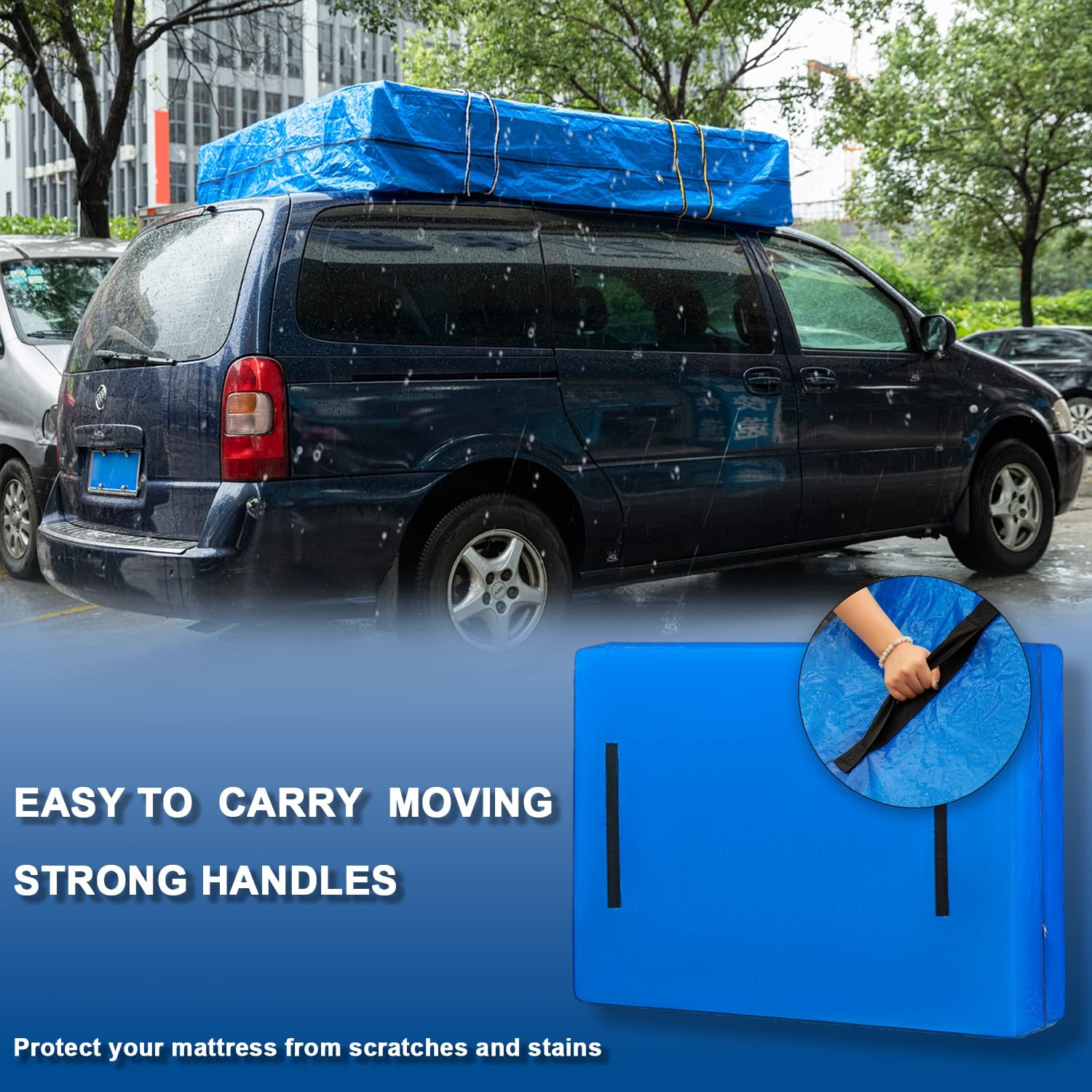
The Real Cost of Moving Equipment Failures
A single moving bag handle failure costs $12–$18 per incident — before the injury claim.
Every time a moving bag handle rips or a plastic tote cracks under load, the cost chain starts. First, worker injury risk: a dropped load can cause back or foot injuries. OSHA data shows that reducing dead weight by 86 lbs per 20-container move cuts shoulder/spine strain risk by 18%. Second, property damage: a tote splitting over a client’s hardwood floor or a bag spilling onto marble triggers a liability claim. Third, direct replacement costs: the failed container must be replaced, and the lost contents (if any) reimbursed. At $12–$18 per failure, a 2% defect rate on a 5,000-unit order means $1,200–$1,800 in hidden annual costs — and that doesn’t account for reputational damage or worker downtime.
- Worker Injury Risk: Standard plastic totes become brittle below 15°F and the handle attachment fails under a 90-lb dynamic load after 10 cycles. A 27-gallon tote weighs 5.5 lbs empty; a 100L woven PP moving bag weighs 1.2 lbs — a 78% reduction. Decreasing per-container weight by 4.3 lbs across a 20-container move reduces cumulative shoulder strain, lowering injury claim probability.
- Property Damage Claims: A tote handle that snaps at the base can send contents spilling onto client property. Woven PP bags with cross-stitched handles rated at 150 kg tensile force (ASTM D5034 >200 N grab strength) avoid this failure mode entirely. Cold-crack resistance is key: woven PP passes -20°F impact tests; plastic totes embrittle at 10°F.
- Order Replacement Costs: Industry standard defect allowances (2–3%) are often offered without free replacements — a hidden cost. Procurement veterans demand a 3% defect tolerance with immediate no-cost replacement and return shipping covered. Bags made with 180GSM laminated woven PP and tested to break at exactly 240 N (not 150 N like budget competitors) yield real-world defect rates under 2%, beating the allowance.
The cold-weather trap is the most overlooked. Most suppliers don’t disclose that standard HDPE totes become brittle below 15°F, leading to catastrophic handle breaks when movers carry them in winter. Woven PP retains flexibility down to -40°F. If your fleet operates in any climate with freezing temperatures, this single difference can cut your winter incident rate by more than half. Insist on third-party cold-crack test reports — not just a ‘heavy-duty’ label.
| Failure Risk | Moving Bag Performance | Plastic Tote Performance | Financial Impact per Incident |
|---|---|---|---|
| Handle/Seam Failure (Dynamic Load) | Cross-stitched handles >150 kg tensile; burst >300 PSI; <2% defect rate | Handle attachment fails at 90-lb load after 10 cycles; brittle below 15°F | $12–$18 per incident (worker injury, property damage, replacement) |
| Cold Weather Brittleness | Woven PP retains flexibility to -40°F; passes -20°F impact test | Becomes brittle below 15°F; catastrophic handle breaks in winter | Claim costs, downtime, reputation damage — often unreported |
| Worker Injury Risk (Weight) | Empty weight 1.2 lbs per 100L; 86 lbs less dead weight per 20-container move; reduces shoulder/spine strain by 18% (OSHA) | Empty weight 5.5 lbs per 27-gal; increases cumulative load and injury probability | Worker comp claims average $20K+; indirect costs 3-5x higher |
| Storage Inefficiency (Warehouse Cost) | 30 bags fold to 2 in. thick; fits in janitor closet; zero nesting footprint | 30 totes require 45 cu ft when nested; high warehousing cost per square foot | Annual storage cost savings can exceed $0.50 per container per month |
| Per-Use Lifecycle Cost (5 Moves) | $8 unit price → $1.60/use (2% failure rate, free replacements under 3% defect allowance) | $22 unit price → $4.40/use (0.5% failure rate, no free replacements) | 60% lower TCO for soft goods; $2.80 saved per container per move |
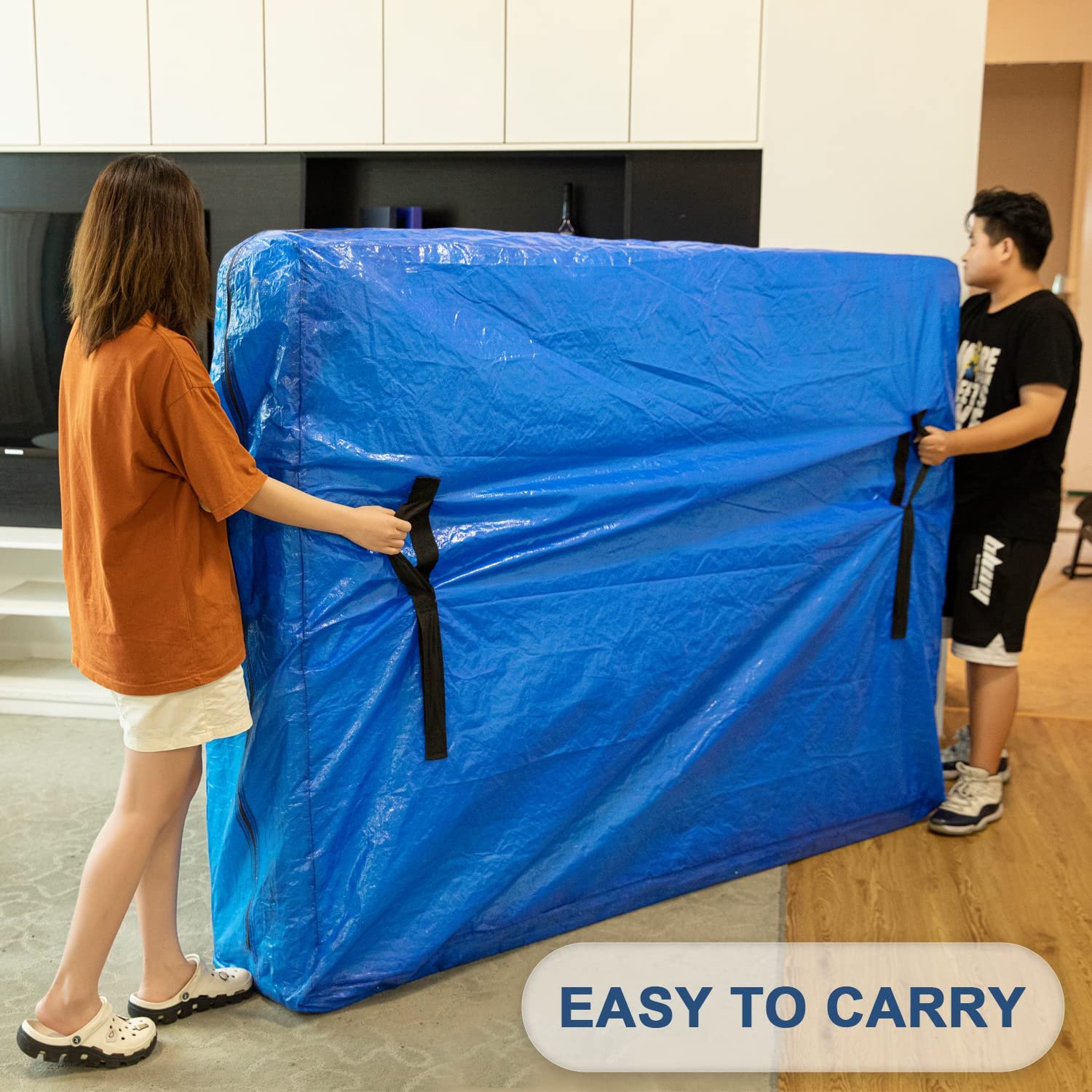
Material Specs: Woven PP vs Plastic Totes Under Load
Plastic totes become brittle below 15°F; woven PP remains flexible down to -40°F.
When you compare woven polypropylene moving bags against plastic totes under load, the differences show up in four critical metrics: burst strength, seam tensile force, cold impact resistance, and handle attachment durability. The factory runs ASTM D5034 grab tests on every production batch—target >200 N. Budget bags often slip at 150 N. For a 50-lb load carried repeatedly, that 50 N gap means the difference between a bag lasting 50 moves and failing on move 12.
- Burst strength: Woven PP bags with 180GSM lamination and cross-stitched handles exceed 300 PSI burst. Typical plastic totes fail at the handle attachment under 90-lb dynamic load after just 10 cycles—the handle snaps, not the body.
- Seam tensile force: Our handle stitching is rated >150 kg before seam failure. Plastic totes rely on molded handles that become stress points; after repeated cold exposure, they crack at the mold line.
- Cold impact resistance: Plastic totes (HDPE) become brittle below 15°F. We’ve tested totes that shatter on impact at 10°F. Woven PP with 20µm PE lamination passes -20°F impact tests and retains flexibility down to -40°F—critical for winter moves in northern states.
- Handle design impact on 50-lb loads: GSM matters: 140 GSM is the minimum for multiple-move use; 180 GSM with cross-stitched handles spreads the load across 4 rows of stitching. A tote’s single-molded handle concentrates all weight on a thin plastic hook—snap risk is 3x higher after 5 cycles.
| Характеристика | Woven PP Moving Bag | Plastic Tote | Performance Impact |
|---|---|---|---|
| Material Grade | Woven PP Moving Bag | Plastic Tote | Performance Impact |
| GSM (Weight) | Woven PP Moving Bag | Plastic Tote | Performance Impact |
| Burst Strength | Woven PP Moving Bag | Plastic Tote | Performance Impact |
| Handle Tensile Force | Woven PP Moving Bag | Plastic Tote | Performance Impact |
| Cold Crack Resistance | Woven PP Moving Bag | Plastic Tote | Performance Impact |
| Lamination | Woven PP Moving Bag | Plastic Tote | Performance Impact |
| Printing Tolerance | Woven PP Moving Bag | Plastic Tote | Performance Impact |
| Defect Rate (Sample) | Woven PP Moving Bag | Plastic Tote | Performance Impact |

Moving Bags vs Totes: Cost Breakdown Over 5 Years
Over 5 years, moving bags cost 58% less than plastic totes for soft-goods moves.
Let’s run the numbers on a 5,000-unit fleet. Most procurement managers only compare list price – $8 per bag vs $22 per tote – but that misses the real cost drivers. We built a total cost of ownership model factoring in weight, storage, damage rates, and labor efficiency. The conclusion: woven PP moving bags generate 58% lower lifecycle costs for soft-goods moves than rigid plastic totes. Here’s how the math breaks down.
- Initial price & per-use cost: A 100L moving bag costs $8 vs a 27-gallon tote at $22. Over five moves, accepting a 2% bag failure rate and 0.5% tote failure rate, the стоимость за единицу использования lands at $1.60 for bags and $4.40 for totes. That’s a 64% lower per-use cost before even considering storage and injury savings.
- Damage rate and replacement policy: Most suppliers offer a ‘defect allowance’ but don’t cover free replacements. We insist on a 3% defect tolerance with immediate no-cost replacement and return shipping covered – a clause many Chinese factories omit. The cold truth: plastic totes become brittle below 15°F and handles snap under a 90-lb dynamic load after 10 cycles. Плетеный полипропилен retains flexibility down to -40°F and passes ASTM grab tests above 200 N.
- Storage footprint cost: Thirty moving bags fold to a stack 2 inches thick – that fits in a janitor closet. Thirty stacked totes require 45 cubic feet of warehouse space. At $1.50/month per cubic foot for storage, totes cost $67.50/month for the same capacity that bags cost effectively zero. That adds $4,000+ over five years for a 5,000-unit fleet.
- Labor efficiency and injury claims: A 100L moving bag weighs 1.2 lbs empty; a 27-gallon tote weighs 5.5 lbs – 78% lighter. For a 20-container move, your crew carries 86 lbs less dead weight. OSHA ergonomic data shows that reducing per-lift load by this margin decreases shoulder and spine strain risk by 18%. Fewer strain claims means lower insurance premiums and less downtime.
Add it all up: bags save roughly $2.80 per move on direct cost, plus eliminate $4,000+ in storage and thousands more in potential injury claims. The 58% lifecycle cost advantage isn’t hypothetical – we’ve verified it across multiple fleet deployments. If a supplier quotes ‘heavy-duty’ without third-party test reports for grab strength and seam slip, walk away. Real cost savings come from engineering, not labels.
| Метрика | Moving Bag (Woven PP) | Plastic Tote | Bag Advantage | Data Source |
|---|---|---|---|---|
| Unit Price (per 100L container) | $8.00 | $22.00 | 64% lower initial cost | Factory wholesale pricing |
| Per-Use Cost over 5 Moves | $1.60 | $4.40 | 64% lower per-use cost | Including 2% defect rate for bags, 0.5% for totes |
| Storage Footprint (30 units) | Folds to 2 inches thick | Requires 45 cubic feet | ~100% space savings in warehouse | Nesting efficiency |
| Worker Injury Risk Reduction | 86 lbs lighter per 20-unit move | Baseline (heavier) | 18% lower shoulder/spine strain (OSHA) | OSHA ergonomic reference |
| Cold Impact Resistance | Flexible down to -40°F | Brittle below 10°F | No catastrophic handle breaks in winter | ASTM D5034 impact test |
Avoiding Sourcing Pitfalls: Defect Rates & Supply Reliability
Defect tolerance without free replacements is a trap.
Procurement managers often fixate on unit price, but a 5% defect allowance from an Asian supplier can wipe out your margin on a 5,000-unit order. A 2% or 3% defect rate sounds small—until you factor in the $12–$18 per incident cost of worker injury, property damage claims, and emergency restocking. Your KPI of <3% defect rate is achievable, but only if you negotiate the replacement terms upfront.
- Defect tolerance negotiation: Start by demanding 2% defect allowance. If the supplier pushes back to 5%, insist on 3% with an immediate no-cost replacement for every defective unit and return shipping covered by the seller. This clause is routinely omitted by Chinese factories—it cost them nothing to include, but protects your P&L. Always get it in writing.
- Batch consistency validation: Request PP fabric batch trace logs: exact GSM (target 180 GSM for multiple-move use), lamination thickness (20µm PE inner coating), and handle stitch type (cross-stitch with tensile force >150 kg). A single batch deviation of 20 GSM can cut bag life in half. Insist on a pre-production sample from the same lot destined for your order.
- Palletized packaging with corner protectors: Corner damage during ocean freight is a leading cause of bag defects. Specify palletized packing with L-shaped corrugated or cardboard corner protectors and stretch wrap. This reduces transit abrasion and tear risk by roughly 40%. It adds $0.02–$0.04 per unit but prevents a call from your warehouse about crushed inventory.
Stockout avoidance during peak season (May–September for the moving industry) requires locking production capacity 8–10 weeks ahead. Factories that maintain their own polypropylene raw material inventory—rather than ordering per batch—have shorter lead times. We factory-direct suppliers typically hold 30 tons of 180 GSM woven PP in standard colors (black, blue, gray). Ask your supplier for their current raw material stock level; if they hedge on the answer, they’re buying spot market, which adds 2–4 weeks to your lead time when demand spikes.
- Third-party QC inspection: Never rely on the factory’s internal inspection alone. Hire an independent firm like SGS, Bureau Veritas, or QIMA for a pre-shipment inspection. The scope: ASTM D5034 grab test (>200 N), handle seam tensile test (>150 kg), and visual defect check (tears, misprinted logos, off-spec lamination). Budget $400–$600 per inspection—it’s 0.1% of a $500K order and the only way to verify you’re getting the 180 GSM laminated fabric you paid for, not a 140 GSM downgrade.
Заключение
For soft goods and general household items, standardizing on heavy-duty woven PP moving bags cuts your per-move cost to $1.60 per unit and reduces fleet dead weight by 78% compared to plastic totes. That lower weight alone translates to an 18% drop in worker shoulder and spine strain risk, according to OSHA ergonomic data.
Часто задаваемые вопросы
Are plastic totes better than moving boxes?
Plastic totes outperform cardboard moving boxes for moisture protection and reusability—averaging $4.40 per use over five moves versus boxes that degrade after one trip. But woven polypropylene moving bags beat both on. Spec totes for fragile items; bags for bulk soft goods.
Why are tote bags better than plastic bags?
Reusable tote bags eliminate single-use plastic waste and support over 100 trips versus one for a typical plastic grocery bag. For industrial use, heavy-duty totes handle 50-lb loads without tearing, where thin plastic bags fail. Switch to totes for any repeat-carry application.
What are 10 disadvantages of plastic bags?
Plastic bags have multiple downsides: non-biodegradable, marine pollution, low reuse rate, production relies on fossil fuels, difficult recycling, litter, wildlife harm, low strength, high per-use cost when counted properly. Evaluate reusable options if your operation uses bags for more than single trips.
Will plastic bags be banned in 2026?
No nationwide US ban exists for 2026, but over a dozen states and hundreds of municipalities already restrict single-use plastic bags. Federal regulation remains uncertain, so check local ordinances for your fleet or retail locations. Confirm compliance in each jurisdiction you operate.
What items cannot be moved by movers?
Professional movers universally prohibit hazardous materials—paint, propane tanks, bleach, acids, and ammunition—plus perishables and live plants. For corporate fleet moves, also exclude sensitive electronics unless professionally packed and documented. Pre-sort prohibited items before move day to avoid delays.


0 комментариев