




Most event planners picture the same nightmare three days before the conference: a box of custom tote bags corporate gifts arrives, and the logo looks washed out on cheap, lint-covered fabric. That single unboxing moment in a hotel ballroom or convention center hallway sets the brand impression before anyone reads the program. The difference between a bag someone folds neatly into a carry-on and one that ends up under a seat five minutes later comes down to half-a-dozen production decisions most suppliers never discuss. You are not buying fabric with handles. You are buying 60 seconds of concentrated brand attention — and the numbers back that up. PPAI research shows 2 out of 3 people keep a branded item because it is actually useful, and the average cost per impression for a tote reused three times a week over a year dips below one-tenth of a cent.
The brands that win at this playbook refuse to treat the bag as an afterthought. They know that 85% of recipients remember the brand on a promotional tote, and 60% hold onto it for more than a year. They also know the traps: a digital proof looks perfect, but the hue shifts once the ink hits textured cotton; the packaging tears open mid-transit because nobody ran a simple 15-newton tare-force test; and a dark fabric draws every speck of dust because the interior spec ignored lint transfer. Those are not hypotheticals. They are the difference between a premium unboxing experience tote bag and a giveaway that whispers “we cut corners.” Getting the seven factors right — material, print fidelity, structure, packaging, sustainability signals, production agility, and quality guardrails — converts a one-time event handout into a walking brand asset that delivers impressions for under $0.001 a pop.
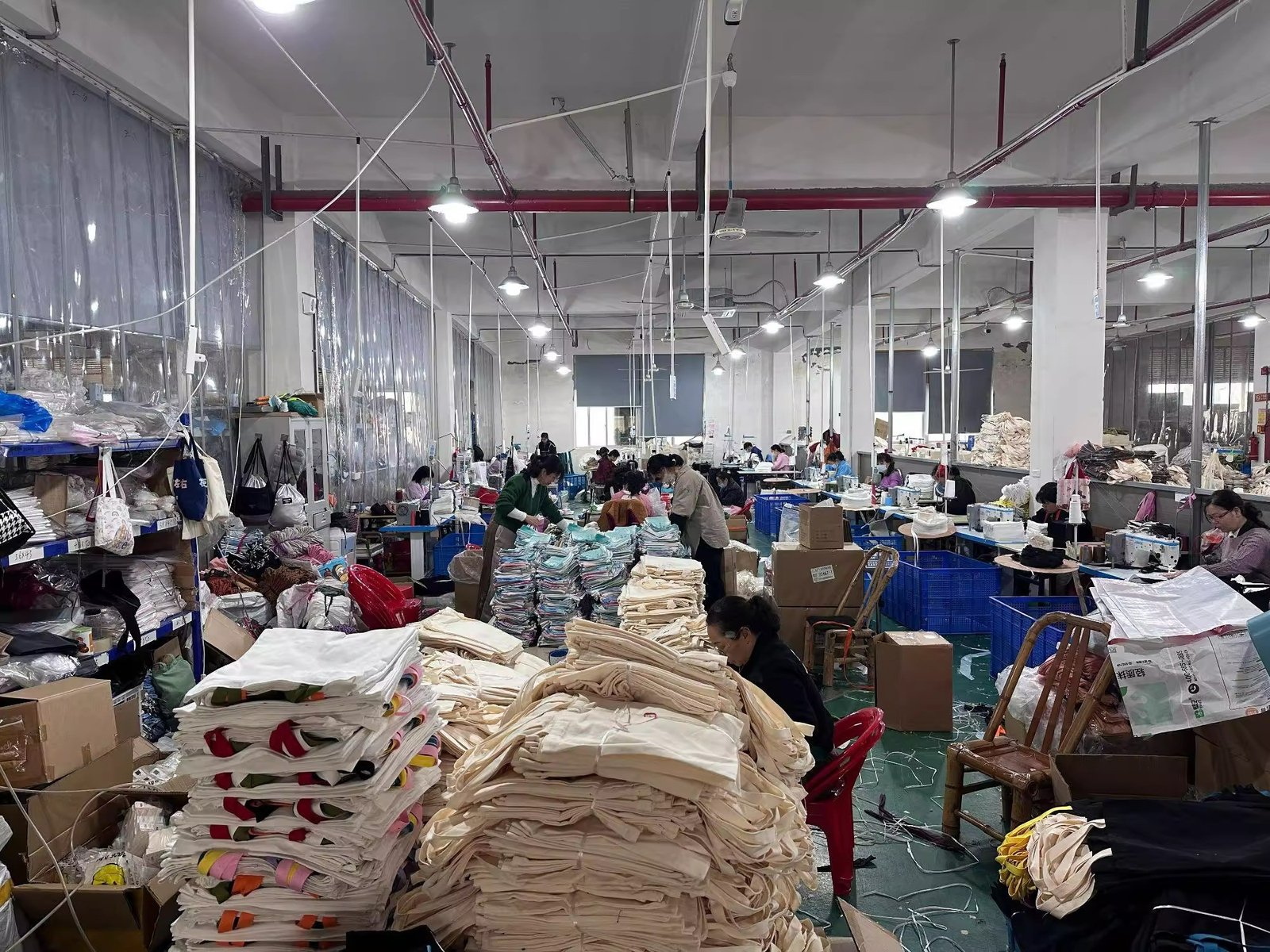
Выбор материала
Material determines cost, durability, and the tactile first impression.
- Non-Woven Polypropylene: Bulk cost as low as $0.50 per bag. Ultra-light, easy to print in high volume, but lacks structural memory and feels disposable. Acceptable for mass handout at trade shows, but for VIP corporate gifts it undercuts brand perception. Ask for a low-lint interior specification if you choose black or navy — standard non-woven sheds micro-fibers that cling to dark fabrics and make the bag look dusty on arrival.
- Cotton Canvas (10–16 oz): Runs $1.20–$5.00 per bag depending on weight and finishing. A 16 oz heavy-duty canvas regularly handles 30+ lbs without seam pop, so it survives years of reuse — critical when 60% of recipients keep a promotional tote over a year. The trade-off: higher unit cost and heavier weight raise shipping expense. Specify pre-washed or garment-dyed finishes to avoid that stiff ‘off-the-shelf’ feel that undermines the premium unboxing experience.
- Soft-Touch Laminated Non-Woven: Sits between the two on cost and delivers a velvety surface that photographs well and feels luxurious in hand. The lamination also adds water resistance and prevents print fading from surface abrasion. The hidden risk: poor bonding can delaminate after folding, creating visible bubbles. Demand a crease-and-recovery test sample before approving bulk production. This material works best for conference swag bags where you need high perceived value without canvas-level spend.
| Материал | Cost per Unit (Bulk) | Key Characteristic | Лучшее для | Insider Note |
|---|---|---|---|---|
| Non-Woven Polypropylene | From $0.50 | Lightweight, budget-friendly, basic screen printing | High-volume giveaways where durability is secondary | Combine with a low-lint spec if using dark colors; budget MOQ as low as 50 for embroidery |
| Cotton Canvas (10–16oz) | $1.20 – $5.00 | Natural grain, premium feel, 30+ lbs load capacity (16oz) | VIP receptions, brand-building events, conferences | Ask for 16oz weight to eliminate seam failure; 85% recall rate; <$0.001 per impression |
| Soft-Touch Laminated | Mid-to-high range (custom quote) | Silky smooth finish, PMS-accurate printing, low-lint interior | Retail-style unboxing moments, luxury corporate gifts | Demand a strike-off on the actual material to verify color against dark fabrics |
Print Fidelity
Digital proofs look perfect on screen—until fabric texture shifts your corporate color into a shade you never approved.
For an event organizer, a wrong shade of corporate blue on 500 tote bags isn’t a minor error—it’s a brand liability. Print fidelity is where most promotional suppliers cut costs, relying on basic digital mockups that ignore what happens when ink hits fibrous cotton or laminated non-woven. Every fabric’s surface texture absorbs and reflects light differently. A PMS 286 blue printed on smooth paper will look deeper and cooler than the same ink on a coarse canvas, which scatters light and dulls the hue. You don’t detect this in a PDF.
The only way to lock in color accuracy before production is a physical strike-off—a sample print on the exact material you’ve selected. Demand it. No serious factory will push back on this. A strike-off lets you view the print under event lighting conditions (which are rarely daylight-balanced), checking for metamerism where colors shift under different lights. For branded tote bags for a conference, even a subtle mismatch between your logo blue and the backdrop blue signals disorganization. Your attendees might not consciously notice, but their subconscious reads it as cheap.
- PMS Code Only: Don’t say ‘dark blue.’ Provide Pantone Coated or Uncoated codes. This eliminates subjective interpretation by the printer. If you spec PMS 2935, the printer knows the exact ink formula.
- Material-Specific Strike-Off: Request a printed sample on your actual bag fabric. A strike-off on paper or a different material invalidates the test. Woven cotton and laminated non-woven will produce distinct results.
- Lighting Condition Check: Examine your approved proof under the typical lighting of your event venue—fluorescent, LED, or natural. Metameric failure can ruin a logo under exhibit hall lights.
- Tolerance Windows: Ask for the factory’s delta E tolerance (color difference). In production printing, a ΔE under 2.5 is visually identical to most people. Above 6, it’s unacceptable for corporate branding.
When you’re sourcing custom tote bags for events on a tight timeline, skipping the physical proof stage might save three days. But when 300 bags arrive with a logo that looks faded, you’ve spent budget on negative brand impressions. Factories that offer rush production custom tote bags and still insist on pre-production proofs are the ones that understand the stakes. They’ll run a small ink drawdown or a single unit for your overnight approval. If your supplier tells you a digital proof is ‘good enough,’ find another supplier. Corporate gifting depends on precision, not guessing.
Structural Details
Guests judge quality by the hidden details—inner pockets, smooth zippers, and handles that survive real use.
The structural details of a tote bag are the first thing an attendee discovers after the unboxing. If the interior feels cheap—unlined, rough seams, no organization—the brand impression shifts from premium to promotional junk. Every conference or corporate event tote should include at least one interior slip pocket sized for a smartphone or business card holder. Specify a pocket depth of at least 15 cm and a reinforced edge stitch to prevent fraying over repeated use.
- Pocket Lining: Use a low-lint, tight-weave poly-cotton blend inside pockets to prevent dark fabric bags from collecting unsightly dust. Many suppliers overlook this; the result is a bag that looks dirty after a single event day.
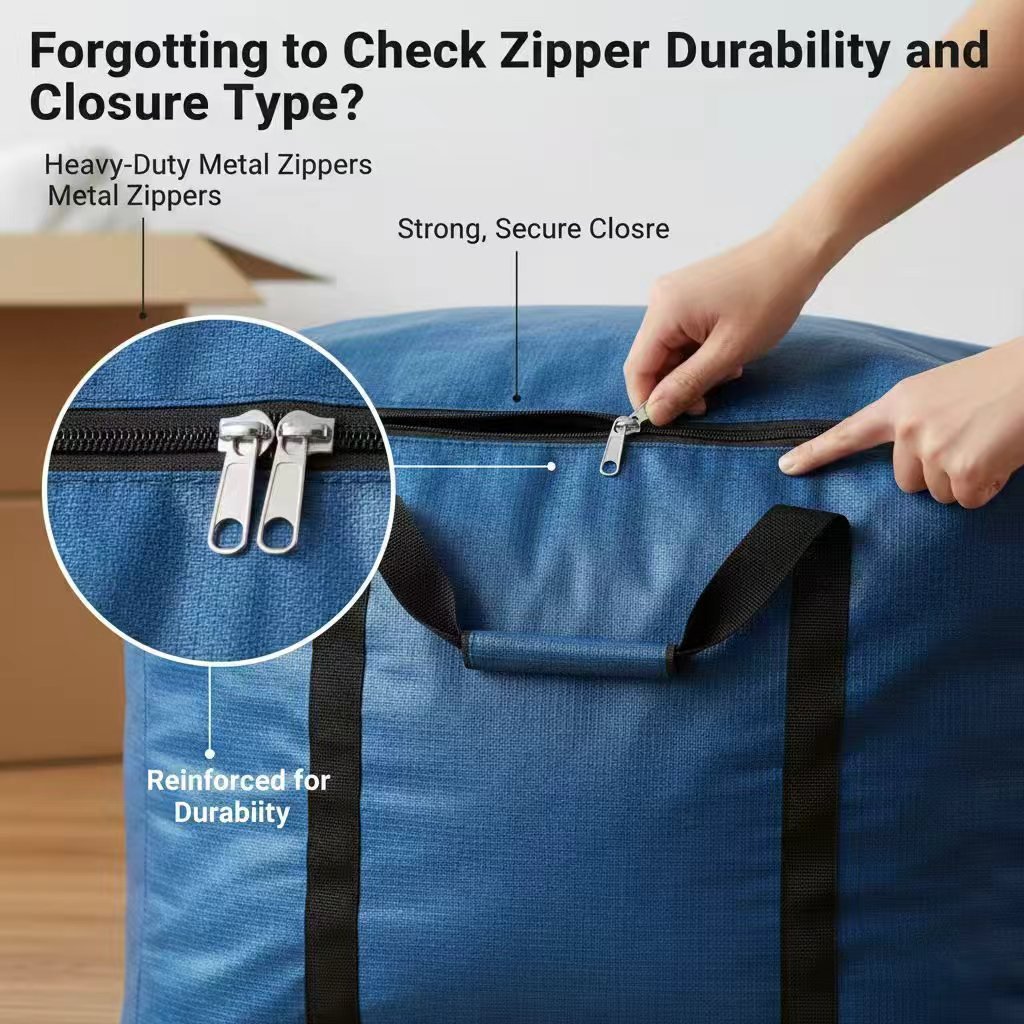
- Zipper Quality: Demand #5 nylon coil zippers over #3 for any main compartment or pocket closure. #5 zippers withstand roughly 50% more opening cycles before teeth misalign, reducing the risk of jamming during a conference.
- Handle Reinforcement: Cross-stitch reinforcement at handle attachment points is the minimum. For 16oz canvas totes, a box stitch with at least 6-8 bartacks distributes load up to 30+ lbs without seam failure. This matters when attendees stuff bags with brochures, water bottles, and giveaways.
If you want the bag to end up in daily use—not a landfill—you need functional structure. A zippered inner pocket keeps valuables secure, turning the bag from a one-time swag item into a trusted everyday carry. When your logo rides along on those daily errands, your cost per impression drops under $0.001.
Packaging Add-ons
The bag gets all the focus—until the tissue paper sheds lint all over it.
Tissue paper, ribbon, and branded inserts aren’t decorative afterthoughts. They build the sequence your guest follows before touching the tote. You open a box, lift a layer of tissue, feel the ribbon’s texture—each step either amplifies perceived value or signals corner-cutting. A 2026 industry survey shows 65% of corporate gift recipients expect sustainable packaging, so the materials you choose send a clear CSR signal before the bag even appears.
Hidden trap: standard tissue paper sheds microfibers that cling to dark fabric bags. If you’ve ever unboxed a black canvas tote and found it covered in white dust, you know the cringe. A low-lint tissue specification prevents this. Some factories now offer antistatic-treated tissue that resists dust attraction, the same principle behind low-lint interior bag linings. Pair this with a ribbon that won’t fray—opt for grosgrain over satin if long-term handling matters—and you remove two common failure points in one specification.
- Lint-free tissue: Specify low-lint, antistatic tissue paper to eliminate dust transfer onto dark fabrics. This single choice can make the difference between a premium unboxing and a cleanup moment.
- Tear-strip calibration: If the bag ships inside a display box with a tear strip, demand the manufacturer provide tare-force test data. The internal standard requires a minimum 15N of pull force. Below that threshold, strips tear open during transit, and you arrive to a room of pre-opened gifts.
- Strike-offs on ribbon material: Printed ribbon color shifts wildly depending on weave and thread type. A digital proof means nothing on screen. Request a physical strike-off on the actual grosgrain or satin ribbon to verify the hue against your brand Pantone before production.
Branded inserts—whether a thank-you card, a discount code, or a product care guide—complete the story. Keep the cardstock weight above 350gsm so it doesn’t curl inside the folded bag. Cut it to a dimension that sits snugly against the interior panel; a loose insert slides to the bottom and looks careless. Some event planners include a QR code on the insert linking to a digital version of the keynote or a photo gallery, turning the bag into a post-conference touchpoint.
The total cost of these add-ons rarely exceeds $0.15–$0.30 per unit at scale, yet they determine whether your branded conference tote spends a year in someone’s daily rotation—or lands in the hotel wastebasket before checkout.
Sustainability Cues
Sustainability claims without certifications are just marketing noise.
Your attendees will check the tag. A 2026 industry survey found 65% of corporate gift recipients expect sustainable packaging — and they’ve learned to spot greenwashing. If your branded tote for conferences doesn’t carry a recognized certification, the CSR story you wanted to tell falls flat. Recycled fabrics like rPET or pre-consumer cotton waste are now widely available, but the difference between a premium unboxing experience and a reputation risk is the paperwork.
- GRS (Global Recycled Standard): Verifies the percentage of recycled content and tracks it through the supply chain. Demand a transaction certificate for each batch — it’s the only way to know that ‘100% recycled’ claim is real, not aspirational.
- OEKO-TEX Standard 100: Tests for harmful substances. Non-woven or laminated bags can off-gas volatile compounds; this cert ensures the bag that holds your company’s gifts isn’t leaching chemicals onto attendees’ hands.
- GOTS (Global Organic Textile Standard): Essential if you’re choosing organic cotton canvas bags. It covers both environmental and social criteria, so you aren’t accidentally supporting forced labor in the cotton supply chain.
- Recycled rPET: Made from post-consumer plastic bottles. Lowers carbon footprint typically by 50-60% versus virgin polyester. Works well for lightweight, foldable event giveaway totes.
- Recycled Cotton Canvas: Uses pre-consumer cutting waste or post-consumer garments. Slightly shorter fiber length can mean a softer drape, but demand a 10-16oz weight range to ensure structure.
- Recycled Non-Woven PP: Often derived from factory offcuts. The lowest-cost sustainable option for large corporate gift tote bags bulk orders; just insist on a GRS certificate — this material is the most commonly greenwashed.
Recycled material doesn’t have to feel rough or look dull. Modern rPET totes can match the hand-feel of virgin polyester, and pre-consumer recycled cotton canvas blends dye evenly. The trick is specifying right: ask for a physical swatch before approving production. Some mills add filler that weakens seams — a 16oz recycled canvas should still hold 30+ lbs without seam failure, just like its non-recycled counterpart. If the supplier can’t show a tear-test report, walk away.
For low MOQ custom tote bags, the sustainability route is no longer a barrier. With embroidery or screen printing, you can order as few as 50 units of GRS-certified rPET bags. Rush production doesn’t suffer either; a factory with in-house sample cutting can turn around 300–500 fully customized sustainable totes in 10 working days, provided the certified fabric is on hand. The key is to lock in the fabric source early so the certification chain stays intact.
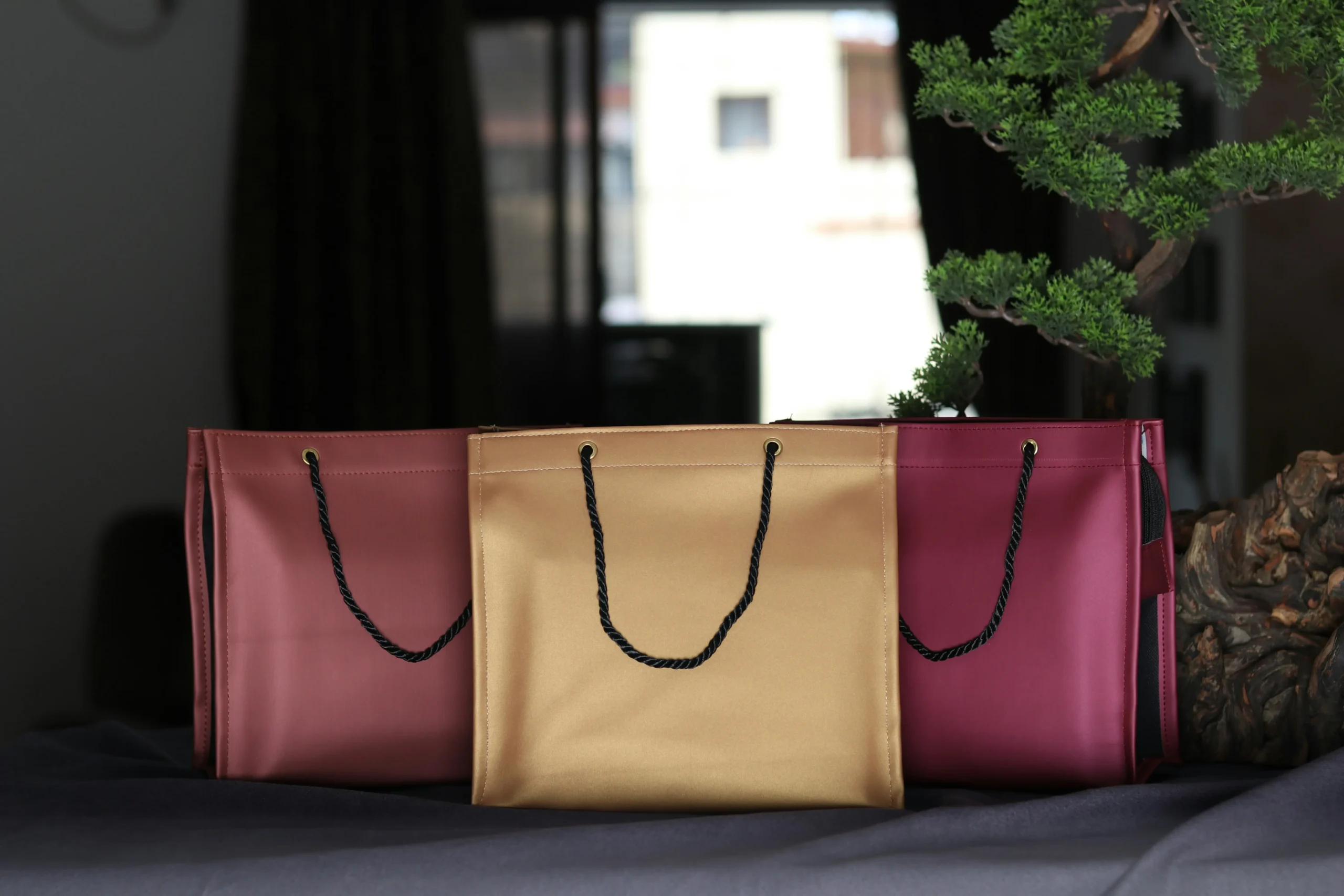
Order Agility
Standard lead times collapse when event dates cannot move.
Most custom tote bag suppliers quote a 4–6 week delivery window. You do not have that cushion when a conference date shifts or a last-minute sponsor activates. Factory-direct production with in-house sample cutting rewrites those timelines. A manufacturing partner that controls sample cutting internally can move from an approved strike-off to a finished batch of 300–500 fully branded totes in 10 working days.
- Low MOQ reality: Embroidery programs start at 50 units. Screen printing typically requires 100–200 pieces. These thresholds let you order a small batch for a VIP gala without committing to pallets of dead inventory.
- Rush production engine: In-house sample cutting removes the back-and-forth with external pattern rooms. Designs are digitized and cut immediately, stripping 3–5 days from the pre-production schedule.
- Split shipment logic: You can direct 200 bags to the main venue and 100 to a satellite reception, each with its own delivery date. This avoids double-handling by your own team, which creates damage risk and extra freight costs.
The trap most event planners fall into is treating split shipments as an afterthought. Without documented addresses and per-lot packing lists, on-site staff scramble to find the right cartons. Insist on a factory that labels each carton by destination and inserts a packing slip inside. This granularity costs nothing extra but prevents the 6 a.m. panic when volunteers cannot locate branded tote bags for the opening keynote.
Quality Guardrails
Sign-off on a sample before full production or you own every defect.
Most corporate gift tote bag disasters start with a single assumption: that the final run will look like the digital mockup. It won’t. Surface texture, thread density, and fabric absorption shift ink hues. When you’re ordering custom tote bags for events, the only reliable quality gate is a physical strike-off printed on the actual material you selected—whether 10oz cotton canvas or soft-touch laminated non-woven. Digital proofs show layout; they don’t show how a royal blue PMS coating actually renders on a recycled fiber blend.
Require a pre-production sample in your contract. The internal workflow here follows a three-point approval: a material swatch confirmation first, then a single-bag strike-off with your logo and any inner pocket detailing, and finally a sealed quality standard sample that becomes the benchmark for bulk inspection. Turnaround for sample cutting and dispatch should not exceed 5 working days if the factory has in-house cutting tables. For branded tote bags for conference use, this step catches 90% of visual defects before 500 units get printed wrong.
- Defect allowance: Set the Acceptable Quality Limit (AQL) at 2.5 for major defects and 4.0 for minor ones. Major means print misalignment over 3mm, broken stitching on handle attachment points, or fabric holes. Minor includes stray threads or a bag seam deviation under 5mm. In bulk orders of corporate gift tote bags, a 0% defect expectation is unrealistic; a 2.5 AQL means a maximum of 25 major defects per 1,000 units, which keeps your event giveaways professional without inflating unit cost.
- Tare-force trap: If your tote bag comes with a display box or a branded tear strip for that premium unboxing experience, demand a tare-force test certificate. The minimum threshold is 15N to prevent accidental opening during handling, but not over 25N to avoid guests ripping the packaging apart. Ask the supplier for a test graph; generic promotional product companies rarely have this data, but it’s a manufacturing standard for retail-ready packaging.
- Lint transfer checklist: Dark bags—black, navy, charcoal—are notorious for attracting white lint that kills the premium feel. Specify a low-lint interior finish in the tech pack. The fabric should pass a lint-release test where a standard adhesive strip picks up fewer than 5 visible particles per 100 cm². This detail differentiates an event giveaway tote bag with logo that looks like a high-end gift from one that looks like a warehouse freebie.
After sample approval, lock the production timeline around a pre-shipment inspection. For rush production custom tote bags—say 500 units in 10 working days—schedule the inspection on day 9, before final packing. The inspector checks seam strength using a 16oz canvas bag that must hold 30+ lbs without stitching tear, confirms color accuracy against the sealed sample under D65 daylight lighting, and verifies that the interior low-lint spec holds. If a batch fails, you isolate and rework without missing the event date, provided the factory has buffer capacity.
Treat the quality guardrail conversation as a filter for suppliers who understand corporate gifting stress. A supplier that resists providing a physical strike-off, can’t name their AQL threshold, or dodges the tare-force question isn’t set up for low MOQ custom tote bags with repeatable results. When you’re ordering corporate swag tote bags for a conference where 2,000 people will judge your brand in seconds, the only peace of mind comes from a documented, verifiable sample approval workflow—not a promise.
Заключение
The 7 factors mapped out across this guide — material feel, PMS fidelity, structural add-ons, packaging cues, sustainability proof, order agility, and sample guardrails — separate a tote that gets tossed in a hotel bin from one that rides the train home. A low-lint interior keeps dark fabric from collecting dust that kills a premium first impression. A physical strike-off on the actual bag surface catches hue shifts a digital proof will miss. When the factory runs in-house sample cutting, shipping 300–500 fully customized pieces in 10 working days stops being a prayer and becomes a production plan. Your attendees sense the difference — and 85% of them remember the brand that gave them something worth keeping.
Before you lock in the order, ask for tare-force test data on any tear strip and verify the defect allowance in writing. Then review current fabric swatches and lead-time options on the custom logo tote bag product page to pick the spec that fits your timeline. A physical pre-production proof takes a few extra days; showing up at a conference with bags that look nothing like the mockup costs a lot longer.
Часто задаваемые вопросы
What is the best material for custom tote bags used as corporate gifts?
The best material depends on whether you prioritize cost-per-bag or a premium tactile impression. Non-woven fits tight budgets, while cotton or soft-touch laminated conveys higher brand value. Request a swatch kit to test hand-feel before committing.
How much do custom tote bags cost in bulk for events?
Bulk pricing varies widely based on material, size, print complexity, and order volume. A typical 80gsm non-woven tote with one-color print starts around $0.50–$1.20 FOB factory for 1,000+. Request a quote with your exact spec and artwork for an accurate landed cost.
What is the minimum order quantity for logo-printed tote bags?
MOQ depends on the manufacturing method and material availability. Some factories offer low MOQs as low as 100 units for stock materials with digital print, while custom dyed fabrics or heavy stitching may. Confirm your MOQ after finalizing fabric and print technique.
Can I get eco-friendly tote bags for corporate events?
Yes, eco-friendly options include recycled cotton, rPET, and biodegradable non-woven with certifications like GRS or OEKO-TEX. These materials align with CSR goals and can be as durable as virgin materials when properly sourced. Specify recycled content and request certifications in your RFQ.
How long does it take to produce custom tote bags for a large conference?
Standard production lead time is typically 2–4 weeks after artwork approval, plus shipping. Rush orders can sometimes ship in 7–10 days for stock materials and simple prints. Always pad your schedule by at least one week for sample review and transit delays.

0 комментариев