



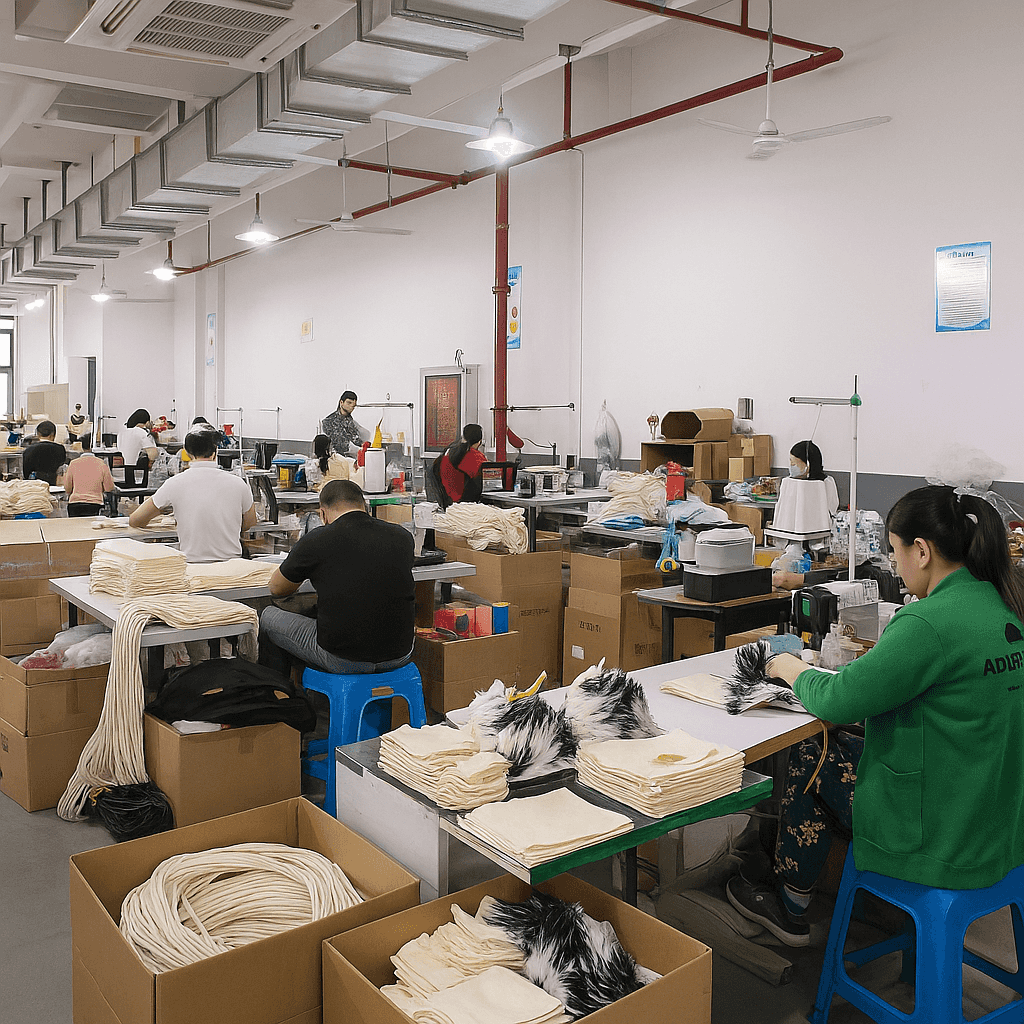
heavy duty bags vs cardboard is the first checkpoint buyers should lock before they approve a supplier, budget, or production slot. You are a logistics procurement manager staring down a recurring budget line that feels like a leaky pipe. The annual spend on cardboard boxes for warehouse relocations, inventory storage, or client moves keeps creeping up, and the disposal logistics are a headache you didn’t sign up for. That is the everyday reality that makes the heavy duty bags vs cardboard comparison worth a hard look.
Most buyers get stuck comparing a $2.50 box to a $5.50 bag and call it a day. That misses the point. The real metric is cost per move cycle, not unit price. A standard 120 GSM woven polypropylene bag handles 150+ pounds and survives 10 cycles. A single-wall ECT-32 box starts losing stacking strength at 66% humidity and is trash after one trip. The data on total cost of ownership moving bags vs boxes flips the math entirely.

Why Most Cardboard Boxes Fail Your Logistics Budget
Cardboard’s recurring cost is a silent budget killer — here is the math.
The upfront price of a corrugated box hides a structural flaw: it is designed for one trip. In a commercial logistics environment with recurring moves, that single-use model becomes a recurring expense that destroys your total cost of ownership (TCO). A standard single-wall ECT-32 box costs $2–$5 per unit. At 4,000 units per move, that is $8,000–$20,000 in virgin cardboard — every single move. After the first unpack, those boxes are either collapsed into recycling or, worse, reused with compromised stacking strength.
Here is the failure point most procurement managers miss: cardboard loses 15% of its stacking strength at 66% relative humidity — a common condition in warehouses and truck trailers. That means a stack that held 80 lbs in a climate-controlled office may collapse at 68 lbs in a humid truck. The result is mid-stack failures, damaged goods, and worker injury claims. The data shows that for a 4,000-unit operation over 10 moves, the cardboard TCO (purchase plus disposal at ~$0.50/box) hits roughly $140,000. That does not include the cost of product damage or the administrative overhead of reordering boxes every cycle.
- Recurring purchase cost: $8,000–$20,000 per move for 4,000 units. No residual value after first use.
- Disposal fees: $0.50/box for recycling or landfill. Adds $2,000 per move.
- Structural failure risk: 15% strength loss in humidity leads to collapses, damaged inventory, and injury claims.
- Labor inefficiency: Breaking down, taping, and reinforcing mismatched boxes adds 50% more packing time versus uniform bags.
The hidden cost is not the box — it is the process. Every move requires vendor management, quality checks on new stock, and disposal logistics. That administrative overhead is billable time that does not show up on the unit price. When you shift to a fleet of reusable heavy duty moving bags, you move from a ‘consumable’ procurement cycle to a ‘capital asset’ model. The bag investment is front-loaded, but the per-move cost drops to $0.35–$0.75 after the break-even point at the 3rd use. That is a 40–60% reduction in TCO per move cycle, with zero disposal fees and a 12-month workmanship warranty covering defects.
Real Cost Breakdown: Bags vs Boxes Per Move
The break-even point hits on move 3.
Run the numbers on a 4,000-unit move. Virgin single-wall cardboard at $3.00/unit lands at $12,000. Add disposal at $0.50/box — total $14,000 per cycle. A fleet of 4,000 heavy duty woven PP bags at $5.50/unit FOB is a $22,000 capital outlay. That feels like a 57% premium on day one.
Now stretch it across 10 moves. Cardboard TCO: $140,000 (purchase + disposal × 10) plus product damage from collapsed stacks. Bag TCO: $22,000 — no disposal cost, no replacement. The bag cost-per-move drops to $0.55. Cardboard stays at $3.50 per use. The break-even point lands on the third move cycle.
- Cost-per-use (10 cycles): Cardboard: $3.50/unit. Bag: $0.55/unit. The bag is 84% cheaper per move.
- Space efficiency: Pre-assembled cardboard boxes fill only 70–80% of truck height due to air gaps on pallets. Compressible bags achieve 95% cube utilization, cutting required truck space by up to 20% per 4,000-unit load.
- Hidden labor savings: Mismatched ‘free’ boxes require taping, cutting, and reinforcement — adds 30–50% more packing time. Uniform bags eliminate that. No tape, no breakdown, no disposal sorting.
The veteran procurement manager isn’t comparing a bag to a box. They’re comparing a recurring consumable expense (cardboard) to a capital asset (bag fleet). The bag fleet eliminates vendor management for every move, cuts disposal logistics, and removes the humidity risk that causes 15% stacking strength loss in cardboard above 66% humidity. That’s not a packaging decision — it’s a process redesign.
| Категория расходов | Cardboard Boxes (Per Move) | Heavy Duty Bags (Per Move) | Savings with Bags | Ключевой момент |
|---|---|---|---|---|
| Unit Cost (FOB) | $2.00 – $4.00 | $3.50 – $7.50 | Higher upfront | Bags are a capital asset; boxes are a consumable. |
| Cost Per Use (10 Cycles) | $2.00 – $4.00 | $0.35 – $0.75 | 82% lower per-use cost | Break-even achieved by the 3rd move cycle. |
| TCO for 4,000 Units (10 Moves) | ~$140,000 (incl. disposal) | ~$22,000 (incl. washing) | ~$118,000 total savings | Bags eliminate recurring procurement and disposal fees. |
| Labor & Handling Cost | High (break down, tape, reinforce) | Low (no assembly required) | 50% reduction in packing time | Uniform bags streamline workflow vs. mismatched boxes. |
| Truck Cube Efficiency | 70-80% (air gaps on pallets) | 95% (compressible on pallets) | Saves 1-2 truckloads per 10,000 units | Bags maximize space, reducing freight costs. |
| Damage & Failure Risk | 15% strength loss in 66% humidity | Moisture-resistant, 150+ lbs load | Lower risk of stack collapse | Bags maintain integrity in non-climate-controlled transport. |
| Warranty & Defect Policy | None (single-use) | 12-month workmanship warranty, 3% defect allowance | Risk-free investment | Supplier accountability ensures fleet longevity. |
Heavy Duty Bags vs Cardboard: Specs vs Durability
A 120 GSM woven bag handles 150+ lbs — cardboard fails at 65 in humidity.
Cardboard’s ECT rating (Edge Crush Test) measures stacking strength. A standard single-wall ECT-32 box holds 65–80 lbs dry. Double-wall ECT-44 tops out at 120 lbs. The moment relative humidity hits 66%, that ECT-32 box loses 15% of its stacking strength. Mid-stack collapse isn’t a theory — it’s a recurring cost in non-climate-controlled trucks and humid warehouses.
A 120 GSM woven polypropylene bag doesn’t rely on edge crush. Its strength comes from the fabric’s tensile force and the stitching at stress points. The bag itself holds 150+ lbs static load. The real failure point — and the one most suppliers ignore — is the handle attachment. A single-stitch handle rips at 60–80 lbs. A 4-layer bartack stitch at the attachment point keeps the handle intact past 150 lbs. Request a stitching tensile force test report. If the supplier can’t provide one, you’re buying a gamble, not a solution.
- Moisture resistance advantage: Cardboard absorbs moisture from humid air, losing structural integrity. PP bags are hydrophobic. A bag stored in a damp warehouse for 6 months retains full load capacity. A cardboard box stored in the same conditions loses stacking strength and risks mold contamination on goods.
- Hybrid approach — bags for soft goods, boxes for fragile/sharp items: Bags excel for textiles, clothing, linens, books, and general household items. They compress to fill truck cube space efficiently. Boxes still win for fragile electronics, glassware, and sharp metal tools that could puncture the bag fabric. The optimal fleet mix: 80% bags for soft goods, 20% specialty boxes for fragile and sharp items. This split maximizes cube utilization and minimizes damage claims.

How to Source High-Performance Moving Bags Without Risk
Most bag failures happen at the handle, not the fabric.
A veteran procurement manager doesn’t buy on price alone — they buy on verifiable performance. The first document you request from any moving bag supplier is the Burst Strength Test Report per ASTM D3786. This measures the force required to rupture the fabric. A 120 GSM woven polypropylene bag must withstand a minimum burst pressure of 50 psi. Anything below that and you’re buying a single-use bag dressed up as heavy duty.
The second critical report is the Stitching Tensile Test. This is the one most buyers skip. Ask the supplier for the force required to pull a stitch seam apart. The industry floor for a 4-layer bartack stitch on a handle attachment point is 300 Newtons. If the supplier cannot produce this report, or the number falls below 250 N, walk away. That handle will tear on the third move.
- Production-condition sample: Never approve a sample made in a lab under ideal conditions. Demand a sample printed with your logo on the exact production line that will run your bulk order. Check the stitch density — minimum 8 stitches per inch on all stress seams. A pre-production sample that matches the final production run is your only insurance against spec drift.
- Bartack stitched handles: This is the single most overlooked engineering detail. A standard single-stitch handle fails at 60–80 lbs. A bartack stitch — a dense, zigzag reinforcement at both ends of the handle strap — distributes load across a wider area. On a 120 GSM bag, a properly bartacked handle holds 150+ lbs static load. Verify this on the sample with a simple hanging test: load the bag to 150 lbs and leave it suspended for 24 hours. If the handle holds, the design is sound.
- Warranty and defect allowance: Negotiate a 12-month workmanship warranty covering seam separation, zipper failure, and handle detachment. The industry benchmark for high-volume orders is a 3% defect allowance with free replacements. Any supplier that balks at this either lacks confidence in their manufacturing or is running a low-cost operation with no QC. Do not accept less than 2%.
- Palletized packaging with corner protectors: Bags arriving crushed or water-damaged defeat the purpose of a durable product. Specify palletized packaging with L-shaped corrugated corner protectors and stretch wrap. Each pallet should be no more than 48 inches high to fit standard truck trailers. Request photos of the packed pallet before shipment. This eliminates the ‘damaged in transit’ excuse.
By setting these five thresholds — test reports, production sample, bartack verification, warranty terms, and pallet protection — you eliminate 90% of the risk associated with switching from cardboard to a bag fleet. The remaining 10% is managed by the 12-month warranty. This is how you treat a bag investment like a capital asset, not a consumable expense.
Заключение
The math is clear. For any logistics operation moving more than 3 times per year, a fleet of heavy duty bags cuts TCO by 40-60% versus cardboard. The break-even hits by the third move. After that, every cycle is pure savings — on materials, disposal, truck space, and labor.
Review the spec sheets on the Heavy Duty Moving Bags page. Match the GSM options and handle construction to your load requirements. That’s the fastest way to validate whether this model works for your next procurement cycle.
Часто задаваемые вопросы
What is the difference between heavy duty and normal cardboard boxes?
Heavy duty boxes use thicker, double-wall corrugated board with higher ECT ratings (ECT-48 vs ECT-32) to support 100+ lbs without collapsing. Normal single-wall boxes lose up to 15% of stacking strength. Specify ECT rating and wall construction when ordering for commercial moves.
Are heavy duty moving bags better than boxes?
Yes, for recurring moves or storage, heavy duty woven PP bags deliver 40–60% lower total cost per cycle after the third use. A 120 GSM bag with double-stitched handles handles. Break-even on bags starts at move three—run the math for your fleet.
What are the disadvantages of cardboard packaging?
Cardboard loses stacking strength in humidity, leading to mid-stack collapses and damaged goods. Hidden costs like disposal fees and replacement after each move make single-use boxes more expensive than reusable bags. Factor in humidity and disposal costs before ordering your next batch.
What is the cheapest form of packaging?
Single-use cardboard boxes have the lowest upfront cost at $1.50–$4.00 per unit, but heavy duty woven PP bags become cheaper per move after three uses, dropping to $0.35–$0.75 per cycle. For one-time shipments. Choose based on move frequency—not just the unit price.
Can I use moving bags for fragile items?
Yes, but only if you add internal padding like bubble wrap or foam dividers, because woven PP bags do not provide rigid corner protection. For fragile items, a. Always pad fragile items inside bags—never rely on the bag alone for impact protection.




0 комментариев