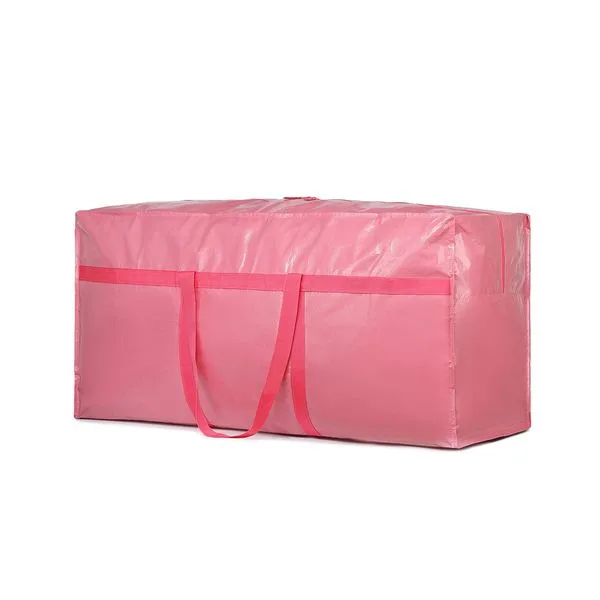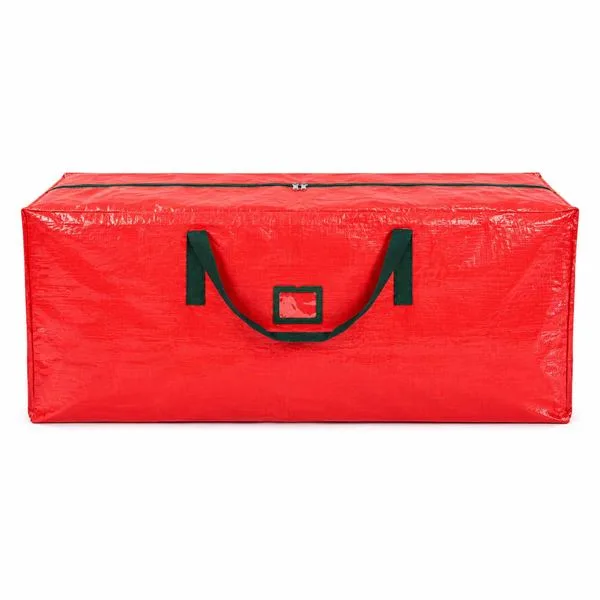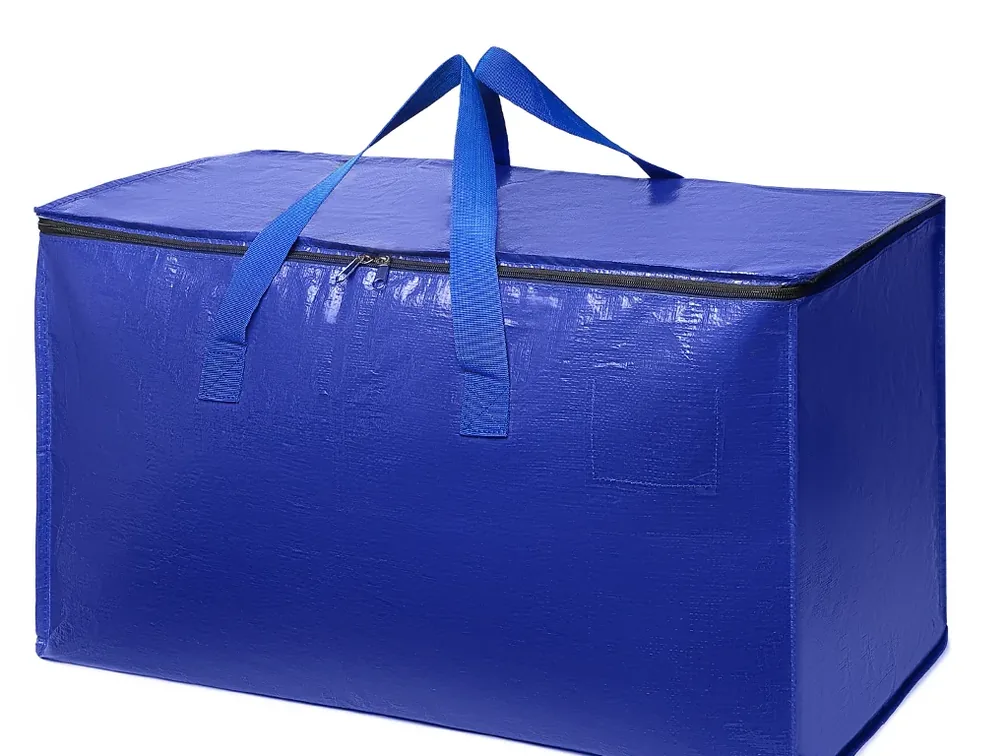

This comparison draws on legacy procurement notes and product spec data for woven PP moving bags and corrugated boxes.
A new hire in the procurement office put two quotes side by side and asked why anyone would pay more for a bag when a box costs less. The buyer looked at the two numbers for a moment and then pushed the box quote back across the desk. The question was fair, and the answer was not on either page.
The comparison felt like a decision because both documents were quotes. One listed a corrugated box, the other listed a woven polypropylene bag, and the smaller number looked like the safer choice. That logic holds for a single shipment and falls apart the moment the same goods move twice.
The Quote That Looks Like a Decision

A box quote and a bag quote describe two different kinds of purchase, and the paperwork hides the difference. The box is priced as a consumable that leaves the building with the goods. The bag is priced as equipment that comes back and gets used again.
Reading them as if they were the same line item is where the error starts. One number buys a single trip. The other number buys a fleet that will be loaded, unloaded, folded, and loaded again. Comparing them at face value is comparing a ticket to a vehicle.
The buyer in that office had been through three relocations in eighteen months. Each one arrived with a fresh box order, a fresh disposal bill, and a fresh round of tape and labour. The quote on the desk looked cheap because it only described one of those cycles.
Why the Unit Price Comparison Feels Safe
Unit price is the number that gets approved, audited, and defended in a budget meeting. It is visible, it is comparable, and it fits on a purchase order. That visibility makes it feel like the whole cost, when it is only the first cost.
A box is also familiar. Warehouses are full of them, staff know how to fold and tape them, and nobody has to explain the process to a new crew. Familiarity reads as low risk, even when the recurring spend behind it keeps climbing.
Then there is the disposal line, which rarely appears on the same page as the purchase. Boxes have to be broken down, sorted, and hauled away after every move. That work is real, it is billable, and it never shows up next to the unit price that won the comparison.
The Cost That Only Appears on the Second Move

The second move is where the two quotes stop being comparable. A box that has already carried a load is crushed, torn, or gone. A bag that has already carried a load is folded in a corner waiting for the next one.
That difference turns a recurring consumable into a capital asset. The box budget repeats every cycle. The bag budget is spent once and then depreciates across every move that follows. A fleet that survives three cycles has already changed the shape of the cost curve.
There is also the labour that surrounds each box. Mismatched sizes have to be broken down, taped, and reinforced before they hold anything. Uniform bags skip that step entirely, which removes a slice of packing time from every load.
Truck space behaves the same way. Pre assembled boxes leave air gaps on a pallet and fill only part of the trailer height. Compressible bags settle into the cube, so a load that needed extra trailer space in boxes can travel in less.
What Humidity Does to a Stack of Boxes

Corrugated board draws moisture out of the air, and moisture costs it stacking strength. A warehouse or a trailer sitting at high relative humidity is a normal condition, not an extreme one. When the board takes on water, the stack that held fine in dry weather starts to lean.
The failure mode is quiet. A box does not announce that it has softened. It bows slowly under the load above it until the stack folds, and by then the inventory inside has already taken the damage. Injury claims tend to follow the same event.
Woven polypropylene behaves differently because the fibre does not absorb water the way paper does. A bag stored through a damp season keeps its load capacity. That property matters most in exactly the places where boxes are stacked highest and left longest.
Where a Bag Actually Fails, and Why It Is Not the Fabric

Most bag failures happen at the handle, not the shell. The fabric can be rated well above the load and still tear open at the point where the strap meets the body. That joint takes the entire weight every time the bag is lifted.
A single stitch line at the handle is the weak version. A dense zigzag reinforcement at both ends of the strap spreads the load across more thread and more fabric. That detail is easy to overlook on a sample and expensive to discover on a loading dock.
The shell itself carries more than most buyers expect. A 120 GSM woven bag handles loads past 150 lbs, and the heaviest shell in the range is the 180 g version used on the largest bag. The construction around that shell decides whether the rating survives daily handling.
The Documents That Turn a Claim Into a Number
A supplier's word about strength is not a specification. The first document to request is a Burst Strength Test Report per ASTM D3786, which puts a number on how much pressure the fabric takes before it ruptures. Without it, the GSM figure describes weight, not performance.
The second document is a Stitching Tensile Test, and it is the one buyers skip most often. It records the force needed to pull a seam apart, which is the number that predicts handle failure. A burst report alone will not catch a weak bartack.
A production sample belongs next to those reports. A sample built in a lab under ideal conditions proves very little about the line that will run the bulk order. Ask for a sample made on that line, with the actual artwork, and check the stitch density by hand.
Warranty terms close the loop. A twelve month workmanship warranty covering seam separation, zipper failure, and handle detachment turns a verbal promise into a claim path. The term is the part worth negotiating, because it prices the risk the supplier is willing to carry.
A Switch Test Before You Commit a Full Fleet

No sensible buyer replaces an entire box programme on the strength of a quote. The safer route is a trial load: one route, one crew, one cycle, with the bags carrying the same mix of goods the boxes used to carry.
Watch three things during that trial. Check how the handles look after the first lift, how the bags stack in the trailer, and how long the packing step takes compared with the old process. Those observations answer more than a spec sheet can.
Then run the same load a second time with the same bags. The second cycle is where the economics separate, because the boxes would have been purchased again and the bags were already paid for. A fleet that performs on cycle two is a fleet worth scaling.
Soft goods suit this trial best. Textiles, clothing, linens, books, and general household items compress well and fill the cube. Fragile and sharp items still need rigid protection, so a mixed programme of bags and boxes is a reasonable outcome rather than a failure.
The Check Sheet for the First Order
Before the first purchase order goes out, confirm the documents are in hand: the burst strength report, the stitching tensile report, and a production sample from the actual line. Each one closes a different gap between a claim and a verified number.
Confirm the handle construction in writing. Look for bartack reinforcement at both ends of the strap, and match the shell weight to the load rather than to the price. The heaviest shell is not automatically the right one for every route.
Confirm the packing and shipping protection. Bags that arrive crushed or water damaged have already lost the durability the order was meant to buy. Palletized packaging with corner protectors and stretch wrap protects the asset before its first use.
Confirm the warranty term and what it covers. Seam separation, zipper failure, and handle detachment are the three failures that decide whether a fleet lasts. A supplier willing to put a term against them is telling you something about the build.
FAQ
Are heavy duty moving bags cheaper than cardboard boxes for a single move?
No. For one trip, single use boxes carry the lower upfront cost. The bag fleet becomes the cheaper option per move after three uses, which is why the comparison depends on how many cycles the goods will travel.
Can woven PP bags replace boxes for fragile items?
Only with internal padding such as bubble wrap or foam dividers. Woven bags do not provide rigid corner protection, so fragile and sharp items still belong in boxes or in padded inserts inside a bag.
How many moves before a reusable bag fleet pays back its purchase?
Break even lands around the third move. After that, each cycle avoids a fresh box purchase and the disposal work that comes with it, so the cost per move keeps falling as the fleet is reused.
What test reports should I request from a moving bag supplier?
Ask for a Burst Strength Test Report per ASTM D3786 and a Stitching Tensile Test. Add a production condition sample and written warranty terms covering seam, zipper, and handle failure.