



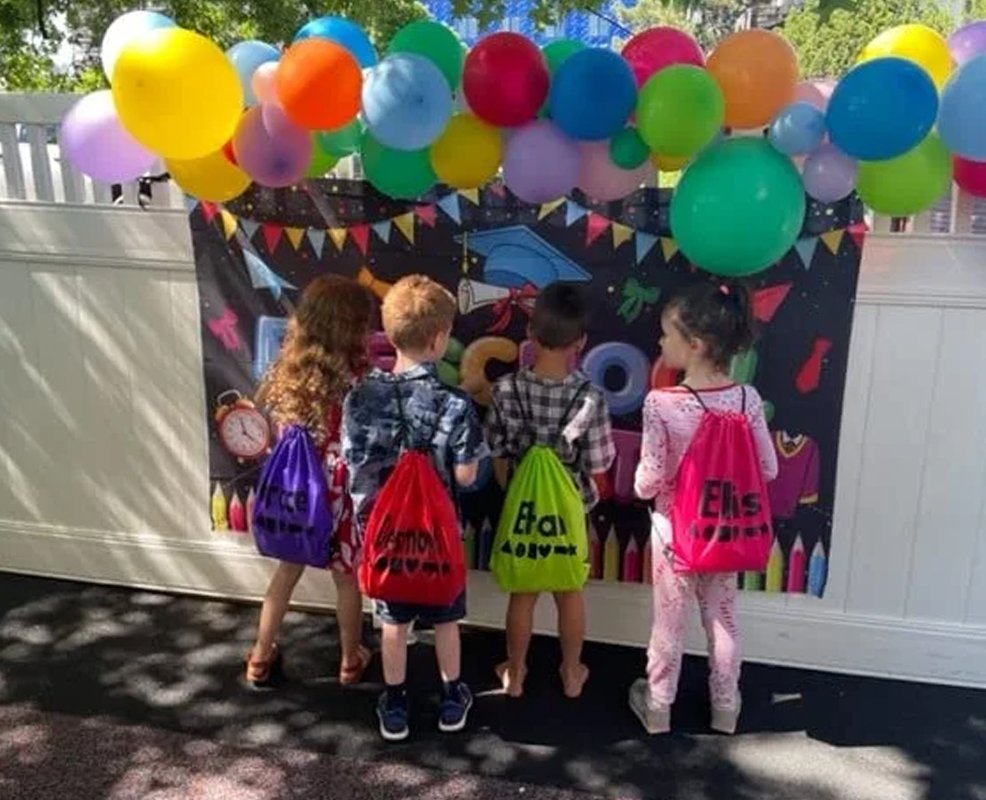
A children’s drawstring bag is not just a bag in the eyes of US regulators. Under the Consumer Product Safety Improvement Act (CPSIA), any product designed for or intended primarily for children 12 years old or younger is classified as a children’s product, which triggers a set of mandatory testing, labeling, and documentation requirements that do not apply to adult products. For importers and brands sourcing индивидуальные сумки с завязками from overseas manufacturers, understanding these requirements before placing a production order is the difference between a compliant product and a costly recall.
This guide walks through every CPSIA obligation that applies to children’s drawstring bags: the lead and phthalate limits, the testing process at CPSC-accepted laboratories, the tracking label requirement, and the Children’s Product Certificate (CPC) that importers must issue before the first unit is sold. For a broader overview of how bag certifications work across different markets, see our guide to heavy-duty bag certifications.
What Makes a Drawstring Bag a “Children’s Product” Under CPSIA?
CPSIA Section 3(a)(1)(C) defines a children’s product as a consumer product that is “designed or intended primarily for children 12 years of age or younger.” For drawstring bags, the classification depends on several factors:
- Marketing and labeling: If the bag is marketed with children’s themes (cartoon characters, school motifs, toy branding), age-range language (“for kids ages 3-8”), or sold in children’s retail sections, it is classified as a children’s product regardless of the physical design.
- Physical design: Bags sized for children (smaller dimensions, shorter drawstrings), featuring child-appealing designs, or sold alongside children’s products are likely to be classified as children’s products.
- Intended use representations: If the manufacturer, importer, or retailer describes the bag as suitable for children, CPSIA applies.
Products that are primarily intended for children 12 and under must comply with CPSIA even if they could also be used by adults. A drawstring bag with a cartoon dinosaur print, for example, is a children’s product even if an adult could physically carry it.
Lead Limits: The Numbers That Matter
CPSIA imposes two separate lead limits on children’s products, and both apply to every component of a drawstring bag:
| Требование | Limit | What It Covers | Effective Date |
|---|---|---|---|
| Total Lead Content (substrate) | 100 ppm | Fabric, drawstring cords, webbing, metal hardware (grommets, toggles, aglets), zipper pulls, printed graphics, plastic components | August 14, 2011 |
| Lead in Paint and Surface Coatings | 90 ppm | Screen-printed designs, heat-transferred graphics, laminated coatings, dyed surfaces, any painted or coated component | August 14, 2009 |
Both limits are tested separately. A drawstring bag with a printed design must pass the 100 ppm total lead limit for the fabric substrate и the 90 ppm lead-in-paint limit for the printed design. If the bag has metal grommets, each grommet must also be tested for total lead content.
This is where sourcing decisions matter. Recycled polyester fabrics, certain dyed cotton textiles, and metal hardware from unverified suppliers are the most common sources of lead exceedances in drawstring bags. For importers working with overseas factories, requiring material-level test reports from the fabric mill and hardware supplier before production begins is the most effective way to catch problems early.
Phthalate Restrictions: Eight Substances, Eight Limits
Under CPSIA Section 108, eight phthalate substances are restricted in children’s products and child care articles. The rule is implemented at 16 CFR 1307 in the electronic Code of Federal Regulations. For drawstring bags, the relevant phthalates are those that may be present in plastic components, printed graphics, coated fabrics, and PVC-based drawstring cords.
| Phthalate | Limit | Common Source in Drawstring Bags |
|---|---|---|
| DEHP | 0.1% (1,000 ppm) | PVC cords, plastic toggles, coated fabrics |
| DBP | 0.1% (1,000 ppm) | PVC cords, plastic components |
| BBP | 0.1% (1,000 ppm) | Coated fabrics, printed graphics |
| DINP | 0.1% (1,000 ppm) | PVC cords, flexible plastic parts |
| DIBP | 0.1% (1,000 ppm) | PVC components, coated textiles |
| DPENP | 0.1% (1,000 ppm) | Plastic components |
| DHEXP | 0.1% (1,000 ppm) | Plastic components |
| DCHP | 0.1% (1,000 ppm) | Plastic components, coated fabrics |
The simplest way to manage phthalate compliance is to specify phthalate-free materials from the start. Most major fabric mills and trim suppliers now offer phthalate-free alternatives: polyester cords instead of PVC, water-based coatings instead of PVC laminates, and plastisol-free printing inks. The cost premium for phthalate-free materials is typically 5% to 12% above standard materials, which is far less than the cost of a failed test and product recall.
For importers also selling into the EU, note that REACH SVHC testing requirements cover many of the same substances but with different thresholds and additional candidates on the SVHC list. A single material specification that meets both CPSIA and REACH requirements is achievable and reduces the total testing burden.
Third-Party Testing: The Mandatory Step
CPSIA does not allow self-certification for children’s products. Before a children’s drawstring bag can be sold in the US, it must be tested by a laboratory that has been accepted by the CPSC. The test results form the basis for the Children’s Product Certificate (CPC).
What Gets Tested
For a children’s drawstring bag, the standard test battery includes:
- Total lead content in every substrate component (fabric, cords, hardware, prints, zippers, toggles)
- Lead in paint and surface coatings for any printed, coated, or painted surface
- Phthalate content for all plastic and PVC components
- Small parts testing (16 CFR 1501) if the bag has any detachable components that could fit in a child’s throat (small toggles, decorative buttons, snap fasteners)
- Drawstring cord safety if the bag is also subject to CPSC General Order 2014-1 on drawstring entrapment (more on this below)
How to Choose a Lab
The CPSC maintains a publicly available list of accepted laboratories. When selecting a lab, consider:
- CPSC acceptance scope: The lab must be accepted specifically for the test methods relevant to your product (lead in substrate, lead in paint, phthalates). A lab accepted only for toy testing may not cover all bag-specific test methods.
- Turnaround time: Standard turnaround is 5 to 10 business days. Expedited testing (2 to 3 business days) is available at most labs for an additional fee of 50% to 100% of the base test cost.
- Component-level reporting: The lab report must identify each component tested and its individual result. A report that lists only a “composite” result is not sufficient for CPC issuance if a component fails.
For context on how testing standards differ across markets, our comparison of ASTM vs ISO standards for bags covers the testing framework differences that affect compliance strategy.
Typical Testing Cost
Testing costs for a children’s drawstring bag depend on the number of components and the test methods required:
- Total lead content (per component): $50 to $120
- Lead in paint/surface coatings (per component): $60 to $150
- Phthalates (per plastic/PVC component): $80 to $200
- Small parts test (per product): $100 to $250
A typical children’s drawstring bag with 4 to 6 components (fabric, cord, print, grommets, toggle) tested for total lead, lead in paint, and phthalates will cost $400 to $800 per test cycle. If the bag has multiple printed colors or fabric types, each must be tested separately, which can increase the total to $1,000 or more.
Tracking Labels: The Often-Missed Requirement
CPSIA Section 14(a)(5) requires that all children’s products bear a permanent, distinguishable tracking label. For drawstring bags, this label must include:
- Manufacturer or private labeler name
- Production location (city and country, at minimum)
- Date of production (month and year at minimum)
- Batch, lot, or run number or other identifying information that allows the manufacturer to trace the product to its production records
The label must be permanent (not a hang tag or sticker that can be removed) and must be placed on the product itself, not just on the packaging. For drawstring bags, the most common placement is a woven label sewn into the interior side seam or the drawstring channel. The label must be distinguishable from other labels on the product (different color, border, or placement) so that consumers and inspectors can identify it as the tracking label.
The Children’s Product Certificate (CPC): Your Compliance Passport
The Children’s Product Certificate (CPC) is the document that certifies a children’s product complies with all applicable CPSIA requirements. Every children’s drawstring bag sold in the US must be covered by a CPC. The CPC is not issued by the government; it is issued by the manufacturer or importer based on passing test results from a CPSC-accepted laboratory.
A valid CPC must include:
- Product identification (name, SKU, description sufficient to match the product to the test report)
- Citation to each CPSIA regulation the product complies with (e.g., 15 U.S.C. 2056b for lead, 16 CFR 1303 for lead in paint, 16 CFR 1307 for phthalates)
- Identification of the CPSC-accepted lab that performed the testing (name, address, phone number)
- Date and place of manufacture
- Date and place where testing was conducted
- Test report number or other identification that links the CPC to the specific test results
One CPC can cover multiple production runs of the same product if the materials and manufacturing process have not changed. However, if you change the fabric supplier, switch the drawstring cord material, or modify any component, a new test cycle and updated CPC are required. For guidance on verifying that your supplier’s quality documentation is genuine, see our article on spotting fake QC certificates.
Drawstring Cord Safety: A Separate but Related Requirement
Beyond CPSIA’s chemical and testing requirements, children’s drawstring bags are also subject to CPSC safety guidelines on drawstring entrapment. CPSC General Order 2014-1 addresses drawstring entrapment hazards in upper outerwear, and while it primarily targets clothing, the CPSC has extended scrutiny to bags with drawstrings that could create a loop large enough to pose a strangulation risk to young children.
For children’s drawstring bags, the practical safety measures include:
- Breakaway toggles: If the drawstring uses a toggle or cord lock, it should release under moderate tension to prevent loop formation.
- Cord length limits: Keep drawstring ends short enough that they cannot form a loop larger than the dimensions specified in CPSC guidance.
- No loose cord ends: Heat-seal or aglet-finish cord ends to prevent fraying that could create additional loop hazards.
- Age-appropriate sizing: For bags intended for children under 3, consider whether drawstrings are necessary at all. Alternative closure methods (zipper, Velcro, magnetic snap) eliminate the entanglement risk entirely.
Building a Compliance Workflow for Your Drawstring Bag Order
Here is the step-by-step process for ensuring CPSIA compliance on a children’s drawstring bag order:
- Specify compliant materials at the RFQ stage. Require your fabric supplier to provide a current test report showing total lead content below 100 ppm and phthalate content below 0.1% for each component. Specify phthalate-free cords and hardware in your purchase order.
- Request pre-production samples for testing. Before authorizing full production, send pre-production samples (including all components: fabric, cord, hardware, print) to a CPSC-accepted laboratory for testing.
- Review the test report for component-level detail. Ensure the report identifies each component by name, material, and individual test result. A pass/fail summary without component breakdown is not sufficient for CPC issuance.
- Issue the CPC based on passing test results. Prepare the Children’s Product Certificate referencing the test report, lab information, and all applicable CPSIA regulations.
- Confirm tracking labels are sewn into production units. Before shipment, verify that every bag bears a permanent tracking label with manufacturer name, production location, date, and batch/lot number.
- Maintain a compliance file. Keep the CPC, test reports, material specifications, and production records on file for a minimum of 5 years. CPSC may request these records during a market surveillance investigation or in response to a consumer complaint.
Common Compliance Mistakes Importers Make
After reviewing compliance documentation for hundreds of bag orders, the most frequent mistakes are:
Testing only the fabric. A children’s drawstring bag has multiple components: fabric, drawstring cord, grommets, toggles, printed graphics, and sometimes zipper pulls. Every component must be tested for lead content. Testing only the fabric and assuming the rest is compliant is the most common error, and it frequently results in failed inspections when metal hardware exceeds the 100 ppm limit.
Using a CPC from a different product. A CPC is product-specific. You cannot use a CPC from a cotton tote bag to cover a polyester drawstring bag, even if they are made by the same factory. Each distinct product (defined by its material composition and components) requires its own test cycle and CPC.
Not re-testing after material changes. If your fabric supplier changes their dye lot, or your hardware supplier switches to a different metal alloy, the previous test results may no longer be valid. Any material change triggers a new testing requirement. Maintain a change-management log that tracks every material substitution against your compliance file.
Confusing supplier test reports with CPSIA test reports. A fabric mill’s internal QC report is not a CPSIA test report. The test must be conducted by a CPSC-accepted laboratory. If your supplier provides a test report, verify that the lab name appears on the CPSC’s accepted laboratory list.
Заключение
CPSIA compliance for children’s drawstring bags is not optional, and it is not something that can be addressed after production. The testing, labeling, and documentation requirements must be built into the sourcing process from the first sample. The cost of compliance, typically $400 to $800 for testing plus the incremental cost of compliant materials, is a fraction of the cost of a product recall, customs seizure, or retailer chargeback.
The most effective approach is to specify compliant materials at the RFQ stage, test pre-production samples at a CPSC-accepted lab, issue a proper CPC before the product enters US commerce, and maintain a compliance file that can be produced on demand. For brands sourcing custom children’s bags from overseas manufacturers, this workflow is the standard of care and the baseline for doing business in the US market.
Часто задаваемые вопросы
Does CPSIA apply to drawstring bags marketed to children?
Yes. If a drawstring bag is designed for or intended primarily for children 12 years old or younger, it is classified as a children’s product under CPSIA. This triggers mandatory third-party testing for lead and phthalates, tracking label requirements, and the issuance of a Children’s Product Certificate (CPC) before the bag can be sold in the United States.
What are the lead limits for children’s drawstring bags under CPSIA?
CPSIA sets two lead limits: 100 ppm total lead content in substrate materials (fabric, cords, hardware, prints) and 90 ppm lead in paint and surface coatings. Every component of the bag must be tested separately, and all components must pass both limits. Testing must be conducted at a CPSC-accepted laboratory.
What is a Children’s Product Certificate (CPC) and who needs one?
A CPC is a document issued by the manufacturer or importer certifying that a children’s product complies with all applicable CPSIA requirements. It must be based on passing test results from a CPSC-accepted laboratory. Any company that manufactures, imports, or sells a children’s drawstring bag in the US must have a CPC on file.
How much does CPSIA testing cost for a drawstring bag?
CPSIA testing for a children’s drawstring bag typically costs $400 to $800 per test cycle, depending on the number of components and materials. A basic test covering total lead content and phthalates for a bag with 3 to 5 material components runs $400 to $600. Multiple printed colors or fabric types increase the cost because each must be tested separately.
CPSIA covers children’s drawstring bags; California adds Prop 65 warning rules for printed bags that reach the state’s market.


0 комментариев