



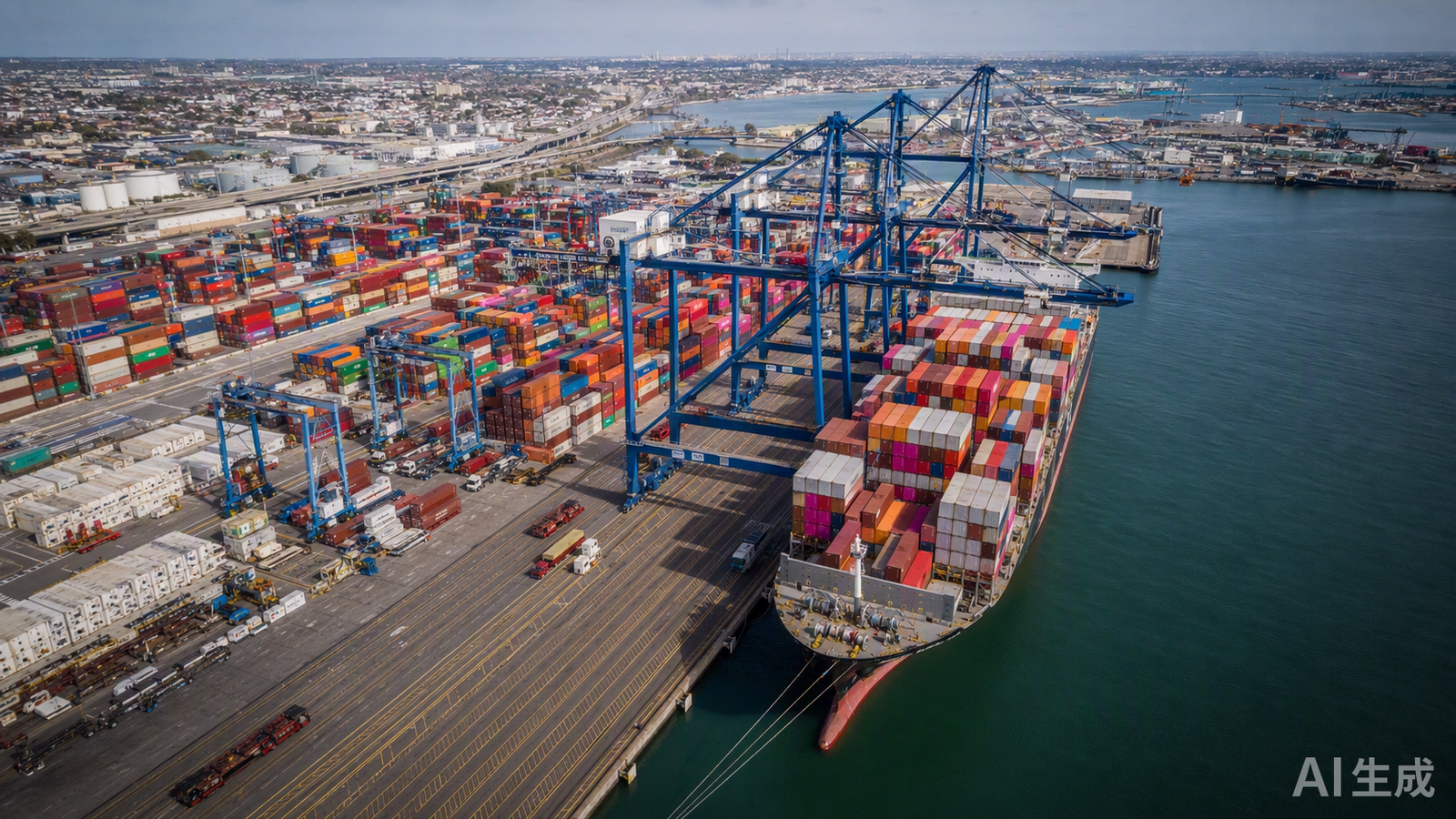
Every importer who has opened a freight invoice next to a factory quote knows the gap between the two numbers can be brutal. The FOB price your supplier quotes in Ningbo is only the starting line. By the time the pallets reach your warehouse in Chicago or Los Angeles, the per-unit cost has climbed well beyond what the spreadsheet first showed.
Shipping documents play a role too: see how to read a bill of lading field by field before the vessel sails.
For a deeper look at port-specific charges, see how port detention and demurrage fees can add 15% to your import bill.
This guide walks you through a five-step landed cost calculator built specifically for custom bag shipments. Whether you are ordering 500 cotton tote bags for a retail chain or 20,000 non-woven shoppers for a promotional campaign, the math follows the same structure. Each step below uses a running example: 5,000 cotton tote bags, FOB Ningbo at $1.20 per unit, shipping to a warehouse in Los Angeles.
Running Example at a Glance
| Компонент | Amount |
|---|---|
| FOB Price (5,000 units x $1.20) | $6,000.00 |
| Ocean Freight (LCL, Ningbo to LA) | $1,100.00 |
| Marine Insurance | $38.10 |
| Customs Duty (HTS 4202.92, 17.6%) | $1,056.00 |
| MPF + HMF | $40.55 |
| Last-Mile Trucking (Port to Warehouse) | $350.00 |
| Total Landed Cost | $8,584.65 |
| Per-Unit Landed Cost | $1.72 |
Step 1: Lock Down the FOB Price
1 Confirm what the FOB price includes and excludes.
FOB (Free On Board) means the supplier pays for production, packaging, and inland transport to the departure port. Everything after the goods cross the ship’s rail is your responsibility. That is where the real cost work begins.
When you receive a quote, check whether the supplier has included export customs clearance. Some factories bundle it into the FOB price; others list it as a separate line item. Either way, the Chinese export customs fee for a textile shipment typically runs between $35 and $60 per entry. If your supplier quotes $1.20 per tote bag FOB Ningbo, that figure already covers factory production, inner packing (poly bags or carton), and delivery to the Ningbo port terminal.
For custom bags, the FOB price also absorbs any tooling charges amortized across the order. A screen-printing setup fee of $150 spread across 5,000 units adds only $0.03 per bag. But if you order just 200 units, that same setup fee becomes $0.75 per unit, a 25-fold difference. This is why MOQ for custom moving bags directly affects your per-unit landed cost.
Step 2: Calculate Ocean Freight
2 Choose between LCL and FCL, then apply current rates.
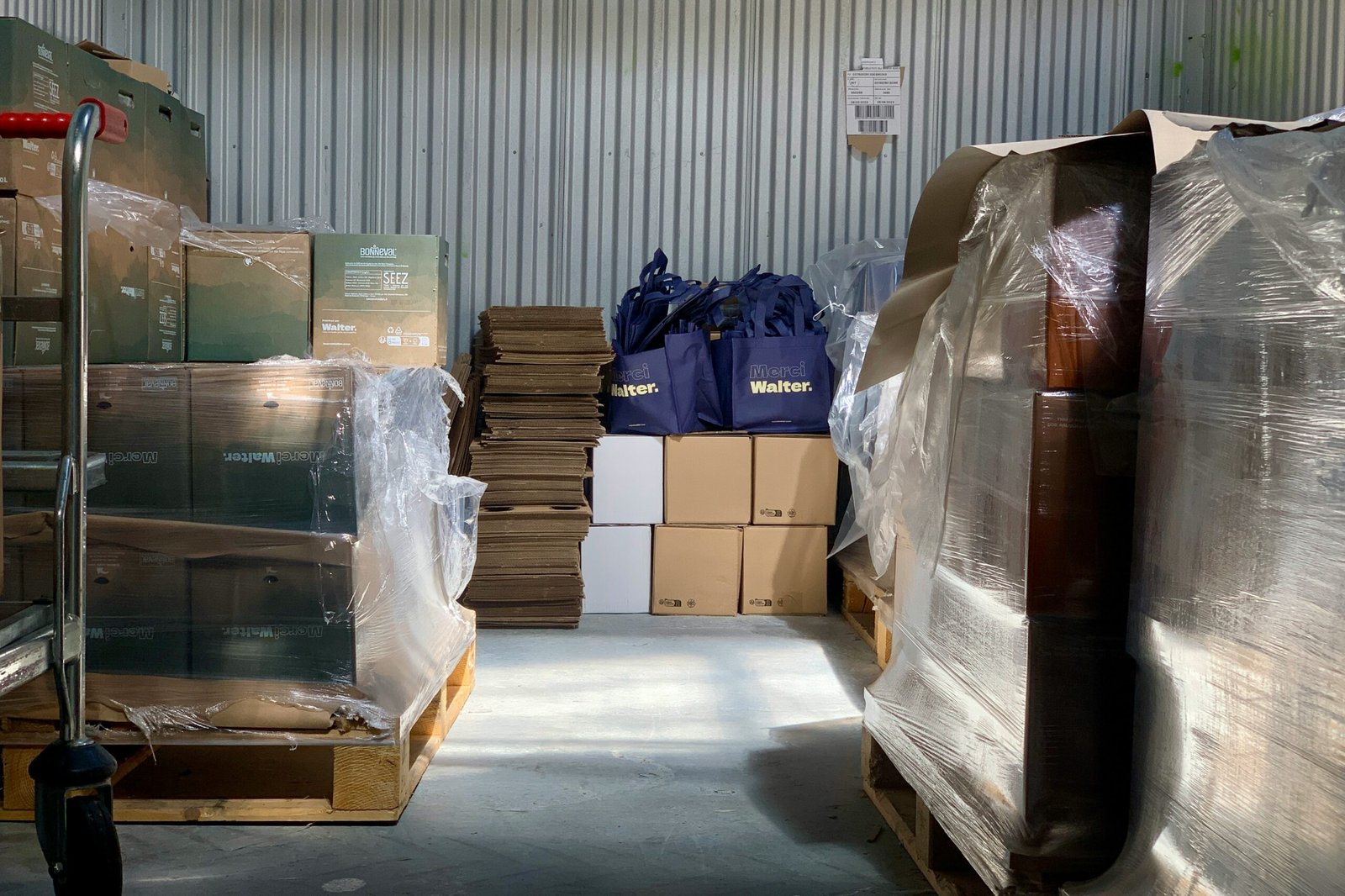
Ocean freight is the single largest cost addition after the FOB price. For custom bag shipments, the choice between LCL (Less than Container Load) and FCL (Full Container Load) depends on your order volume.
Cotton tote bags are relatively lightweight but bulky. A standard carton of 100 tote bags measures roughly 50 x 40 x 30 cm and weighs about 12 kg. At those dimensions, 5,000 bags fill approximately 7.5 CBM, which fits comfortably in an LCL shipment. As of mid-2026, LCL rates from Ningbo to Los Angeles range from $120 to $160 per CBM, putting freight at roughly $900 to $1,200 for this shipment.
If you scale up to 15,000 bags (22.5 CBM), you are approaching the volume of a 20-foot container (typically 28 to 33 CBM usable). At that point, FCL becomes more economical. A 20-foot container from Ningbo to LA costs between $1,800 and $3,200 depending on the season, with peak-season surcharges adding $300 to $600 from August through October.
Step 3: Determine Customs Duty
3 Classify your bags under the correct HTS code, then apply the duty rate.
US customs duty is calculated on the FOB value of the goods, not on the landed total. The Harmonized Tariff Schedule classifies bags under Heading 4202. The specific subheading depends on the outer material:
| Материал | HTS Subheading | Duty Rate |
|---|---|---|
| Cotton tote bags | 4202.92.15 or 4202.92.30 | 5.8% to 17.6% |
| Non-woven PP bags | 4202.92.90 | 17.6% |
| Nylon or polyester bags | 4202.92.90 | 17.6% |
| Laminated or coated bags | 4202.92.60 | 5.3% to 17.6% |
Сайт US Customs and Border Protection retains final authority over classification. If you are unsure which subheading applies to your bags, you can request a binding ruling from CBP before shipping. To check current rates yourself before you consult a broker, search the USITC Harmonized Tariff Schedule online search tool, which lists the duty rate and any special program indicators for every subheading. Misclassification can result in penalties or overpayment that you may not recover.
For our running example of cotton tote bags at HTS 4202.92.30 (travel, sports, or shopping bags with outer surface of textile materials, other), the duty rate is 17.6 percent. On a $6,000 FOB value, that equals $1,056 in duty.
Importers should also check whether their bags qualify for any trade preference programs. Bags manufactured in countries with a US free trade agreement may enter duty-free or at reduced rates. However, the rules of origin are strict: the bag must be wholly produced or substantially transformed in the beneficiary country. Simply cutting fabric in Vietnam does not confer Vietnamese origin if the fabric was woven in China.
For additional context on how classification affects costs, see our guide on HS codes for moving bags, which covers the same principles applied to a different product category.
Step 4: Add Insurance and Processing Fees
4 Don’t skip marine insurance or overlook processing fees.
Marine insurance is optional but strongly recommended. The standard premium for textile goods on the China-to-US route is 0.3 to 0.8 percent of the CIF value. For our example, the CIF value (cost $6,000 + freight $1,100 + insurance) is roughly $7,140, which generates a premium of roughly $21 to $57. We used $38.10 in the running example, which reflects an all-risk policy at approximately 0.5 percent of the insured value.
Beyond insurance, US Customs charges two fees that importers often forget:
- Merchandise Processing Fee (MPF): 0.3464 percent of declared value, minimum $31.67, maximum $614.35 (FY 2025 rates). On $6,000, the MPF is $20.78, but the minimum applies, so you pay $31.67.
- Harbor Maintenance Fee (HMF): 0.125 percent of the customs value for ocean shipments arriving at US ports. On the CIF-equivalent value of approximately $7,100, the HMF is roughly $8.88.
Combined, these processing fees add roughly $40 to the total cost of this shipment. On a per-unit basis for 5,000 bags, that is less than $0.01 each. But on smaller orders of 200 to 500 bags, the minimum MPF can add $0.06 to $0.16 per unit, which is not negligible.
Step 5: Factor in Last-Mile Delivery
5 Get a trucking quote from the port to your warehouse before the shipment arrives.
Last-mile trucking from the port of discharge to your warehouse is the final cost layer. Rates vary widely by distance and market. From the Port of Los Angeles to a warehouse within 50 miles, expect to pay $250 to $450 for a standard dry van delivery. From the Port of Savannah to an inland warehouse in Atlanta, the range is $350 to $600.
For our Los Angeles example, we budgeted $350. Divided across 5,000 bags, that is $0.07 per unit. If you are receiving LCL freight, the cargo must first be deconsolidated at a Container Freight Station (CFS), which adds $75 to $200 in handling charges depending on the terminal.
One cost that catches importers off guard is demurrage and detention charges. If your container sits at the port beyond the free-day allowance (typically 4 to 5 calendar days for imports), the terminal charges $150 to $300 per day. Always schedule trucking pickup before the free days expire.
Putting It All Together: The Landed Cost Formula
The complete landed cost formula for custom bags is straightforward once you have each component:
For our running example:
- FOB: $6,000.00
- Freight (LCL): $1,100.00
- Insurance: $38.10
- Duty (17.6%): $1,056.00
- MPF + HMF: $40.55
- Last-Mile: $350.00
- Total: $8,584.65 / 5,000 = $1.72 per unit
That represents a 43 percent premium over the FOB price of $1.20. For higher-value bags with a $4.00 FOB price, the percentage premium drops to roughly 25 to 30 percent because fixed costs like MPF and last-mile trucking spread across a larger dollar base. This is why wholesale custom bag factory pricing always requires a full landed cost analysis, not just an FOB comparison.
How Volume Changes the Math
Scaling from 5,000 to 20,000 units shifts several cost components in your favor. Here is how the same calculation looks at three volume tiers, all shipping LCL from Ningbo to Los Angeles:
| Компонент | 5 000 единиц | 10,000 Units | 20,000 Units |
|---|---|---|---|
| FOB per unit | $1.20 | $1.05 | $0.92 |
| Freight per unit | $0.22 | $0.18 | $0.14 |
| Duty per unit (17.6%) | $0.21 | $0.18 | $0.16 |
| Fixed fees per unit | $0.01 | $0.01 | $0.01 |
| Last-mile per unit | $0.07 | $0.07 | $0.04 |
| Total per unit | $1.72 | $1.49 | $1.27 |
The per-unit landed cost drops 26 percent when volume quadruples. The biggest savings come from the FOB price itself, as factory setup costs amortize over more units, followed by freight efficiency gains. This volume effect is one reason comparing DDP vs FOB shipping at different order sizes tells a different story than comparing them at a single quantity.
Common Mistakes Importers Make
The most expensive mistake is ignoring the landed cost entirely and comparing only FOB prices between suppliers. A factory quoting $0.95 per bag FOB may look cheaper than one at $1.20, but if the first factory is in an inland city like Chengdu, the inland freight to the port adds $0.10 to $0.15 per unit. The apparent savings evaporate.
Another frequent error is using the wrong HTS code. Classification under 4202.92.15 (with outer surface of cotton, containing textile materials in whole or in part) carries a 5.8 percent duty rate, while 4202.92.30 (other) carries 17.6 percent. The difference on a $10,000 shipment is $1,180. Work with a licensed customs broker to confirm the correct code before the first shipment.
Finally, do not forget currency fluctuation. If your FOB contract is in USD but the factory’s costs are in RMB, a 5 percent yuan depreciation could lead to a price increase on your next order. Lock in exchange rates through your bank or factor a 3 to 5 percent currency buffer into your landed cost model.
When to Use a Freight Forwarder vs. DDP
For orders under $5,000, DDP (Delivered Duty Paid) shipping is often the simplest option. Your supplier handles everything from factory to your door, and you pay a single invoice. The trade-off is that DDP prices typically carry a 10 to 15 percent margin over the actual freight and duty costs, because the supplier assumes the risk.
For orders above $10,000, working with a licensed customs broker and freight forwarder gives you more control and lower costs. You can negotiate freight rates directly, choose your own insurance provider, and ensure correct duty classification. The savings on a $30,000 shipment can exceed $2,000 compared to DDP.
Заключение
Calculating the landed cost of custom bags is not complicated, but it requires discipline. Each of the five steps, FOB price, ocean freight, customs duty, insurance and fees, and last-mile delivery, contributes a measurable amount to the final per-unit cost. The difference between a rough estimate and a precise calculation can be the margin between profit and loss on a bulk order.
Build a spreadsheet with these five components, plug in your actual quotes, and run the numbers at three volume tiers before placing an order. The landed cost per unit will tell you whether the deal makes financial sense and give you a basis for negotiating with both your factory and your freight forwarder.
Часто задаваемые вопросы
What is the typical landed cost markup over FOB for custom bags?
For ocean shipments from China to the US West Coast, the landed cost typically runs 25 to 45 percent above the FOB price. The range depends on volume, HTS classification, and whether you ship LCL or FCL. Smaller orders (under 2,000 units) see higher percentage markups because fixed fees like the MPF minimum and CFS handling charges spread across fewer units.
Can I reduce landed cost by choosing a different US port?
Yes, but the savings depend on your warehouse location. Shipping to the Port of Savannah instead of Los Angeles may lower ocean freight by $100 to $300 for LCL, but if your warehouse is in Phoenix, the last-mile trucking from Savannah adds $800 to $1,200 more than from LA. Always calculate the full door-to-door cost, not just the ocean leg.
Do promotional or sample bags pay customs duty?
Yes. US Customs does not exempt promotional bags or free samples from duty if they are imported commercially. Even bags marked “not for resale” are assessed duty based on their declared value. The only exception is if the shipment value falls below the de minimis threshold of $800 per consignee per day under Section 321.
How often do ocean freight rates change?
Ocean freight rates are typically quoted for 2-week periods (mid-month and end-month) by major carriers. During peak season (August through October), rates can shift weekly. Lock your freight rate with a booking confirmation as soon as your production schedule is firm to avoid surprise increases.
Payment timing changes cash flow before the goods move: see how deposit and balance structures for China bag orders interact with your landed cost.
Рекомендуемые материалы: Shipping Bulk Bags to Canada: Duties, Taxes, and DDP Options.


0 комментариев