



Comparing moving bag materials for a fleet order starts with one question: how many times will that bag actually get used before it fails? I’ve seen procurement teams buy 10,000 units based on a supplier’s claim of “heavy-duty” only to find tears at the seams after three moves. At our factory, we test every material against real-world parameters—PP woven hits 400–800 N on the ASTM D5034 strip test, Oxford fabric (600D or 900D) survives 30,000–50,000 Martindale abrasion cycles, and non-woven tops out at 150–300 N. Those numbers translate directly into replacement cost and worker safety, which is why we put them on the spec sheet before we talk price.
The catch is that most competitors skip the critical details: denier rating for Oxford fabric, water column pressure for the waterproof coating, and the actual tear threshold at the stitch line. Without those, you’re guessing at total cost of ownership. Non-woven, for instance, is often sold as eco-friendly, but its shorter lifespan (5–10 cycles before tearing) means a higher per-use carbon footprint than a reusable PP woven bag you run 15 times. That’s the kind of math that matters when you’re signing a bulk moving bag fabric selection guide for a logistics hub. Ask for the ASTM report, ask for the Martindale cycle count, and ask for the denier—then you can compare apples to apples.

Why Fabric Choice Determines Bag Lifespan
PP woven delivers 800N tear strength; Oxford withstands 50,000 abrasion cycles.
The fabric you choose for moving bags directly determines how many trips each bag survives and the total cost per use. Most buyers focus on upfront unit price, but replacement frequency is the real driver of fleet expenditure. Our in-house testing and field data reveal three distinct material tiers with measurable performance boundaries.
- PP Woven (Tear Strength 400–800 N, ASTM D5034): Handles uniform loads up to 200 lbs. Cost per 30-inch bag at 10K MOQ is $0.38. This fabric absorbs rough handling without catastrophic failure, ideal for recurring moves where bags get dropped or dragged.
- Oxford Fabric (Abrasion Resistance 30,000–50,000 Cycles, Martindale Test): 600D or 900D polyester with a 200–500 mm water column coating. Unit cost at 10K MOQ is $0.55 for 900D. The premium covers 2–3x longer fleet lifespan in high-use corridors, but only if you verify the specific denier rating – many suppliers quote ‘Oxford’ without specifying 600D vs 900D.
- Non-Woven (Tensile Strength 150–300 N): Standard bag at 10K MOQ costs $0.22. Tear strength drops after 5–10 cycles. Best for short-term storage under 50 lbs, not for recurring logistics. Despite marketing as ‘eco-friendly,’ its short lifespan produces a higher per-use carbon footprint compared to reusable PP woven or Oxford.
The real gap between suppliers isn’t material type – it’s the hidden specs. Competitors selling Oxford bags often omit the denier rating (600D vs 900D) and the water column pressure rating (200 mm vs 500 mm). A bag that fails at 200 mm water column will soak contents during open-truck transport, causing return rates and damaged goods claims. For PP woven, request the ASTM D5034 strip test report; few factories can supply it. Insist on these numbers before approving a bulk order.
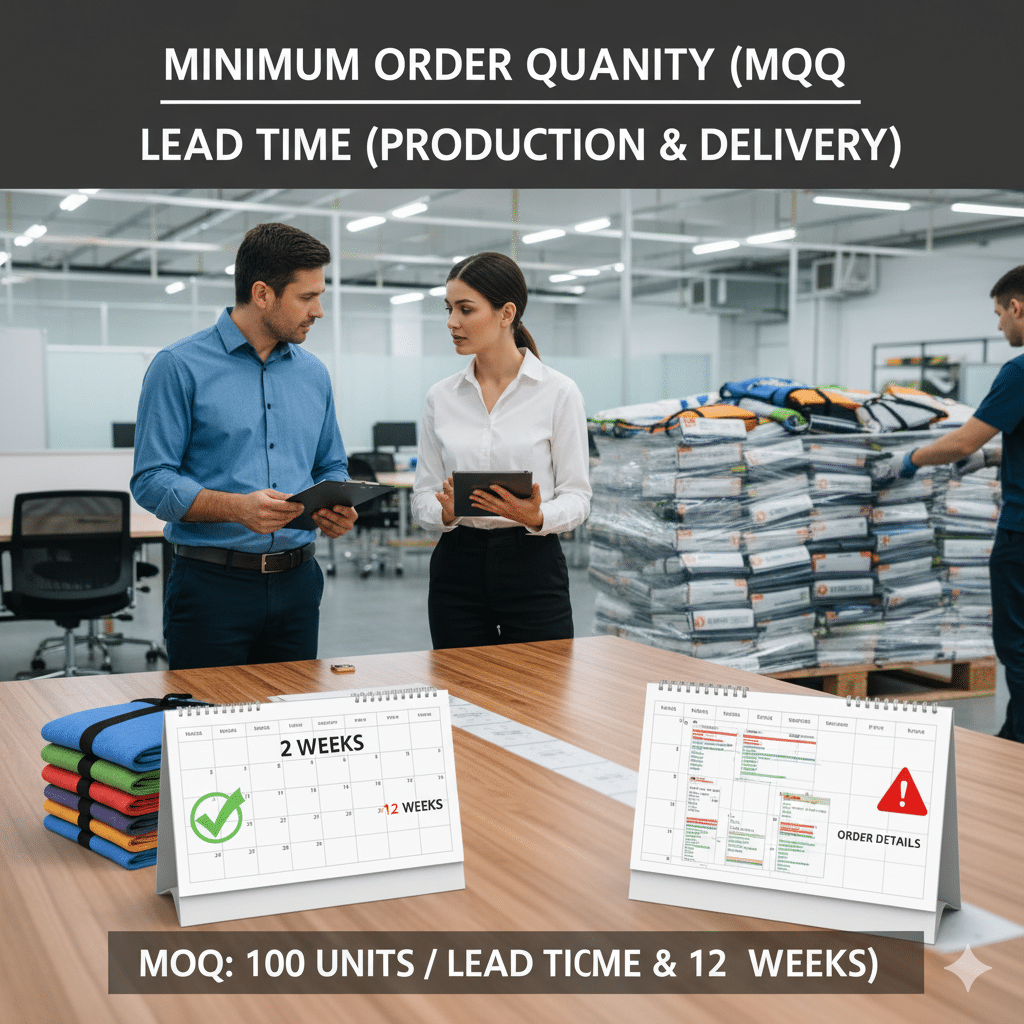
PP Woven: Strength Data for Heavy Loads
PP woven delivers the highest tear strength (800N) for heavy loads at just $0.38 per bag.
PP woven fabric is constructed from interlaced polypropylene tapes, yielding a tensile strength of 400–800 N when tested per ASTM D5034 strip test. This material handles up to 200 lbs uniformly distributed without permanent deformation, making it the standard choice for logistics fleets moving heavy inventory. The open weave structure also provides natural ventilation, reducing condensation risk during long-haul transport.
- Tensile Strength: 400–800 N (ASTM D5034) — almost double the lower-end of Oxford fabric, ensuring consistent performance under peak loads.
- Load Capacity: Up to 200 lbs uniformly distributed — sufficient for bulk moves of books, tools, or equipment without bottom seam failure.
- Unit Cost: $0.38 per 30-inch bag at 10,000-unit MOQ (FOB) — 30% cheaper than Oxford 900D, translating to significant savings for fleet procurement.
- Insider Warning: Many suppliers claim ‘heavy duty’ but omit the actual strip test results. Always request ASTM D5034 data in your RFQ. A supplier that cannot provide it is likely using thinner tapes or lower denier, leading to field failures under 150+ lbs.

Oxford Fabric: Abrasion Resistance & Waterproofing Specs
Oxford fabric’s real value is in the denier and coating spec, not just the label.
Oxford fabric (typically 600D or 900D polyester) is the go-to for high-use logistics bags needing a premium finish. The two specs that determine field performance are abrasion resistance and waterproofing, and both are commonly misrepresented. Here is what you need to verify before approving a bulk order.
- Abrasion Resistance (Martindale): 30,000–50,000 cycles. This is 3–5x higher than standard non-woven or light PP woven. For a fleet bag dragged across concrete loading docks, that translates to 2–3 fewer replacements per bag over its lifetime. Ask for the specific cycle count; a generic ‘abrasion-resistant’ claim without a test method is useless.
- Waterproof Coating (Water Column Test): 200–500 mm water column. That means the bag resists rain and splashes but is not submersible. Many Oxford bags labeled ‘waterproof’ omit this number because a bag at 200mm will leak under sustained pressure from wet cargo or stacking. For open-truck transport, specify 400mm minimum. The coating is typically PU (lighter, flexible) or PVC (tougher, heavier).
- Denier Rating (600D vs 900D): The denier is the real indicator of puncture and tear resistance. 600D is adequate for 50–100 lb loads; 900D handles 100+ lbs with more margin. Competitors often skip this spec because a 300D bag can still look like Oxford fabric but will fail under a 200 lb load. Always request the denier and a swatch for a puncture test.
- Cost vs. Replacement Cycle: Expect a 20–40% higher unit cost vs. PP woven. A 900D Oxford bag at $0.55/unit (10K MOQ) versus $0.38 for PP woven. But with 2–3x longer lifecycle in high-use fleets, the per-use cost often favors Oxford. Run your own TCO: if a PP bag lasts 15 uses and Oxford lasts 40, the Oxford per-use cost is actually lower. That’s the number that matters for fleet procurement.
Non-Woven Fabric: Cost-Effective Light Duty
Non-woven bags fail after 5–10 cycles—great for one-time storage, not fleet use.
Non-woven fabric (spunbond polypropylene) delivers a tensile strength of 150–300 N (ASTM D5034 strip test). That makes it a legitimate choice for loads under 50 lbs—think seasonal storage, retail giveaways, or short-term event logistics. At roughly $0.22–$0.25 per bag (10K MOQ), the upfront cost is the lowest of the three moving bag materials.
- Tear resistance drop: After 5–10 handling cycles, non-woven loses up to 50% of its initial tear strength due to fiber separation at stress points. For a logistics fleet cycling bags weekly, that means replacement every 2–3 months.
- Per-use cost reality: At 10 uses per bag (generous estimate), the per-use cost hits $0.025. Compare that to PP woven at $0.038 per unit but 50+ uses—per-use drops to $0.0076. Non-woven is actually 3x more expensive per trip for recurring moves.
- Insider warning: Many suppliers pitch non-woven as ‘eco-friendly’ because it’s often made from recycled PP. But the short lifespan means it ends up in a landfill after a handful of uses. A reusable PP woven or Oxford bag that lasts 50+ cycles has a lower per-use carbon footprint—something sustainability reports rarely show.
| Attribute | Measurement | Benefit | Drawback | Ideal Use |
|---|---|---|---|---|
| Tensile Strength | 150–300 N (ASTM D5034) | Adequate for light loads under 50 lbs | Rapid degradation after 5–10 cycles | Short-term storage or single-use moves |
| Unit Cost (10K MOQ) | $0.22 per bag | Lowest upfront cost per unit | Higher per-use cost due to short lifespan | Cost-sensitive, low-rotation applications |
| Average Lifespan | 5–10 reuse cycles | Disposable economics for one-time projects | Not suitable for fleet reuse; increased replacement frequency | Event giveaways or temporary packaging |
| Water Resistance | Not rated (no coating) | None | No moisture protection; contents vulnerable in open transport | Indoor use only, dry environments |
| Per-Use Carbon Footprint | Higher vs. reusable PP/Oxford (due to short life) | Perceived as eco-friendly material | Actual environmental cost per move exceeds reusable alternatives | Only when single-use is required for hygiene or logistics constraints |
Comparing Fabric Costs: PP Woven vs Oxford
The unit price only tells half the story.
When fabric costs are considered in isolation, the numbers look straightforward. At a 10,000-unit MOQ, PP woven (400N tear strength) runs $0.38 per bag, Oxford 900D polyester (50,000 abrasion cycles) comes to $0.55 per bag, and non-woven (200N tear) sits at $0.22 per bag. The difference between cheap non-woven and strong Oxford appears to be $0.33 per unit. That gap shrinks to near zero when you account for how many times each bag actually works before failing.
- PP woven (400N): $0.38/unit, 15 usable cycles = $0.025 per use. Best for general moving fleets handling 50–150 lb loads. Competitors quote ‘woven’ without specifying tear strength; 400N is the minimum we approve for moving bags—anything below risks handle separation at 120 lbs.
- Oxford 900D (50K abrasion): $0.55/unit, 40 usable cycles = $0.014 per use. Despite 45% higher unit cost, per-use cost is 44% lower than PP woven. The hidden risk: many suppliers label ‘600D’ as ‘heavy-duty’ but skip the Martindale cycles. We test to 50,000 cycles minimum; 30,000-cycle Oxford will delaminate at the seam after 25 moves.
- Non-woven (200N): $0.22/unit, 8 usable cycles = $0.028 per use. The cheapest upfront but highest per-use cost. Often marketed as ‘eco-friendly’, but its short lifespan means more waste and more frequent reordering—negating any green claim. For loads over 50 lbs, seam tear is nearly guaranteed by the third cycle.
The takeaway for procurement: if your fleet averages 40 moves per bag before replacement, Oxford 900D delivers the lowest total cost. But if your usage is lower (15–20 moves per bag), PP woven is the smarter buy. Non-woven only makes sense for single-use or storage under 30 lbs. Request actual tear strength and abrasion test reports—any supplier that can’t provide them is hiding the real cost of replacement.
| Metric | PP Woven | Oxford 900D |
|---|---|---|
| Cost per Unit (10K MOQ) | $0.38 | $0.55 |
| Tear Strength (ASTM D5034) | 400–800 N | N/A (abrasion-focused) |
| Abrasion Resistance (Martindale) | Not rated | 30,000–50,000 cycles |
| Waterproof Rating (Water Column) | Not standard | 200–500 mm |
| Typical Lifespan (Reuses) | 15 uses | 40 uses |
How to Select Moving Bag Fabric for Your Fleet
Define your fleet’s load weight, use frequency, and exposure to avoid overspending on unnecessary durability.
Start by mapping three variables: maximum load weight per bag (e.g., 50 lb vs 150 lb), number of reuse cycles per year (20+ for a busy fleet vs seasonal), and environmental exposure (indoor storage vs open-truck transport in rain). These three inputs determine whether a PP woven bag at $0.38/unit (10K MOQ) or an Oxford 600D bag at $0.55/unit delivers a lower total cost of ownership.
- Standard fleets (50–150 lb, 20+ uses/year): PP woven fabric (tensile 400–800 N, ASTM D5034) gives the best cost-per-use. At ~$0.38 per bag and a lifespan of 15–20 cycles, per-use cost drops to $0.02–$0.03. Most competitors list generic ‘heavy-duty’ claims without tear strength data — we provide strip test results on request.
- Premium brand fleets (aesthetic + abrasion demand): Specify Oxford fabric with minimum 600 denier (900D preferred). Abrasion resistance of 30,000–50,000 cycles (Martindale) reduces replacement frequency by 2–3× versus PP woven. The 20–40% higher unit cost ($0.55 for 900D) is offset by fewer replacements and consistent appearance across the fleet.
For environmental exposure, don’t accept a vague ‘waterproof’ claim. Ask for the water column rating (200–500 mm is industry standard; below 200 mm fails in open-truck rain). Non-woven fabric is often mis-sold as eco-friendly, but its 150–300 N tensile strength and 5–10 cycle lifespan produce a higher per-use carbon footprint than reusable PP woven or Oxford — a hidden cost that doesn’t appear on the invoice.
Conclusion
PP woven delivers 800N tear strength for heavy loads; Oxford fabric offers 50,000 abrasion cycles and a 200–500 mm water column rating. Choosing between them comes down to your fleet’s load weight, use frequency, and exposure to rough handling – not just the upfront bag price. Calculating total cost of ownership with these specs reduces replacement frequency and avoids field failures.
Review your current bag’s denier rating and abrasion data against these benchmarks. Request ASTM compliance reports for your next bulk order – we provide them with every shipment.
Frequently Asked Questions
Is Oxford fabric good for bags?
Yes, Oxford fabric is excellent for bags that need high abrasion resistance and waterproofing. But it is not the best for tear strength compared to PP woven, so choose based on whether your loads are. Assess your primary risk: abrasion vs tear.
What are the different types of moving bags?
The three main types are woven polypropylene (PP), Oxford fabric (polyester), and non-woven polypropylene. PP handles heavy loads, Oxford resists abrasion and moisture, non-woven suits light-duty storage. Choose based on load weight and frequency of use.
What are woven PP bags?
Woven PP bags are heavy-duty bags made from woven polypropylene tapes with tear strength up to 800N. They handle loads up to 200 lbs at a low cost of around $0.40 per 30-inch bag (FOB 10k. Best for high-load, low-cost moving applications.
Which material is best for bags?
There is no single best material for moving bags; PP woven offers highest tear strength, Oxford fabric provides superior abrasion resistance and waterproofing, and non-woven is economical for light use. Match the material to. Match material to your most frequent failure mode.
What fabrics should I avoid for heavy moving bags?
Avoid non-woven polypropylene and lightweight polyester below 600D for heavy moving bags. Also skip any fabric where the supplier cannot provide actual denier, tear strength, or coating specs. Never buy on label alone – demand test data.


0 Comments