



A rental fleet changes that math: see the self-storage moving bag rental case study for reuse economics.
Once you know how many bags fit, the next question is whether to ship LCL or FCL. See our guide on LCL vs FCL shipping decision.
Importers planning their first bulk order of moving bags always start with the same question: how many moving bags fit in a 40ft container? The short answer is about 400 to 750 units, depending on bag size, how the bags are packed, and whether you are loading a GP or HC box. This CBM guide gives you the exact math so you can size an order, check a supplier’s loading plan, and avoid paying for space you never use.
A 40ft standard container lists around 67 CBM of nominal volume. Usable volume lands closer to 63 CBM once you subtract wall curvature and the gaps that always appear between stacked cartons. A typical medium moving bag at 28 x 18 x 16 inches takes 0.132 CBM, which puts a realistic load near 420 bags. Weight almost never limits this product category; volume does.
Before you sign a purchase order, run the numbers the same way a freight forwarder will. The factory should confirm carton dimensions, the number of bags per carton, and a loading plan against the exact container type you book. The sections below walk through the calculation step by step, with the figures a serious heavy duty moving bags factory uses on every quote.
Standard Container Dimensions
Container volume is quoted in cubic meters (CBM), and every figure in this guide starts with the internal dimensions of the box, not the external ones. Freight forwarders charge on the actual cargo volume, so the internal numbers are the only ones that matter for loading math. Carrier-published container dimensions are consistent across major lines, which makes the calculation repeatable.
The 40ft GP (general purpose) is the workhorse for bag imports. Its internal space runs about 12.03 m long, 2.35 m wide, and 2.39 m high. Multiply those figures and you get 67.5 CBM, but nobody loads a full 67.5 CBM in practice. Wall curvature at the ceiling, the door opening, and the space between irregular cartons eat several cubic meters.
| Container | Internal Dimensions | Nominal CBM | Usable CBM | Payload Limit |
|---|---|---|---|---|
| 20ft GP | 5.90 x 2.35 x 2.39 m | 33.2 | ~30 | ~28,200 kg |
| 40ft GP | 12.03 x 2.35 x 2.39 m | 67.5 | ~63 | ~26,500 kg |
| 40ft HC | 12.03 x 2.35 x 2.69 m | 76.3 | ~72 | ~26,200 kg |
The high-cube (HC) container earns its extra 9 CBM from internal height: 2.69 m instead of 2.39 m. For bags, that height matters only when you stack cartons more than five levels or load bulky expanded bags. Most bag cartons are short enough that a GP handles them fine, so do not pay the HC premium unless the loading plan needs it.

Moving Bag Sizes and Their CBM
Moving bags come in a handful of standard sizes, and each one changes the container count by a wide margin. The table below converts common retail sizes from inches to cubic meters, then applies the 63 CBM usable volume of a 40ft GP with a 12% packing loss. That loss factor is the honest middle ground between a perfect theoretical stack and a real warehouse floor.
| Bag Size | Dimensions (in) | Volume (CBM) | Per 40ft GP | Typical Use |
|---|---|---|---|---|
| Small | 24 x 16 x 12 | 0.0755 | ~730 | Books, shoes, linen |
| Medium | 28 x 18 x 16 | 0.132 | ~420 | Clothing, kitchen goods |
| Large | 30 x 20 x 18 | 0.177 | ~310 | Bedding, blankets |
| Extra Large | 38 x 22 x 20 | 0.274 | ~200 | Comforters, duvets |
Note the spread: the same container carries 730 small bags or 200 extra-large ones. If your product line mixes sizes, ask the factory for a per-SKU volume breakdown before comparing quotes. A supplier that quotes a flat “about 400 bags per container” without asking your size mix is guessing, and guesses become freight bills.
How to Calculate Bags Per Container
The formula has three steps, and each one is easy to verify on a calculator. First, convert the bag dimensions to meters and multiply to get the volume of one bag in CBM. Second, divide the usable container volume by that number. Third, multiply by the packing factor, which for bags sits between 0.85 and 0.90.
Worked example with the medium bag: 0.711 m x 0.457 m x 0.406 m equals 0.132 CBM. Divide 63 by 0.132 and you get 477 bags at perfect packing. Apply the 0.88 factor and the realistic figure becomes 420. That is the number to put in your purchase order and your landed cost model.
One caution about the packing factor. It shrinks when you load multiple SKUs, because mixed carton sizes leave more gaps. It also shrinks when cartons are overstuffed and bulge in the middle. A single-SKU order of identical bags regularly hits 0.88 or better; a mixed-SKU order can drop to 0.82. Plan the factor before you book, not after you pay the detention bill.
Why Weight Rarely Limits Moving Bag Loads
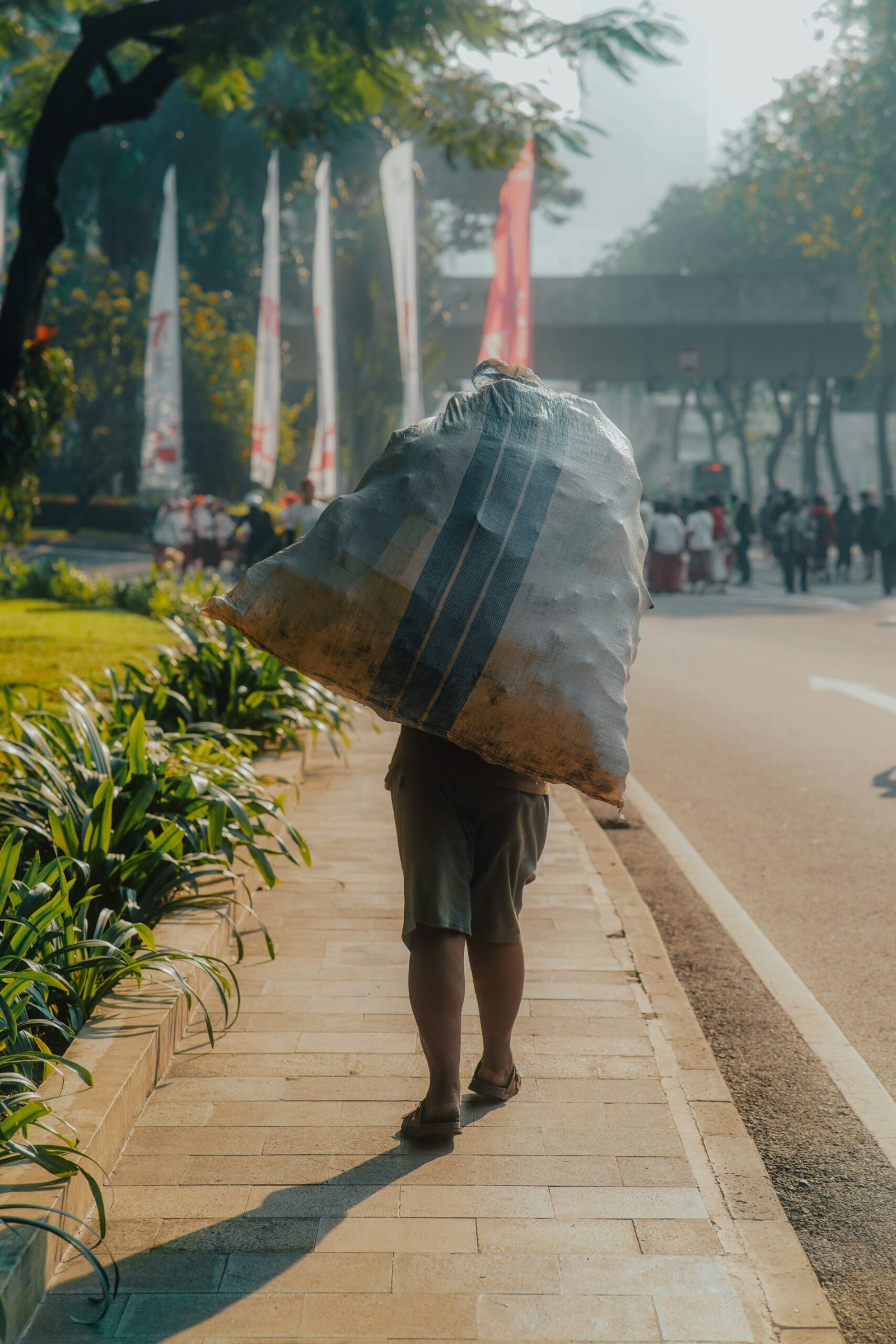
Every container has a payload ceiling, and for moving bags it almost never binds. A woven PP bag of 80-100 GSM weighs roughly 1.5 to 2.5 kg depending on size and handle reinforcement. Take 420 medium bags at 2.2 kg each: the cargo weighs about 920 kg, against a 26,500 kg payload limit.
Even the heaviest reinforced bags stay below 2,500 kg per container. Compare that with FIBC bulk bags or canned goods, where shippers hit the payload ceiling long before the box looks full. For moving bags, the constraint is cubic, so the entire negotiation should focus on volume efficiency, not weight tolerance.
There is one exception worth naming: poly bags packed with metal hardware, zippers, or extra webbing can add 30-40% weight. If your spec includes reinforced handles with metal rivets, request the gross weight per carton in the quote. The math changes from volume to a volume-plus-weight check, and a good factory will flag it before you do.
Flat-Packed vs Expanded Loading
The size table assumes bags ship at their expanded dimensions, which is how most buyers picture the product. In practice, moving bags are collapsible, and factories ship them flat-packed in cartons or bales. A flat-packed bag occupies a fraction of its expanded volume, which is exactly why foldable bag logistics can cut empty container space by 30-50%.
The shift changes the container count dramatically. A medium bag folded to a 28 x 18 x 2 inch pancake takes about 0.0165 CBM instead of 0.132 CBM. That is an 8x difference in raw volume, though carton wall thickness and packing patterns bring the real-world gain down to the 30-50% range cited above.
Buyers who quote landed costs per unit must know which packing mode the factory plans to use. If the supplier ships flat but you calculated freight on expanded volume, your landed cost is overstated and your competitor with the same factory wins the bid. Get the carton dimensions and bags-per-carton number in writing at the RFQ stage. Then compare your loading plan against the strategies used in FIBC container loading to see where space is being wasted.
Container Options and Order Sizing
Order size should drive container choice, not the other way around. A 20ft GP holds roughly half of a 40ft load, around 210 medium bags after packing loss. That box makes sense for first orders, retail tests, or SKU pilots where you want a real container load without a 420-bag commitment.
Below one-third of a container, shared loads beat full containers on cost. LCL (less than container load) pricing charges by CBM, and it lets you order 50-100 bags without paying for empty space. The trade-off is slower transit, transshipment risk, and per-unit freight that runs higher than FCL. Compare both against the landed cost your price list can absorb.
For full-container buyers, remember that freight is only half the cost story. Duties and customs documentation add a fixed layer per shipment, which is why many importers prefer DDP shipping and why the right HS code classification matters before you commit. A factory that ships DDP with tax included removes the variable-cost surprises that eat into a 420-bag margin.
Need a loading plan for your moving bag order?
TIIOCTI provides carton dimensions, bags-per-carton counts, and a container loading plan on every bulk quote. Direct factory, BSCI certified, with DDP delivery to the US and Europe.
What to Send the Factory Before Booking
The calculation above only works if both sides use the same inputs. Send the factory a short spec sheet with bag dimensions, fabric GSM, handle type, and packing mode, then ask for carton size, bags per carton, and gross weight per carton. Compare the returned loading plan against your own CBM math.
- Bag dimensions: interior or exterior, expanded or folded, with tolerance.
- Carton data: length, width, height, bags per carton, gross weight.
- Container plan: cartons per row, rows per tier, total cartons per container.
- Loading mode: floor-loaded, palletized, or bales, plus pallet dimensions.
- Freight basis: FOB, CIF, or DDP, with the incoterm on the quote.
If the returned plan differs from your math by more than 5%, ask why before approving. The cause is usually a packing factor, a carton dimension, or a folding method, and all three are negotiable. A factory that cannot produce a coherent loading plan on request will not produce one on delivery day either.
Frequently Asked Questions
How many moving bags fit in a 40ft container?
A 40ft GP fits roughly 730 small bags, 420 medium bags, or 310 large bags when shipped expanded and floor-loaded. Flat-packed bags raise those counts by 30-50%.
What is the usable CBM of a 40ft container?
A standard 40ft GP offers about 63 CBM of usable volume after wall curvature and packing loss. A 40ft HC reaches roughly 72 CBM through extra internal height.
Does weight limit a moving bag container load?
Rarely. A full container of moving bags weighs about 1-2 tons, far below the 26,500 kg payload limit. Volume, not weight, sets the count for this product.
How many bags fit in a 20ft container?
A 20ft GP holds about half of a 40ft load: roughly 210 medium bags after packing loss. It suits first orders and retail pilots.
Should I ship moving bags flat or expanded?
Ship flat. Folded bags load 30-50% more units per container, which lowers landed cost per bag. Confirm the packing mode in writing before you book freight.
Conclusion
The answer to how many moving bags fit in a 40ft container is a calculation, not a guess. Start with usable volume, divide by the CBM of one bag in its shipping state, apply a 0.85-0.90 packing factor, and confirm the result against the factory’s loading plan. Weight checks come second, and only for hardware-heavy specs.
- Use 63 CBM for a 40ft GP and 72 CBM for a 40ft HC in your math.
- Expect about 420 medium moving bags per 40ft GP container.
- Flat-packed bags raise the count 30-50% and cut freight per unit.
- Ask for carton dimensions and a loading plan on every quote.
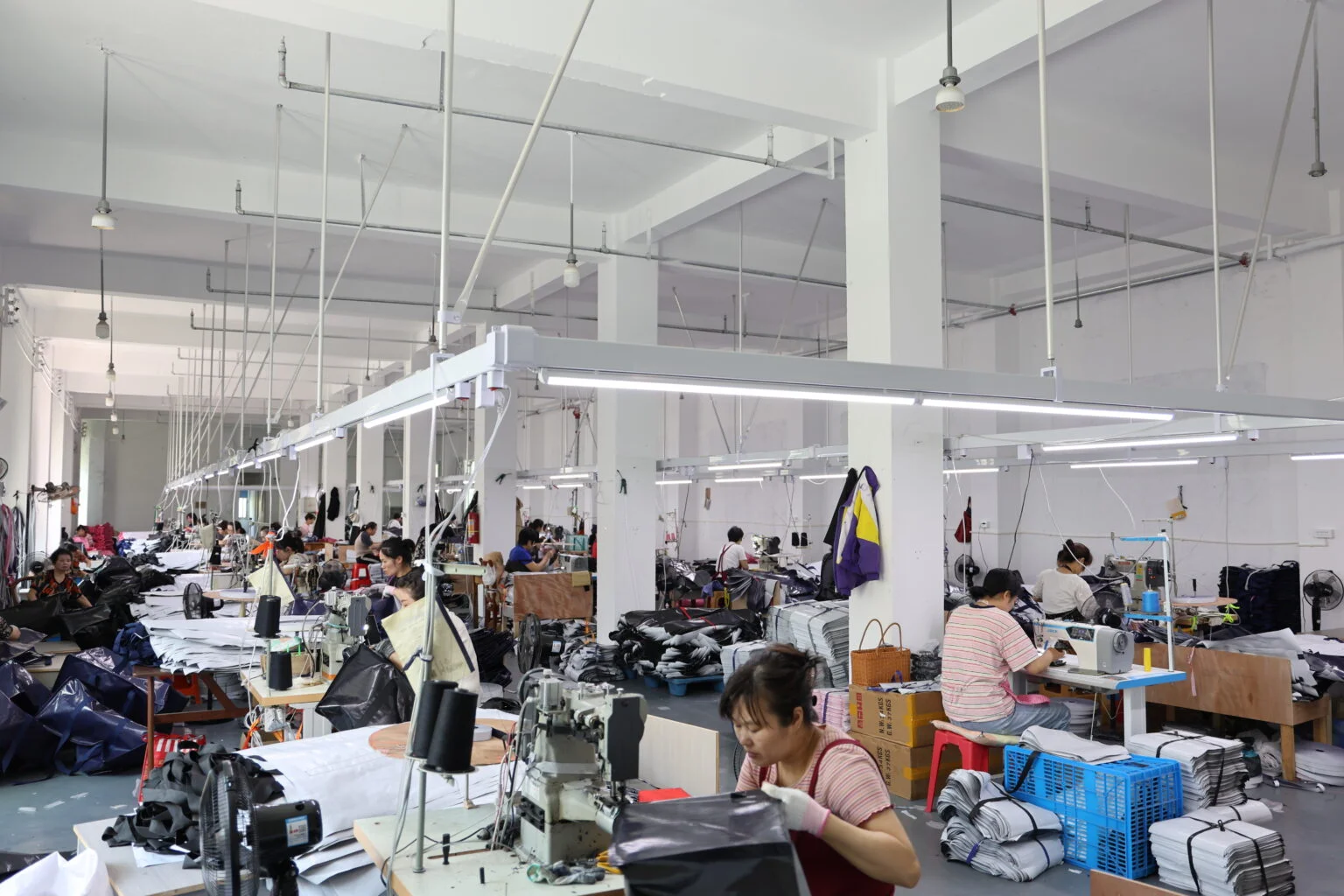
TIIOCTI is a BSCI-certified direct factory for heavy duty moving bags, with free samples and DDP delivery to the US and Europe. Send your size mix and target quantity, and the loading plan comes with the quote. Request a quote when you are ready to lock the numbers.
For smaller shipments that cannot fill a container, our air vs sea freight guide for bag samples shows when air freight beats sea on cost.
For deployment-scale orders like the 6,000-bag fleet in our military mover case study, container loading calculations are essential.
Fabric weight affects how many bags fit per carton. See our Oxford fabric weight guide for GSM differences by denier.
Related: a loading sequence that protects cartons when several bag SKUs share one container


0 Comments